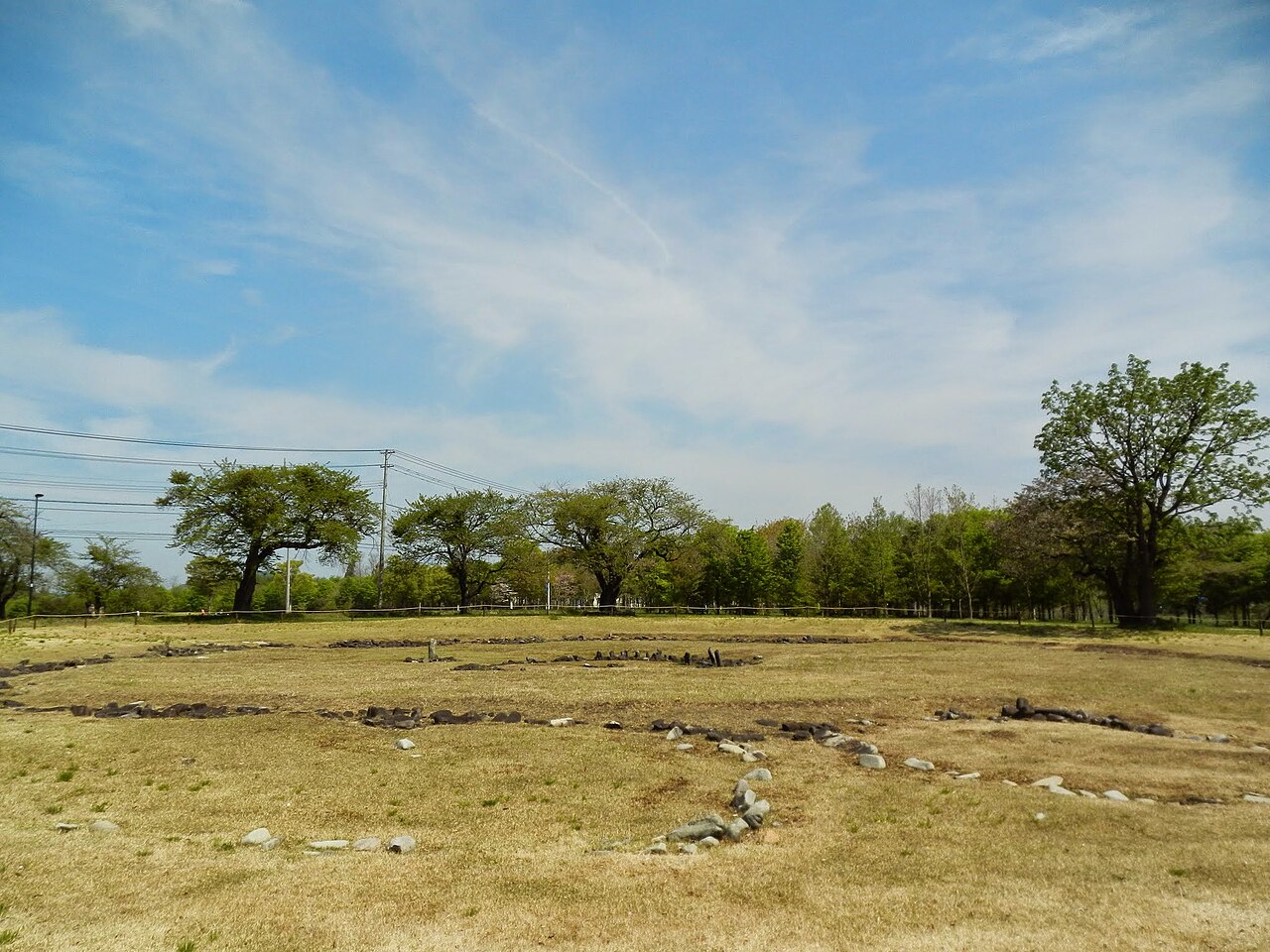
In the far north-east of Akita prefecture, where the Oyu river winds out of the hills of Kazuno, an old hot-spring village and a far older ring of stones sit within one short ride of each other. The pairing is unusual: a morning can be spent among the placed stones of a prehistoric plaza, the afternoon in water that has soothed travellers for centuries. A local guidebook from the early twentieth century — a booklet whose very title calls Oyu a sacred spring of the realm — supplies the older half of the picture, and reading it against the quiet of the present valley is a pleasure in itself.
Three Baths Along the Oyu River
The guide describes a village arranged around three public baths — Kami-no-Yu, Shimo-no-Yu and Kawara-no-Yu — each with its own circle of inns and its own regulars. Of the three it gives the warmest words to Shimo-no-Yu, singling out the quality of its spring. The waters are said to have carried a healing reputation for generations, drawing bathers from the farms and towns of the region in the old northern manner. What the book sketches is not a resort but a working village that happened to be built on warm water, and that remains the tone of the place.
A Ring of Stones from the Jomon Age
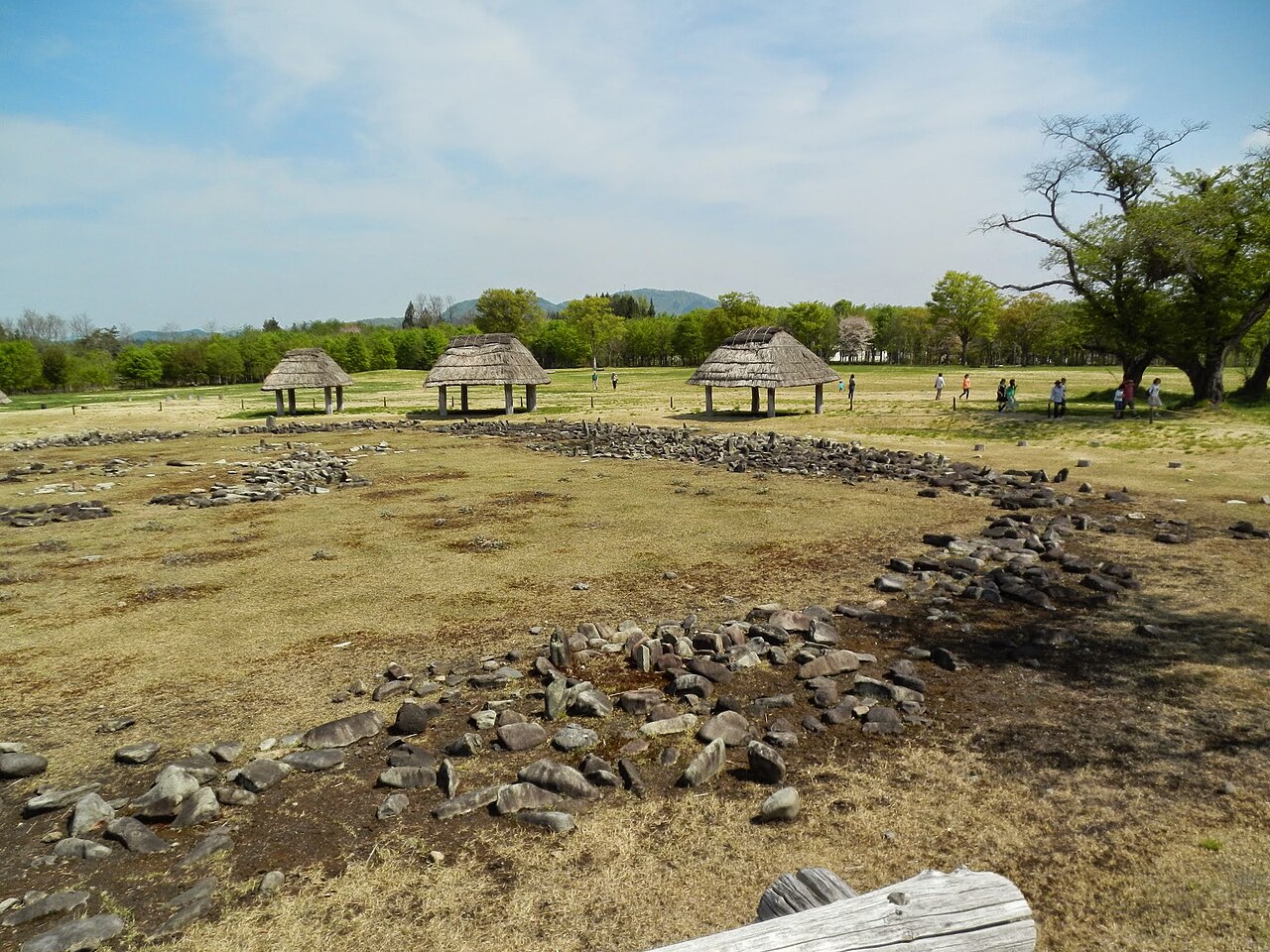
A short ride down the valley from the baths lies the reason many visitors now come this far: the Oyu Stone Circles, two great rings of river cobbles laid out on a terrace in the Jomon age, thousands of years before the village or its inns existed. They are counted among the Jomon sites of northern Japan on the World Heritage list, yet the terrace rarely feels busy. The stones are low and countless rather than monumental — slim cobbles set on edge in overlapping arrangements, among them a celebrated cluster laid out like the spokes of a wheel — and the pleasure of the place is walking the mown grass slowly until the pattern begins to assert itself.
The Museum Beside the Circles
The Oyu Stone Circle Museum stands beside the site and makes the stones legible. Entry to the museum itself is free of charge, and the exhibition hall asks a viewing fee of three hundred and twenty yen for an adult. For elementary, junior-high and high-school students the viewing fee is one hundred and ten yen. Groups of twenty people or more pay two hundred and fifty yen each. From April to October the museum is open from nine in the morning until six in the evening. From November to March the hours run from nine in the morning until four in the afternoon. The museum is closed for the New Year holidays, from the twenty-ninth of December until the third of January.
Getting There
The approach is part of the pleasure. From Morioka Station, the JR Hanawa Line — take a service bound for Ōdate Station — runs through the mountains to Kazuno-Hanawa Station in about two hours. From the front of Kazuno-Hanawa Station, an Akita Kotsu bus bound for Oyu Onsen reaches the Oyu Kanjo Resseki-mae stop, beside the circles, in about thirty-five minutes. The one-way adult fare on that route bus, from Kazuno-Hanawa Station-mae to Oyu Kanjo Resseki-mae, is six hundred and twenty yen. The same road carries on to the hot-spring village itself, so the stones and the baths string naturally onto a single unhurried line.
New to rural buses and one-man trains? See how to ride them, step by step.
Where to stay
Places to stay near Oyu Onsen →
Disclosure: This post may contain affiliate links. If you book through them, we may earn a commission at no extra cost to you.
The View from Kakura Park
For the wider setting, the guide sends its readers up to Kakura Park, on the rise behind the village. From the top, it records, the eye takes in the cone the locals call Oyu Fuji, the long ridge of Mount Raiman on the horizon, the farmland of Kemanai spread along the river, and the roofs and rising steam of the spa quarter directly below. This was the favourite stroll of the bathers of that era, and the description still works as a photographer's briefing: go up late in the day and let the valley arrange itself in layers.
Waterfalls, the Lake and Winter Greens
The guide's excursions radiate outward from the baths. It describes the Choshi waterfall on the river above the village, measuring it at more than one hundred and sixty shaku in height — a shaku is roughly a foot — with lesser companions nearby that it calls the middle and the stopping falls. In the other direction it points towards Lake Towada, putting the way from the village to the Hakka shore at four ri and twenty-two cho in the measures of the day. And it records one detail that still surprises: early in the Taisho era, growers here began raising winter vegetables — garland chrysanthemum and cucumbers — in plots warmed by the springs themselves, so that green things came to market in the snow months. If you would rather have the valley arranged for you, a guided day around northern Akita can pair the circles with the springs and their surroundings.
Make It a Quiet Day
The village keeps quieter stories too. According to one travel book, the house where Soma Daisaku, a swordsman famous in the north, lay hidden stood in this village, and the site of its storehouse is said to have been pointed out long afterwards. The souvenirs of that era are said to have included picture postcards of the springs, crisp rice crackers, butterbur stalks candied in sugar, and trout from Lake Towada — a shopping list that still reads well. A day here composes itself: the circles and their museum first, the baths after midday, the park as the light softens. Details of times and prices do change, so confirm the latest before you travel. If this pairing of warm water and old stones appeals, the small spa lanes of Iwai Onsen behind Tottori's sea rocks run on the same unhurried logic on the opposite coast.