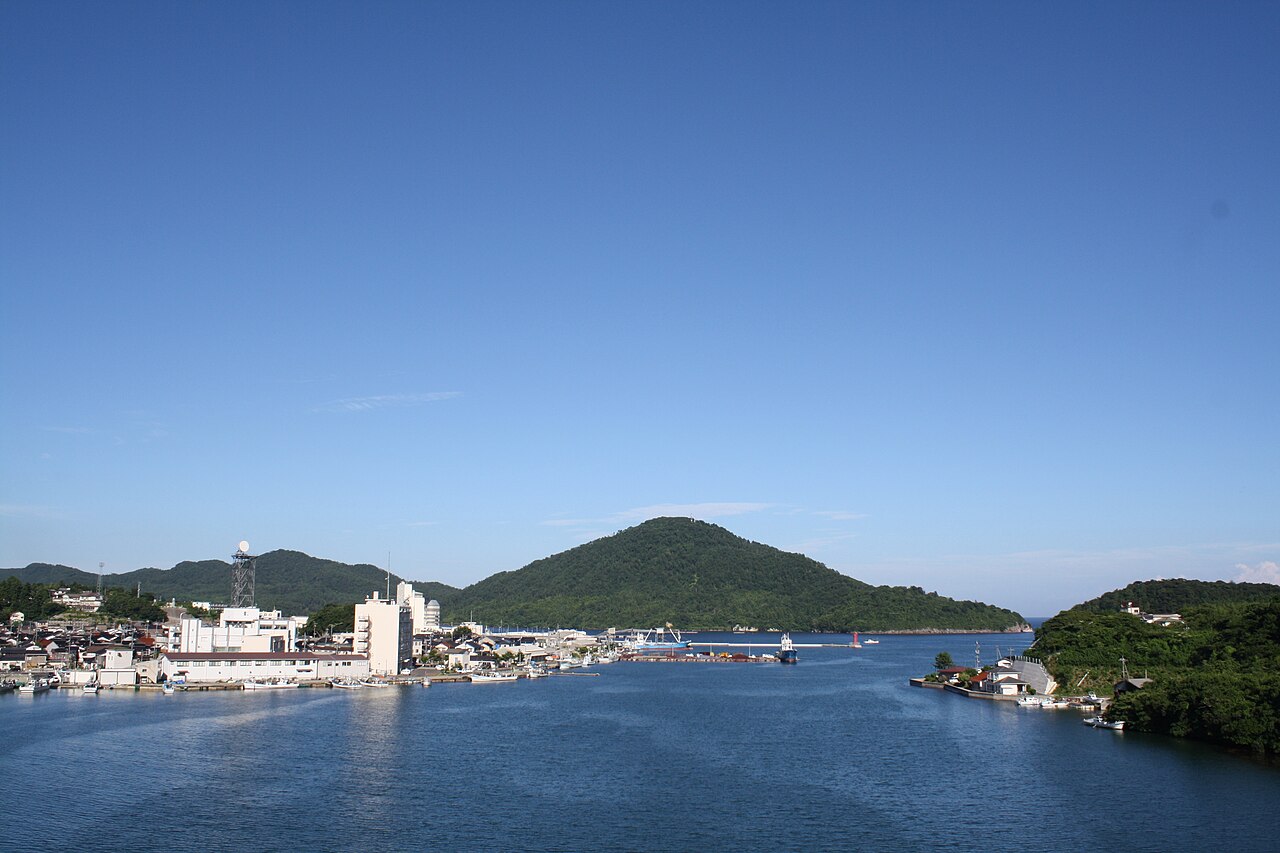
The Oki Islands, out in the Sea of Japan off the Shimane coast, hold a place on the UNESCO Global Geoparks list — a recognition granted only after a nominated region passes a strict course of document screening and on-site inspection. The islands began as a piece of the Eurasian continent: they were torn slowly away from it, and later rounds of large volcanic activity built up the two groups a traveller meets today, Dozen and Dogo. During the last ice age the sea drew back far enough to join Oki to the mainland again; when the water rose, about ten thousand years ago, the islands took their present shape, and that long rhythm of joining and parting is held to be one reason their living world is so much their own.
More than a hundred and fifty shrines stand across the islands, a density explained by how hard it once was to move between valley hamlets: each settlement raised and kept a shrine of its own. The same isolation, folded over a rugged interior, kept every village's festivals and habits intact, and it is read today as the seedbed of the geopark's unusual wealth of life and culture.
Getting there, slowly
From Matsue Station, a connecting bus reaches Shichirui Port in about forty minutes. The ferry from Shichirui to Saigo Port then takes about two hours and twenty-five minutes. Reckon on between two and two and a half hours for any direct run by the ferries Oki, Kuniga, and Shirashima between the mainland and the islands. A one-way second-class ferry ticket is three thousand eight hundred and seventy yen. The fast boat, the Rainbow Jet, comes to seven thousand three hundred and sixty yen one way with its express surcharge included.
For the air route, the limousine bus from Matsue Station reaches Izumo Enmusubi Airport in about thirty-five minutes. On the island side, the connecting bus from Oki Sekai Geopark Airport to Saigo Port takes about ten minutes. The fare is five hundred and twenty yen for adults and two hundred and sixty yen for children. The islands then link to one another by sea: the ferry from Saigo across to Hishiura Port takes about an hour and ten minutes. If you plan to give the islands more than a day, you can compare places to stay in the Oki Islands before you sail.
Saigo, the harbour that sang
In the Edo period Saigo flourished as a wind-waiting harbour for the kitamaebune trading ships, which are said to have called four thousand times a year at the port's height; crews from every coast carried their music ashore, and the local ballad Shigesa-bushi is traced to a song from Niigata. The trading habit is far older than the ships: obsidian quarried on Oki was already travelling to what are now Niigata and Shikoku some thirty thousand years ago, evidence of a wide network of exchange even then.
The Oki Islands Nature Museum is open from nine in the morning to five in the afternoon, with last entry at a quarter to five. Admission is five hundred yen from high-school age up. For elementary and junior-high pupils it is two hundred and fifty yen.
The total shrine and its two-thousand-year cedar
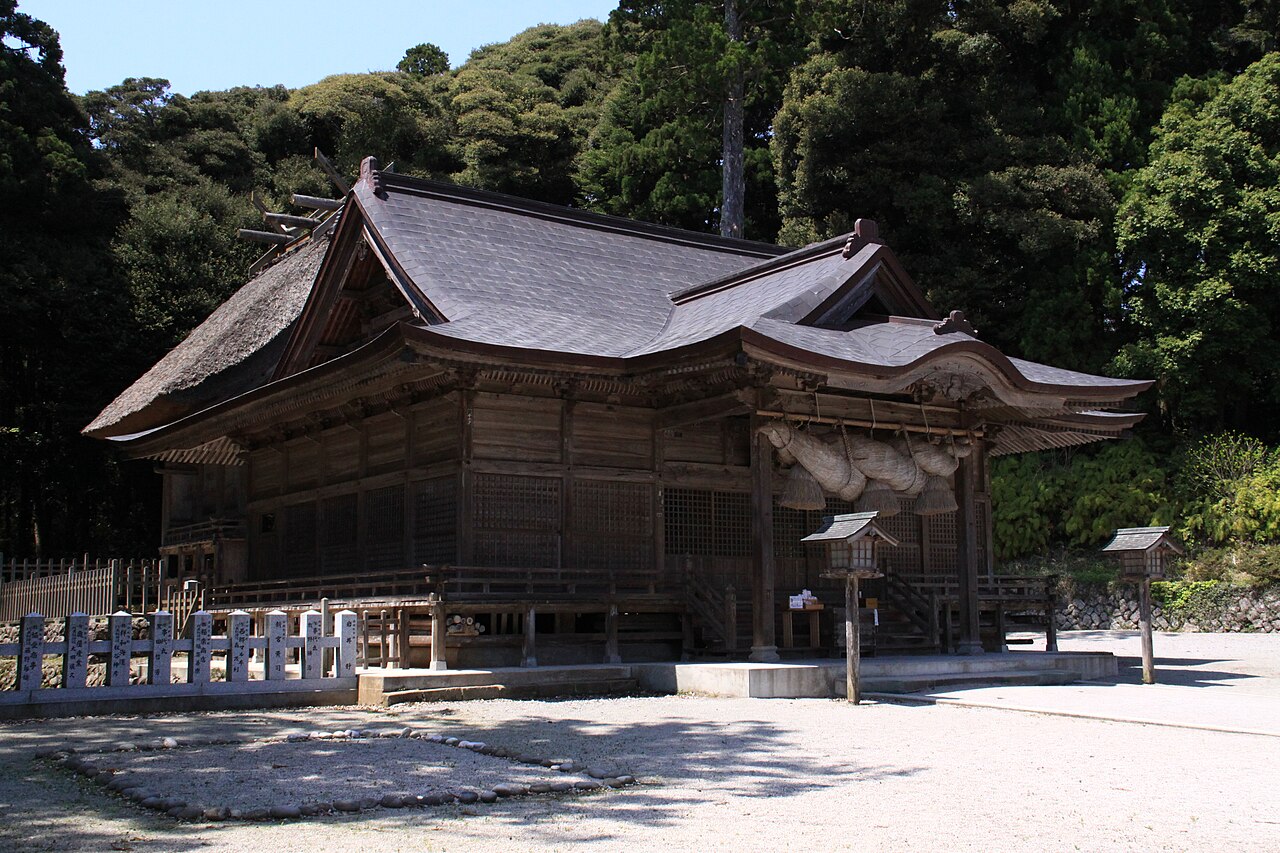
Tamawakasu-mikoto Shrine is the sōsha — the "total shrine" — of old Oki: its main hall, its gate, and its former worship hall are listed as national Important Cultural Properties, and beside them rises the Yaosugi, a cedar reckoned at some two thousand years old and protected as a national Natural Monument. On the fifth of June each year the shrine holds the Goreie Furyu, counted among the three great festivals of Dogo. Here, as at many shrines on these islands, the grounds keep a sumo ring; wrestling has never drifted far from the gods in Oki.
The islands' standing in the old order still shows on paper. A court register of shrines compiled in the tenth century listed sixteen in Oki and ranked four of them — Ise-mikoto, Mizuwakasu, Uzuka-mikoto, and Yurahime — as great shrines, at a time when the whole of mainland Shimane counted only two such, Izumo Taisha among them. Mizuwakasu Shrine still carries that weight: its ring is counted the most prestigious on the islands, Edo-period papers record wrestling offered at the shrine's rebuilding every twentieth year, and its main hall is the model of the islands' own architectural style, called Oki-zukuri.
Through the eyes of a Meiji surveyor
A gazetteer of the islands written at the turn of the twentieth century lets you stand in these same precincts several generations ago. Its author found the great cedar by the shrine gate so vast that at a glance it seemed to outweigh the shrine buildings themselves, and its boughs spread widely enough, he noted, that a person caught in the rain could wait it out beneath them. The tree, people told him, was planted by the nun Yao-bikuni, who came from Wakasa, prayed here until her wish was granted, and set the cedar in the earth with her own hands in thanks. When a branch dropped on a windless day, the story went, islanders scrambled for it as a charm — the rich boasted of a fragment, the poor grieved that even a broken end lay beyond their means.
The total shrine itself he found nearly deserted: a single caretaker, doors opened only on festival days, grass thickening before the stone steps, while Mizuwakasu kept a full complement of priest, ritualists, and musicians observing every form. Yet he did not pity the quieter shrine. Its god, he wrote, rested serenely in place, and its lone keeper served on without complaint — the bearing, he thought, of a gentleman untroubled by neglect.
Where to stay
Places to stay near Oki Islands →
Disclosure: This post may contain affiliate links. If you book through them, we may earn a commission at no extra cost to you.
Sea shrines of the Dozen islands
On Nishinoshima, halfway up the flank of Mount Takuhi, Takuhi Shrine has drawn the faith of sailors for centuries, and Hiroshige and Hokusai both set this Oki landmark into their prints. Its main hall is fitted into a hollow of the rock face — a rebuilding dated to the seventeen-thirties, and the oldest shrine hall standing on the islands. The founding story tells of a ball of fire that rose from the sea and settled into the cave, and a rite bound to that story is still kept in the twelfth month of the old calendar.
At Yurahime Shrine, an ichinomiya of old Oki alongside Mizuwakasu, the beach before the gate is known as the squid-beckoning shore, and squid are worked into the carvings of the shrine itself. The tale behind the name runs that a squid once bit the goddess's hand, and that the squid have beached themselves in apology every year since.
In the town of Ama, Uzuka-mikoto Shrine sits ringed by rice fields, prayed to for protection at sea and in childbirth; on New Year's Day its people throw a stone shaped like a flying fish into the waves to call in the year's catch. Close by, Oki Shrine honours Emperor Gotoba, exiled to these islands after a failed rising against the shogunate; the shrine is young — raised in the nineteen-thirties, seven hundred years after his death — and in spring some two hundred and fifty cherry trees give it the islands' liveliest week of blossom. Exile shaped island custom in stranger ways too: Oki's bull-against-bull tournaments are said to have begun as an entertainment to console the banished emperor, and they took root as the islanders' own sport.
A calendar of island rites
In Kumi on Dogo, a village that once quarried what is held to be western Japan's largest source of obsidian, Ise-mikoto Shrine keeps its July festival with kagura danced through the whole of the night. The islands' "classical sumo," staged only for a shrine's rebuilding or the completion of some great public work, is wrestled in paired bouts so that every man wins once and loses once. Set beside these the masked Rengee dances that Oki Kokubunji temple has carried for some twelve centuries, and a mountain rite in which a vine is wound seven and a half times around a great tree, and the islands' density of living observance starts to feel like their true wealth.
Rock walls, a candle in the sea, pasture stones
On Nishinoshima's western shore the land ends at Matengai, a sea-carved precipice that ranks among the highest of its kind in Japan. Directly below it, the waves have cut a huge stone arch called Tsutenkyo from a shoulder of rock thrust into the sea. In the village of Chibu, iron-rich basalt and tuff streak the great rock wall called Sekiheki with vivid reds, the small island's proudest sight. Near Akahage-yama on the same island, low stone walls still divide the slopes: relics of the old makihata system, a four-year rotation of grazing and cropping devised to coax a living from thin volcanic soil.
Off the northwest coast of Dogo, a lone sea stack called Rosoku-jima has been whittled by the water into the shape of a giant candle, one of the signature views of Oki. The deeper story is written in the stone itself: the islands' oldest rock, the Oki gneiss, formed far beneath the continent under great heat and pressure, and it stands as the plainest proof that this ground was once part of mainland Asia.
Old cedars and life found nowhere else
In the mountains of Dogo the cedars grow huge and strange. The Chichi-sugi of Iwakura, some eight hundred years old, hangs a couple of dozen rounded aerial roots from its boughs — the "breast cedar," named for their shape. The Kabura-sugi divides from near the ground into six full trunks and has stood some six hundred years. Recent research suggests the islands sheltered mainland cedars through the ice age, and that the giants of Dogo descend from refugees that simply never left.
About twenty kinds of living thing exist on Oki and nowhere else on earth — the Oki salamander and the Oki dandelion among them — most of them differing only slightly from mainland relatives after ten thousand years apart. The Oki rhododendron opens from the end of April into May along Mount Daimanji, where marked trekking routes let you walk among this rare flora at an unhurried pace. And at Kasuga Shrine, set so that on the spring and autumn equinoxes the sunrise climbs straight up the line of its torii gate, a black-pine grove more than three and a half centuries old shelters a southern orchid from spring into early summer while a northern shore rose blooms on the beach outside — the islands' north-and-south botany gathered around a single shrine.
A castle hill the gazetteer loved
The old gazetteer also preserves a place most modern itineraries skip: the castle hill of Miyata, at Oda in the former village of Togo on Dogo, its three sides wrapped in screens of natural rock. Nothing of the fortress remains above ground but scattered stones; its garrison, the record says, perished to the last man. A small shrine now stands on the site, and on the seventeenth of every month a priest still comes to offer music there. Tradition names the man who shut himself in and ended his days here as Yamato-no-kami Kiyohide, and holds that the monthly rite began as the villagers' way of quieting his spirit. The author, pausing beneath the rock, judged that any passer-by would read a thousand-year fortress in the shape of the ground itself.
Make it a slow crossing
The run from Matsue starts with about forty minutes by connecting bus to the port. The ferry crossing then takes about two hours and twenty-five minutes, so the journey fills the better part of a morning by itself — give Oki at least a night or two rather than squeezing it into a day. Let one day go to Dogo, its total shrine, cedars, and candle rock, and another to the Dozen group's rock walls and sea shrines. If slow islands suit you, our guide to Sado Island's quiet port and mine towns crosses another stretch of the same sea. Ferry timetables and fares on an island route move with the seasons, so check official information before visiting.
For a night or two on the islands, compare places to stay in Oki.