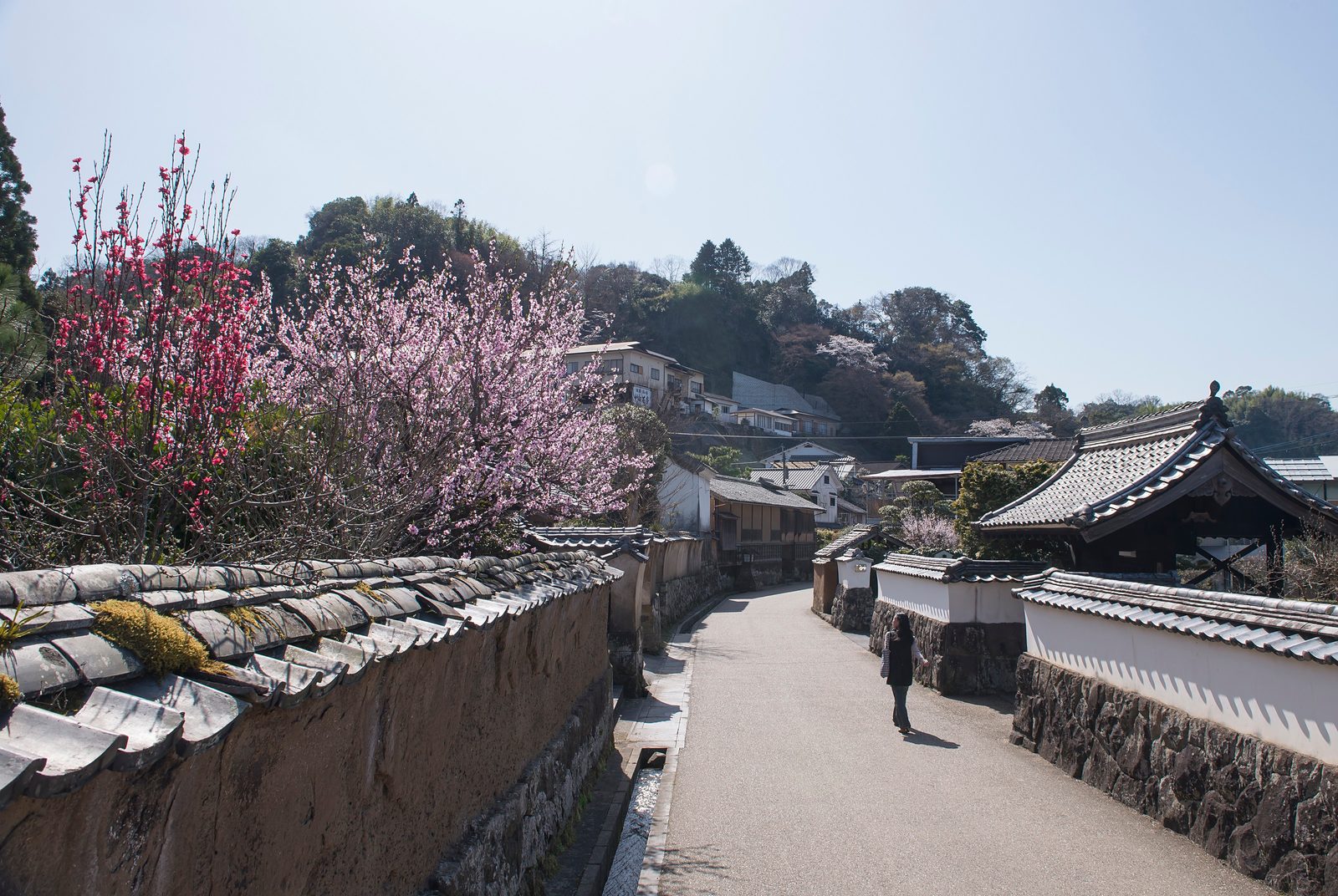
Taketa sits in the hills of inland Oita, a small castle town that grew up at the foot of a fortress on a long hill. The hill is Oka Castle, or rather Oka Castle Ruins, and what stands there now is stonework rather than keeps and towers. Below it, the old samurai quarter keeps its earthen walls capped with tiles, and the whole place can be walked at an easy pace between breakfast and the last light of the afternoon.
The lane through Tonomachi, where the old samurai residences stand behind clay walls roofed with tile.
This is a planning piece: how to get in from Oita, what the castle and the town museum charge, when their gates close, and what to eat if you want the one dish Taketa is known for. If you decide the town deserves an evening rather than a dash back to the coast, compare places to stay in Taketa before you set out.
Getting from Oita to the castle gate
The approach is simple and slow. From JR Oita Station, the train to JR Bungo-Taketa Station takes sixty to seventy minutes, long enough to settle in and let the city thin out behind you. Check current transport schedules before you leave Oita, and note when the last service back departs.
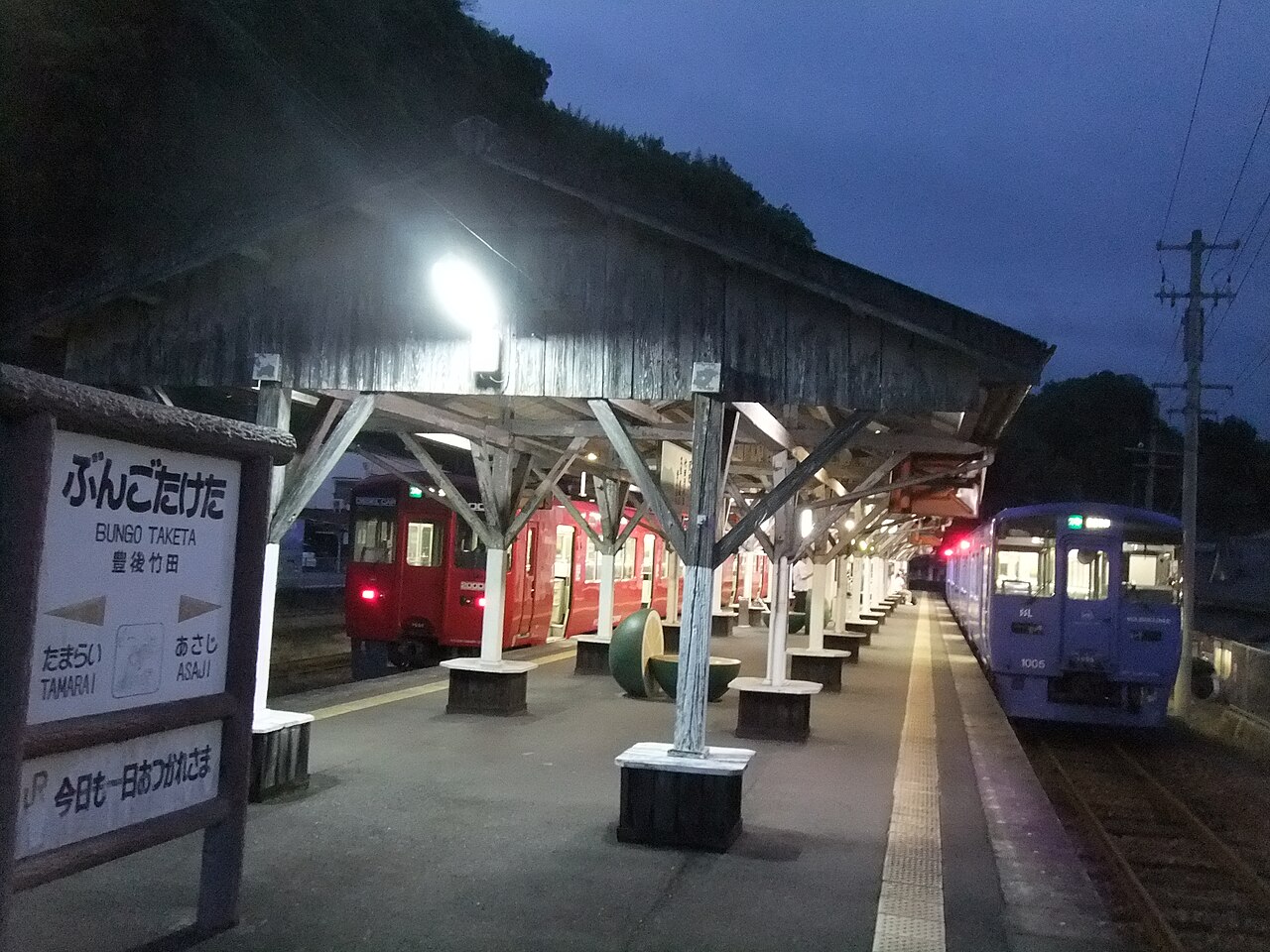
The platform at Bungo-Taketa toward evening, with a local service waiting to leave.
From the station, the castle ruins are about two kilometers away. On foot it is thirty to forty minutes, uphill at the end. A taxi covers the same ground in about five minutes. The taxi fare is about a thousand yen at the time of writing, which makes it a reasonable choice for the uphill leg if you plan to walk back down through the town afterward.
Walking the ruins: admission and hours
Oka Castle is a ticketed site, and the figures here are for individual visitors, with group rates noted alongside. Admission for visitors of high school age and older is three hundred yen, and groups of twenty or more pay two hundred yen a head. Children of elementary and junior high school age pay one hundred and fifty yen, or one hundred yen in a group of twenty or more.
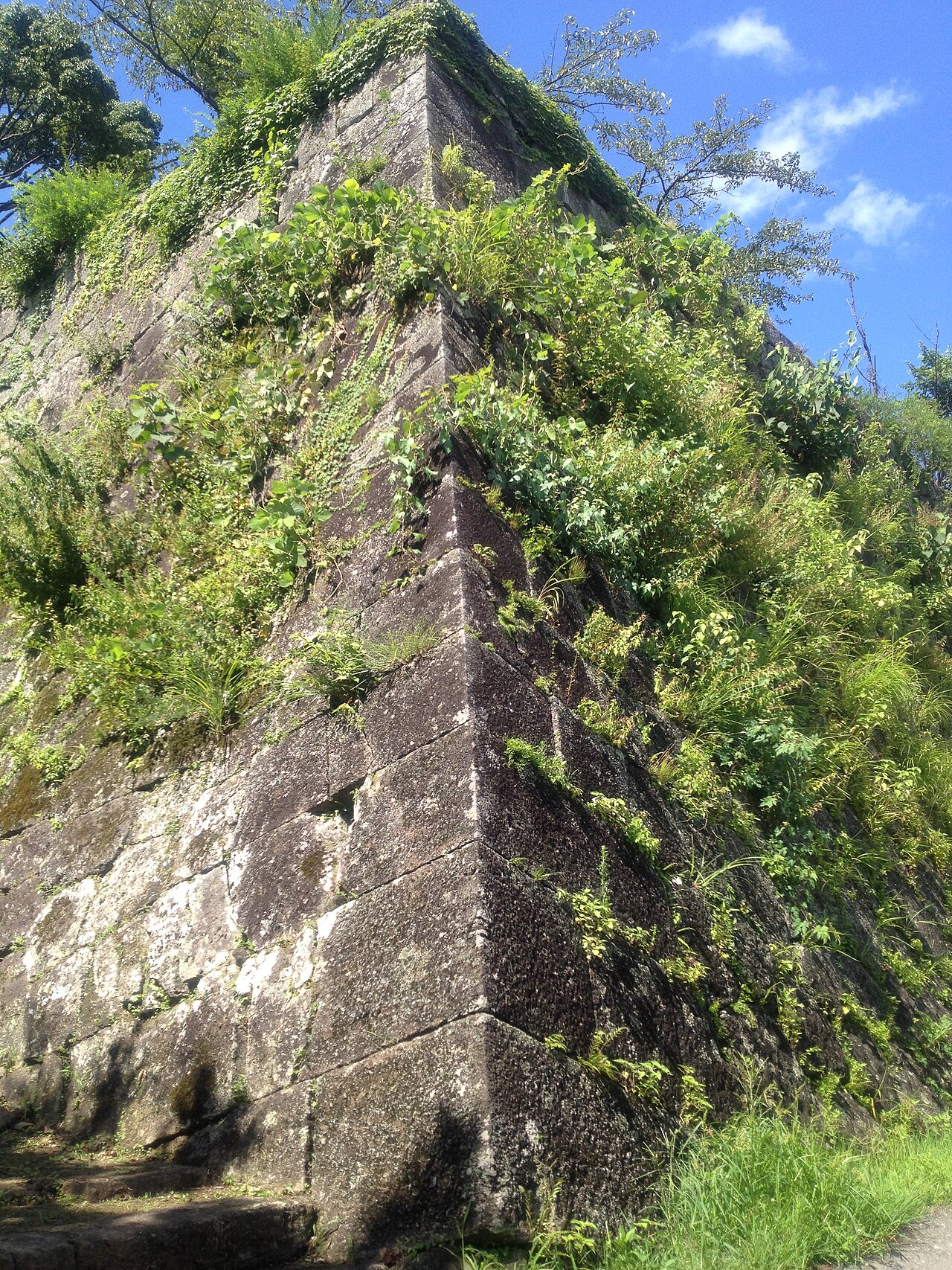
The high stonework at the corner of a turret base, ivy and grass creeping over the blocks.
The reception desk keeps hours from nine in the morning to five in the afternoon, so plan to be through the gate well before five if you want unhurried time among the walls. The castle grounds are closed over the New Year break, from the last day of December through the third of January.
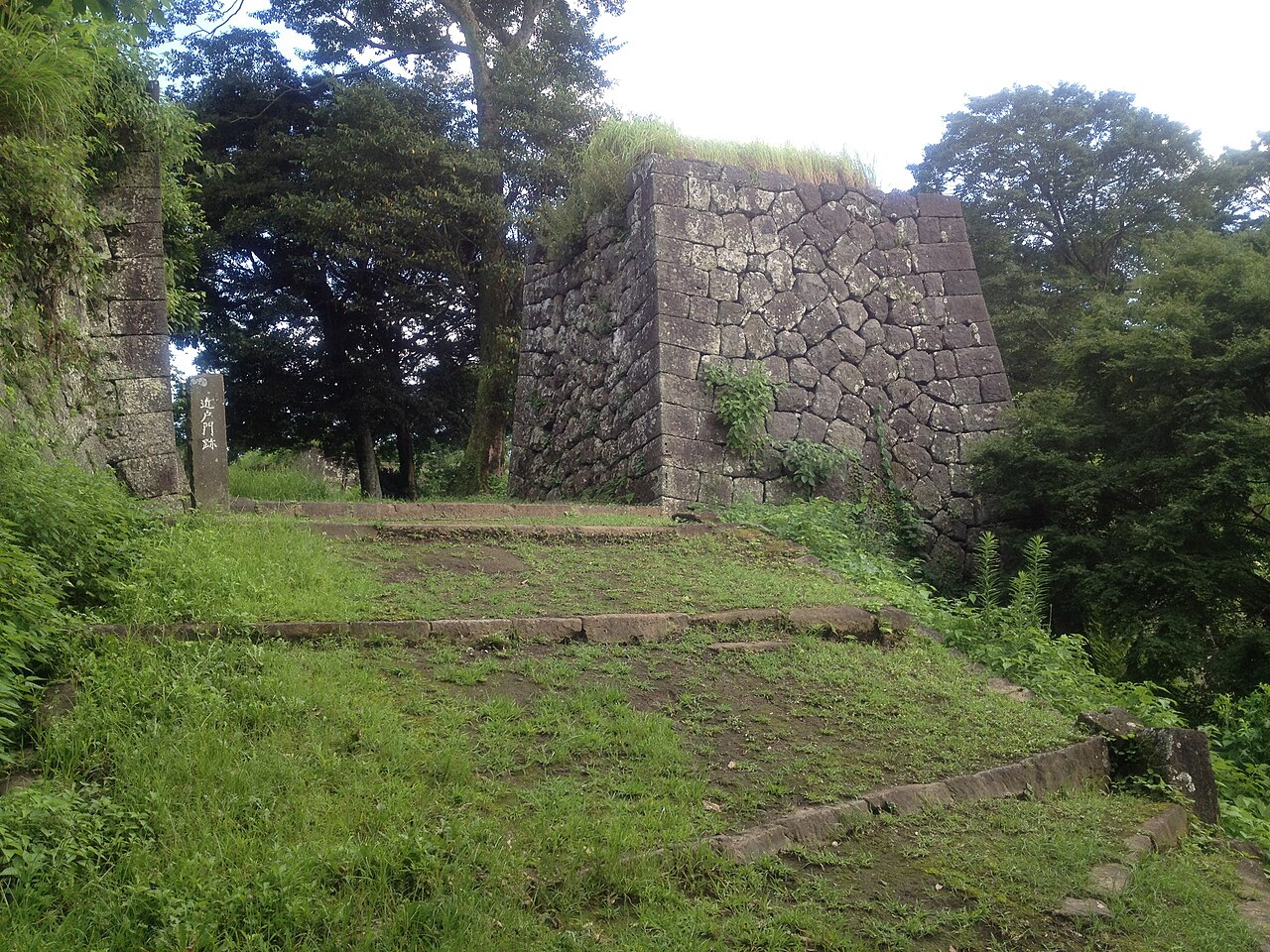
Stone steps and walls at one of the castle's old gate sites.
| Oka Castle | Detail |
|---|---|
| Admission (high school and older) | 300 yen; 200 yen for groups of 20 or more |
| Admission (elementary and junior high) | 150 yen; 100 yen for groups of 20 or more |
| Reception hours | 9:00 to 17:00 |
| Closed | December 31 to January 3 |
Where to stay
Places to stay near Taketa, Oita →
Disclosure: This post may contain affiliate links. If you book through them, we may earn a commission at no extra cost to you.
What a Meiji-era gazetteer saw
A Meiji-era gazetteer places the castle site to the southeast of the town and notes that the hill was likened to a crouching ox, which gave the fortress its other name, Gagyu Castle; the same source calls it a stronghold once held to be without equal in the land. Of the castle itself, the gazetteer records that the buildings were already gone, leaving only the foundation stones of the walls among wild grass and cold mist, a ruin that recalled the old days by what was missing. On the former keep base, the gazetteer notes a small shrine to Sugawara no Michizane, which the Nakagawa lords are said to have maintained as the castle's guardian from the time they entered Bungo, and it adds that the spot was still called Tenjinyama.
In the same account, the bell-tower site is described as the place to stand for the view, with the whole town below and the peaks of Sobo and Kutami gathered into a single sweep.
Down at the western edge of town, the gazetteer places Ganjoin, a temple of the Kogi branch of Shingon Buddhism, partway up Hachimanyama; it records that the temple moved there after the Meiji-era order separating Shinto and Buddhism, leaving the grounds of the old Atago shrine for the former site of Daishoin. Within its grounds stands the Aizendo, a hall said to have been raised in the sixteen-thirties by the Nakagawa lord of the day, plain unpainted wood on the outside and a riot of color within, a contrast the gazetteer says startled those who stepped inside.
Down in the town: the museum, the passport and a dish of heads
Taketa's sights below the castle are compact, and two of them come with fixed times and charges. The Taki Rentaro Memorial Museum is open from nine to five, with last admission at half past four. It closes for the New Year period, from the twenty-ninth of December to the third of January.
There is also a Taketa Machiaruki Jokamachi Passport, its name roughly a castle-town walking passport, priced at eight hundred yen for high school students and older. The version for elementary and junior high school students is five hundred yen. What the pass includes is best confirmed in town; the charges are listed below.
Taketa's signature dish is atama ryori, literally head cuisine, which came about as a way to use a precious fish to the last scrap: not just the flesh but the gills, the jaw and the innards that would normally be thrown away. The method is plain: the flesh, jaw, pectoral fins and innards are boiled in salted water, chilled in cold water, and arranged together on a large platter. It was a dish for celebrations, and because cooking the fish once made it keep longer, it was also set before guests who called over the New Year.
Oyado Ittiku is an inn a two-minute walk from Bungo-Taketa Station. Its restaurant serves the atama ryori meal from thirty-five hundred yen per person at lunch, before tax. At dinner the same meal starts at five thousand yen per person, before tax. Both sittings need to be arranged ahead of time. The restaurant is open from eleven to two.
| In the town | Detail |
|---|---|
| Museum hours | 9:00 to 17:00, admission until 16:30 |
| Museum closed | December 29 to January 3 |
| Jokamachi Passport (high school and older) | 800 yen |
| Jokamachi Passport (elementary and junior high) | 500 yen |
| Atama ryori at Oyado Ittiku, lunch | from 3,500 yen per person, excluding tax; arrange in advance |
| Atama ryori at Oyado Ittiku, dinner | from 5,000 yen per person, excluding tax; arrange in advance |
| Oyado Ittiku restaurant | 11:00 to 14:00 |
Putting the day together
- Take a morning train from Oita to Bungo-Taketa, allowing sixty to seventy minutes for the ride.
- Go up to the castle ruins by taxi, a ride of about five minutes, and walk the walls while the light is still low.
- Come back down on foot through the samurai lanes of Tonomachi.
- If you arranged it ahead, eat atama ryori at Oyado Ittiku within its eleven-to-two window.
- Spend the afternoon at the Taki Rentaro Memorial Museum, remembering that admission ends at half past four.
- Catch an evening service back to Oita, or stay the night.
Hours and admission fees change with the season and the year, so check official information before visiting, and look at the current timetable for the last service back to Oita before you commit to a long dinner. If the dinner sitting is the plan, compare places to stay in Taketa and leave the ride back to Oita for the morning.