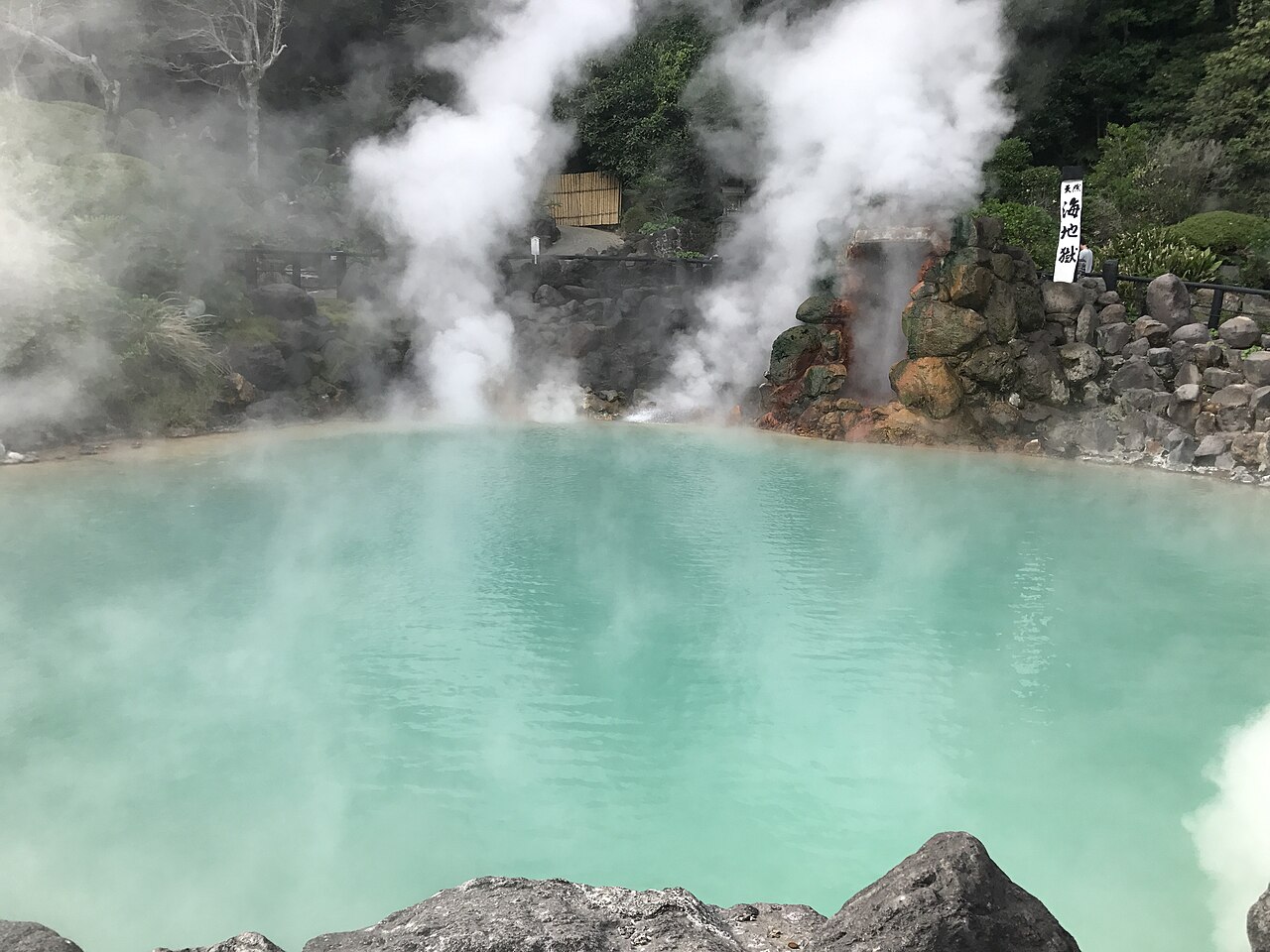
Beppu is known for the sheer volume of hot water beneath it, but the quarter that repays a slow visit is Kannawa, on the slope above the town. Here the ground gives off vapour through vents in back lanes and garden walls, and the local habit is not to photograph it but to use it: to bathe in it, and to cook lunch over it. A guide to the hot springs of Japan published in the early part of the last century gives this valley many pages, and reading its descriptions against the present-day lanes is one of the quieter pleasures of Oita.
A Valley That Boils
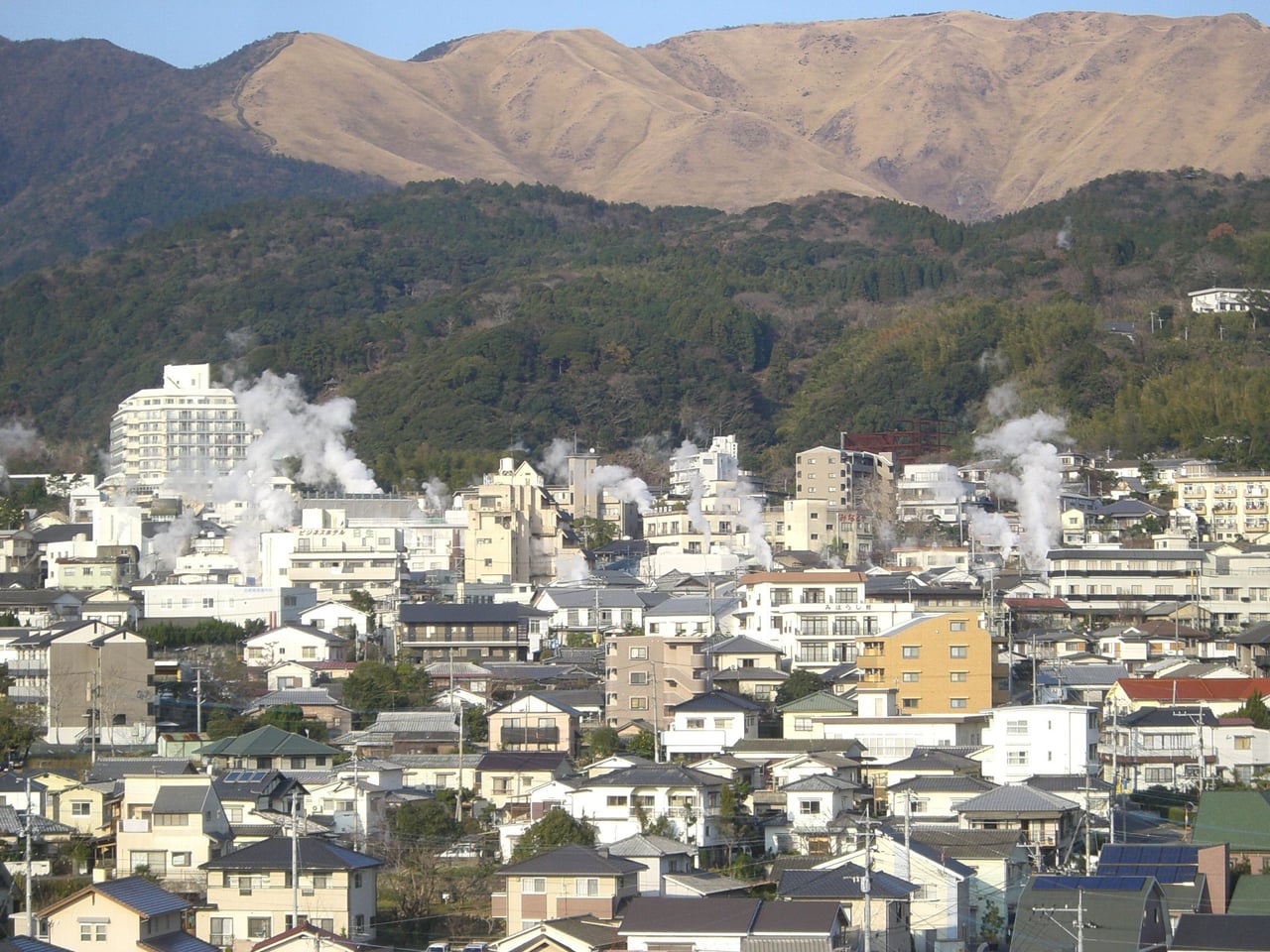
The old guide sets the scene in a line that still holds: Beppu lies dry and high and clear, with blue water in front of it and green mountains at its back. It records that the ground here gives off vapour so vigorously that local people call the vents jigoku, hells — a name that has stayed with the coloured pools ever since. The area over which the water rises, the guide says, runs seven ri square. The German physician Baelz, it reports, judged Beppu a rare hot-spring place that combined the scenery of mountain and sea, and called it Atami made large.
Cooking in the Ground
The most direct way to meet the steam is to cook in it. Jigoku Mushi Kobo Kannawa, the steaming kitchen run by the city, opens from ten in the morning until seven in the evening, with last orders at six in the evening. The idea is simple: food goes down into a vent, and the ground does the rest. Use of the small pot costs four hundred yen for fifteen minutes or less. The large pot costs six hundred yen for fifteen minutes or less. If what you are cooking wants longer, the small pot runs on at two hundred yen for each further ten minutes or part of one. The large pot runs on at three hundred yen for each further ten minutes or part of one. The old guide notes that steam bathing of this kind — sitting in a chamber filled with vapour rising straight out of the ground — was already regarded then as a thoroughly Japanese way of taking the waters.
The Coloured Pools
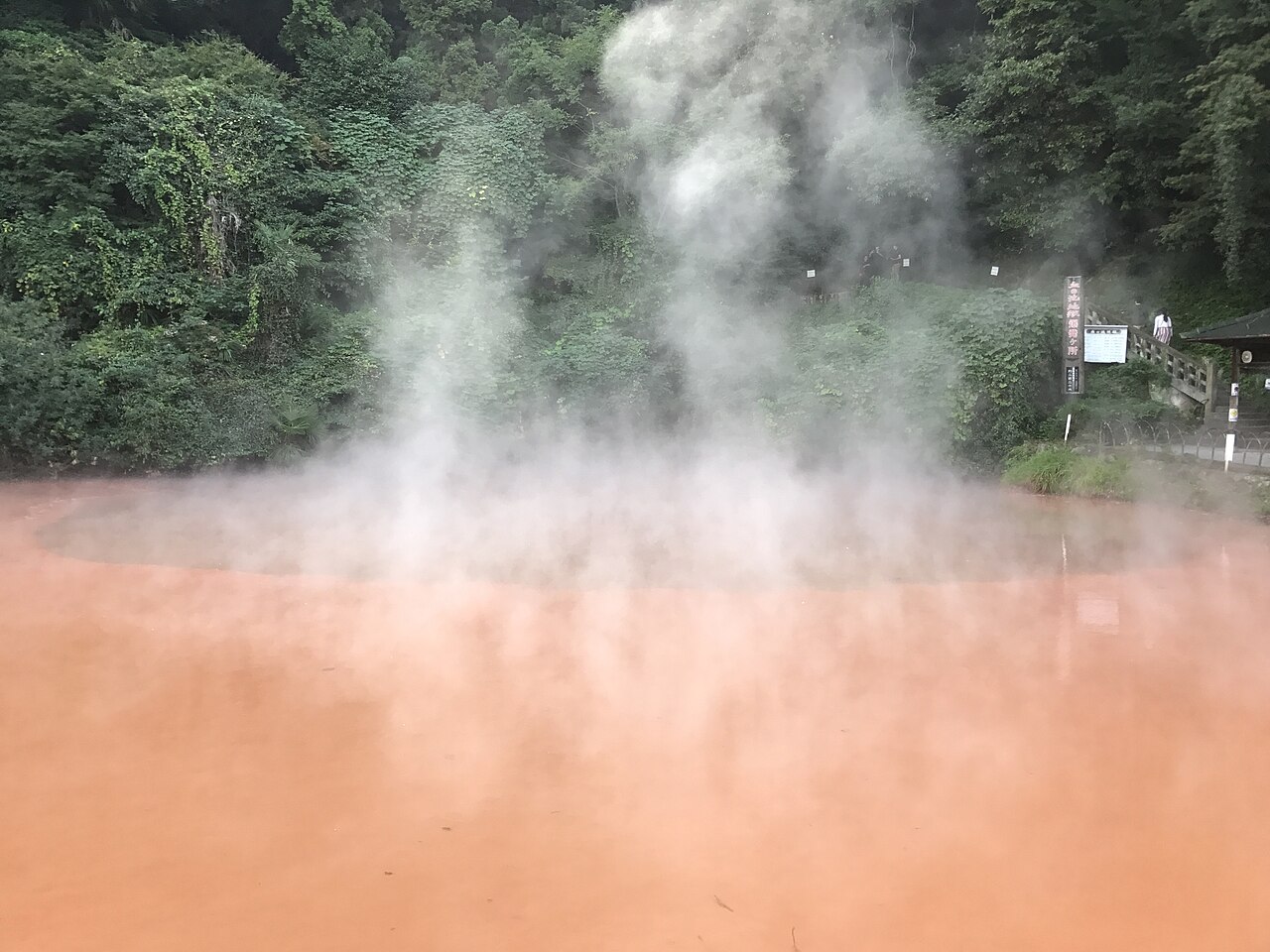
The vents are not all alike, and the old guide is good on their differences. Of one pool it records that the hot water carries a hydroxide compound and so takes on a vermilion cast. Konya Jigoku, the dyer's hell, it places just below Myoban, its hot mud turning over endlessly in indigo ripples. The guide also lays out the walking circuit that the bathers of that era followed: out from the town through Shin-Beppu, past Bozu Jigoku and Umi Jigoku to Kannawa, on to Shibaseki and finally to the blood pond.
Getting There Without a Car
Kannawa sits above the town, and the whole approach works on public transport. From the west exit of JR Beppu Station the ride to the Kannawa stop takes about twenty minutes. The adult single fare for that ride is three hundred and thirty yen, so check official information before visiting. From the east exit the ride to the Kannawa Onsen stop takes about twenty-five minutes. From that stop it is roughly a four-minute walk to the steaming kitchen — the short last stretch that guides so often leave out. If you carry on up the hill to Myoban, it is about a three-minute walk from the Jizoyu-mae stop to Myoban Yunosato.
Where to stay
Places to stay near Kannawa Onsen →
Disclosure: This post may contain affiliate links. If you book through them, we may earn a commission at no extra cost to you.
A Bath in the Old Town
Down in the old centre, Takegawara Onsen is the town's municipal bathhouse, and it is still inexpensive: three hundred yen for adults from junior high school age upward. Children pay one hundred yen. Its speciality is the sand bath, where bathers are covered over in hot sand; that costs one thousand five hundred yen. The old guide describes an earlier and rougher version of the same idea — a famous sand bath dug straight into the shore at low tide, a temporary hot spring made of nothing but sand and the water beneath it.
What a Stay Cost Then
The guide is unusually frank about money, and its figures make a fine period photograph. Lodging with three meals came in six grades: five yen for first class, three yen for second, two yen and fifty sen for third, one yen and fifty sen for fourth, one yen and twenty sen for fifth, and one yen for sixth. Travellers who did not care to share could pay for four persons and have an eight-mat room to themselves, for three persons a six-mat room, and for two a room of four and a half mats. The meals that came with the cheaper plans were plain — bean-paste soup and pickles in the morning, one fish dish and pickles at midday, a plate of vegetables and pickles in the evening — with about a yen more buying something closer to a middle-class household's table. There were, the guide says, more than a hundred and eighty inns of every grade. The town hall kept a dedicated hot-spring section, and in front of the railway stop stood an office of the inn guild where three or four guides were always on duty, advising newcomers without charge on which spring suited which ailment and on the position, grade and fittings of the inns, arranging a room to suit, and having luggage carried up to the door.
Make It a Quiet Day
The beginnings of Beppu's water are not settled in the written record, but the guide gathers the old notices and concludes that the springs are very old indeed: the Iyo no Kuni Fudoki, it notes, tells of Onamuchi no Mikoto bringing water from Hayami through a wooden conduit to revive Sukunabikona. The same book praises the sea breeze of a Beppu summer in terms it admits are beyond words, and holds that the air of the place carries the minerals of the springs, so that the cure works from the inside as well as from without. Modern medicine will make of that what it likes; the sensation of walking a lane where every wall breathes warm vapour is real enough.
If you would rather have the valley arranged for you, a guided day around Beppu and its hot springs can take in the pools and the bathhouses in one loop. And if the pairing of warm water with an old guidebook appeals, Iwai Onsen behind Tottori's sea rocks runs on the same unhurried logic on the far side of the country.