Usuki sits where its river meets the sea on Oita's east coast: a small port with a hillside of carved Buddhas a short ride inland, and a former castle town whose lanes are still walled by temple gates and white plaster. It is a place that rewards a slow day far more than a hurried stop.
This guide sketches one unhurried day in Usuki — the stone Buddhas first, then the old town — pairing the current fares, admission and times from the site's own visitor pages with scenes from the Meiji-era gazetteer 新撰名勝地誌 (九州の巻), which described the town when steamers still called at its pier.
A port town at the mouth of the river
The gazetteer introduces Usuki as one of the notable ports of Bungo's east coast, set at the mouth of the Usuki River with its harbor opening toward the southeast. Before the Restoration it was the castle town of the Inaba family, busy with trade and known, the writer adds, for its thrifty and diligent temper.
The same pages explain why the sea mattered so much here. The east coast of the old province piles mountain upon mountain, and land routes between its towns were poor, so the towns kept in touch by water; a proper pier stood at Usuki's harbor front, and steamers from Osaka and the Seto Inland Sea called constantly.
North of the town the gazetteer praises Shimonoe, a harbor of deep, calm water suited to larger ships, with an admired outlook over the islets of Sankojima and Kuroshima. It is a useful reminder that Usuki once faced the water at least as much as it faced the land.
Reaching the stone Buddhas from the railhead
The carved Buddhas sit a short way inland from the town, and the trip out is easy to plan. The choices below are the current ones given on the visitor pages for the site, from the local buses to the expressway interchanges, so you can pick whichever suits the shape of your day.
- By the local buses: services bound for Oita Kenchomae or for Mie leave from Usuki's railhead, and the ride to the Usuki Sekibutsu stop takes about twenty minutes and costs two hundred yen one way.
- By free rental bicycle: about forty minutes of pedaling from the railhead.
- By car: about five minutes from the Usuki interchange, about fifteen minutes from the middle of town or from Usuki Port, about thirty minutes from the Oita interchange, and about forty minutes from the Beppu interchange, the last two via the Higashi-Kyushu Expressway.
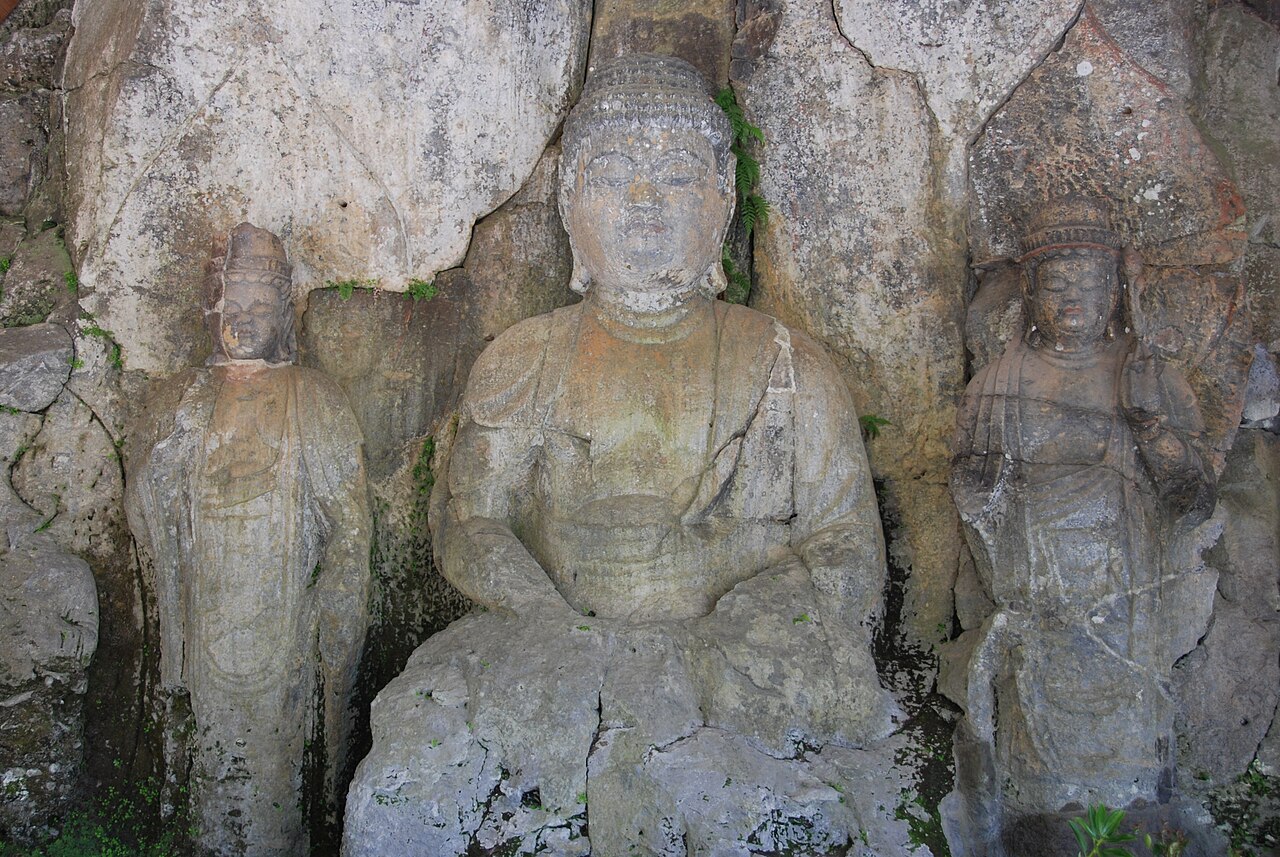
Rows of seated figures, cut directly into the soft rock of the hillside.
What a visit costs, and the daily window
Admission is charged at the entrance, and the grounds keep the same rhythm through the year, which makes the visit easy to slot into a morning or an afternoon. The current rates and times, from the site's visitor pages, are these:
- Adults, meaning anyone of high-school age and above: five hundred and fifty yen.
- Elementary and junior-high children: two hundred and seventy yen.
- Groups of thirty or more: four hundred and forty yen for each adult.
- The site welcomes visitors every day of the year, from nine in the morning until five in the afternoon, with the last entry at half past four.
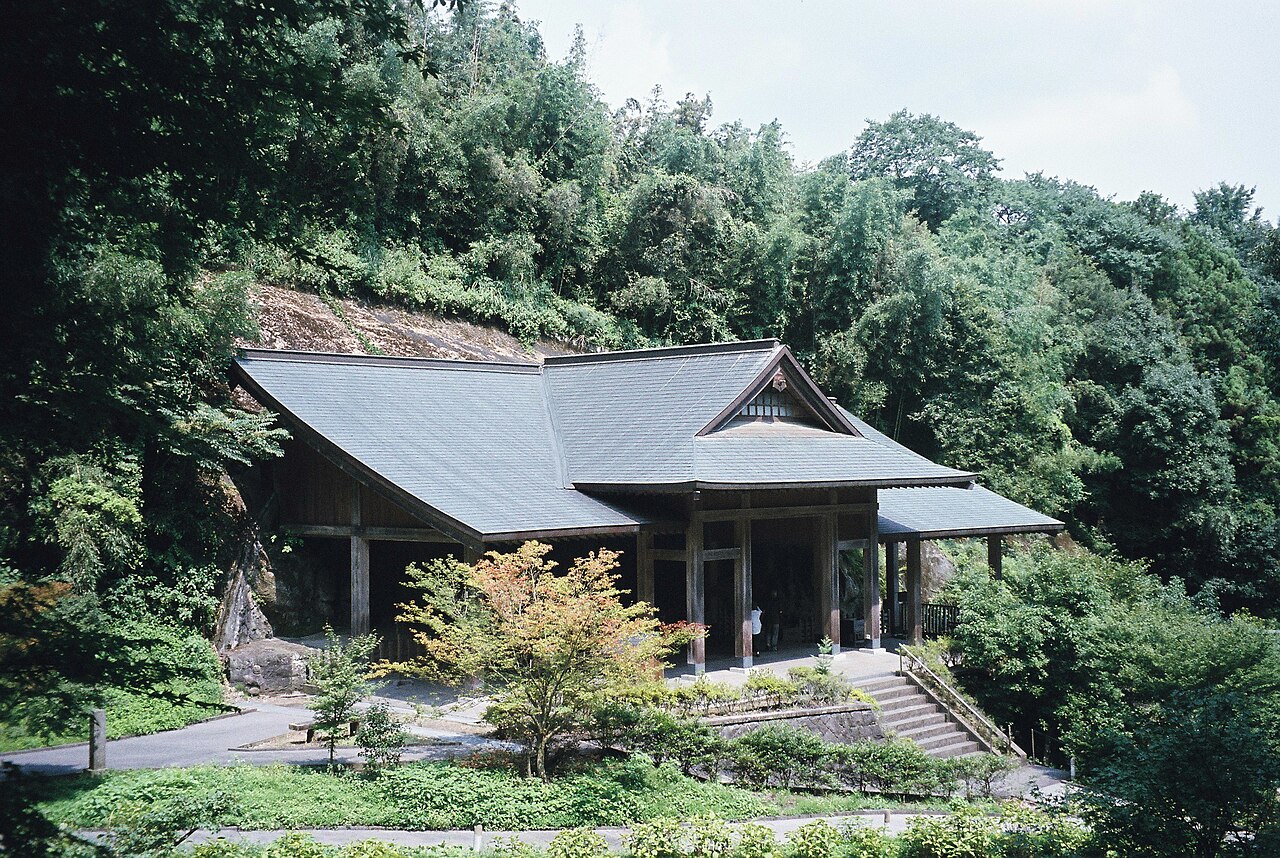
A wooden shelter roof stands over one of the carved groups.
If you would rather have the day arranged for you, browse day tours around Usuki and Oita and compare what is on offer before you travel.
Compare options
See partner pricing and availability →
Disclosure: This post may contain affiliate links. If you book through them, we may earn a commission at no extra cost to you.
The shrine that came down to Nioza
Back in town, the lanes of Nioza stay with you longest: a paved slope walled on both sides by temple gates and old plaster, quiet underfoot even at midday. The district's story, as the gazetteer tells it, begins with the shrine that first stood on this ground.
Yasaka Shrine, once called the Gion shrine, is the town's tutelary shrine. In the late eleventh century, the record says, its keeper of the Tsurumine family carried the deity down to Bungo and enshrined it here at Nioza, long before the castle or the plastered lanes existed.
At the close of the sixteenth century the castle lord Ota Shigemasa moved the shrine to its present site and rebuilt the halls on a grand scale. Repeated fires of war, the gazetteer notes, kept it from ever quite regaining its old appearance.
Each year, from the seventh to the fifteenth day of the sixth month of the old calendar, the deity was carried in procession to the Gion grounds at Kaizoe — a festival the writer counts among the celebrated ones of this coast.
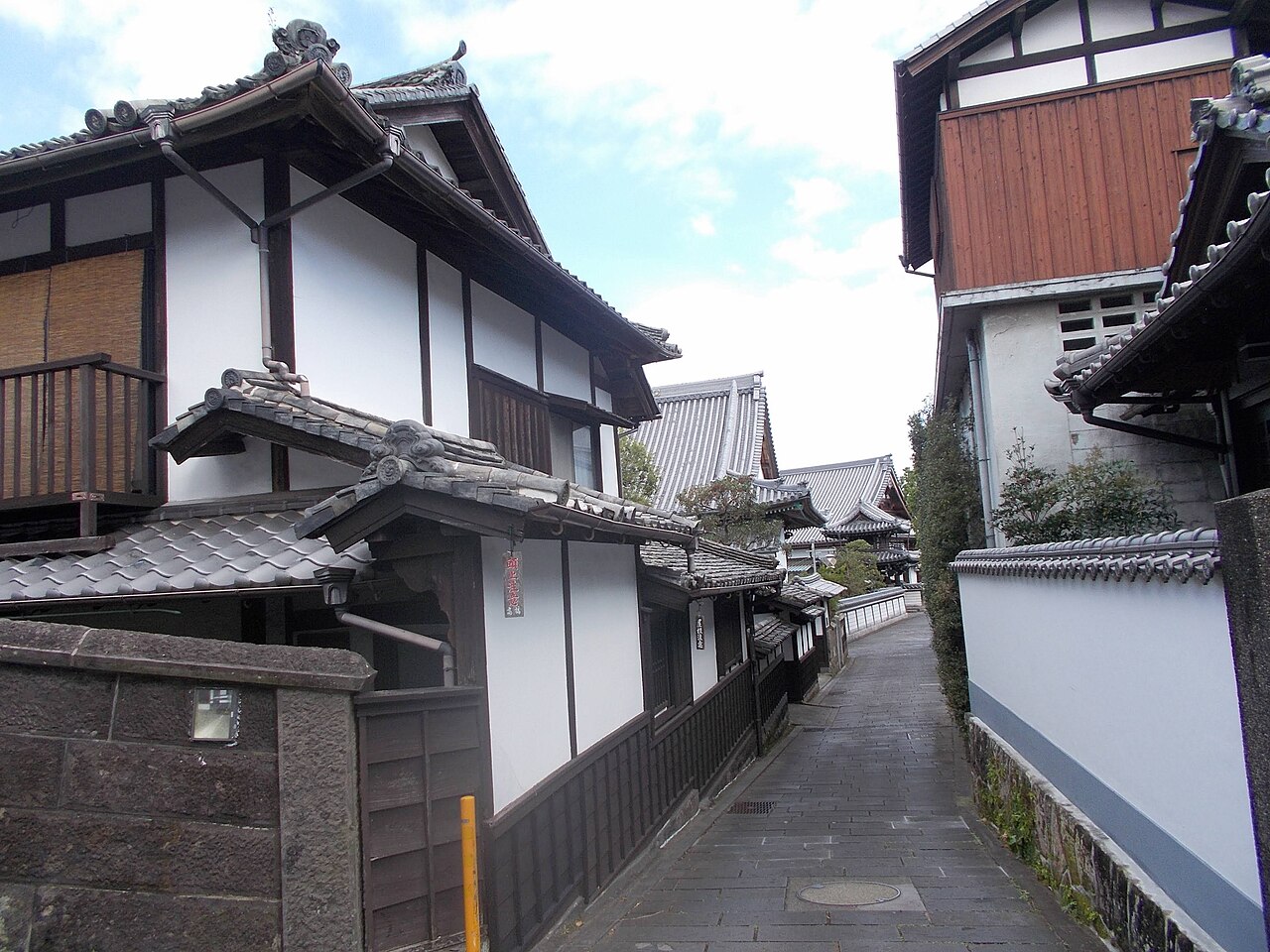
The paved slope of Nioza, walled on both sides by temples and plaster.
Zen temples on the high ground
A short walk southwest of the shrine stands Gekkeiji, a Zen temple of the Myoshinji school, on ground the gazetteer describes as high, dry and blessed with fine scenery, deeply secluded in feel. It began, the record says, as Gekkei-in in Mino, built by Inaba Ittetsu himself.
When Ittetsu's son Sadamichi was moved to Usuki, the temple came with him, and it served for generations as the mortuary temple of the Inaba house. Next door stands Tafukuji, of the same school, founded in the early seventeenth century by Tokuun-in, the wife of the lord Kazumichi.
Tafukuji's second abbot, the master Sesso, planted a pine there that came to carry his name, and the gazetteer judges the temple's quiet to be no less than its neighbor's. Sesso himself was a monk of wide learning, said to have preached before Emperor Go-Mizunoo and to have received an honorific title by imperial decree after his passing.
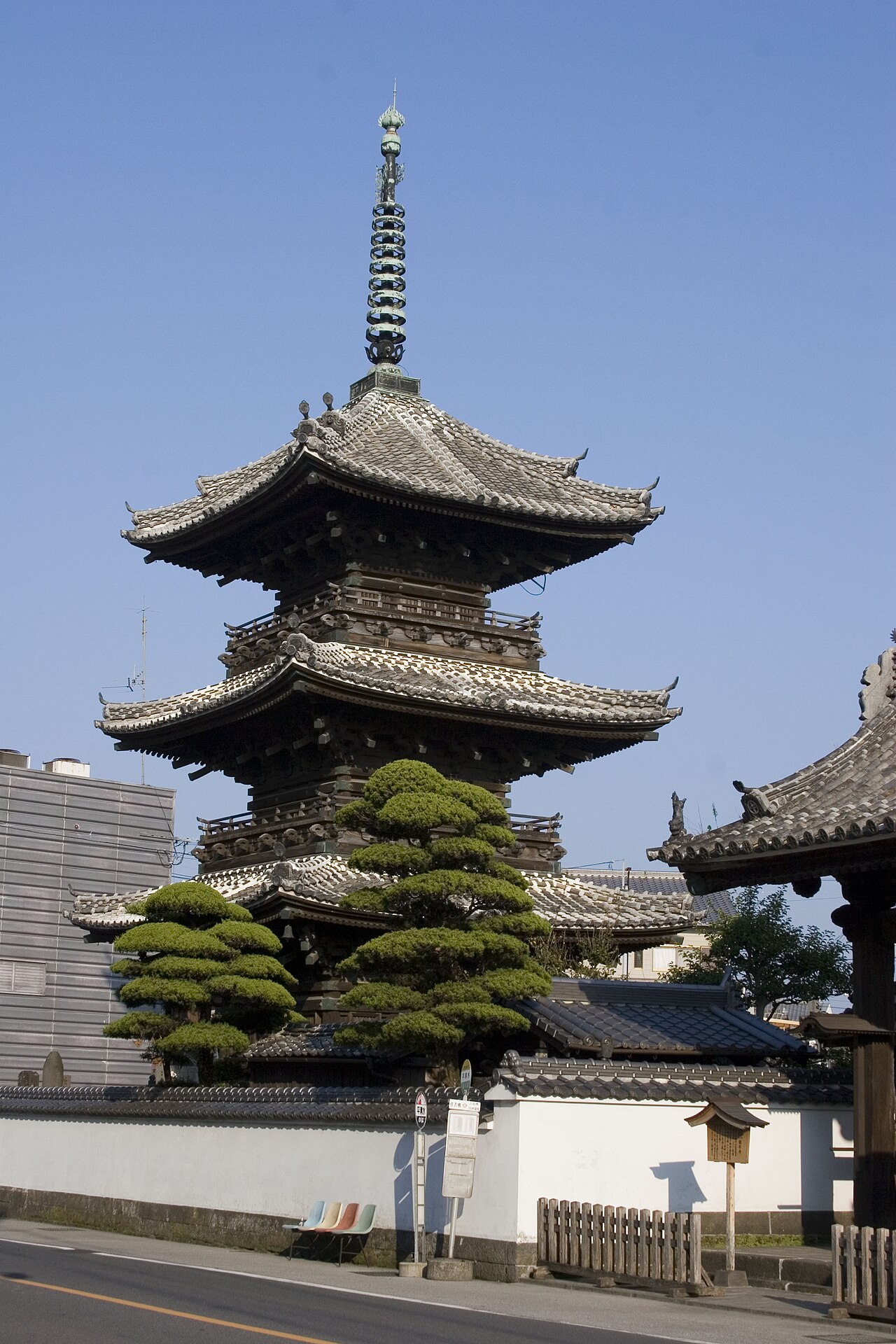
The wooden three-storied pagoda at Ryugenji, another of the old town's temples.
By the river, and a view over the roofs
On the bank of the Usuki River stands Ohashiji, a Pure Land temple of the Seizan branch, shaded by old trees and deeply quiet in the gazetteer's telling. Its beginnings lie, the record says, in the middle of the sixteenth century, in a small story of devotion.
The priest Yuhan was then staying on the isle of Ubushima, and Otomo Sorin, drawn to his teaching, raised a temple for him on the island itself. Only later was it brought across to its present ground beside the river.
Southwest of it, on a rise called Fukura, a small shrine to Tenjin looks out where the view opens wide on every side; poets and literary men, the gazetteer says, climbed up in every season. In the park at the heart of town, Inaba Shrine honors the old lord Ittetsu from broad grounds with a fine outlook of their own.
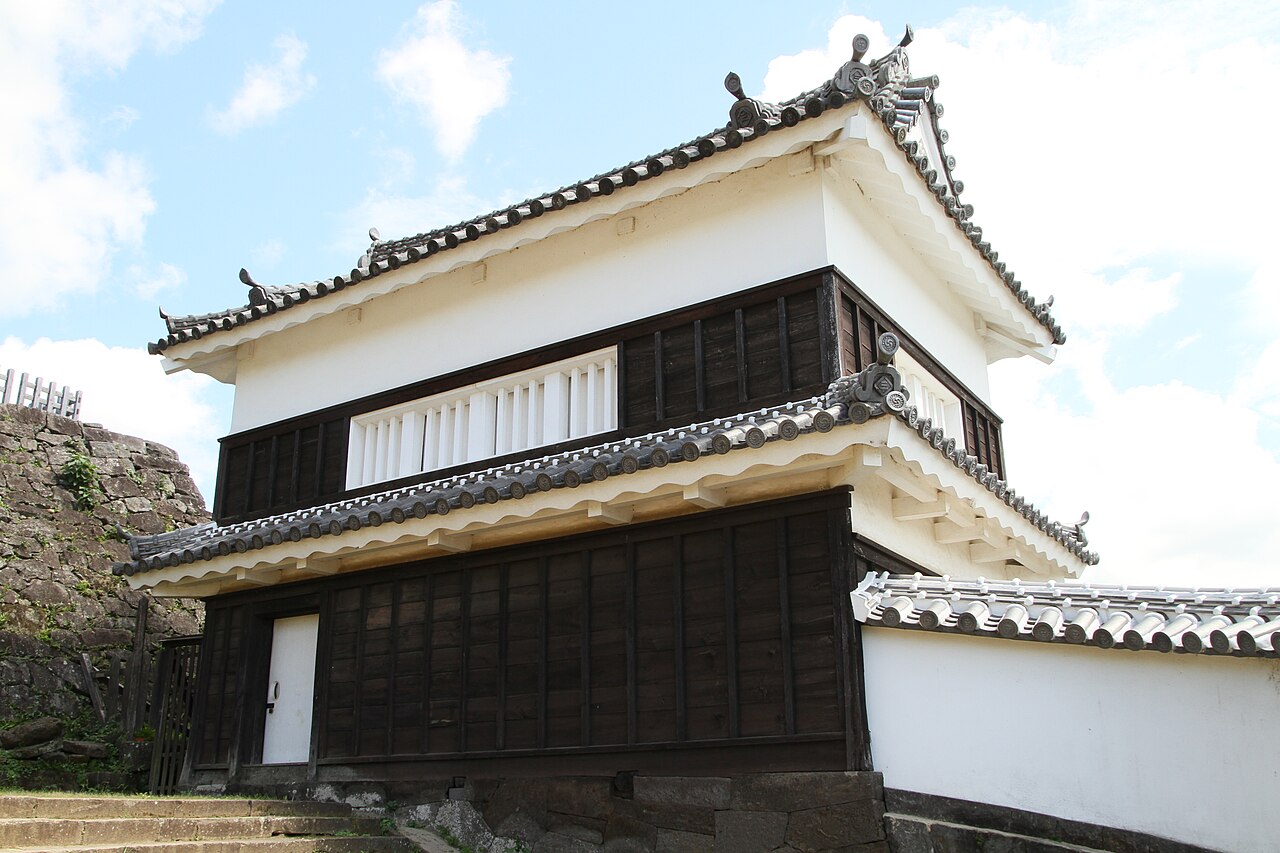
A whitewashed turret of the former castle, still standing on its stone ramparts.
A hamlet across the water that kept to itself
The gazetteer keeps one curiosity for the far bank. From the landing at Shimonohana, in the old Tojinmachi quarter, a ferry carried you across the river to Tsuru, a hamlet of a hundred-odd households facing the town over the water.
Its people, the record claims, held themselves to be descendants of the Heike, did not marry outside their village, and kept a manner of speech and a set of customs entirely their own. Whether or not the account was ever fully fair to them, it shows how many worlds one small river mouth could hold.
Give Usuki a full day rather than an afternoon. See the carved Buddhas early, eat slowly, and keep the slope at Nioza for late afternoon, when the plaster walls warm in the low light and the lanes empty out; the town is at its best exactly then.