Usa, in Oita, rewards a slow day on foot. At Usa Jingu a bridge roofed in cypress bark like a shrine building waits at the end of a straight road, and in Yotsukaichi two betsuin of different sects stand side by side. Further out, five hundred stone rakan at Toko-ji wear faces of joy, anger, sorrow and pleasure, and the valley town of Innai keeps seventy-five stone bridges, sixty-four of them arches. The day runs from torii to bridge to temple steps, and ends with yuzu goods and loach dishes.
The Vermilion Torii and the Kure-bashi Bridge at Usa Jingu
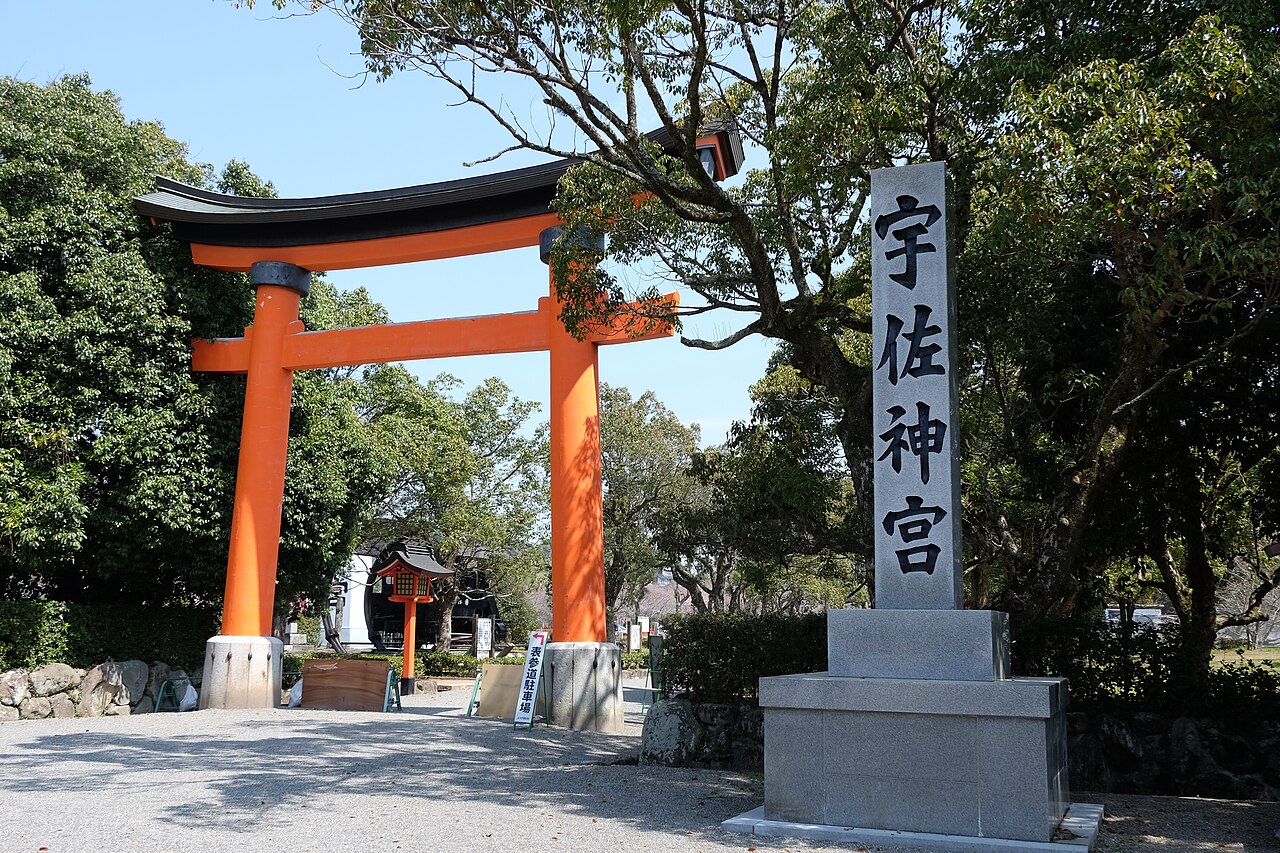
Usa Jingu begins with the Usa torii, a gate form particular to this shrine, standing where the path reaches the upper shrine. Its top beam curves upward, it has no small post beneath the crosspiece, and a black base caps the pillars. The vermilion is meant to keep evil away, and the torii across the grounds follow this style.
Walk on to the Kure-bashi Bridge, roofed in cypress bark like a shrine building and said to go back to before the Kamakura period. The Chokushi Kaido, which envoys from the capital are said to have travelled, runs straight to the front of the bridge, so the roof sits squarely ahead.
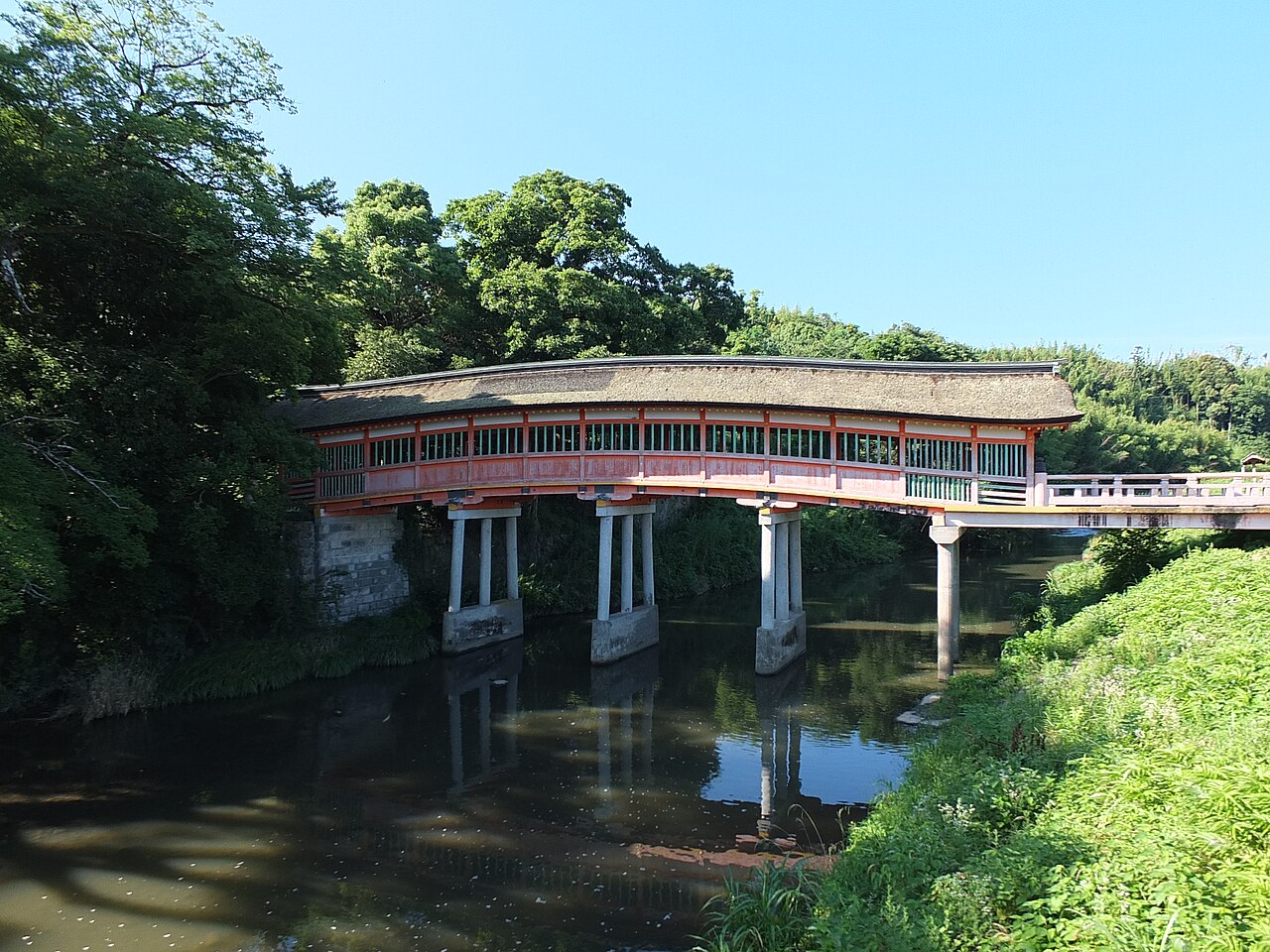
The Okusu, a sacred camphor tree estimated at eight hundred years old, sends its roots up from the ground below the upper shrine. The bridge doors swing wide once in ten years, during the imperial-envoy festival, the one time ordinary visitors may cross. Walk the road first, take in the bridge and the Okusu, then go up to the upper shrine.
The Upper Shrine, the Mikoshi and Old Ties to Buddhism
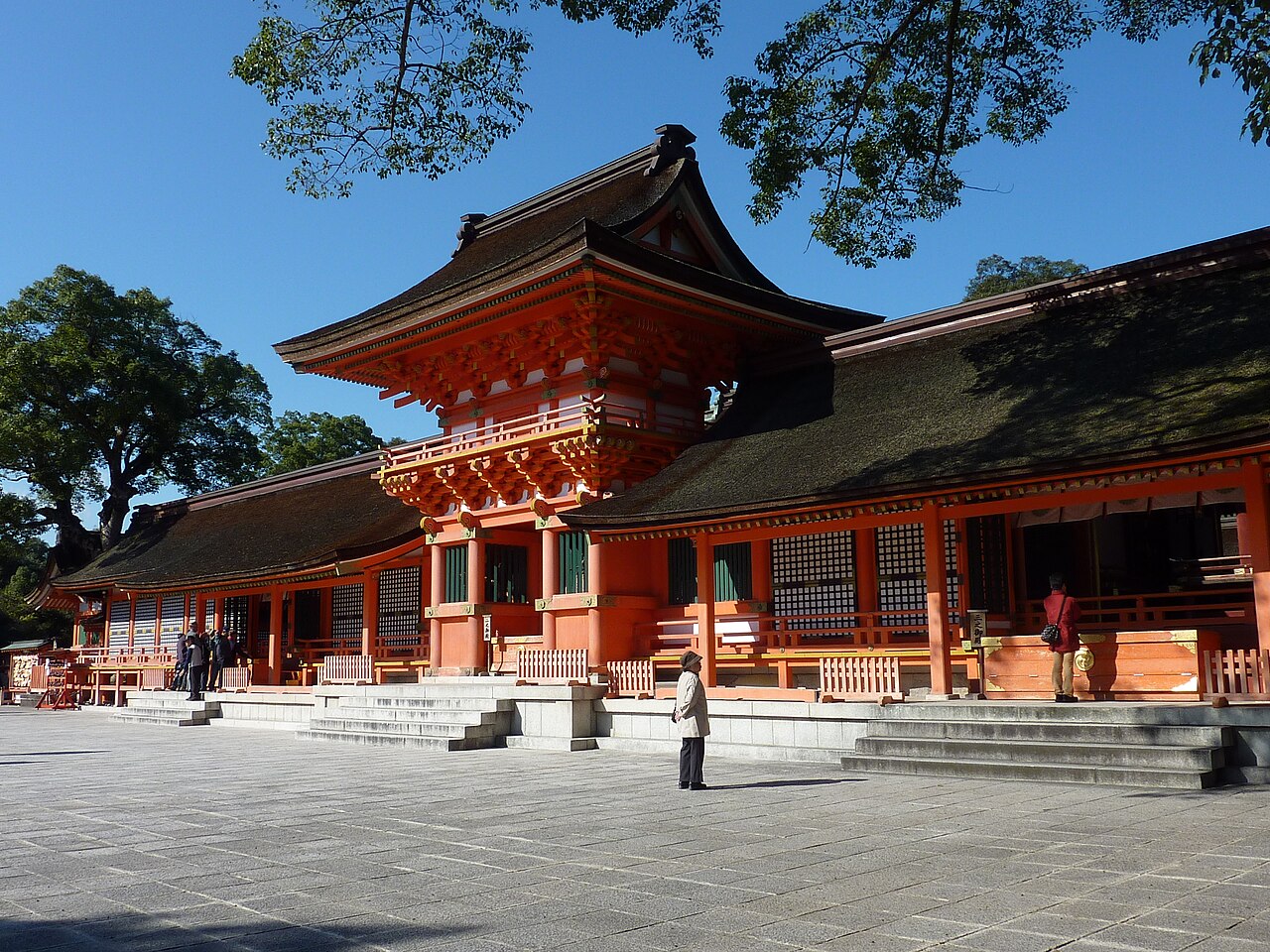
Usa Jingu's upper shrine puts you in front of the main hall, built in the old Hachiman-zukuri style and designated a National Treasure. The hall stands at a shrine said to be one of the birthplaces of the blending of Shinto and Buddhism, which the temple Miroku-ji shared with Usa Jingu until the Meiji era.
The Usa Jingu mikoshi can be seen in the treasure hall, and it comes out for the festival that began here as a memorial to calm the spirits of the Hayato and later spread nationwide. A makeup well nearby is said to be where the puppets for that festival were made up.
Along the Chokushi Kaido, the Kyoshuzuka is said to hold the heads of Hayato brought back in the Nara period, and the Hyakutai-sha, an auxiliary shrine of Usa Jingu, calms their spirits. See the hall and the mikoshi first, then follow the road out to these smaller sites.
Two Betsuin Temples and the Oni Mummy in Yotsukaichi
Yotsukaichi sets you between the East Betsuin and the West Betsuin, the Kyushu Gobo, overseeing temples of their own sects across Kyushu. Different sects side by side like this is a pairing seldom found elsewhere in Japan. The East Betsuin stands where Shinsho-ji stood before the shogunate confiscated it and handed it to Higashi Honganji.
A little south, one hundred and eight steps lead up to Jippozan Daijoin, where a mummified oni rests in the zushi cabinet at the right-hand end. It has sunken eyes and a mouth left ajar, and sits with hands clasped and knees bent. The figure is said to have been bought by a parishioner and placed in the temple, which is how it came to sit above those steps.
Take the two halls first and finish with the steps. Those who want to linger where a confiscated Shinsho-ji became a Higashi Honganji betsuin beside a hall of another sect can look for places to stay in Usa before the rakan and the stone bridges.
Five Hundred Rakan, Cave Tombs and a Hill Castle Site
Toko-ji lets you walk among five hundred stone rakan carved with faces of joy, anger, sorrow and pleasure. A head priest, wanting to save farmers suffering from drought, commissioned a stonemason, and the five hundred and twenty-one statues before you took twenty-four years to carve. Behind the main hall are the sixteen rakan and a Buddha footprint stone, cultural properties of Usa City along with the five hundred.
The Yotsukaichi cave tombs, eighty or more at Ikkide and seventy or more at Kagayama, show as holes dug straight into a hillside. One tomb at Ikkide and two at Kagayama carry patterns painted in red.
Excavation found six buildings on a hill castle site, a lookout tower among them, on ground cut flat where the outlook is wide. Fenced maze-like passages ran around them behind an earthen rampart and a moat, and a literary monument in the park recalls a novelist who wrote of this hill. Start with the rakan for detail and end on the hill for the outlook.
Innai Stone Bridges, Fukuganji and a Machu Picchu View
Innai keeps seventy-five stone bridges in its valley, sixty-four of them arches. The deep, fast-flowing valley needed bridges that would not wash away, stone was quarried in abundance, and local stonemasons knew terraced fields and stone walls, so the arch you cross is valley, quarry and craft in one.
Torii Bridge, a prefecture-designated cultural property, crosses on five arches in a rhythmic line, its thin, long piers earning it the name 'Lady of Stone Bridges'. At Fukuganji in Innai, a small pond recalling the Sanzu River lies before the Emma cave, spanned by the Rakan bridge, a historic site. Its arch ring is built from sixteen pieces of stone, matching the sixteen arhats behind the cave, eight on either side.
From the road through Nishishiiya, terraced fields and a settlement sit against a conical mountain, a view compared to Machu Picchu in Peru and given a viewing platform. In autumn, Asagimadara butterflies visit the Fukuganji precinct. Pick a few arches, Torii Bridge and the Rakan bridge among them, then end at Nishishiiya.
Yuzu, Loach and Sake Around Usa
Usa Jingu's omotesando shopping street sends you off with Usa ame and goods made from local red shrimp and yuzu. The yuzu thread runs on to Michi-no-Eki Innai, which sells produce and processed goods built around the fruit, plus game meat. The yuzu and grapes grow in the hills of Ajimu and Innai.
Ishibashi Chaya, the restaurant there, serves loach dishes alongside Usa fried chicken and chicken tempura, and its gozen set brings the tempura, the fried chicken and dango-jiru together in one sitting. Fujibakama has been planted outside because Asagimadara butterflies prefer its nectar.
A sake brewery in the area has a food and drink space where its sake and snacks can be had, with cocktails made from Oita-grown fruit and limited-edition sake. The menu adds dishes made with the brewery's own miso and red vinegar, and coffee and sweets made with local shops. Buy Usa ame and yuzu goods on the omotesando, eat the gozen set at Ishibashi Chaya, and leave the brewery for last.
Getting to Usa
| Leg | How | Time and estimate |
|---|---|---|
| Oita Airport to Usa Station | Journey (means not stated) | About 60 minutes |
| Hakata to Usa Station | JR limited express | About 1 hour 30 minutes |
| Oita to Usa Station | JR limited express | About 40 minutes |
| Beppu to Usa Station | JR limited express | About 30 minutes |
| Yanagigaura Station to East Betsuin | Taxi | About 15 minutes; reference fare 3,100 to 3,200 yen |
| Usa Jingu to the Machu Picchu viewing platform in Innai | Car | About 15 kilometers |
New to rural buses and one-man trains? See how to ride them, step by step.
Hours and Fees
| Place | What | Hours or fee |
|---|---|---|
| Usa Jingu upper shrine | Hours | 6:00 to 18:00, except around New Year |
| Usa Jingu treasure hall | Admission | 300 yen for adults, 200 yen for junior high and high school students, 100 yen for elementary school students |
| Usa Jingu omotesando car park | Parking | 500 yen for 12 hours |
| Oita Prefectural Museum of History | Hours | 9:00 to 17:00, with entry until 16:30 |
| Oita Prefectural Museum of History | Admission | 310 yen for general visitors, 160 yen for high school and university students |
| Sake brewery food-and-drink space | Hours | 10:00 to 17:00 |
The museum takes Mondays off, moving the break to the next weekday when Monday is a national holiday, and shuts from December twenty-eighth to January fourth. The brewery space takes Wednesdays off unless the Wednesday is a public holiday, and also pauses during Obon and over the year-end and New Year holidays.
Where to stay
Places to stay near Usa, Oita, Japan →
Disclosure: This post may contain affiliate links. If you book through them, we may earn a commission at no extra cost to you.