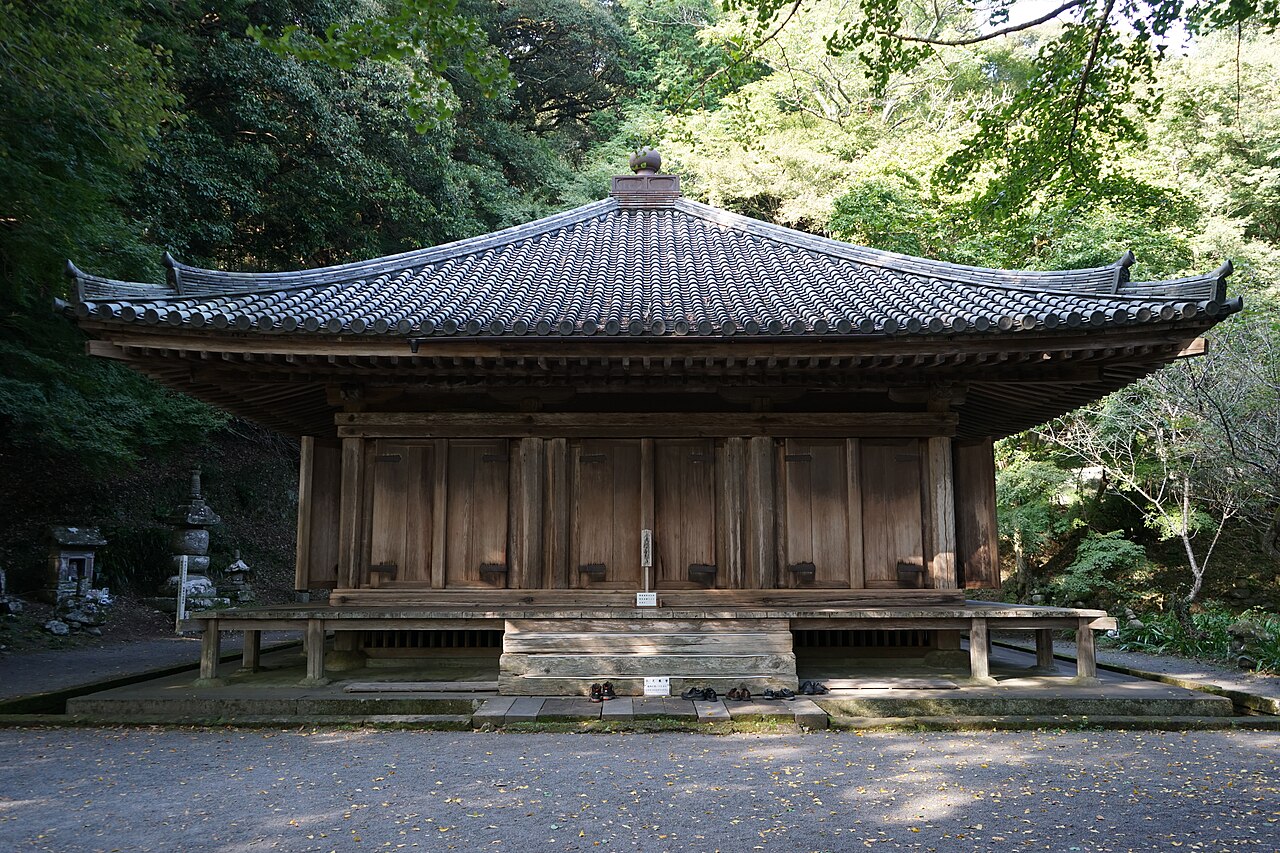
Bungotakada gathers temple halls, a demon's stairway, flooded paddies and a Showa-era shopping street into one corner of the Kunisaki Peninsula in Oita. Inside Fuki-ji's Amida Hall, murals depict the world of the Pure Land. At Kumano, ninety-nine stone steps said to have been built by a demon in one night lead up to Buddhas carved into the rock. On the coast at Mamagai, when low tide and sunset coincide, a striped sand pattern emerges on the tidal flat.
Fuki-ji Temple and Maki Odo
Fuki-ji was founded in the Heian period as the family temple of the chief priest of Usa Jingu. Its Amida Hall holds murals depicting the world of the Pure Land.
A survey found that the murals were painted in rich colours, but they have weathered badly, and a faithful reproduction now stands at the Oita Prefectural History Museum. Around the hall stand the Ninmon stone carved with Sanskrit characters, a Kamakura-period stone monument and a Muromachi-period Kunisaki pagoda. The principal Amida Nyorai image is said to have been carved by Ninmon Bosatsu from a single giant kaya tree.
Maki Odo is said to have been built as one of the halls of Denjoji, a temple of Rokugo Manzan. Its principal image is a seated Amida Nyorai about two and a half metres tall, attended by the Four Heavenly Kings, who restrain evil spirits in the four directions. If you want painted walls, start with Fuki-ji; if you want a large seated Amida Nyorai with its guardian kings, go to Maki Odo.
Kumano Stone Buddhas and the Demons of Kunisaki
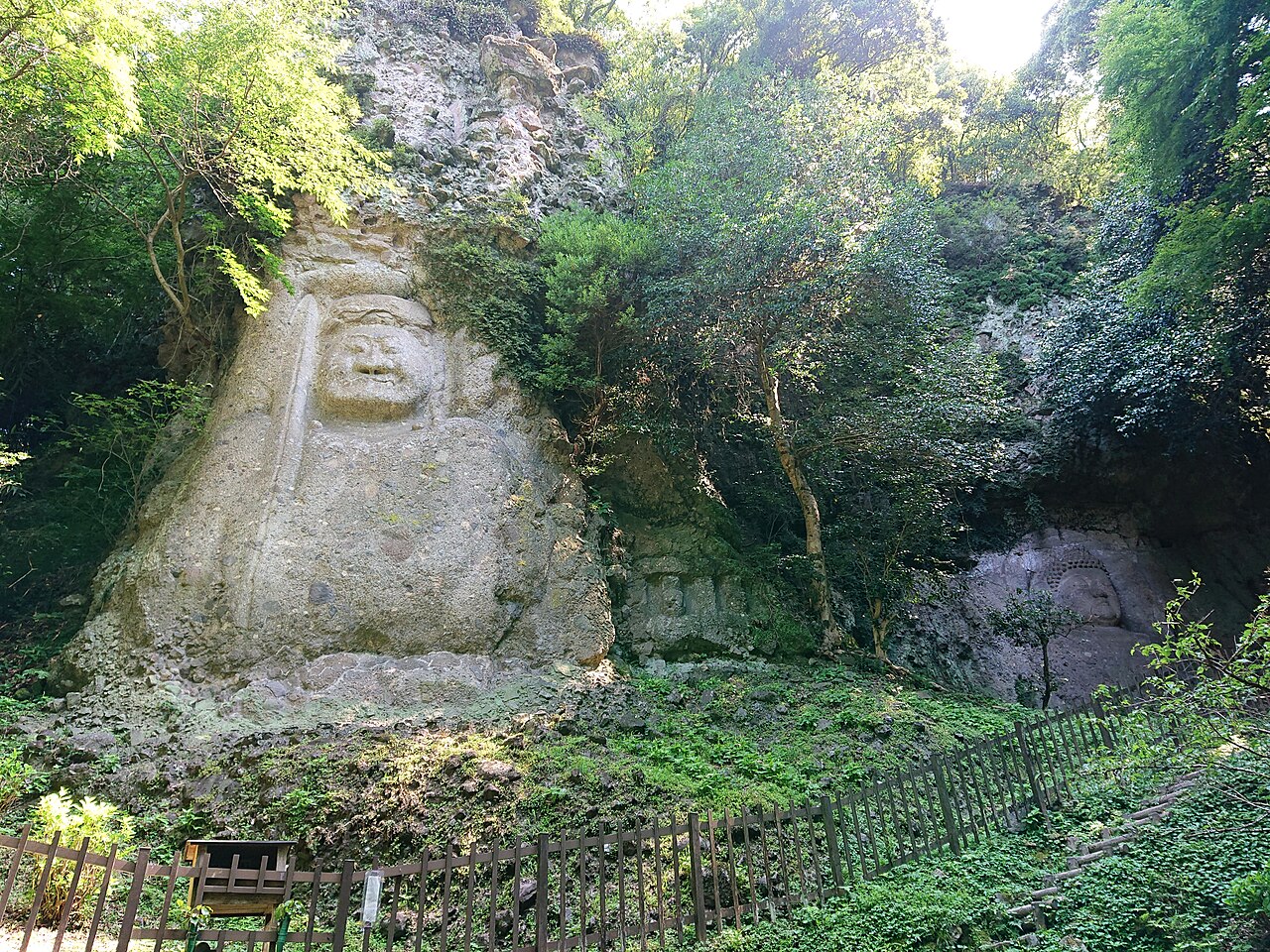
The stone steps from the torii gate up to the Kumano carved Buddhas are said to have been built by a demon in one night, all ninety-nine of them. They are natural stones stacked up, and you can borrow a walking stick at the reception before you start. From the stone steps, you see the main carved Buddha with a calm expression.
At the Shujo Onie fire festival at Tennen-ji, you watch sparks fly as monks dressed as red and black demons carry torches and rampage through the hall. If a demon strikes you on the buttocks or shoulders, you are said to receive the blessing of good health.
The Onie no Sato museum near Tennen-ji tells the history of the Shujo Onie and the Buddhist culture of Rokugo Manzan, and displays the tools and demon masks actually used in the festival. Hand-cut soba made by local mothers is served there, and the souvenir amulet is modelled on the demon mask handed down in Nagaiwaya. If you have only a short stay, climb the steps to the Buddhas first and add Onie no Sato for the story behind the fire festival.
Tashibu Paddies and Soba
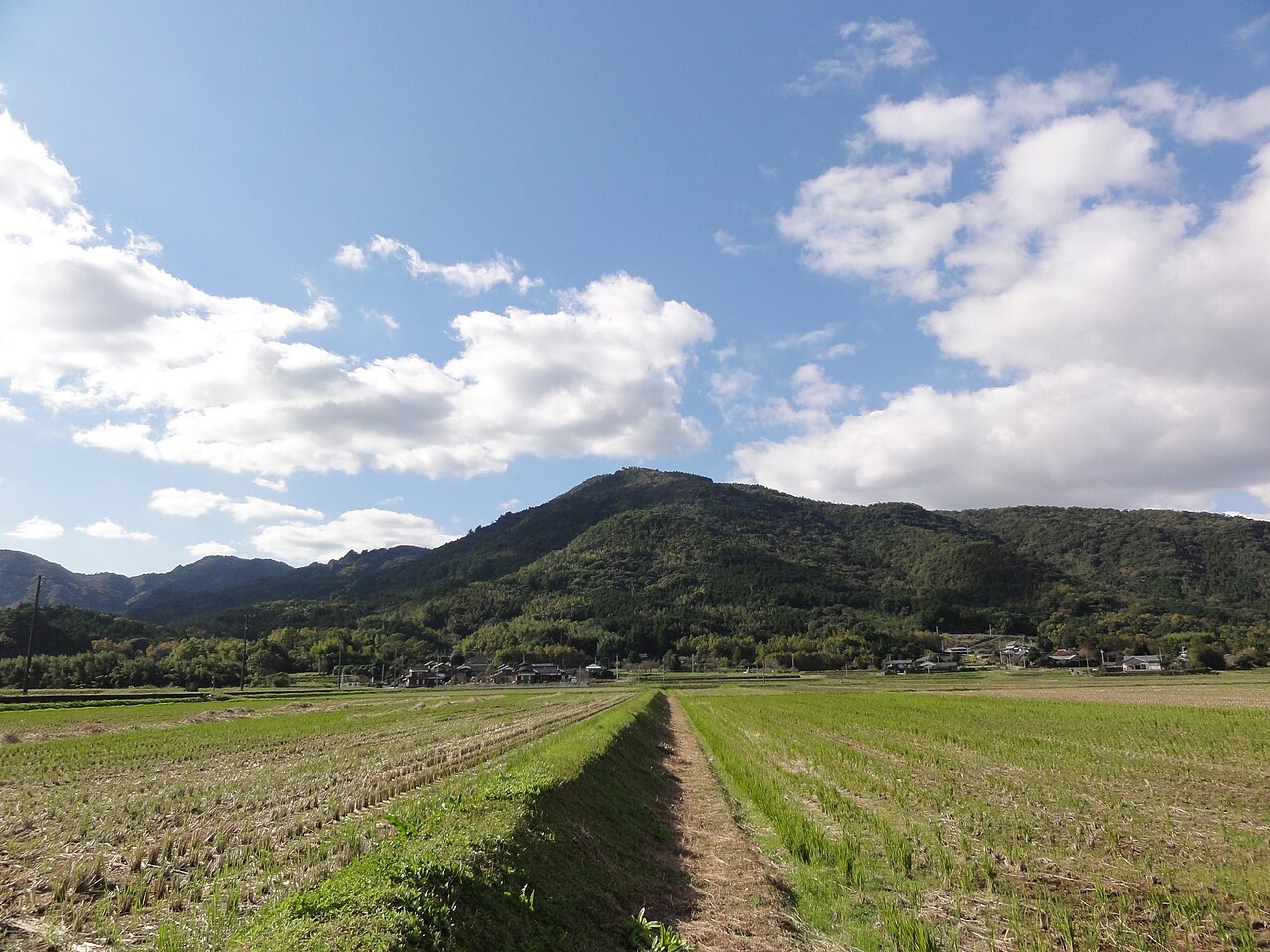
The Tashibu district keeps its traditional rural paddy landscape, with twelve hundred years of history behind it. When the paddies are flooded, you see the scenery reflected on the surface of the water. Rice harvested here is sold as estate rice at direct sales outlets.
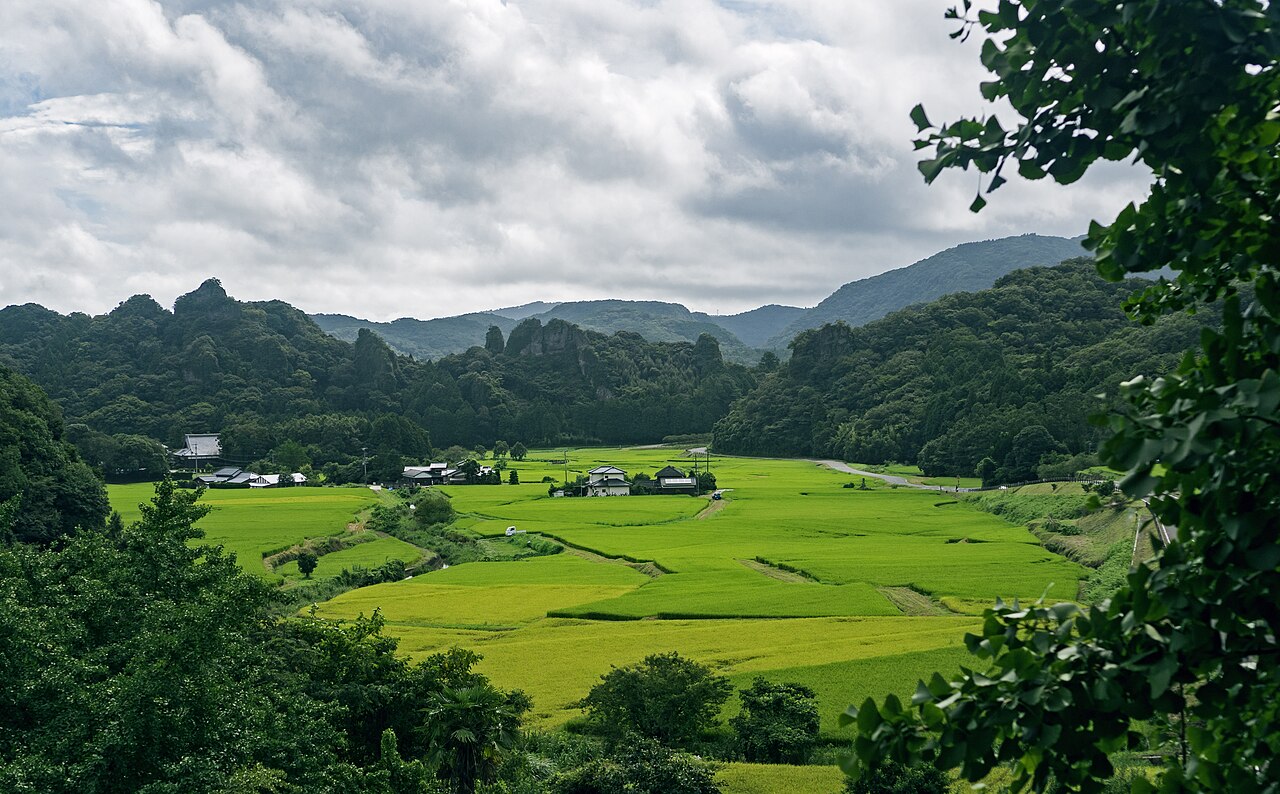
Bungo-Takada soba is grown twice a year, in spring and autumn, using the warm climate. Across the broad fields, you see white soba flowers in bloom. Certified Bungo-Takada soba shops must use local soba, cut the noodles by hand and follow the three 'tate' rules: freshly ground, freshly cut and freshly boiled. In the new-soba season, 'freshly harvested' joins the list, and it becomes the four 'tate'. There are twelve certified shops in the city, and the ratio of soba flour to binder varies from shop to shop.
At the Bungo-Takada Soba Dojo, you make soba in a group of two to five people per bowl, then boil what you have made on the spot and taste it. Anyone who wants more than a bowl of noodles can make the soba and eat it on the spot; anyone who just wants lunch has twelve certified shops to choose from. Soba-making sessions run four times a day and take about one to two hours each.
Showa Town and the Bonnet Bus
The Showa Town shopping street is short enough that walking it normally takes less than fifteen minutes. Along the street, each shop displays at its storefront a rare tool or business implement handed down in the shop, and sells a product handed down from long ago.
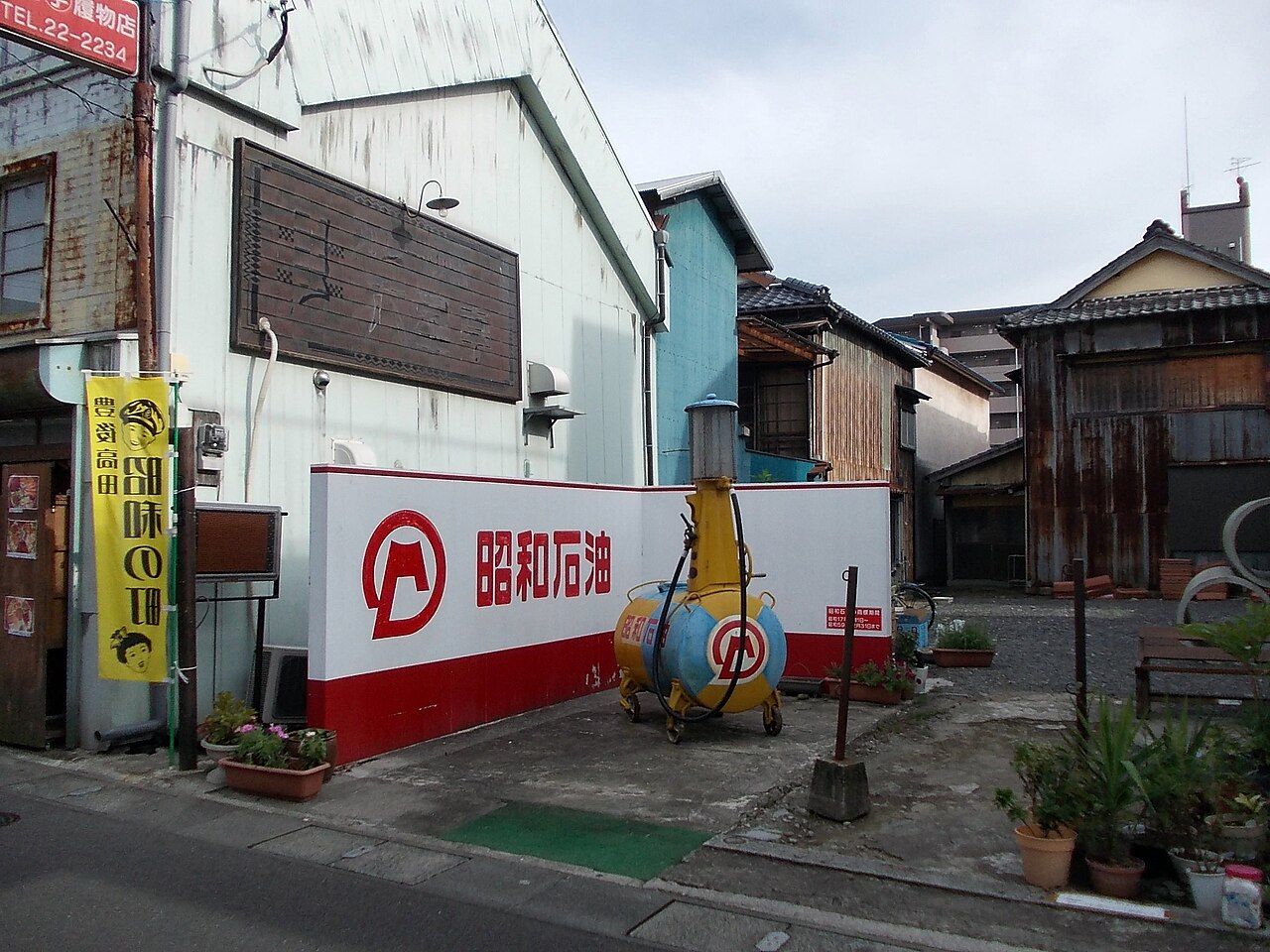
The exhibition hall on the street permanently displays documentary dioramas of the lives of people in the turbulent Showa era. One building in the town has a large Japanese restaurant and a space where you can rent Showa retro fashion.
The other way to see the town is from the bonnet bus, which carries twenty-five people per run, first come, first served. It is a nineteen fifty-seven model that runs around the city mainly on Sundays and public holidays, after standing idle for more than thirty-five years. The course is a mini tour of about fifteen minutes along the shopping street and the Katsura River. Inside, you find no air conditioning.
Bungotakada burgers use local specialty products and seasonal ingredients as fillings, sold by local shops in a city with no hamburger chain. One of them is a shark burger. The street fits between two temple visits.
Sunset Coasts at Mamagai and Nagasakibana
Mamagai Coast is a scenic spot where you watch the sun sink into the horizon. When low tide and sunset coincide, you see a striped sand pattern emerge on the tidal flat, and the contrast of light, colour and shadow between the stripes and the sunset is what the coast is known for. The flat shows itself only for a stretch before and after the low-tide time, so plan the coast around the tide and the sunset rather than the clock.
In summer the sun sets on the horizon, and from early autumn it sets on the mountain side. Near the coast, teamLab Gallery Mamagai Coast shows the flowers of the Kunisaki Peninsula appearing out of darkness. The display moves through the four seasons every fifteen minutes, so that a year passes in an hour.
Nagasakibana, at the tip of a cape facing Suo-nada, is a ria coast with a campground, a swimming beach, sea caves and flower fields. Inside the cave where three figures are enshrined, you see light from outside come in through the opening. Barbecue sets use local ingredients, and equipment rental means you can arrive empty-handed. Book the beach barbecue ahead. Camping trailers and glamping accommodation let you stay on the cape.
Getting to Bungotakada
| Leg | How | Time and estimate |
|---|---|---|
| Usa Station to the Bungo-Takada bus terminal, the entrance of Showa Town | Bus, no transfer | About 10 minutes |
| The same bus ride from Usa Station | Fare | 250 yen |
| Showa Town to Fuki-ji | By car | About 15 minutes |
| Showa Town to Kumano | By car | About 20 minutes |
| Showa Town to Maki Odo | By car | About 20 minutes |
| Showa Town to Tennen-ji | By car | About 15 minutes |
| Usa Station to Mamagai Coast | By car | About 30 minutes |
| Kumano to Fuki-ji | Distance | About 7.5 km |
| Oita Kotsu sightseeing bus, Kunisaki historic sites tour, advance booking | From Oita Station front | 5,700 yen |
| Oita Kotsu sightseeing bus, advance booking | From Beppu Station front | 5,150 yen |
| Oita Kotsu sightseeing bus, advance booking | Usa Station front to Oita Airport | 3,100 yen |
From Usa Station, the bus brings you to the entrance of Showa Town, and the sightseeing bus from Oita or Beppu is booked in advance. From Showa Town, Fuki-ji is about fifteen minutes by car.
New to rural buses and one-man trains? See how to ride them, step by step.
Hours and Fees
| Place | What | Hours or fee |
|---|---|---|
| Fuki-ji | Admission, general and high school students | 500 yen |
| Fuki-ji | Admission, elementary and junior high school students | 150 yen |
| Kumano | Gate hours, April to October | 8:30-17:00 |
| Kumano | Gate hours, November to March | 8:30-16:30 |
| Maki Odo | Adult admission | 500 yen |
| Maki Odo | Hours | 8:30-17:00 |
| Bungo-Takada Soba Dojo | Hours | 8:30-17:00 |
| Bungo-Takada Soba Dojo | Closed | Mondays, or the next day when Monday is a public holiday |
| Bungo-Takada Soba Dojo | Soba-making sessions | 9:00, 10:30, 13:00 and 14:30 |
| Bungo-Takada Soba Dojo | Soba-making, per bowl for 2 to 5 people | 4,000 yen |
| Pizza making | Per person, with one pizza and a drink | 1,000 yen |
| Onie no Sato museum | Hours, April to November | 9:00-17:00 |
| Onie no Sato museum | Hours, December to March | 9:30-16:00 |
| Onie no Sato | Closed | 2nd and 4th Tuesday of every month, open on public holidays |
| Onie no Sato museum | Admission | 300 yen for adults, 150 yen for children |
| Tashibu volunteer guide | Fuki-ji, Maki Odo or Tashibu | 1,000 yen per place |
| Tashibu volunteer guide | Kumano | 2,000 yen |
| Tashibu volunteer guide | Tour length at Fuki-ji or Maki Odo | About 30 minutes each |
Once the day is planned, compare places to stay in Bungotakada.
Where to stay
Places to stay near Bungotakada, Oita, Japan →
Disclosure: This post may contain affiliate links. If you book through them, we may earn a commission at no extra cost to you.