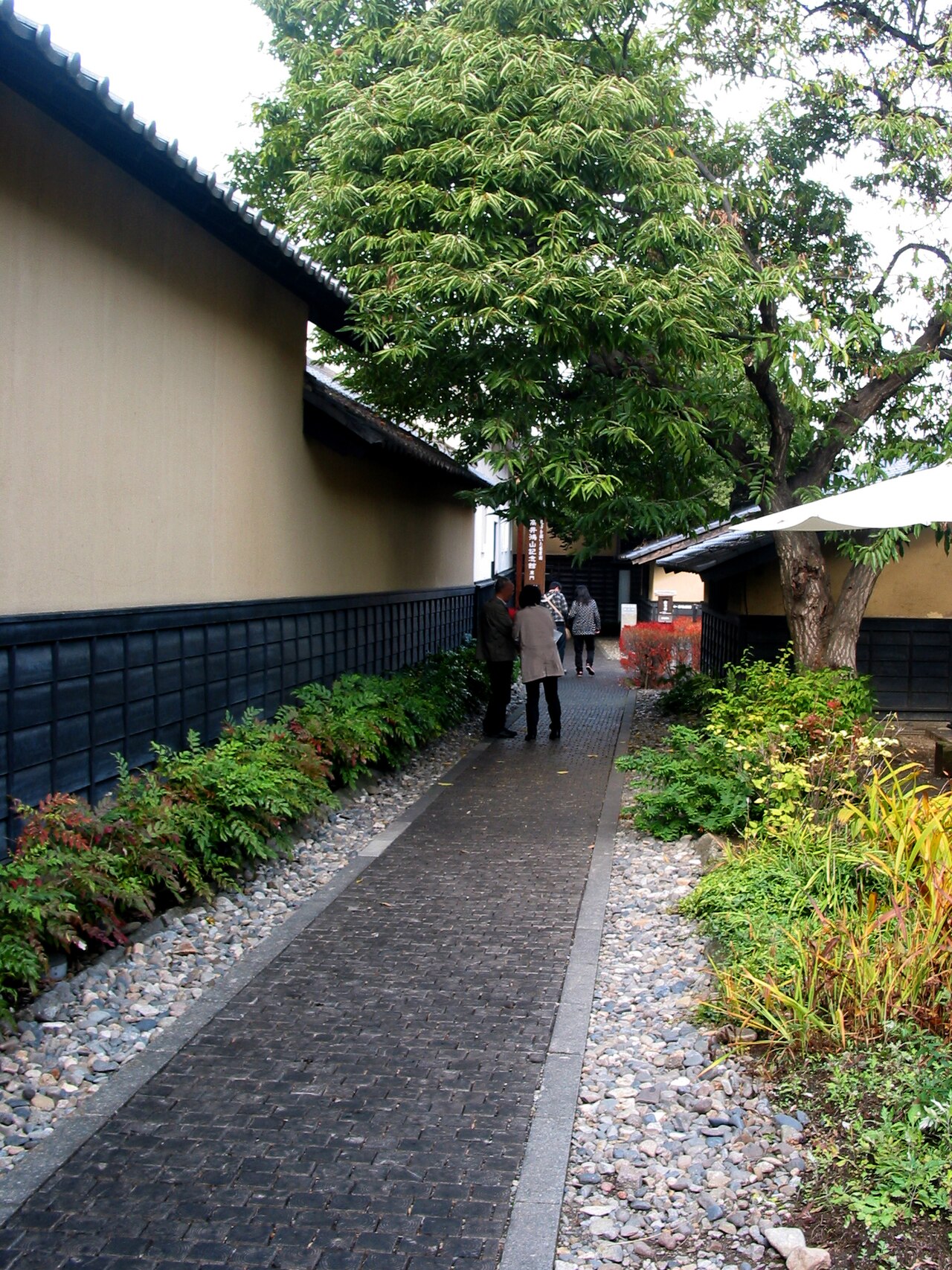
Obuse covers less ground than any other municipality in Nagano, and most of its hamlets gather within a couple of kilometres of the town hall, so the whole place reads as one walkable neighbourhood. About a million visitors find their way here in a year, drawn by two things above all: chestnuts and Katsushika Hokusai. An Edo-period saying set the town beside Japan's most celebrated chestnut country — "Tamba in the west, Obuse in the east" — and its chestnuts are said to have travelled to the shogun's table as tribute.
Getting there and getting around
The Hokusai-kan, the museum at the town's heart, is about twelve minutes on foot from Obuse Station on the Nagano Dentetsu line, about fifteen minutes by car from the Shinshu-Nakano interchange, and it keeps its own parking. At the museum's Higashimachi lot, a regular car pays two hundred yen for the first hour and one hundred yen for each hour after that, with a ceiling of a thousand yen for a day. The main street, the old Tanikaido road, is described as ten minutes or so on foot from the rail gateway; along its length, refitted in a town-wide project in the nineteen-eighties, stand the museums and the long-established chestnut confectioners.
From spring through autumn, a loop shuttle called the Obuse Romango circles from the rail gateway out past the Hokusai-kan, the Obuse Museum, the temples of Ganshoin and Jokoji, and the Floral Garden to the general park at the town's edge, in a small vehicle drawn up by the industrial designer Eiji Mitooka. The roads are level throughout, so a rented bicycle covers the town comfortably.
The painter who kept coming back
The Hokusai-kan is built around the work Katsushika Hokusai made for this town: he travelled here four times in his final years, and the museum shows the festival-float ceiling panels he painted alongside brush works in many formats — hanging scrolls, framed pieces, albums, picture scrolls — as well as prints. Its holdings are described as including some forty brush paintings from Hokusai's late period, and admirers come from well beyond the prefecture. The museum itself dates from the nineteen-seventies, and the joint town-and-citizen streetscape project that followed in the eighties is described as the beginning of Obuse's life as a destination.
Admission to the special exhibition is twelve hundred yen for adults, five hundred yen for high school and university students, and three hundred yen for children of elementary and junior high school age. Entry is accepted until half an hour before closing, and the museum is closed on the final day of December.
A few steps away, the Takai Kozan Memorial Hall keeps the works of the wealthy merchant-scholar who brought Hokusai to Obuse, together with Yuzenro, the study where the region's literati once gathered. Between the two museums runs the Kuri no Komichi, a footpath paved with squared blocks of chestnut wood thinned from local groves.
Where to stay
Disclosure: This post may contain affiliate links. If you book through them, we may earn a commission at no extra cost to you.
Three houses of chestnuts
Three long-established makers — Sakurai Kanseido, Chikufudo, and Obusedo — are known as the town's chestnut-sweet "three houses", and each keeps its home shop in Obuse. Obusedo faces the old highway with everything from kuri kanoko and chestnut yokan to baked sweets and Mont Blanc, its group shops scattered through the surrounding block, and at the adjoining Masuichi Ichimura brewery you can taste every sake the house brews. Chikufudo's main shop works only with good domestic chestnuts, Obuse's own first among them; its dining room is loved for chestnut okowa rice, and the giant silver beetle sculpture out front has become a landmark in its own right. In the storehouse courtyard behind it hides a lighting museum described as the country's first devoted wholly to the lamps and lighting tools Japan used before electric light came. Sakurai Kanseido, in business for more than two centuries, spreads into several houses of its own nearby — a tearoom for cake and black tea, a formal dining room, a takeaway café — with fresh confections carried straight from the adjacent workshop.
The most pursued sweet of all, the chestnut dessert called Shuzaku, appears for only about a month each autumn at one Obusedo shop, made from newly harvested chestnuts, while a western-style Mont Blanc version is served year-round at the group's Entotsu café. Autumn, when the harvest comes in, is described as the season when the town is at its most crowded. If quiet is the point, come on a green early-summer weekday, or arrive well before mid-morning in autumn.
The chestnut houses and the museums stand within a few minutes' walk of one another, so a circuit from Obusedo past Chikufudo and the lighting museum to Sakurai Kanseido and the Obuse Museum strings together on foot and ends back at the rail gateway. If you would rather have the day arranged for you, browse guided tours and tickets around Nagano.
Temples, blossom banks, and a black-flecked bath
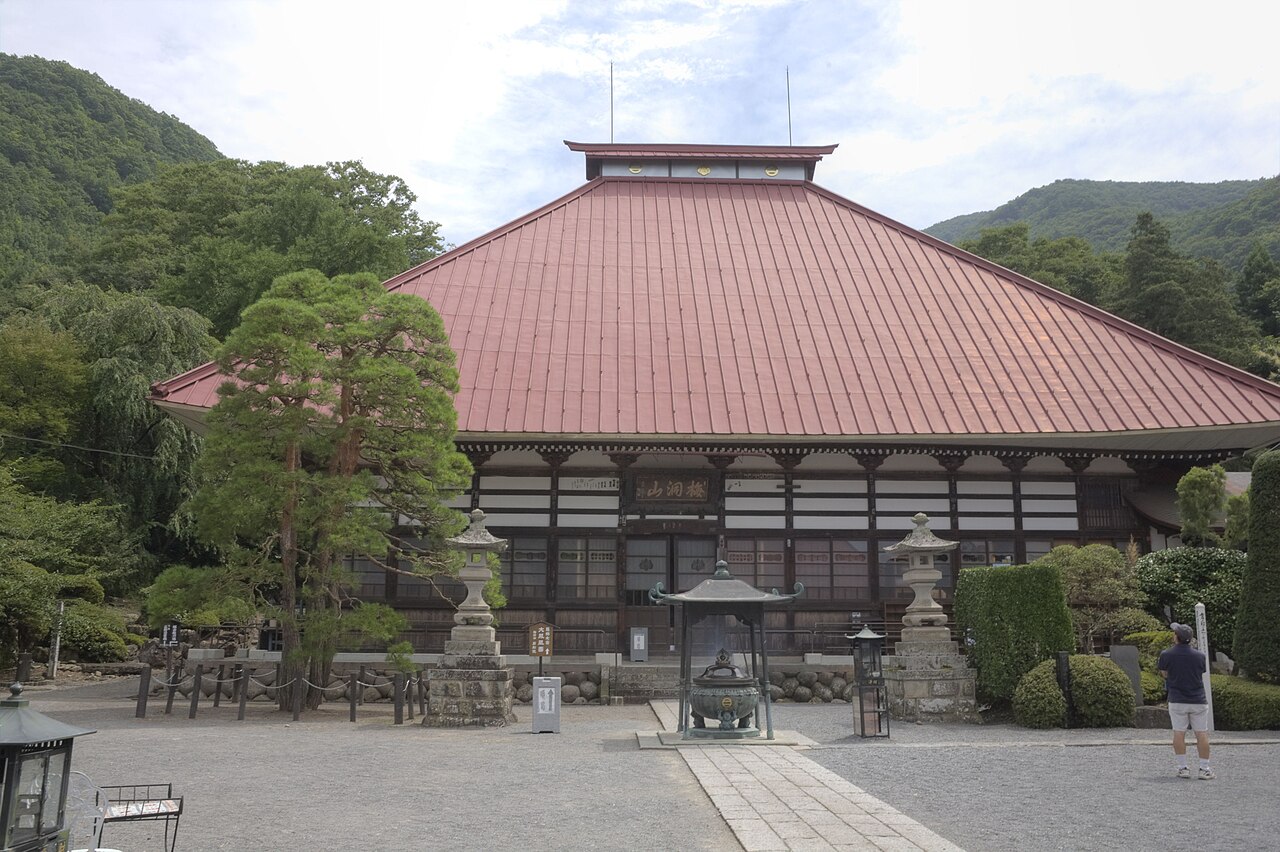
At Jokoji, the thatched Yakushi hall has stood since the early fifteenth century and is listed as a nationally designated Important Cultural Property. The hall is no museum piece: a fire ritual is still held inside, and anyone may step in and take part. The Obuse Museum and its Nakajima Chinami gallery pair the flower paintings of this locally born painter with metal sculpture by another artist the town raised, and with a set of the festival floats themselves.
Down along the Chikuma River, a riverside park spreads beneath the embankment, with a planted bank of some six hundred double-flowering cherries running for about four kilometres beside fields of rape blossom. From the middle of April into early May, the cherries, the rape blossom, and the peach blossom are described as coming all at once, and this is the park's own crowded moment, with a festival in the last part of April. Out by the general park, the Michi no Eki Oasis Obuse rest area combines lawns, play spaces, a dog run, climbing walls, and a farm-produce market, and it can be reached from the expressway without leaving it as well as from the ordinary roads below.
To end the day, Akebi no Yu — the town's one hot-spring house that also lodges guests — offers a day-visit bath in which dark flecks of mineral bloom and the water's colour shifts from day to day; it welcomes bathers from six in the morning, early enough for a soak before the sightseeing begins.
Make it a quiet day
Give the morning to the Hokusai-kan and the merchant lanes before the day-trip tide arrives, let lunch be chestnut rice, spend the afternoon between the temples and the river bank, and let the bath close the day. If small towns of this unhurried kind suit you, our guide to Tamba Sasayama, a quiet castle town continues in the same spirit. Sweet-shop calendars, seasonal services, and fees in a small town move with the year, so check official information before visiting.
Compare options and book: Nagano tours and tickets.