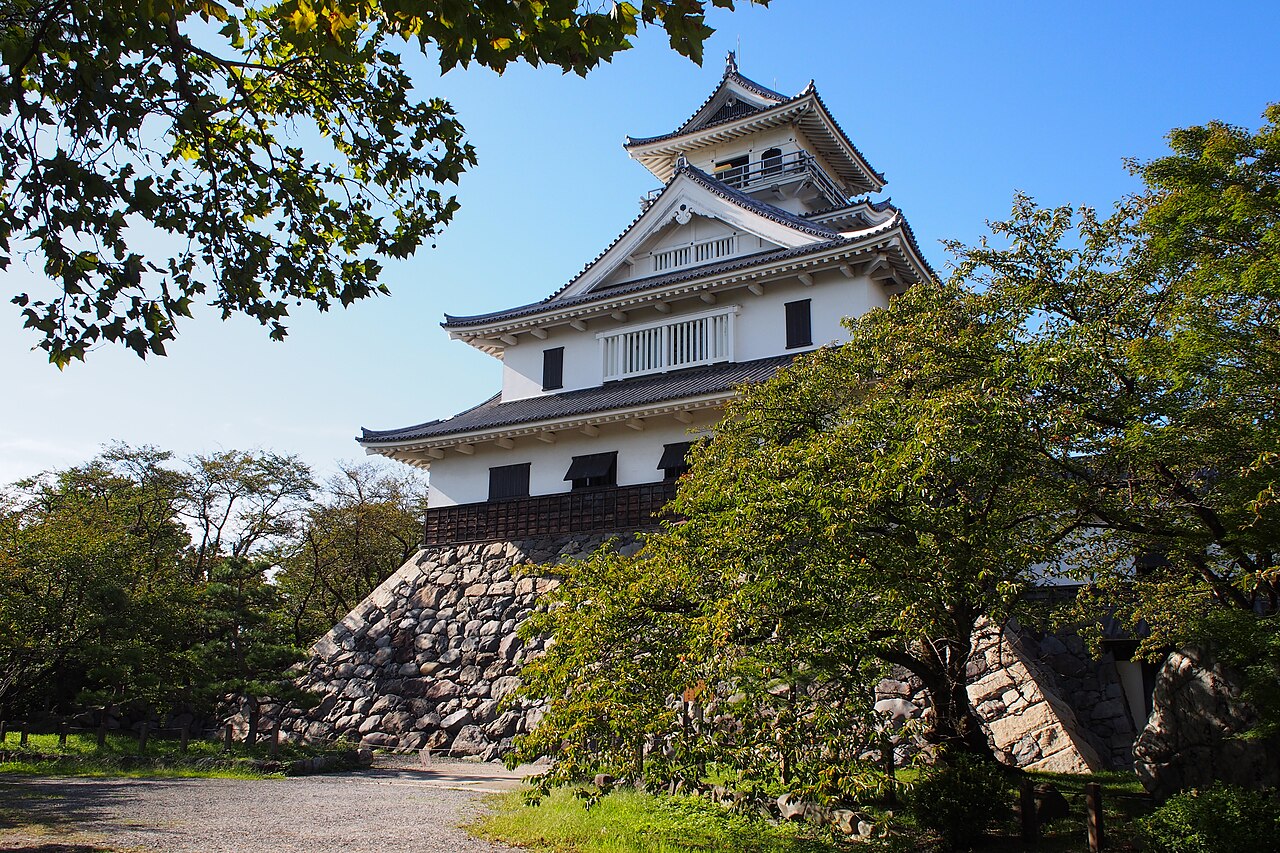
Nagahama sits in Kohoku, the district on the northern side of Lake Biwa, and its old centre rewards a slow day on foot. The pieces are close together: a merchant street of converted townhouses along the old northern highway, a large temple with a garden, a keep-shaped museum on the lakeshore, a hall of festival floats, and a Meiji-era guesthouse whose garden was laid out by a famous gardener. Beyond them the lake itself offers one more choice, a short crossing to the island temple and shrine of Chikubushima.
This article walks that loop in a sensible order, with prices and times gathered into tables so you can plan around them. If you would rather have someone lead the way, GetYourGuide lists experiences in and around Nagahama.
Kurokabe Square and the Old Northern Highway
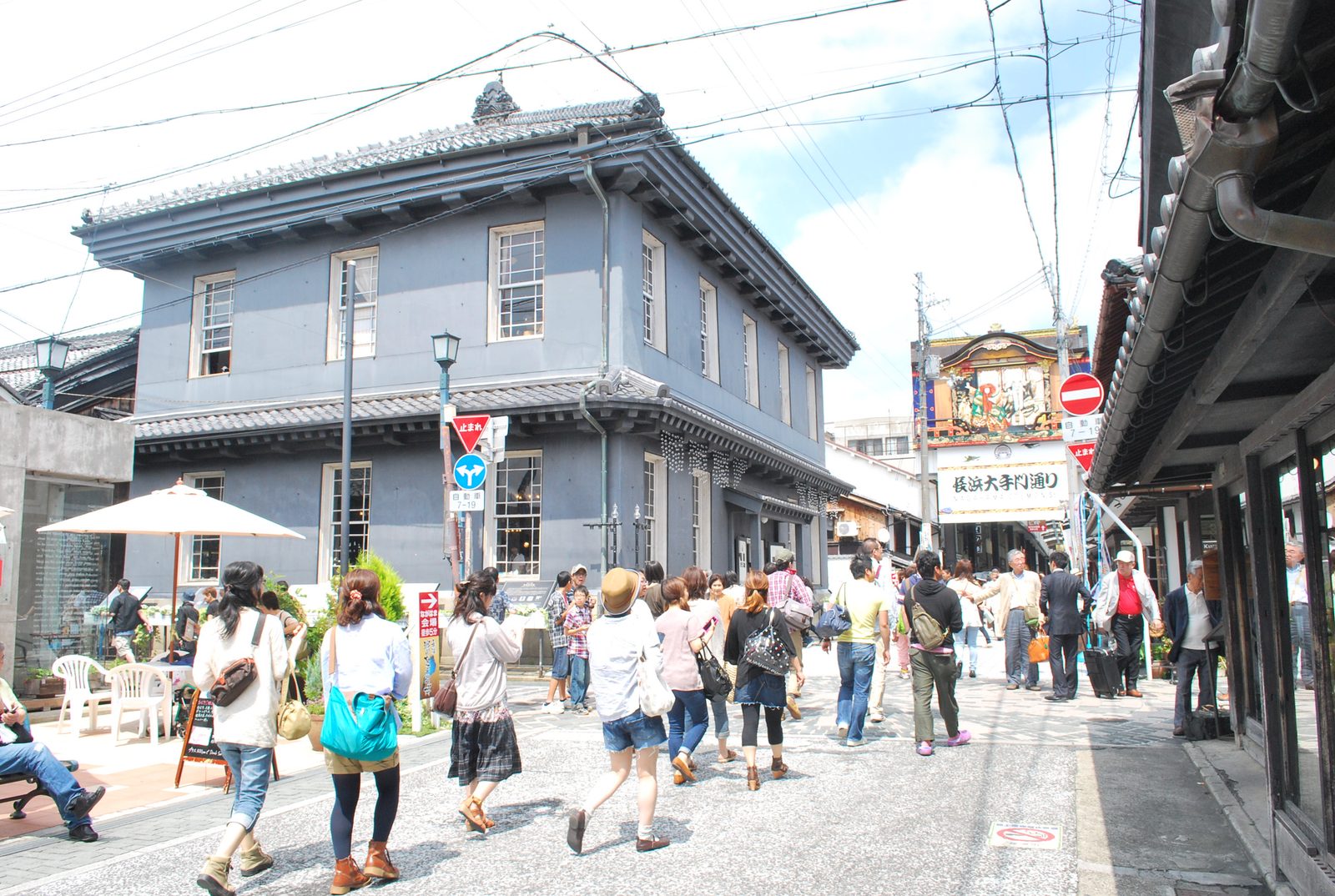
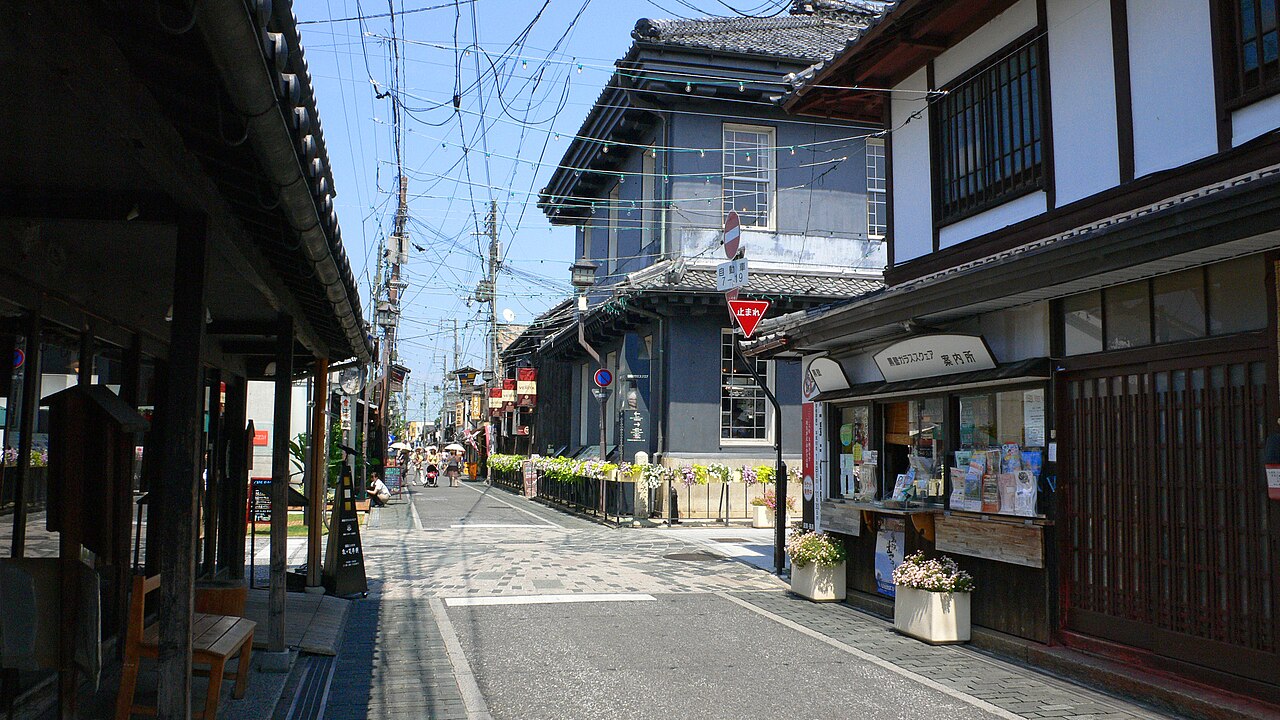
The local guidebook states that Kurokabe Square is the stretch of the Hokkoku Kaido, the old highway north, where Nagahama's townhouses and older commercial buildings have been turned into shops and places to eat. The same guidebook notes that the area keeps the feel of a post town; the pleasure is in drifting from one doorway to the next rather than in any single sight.
The guidebook lists the Kurokabe Glass House as the landmark of the square, and the building gives the district its name; Kurokabe simply means black wall. The square's history states that the shop occupies a former bank built in the Meiji era, a Western-style facade standing directly on the highway; inside, the guidebook notes, it sells glassware ranging from traditional pieces to modern design. It is a natural place to begin.
Daitsuji and Its Borrowed Buildings
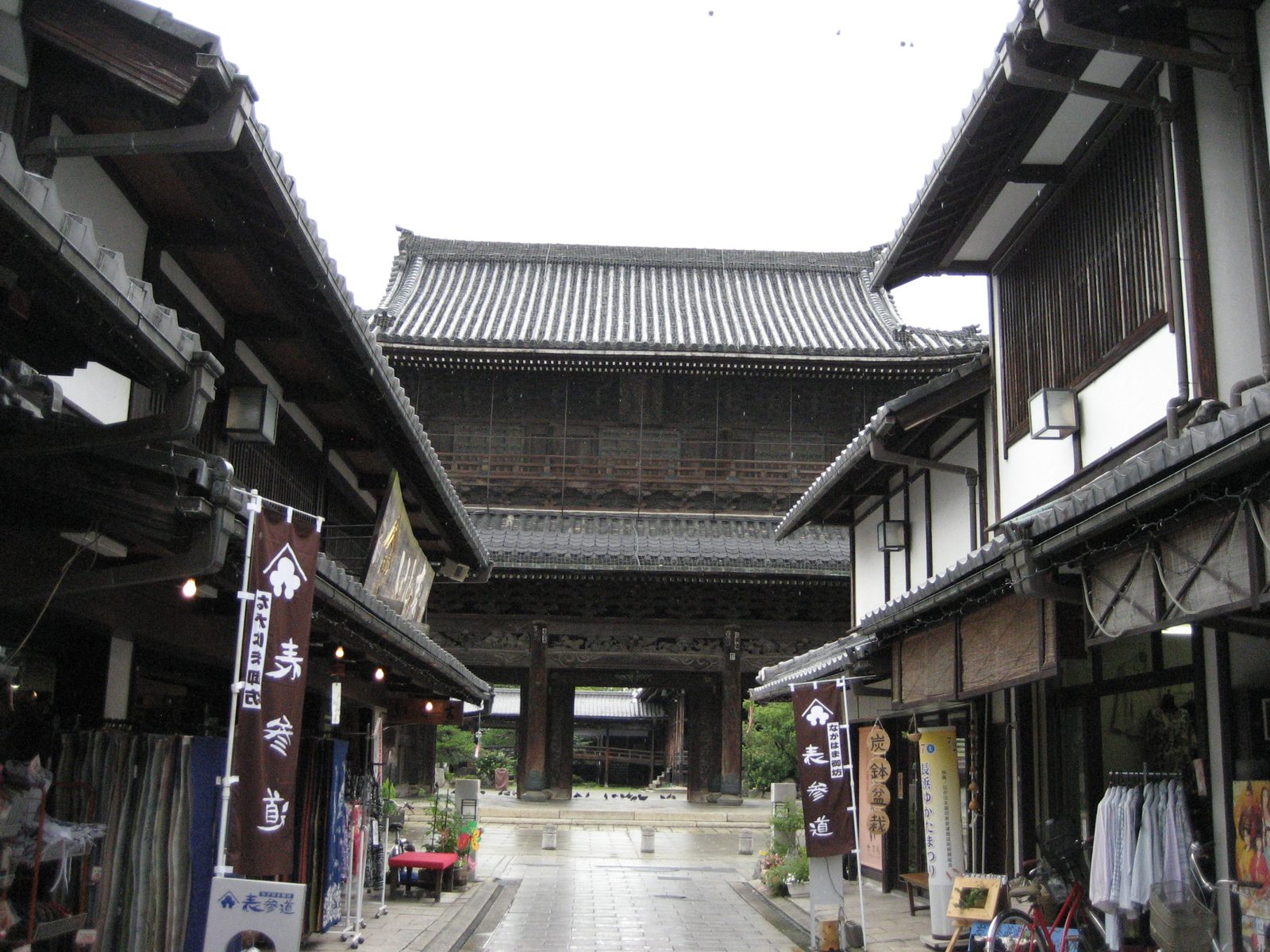
Daitsuji is the kind of temple that repays a slow circuit rather than a glance from the gate. The temple's history states that the main hall and a shoin-style great hall are said to have come from Fushimi Momoyama Castle, that a side gate is said to be the relocated main gate of Nagahama Castle, and that the garden is designated a national Place of Scenic Beauty. Allow time for the garden in particular; there is no reason to hurry back to the shops.
| Daitsuji | |
|---|---|
| Hours | 10:00 to 16:00 |
| Admission, high school students and older | 500 yen |
| Admission, junior high school students | 100 yen |
| From JR Nagahama Station on foot | about 15 minutes |
Nagahama Castle and the Man Who Renamed the Town
The town's story fits in a few lines. The town's history records that the place was once called Imahama and that the name is said to have changed to Nagahama when Toyotomi Hideyoshi made it the seat of his castle. The record states that the castle dates from the years after Oda Nobunaga destroyed the Azai clan, when Hideyoshi, then still called Hashiba, was granted the territory and raised a fortress on the lakeshore. The same record says that after he moved on to Himeji the castle passed to Shibata Katsuie, and in the Tokugawa period to Naito Nobunari, before it was abandoned.
| Nagahama Castle, in brief | |
|---|---|
| Built | Tensho 1 (1573); the record states that after Oda Nobunaga destroyed the Azai clan, Hashiba Hideyoshi, granted 180,000 koku, raised the castle on the lakeshore |
| Later lords | The record states that Shibata Katsuie held it after Hideyoshi left for Himeji, that Naito Nobunari entered with 50,000 koku in the Tokugawa period, and that it was later abandoned |
The guidebook states that what stands by the lake today is a building modelled on a castle keep, and that it houses the Nagahama Castle Historical Museum. The guidebook notes that the museum presents the history and culture of Kohoku and Nagahama, with a permanent exhibition on Hideyoshi and the town, and that its top floor is an observation deck looking out over Lake Biwa and the streets below. Go up first; the view sorts out the geography of the whole walk.
| Nagahama Castle Historical Museum | |
|---|---|
| Hours | 9:00 to 17:00; last admission 16:30 |
| Admission | 500 yen for high school students and older; 200 yen for elementary and junior high school students |
| Closed | Mondays (the following weekday when Monday is a public holiday) and December 27 to January 2; may close temporarily between exhibitions |
| From JR Nagahama Station on foot | 8 minutes |
Where to stay
Places to stay near Nagahama, Shiga →
Disclosure: This post may contain affiliate links. If you book through them, we may earn a commission at no extra cost to you.
The Hikiyama Museum and the April Festival
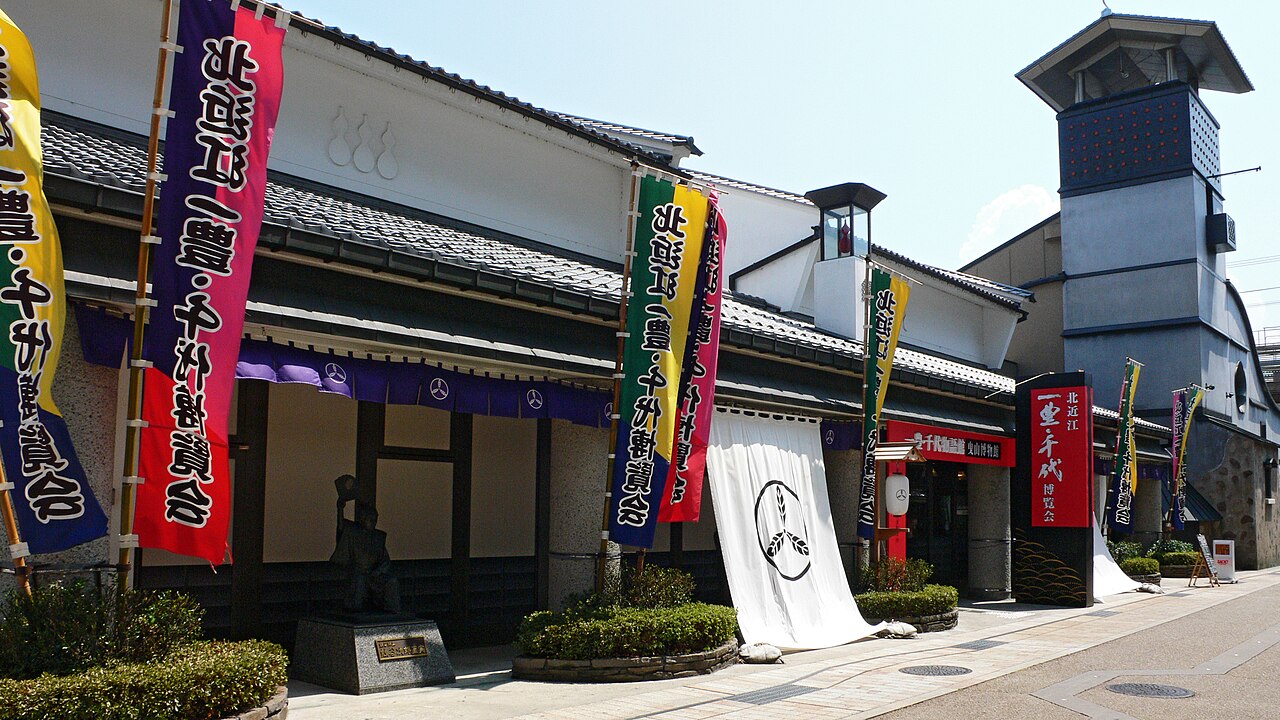
The festival's history states that each April the Nagahama Hikiyama Festival is held at Nagahama Hachimangu shrine, that it is counted among Japan's three great float festivals, and that it is inscribed on UNESCO's list of Intangible Cultural Heritage. If your visit comes at any other time of year, the Hikiyama Museum is where you can see the floats themselves. The museum's own history says it keeps four of the floats actually used in the festival and shows two at a time, swapping them every three months, so a return visit will find different ones on display.
| Hikiyama Museum | |
|---|---|
| Hours | 9:00 to 17:00 (last admission 16:30) |
| Admission | 600 yen for adults; 300 yen for elementary and junior high school students |
Keiunkan, a Guesthouse for an Emperor
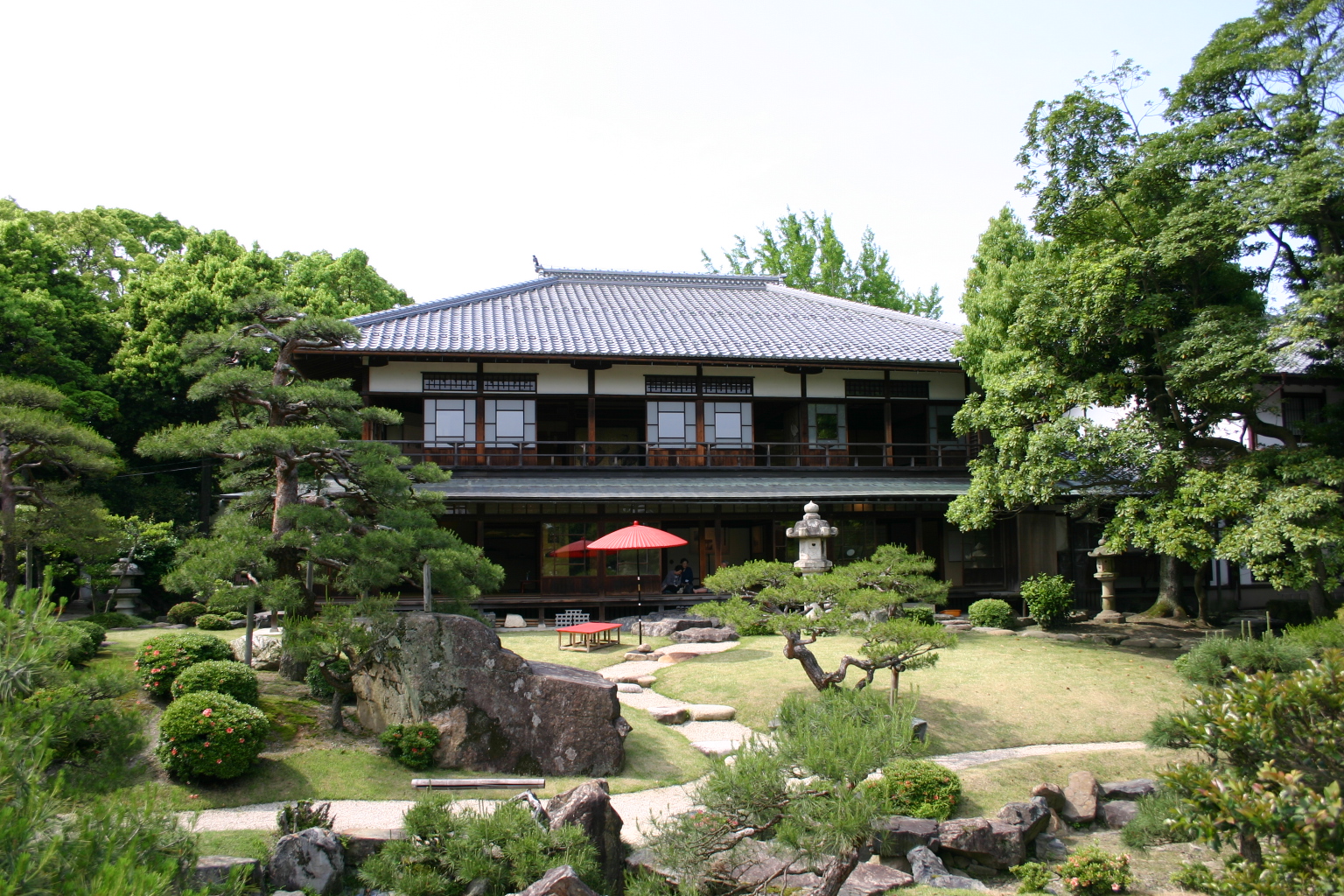
Keiunkan was built in the Meiji era as temporary lodgings for the Emperor Meiji on a visit to Nagahama, and it is described as the town's guesthouse, with a garden designated a national Place of Scenic Beauty. The garden's history states that it is the work of the seventh-generation Ogawa Jihei, the gardener often called the pioneer of the modern Japanese garden, and that it received its scenic designation in the Heisei era; the interest runs from the front garden through to the main garden behind the house.
Something to Eat Between Stops
Two local specialities are worth seeking out along the way. Bunpuku Chaya's bunbuku mochi is described as made from Omi-grown glutinous rice pounded into mochi and grilled on a copper plate, and it is said to come in two versions, one with chunky red-bean paste and one with black sesame paste. Noppei udon is the other, and according to local guides, the noodles and the broth are both house-made, the Kansai-style dashi soaks well into the noodles, and the bowl is topped with large shiitake, maple-leaf-shaped wheat gluten and slices of kamaboko.
Across the Water to Chikubushima
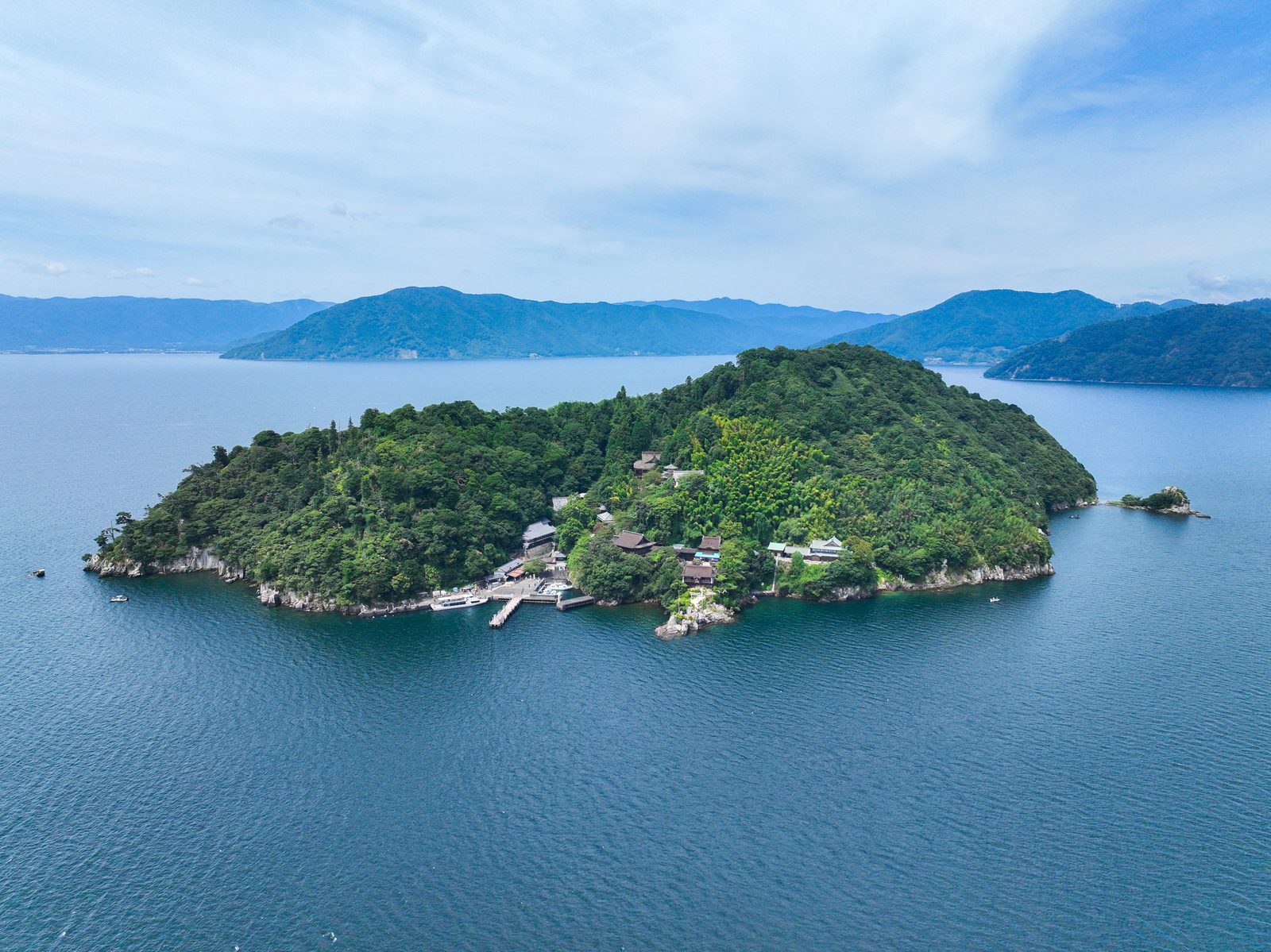
If you have the afternoon to spare, the lake offers an outing of its own. The island's history records that Chikubushima is a small island in Lake Biwa, counted among the Eight Views of Lake Biwa for the reflection of its fresh green in early summer, and long regarded as a place of worship. The guidebook states that regular boats run to the island from three ports on the lakeshore, Nagahama, Imazu and Hikone, and that the crossing from each is short.
On the island, the temple's history states that Hogonji was founded in the eighth century, in the Jinki era, by the monk Gyoki at the wish of Emperor Shomu; it enshrines Benzaiten as its principal image, houses a thousand-armed Kannon as well, and is known to pilgrims as one of the Saigoku thirty-three Kannon temples. The shrine's history states that Tsukubusuma Shrine beside it appears in the Engishiki, a Heian-period compilation of regulations, and that it enshrines four deities said to protect the lake, Ugafukujin, Ichikishimahime, Azaihime and a dragon god; its main hall, in the style of Momoyama culture, is the thing to look at. A covered passage known as the boat corridor links the temple and the shrine, and it is said to have been built from Toyotomi Hideyoshi's state barge.
| Nagahama route (Nagahama Port to Chikubushima Port) | |
|---|---|
| Return fare, adults (junior high school students and older) | 3,800 yen |
| Return fare, elementary school students | 1,900 yen |
| From JR Nagahama Station to Nagahama Port on foot | about 10 minutes |
| From Chikubushima Port to Tsukubusuma Shrine on foot | about 5 minutes, the guidebook states |
Putting the Day Together
Everything above lies within a short walk of the same starting point, and the walking times below are the ones to plan with. Confirm the current times and prices with each place before you set out.
| Walk | Time |
|---|---|
| JR Nagahama Station to Nagahama Castle Historical Museum | 8 minutes |
| JR Nagahama Station to Daitsuji | about 15 minutes |
| JR Nagahama Station to Nagahama Port, for Chikubushima | about 10 minutes |
A workable order for a single day:
- Nagahama Castle Historical Museum, for the lake view and the Hideyoshi exhibition.
- Kurokabe Square and the Glass House, with a bunbuku mochi along the way.
- Daitsuji, then the Hikiyama Museum.
- Keiunkan and its garden.
- Either the port and a crossing to Chikubushima, or a bowl of noppei udon and an early finish.
If you would rather stay the night than head back, compare places to stay in Nagahama, and for a day with a local guide, see what is on offer around Nagahama on GetYourGuide.