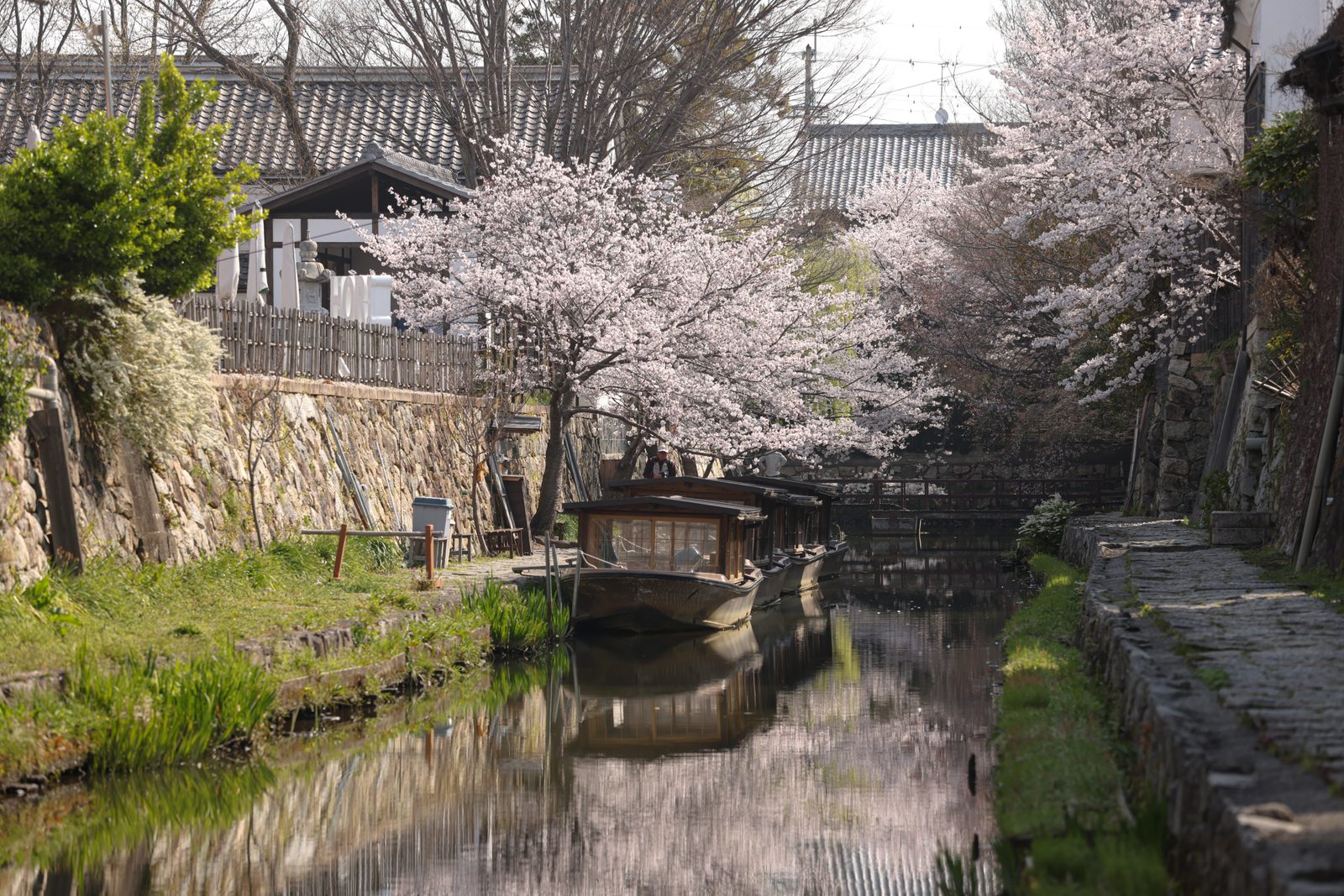
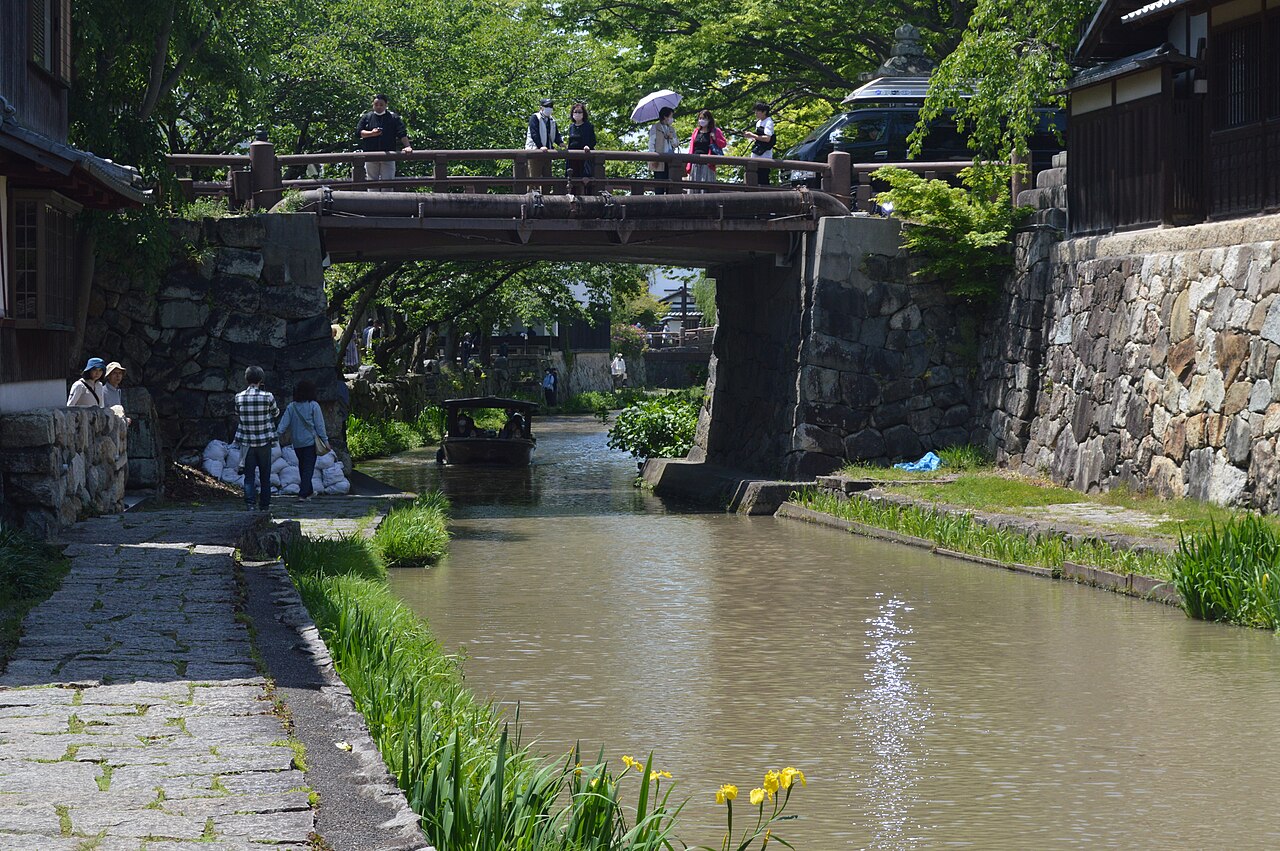
Omihachiman is an old merchant town in Shiga, and its center is held together by the Hachimanbori, a stone-walled canal lined with white plaster storehouses. The main activity here is walking slowly: along the water, through the grounds of the shrine the merchants prayed at, past houses left by an American architect who made the town his home. This guide puts the boat, the ropeway, the shrine and the old quarter into a one-day order with short walks between them.
Getting There and Getting Around
- From the north exit of JR Omihachiman Station, take the Omi Railway bus bound for Chomeiji (or for Kyukamura via Chomeiji). The ride to the stop Hachimanbori Hachimanyama Ropeway-guchi takes about seven minutes.
- The Omi Bus stop Obatacho Shiryokan-mae, also on the bus toward Chomeiji, is about a two-minute walk from the former Nishikawa residence.
- On foot, Himure Hachimangu Shrine is about a thirty-minute walk from JR Omihachiman Station.
The canal boat landing is just off the bus stop Hachimanbori Hachimanyama Ropeway-guchi, so the water and the hill go back to back.
The Hachimanbori Canal by Boat
The canal was laid out in the Azuchi-Momoyama period on the orders of Toyotomi Hidetsugu as a logistics base for Lake Biwa. According to guidebooks, it runs for about six kilometers, and the boat follows the stretch where white-walled storehouses of old merchant houses stand at the water's edge. The Hachimanbori-meguri uses engine boats; the landing is behind the restaurant Waden.
Hachimanbori boat tour (engine boat)
- Length: about thirty minutes.
- Hours: ten in the morning to four in the afternoon.
- Fares: adults one thousand five hundred yen, children one thousand yen.
Suigo-meguri regular boat (hand-rowed)
- Length: about sixty minutes.
- Boats leave at ten in the morning and three in the afternoon, with one more at ten past one, daily from April to November.
- Fare: students one thousand eight hundred seventy yen (student ID required).
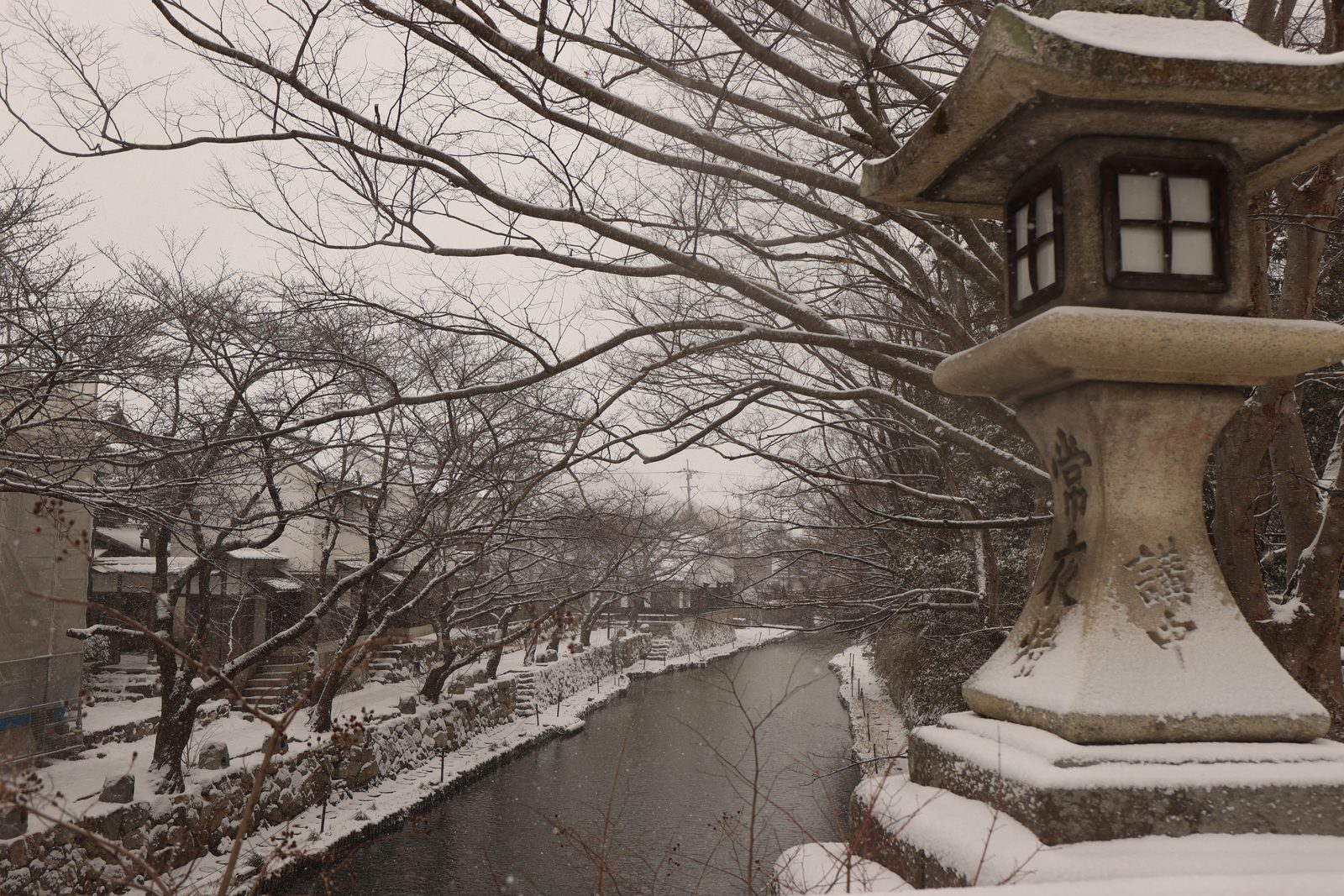
In spring the cherry trees around the Hakuun bridge, right by the landing, bloom along the waterway and are at their best seen from the boat. On the Suigo-meguri, cherry blossom and rapeseed flowers overlap from late March to early April.
Himure Hachimangu Shrine
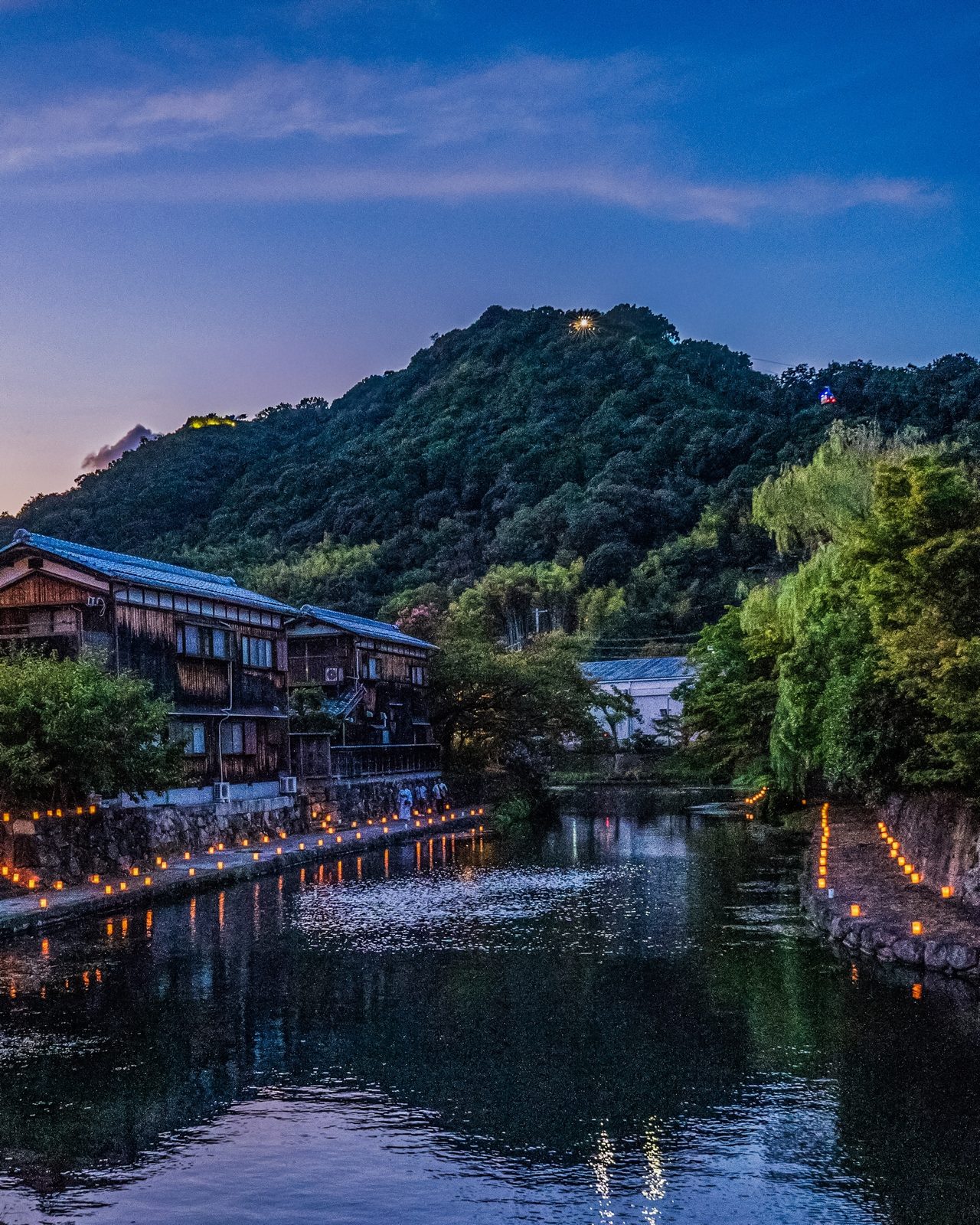
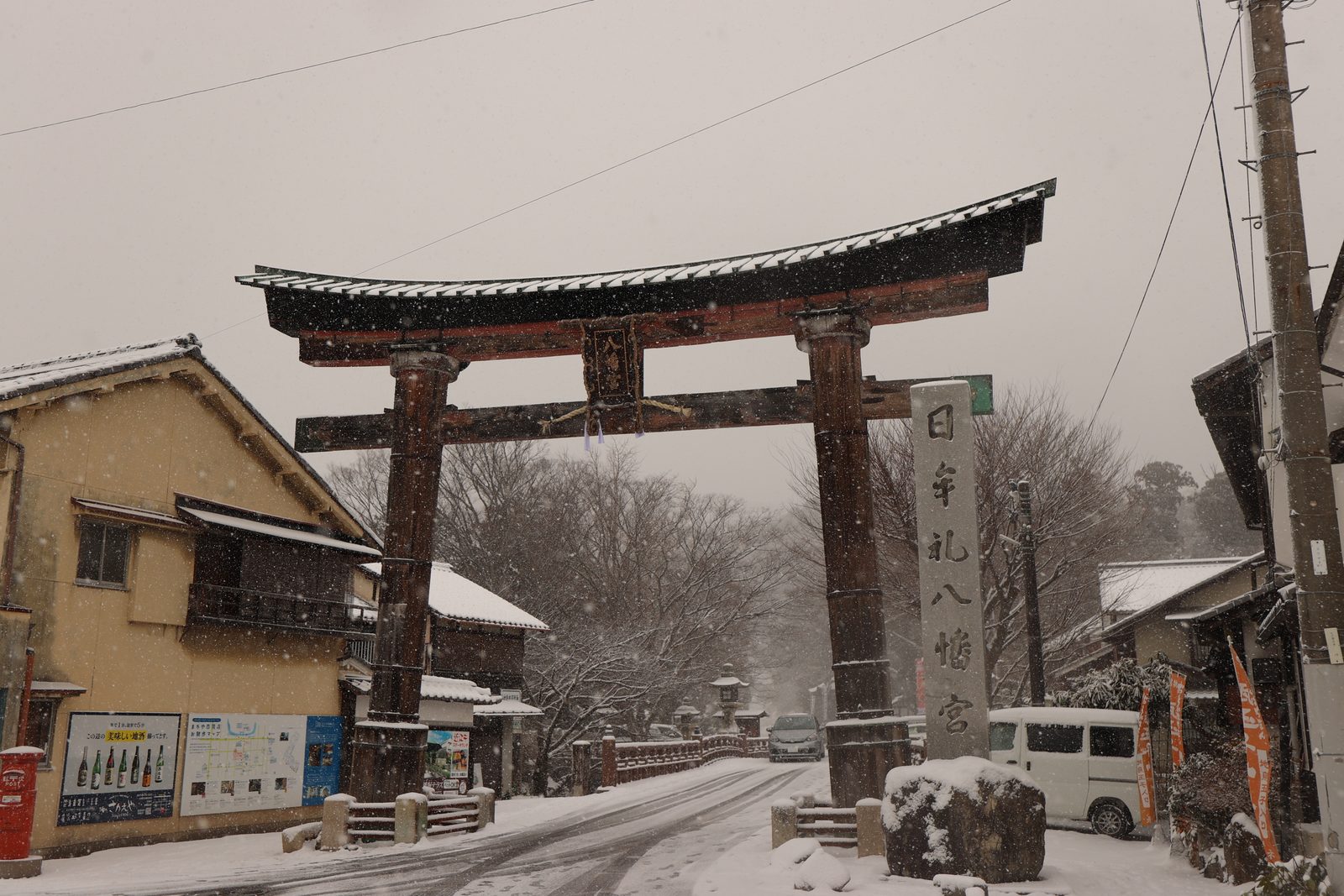
Himure Hachimangu is an old shrine that the Omi merchants revered as their guardian deity. Its wide grounds are shaded by huge hackberry and muku trees, and the main hall and the worship hall stand side by side beneath them. Two fire festivals held here every year, the Sagicho Matsuri and the Hachiman Matsuri, are known as the two great fire festivals of Shiga and have been selected by the national government as intangible folk cultural properties.
- Entry to the grounds is free; there is no charge to pray.
- The shrine can be visited for worship twenty-four hours a day.
Up Hachimanyama by Ropeway
The Hachimanyama Ropeway runs up the hill of the same name and is the simplest way to put the canal town below you.
- It operates every day of the year with no closed days, from nine in the morning to five in the afternoon, and the last ascent is at four thirty in the afternoon.
- Cars leave every fifteen minutes.
- Adult fare: five hundred forty yen one way, nine hundred fifty yen round trip.
- Child fare: two hundred seventy yen one way, four hundred eighty yen round trip.
If you arrive in the afternoon, take the boat first, since the boat tour stops at four while the last ascent is at half past four.
The Old Merchant Quarter
Shinmachi is where the merchant houses are. The former Nishikawa residence there preserves the typical architecture of an Omi merchant family home from the Edo period. It is one of three facilities that form the Omihachiman City Museum, together with the Museum of History and Folklore and the Local Museum, housed in a Vories building. The museum is just off the bus stop Obatacho Shiryokan-mae.
- Admission to the former Nishikawa residence alone: three hundred yen for general adults.
- Hours: nine in the morning to four thirty in the afternoon.
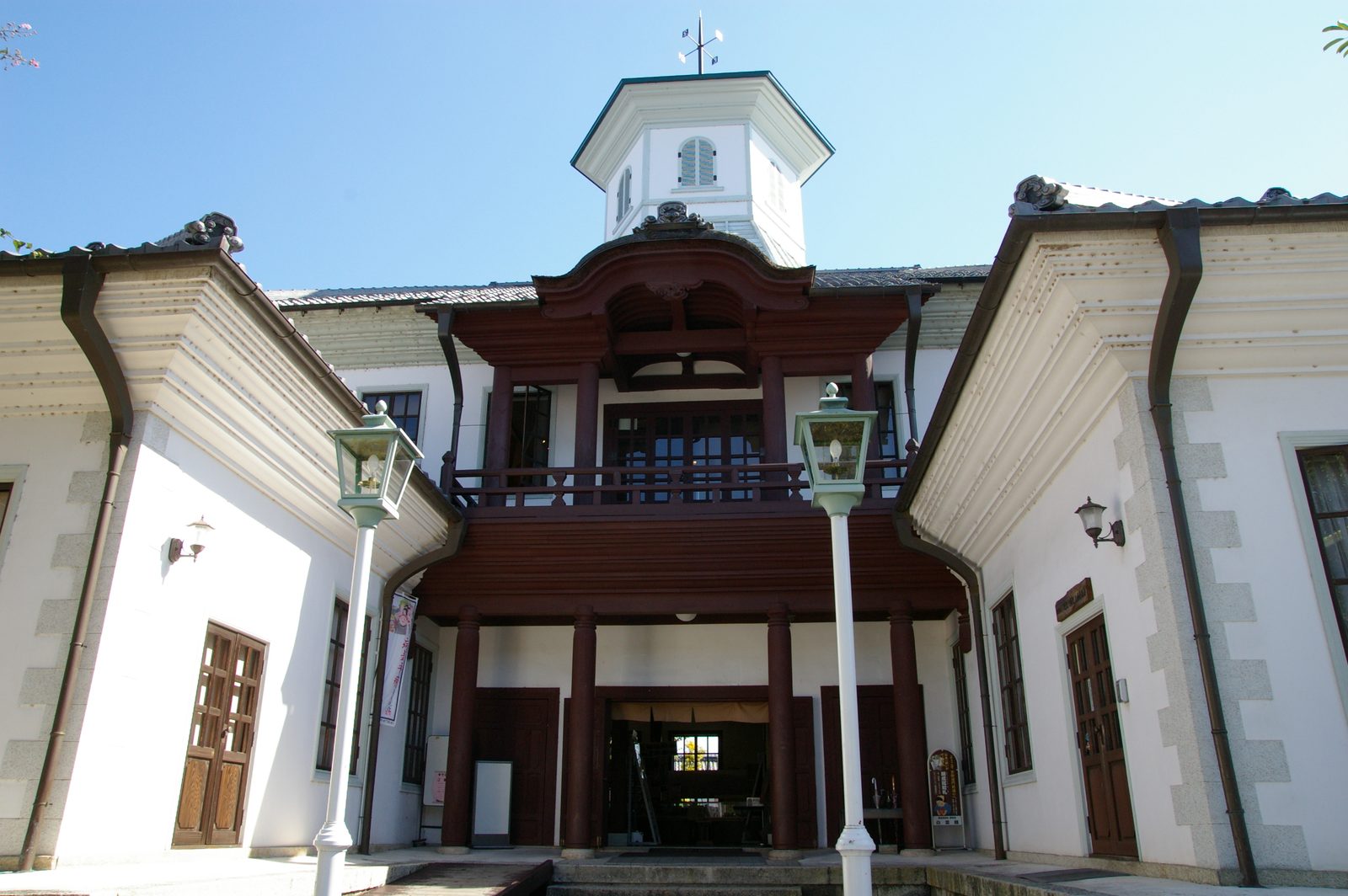
Nearby, Hakuunkan is a Western-style building from eighteen seventy-seven, built as the Hachiman East School with money put up by Omi merchants and local residents. Today it is a tourist information office and a nationally registered tangible cultural property.
The Kawara Museum is devoted to Hachiman roof tiles, a local industry that took root in the Edo period, and runs hands-on classes where visitors knead clay and shape it with molds or freehand.
Where to stay
Places to stay near Omihachiman →
Disclosure: This post may contain affiliate links. If you book through them, we may earn a commission at no extra cost to you.
William Merrell Vories and His Buildings
William Merrell Vories was born in Kansas in eighteen eighty and came to Japan at twenty-four, introduced through the YMCA, to work as a Christian missionary. He went on to design more than one thousand six hundred churches, schools, hotels and other buildings across Japan, and as a businessman he brought Mentholatum, sold today as Mentamu, to the country. After marrying Hitotsuyanagi Makiko he took Japanese citizenship as Hitotsuyanagi Mereru and became the first honorary citizen of Omihachiman, where more than twenty of his buildings survive.
The Hitotsuyanagi Memorial Hall, also called the Vories Memorial Hall, is his former home, designed by himself: a wooden Western-style house with a red tiled roof and a white chimney, now displaying his favorite books, personal effects and piano. It is a Shiga Prefecture tangible cultural property. The former Hachiman Post Office, built in nineteen twenty-one, had its curved Spanish-style entrance restored in two thousand four, and a cafe now shares the building.
The Mentamu museum of the Omi Brotherhood, the company Vories founded, sits on the ground floor of its office, shows the founding story and retro package designs, and is free to enter.
Where to Eat
Himure-an, in Nishimoto-cho, is a handmade soba restaurant in a mansion that once served as a shipping agent's house. The noodles use stone-milled flour from the Yatsugatake area of Shinshu, with a dipping sauce built on good kombu and bonito stock.
Next to the canal area, Himure Village gathers the Himure-no-ya of the Shiga confectioner Taneya and the Himure-kan of its Western-sweets brand Club Harie. Himure-no-ya serves seasonal sweets built around its tsubura-mochi and meals using Shiga ingredients.
HAKO TE AKO is a cafe in a registered tangible cultural property farmhouse more than a hundred and ten years old, inside the Omihachiman Youth Hostel in Maruyama-cho.
When to Go
- Late March to early April: cherry blossom and rapeseed flowers overlap on the Suigo-meguri, and the cherry trees by the Hakuun bridge frame the Hachimanbori landing.
- Spring and autumn: rooms of the Andrews Memorial Hall, the former YMCA hall that was Vories's architectural debut, are shown to visitors when they are normally closed.
- Autumn: Murakumo Gosho Zuiryuji Monzeki is known for its autumn colors. The temple was built for the repose of Toyotomi Hidetsugu, the adopted son whom Hideyoshi ordered to take his own life, and is said to have been founded by his mother, the nun Nisshu.
Further Out: Chomeiji Temple
The Omi Railway bus that serves the canal stop is bound for Chomeiji. The temple stands on the slope of Mount Chomeiji at about two hundred fifty meters above sea level and is the thirty-first of the thirty-three temples of the Saigoku Kannon pilgrimage. Tradition holds that in ancient times Takenouchi no Sukune prayed for long life on this mountain and that Prince Shotoku later founded the temple. The three Kannon statues in the main hall are national Important Cultural Properties, and the present main hall dates from a rebuilding in the Muromachi period.
A Sample Day and Where to Stay
- Morning: bus from JR Omihachiman Station to Hachimanbori Hachimanyama Ropeway-guchi, about seven minutes, then the ropeway, which starts at nine.
- Late morning: the Hachimanbori boat, which runs from ten in the morning to four in the afternoon and takes about half an hour.
- Midday: soba at Himure-an or sweets at Himure Village.
- Afternoon: the old quarter; the former Nishikawa residence closes at half past four.
- Any time: Himure Hachimangu, open for worship twenty-four hours a day.
If you would rather have someone else handle the details, browse guided tours that include Omihachiman. To see the canal without a train to catch, search places to stay in Omihachiman.