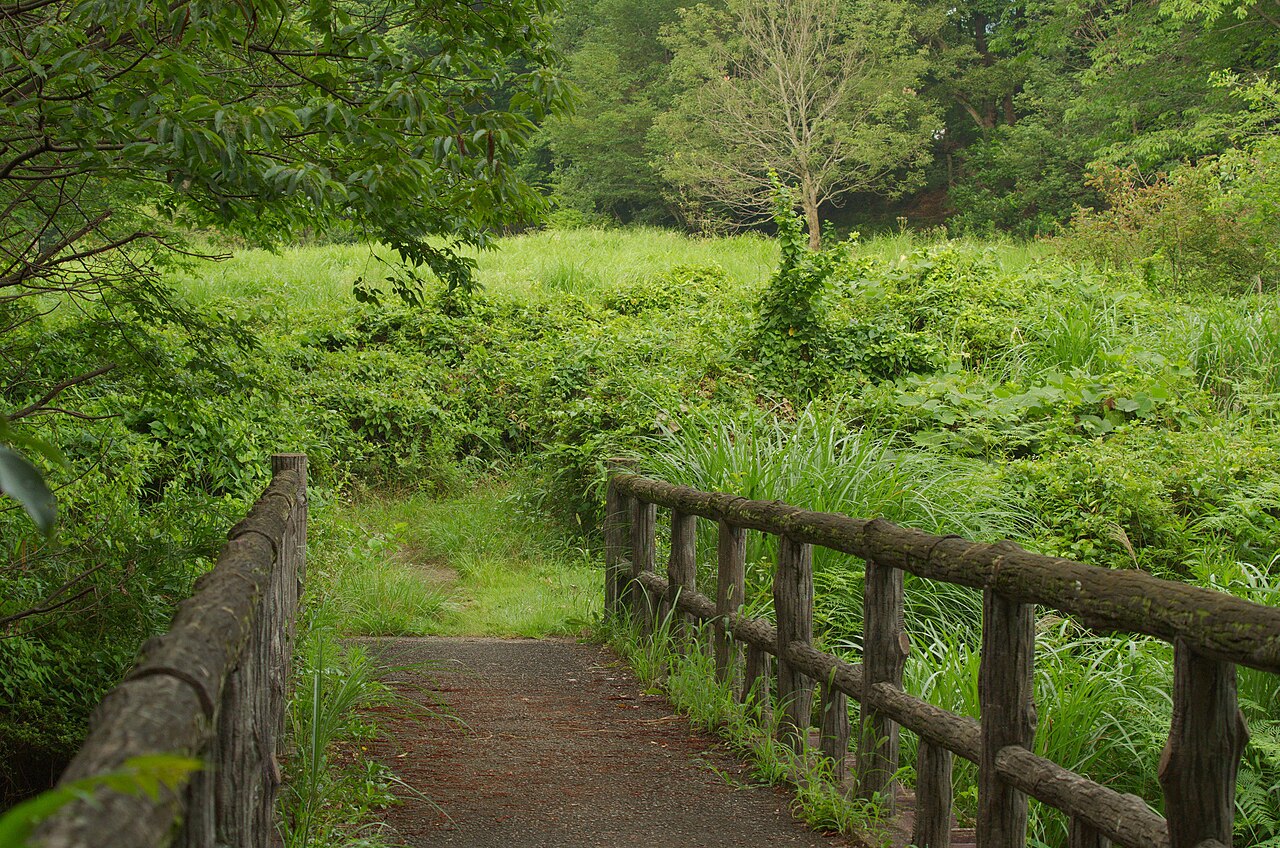
Ask a Tokyo day-tripper about Saitama's river gorges and you will hear about Nagatoro. Almost nobody mentions the other one. Musashi-Ranzan, a small town in the Hiki hills northwest of Tokyo, was celebrated a century ago for a stretch of the Tsuki River so scenic that it was described in guidebooks as the "New Nagatoro". The crowds never quite came, and that is the point of going. What remains is a walker's town: a sprawling medieval castle site, a river said to run glass-clear under red pines, and, in the hills one valley over, a mountain temple that the rulers of medieval Kamakura counted among the great monasteries of the east.
A castle site bigger than Kamakura's
Start at the Sugaya-yakata site, at the edge of town where the river meets the old road. According to one travel book, the site stood on the old Kamakura Highway, the military road that linked the eastern provinces to the shogun's capital, and it has been a strategic crossing since the Kamakura age. The Tsuki River is described in guidebooks as flowing directly past the castle grounds. According to one travel book, the first, second and third baileys, the earthen ramparts and the lines of the moats all survive in remarkably good order.
Walk the embankments and the scale sinks in slowly: one early visitor is said to have judged the compound far larger than the site of Yoritomo's own residence in Kamakura. What stands today is described in guidebooks as the work of later centuries, the defences most likely rebuilt and strengthened in the age of the warring states, so the walls you climb are not quite the walls of the famous man the place remembers.
That man is Hatakeyama Shigetada. His family's main seat is said to have lain further north, this compound serving as an outpost on the highway. He is described in guidebooks as a warrior of exceptional courage who never boasted of his deeds, warm in feeling and faithful to the end, a man Yoritomo trusted for as long as he lived. According to one travel book, in the summer of 1205 Shigetada rode out from Sugaya for the last time and died in battle at Futamatagawa against the forces of the Hojo. He is said to have been just forty-two. A local historian is said to have raised a memorial stone to him on the castle grounds, burying beneath it soil gathered from places tied to the Hatakeyama clan across Japan.
A small prefectural museum stands at the edge of the site and makes a good first stop for orientation. The museum is closed for the year-end and New Year holidays from December 29 to January 3.
The gorge they called the "New Nagatoro"
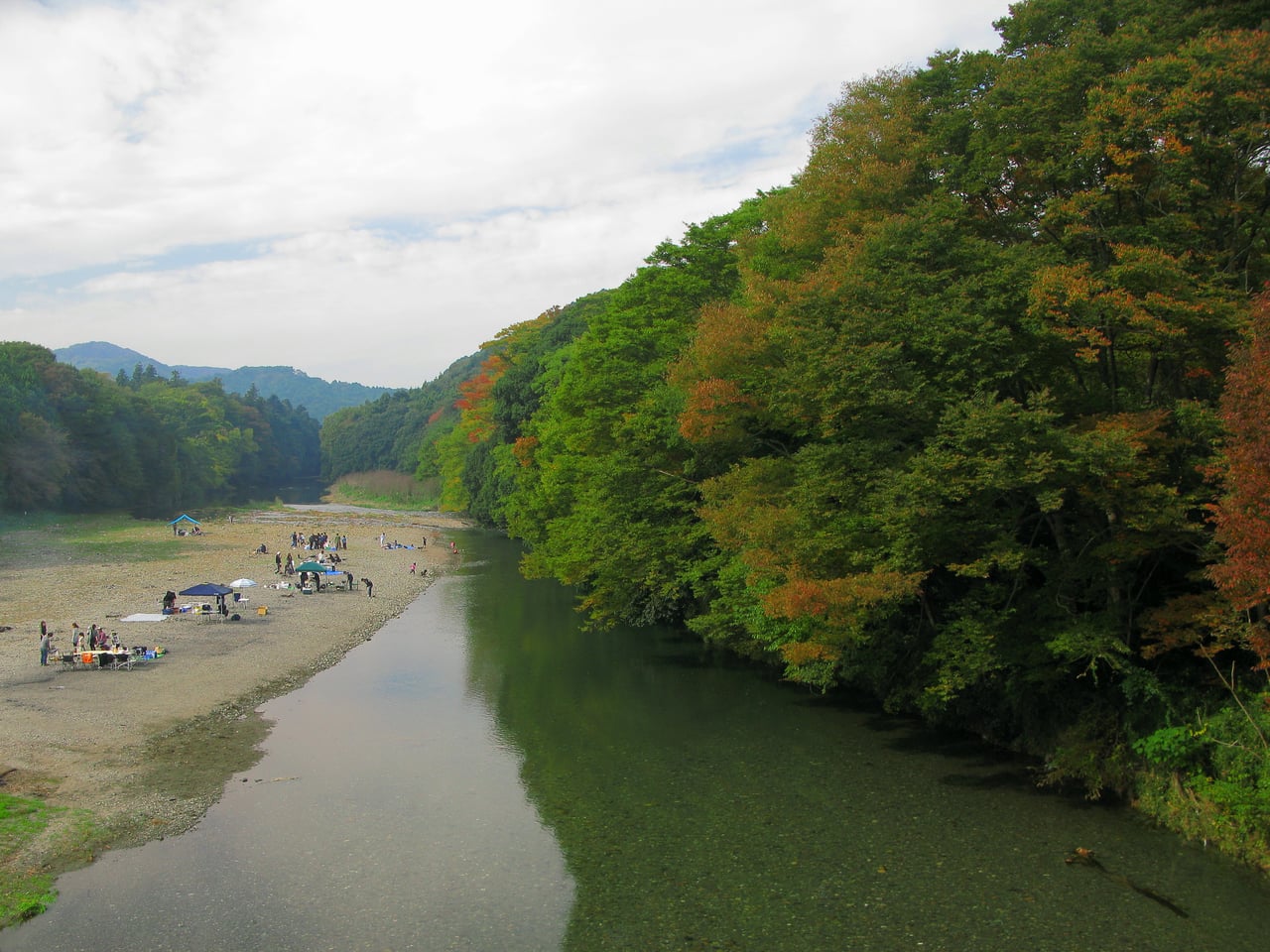
Follow the river upstream and the valley narrows. Guidebooks describe a run of water where the Tsuki, once known as the maple river, quickens over rapids and settles into deep green pools, with red pine woods and strangely shaped rocks crowding both banks. The water is said to be so clear that you can count the fish moving over the stones.
If that description reminds you of somewhere, it should: the original Nagatoro, with its rock terraces and river boats, lies deeper in the mountains to the west, and we cover it in a separate one-day itinerary. The Ranzan version asks less of you. There is no boat to catch and no queue to join; the reward is simply a riverbank, the sound of water on rock, and the feeling of having the view to yourself.
Where to stay
Disclosure: This post may contain affiliate links. If you book through them, we may earn a commission at no extra cost to you.
An offering of iron clubs
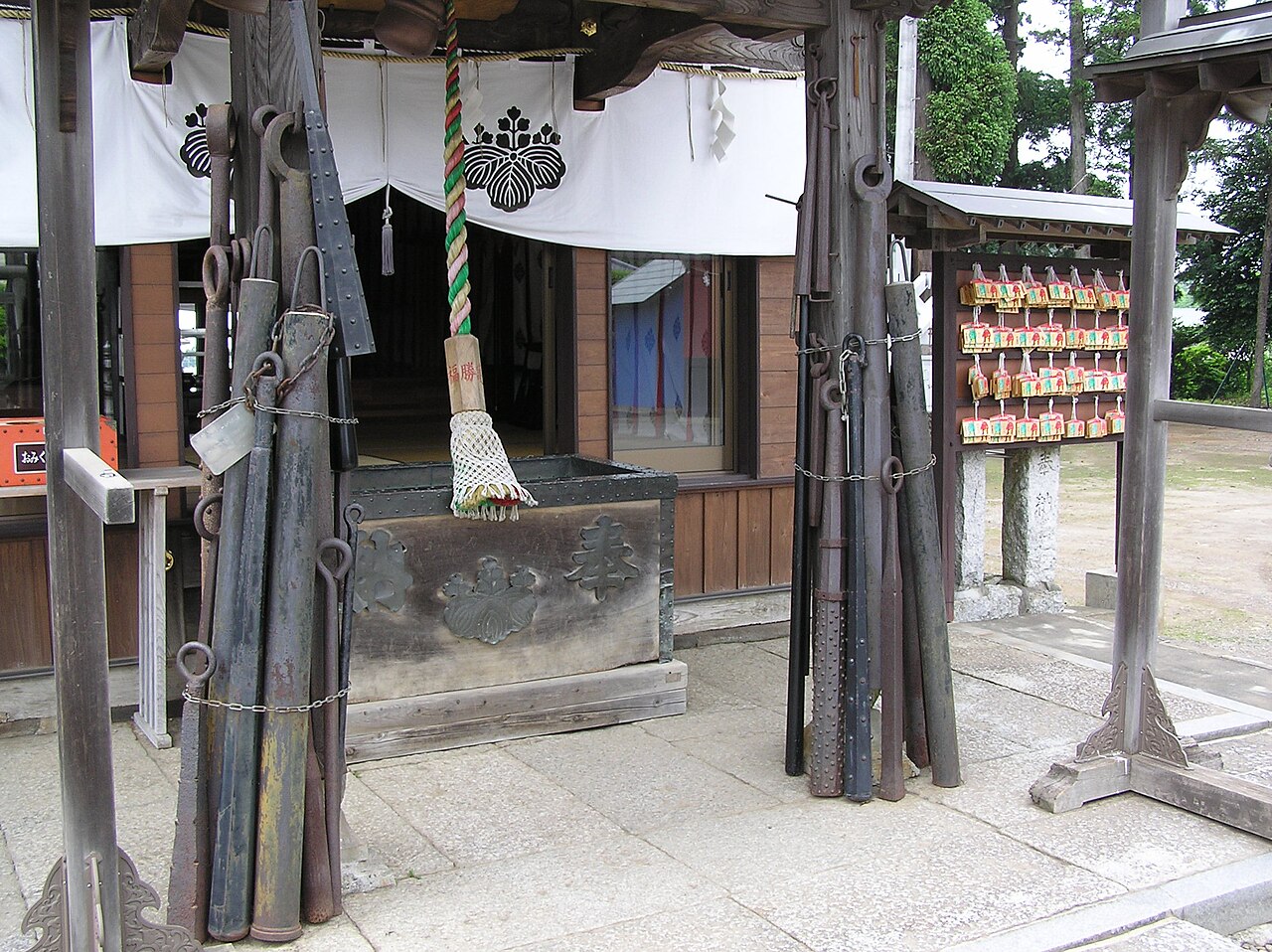
The town keeps one genuinely strange sight as well. At Kijin Shrine, elsewhere in town, rows of heavy iron clubs stand chained at the votive hall beside the wooden prayer plaques, offerings at a shrine devoted to a demon guardian — the kind of local oddity that rewards an unhurried day.
Kamagata Hachiman and the warlord's spring
A walk along the river south of the castle site brings you to the hamlet of Kamagata and its Hachiman shrine. According to one travel book, the shrine traces its founding to the general Sakanoue no Tamuramaro, and it preserved documents from the fifth Tokugawa shogun, whose government granted it a formal stipend. Old cedars are described in guidebooks as crowding the grounds with a solemn, holy air, and the shrine's treasures included a pair of small votive plaques cast in 1348 as well as a stray scroll from Jiko-ji's celebrated sutra set. A spring in the grounds is said to have supplied the first bathwater of the infant Kiso Yoshinaka, the tragic general of the Genpei war, and its water is said to be clear and faintly sweet.
Jiko-ji: the temple Kamakura remembered and Tokyo forgot
One valley to the south, in the hills of neighbouring Tokigawa, stands Jiko-ji. The temple is said to have been founded in 673, and it is described in guidebooks as one of the oldest temples of the Musashi region — "first in the Kanto", as older writers put it. A century ago a travel writer is said to have grumbled that a monastery famous across medieval Japan was all but unknown to the Tokyo public, a complaint that still quietly holds.
The medieval record is startling for somewhere so little visited. According to one travel book, the temple's prayers were valued by Minamoto no Yoritomo himself, who sent a sacred image here in 1189 to seek success for his northern campaign and rewarded the monks generously afterwards. According to one travel book, when hundreds of monks were summoned from across the east for a great memorial service in 1192, Jiko-ji's delegation was outranked only by Kamakura's two greatest institutions. The temple bell, according to one travel book, was cast in 1245, and its dedication still stands out in raised characters on the face of the bronze. The temple is also described in guidebooks as the keeper of a famous set of hand-copied sutra scrolls, National Treasures of which, from an original six hundred, only a portion survives — and even a century ago the surviving scrolls had been moved to a museum for safekeeping. Pilgrims are said to know it as the ninth stop on the Bando pilgrimage circuit, with the temple's Kannon as the object of devotion.
Getting up to the temple is part of the experience. According to one travel book, the last stretch is a mountain path climbing from a hamlet on the valley floor, the cedars growing older and taller as you rise. Along the way, according to one travel book, medieval stone prayer slabs taller than a standing adult line the path in rows.
Getting there, and the shape of the day
Musashi-Ranzan is reached on the Tobu Tojo Line from Ikebukuro; the castle site and the gorge are within walking range of the town, while Jiko-ji lies over the hill in neighbouring Tokigawa and takes more planning, by local bus and on foot. Seasonal operations and opening details change; check official information before visiting.
- Morning: the Sugaya-yakata earthworks, with the museum as a first stop.
- Midday: follow the Tsuki River into the gorge once called the "New Nagatoro".
- Afternoon: Kamagata Hachiman and Yoshinaka's spring — or give the afternoon to Jiko-ji if you have a full day and a taste for old stones.
If you would rather not hurry back to Tokyo the same evening, compare places to stay in Ranzan.