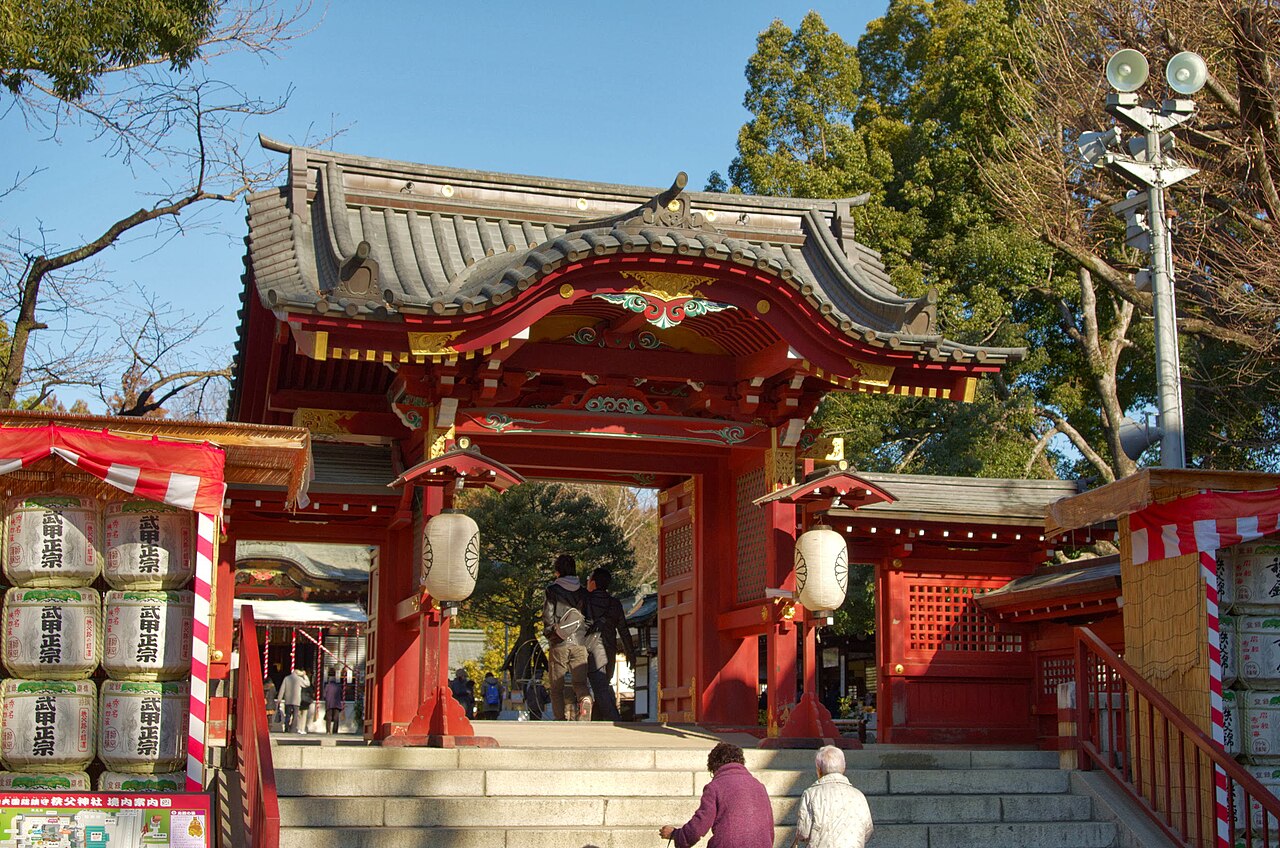
Everything in Chichibu's old centre seems to point back to one place: Chichibu Shrine. According to one travel book, the shrine stands in the Banba-machi area at the heart of the town in western Saitama, and in 1873 it was ranked as a prefectural shrine, a mark of its standing in the region. It is said to be one of the oldest shrines in eastern Japan, with a founding traced to the era of Emperor Sujin, when the head of the ancient Chichibu clan enshrined his ancestral deity here.
A shrine older than the town
According to one travel book, the shrine appears in the Engishiki, the classical register of shrines, and the national histories record that it received the senior fourth rank, lower grade, in 878, early in the Heian period. Its principal deities are described as Yagokoro-omoikane-no-mikoto and Chichibuhiko-no-mikoto, with Susanoo and Okuninushi enshrined alongside them. The old lineage records are said to name Chichibuhiko, a descendant of Omoikane, as the ancient governor who settled this land and guarded the approaches to the northeast.
According to the same book, the buildings burned to the ground after a lightning strike in 1235, and the Kamakura shogunate rebuilt them the following year; further rebuilding followed early in the fourteenth century. Shrine records are said to trace the priestly line back many centuries, with the Ranada family serving for generations after a restoration in 1397 ordered by Ashikaga Mochiuji. According to one travel book, the present sanctuary went up in 1591 and 1592, when Tokugawa Ieyasu granted the shrine an estate of 57 koku and ordered its construction; the main hall, offering hall and worship hall are joined in a single gongen-zukuri structure. A great fire in March 1878 is described as having torn through the surrounding town and destroyed many of the auxiliary buildings, while the main sanctuary survived.
According to one travel book, the title "Prince Chichibu" was conferred on Emperor Taisho's second son, Prince Yasuhito, in 1922, and the prince visited the shrine in November of that year.
The Myoken connection
The shrine is said to have taken the name Myoken-gu after an epidemic in the late seventh century prompted the enshrinement of additional deities alongside the polar star deity Myoken. Guidebooks describe how, when the sanctuary was rebuilt in 1592, the Myoken shrine was formally merged into the main building, with the ridgepole tablet from that construction recording the joint dedication. Chichibu's Myoken faith is said to be one source of the famous Myoken worship of Chiba as well, carried east by the warrior Muraoka Goro Yoshifumi after the battles with Taira no Masakado in the tenth century. The name of the old town itself, Omiya, meaning the great shrine, is described as deriving from this sanctuary.
Where to stay
Places to stay near Chichibu →
Disclosure: This post may contain affiliate links. If you book through them, we may earn a commission at no extra cost to you.
Festivals: the loud exception to a quiet town
Chichibu keeps its noise concentrated in a few spectacular dates. According to one travel book, the most famous is December 3, the annual festival known as the Chichibu Night Festival, when six festival floats from the town's parishes are hauled through the streets and stages of theatre and dance run from the night before. Fireworks are said to begin before dawn, with the full sequence of rites running deep into the night and finishing past two the following morning. Guidebooks describe the dawn fireworks, rockets and set pieces together, as a sight almost beyond words. According to the same book, on the evening of the festival the portable shrine is carried out and the floats are drawn up to Ohanabatake, the resting place south of the shrine also called Chichibu Park, before the deity returns. Even in the Edo period the scale is said to have been remarkable: one account records lantern processions crossing the fields to the resting place, with crowds lighting the night as bright as day.
Summer has a smaller echo of the same tradition. At the Kawase Festival on July 20, six lighter floats are said to tour the parishes from the morning of the 19th and accompany the procession to the Arakawa river, with the floats circling the town late into the night. On December 6, according to one travel book, the shrine holds a harvest thanksgiving at which offerings are presented and sacred kagura is performed. At the spring prayer festival on March 4, a rice-planting rite is described as re-enacting the whole farming year, from sowing to harvest, in its old form. According to one travel book, the same rite appears in a nineteenth-century local chronicle, which shows priests performing the full cycle of field work as a deliberately old-fashioned ceremony. At Setsubun in early February, sixty to seventy men born under the year's zodiac sign are said to volunteer for the demon-expelling rite, attending in formal dress, with lion dances, fireworks and theatre offered at the shrine.
If you come on any other date, you inherit the quiet those festivals leave behind.
The town before the gates
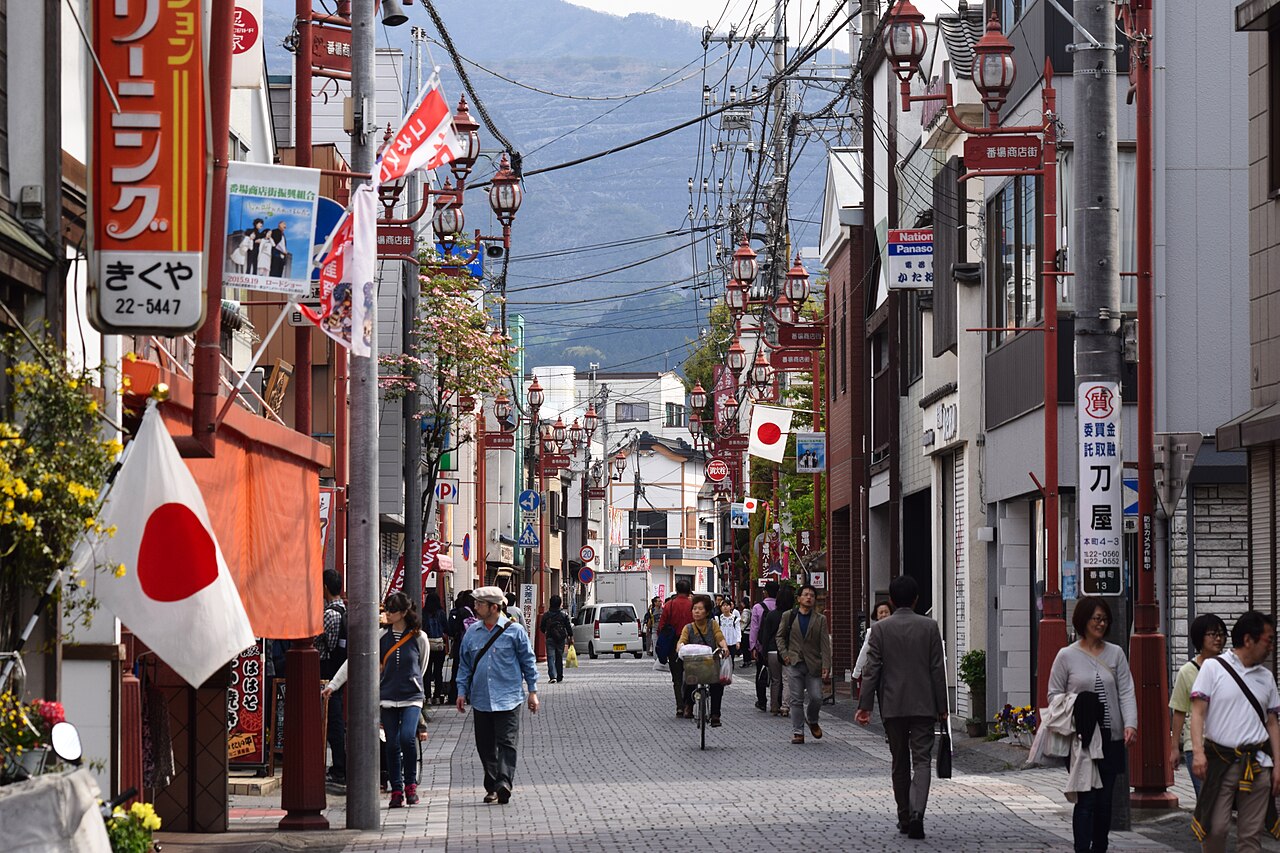
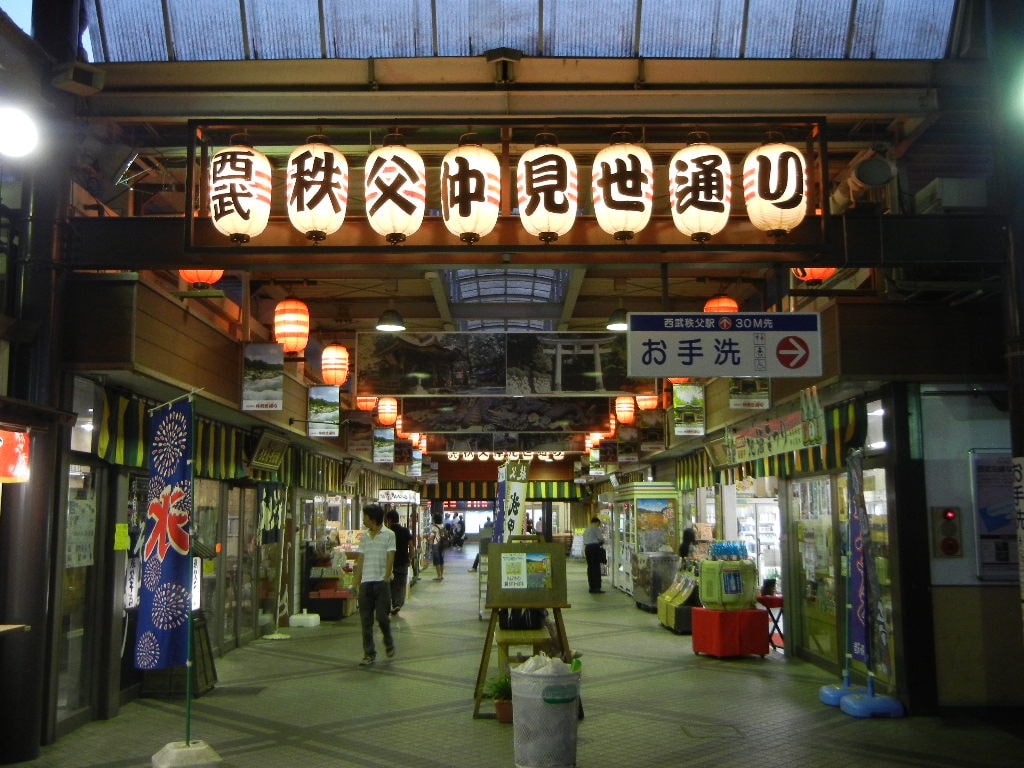
Guidebooks describe Chichibu as a monzen-machi, a town that grew up in front of the shrine gates. A chronicle of the region is said to record a great market held in the eleventh month, drawing merchants from Ueno, Shimotsuke, Shinano, Owari and Edo, with trade brisk enough to leave its mark in the histories. According to the same book, the precincts were recorded at 7,330 tsubo, shaded by cedar, cypress, zelkova, ginkgo, oak and cherry, with a shrine gate, a water pavilion, a kagura stage and other buildings standing among the trees. Outside festival dates, the approach and the shopping street in front of it move at the pace of a local errand rather than an itinerary.
Planning your visit
From Ikebukuro, the Limited Express Red Arrow runs direct to Seibu-Chichibu Station in about 80 minutes, with all seats reserved and no transfers needed. If you would rather make the ride part of the day, the SL Paleo Express steam service takes approximately 2 hours 40 minutes from Kumagaya Station to Mitsumineguchi Station. At the shrine itself, formal prayer ceremonies can be arranged from 5,000 yen upward. Details like these can change, so check official information before visiting.
If you want a structured day, a guided outing, a craft workshop or a festival-timed visit, browse tours and experiences around Chichibu. For broader ideas in the same direction, see day trips from Tokyo.
Come on an ordinary morning, give the old sanctuary your unhurried attention, and let the town set the tempo. That is Chichibu at its best.