Oshima lies a short crossing off the Munakata coast in Fukuoka Prefecture, and it is small enough that one unhurried day covers it. The island is home to Nakatsumiya, one of the shrines of Munakata Taisha, which stands a few steps from the port, and a place of worship elsewhere on the island looks out across the water toward Okitsumiya. If quiet is what you came for, check the festival dates described below and choose a different day. The crossing from Konominato takes about fifteen to twenty-five minutes depending on the boat, which is short enough to make a morning start and an afternoon return feel natural.
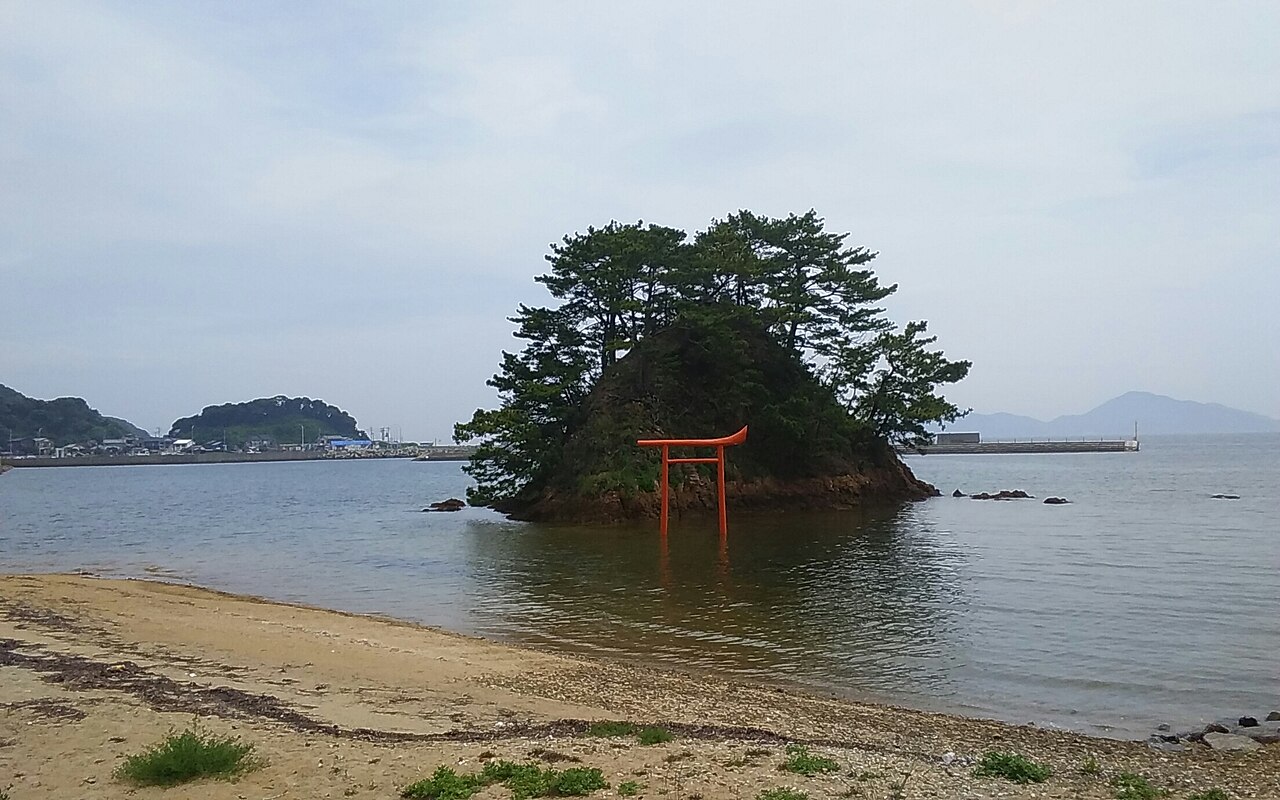
Yume no Sayojima, the pine-topped islet with a vermilion torii in the shallows.
The crossing from Konominato
Boats to Oshima leave from Konominato, the port on the Munakata coast. Two kinds of vessel work the route, and the difference matters if you are counting minutes. The ferry Oshima takes about twenty-five minutes between Konominato and the island. The passenger boat Shiokaze does the same crossing in about fifteen minutes. Either way the trip is short enough that the sea, not the seat, is the point.
The published one-way fares for the Oshima route are these:
| Ticket | One-way fare |
|---|---|
| Passenger, Oshima to Konominato | 570 yen adult / 290 yen child |
| Car ferry, vehicle under 3 m | 3,090 yen |
| Car ferry, vehicle 3 m to under 4 m | 3,830 yen |
| Car ferry, vehicle 4 m to under 5 m | 5,020 yen |
| Car ferry, vehicle 5 m to under 6 m | 5,870 yen |
A car is unnecessary on the island itself; the places most visitors want sit close to the port, on foot or by bicycle. If you would rather have someone else handle the boat and the timing, there are a few tours from Munakata worth a look before you commit to doing it alone.
On foot, or on a rented bicycle
The port terminal is the starting point for everything, and the listed figures give these times from it:
| Spot | On foot | By bicycle |
|---|---|---|
| Munakata Taisha Nakatsumiya | about 5 minutes | about 1 minute |
| Yume no Sayojima | about 10 minutes | about 5 minutes |
| Munakata Taisha Okitsumiya Yohaisho | about 25 minutes | about 10 minutes |
The figures wobble a little from page to page. One listing gives Nakatsumiya as about a three-minute walk from the ferry terminal. Another puts the Okitsumiya Yohaisho at about a forty-five-minute walk from the ferry terminal. Plan on the longer figure and the shorter one becomes a pleasant surprise.
A rental bicycle on Oshima costs fifteen hundred yen per rental. The rental operates from eight in the morning to six in the evening. On a normal day that window is wider than the day itself needs to be, so there is no reason to rush the first turn of the pedals.
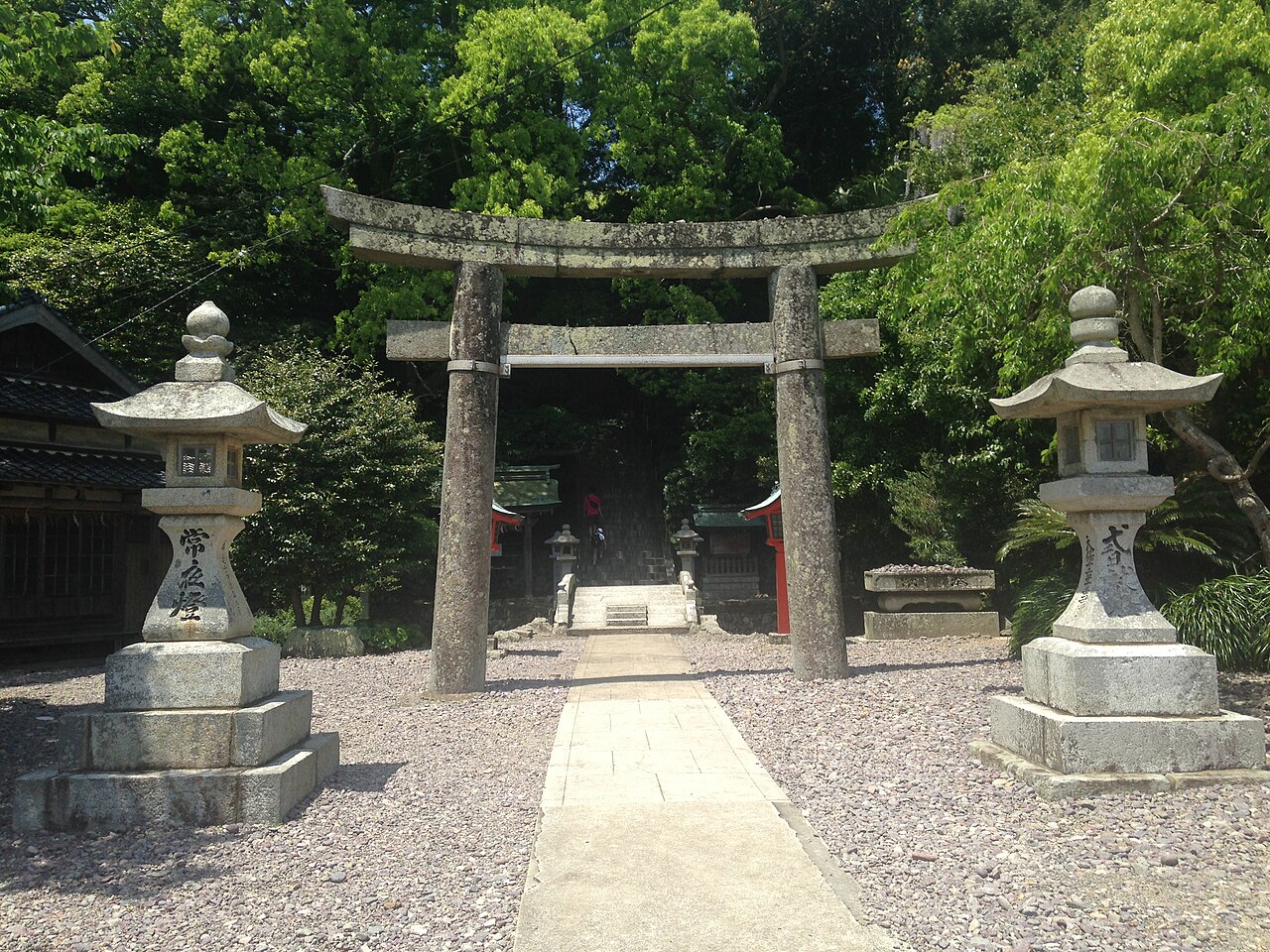
The approach to Nakatsumiya begins at a mossy stone torii, with the steps and a small vermilion hall beyond.
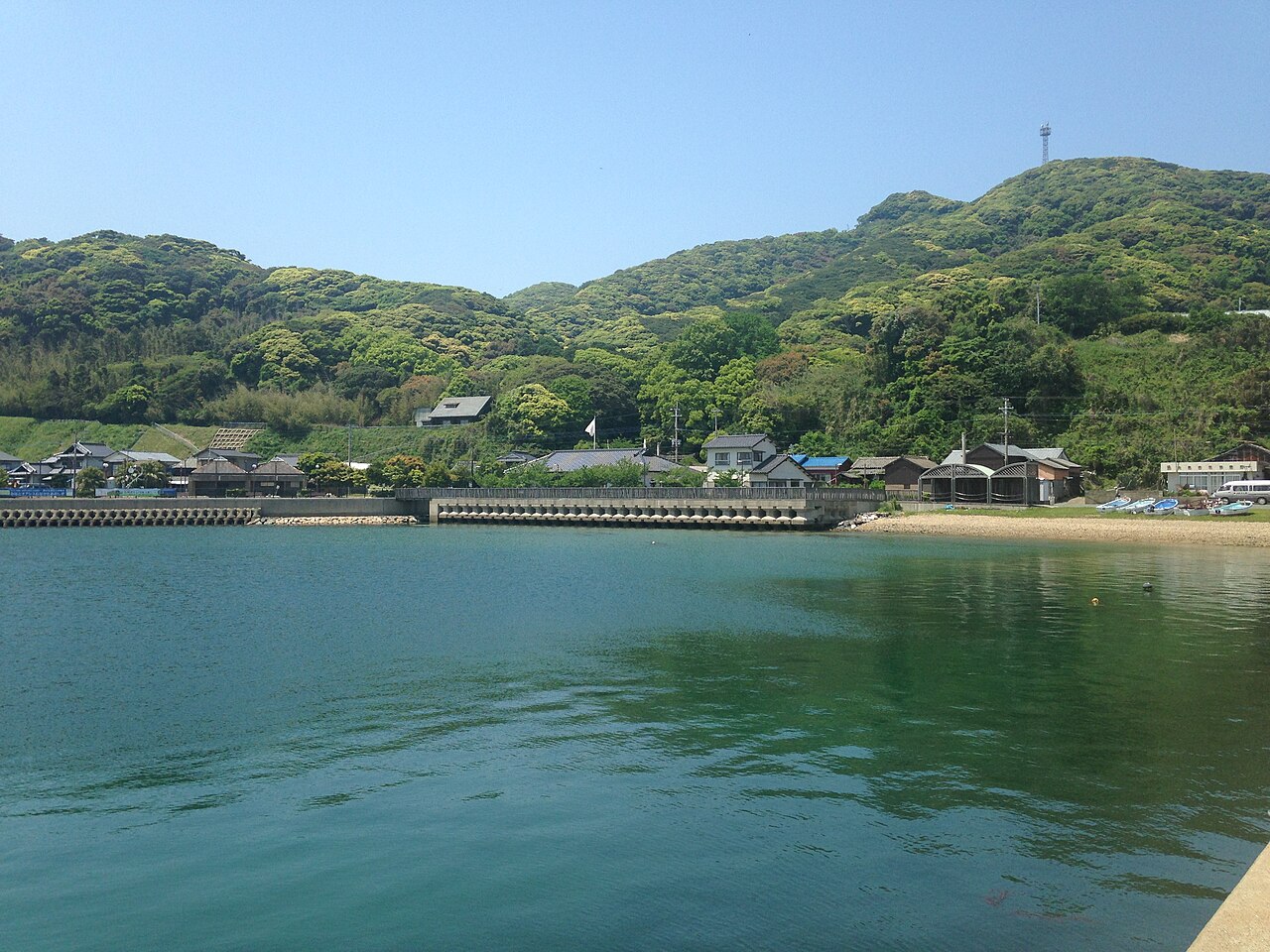
Where to stay
Places to stay near Munakata, Fukuoka, Japan →
Disclosure: This post may contain affiliate links. If you book through them, we may earn a commission at no extra cost to you.
Nakatsumiya and the view toward Okitsumiya
Nakatsumiya is the island's own shrine, part of Munakata Taisha. Its halls, with their bark-brown roofs, stand against the trees, and vermilion lanterns line the way in. It is about a five-minute walk from the port terminal to Nakatsumiya, so it is usually the first and the last thing visitors see. Nakatsumiya and Okitsumiya hold their spring and autumn grand festivals on the fifteenth day of the third month and the fifteenth day of the ninth month of the lunar calendar, which means the dates shift on the Western calendar from year to year.
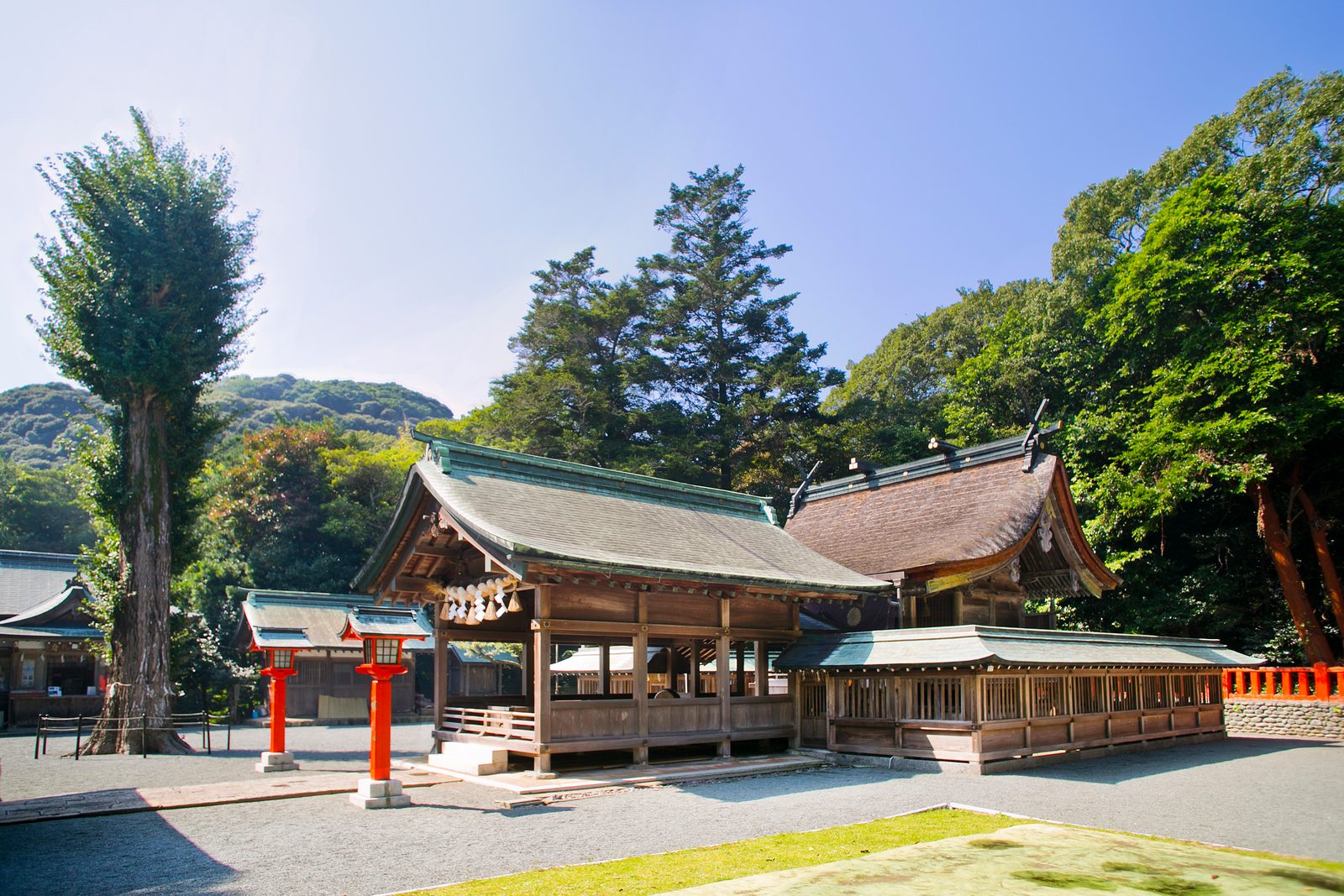
The halls of Nakatsumiya against the trees on a clear day.
Away from the port, the Okitsumiya Yohaisho is a place to pray toward Okitsumiya across the water, rather than a shrine you enter. It is about a twenty-five-minute walk from the port terminal to the Yohaisho. Elsewhere on the island a red windmill stands on a grassy rise, with nothing behind it but sea and sky.
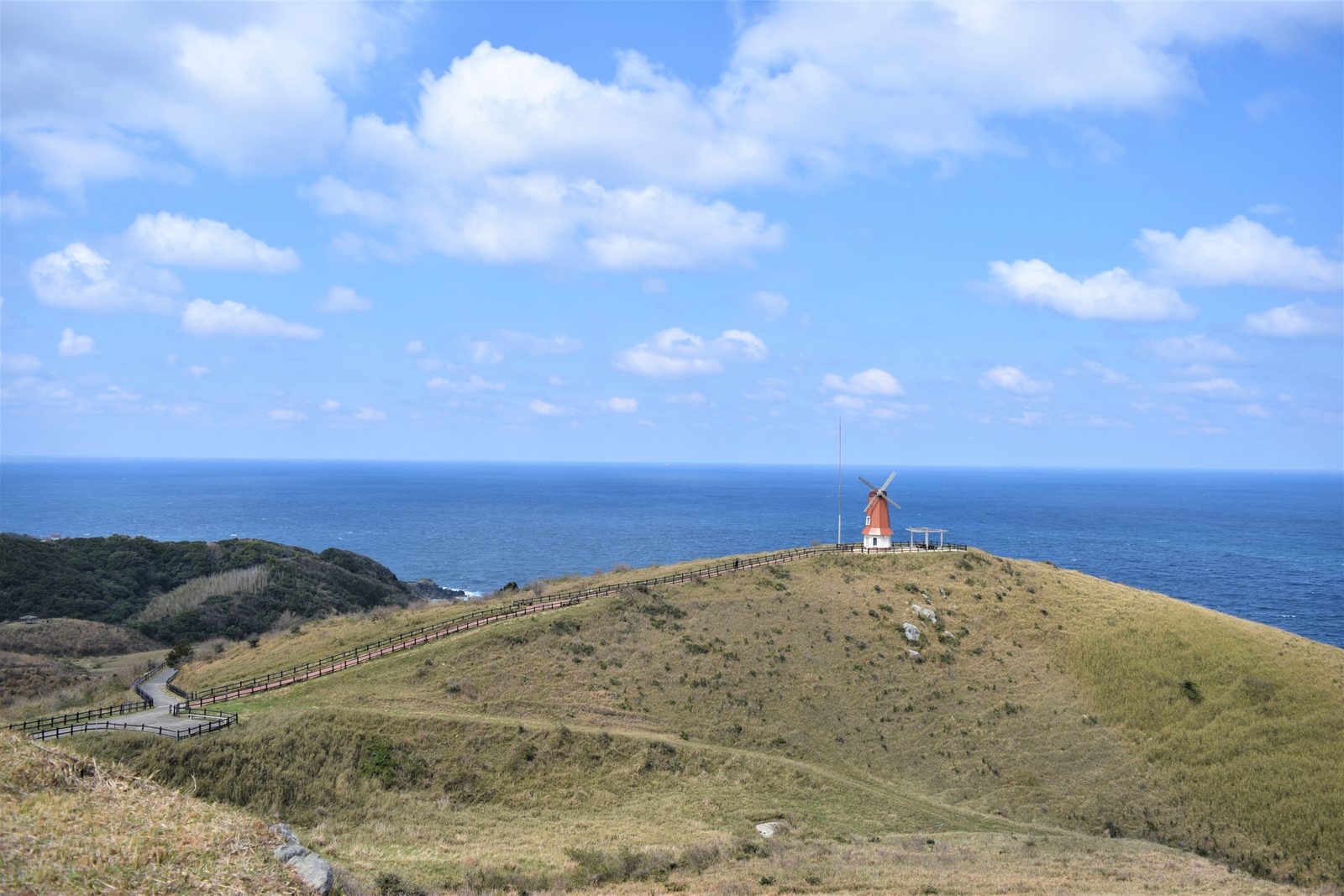
The red windmill on its grassy rise, with the sea behind it.
Eating on the island
Island food leans toward fish, and lunch here is a midday affair rather than an evening one. The listed prices give a sense of the range:
| Place | Dish | How much |
|---|---|---|
| Kotobukiya Saburo | Tokubetsu Kaisen-don | 2,200 yen |
| Kitchen KAIKYU | Natural Sea Bream Sandwich / set with fried chicken and a drink | 900 yen / 1,400 yen |
| Musubi Cafe | Fish & Chips | 500 yen |
| Musubi Cafe | Oshima Lemonade | 300 yen |
| Meshidokoro Harunohi | Harunohi Gozen | 16,500 yen including tax |
Kotobukiya Saburo serves from eleven in the morning to three in the afternoon. Kitchen KAIKYU runs from eleven in the morning to five in the afternoon. Musubi Cafe is open from ten in the morning to four in the afternoon. The Harunohi Gozen is a different kind of meal from a sandwich eaten by the harbor, and it belongs to a different kind of day; the sandwich and the lemonade are what most quiet-day visitors will actually want.
The days when Oshima is not quiet
Two dates change the island's character. The Oshima Tanabata Festival is held on the seventh of August. Stage events and food stalls start from five in the afternoon. The Tanabata shrine ritual at Nakatsumiya is held from eight in the evening. Extra charter boat service operates from around nine in the evening. Charter-boat-only tickets are sold at the festival venue entrance from around six in the evening.
The Miare Festival is held every year on the first of October. It is a sea parade of more than four hundred boats from the seven Munakata ports, running from Oshima to Konominato. These are the days to come if you want the island at full voice, and the days to avoid if quiet is what you came for.
Before or after the crossing: Munakata Taisha's treasure hall
The Shinpokan, the treasure hall of Munakata Taisha, pairs well with the island on the same trip. The listed entry prices, which fold in a facility maintenance cooperation contribution, are these:
| Visitor | Entry |
|---|---|
| General | 800 yen |
| High school and university students | 500 yen |
| Elementary and junior high school students | 400 yen |
Groups of twenty or more paying in one sum, and visitors aged sixty-five or over who show a senior card, get two hundred yen off Shinpokan admission. The Shinpokan is open from nine in the morning to half past four in the afternoon, with last admission at four. Near Munakata Taisha, the Munakata Chayu cafe keeps to ten in the morning to three in the afternoon on weekdays and nine in the morning to four in the afternoon on weekends and holidays, which suits a rest after the hall better than a lunch.
If a single day feels too tight, there are places to stay in Munakata that make an early crossing easy and let you give the island a second, slower morning. For most people, though, one quiet day is exactly the right amount: a short boat, a shrine by the port, a windmill above the sea, and a sandwich before the boat home.