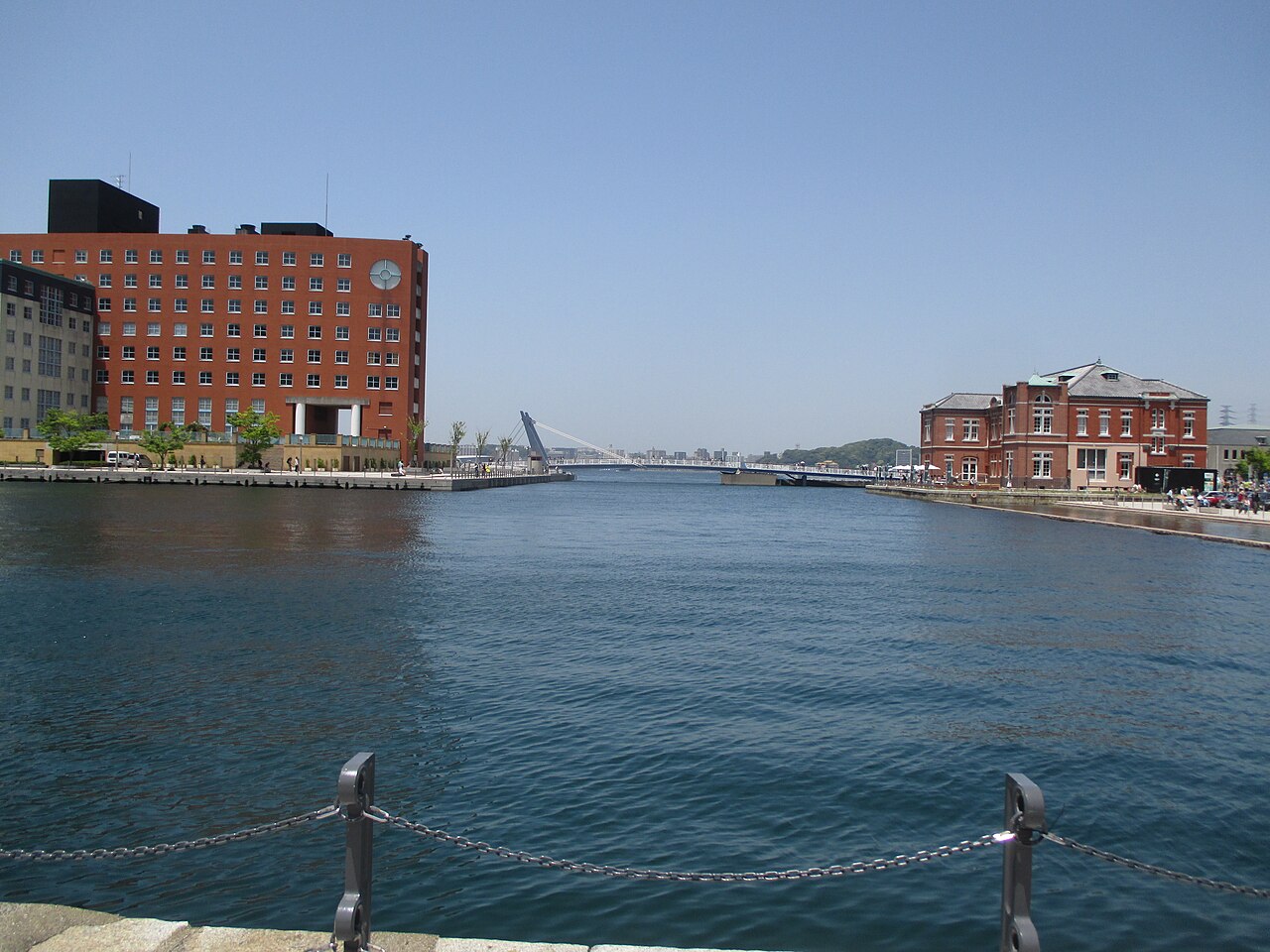
At the northern tip of Kyushu, where the island narrows toward Honshu across the Kanmon strait, an old port has kept its face while the world moved on. Moji once handled ships and cargo bound for the continent, and the firms that grew around the piers put up buildings meant to impress. Many of them still stand, close enough together that the whole quarter can be seen on foot at an easy, unhurried pace.
A port that kept its buildings
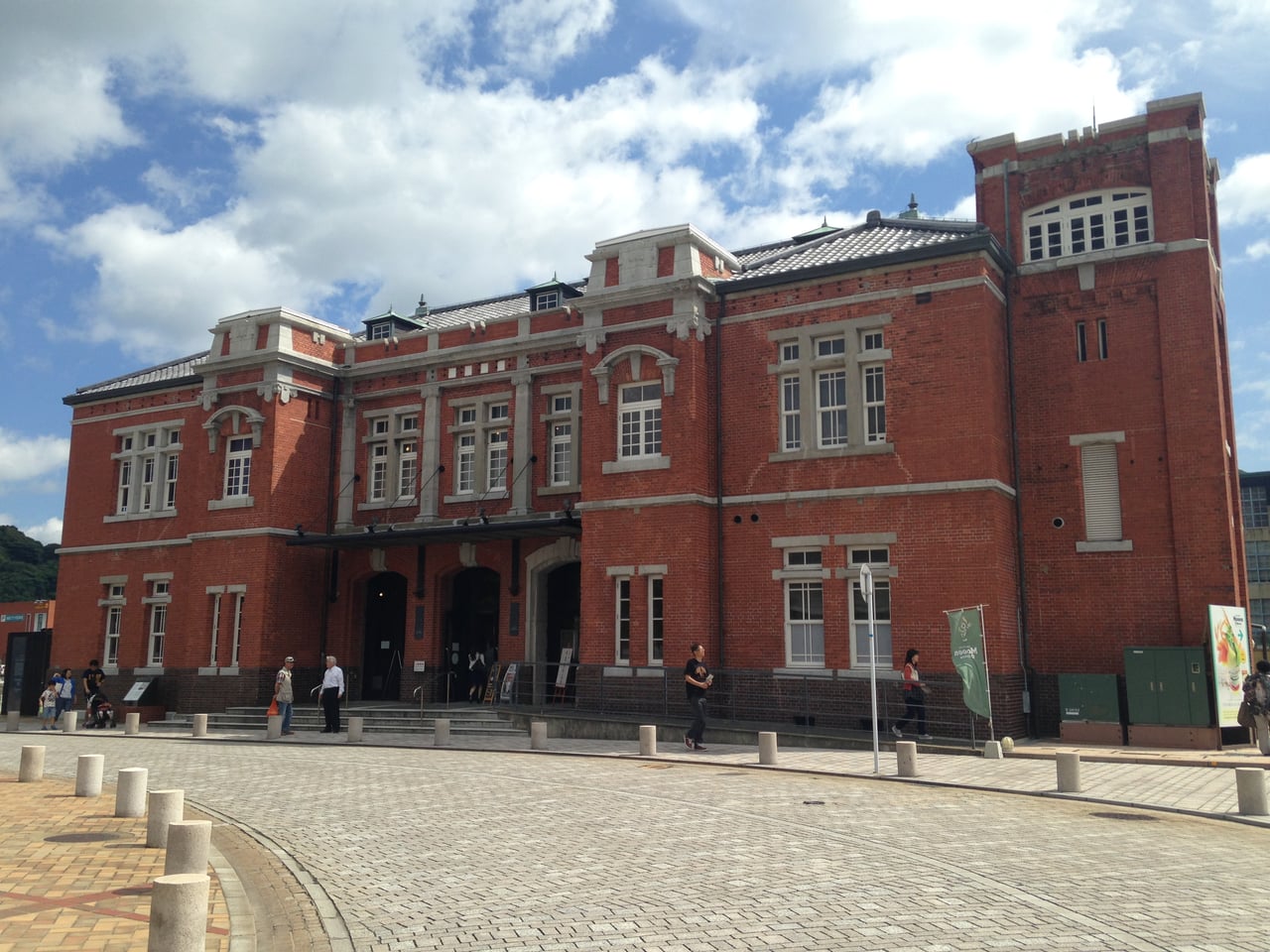
The former Moji Customs building went up in the first decade of the twentieth century, burned down, was rebuilt a few years later, and was restored in a neo-Renaissance style in the nineteen-nineties, when it was opened to the public. The former Osaka Shosen building, raised in the late nineteen-tens for a shipping line, wears orange tile with white stone bands, and its octagonal tower once served in place of a lighthouse. Osaka Shosen was, at the time, the eighth-largest shipping company in the world. Inside the ground floor of that same building, a gallery devoted to the illustrator Watase Seizo fills what was once the waiting room for passengers. The Home Ringer trading company, begun by an English merchant who came out of the famous Glover firm, still does business from a pink-and-white building with half-round windows put up in the early nineteen-sixties. The Moji branch of a storied Yokohama bank keeps its English classical front with two great columns, and because it is a working bank, the viewing is from the outside.
Along the water
Guidebooks describe the Blue Wing Moji as a drawbridge beloved of couples, certified as a lovers' sanctuary. According to travel guides, the first pair to cross after the bridge comes back down will stay together for good. Guidebooks describe the Shinkaiun building, a wooden three-story block from the early Showa years built on the concept of a ship, as a warren of small shops and eateries. According to travel guides, Moji is where the banana street-hawker's chant began, and a banana statue outside the Kaikyo Plaza shopping arcade marks the spot. Farther along the shore, the Moji Red Brick Place began as an imperial beer works in the early nineteen-tens, kept brewing until the turn of the millennium, and all four of its buildings are now registered cultural properties. Guidebooks describe the small brick museum on the grounds as a record of Sakura Beer and the Sapporo years that followed.
Museums and lookouts
The Moji Telecommunications Retro Hall occupies a telephone-era government building from the nineteen-twenties. According to travel guides, you can try dial telephones and tap out Morse code inside. Nearby, the Dalian Friendship Memorial Hall reproduces the office of a shipping arm of the old East Qing railway. Kitakyushu and the Chinese city of Dalian became friendship cities in the late nineteen-seventies. The Kanmon Strait Museum, renewed in the late twenty-tens, turns the water itself into the exhibit, with a vast screen it calls the strait atrium and a floor of hands-on strait experiences. Guidebooks describe the museum's upper deck as a place to watch the ships go by. Guidebooks describe the Mojiko Retro Observation Room as a lookout from far above the town, set near the top of a high-rise planned by the architect Kurokawa Kisho. Admission to Mojiko Retro Observation Room costs 300 yen for adults. For elementary and junior high school students, admission costs 150 yen.
Crossing the strait
The strait is the whole point of Moji, and the shortest way to feel it is to cross it. The ferry between Shimonoseki (Karato) and Mojiko takes approximately 5 minutes. The one-way adult fare for the Kanmon ferry is 400 yen. For children, the one-way fare is 200 yen. On the far side lies Karato, and the crossing itself, with its engines and gulls and the pull of the tide, is the memory you keep. If you would rather see the strait on a longer ride, you can browse cruises and guided outings around Mojiko and the Kanmon strait.
Getting there
Mojiko is the end of the line, and arriving feels like it. From JR Hakata Station, the Shinkansen to Kokura takes 16 minutes. From JR Kokura Station, the train to Mojiko takes 15 minutes. From JR Hakata Station, the train to Mojiko takes approximately 1 hour 30 minutes. Whichever way you come, the last stretch rolls along the water into the old terminus.
New to rural buses and one-man trains? See how to ride them, step by step.
Where to stay
Places to stay near Kitakyushu →
Disclosure: This post may contain affiliate links. If you book through them, we may earn a commission at no extra cost to you.
Taking it slowly
Mojiko rewards the visitor who is not in a hurry. Come on a weekday morning, walk the waterfront before the day fills in, cross the water once just to cross back, and let the ferries set the rhythm of your afternoon. The buildings have been waiting for more than a century, and they are not going anywhere.