Mitsumine Shrine is not a place you pass on the way to somewhere else. It stands near the crest of a wooded ridge deep in the Chichibu mountains of Saitama, and the last stage of getting there is a long climb through cedar forest, switchback after switchback, until the valley floor drops out of sight below. That distance is the whole reason to go, and it is also the reason this trip rewards planning more than most.
The journey, and how long it really takes
There are two legs, and it is the second one that people underestimate.
From Ikebukuro, the Seibu Railway Limited Express takes 1 hour 20 minutes to Seibu-Chichibu Station. From Seibu-Chichibu Station, the Seibu Kanko express bus takes approximately 80 minutes to Mitsumine Shrine.
Back to back, that is a little over two and a half hours in each direction, before any wait at the interchange. So plan the day around the bus rather than the train. Buses up the mountain run far less often than trains into Chichibu, and the last one down is what really sets the shape of everything before it. Timetables shift with the season, so check official information before visiting.
There is a second way in for anyone who would rather ride the valley line: change at Ohanabatake for the Chichibu Railway, ride to its terminus at Mitsumineguchi, and pick up a bus from there.
What the shrine itself costs
Two of the shrine's own figures are worth knowing before you arrive, because both come as a surprise to visitors expecting a small mountain shrine.
The one-year loan fee for the shrine's guardian wolf charm, protection against fire and theft, is 5,000 yen, and the charm must be returned. The prayer fee for a formal ritual is 50,000 yen or more.
The wolf charm is the reason a great many Japanese visitors come at all, and the borrowing-and-returning cycle is what brings families back year after year.
Where it stands, and what surrounds it
According to the cited book, the shrine occupies a roughly 1,100-metre shoulder ringed by the three peaks of Kumotoriyama, Shiraiwayama and Myohogatake. According to the cited book, Myohogatake is a 1,382-metre peak to the southeast, and it carries the shrine's inner sanctuary, the okumiya. According to the cited book, Kumotoriyama is a 2,018-metre summit further south again, the highest point of the range.
The name Mitsumine carries two meanings at once: the mountain the shrine stands on, and the three summits taken together. That ambiguity is not carelessness — it is the older way of seeing the place, as one sacred massif rather than one building.
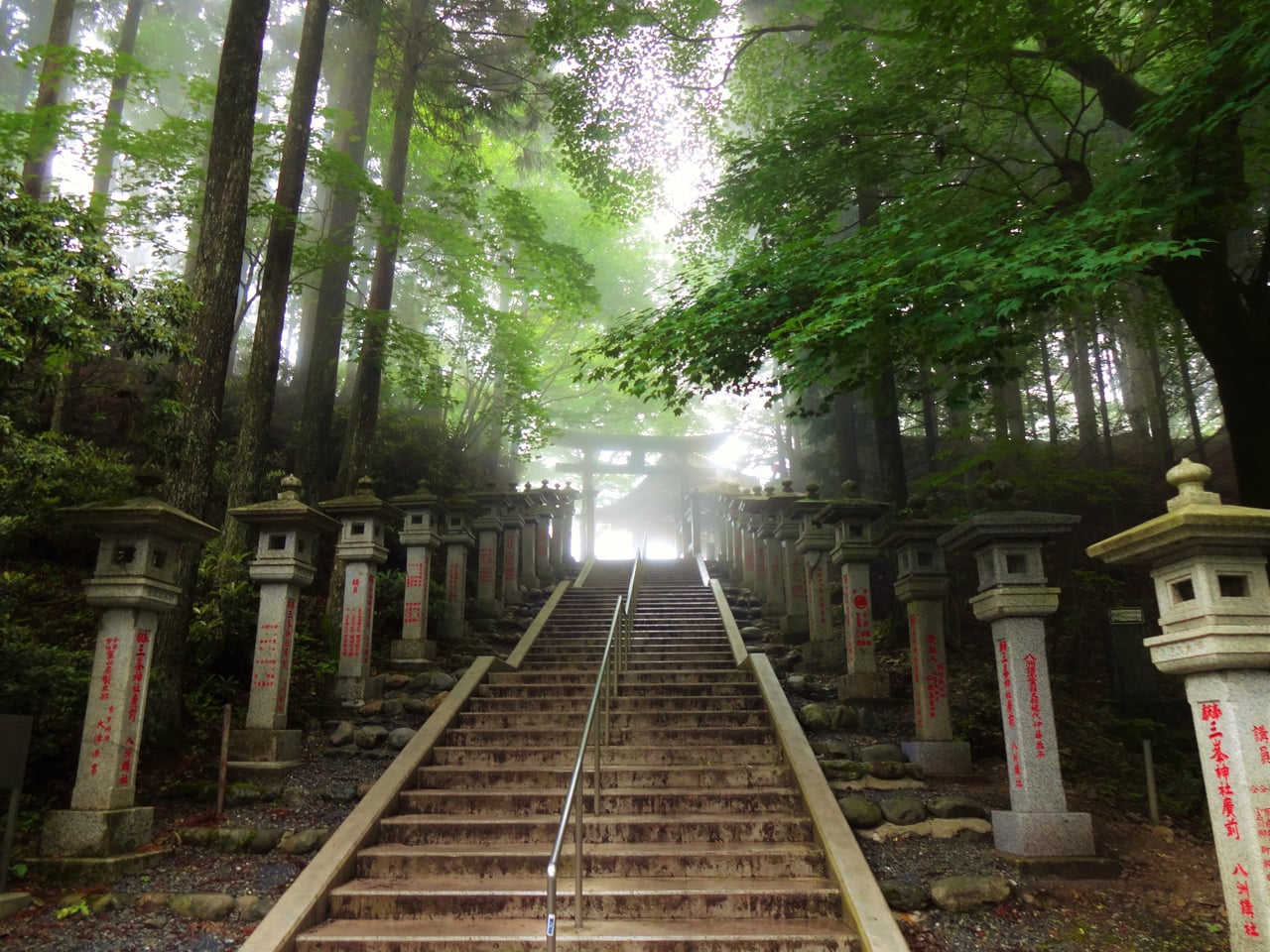
Before the road existed, pilgrims walked. According to the cited book, the old climb from the second torii gate to the main shrine ran fifty-two cho, roughly 5.7 kilometres of switchbacks, with the Seijo waterfall on the left about twenty cho up. The approach was so severe that writers likened it to the mountain roads of Shu in China, and only after the Meiji era did roads and bridges reach the foot of the mountain and horse coaches, then motor cars, begin to run.
Wolves instead of lion-dogs
At Mitsumine, the wolf is enshrined as the messenger of the deities, a protector of households and of the people in them.
In older Japanese usage the wolf is said to have been called Okuchi-no-magami, the large-mouthed true god, and to have been held in particular awe among wild animals. The shrine's reputation is said to rest on that guardianship: protection against fire and theft, against illness and grave misfortune, and across the silk-farming country of Chichibu, protection of the silkworms. The old accounts cut both ways, and they are worth reading in that spirit — anger the wolf messenger and a household is said to be ruined, keep faith with it and disaster is said to pass you by. The novelist and scholar Koda Rohan, writing on the subject, put the mountain's prosperity down to precisely this: worshippers coming from every direction to ask for a wolf talisman, in a deep valley where the old habit of fearing and honouring the wolf had survived. The pattern was regional rather than unique, and neighbouring shrines in the Chichibu hills lent out wolf talismans in the same way.
Where to stay
Places to stay near Chichibu →
Disclosure: This post may contain affiliate links. If you book through them, we may earn a commission at no extra cost to you.
The buildings, and what to look for
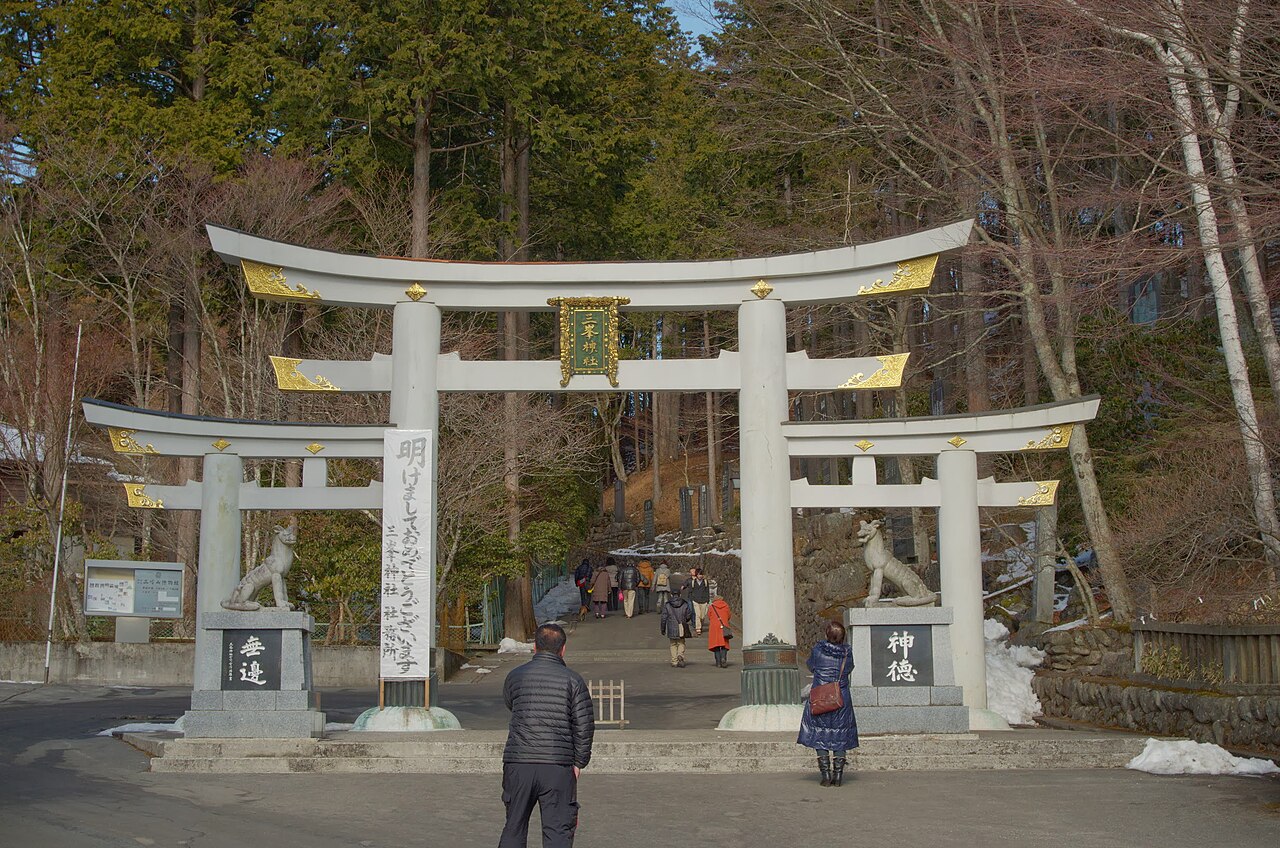
At the entrance stands a three-part torii, gates of the myojin type combined into a single rare form, and the figures set before it are the shrine's divine messengers rather than the usual lion-dogs.
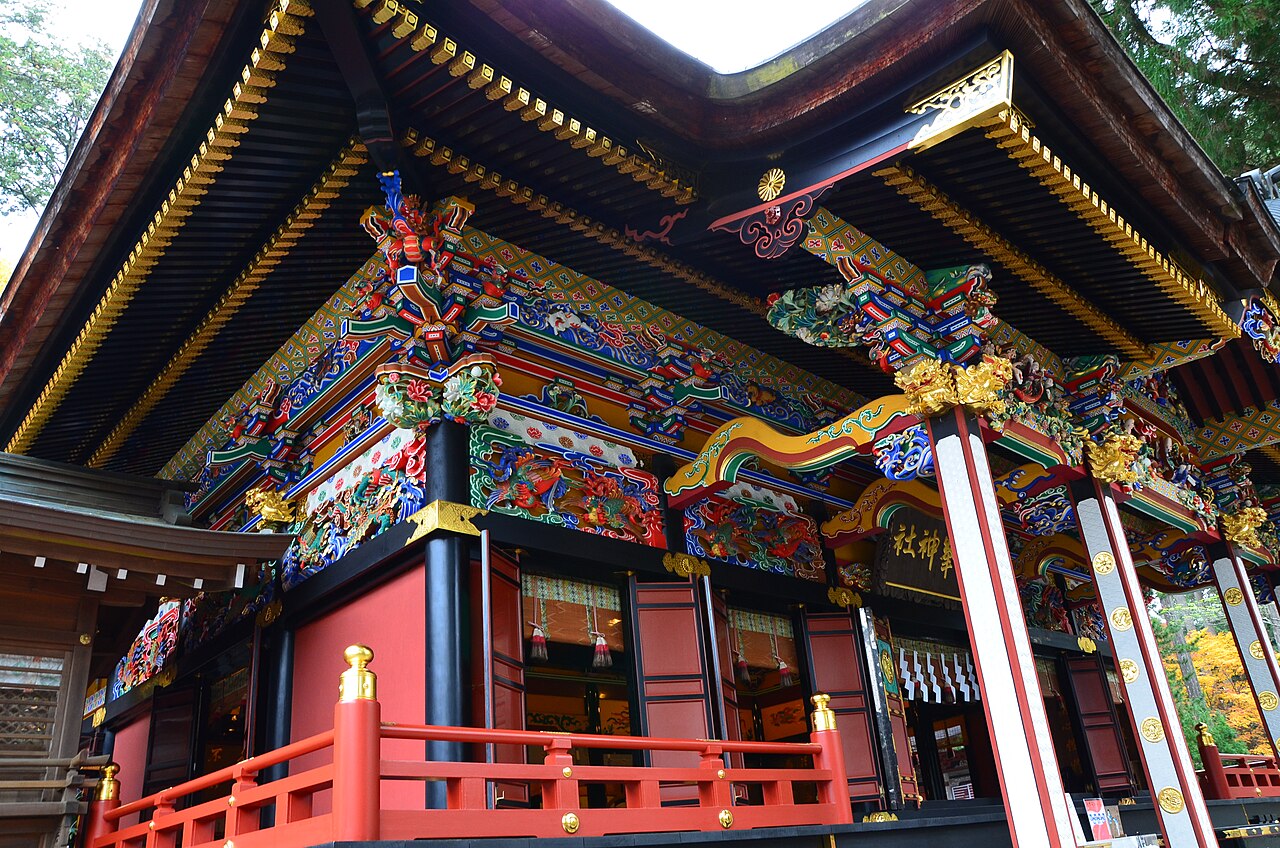
According to the cited book, the main sanctuary was built in the first year of Kanbun, 1661, in the single-bay kasuga style, and the hall of worship in front of it dates from 1800, where ordinary visitors pray. According to the cited book, the Zuishinmon gate was rebuilt in 1691, when it served as a Nio gate, and its guardian statues have since been moved to another temple.
Look down as well as up. A dragon shape with a red eye is said to have appeared in the paving stones by the hall of worship in 2012, and has been pointed out ever since as an auspicious sign, the dragon being a deity of water and rain and credited with warding off fire.
The sea of clouds, and when to try for it
From the remote worship hall, the yohaiden, the view opens over the Chichibu basin, and on the right mornings that basin fills with cloud. The mechanism is ordinary enough: radiation cooling pools cold air on the basin floor overnight, mist forms, and warmer air above holds it down instead of letting it rise. The conditions that favour it are a clear, windless, humid dawn, most often in autumn and above all in November. None of that can be booked, and many of the visitors who plan around it will see nothing. If the cloud matters to you, the honest answer is that you want to be nearby overnight rather than riding up on the first bus out of Chichibu.
Compare guided options and book through our partner links: Chichibu tours and experiences.
The shrine's year
The shrine's annual grand festival falls on April 8. According to the cited book, the rest of the year has a clear rhythm: New Year's Day begins with the first rites at dawn, the spring festival follows on April 8, the okumiya on Myohogatake enters its season on May 3 and leaves it on October 9, and the year ends with the great purification on December 31.
The subsidiary Suwa shrine is described as holding its festival with a lion dance on August 26 each year, an event that has drawn people from a long way off for generations.
Why it is quiet, and when it is not
The quiet here is a function of the road. A shrine that sits well over an hour by bus above the nearest express station filters its own crowds, and the people who make that trip mostly want what the mountain offers rather than a quick photograph. That was not always its reputation. The records of a century ago describe a following that stretched across one circuit, three metropolitan prefectures and twenty-two prefectures, from Hokkaido to Tokushima. This was a national pilgrimage centre rather than a local shrine, and the emptiness you may find on a weekday morning now is a modern condition rather than an old one. Old verse about the mountain is said to keep returning to the same few things: cool air in the depth of summer, the weight of ancient cedars, snow, and the cry of the wolf in the dark.
The practical corollary is straightforward. Weekday mornings are calm, New Year and the spring festival and the autumn foliage weekends are not, and because everything funnels through one bus route, a busy day at the shrine begins as a queue at the station down in Chichibu.
Making a day of it
Because the shrine takes most of the day, the natural place to add something is around the station at the bottom. Old confectioners are described as scattered through central Chichibu within walking distance of the Chichibu Railway stations. The local souvenirs lean hard on regional produce, from wine jelly to baked sweets of white beans and millet topped with walnut. The town's other speciality is pork marinated in a house miso, sold as a take-home box.
If a long approach to a mountain shrine appeals, our guide to Mount Mitake's shrine settlement above Ome works the same way in western Tokyo, and Nagatoro sits down the same railway line for a gentler day beside the river.
Compare more of the region and book through our partner links: Chichibu day tours and day trips from Tokyo.