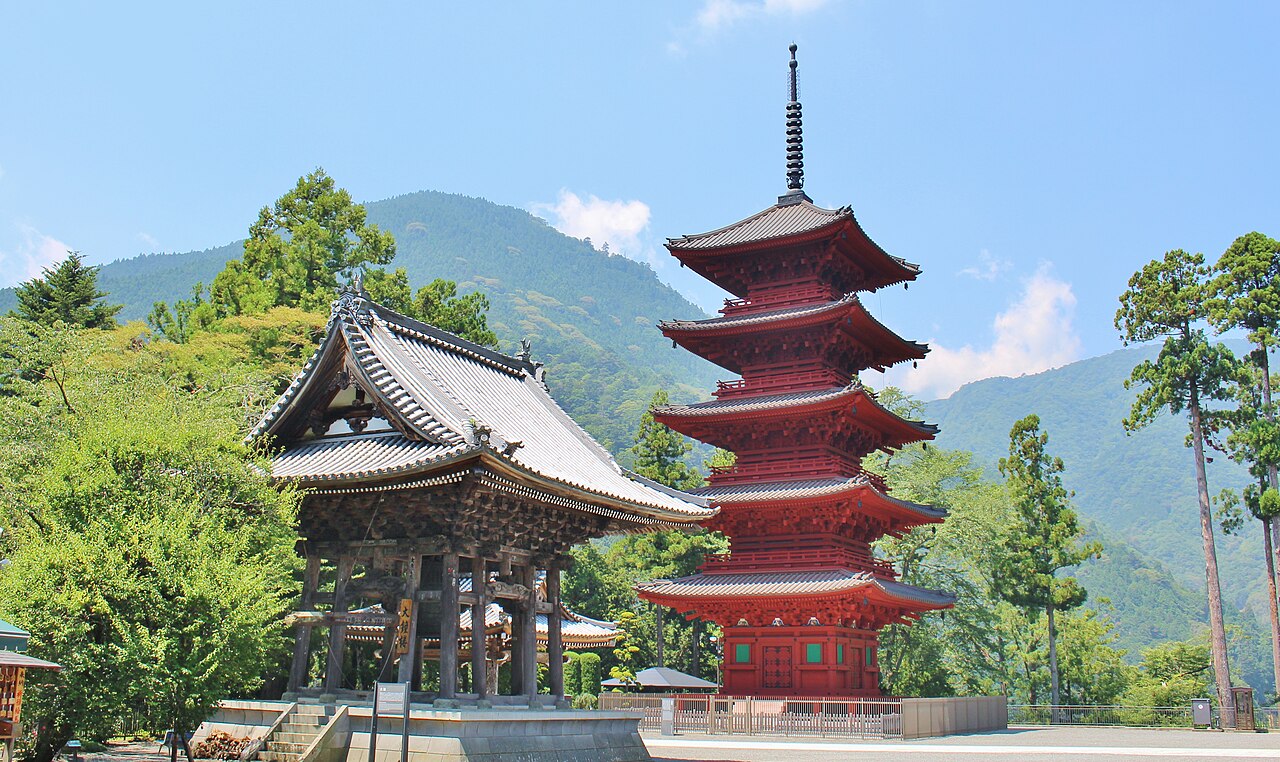
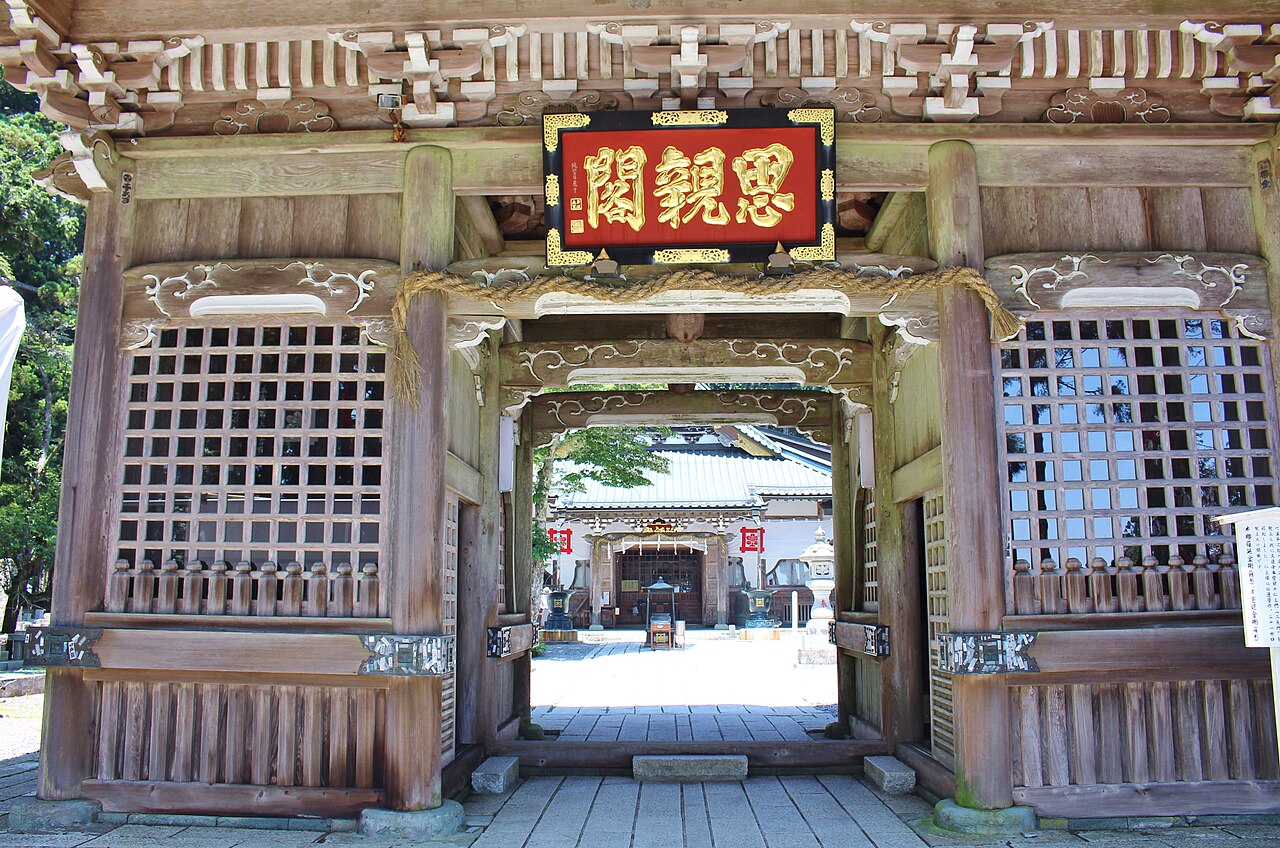
The Bodaitei stairway climbs two hundred and eighty-seven stone steps from the Sanmon gate to the main hall of Kuon-ji. Domestic timber rises through every storey of the five-storied pagoda, which reconstructs the pagoda built four hundred years earlier. The Okunoin Shishinkaku stands on the summit of Mt. Minobu at one thousand one hundred and fifty-three metres.
The Stone Stairway, the Pagoda and the Main Hall
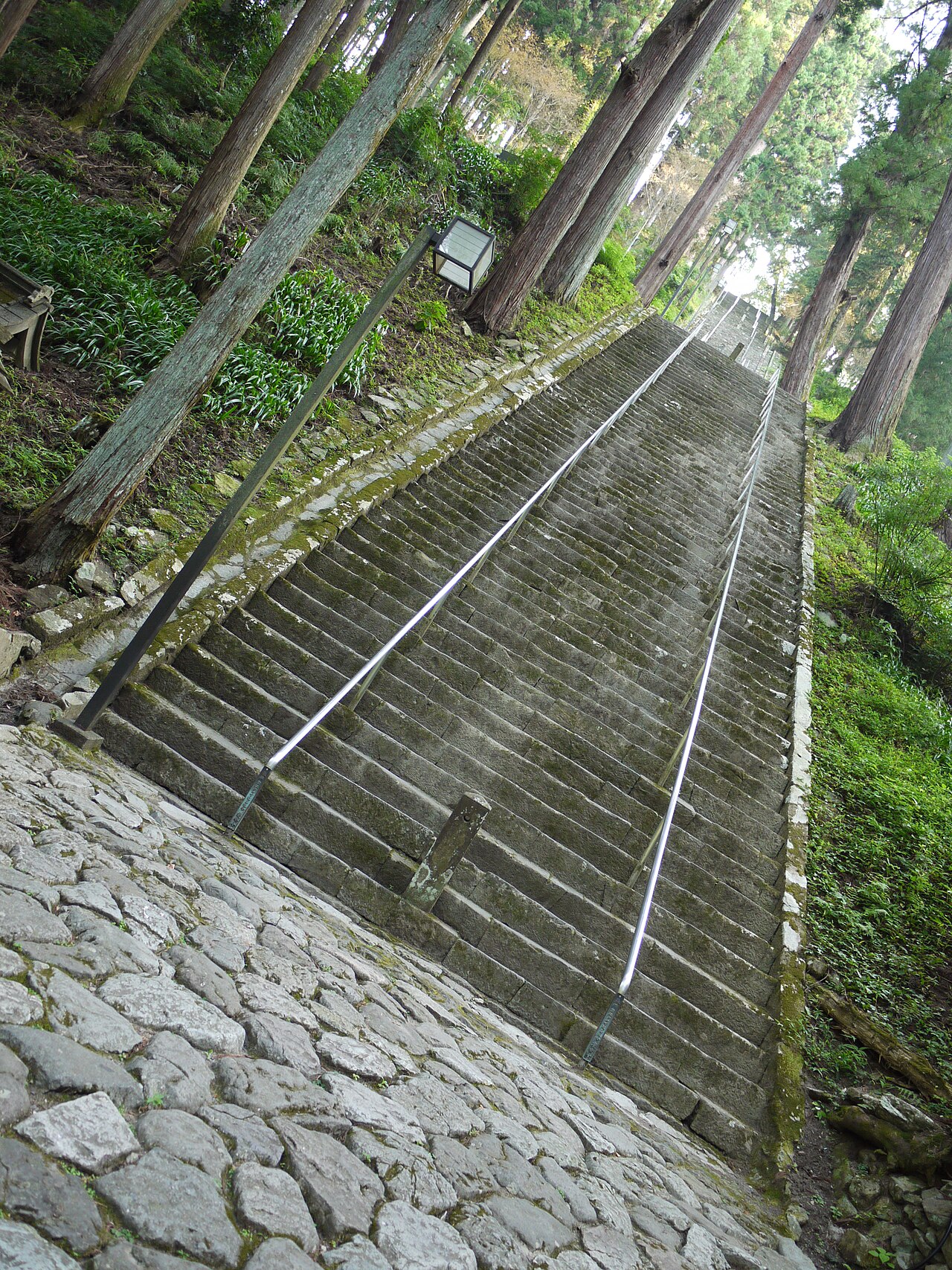
The stairway divides into seven sections, each likened to one of the seven characters of Nam-myoho-renge-kyo. The Sanmon gate bears a plaque written by Nichiji, the seventy-ninth head priest, and stands for the three liberations.
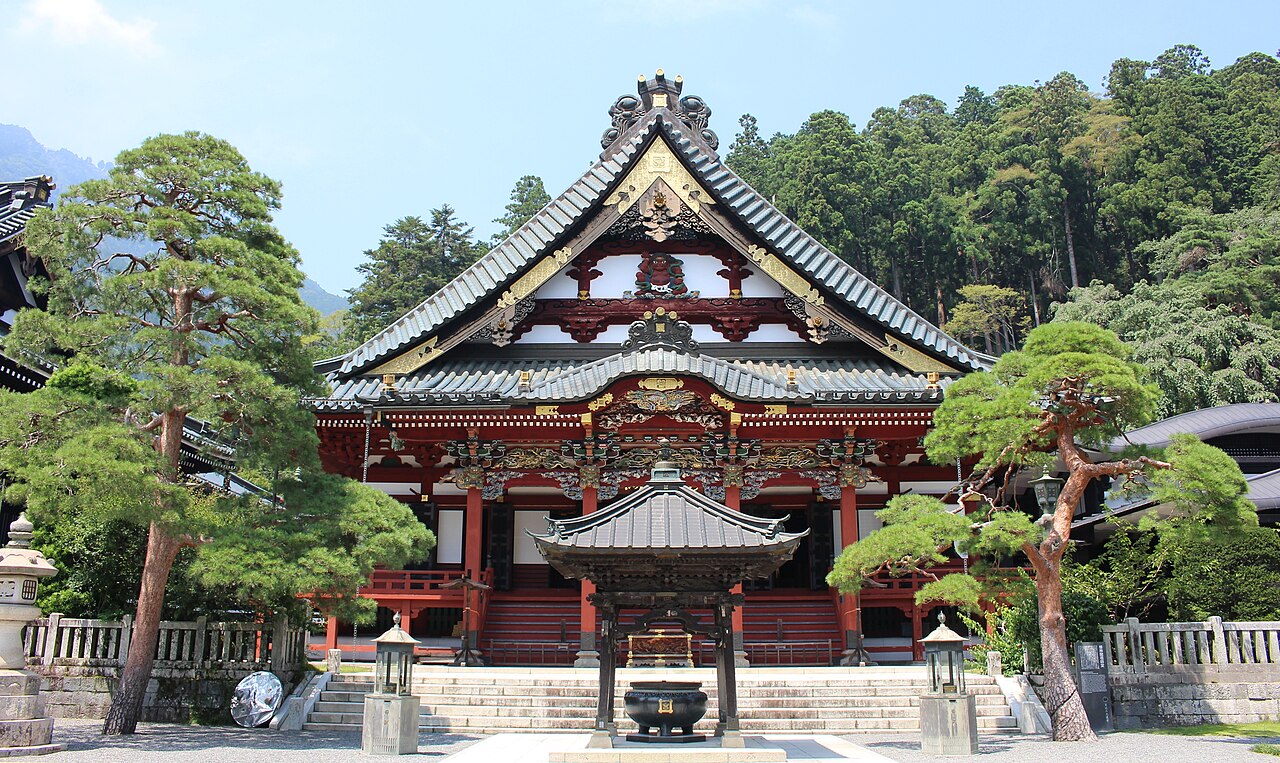
The main hall holds a Buddhist service for one thousand five hundred worshippers at once. The five-storied pagoda rose again in May, one hundred and thirty-four years after a fire.
The Jorokudo hall enshrines a golden Shakyamuni statue, and both hall and statue are town-designated cultural properties. Behind the statue, the rear wall enshrines a thousand Buddha figures donated by Oman no Kata.
A cedar forest on the mountain rises forty metres or more, and Yamanashi Prefecture designates it a natural monument. The morning service in the main hall begins at five thirty in the morning.
If the early service is the reason you are going, places to stay in Minobu are worth sorting out before anything else.
The Hermitage Site, the Mausoleum and the Soshi-do
Nichiren came to Mt. Minobu in May at the believer Sanenaga's invitation and from the seventeenth of June lived in a hermitage in a valley at the foot of a mountain. A square plot ringed by a stone fence marks that hermitage's site, where he passed about nine years reciting the Lotus Sutra and teaching disciples.
A tower at the Sobyo mausoleum houses the five-ring tomb made at Nichiren's death, and an underground chamber enshrines part of his remains. A white-plastered octagonal hall and its worship hall form part of the mausoleum.
At the water pavilion, Minobu River water flows into a natural-stone basin for purification and hand washing. On the thirteenth of each month, the day of Nichiren's death, a memorial service takes place in the Soshi-do and a ceremony at the Sobyo.
For the Ohiraki rite, the doors of the large shrine in the Soshi-do are opened and visitors can specially worship the figure and face of Nichiren. Ohiraki means worshipping a venerable image kept inside a temple's zushi shrine or a similar enclosure.
Weeping Cherries and the Mountain Seasons
The weeping cherry trees of Kuon-ji are four hundred years old, and their blossoms hang down toward the ground. Many visitors take commemorative photos with the trees as a backdrop, and many photographers can be seen.
In spring the surrounding mountains burst into new green all at once, and weeping cherries appear in many places. The autumn foliage on the mountain sets cedar against red-turned deciduous trees. In winter snow covers the Minobu mountains, and plum blossoms add colour from winter into spring.
Up the Ropeway: Summit Views and Yuba Lunch
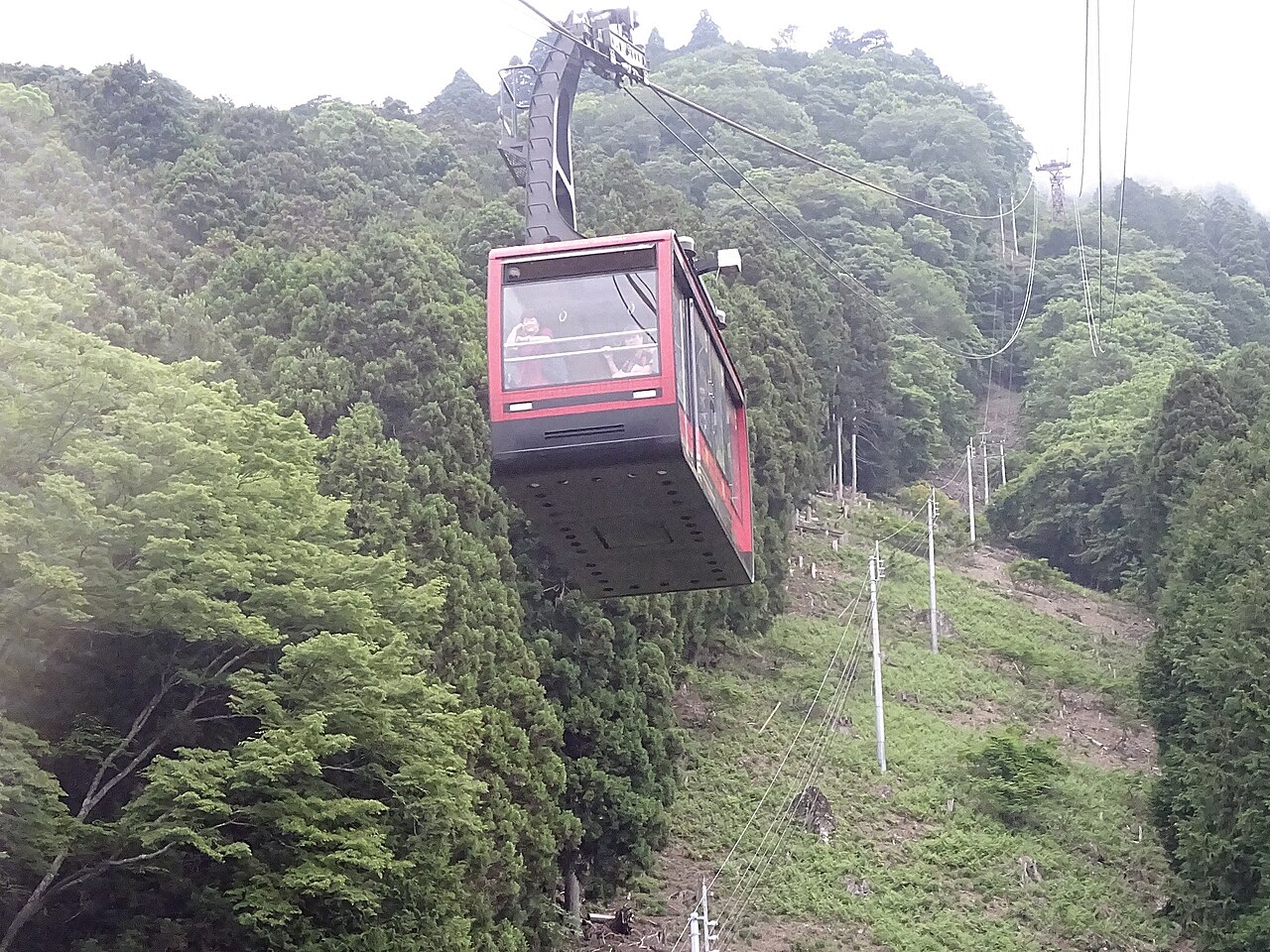
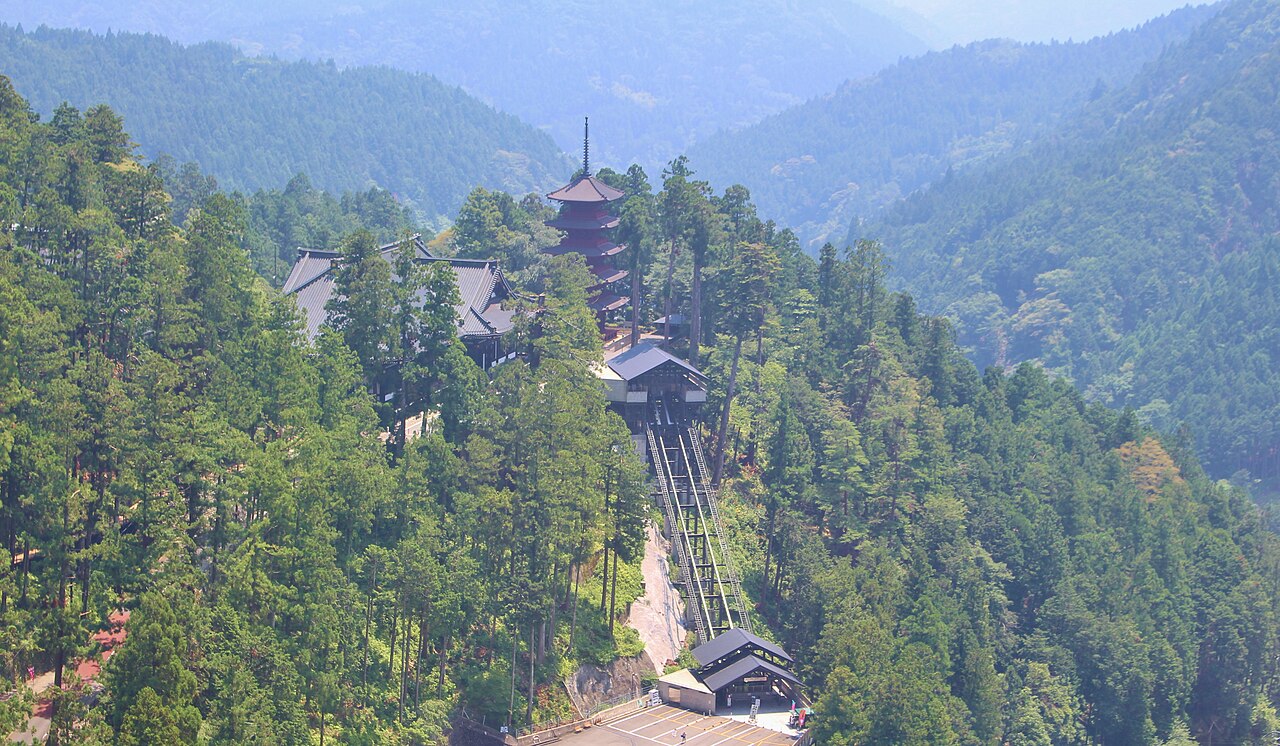
During his nine years there, Nichiren climbed a pathless way from his hermitage in the western valley, longing for his distant parents and his teacher. The Shishinkaku stands on the summit, and a gate enshrining guardian statues guards the precinct.
From the observation decks the view runs east to Mt. Fuji, the Tenshi mountain range, the Fuji River and the Minobu townscape, south to Suruga Bay and the Izu Peninsula, and west to the Abe mountains.
The east deck adjoins the summit terminal of the ropeway, and its view of Mt. Fuji counts among a hundred views of the mountain in the Kanto region. Three minutes along a promenade, the north deck looks out to the Hayakawa Gorge, the Southern Alps, Yatsugatake and the Kofu basin, with the Okuchichibu mountains behind.
For just a few days in spring, around mid March, and in autumn, from late September to early October, the sun rises from the centre of the summit of Mt. Fuji and shines like a diamond; the ropeway lets visitors see this Diamond Fuji.
The summit restaurant Minobu-an serves yuba: a Minobu yuba curry bowl, a yuba katsu curry, a yuba shio ramen, a Minobu yuba bowl and yuba udon. A course taking in Kuon-ji and the Shishinkaku takes about an hour or two.
Sutra Copying and Training Retreats
The Lotus Sutra copying retreat begins with an entrance ceremony, a visit to the mausoleum, a talk and sutra copying, and its second day pairs the morning worship with copying and a completion ceremony.
The training retreat's second day follows the morning worship with a talk, sutra reading and a completion ceremony. In the large copying gathering, participants share out the eight volumes of the Lotus Sutra and dedicate the copy. Neither retreat serves lunch on its opening day.
Getting to Kuon-ji
New to rural buses and one-man trains? See how to ride them, step by step.
| What | Detail |
|---|---|
| Kofu to Minobu Station | Limited express, about one hour |
| Shizuoka to Minobu Station | Through limited express, about one hour twenty minutes |
| Shinjuku Station to Minobu | Express bus from three thousand three hundred yen one way, no transfer |
| Parking areas to the Sanmon gate | Climbing slope, about fifteen minutes on foot |
| Slope elevator | Parking area to the grounds without stairs |
| Wheelchair users and visitors who find walking hard | Hokuon Bridge direct to the area under the mausoleum worship hall |
| Main hall to the mausoleum area | About ten to fifteen minutes on foot |
| Ropeway, foot station to summit station | About seven minutes one way |
A local route bus runs from Minobu Station to Mt. Minobu.
If you would rather leave the logistics to someone else, tours and activities around Minobu are worth comparing.
Hours and Fees
| What | Detail |
|---|---|
| Reception window | Five in the morning to four twenty in the afternoon |
| Treasure Museum hours | Nine in the morning to four in the afternoon, entry until three thirty |
| Treasure Museum, high school and older | Five hundred yen |
| Treasure Museum, elementary and junior high | Two hundred yen |
| Jorokudo visiting hours | Nine in the morning to four in the afternoon |
| Ropeway round trip, junior high and older | One thousand seven hundred yen, ordinary ticket |
| Ropeway one way, junior high and older | One thousand and sixty yen, ordinary ticket |
| Ropeway round trip, age four to elementary school | Eight hundred and fifty yen, ordinary ticket |
| Ropeway season and times | Sixteenth of March to fifteenth of November; nine in the morning to a final ascent at four, final descent at four forty |
| Minobu yuba bowl, Minobu-an | One thousand two hundred yen |
| Yuba udon, Minobu-an | Nine hundred and fifty yen |
| Minobu-an summit restaurant | Eleven in the morning to two in the afternoon, weekends and holidays; weekdays irregular |
| Ohiraki at the Soshi-do | Two thousand yen per person |
| Training retreat fee | Six thousand yen, two meals included |
| Lotus Sutra copying retreat fee | Seven thousand yen, two meals included |
Fees and hours were checked against official sources between 6 October 2026 and 11 November 2026.
The hours in this table differ by facility.
Thinking of staying overnight?
Compare places to stay near Minobu, Yamanashi →
Disclosure: This post may contain affiliate links. If you book through them, we may earn a commission at no extra cost to you.