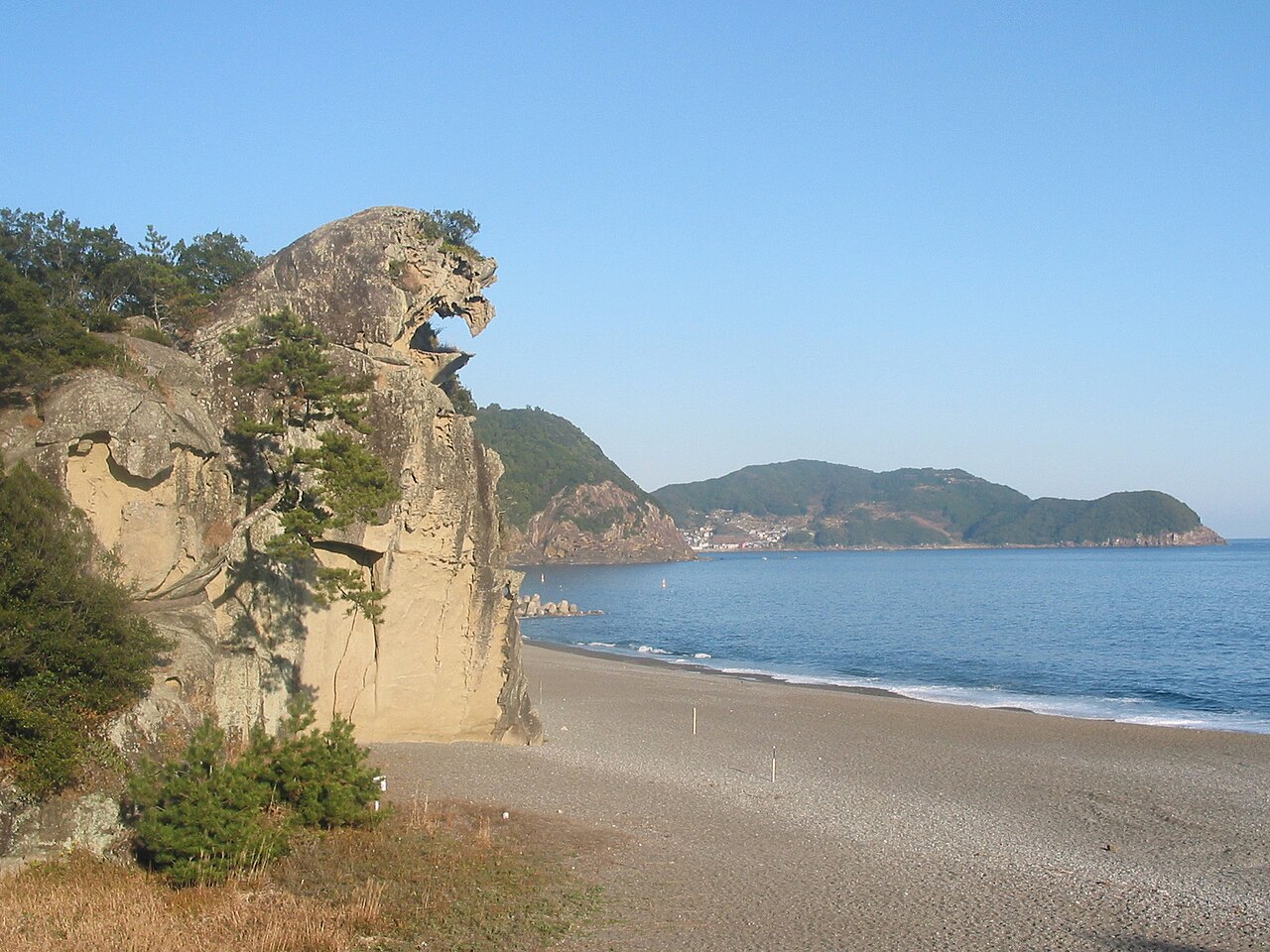
At Kumano, on the coast of Mie Prefecture, uplift of the ground and the erosion of wind and sea have left the rock at Onigajo with caves of every size along more than a kilometre of shore. Along the same coast stands Hananoiwaya, a shrine with no building whose object of worship is a rock forty-five metres high. The beach of Shichirimihama holds stones of many kinds that came down the Kumano River, and the regional dish is mehari-zushi, rice without vinegar wrapped in takana pickles.
Onigajo and Shishiiwa on the Kumano Coast
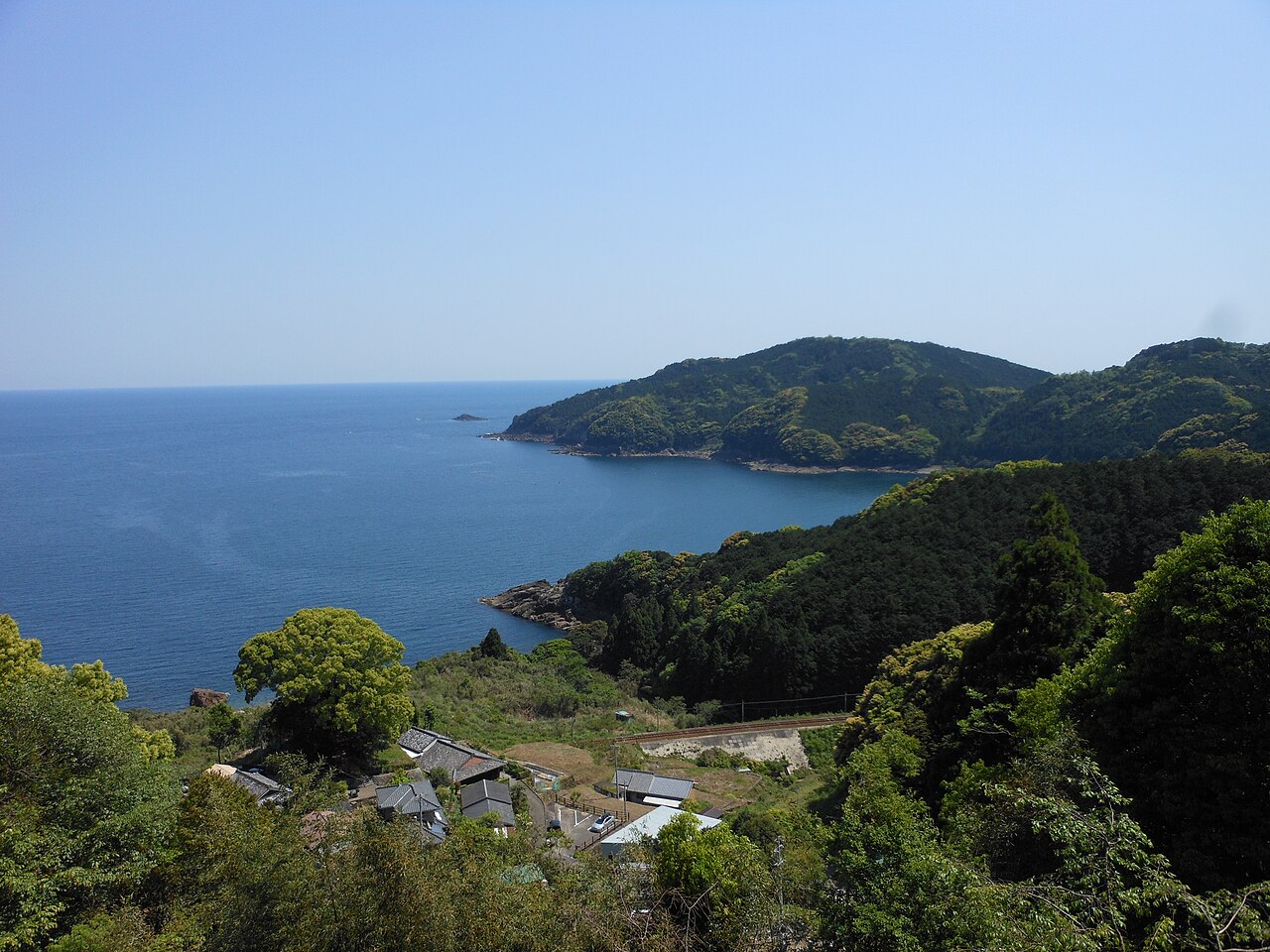
Onigajo is rock shaped by repeated rapid uplift and by the erosion of wind and sea, and its caves, large and small, continue for more than a kilometre along the shore. Shishiiwa, a twenty-five-metre-high rock with a two-hundred-ten-metre circumference, was formed by the same uplift and sea erosion.
A legend remains that in the early Heian period the shogun Sakanoue no Tamuramaro subdued the pirate Takamaru, feared as a demon, who used Onigajo as his base. The older name meant the demon's cave; the place became Onigajo after Arima Tadachika built a mountain castle on the summit as a retirement residence in the Muromachi period.
Senjojiki is the main scenic spot of Onigajo, reached on foot from Onigajo Center. The center has a shop of Kumano specialties, a cafe and a takeout corner where Niihime soft serve is among the items.
Hananoiwaya Shrine and Its Great Rope
Hananoiwaya has no shrine building; the object of worship is the rock itself, forty-five metres high. The deities enshrined are Izanami-no-Mikoto and Kagutsuchi-no-Mikoto, and the Nihon Shoki, compiled in the Nara period, places the birth of the land here in its first chapter of the age of the gods. The name is said to derive from the custom of worshipping the deity with seasonal flowers.
In the Otsuna-kake rite, a great rope is drawn from the top of the rock out to Shichirimihama beach and across to the shrine precinct. Three rope flags on it stand for the three noble deities born of Izanami: Amaterasu-Omikami, Tsukuyomi-no-Mikoto and Susanoo-no-Mikoto. The rope is believed to be inhabited by gods, so stepping over it is taboo.
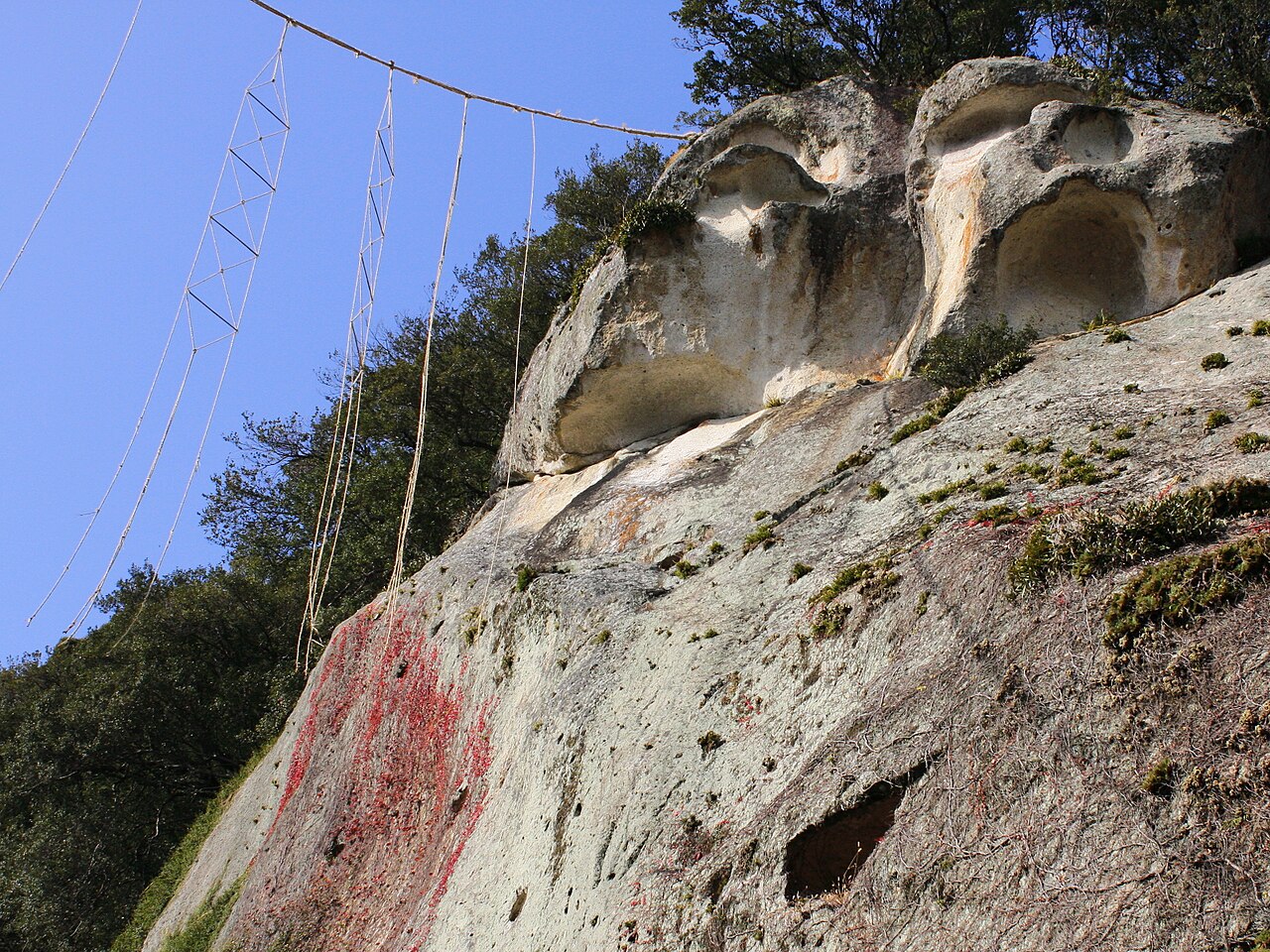
An old rope is not taken down; if it remains, the new one is hung alongside, so a visitor may find two. The grand festival is held on February second and on October second, and at the autumn festival a flower cart carrying sacred white stones is pulled in procession with processional dances. The rope and the rock are the heart of the visit; early February and early October are the dates to know for readers who want to see the shrine in use.
Ubuta shrine, an old shrine dating from the Yayoi period, enshrines Izanami and her child Kagutsuchi. It is told of as the place where Izanami died after giving birth to the fire deity, and in meaning it is paired with Hananoiwaya, her mausoleum. Here too there was once no building; two himorogi, prehistoric ritual platforms enclosed with stones, remain on the left and right.
Shichirimihama and the Old Road over Matsumoto Pass
The stones of Shichirimihama come in many kinds, having arrived by way of the Kumano River. From spring to summer, sea turtles come ashore on this coast.
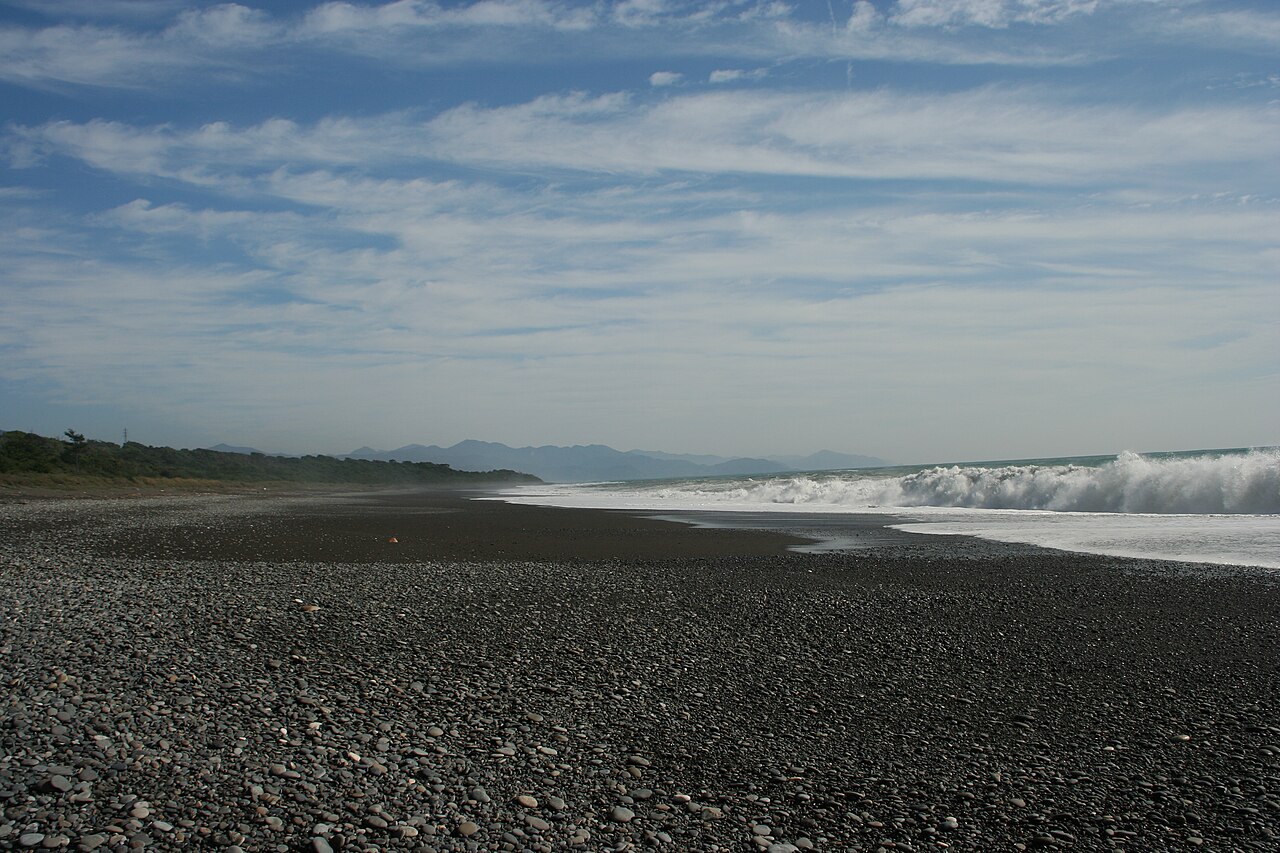
On the mountain side of Onigajo, the stone-paved Matsumoto-toge pass connects Odomari and Kimoto. At the pass, which is surrounded by bamboo groves, stands a jizo statue said to have been shot with a gun. From an arbour on the way, Shichirimihama shows as a gentle curve running far into the distance.
Below the pass, the old road continues onto the level Hama-kaido, the Kumano Kodo stretch from Kumano city to the mouth of the Kumano River with no mountain passes. Matsumoto-toge is the stretch to choose for the arbour's view of the beach; the level Hama-kaido suits readers who prefer a walk with no pass to cross.
Hatasu is a village where Jofuku is said to have landed from China in search of an elixir of immortality, and a short stretch of pavement laid with huge stones, thought to date from the Kamakura period, survives there. Summer brings Kumano's fireworks festival, held every year on August seventeenth.
Maruyama Senmaida and the Fuden Pass Road
Maruyama Senmaida is kept today at thirteen hundred forty paddies. A record remains that about four hundred years ago there were two thousand two hundred forty paddies and fields, which had shrunk to five hundred thirty by the early Heisei era for want of successors.
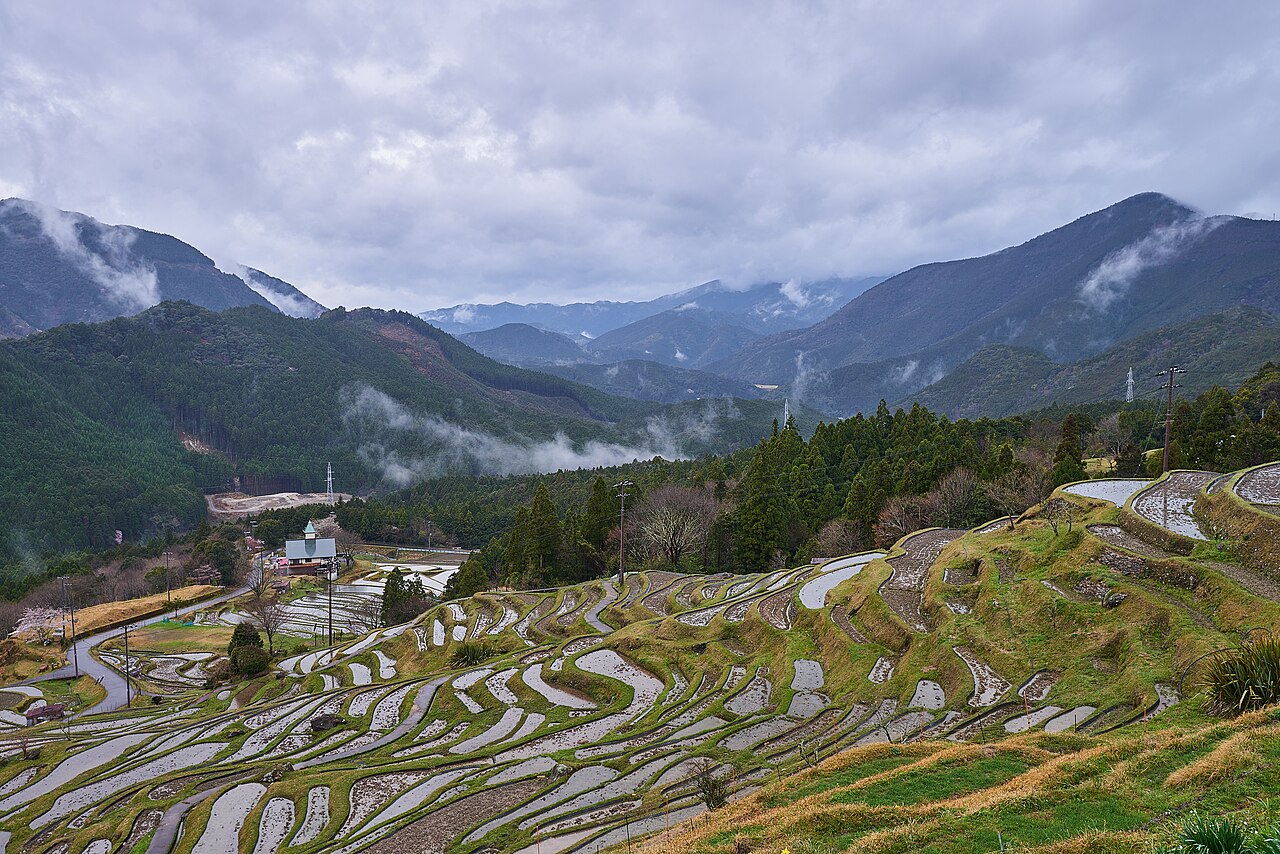
The paddies were restored through an ordinance for Maruyama Senmaida enacted in the sixth year of Heisei and the cooperation of local residents. A visit here is as much about how local residents brought the paddies back as about the view.
On the Fuden pass road, walkers follow a pavement of a stone particular to this area. A roadside shop sells yomogi mochi with sweet bean paste inside, and a tea house at Fuden pass is heated by a wood stove. With luck, a morning brings a mist with its own local name, and at Toori pass a Jizo statue with a local pet name greets walkers.
Mehari-zushi, Sanma-zushi and Other Tables of Kumano
Mehari-zushi is rice without vinegar wrapped in takana pickles, and visitors with room for only one local dish can start there. Sanma-zushi is the other name to know, and Ubuta shrine is regarded as its birthplace. At the shrine's grand festival on January tenth, soup-poured rice, bone-in sanma-zushi, a red dressed dish and sake are served with a wish for children to grow up healthy.
Mikuma-gyu is black Japanese beef, females only, raised on a hill ranch overlooking Kumano-nada. Kumano jidori chicken, a cross of a Mie-native shamo with two other breeds raised with little stress, has a moderate chew and a rich flavour without the odour chicken can carry. Ocean sunfish, mild and soft-fleshed, is another local plate.
Niihime is a citrus that arose from a natural cross of tachibana and unshu mikan and was discovered within Kumano city. It is strongly sour, with a fresh mikan-like aroma, and goes well with sashimi, grilled fish and a drink.
Readers who would rather take part than only taste can prepare sanma-zushi and mehari-zushi under the guidance of someone from a local food shop and eat them. Each participant keeps one of each, to eat there or take home.
Getting to Kumano
| Leg | How | Time and estimate |
|---|---|---|
| Tokyo to Nagoya | Shinkansen Nozomi | About 1 hour 45 minutes |
| Nagoya to Kii-Nagashima | JR Limited Express Nanki | About 2 hours 15 minutes |
| Kii-Nagashima to Owase | JR Limited Express Nanki | About 20 minutes |
| Owase to Kumano-shi Station | JR Limited Express Nanki | About 30 minutes |
| Nagoya to Kii-Nagashima | Highway bus, 7 trips a day | About 2 hours 40 minutes |
| Kumano-shi Station to Hananoiwaya Shrine | Car | 5 minutes |
| Kumano-shi Station to Shishiiwa | Car | 4 minutes |
| Kumano-shi Station front to the Onigajo east entrance | Taxi, one way | 15 minutes, estimated 1,050 yen |
| Kumano-shi Station front to the Matsumoto-toge trailhead | Taxi, one way | 10 minutes, estimated 880 yen |
| Kumano-shi Station front to Hatasu | Taxi, one way | 20 minutes, estimated 3,000 yen |
| Kumano-shi Station front to the Toori pass trailhead for Maruyama Senmaida | Taxi, one way | 40 minutes, estimated 7,000 yen |
| Onigajo Center to Senjojiki | On foot | 5 minutes |
| City loop bus | Weekends and holidays only; unlimited rides for one day | 200 yen |
The Maruyama Senmaida row is a much longer taxi ride than the rows for Onigajo and Matsumoto-toge, so it suits readers with time to spare.
New to rural buses and one-man trains? See how to ride them, step by step.
Hours and Fees
| Place | What | Hours or fee |
|---|---|---|
| Onigajo parking | Cars and buses | 35 cars and 10 buses, free |
| Hananoiwaya Shrine parking | Cars and buses | 35 cars and 2 buses, free |
| Shishiiwa | Parking and toilets | None |
| Kumano Kodo Omotenashi-kan | Hours | 9:30-16:30, food and drink 10:00-16:00 |
| Kumano Kodo Omotenashi-kan | Closed days | Mondays, second and fourth Thursdays, December 30 to January 2 |
| Kumano Kodo Omotenashi-kan | Takeout menu mehari-zushi set meal | 900 yen |
| Sanma-zushi and mehari-zushi making experience | Fee for both | 2,500 yen |
| Sanma-zushi and mehari-zushi making experience | Work time | About 40 minutes |
Because every taxi estimate in the Getting to table starts at the front of Kumano-shi Station, readers who plan several of these stops may want to look at places to stay in Kumano.
Where to stay
Places to stay near Kumano, Mie, Japan →
Disclosure: This post may contain affiliate links. If you book through them, we may earn a commission at no extra cost to you.