Mention Matsuyama and most people think of hot springs. The famous bathhouse quarter of Dōgo sits just up the tramline, and it absorbs nearly all of the attention the city gets. That suits the rest of Matsuyama very well. Down in the level streets around the castle hill, there is a whole day of quiet walking that most visitors never touch: the rebuilt boyhood rooms of a poet who changed haiku, a museum built around a single novel, a villa where the old feudal house entertained, and a keep that has stood on its hilltop since the age of the samurai.
This is a walk for readers. Matsuyama is the home town of Masaoka Shiki, the setting that shaped the Akiyama brothers of *Saka no Ue no Kumo*, and the place where the filmmaker Itami Jūzō spent his school years. The city wears these names lightly, on ordinary shopping streets, which is exactly why the walk stays calm.
Getting there and getting around
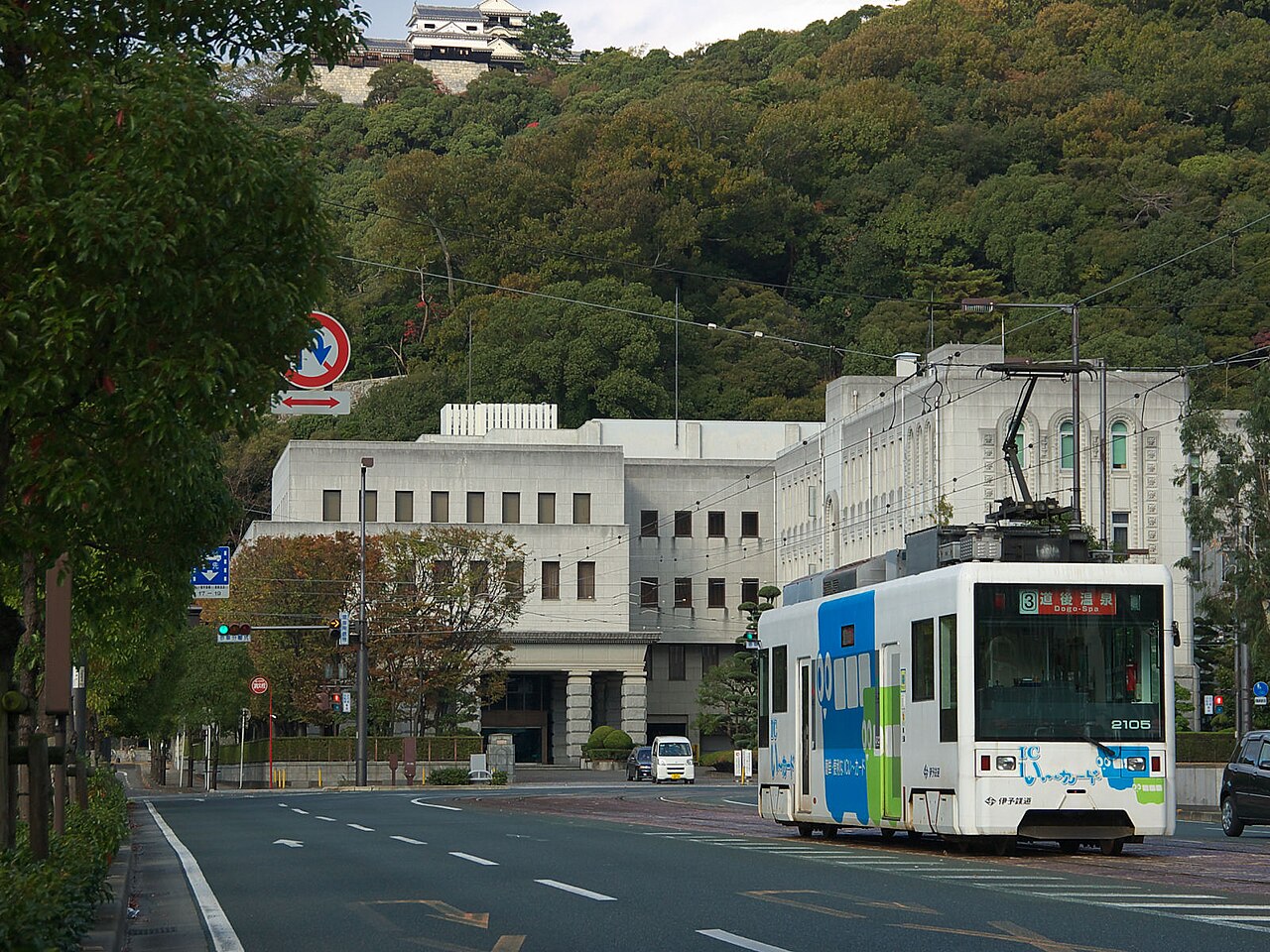
Guidebooks describe the literary and historical spots of central Matsuyama — Shiki-dō, the Saka no Ue no Kumo Museum, the Akiyama brothers' birthplace and their neighbours — as sitting close enough together to cover on foot in a single day, starting from either Iyotetsu's Matsuyama City Station or the Ōkaidō tram stop. The trams thread the whole route together, so if your legs give out between spots, you are never far from a ride home.
The castle above the town
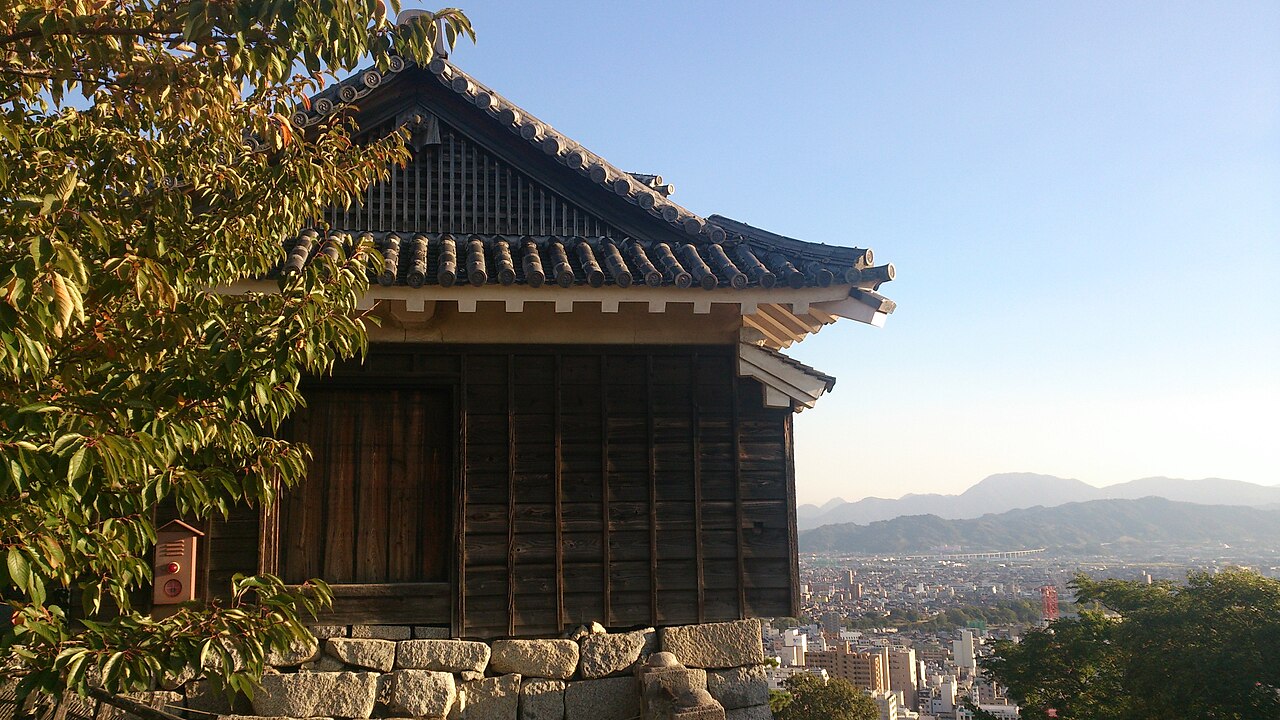
Matsuyama Castle is the fixed point the whole walk turns around: a hilltop fortress whose original keep still stands and still lets visitors in, with a park spread around it. From the base of the hill, a ropeway and a chairlift run side by side and carry you most of the way up; the two cost the same, five hundred and twenty yen return or two hundred and seventy yen one way, so the choice is purely about whether you want a cabin or the wind on your face.
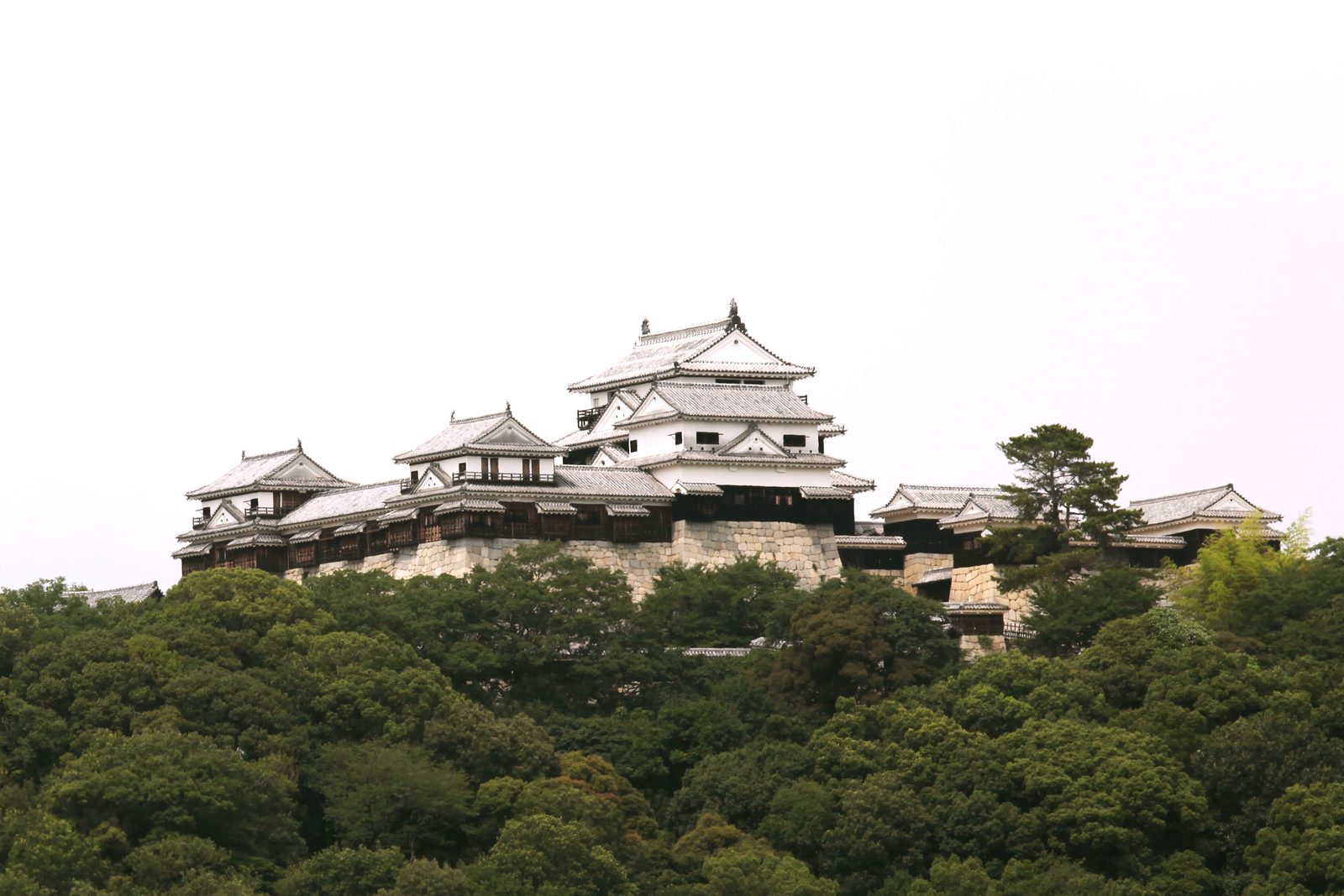
The ropeway runs from half past eight in the morning until half past five for most of the year, stretching to six in the evening in August and stopping at five in December and January. The chairlift keeps simpler time, half past eight until five all year round. The keep itself opens at nine and closes at five through most of the year, at half past five in August, and at half past four in December and January; admission is five hundred and twenty yen, and the only day it shuts is the third Wednesday of December — which makes it one of the most dependable rainy-day plans in the city.
On the way down, leave time for the Ninomaru historical garden at the foot of the hill. It follows nearly the same clock as the keep — nine to five for most of the year, half past five in August, half past four in December and January, resting only on that same third Wednesday of December — and asks just two hundred yen at the gate.
*Rather see the castle with everything arranged in advance? Compare tours and tickets around Matsuyama.*
Where to stay
Places to stay near Matsuyama →
Disclosure: This post may contain affiliate links. If you book through them, we may earn a commission at no extra cost to you.
Writers along the way
Shiki-dō is the emotional centre of the walk. In the grounds of the Zen temple that holds the Masaoka family graves stands a modest reconstruction of part of the house where the young Shiki grew up, furnished with his manuscripts, his calligraphy and other things he left behind. In the same temple grounds you will find the tower where his hair is buried and, fittingly for a poet who loved the game, a monument to baseball.
A short walk away, the Saka no Ue no Kumo Museum takes a single book as its subject: Shiba Ryōtarō's novel of Matsuyama men rising through the Meiji era. It is the only museum in Japan devoted to the novel's world, and the building competes with the exhibits — Andō Tadao designed it around a staircase that appears to hang in the air, and the displays are rearranged once every so often, so even the shape of the museum rewards a return visit.
The Akiyama brothers themselves are remembered along the shopping street that leads to the castle ropeway. Their birthplace burned in the war and was rebuilt from old photographs and the memories of their descendants; in its small garden, Yoshifuru — called the father of the Japanese cavalry — sits on horseback in bronze, while his brother Saneyuki watches from a bust nearby.
Round out the loop at Bansuisō, a French Renaissance–style villa raised in the Taishō era as a second residence for Hisamatsu Sadakoto, a descendant of the domain's former lords. When it was new it served as a salon where notable figures from every field gathered, and it still carries itself that way.
Art in the castle greenery
The Ehime Prefectural Museum of Art stands in the green of Horinouchi with the castle in view, and it makes a gentle late-afternoon stop. The collection runs from Western masters — Corot and Monet among them — through modern Japanese painting to artists with roots in Ehime, such as Sugiura Hisui, Azechi Umetarō and Manabe Hiroshi. It opens at nine-forty in the morning and stays open until six in the evening, with last entry at half past five; it closes on Mondays, though the first Monday of each month it opens and takes the following Tuesday off instead, and when a Monday falls on a holiday the museum rests the next day.
Farther afield, if the mood holds
Two more stops reward travellers with extra time and no fixed schedule. The Itami Jūzō Museum honours the filmmaker, actor and essayist who spent his high-school years in Matsuyama: handwritten manuscripts, drawings, film material and personal belongings fill its exhibit corners, his beloved Bentley Continental sits on show in the garage, and there is a café and a small shop for lingering. Inside Matsuyama Sōgō Park, the city's archaeology hall gathers finds dug from the Matsuyama plain and tells the story of Iyo as a crossroads that grew rich on culture carried in by sea.
And if you want to end the trip with salt air, the little island of Kashima floats just off the Hōjō coast in the city's north: an uninhabited islet where deer roam and can be met at close quarters in their enclosure, with walking paths, a swimming beach and a campground, at its liveliest with local families in high summer.
Making a quiet day of it
Take the tram in, climb to the keep while the morning is still cool, come down through the Ninomaru garden, and give the afternoon to the writers — Shiki first, then the museum of the novel, then the villa. If the light is good, finish among the paintings in Horinouchi; the museum's evening close leaves room for a slow last hour. None of these places hurries you, and that is the point of Matsuyama's castle town: the famous water is up the line, and the quiet is right here. Fees and opening times move with the season at the castle, the garden and the museum, so check official information before visiting.
*Prefer to have the day mapped out for you? Browse tours and tickets around Matsuyama.*