Canoeing on Lake Shikotsu crosses clear water while looking at the lake's natural surroundings. Divers go into the deep blue called Shikotsu Blue, and the blue deepens as they go underwater. Below a bridge on the shore, a waterside park lets visitors go down to the water's edge and view the lake's transparency up close. Under the lake surface there is a scene of columnar joints.
Canoe tours on the lake, the Yamasen railway bridge on the east shore and Marukoma Onsen on the northwest shore each give a separate way into Lake Shikotsu.
Shikotsu Blue on the Water: Canoeing, Diving and the Underwater Sightseeing Boat
Lake Shikotsu and the Chitose River are both covered by activity tours in which visitors take a canoe. A guide with a canoe instructor qualification accompanies every tour, and first-time canoeists can join. The clear kayak has a transparent bottom and the clear SUP has a transparent board, allowing a view into the water below.
Shikotsu Blue is the deep blue that divers go into, and it deepens as they go underwater. Divers can encounter creatures living in the lake, such as Shikotsuko chip (himemasu). In the trial dive, a dry suit that keeps the body from getting wet is used all year round.
The Shikotsuko underwater sightseeing boat lets visitors observe columnar joints and fish swimming in the clear underwater world, and it operates from late April to early November. An underwater window in the cabin shows the underwater scene and the shape of the lakebed. The ride takes about thirty minutes.
Canoe tours stay on the surface while the underwater boat shows the lake from below. Lake Shikotsu is called the northernmost non-freezing lake in Japan and canoeing is possible there all year round, whereas the boat has a season, so the two suit different times of year.
The Yamasen Railway Bridge, Marukoma Onsen and Shikotsuko Onsen
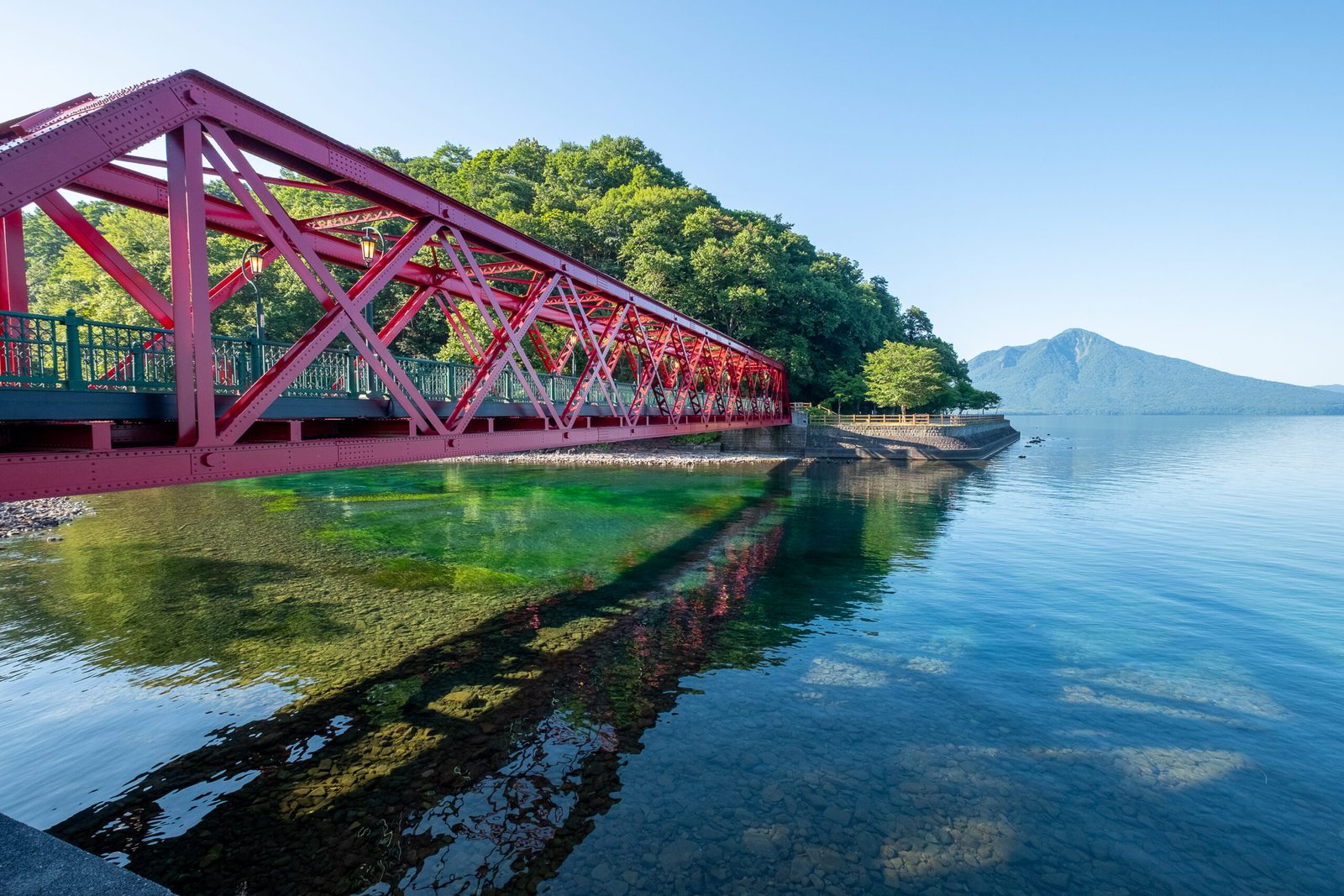
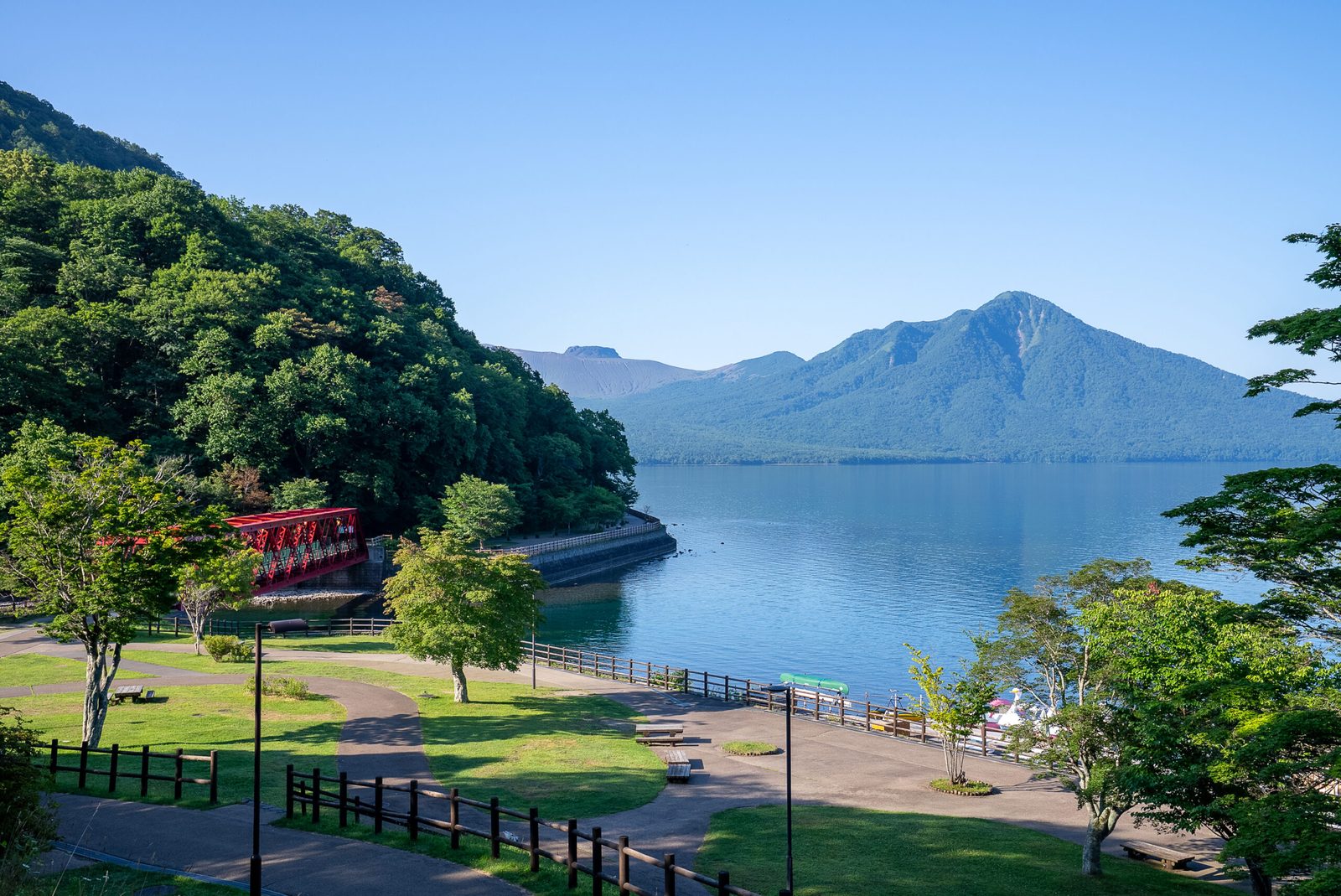
The Yamasen railway bridge is an iron bridge over the Chitose River in the Shikotsuko Onsen district. A waterside park below it gives a close view of the lake's transparency from the edge of the water. Fresh greenery, autumn leaves and snow change the scenery around it by season. It once served as a light railway of Oji Paper and is a pedestrian bridge today.
Marukoma Onsen has a natural bath separated from the lake only by a rocky area, where source water of about 50°C wells up from underfoot. The bath level goes up and down with the level of Lake Shikotsu, and the temperature is adjusted at a sluice gate connected to the lake. It stands at the foot of Mt. Eniwa on the lake's northwest side.
Shikotsuko Onsen lies on the eastern shore of Lake Shikotsu in Chitose City. Its water has a smooth, creamy texture. Five hot spring inns stand on this shore, with different spring qualities. Accommodation facilities are scattered along the lakeshore, and there are also facilities where day-trip bathing is available.
Marukoma Onsen lies on the northwest shore while the bridge and Shikotsuko Onsen share the east shore, so those two pair up and Marukoma Onsen is a stop of its own.
Mt. Eniwa, Mt. Tarumae and the Forest, Autumn Leaves and Shikotsuko Chip Through the Year
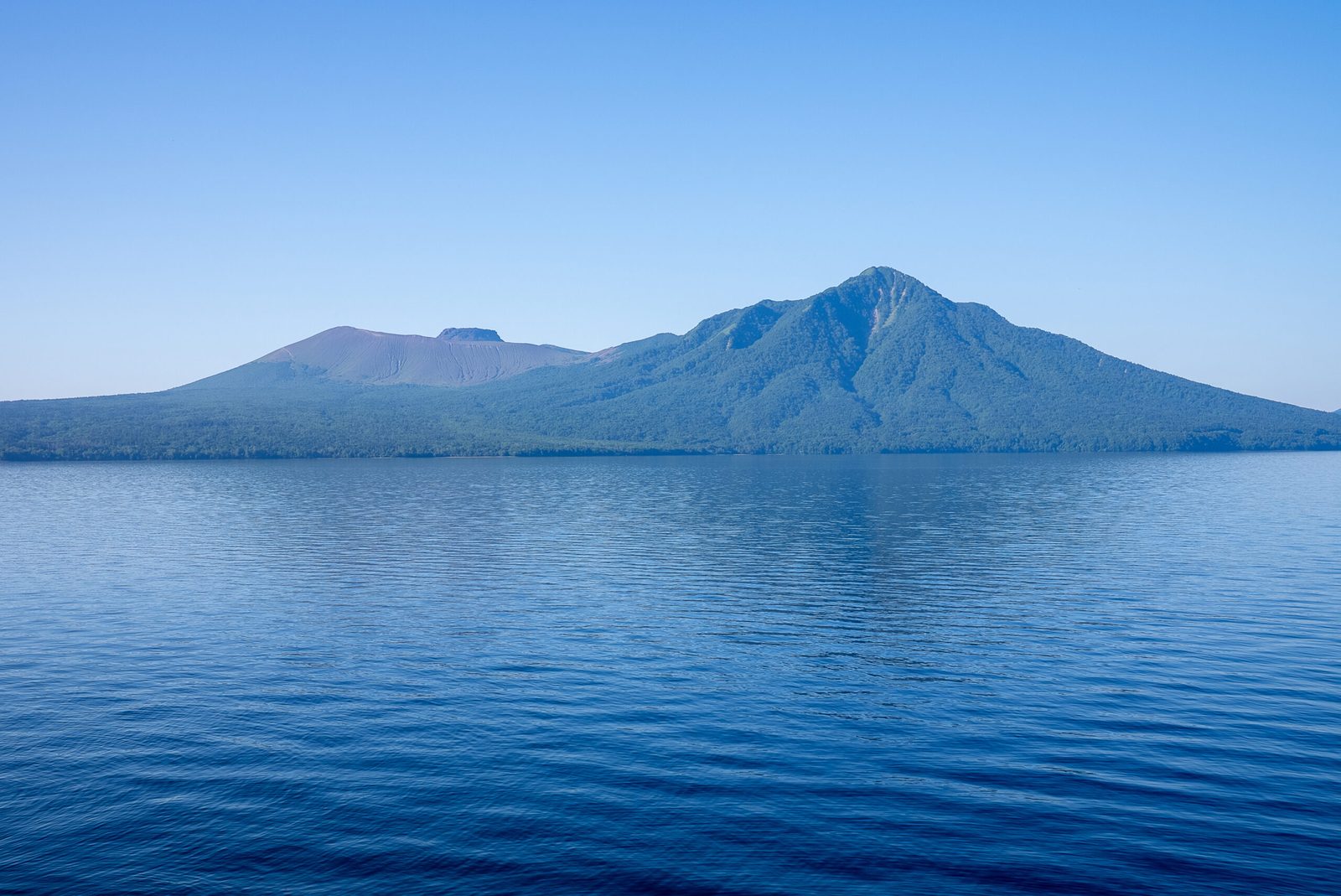
Mt. Eniwa and Mt. Tarumae can be seen from the lakeshore. In autumn, red color begins to spread across the mountains little by little after mid-September, as if descending from the summit of Mt. Tarumae. Autumn leaves reflected on the lake surface are a viewing point. Lake Shikotsu itself was formed when water collected in the Shikotsu caldera, which was created by volcanic activity.
Fukinotō and Fukujusō (pheasant's eye) flowers appear on the forest floor in spring, and white Kitakobushi flowers begin to bloom on the mountainsides. Flowers and greenery spread through the forest all at once from the time the Ezo yamazakura begins to bloom. Eggs of the Ezo salamander are found at the water's edge in the same season.
Shikotsuko chip is himemasu, a lake-resident form of sockeye salmon that does not go down to the sea, and chip is its Hokkaido local name. In the autumn spawning season, chip with vermilion breeding coloration can be seen at places where spring water wells up in the lake. Chip can also be eaten at the hot spring lodgings around the lake.
If autumn is the plan, two things line up: the red color starts down from the summit of Mt. Tarumae after mid-September, and the chip show their breeding coloration in the autumn spawning season.
The Hyoto Ice Festival and Winter on the Lake That Does Not Freeze
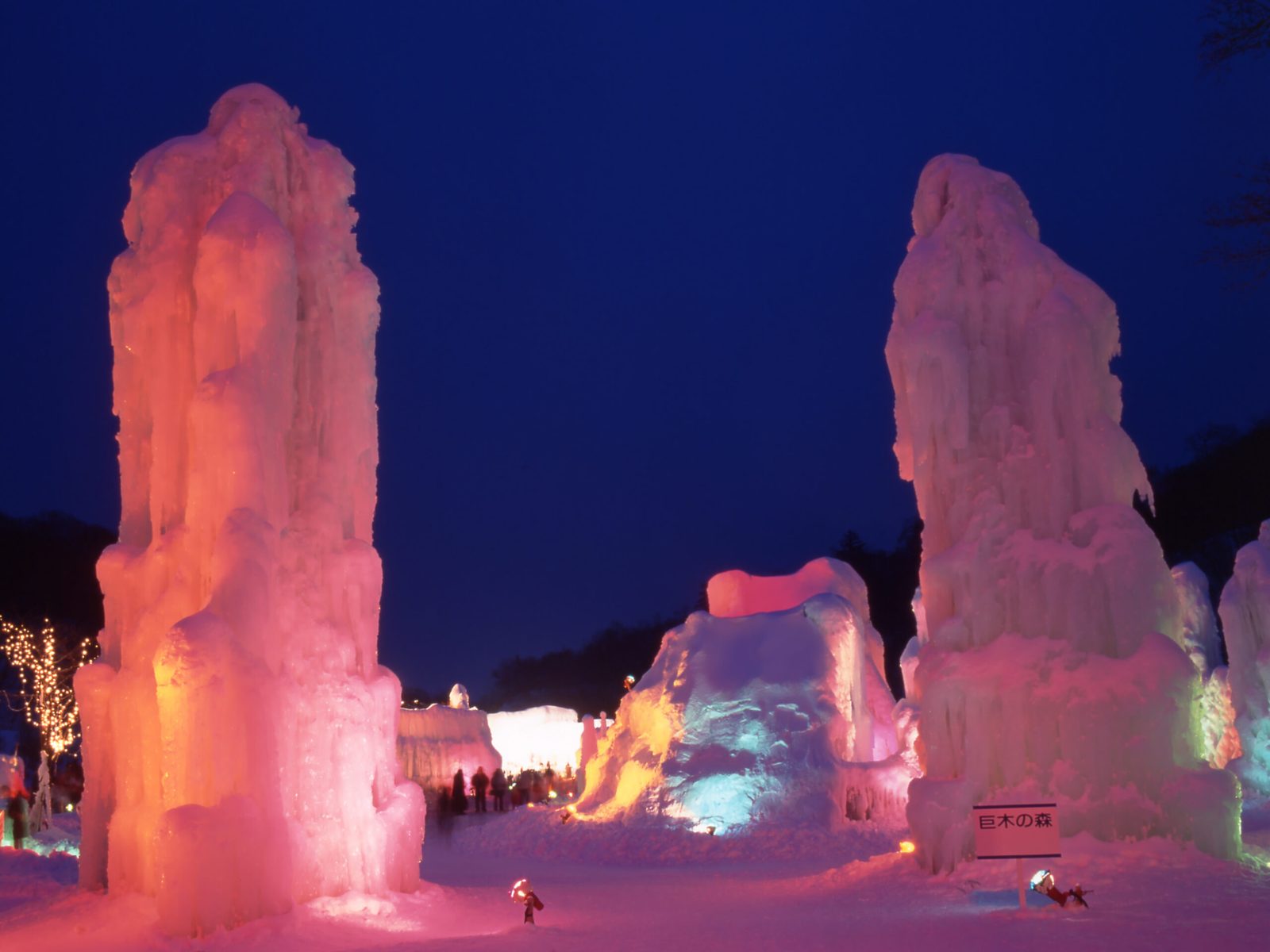
The Chitose Shikotsu-ko Hyoto Matsuri ice festival is a winter event held in the Shikotsuko Onsen area of Chitose City. Water from Lake Shikotsu is sprayed by sprinklers onto frameworks and freezes over time, and ice sculptures of various sizes are lined up. The sculptures, made by freezing the blue water of the lake, are lit up at night.
Lake Shikotsu has a surface that does not freeze over entirely. The ice walk, available only in winter, is possible because the lake does not freeze. Participants wear a wetsuit over their clothes and can break the ice, jump into the lake, ride drifting ice or float on the water. Other winter activities include ice fun diving and fat biking on a snowy forest road.
Which winter plan fits an unfrozen lake? The ice walk takes place on the water itself, while the Hyoto festival is held in the hot spring area, so one is for going into the water and the other for viewing lit ice sculptures at night.
One Day at Lake Shikotsu: From the Bus Stop to the Water and the Hot Spring
A route bus from Chitose Station takes about forty-five minutes to Shikotsuko Onsen. From New Chitose Airport the route bus takes about fifty-five minutes. The Shikotsuko Visitor Center has an exhibit corner where eighteen types of wild bird songs can be heard. The Yamasen railway bridge stands in that same onsen district, with the waterside park below it.
The underwater sightseeing boat tour circles the east side of the lake over about thirty minutes. Marukoma Onsen and its lakeside open-air bath are on the shore to the northwest. Mt. Eniwa and Mt. Tarumae are in view from the lakeshore. The east-shore stops form one group, with Marukoma Onsen apart, and not all of them need to go into a single day at Lake Shikotsu.
Travellers who want a base in the city can look through places to stay in Chitose. Guided outings appear among the tours listed for Shikotsu.
Getting to Lake Shikotsu
New to rural buses and one-man trains? See how to ride them, step by step.
| Route | Time | Notes |
|---|---|---|
| Route bus from the New Chitose Airport bus terminal to Lake Shikotsu | About fifty-five minutes | Route numbers twenty-eight (domestic terminal) and sixty-six (international terminal). |
| Bus from the Chitose Station bus terminal to Lake Shikotsu | About forty-five minutes | By route bus, the trip from Chitose Station to Shikotsuko Onsen takes about forty-five minutes. |
| By car to Shikotsuko Onsen | Depends on the starting point | About forty minutes from New Chitose Airport. About seventy minutes from Sapporo Station. |
| Parking lot | Not stated | Three hundred spaces, paid. |
Hours and Fees
| Item | Period | Details |
|---|---|---|
| Underwater sightseeing boat | Late April to early November | The ride takes thirty minutes. The two thousand twenty-six fiscal-year operations start on April twenty-fourth (Friday). |
| First and last departures (as listed by the ship operator) | September first to November third | September first to fifteenth, nine o'clock and five o'clock in the afternoon. September sixteenth to thirtieth, nine o'clock and four thirty in the afternoon. October first to fifteenth, nine o'clock and four o'clock in the afternoon. October sixteenth to November third, nine o'clock and three thirty in the afternoon. |
| Shikotsuko Visitor Center | April to November | Open nine o'clock to five thirty in the afternoon. |
| Shikotsuko Visitor Center | December to March | Open nine thirty to four thirty in the afternoon. Closed on Tuesdays (the following day if Tuesday is a holiday) and over the year-end and New Year period. |
| Pedal boat | Not stated | Thirty minutes, two thousand yen, tax included. |
| Chitose Shikotsu-ko Hyoto festival | Winter | Listed as January thirtieth (Saturday) to February twenty-third (Tuesday, a holiday), two thousand twenty-seven. |
Fees and hours were checked against official sources on 21 November 2026.
Thinking of staying overnight?
Compare places to stay near Chitose, Hokkaido, Japan →
Disclosure: This post may contain affiliate links. If you book through them, we may earn a commission at no extra cost to you.