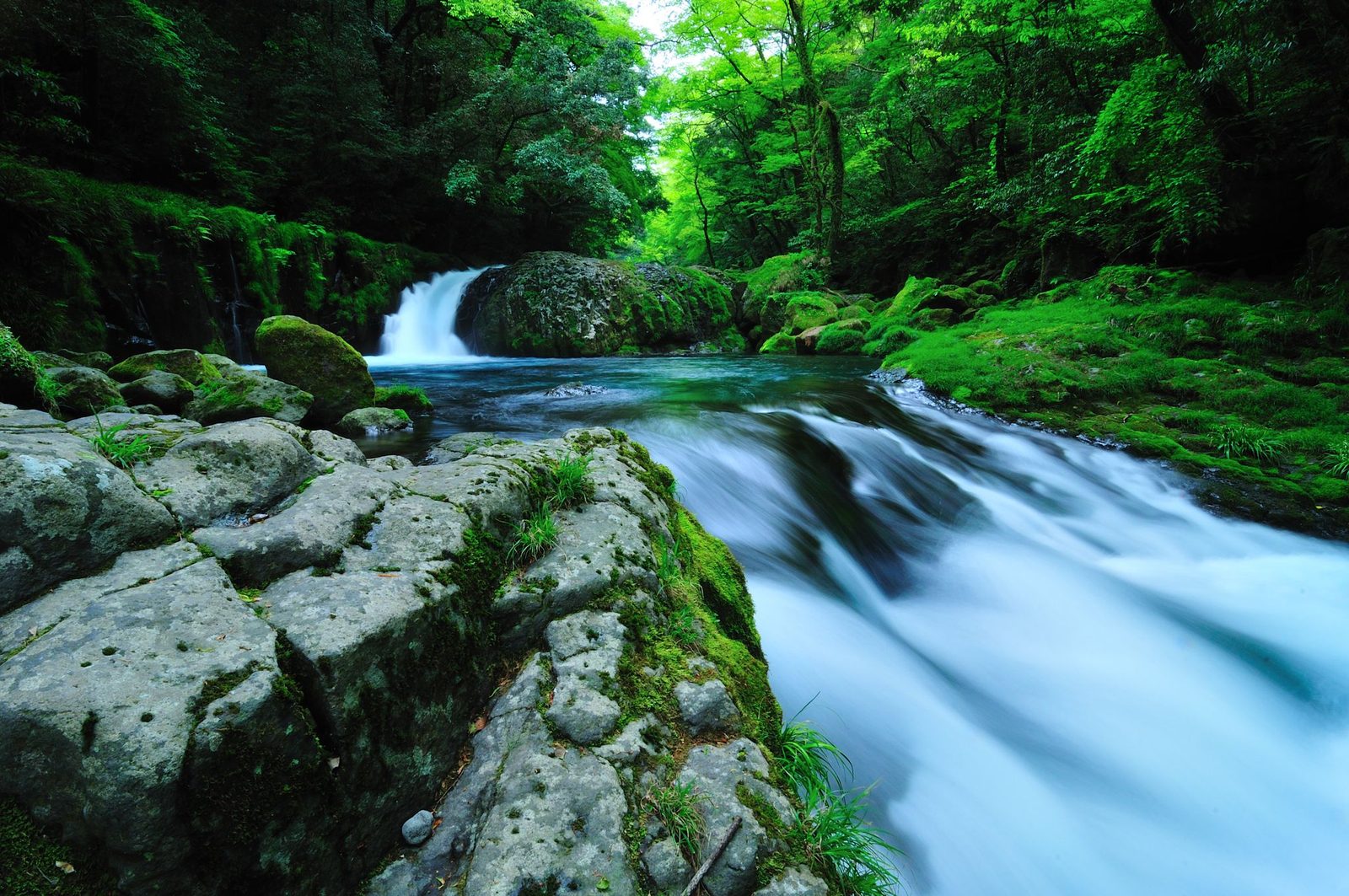
Kikuchi in Kumamoto rewards a slow day in three ways. In Kikuchi Gorge the Kakemaku waterfall pours down like a curtain, and on sunny days a rainbow sometimes appears. In Kikuchi Onsen the bath water is colorless, transparent and alkaline. At Kikuchi Shrine a history hall displays the Kikuchi clan's old documents, family precepts, thousand spears, Noh costumes and Noh masks, and at the chrysanthemum show the same clan's warriors reappear as dolls made of brightly coloured chrysanthemums.
Water Curtains and Rapids in Kikuchi Gorge
Kikuchi Gorge greets visitors at the bridge that spans the way in, where the Kakemaku waterfall lies directly beneath and the first look at the water is from above. Named for the way it resembles a silver screen stretched across a stage, the Kakemaku waterfall pours down like a curtain, and on sunny days a rainbow sometimes appears there.
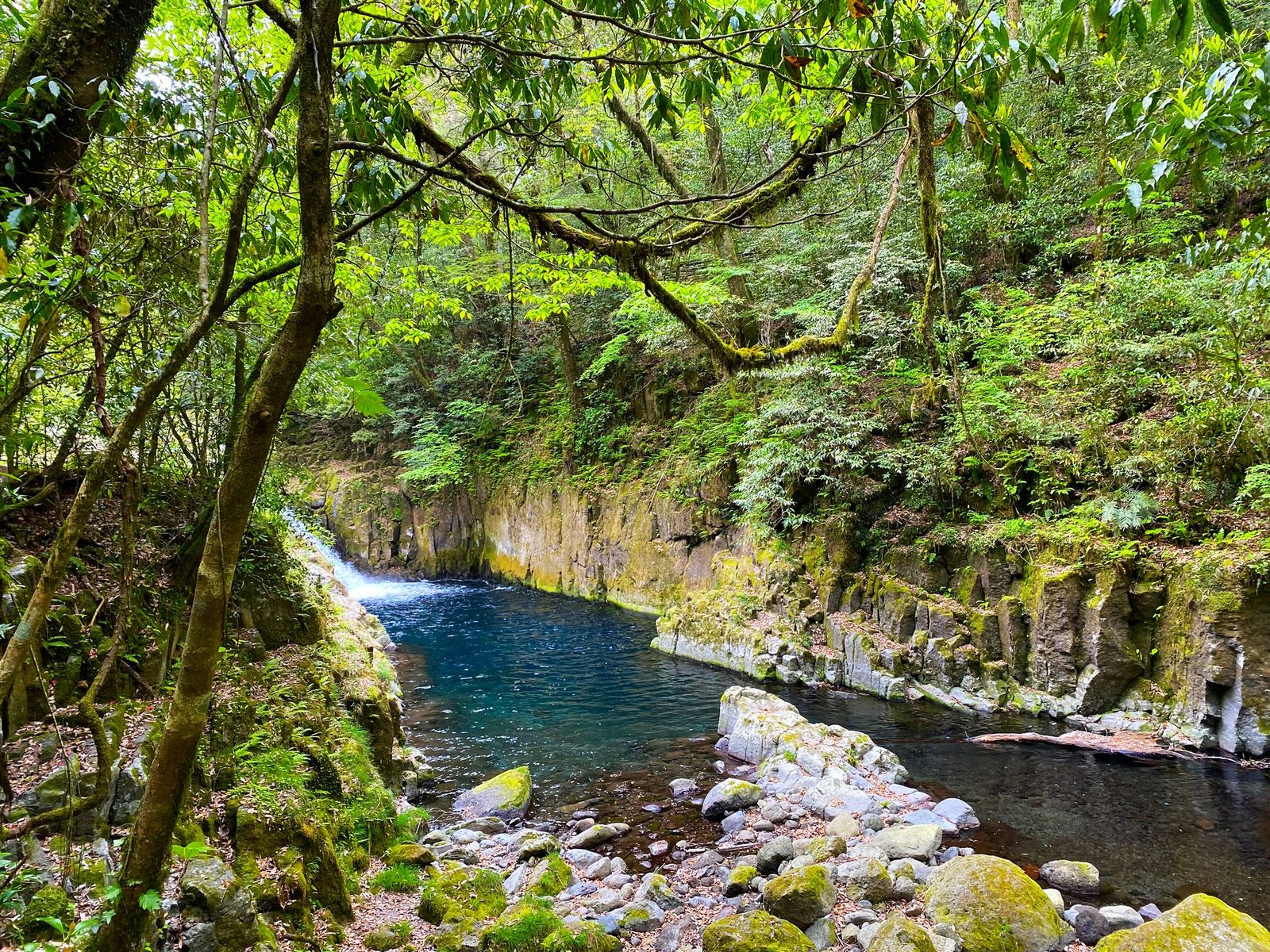
The Reimei waterfall takes its name, which means dawn, from the spray that rises like morning mist, and that mist-like spray still rises at the waterfall today, with its moss-covered rock wall and pool. A curved stone weir built for hydroelectric power sometimes carries a water curtain of its own, turning a working structure into one more sight on the walk.
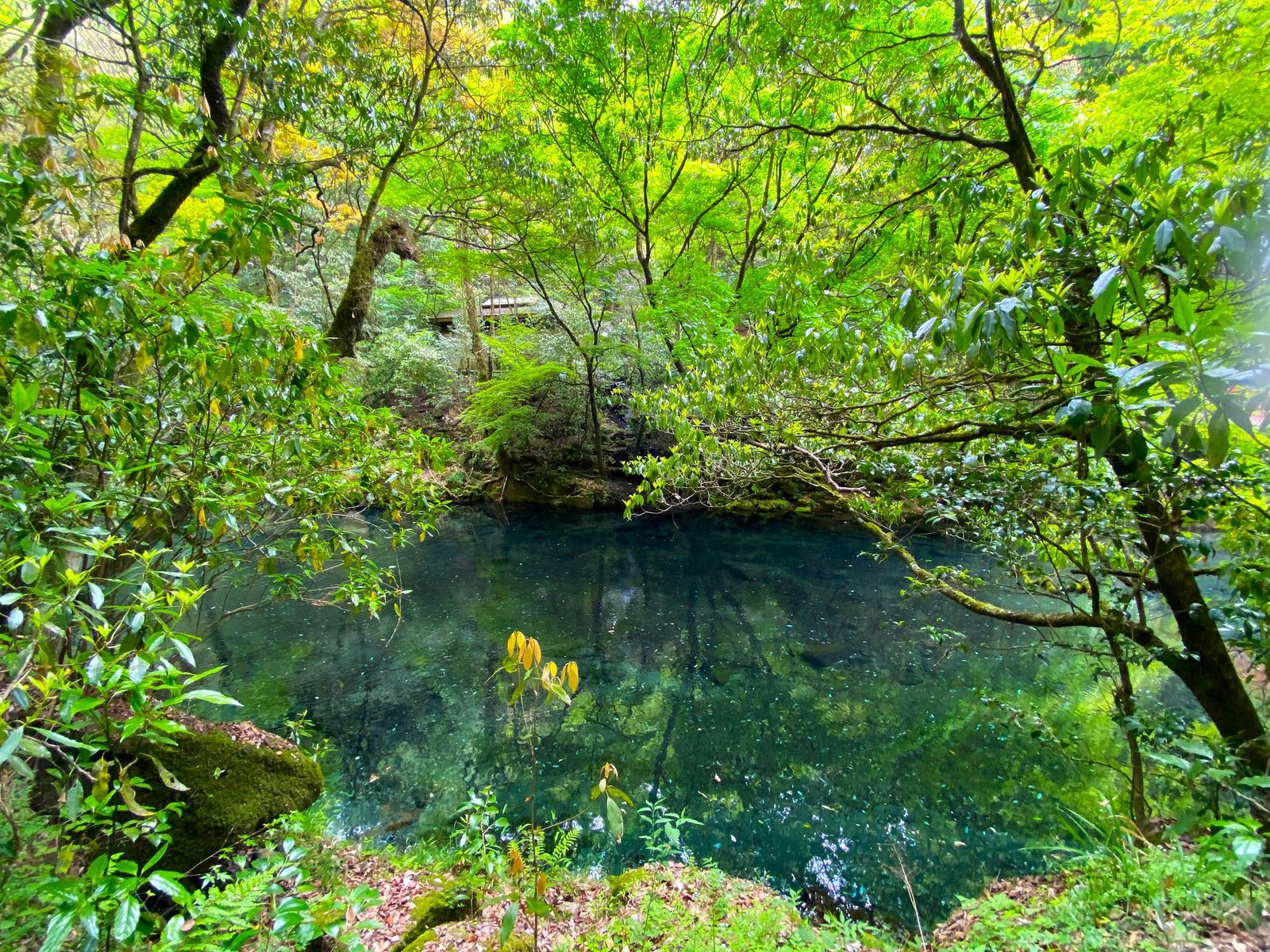
Along the walking path, waterfalls, rapids and pools come one after another, and the water running beside you stays cool all year. Walk the path to its end rather than turning back at the bridge, since the waterfalls, rapids and pools arrive in series.
Soaking in Kikuchi Onsen
Kikuchi Onsen asks little of a visitor beyond stepping into water that is colorless, transparent and alkaline. The source is kept hot at all times, and that steady heat is what you feel in the bath.
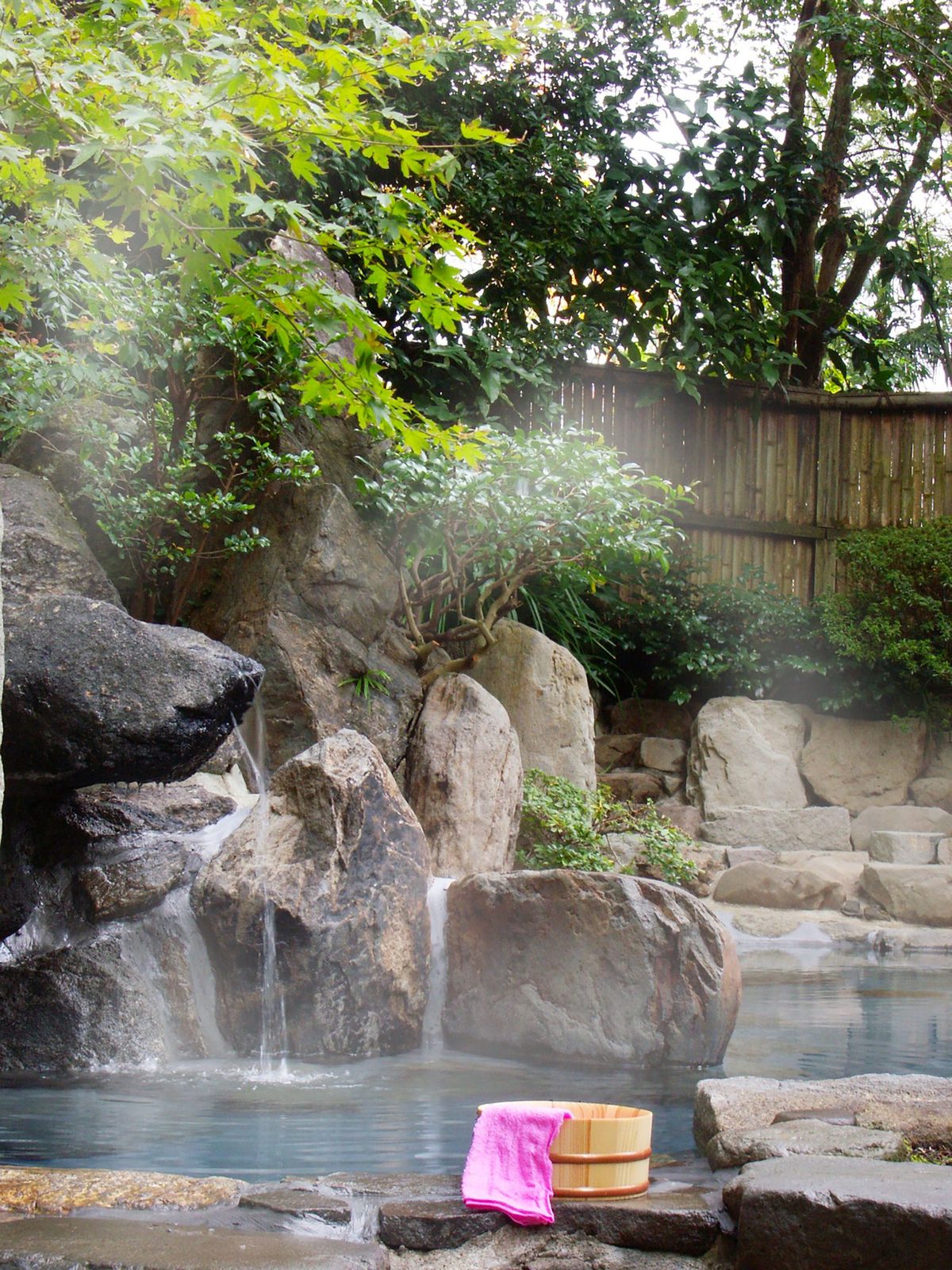
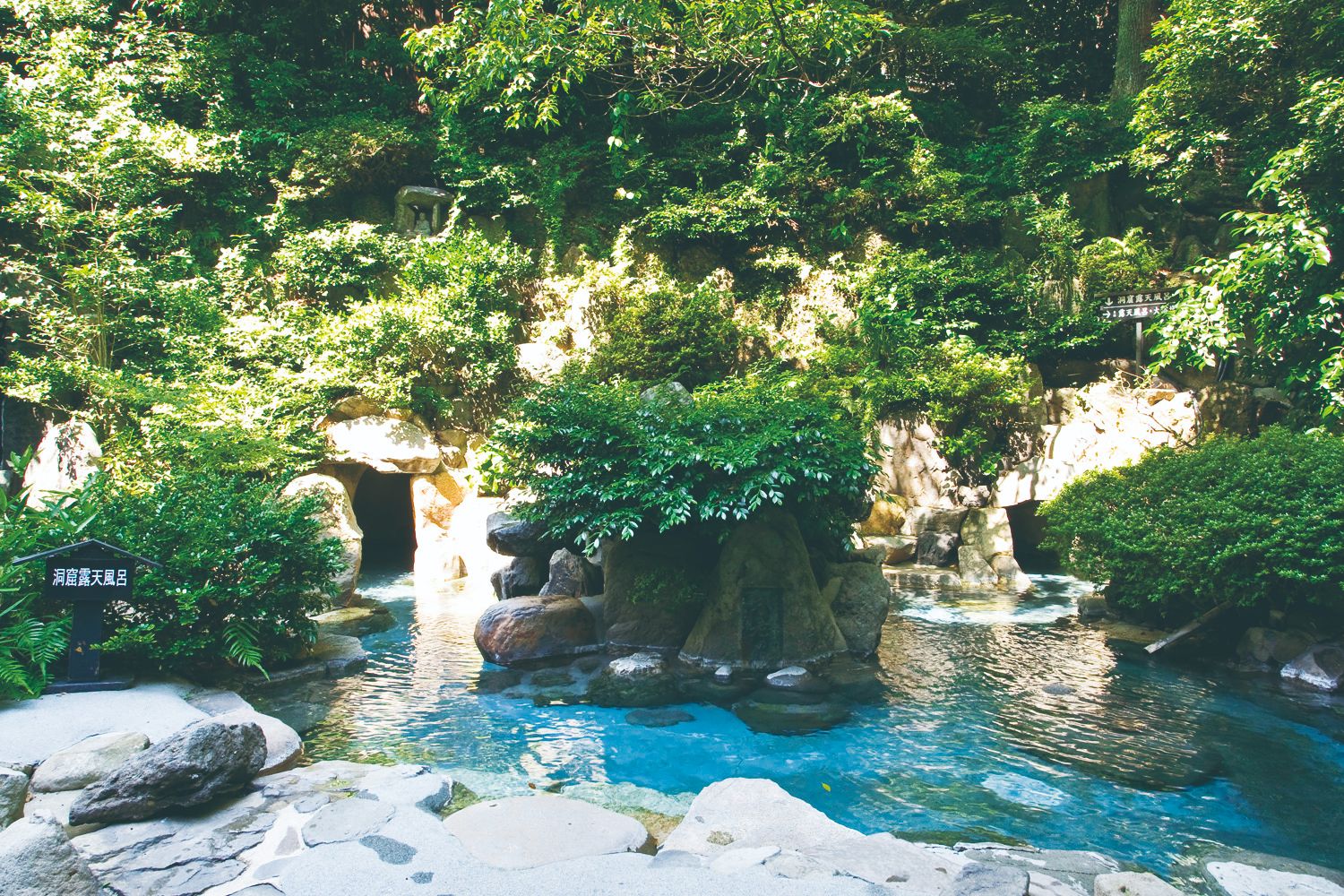
At the foot bath tea stand, a set brings Kikuchi tea, a Kikuchi sweet and a rental towel, so you sit with your feet in the water, cup in hand. One of the inns has an outdoor bath for anyone who would rather not soak under a roof.
After dark the onsen town is lit up under a night-lighting scheme run as a social experiment, so the walk back from the bath becomes part of the evening. Take it in that order, the bath first, then the foot bath with tea, then the lit streets after dark. Seven inns and hotels make up the Kikuchi Onsen ryokan association, and if the lit-up streets persuade you to stay the night, they are where to begin looking at places to stay in Kikuchi.
Kikuchi Shrine and the Clan Behind It
Kikuchi Shrine is where visitors meet the Kikuchi clan, a warrior family that flourished around this region for about four and a half centuries, through the old documents, family precepts, thousand spears, Noh costumes and Noh masks in the history hall in its grounds. The shrine itself dates from the nineteenth century, well after the clan's own time, and its hall is where that older history is now gathered.
The Noh stage used for the Matsubayashi Noh was built facing the muku tree, so the tree beyond the stage is the view its builders chose. Thousands of cherry trees bloom along the shrine approach and in nearby Kikuchi Park, and a cherry tree also stands within the shrine grounds.
Kikuchi Castle, raised by the Yamato court in the seventh century as a mountain fortress, is seen today through its reconstructed buildings, an octagonal drum tower and a rice storehouse among them. Just below Kikuchi Park, a temple of the Rinzai school holds the grave of Kikuchi Takemitsu of the clan. If the clan's story is what brings you, start at the history hall, where the documents, precepts, spears and Noh costumes sit in one place, then find the cherry tree in the same grounds.
Tomato Pudding, Red Soybeans and Local Rice
A good way into Kikuchi's food is its tomato pudding, made with plenty of eggs from a local egg farm and Kumamoto-grown tomatoes. The pudding has a refreshing acidity and a mellow sweetness that lean on the tomato's own flavour.
The same egg farm makes an olive oil mayonnaise with a smooth, mellow mouthfeel, and the scent of olive oil spreads gently in the aftertaste. Red soybean sweets come plain roasted or in salt, kinako and brown sugar flavours, and they can be eaten as they are because they keep the original taste of the soybeans.
Rice here is grown with abundant water, cattle are raised on its straw and their compost returns to the paddies, and the chewy texture of Kikuchi rice is where that cycle lands on your plate. Kikuchi pears are juicy and sweet, and a melon ice cream carries a rich aroma and a sticky texture that tastes like the melon itself. With little time, start with the tomato pudding and the red soybean sweets, since the sweets can be eaten just as they are.
Chrysanthemum Dolls of the Kikuchi Clan
Chrysanthemum dolls at the civic plaza depict the warrior figures of the Kikuchi clan, active in Kyushu some seven centuries ago, in brightly coloured chrysanthemum flowers, so the clan history from the shrine's hall becomes something you walk past in bloom. Around them stand large, small and cascade-style chrysanthemums and bonsai grown by the festival committee's members, along with chrysanthemums raised by local elementary, junior high and high school students. Held this autumn as the latest of many editions, the show puts the clan's warriors and the students' flowers in the same plaza.
Village Footpaths in the Water-Source Hills
Past editions of the water-source footpath walk have followed a course with gentle ups and downs, with a food-truck cafe along the way serving handmade sweets and tea from local people. Lunch on those walks has been a satoyama lunch made by local mothers from the ingredients of the water-source area. It suits anyone who wants to taste the hills as well as look at them.
Getting to Kikuchi
| Leg | How | Time and estimate |
|---|---|---|
| JR Kumamoto Station to Kikuchi | Kumamoto Dentetsu bus for Kikuchi Onsen or Kikuchi Plaza | About 70 minutes |
| Kumamoto Koutsu Center to Kikuchi | Kumamoto Dentetsu bus from platform 18 for Kikuchi Onsen or Kikuchi Plaza | About 60 minutes |
| JR Higo-Ozu Station to Kikuchi | Kyushu Sanko bus, about one bus every 2 hours | About 40 minutes |
| Aso Kumamoto Airport to Higo-Ozu Station | Airport liner | 15 minutes |
| Aso Kumamoto Airport to Kikuchi Onsen | Taxi | Estimated 6,300 yen, toll fees not included |
| Aso Kumamoto Airport to Kikuchi | Rental car via Prefectural Route 36 and National Route 325 | About 30 minutes |
| Kikuchi Gorge by car from Kumamoto | From JR Kumamoto Station; from Aso Kumamoto Airport | About 1.5 hours; about 1 hour |
| Kikuchi Gorge by car from Fukuoka | From Fukuoka City via the Kyushu Expressway | 2 hours 10 minutes |
The bus rows above end in Kikuchi itself; the gorge is reached by car, as in the last two rows.
New to rural buses and one-man trains? See how to ride them, step by step.
Hours and Fees
| Place | What | Hours or fee |
|---|---|---|
| Kikuchi Gorge | Entry fee | 500 yen per person for high school students and older; the entry receipt comes with a discount coupon for a day-use bath in Kikuchi Onsen |
| Kikuchi Gorge | Season and hours | April 1 to November 30 in a typical year; 8:30 to 17:00 |
| Kikuchi Tourism Association | Hours and closing day | 10:00 to 17:00, foot bath until 18:00; closed every Tuesday (the next day if it is a public holiday) |
| Day-use bath tickets | Set of 3 | 1,500 yen including tax; no expiry date; one bath at one facility per ticket; valid at the 7 member inns |
| Foot bath tea stand | Set with Kikuchi tea, a Kikuchi sweet and a rental towel | 600 yen plus a 500 yen deposit |
| Kikuchi Shrine history hall | Entry fee | Adult 500 yen, university and high school 200 yen, elementary and junior high school 100 yen |
| Chrysanthemum doll festival | 2026 dates | 31 October (Sat) to 15 November (Sun) 2026 |
| Chrysanthemum doll festival | Hours | 9:00 to 17:00 |
Where to stay
Places to stay near Kikuchi, Kumamoto, Japan →
Disclosure: This post may contain affiliate links. If you book through them, we may earn a commission at no extra cost to you.