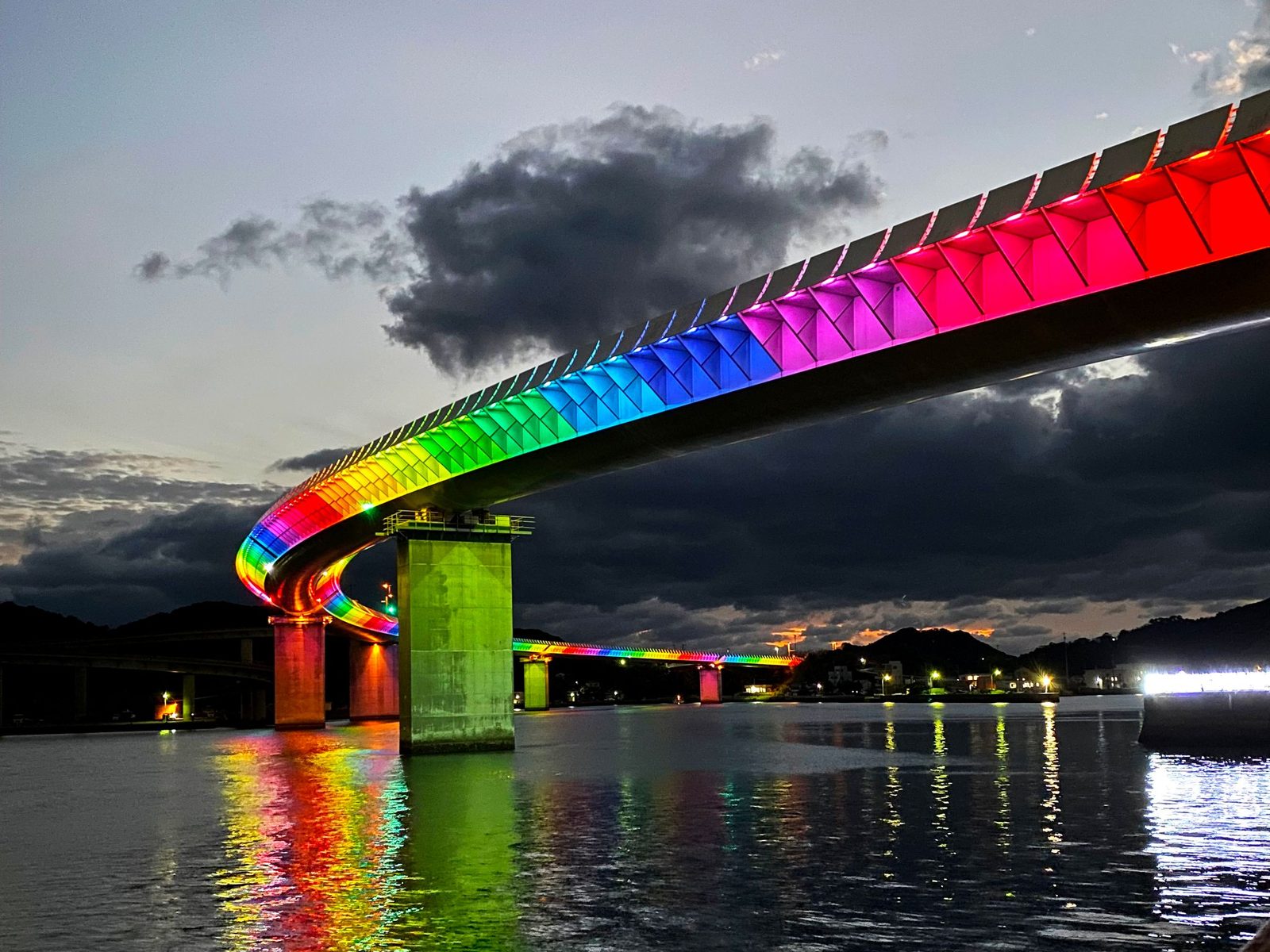
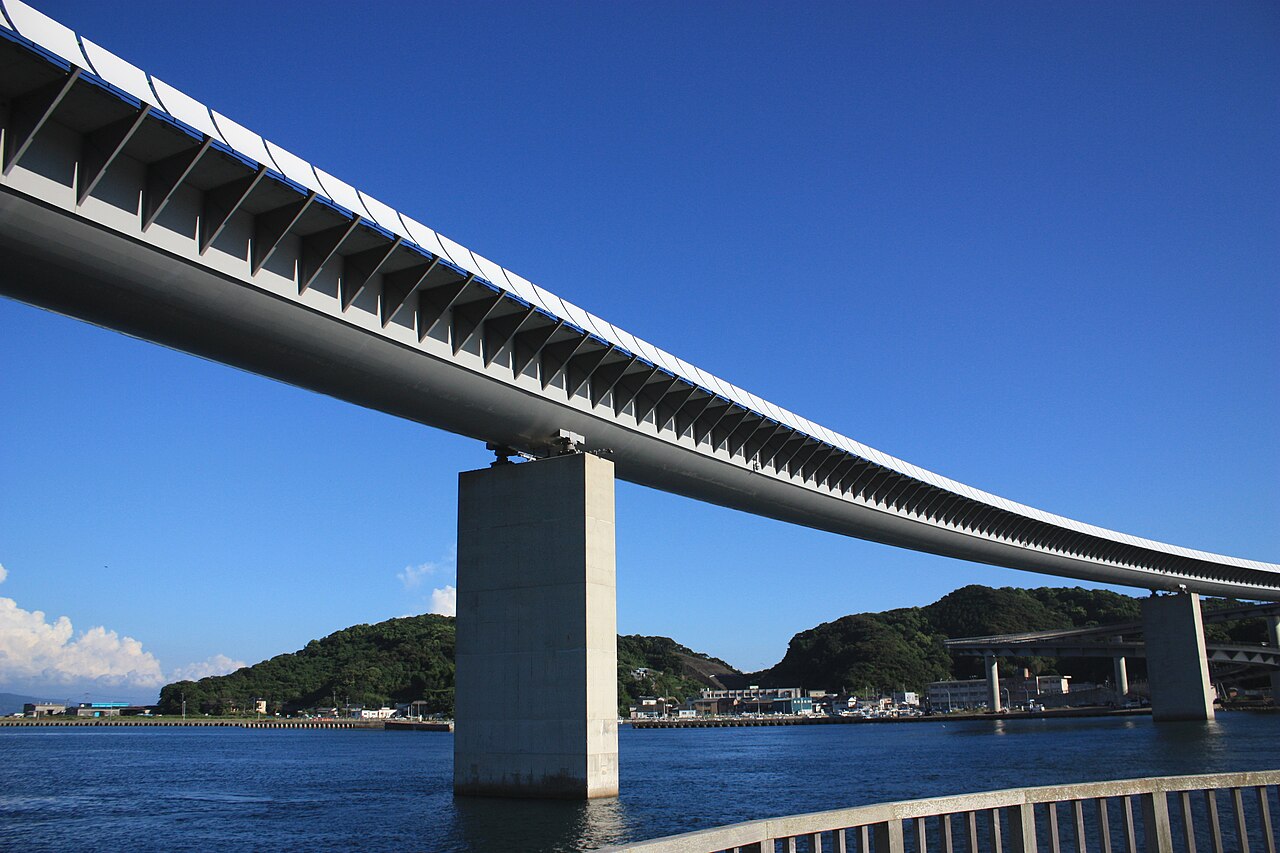
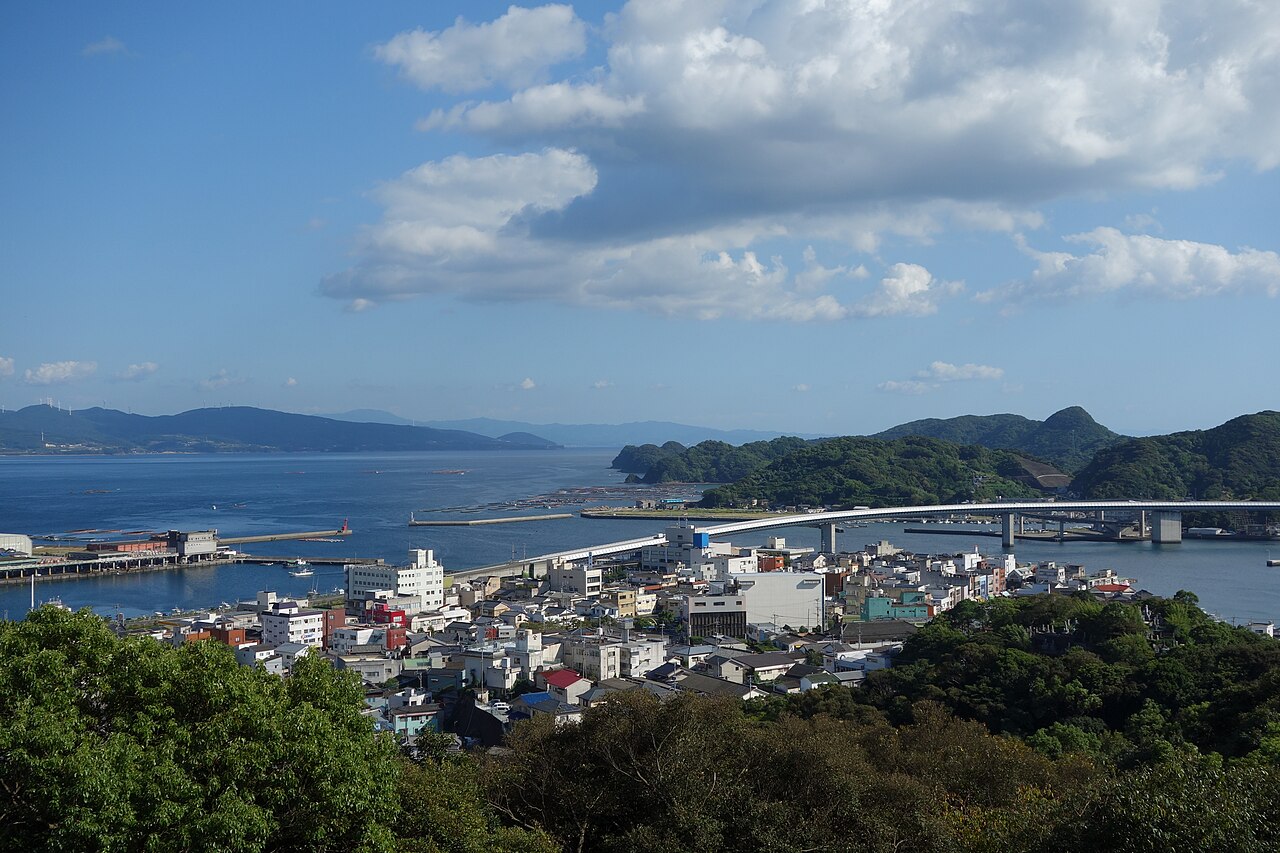
Ushibuka is a fishing port at the southern tip of the Amakusa islands in Kumamoto, where the Ushibuka Haiya Bridge was designed by the Italian architect Renzo Piano. From a glass-bottom boat in the marine park, visitors see Shishiboe Cape, a rock described as a natural shape that looks like a large lion roaring toward the sea. On the beach, the sun sets on the horizon beyond the reef, and in town a restaurant grills fish, pork and camembert cheese over straw fire. The Haiya song that the women of Ushibuka began singing to entertain visiting sailors is still carried on at a festival here every April.
Haiya Bridge, the Lookout and the Old Port
The Ushibuka Haiya Bridge was designed by the Italian architect Renzo Piano, who also worked on Kansai International Airport. It is the landmark the rest of the town is seen against: the lookout above the port shows it together with the townscape, a restaurant window frames it at lunch, and the old harbor is where the Haiya song was born.
Matsutake Park, a lookout on the middle slope of Toomi-yama, shows the townscape of Ushibuka and the Ushibuka Haiya Bridge in one view, a sensible first stop for getting the lay of the port. Around May, the Shari-bai of the rose family comes into full bloom and a sweet scent spreads all around. Watching the sea from a height has a long history here: on Tomidake, the mountain beside the beach at Onikizaki, a lookout was placed in the Edo period as a sea guard and a post against smuggling.
The old port is Ushibuka-ura, which prospered through trade by cargo sailing ships and is where the Ushibuka Haiya folk song was born. Samurai of the Satsuma domain are said to have stayed at an inn in Ushibuka-ura. Sedowa is a settlement of fishermen whose houses stand with narrow frontages between their neighbours, and a guided tour of spots tied to the history of Ushibuka is offered there and is booked in advance. Visitors with only a short stay can start from the bridge and the park lookout, which show the town and the bridge together, and leave the Sedowa walk for a longer visit.
Over the Sea and Along the Coast
The glass-bottom boat tour of the Ushibuka marine park lasts eighty minutes. From the boat, visitors can see Shishiboe Cape, an oddly shaped rock at the southern tip of an island within the designated area of the park. The rock formation is described as a natural shape that looks like a large lion roaring toward the sea. The cape is said to have been formed by the eruption of a large caldera volcano with Sakurajima in Kagoshima Prefecture as its central crater.
Mogushi Beach is a place for getting into the water rather than looking down at it. The sea there has high transparency and a shallow slope offshore, and sea turtles come to lay eggs there. Tropical fish and coral live at Mogushi Beach, and snorkelling is possible there. The beach was also the filming location for the climax scene of an NHK Taiga drama.
A trial diving plan includes daytime dives, a wetsuit, camera rental and instruction in underwater photography, and a SUP experience is also offered, with the fees in the table below. Those who prefer to stay dry can see the cape from the glass-bottom boat, while snorkellers can head to Mogushi Beach.
Sunset on the Beaches
The Kuroishi sunset was chosen for Japan's sunset selection and is one of the Amakusa sunset views. Visitors can walk along two stretches of coast while watching the sunset, so the end of the day here is a walk rather than a single viewpoint. From the beach at Onikizaki, the sun setting on the horizon beyond the reef can be seen, and the sea is clear and the sand very clean. Another beach pairs the sunset with islands and the ruins of a coal mine.
Sazuki Beach is a place for a full day on the sand: its sandy beach is crescent-shaped, curves in a beautiful arc and extends for one kilometre. It has toilets, showers and changing rooms, and barbecue is possible, so Sazuki Beach suits a beach day, while the Kuroishi coast and the beach at Onikizaki are the choices for the sunset.
Eating and Making in Ushibuka
Straw-fire cooking is a meal to look for in Ushibuka. A restaurant that cooks over straw fire grills its food at once with strong heat and a fragrant straw aroma. The straw grilling is applied to fish, pork and camembert cheese. Lunch there is served as a course that includes udon and is booked ahead, so it needs to be planned before the day.
For sashimi, a restaurant on the second floor of a fish shop recommends the Ushibuka sashimi set meal, and the Ushibuka Haiya Bridge can be seen from its window. Anyone who wants a meal with a view of the bridge can look for the restaurant above the fish shop.
Ushibuka also offers things to make by hand. A dashi-maki tamago making experience is booked by the previous day, and a butter making experience is offered for two or more people, with the details in the table below.
Haiya Festival and Summer Lanterns
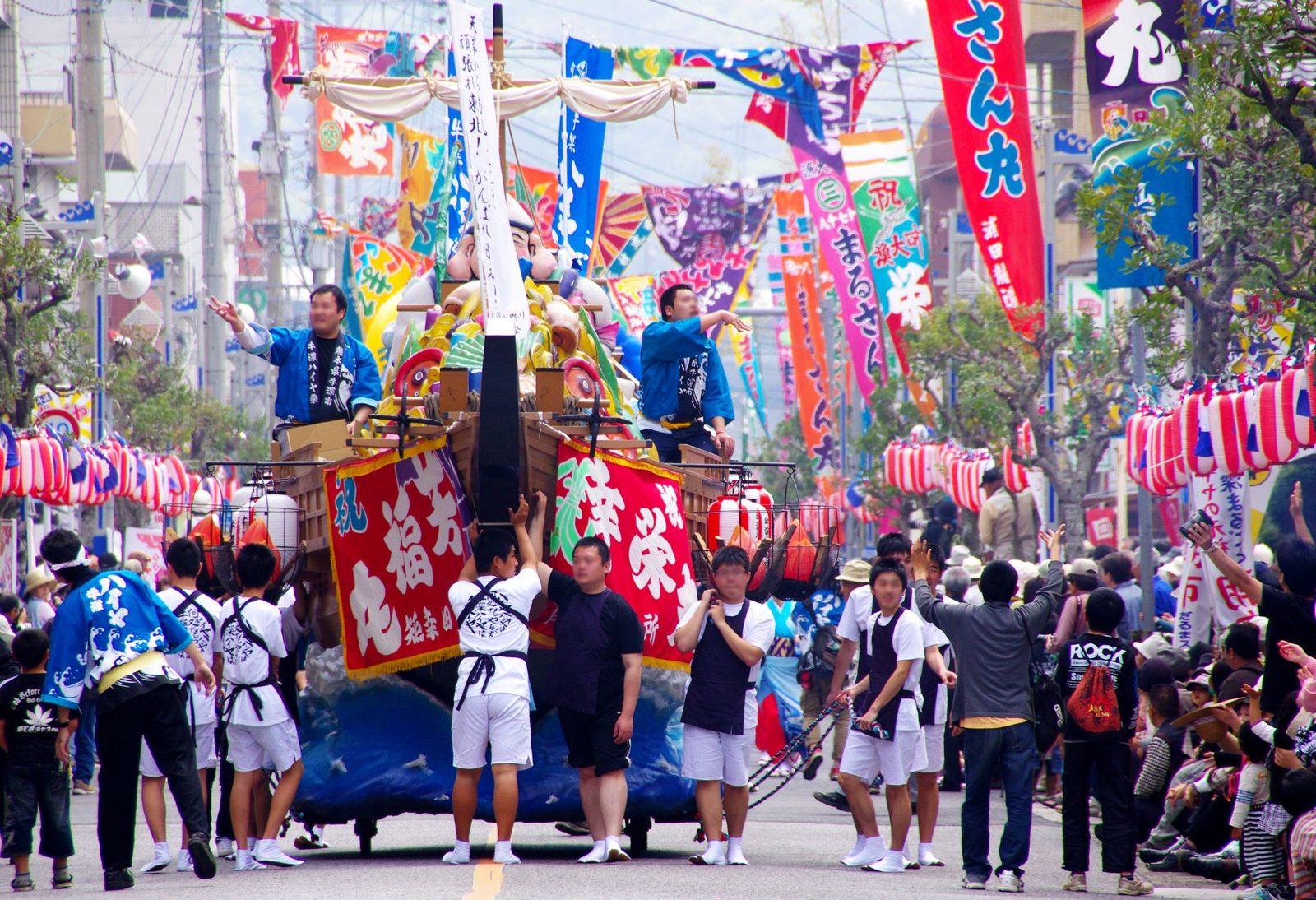
Visitors who want to see the Haiya in the streets should plan for April, since the Ushibuka Haiya Festival is held then every year, in the central shopping street area of Ushibuka. The festival carries on the Ushibuka Haiya Bushi, handed down since the Edo period.
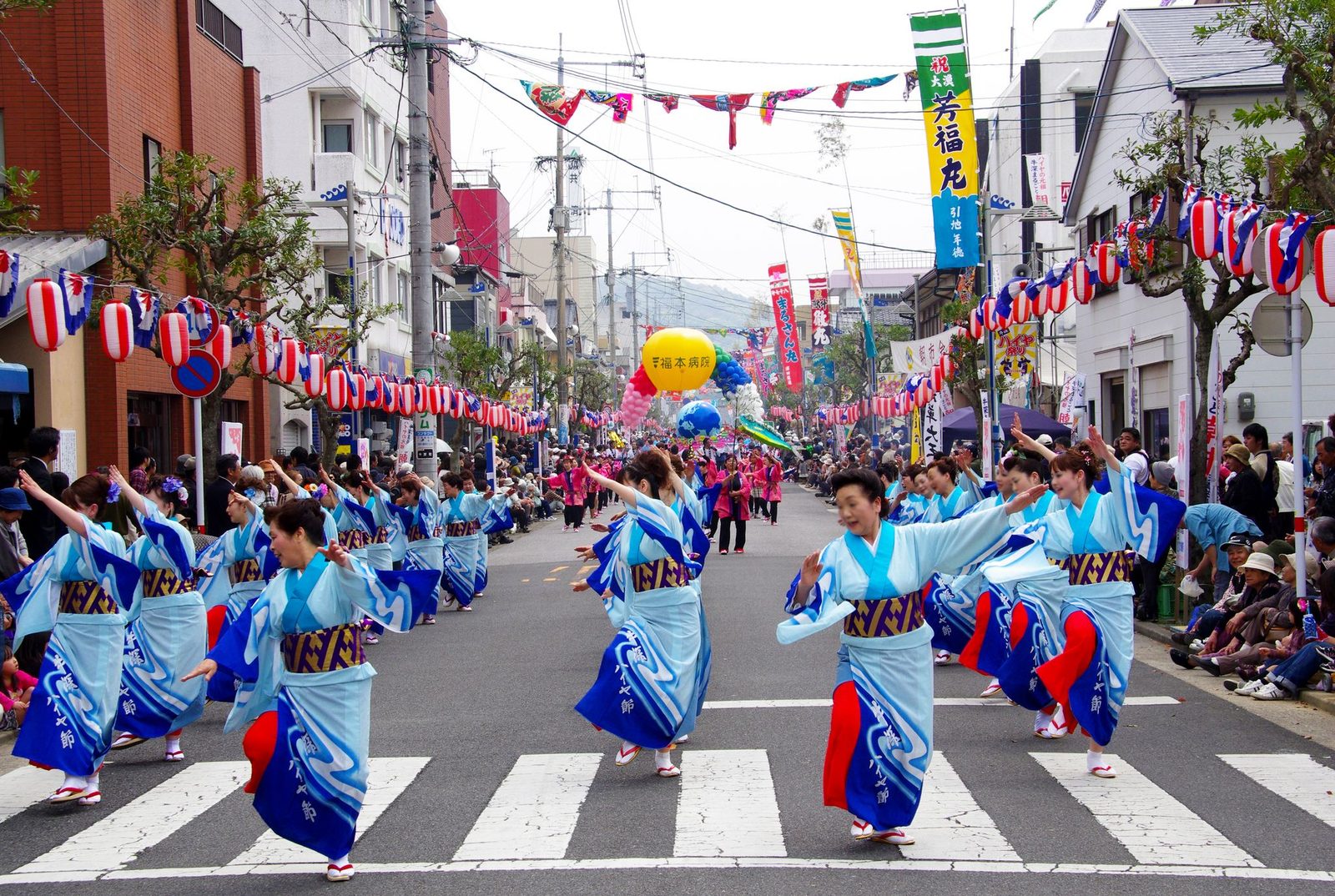
The song began at the port. Many sailing ships carrying marine products and other goods came and went from Ushibuka, a key point of sea traffic, and the Haiya bushi is a song that the women of Ushibuka began singing to entertain the sailors who called here. The song and dance of those sailors and the women of Ushibuka is said to be the start of the Ushibuka Haiya Bushi.
In August, in the Obon season, the summer cooling festival brings a fireworks display and mini events. The Ushibuka SUMMER Lantern Festival of twenty twenty-six was held at the roadside rest area at Ushibuka Port from August eighth to August sixteenth, with a display of five hundred or more lanterns and a wind-chime corridor of about seven hundred wind chimes designed by local elementary school pupils. The lanterns were lit from seven to ten in the evening. The Akane Market, another event on the calendar, includes a sea bream fishing contest, a local products market called Ikiiki Market and sales of Ise-ebi miso soup.
Getting to Ushibuka
| Leg | How | Time and estimate |
|---|---|---|
| Kumamoto to Ushibuka | Car and ferry | About 180 minutes |
| Nagasaki to Ushibuka | Car and ferry, with a 30-minute crossing | About 210 minutes |
| Kagoshima to Ushibuka Port | Car and ferry, with a 30-minute crossing | About 190 minutes |
| Hakata Station to Ushibuka | JR, boat and bus | About 275 minutes |
| Ushibuka Port to the ferry port across the water | Ferry | 30 minutes |
| Ferry | Adult one-way fare | 540 yen |
| Ferry | First departure from Ushibuka Port | 07:00 |
| Ferry | Last departure from Ushibuka Port | 18:00 |
| Ferry | Round-trip ticket validity | 10 days |
New to rural buses and one-man trains? See how to ride them, step by step.
Hours and Fees
| Place | What | Hours or fee |
|---|---|---|
| Glass-bottom boat | Adult fare | 2,800 yen |
| Glass-bottom boat | Elementary and junior high school fare | 1,400 yen |
| Glass-bottom boat | Closing day | Tuesdays, except public holidays and in July and August |
| SUP experience | Fee | 6,000 yen per person, insurance included |
| Dashi-maki tamago making | Adult fee | 3,000 yen, tax included |
| Dashi-maki tamago making | Experience time | 11:00-14:00 as a guide; book by the previous day |
| Butter making | Fee | 1,000 yen per person, for two or more people |
| Beach snorkelling, half day | Fee | 6,000 yen, for two or more people |
| Guided walk in the Sedowa settlement | Fee | 4,000 yen per group of up to five |
| Straw-fire restaurant | Lunch | 11:30-14:00, booking required |
| Straw-fire restaurant | Dinner | 18:00-21:30, reservations possible |
| Tourist information office | Hours | 8:30-17:30 |
| Ferry ticket office | Hours | 6:30-18:00 |
| Sazuki Beach showers | Fee | 100 yen, from early July to around the end of August |
Readers who want to walk the coast at sunset and then sit down to a straw-fire dinner can look for places to stay in Amakusa.
Where to stay
Places to stay near Ushibuka, Amakusa, Kumamoto, Japan →
Disclosure: This post may contain affiliate links. If you book through them, we may earn a commission at no extra cost to you.