This is a plan for one morning at Noboribetsu Onsen in Hokkaido: the train-and-bus approach through Noboribetsu Station, a walk along the Jigokudani boardwalk and around the steaming pond of Oyunuma, the parking arrangement if you drive, and a short look at what the spa town was before it became a resort.
Noboribetsu Onsen sits to the northwest of Noboribetsu Station on the Muroran Main Line, about five point four kilometres from the platforms and up in the hills. An older reckoning gave the distance as one ri and twenty-eight cho. A morning plan simply means making that transfer early, so that the valley is mostly yours.
The shape of the day is simple. Take an early train to Noboribetsu Station, ride the bus up to the spa town, and walk Jigokudani first while the boardwalk is at its quietest. Move on to Oyunuma, then return to the hotel district for a bath and something to eat before you retrace the bus ride to the station.
Getting there from Noboribetsu Station
If you are coming by train from Sapporo or New Chitose Airport, the rail part of the journey ends at Noboribetsu Station. The spa town is a separate leg from there, and a bus covers it. The two figures you need for planning the morning are in the table below.
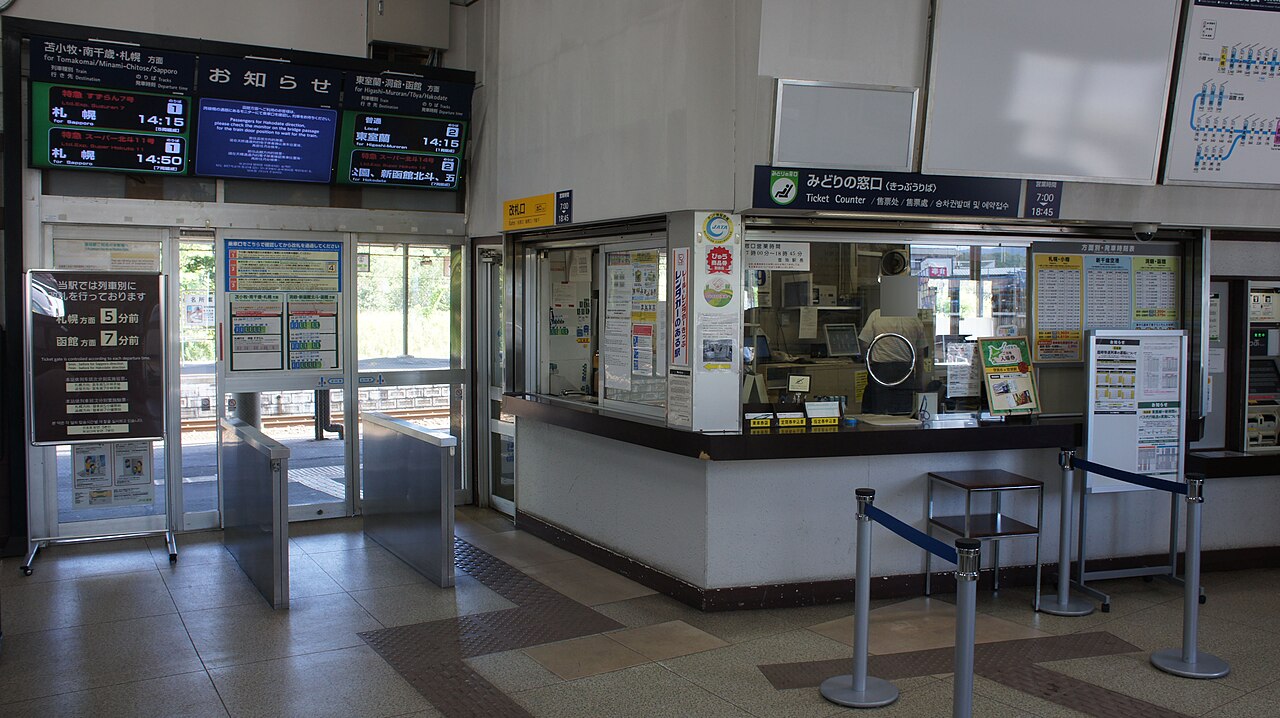
Noboribetsu Station itself is small. There is one concourse with the ticket gate, the departure boards and a staffed ticket counter, so there is nowhere to get lost between the platform and the bus. Make the transfer without lingering; the minutes you save here are minutes on the boardwalk.
| What | Detail |
|---|---|
| Bus, Noboribetsu Station to Noboribetsu Onsen | twenty-seven minutes |
| Adult bus fare, one way | four hundred and fifty yen |
| Distance, station to spa town | about five point four kilometres, uphill to the northwest |
Older guidebooks described the road from the station as wide, well kept, and rising gently into the hills, and said walking it was not hard. They also promised autumn colour, woodland, and flowering pasture along the way. Treat that as period colour rather than a current route description; the bus is the sensible choice for a morning.
If you would prefer to have the transport handled for you, tours that include Noboribetsu are the alternative to the train-and-bus combination. For an independent morning, the combination is simple enough: a train to Noboribetsu Station, twenty-seven minutes on the bus, and you are in the spa town with the morning ahead of you.
The valley in the first hour
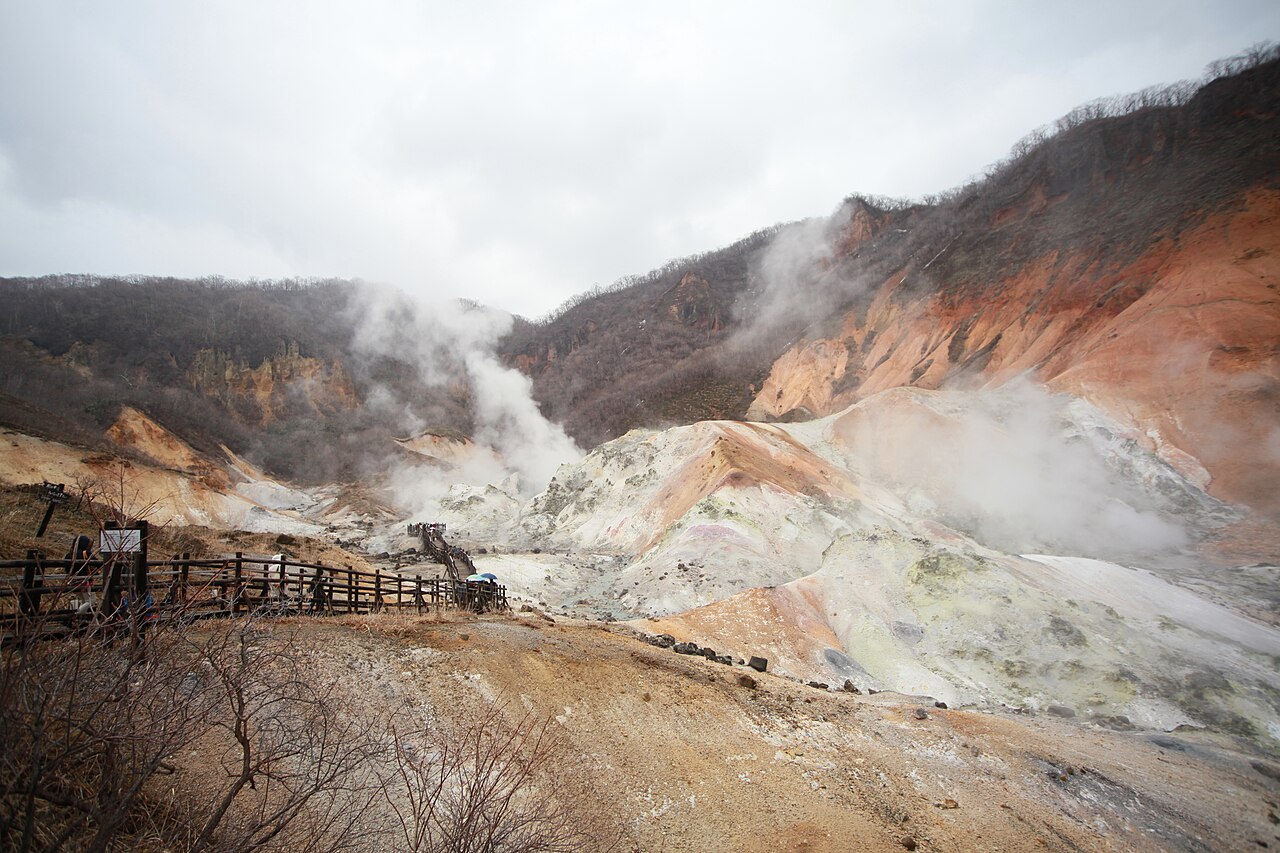
Jigokudani is where the morning starts. Hot water comes up everywhere across the valley floor and in the ponds around it, steam pushes constantly out of gaps between the strange rock forms, and the water gathers into pools, streams and waterfalls. The old guidebooks called it a grand spectacle, and from the boardwalk it still reads as one.
Arriving early is the simplest way to have the boardwalk mostly to yourself. The wooden walkway with its railings runs along one edge of the crater floor, so you are never far from the steam, and in the cool of the morning the vapour tends to stand out sharply against the ochre and pale-grey slopes.
The second half of the morning belongs to Oyunuma, the steaming sulphur pond below the spa town. Where Jigokudani is all rock and vents, Oyunuma is a sheet of hot water with columns of white vapour lifting off it against a bare hillside, and a path follows the far shore.
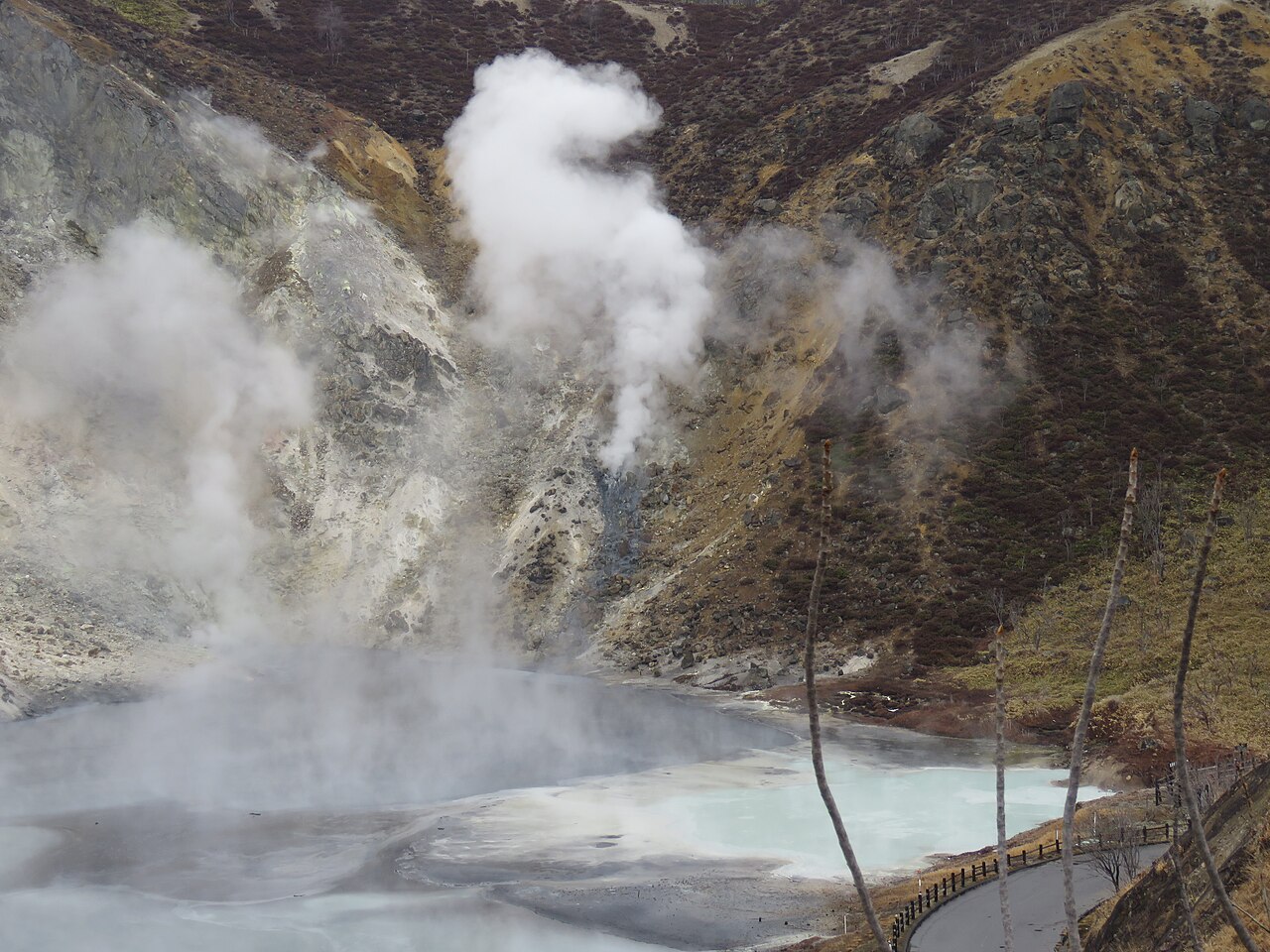
By the time the walk is done you have seen both faces of the place: the valley where steam comes out of rock and the pond where it comes off water. That is the morning plan. The hotel district and the busier evening are ahead, and you meet them having had the quiet part of the day.
Where to stay
Places to stay near Noboribetsu Onsen →
Disclosure: This post may contain affiliate links. If you book through them, we may earn a commission at no extra cost to you.
If you arrive by car
Driving changes the order of the morning less than you might expect, because the parking is arranged around the same two stops. The Jigokudani car park charges five hundred yen, paid once per day, and outside the winter season the same ticket also covers the Oyunuma car park. In practice that means one payment for the whole walk.
- Jigokudani car park: five hundred yen, charged once per day
- Oyunuma car park: covered by the same ticket outside the winter season
- Winter: the shared ticket does not apply
The simplest sequence is to park at Jigokudani first, walk the boardwalk while it is quiet, then move the car to Oyunuma on the same ticket. If you are visiting in winter, check the arrangement on the spot, since the shared ticket does not apply then. Either way, the early start matters more than the vehicle.
The village before the resort
The Ainu are said to have been the first to bathe here, digging pits in the valley where the hot water surfaced. Later, according to the old accounts, inspectors sent by the shogunate confirmed that a healing spring existed, but thick briars made the spot hard to reach and it stayed little known.
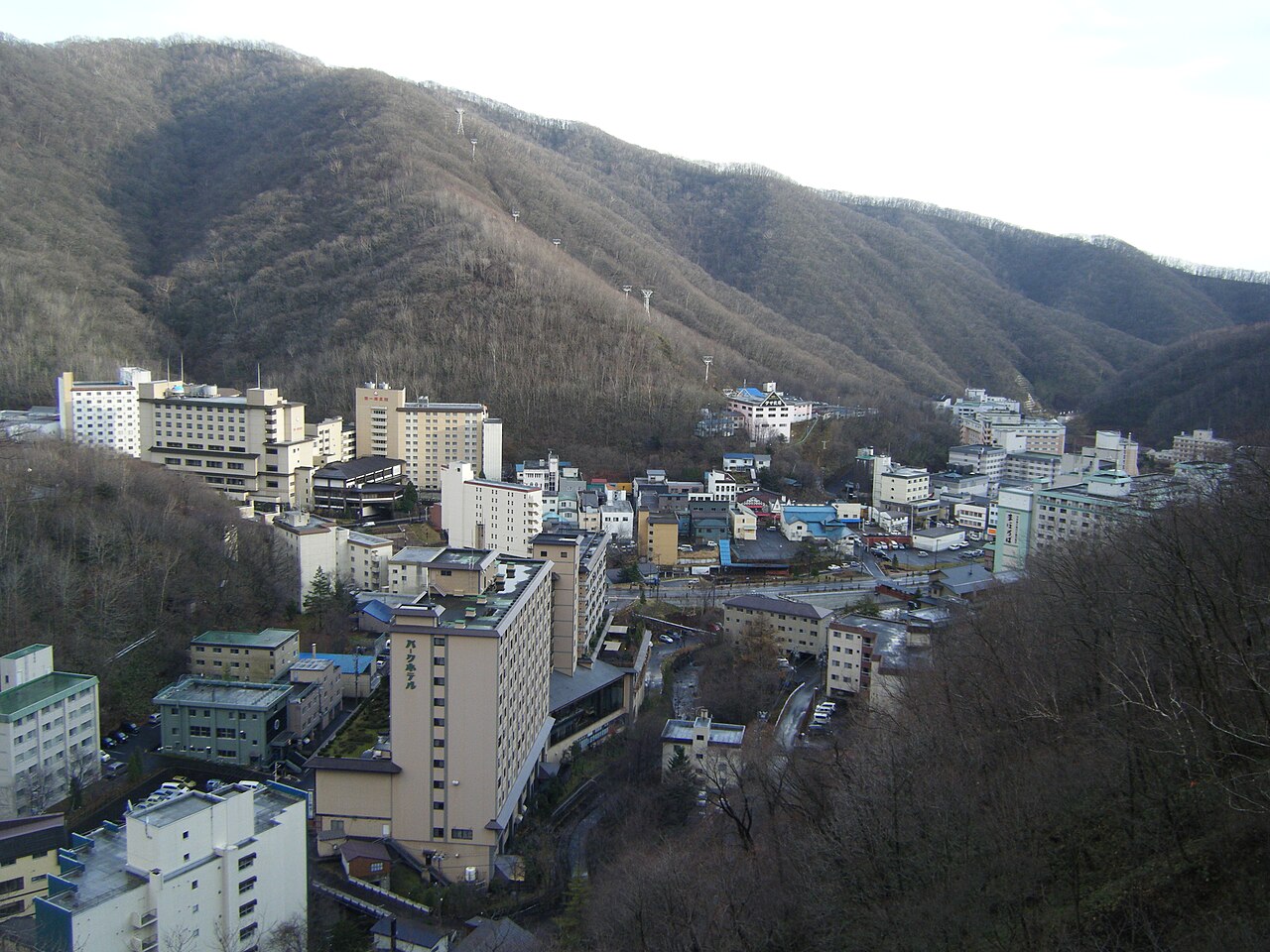
Even in the nineteen-tens, when guidebooks were already describing it, the settlement around the springs was small: some fifty-odd households and a little over two hundred people. Hold that figure in mind when you look at the packed hotel blocks today, because the gap between the two is the story of the place.
What the old guidebooks were promising
The same guidebooks that counted those households were also reporting new works. A horse-drawn tramway, electric lighting and a public telephone were under construction at the spa, and the writers expected all three to be running before long. Read now, the passage has the tone of a village about to be discovered.
Companies were building here too. The Japan Steel Works put up a rest house at the spa, the Noboribetsu Rakuseien, where its staff and factory workers were sent to recover and rest, and a paper company in Tomakomai and a coal-mining and steamship company in Yubari were planning facilities of the same kind.
On paper the spa was a small corner of a larger map. It belonged to Noboribetsu village in Horobetsu district, Iburi province, and formed a joint administrative village with Washibetsu and Horobetsu. The village office was in Horobetsu, which had the railway station of that name, under the Muroran subprefecture.
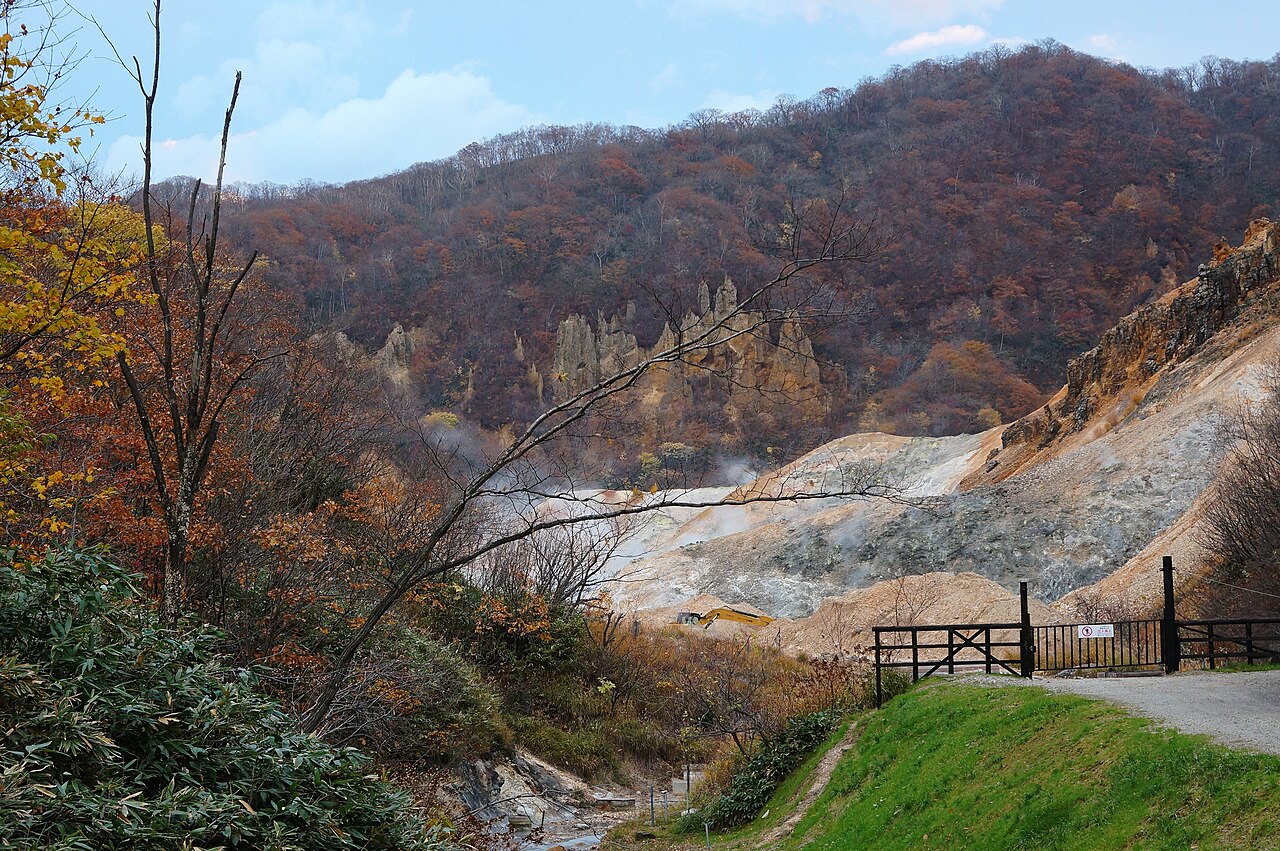
None of this needs to be in your head on the boardwalk. It is simply the answer to a question the view raises: how a hollow of fifty-odd households became the packed valley in the photograph. The steam, at least, was there first.