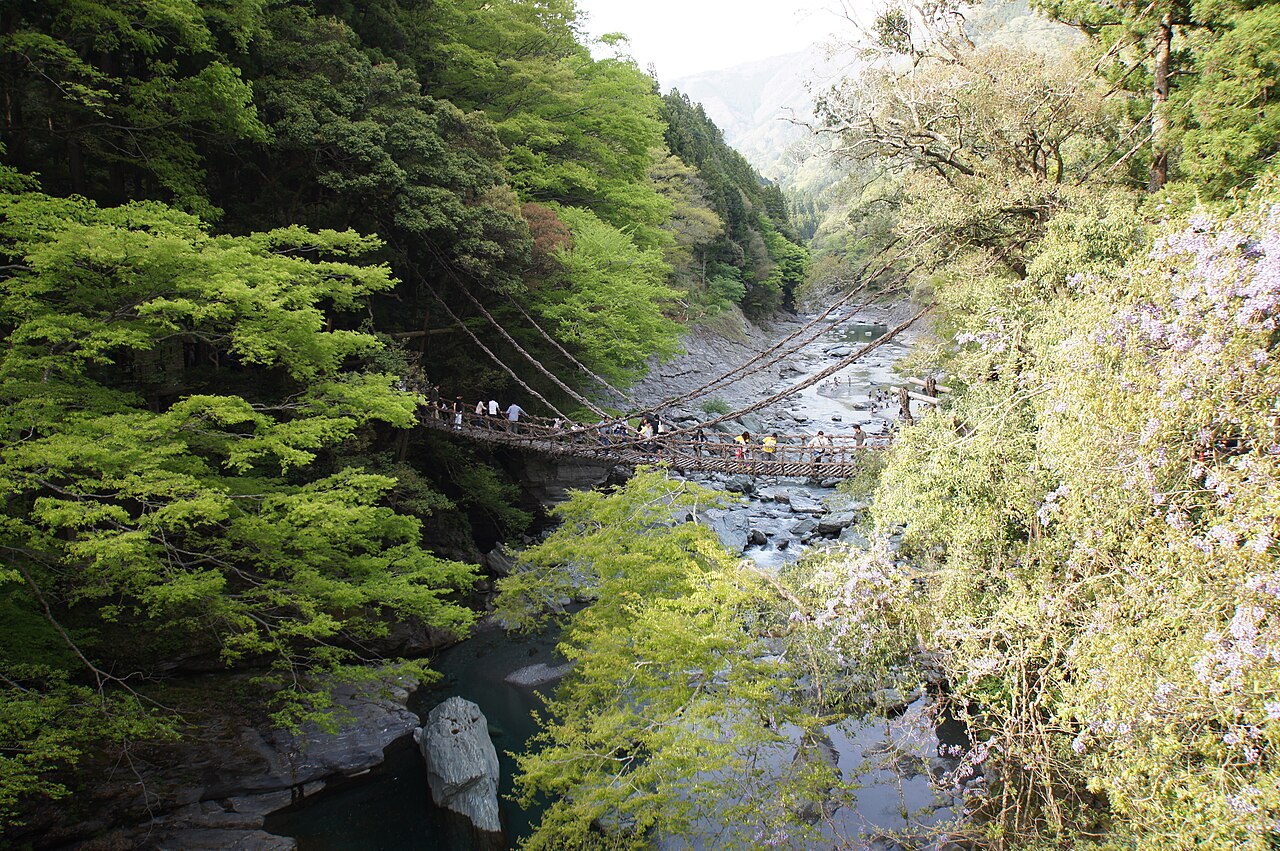
Shikoku saves its deepest quiet for the far west of Tokushima, where the Iya Valley and the Oboke Gorge cut into mountains that feel a long way from anywhere.
This is not a place that rewards hurry. The valley asks for a slow day of swaying vine bridges, a river the colour of bottle glass, and monsters carved from wood.
Getting there
The simplest way in is by rail to Oboke Station. From Takamatsu Station, the Limited Express Shimanto reaches Awa-Ikeda Station in about an hour.
From Awa-Ikeda Station, the Limited Express Nampu takes twenty minutes to Oboke Station. Coming from the south, the Limited Express Nampu or Shimanto from Kochi Station also reaches Oboke Station in about an hour.
Onward connections up the valley are thin and change with the seasons, so settle the last leg before you arrive.
New to rural buses and one-man trains? See how to ride them, step by step.
The vine bridge at Iya
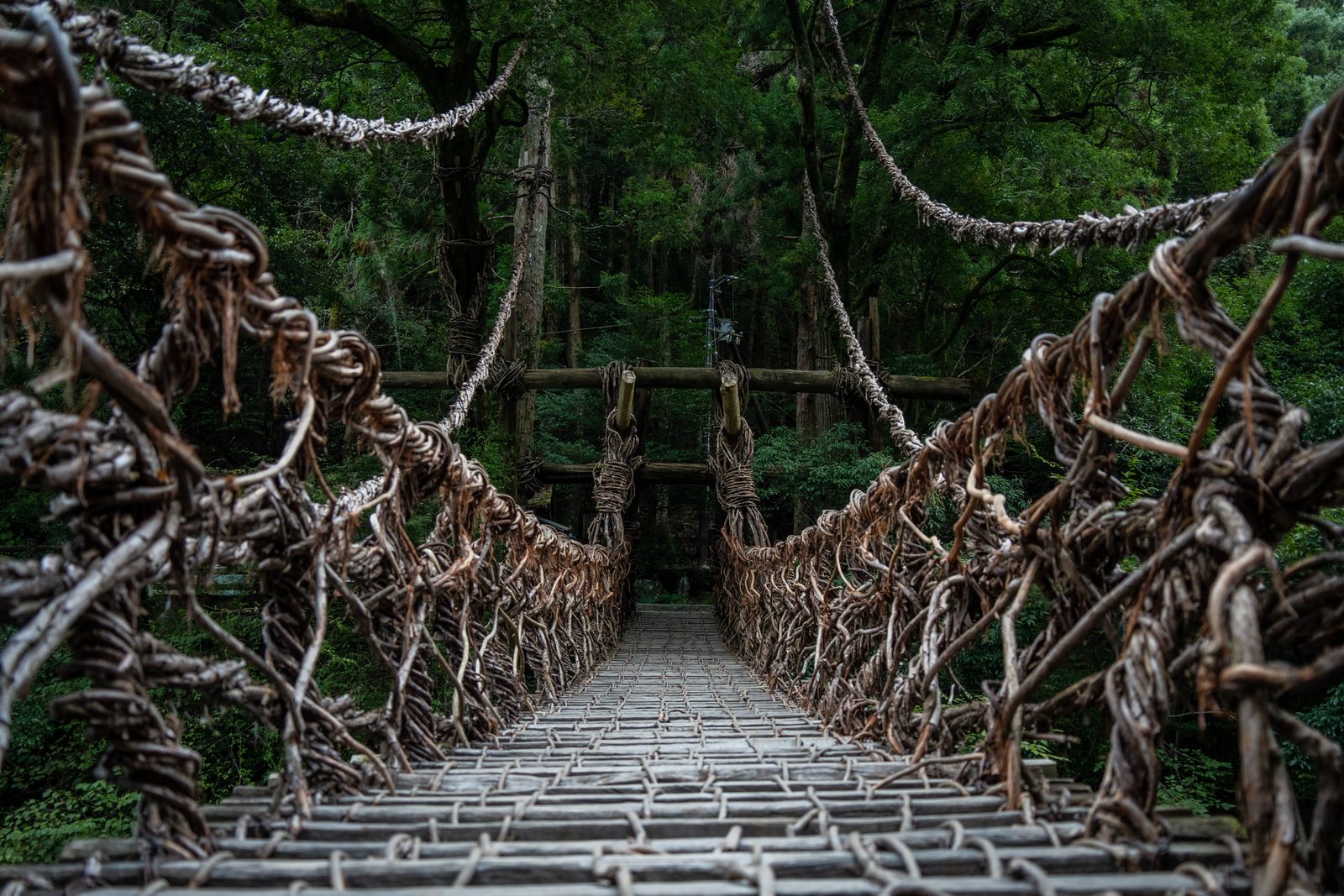
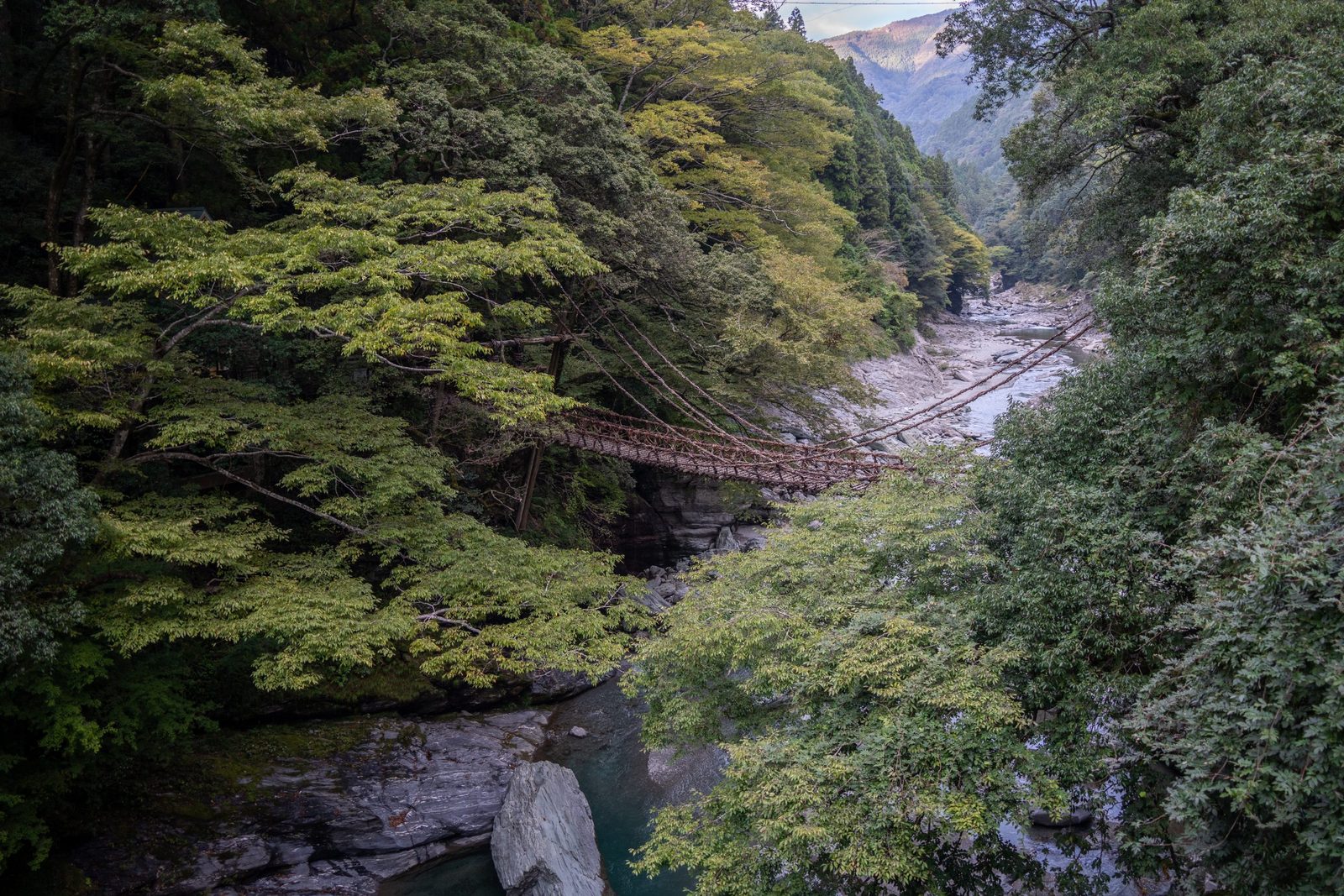
Guidebooks describe the Iya Kazurabashi as a bridge woven from shirakuchi vines, about forty-five metres from end to end and hanging high above the water. The whole span is described as swaying when many people cross at once, and it is said to have carried everyday village traffic in earlier times.
According to local legend, the bridge was first hung by Heike refugees who fled into these mountains, and the Biwa waterfall a short walk away is woven into the same story.
From April through June the bridge can be crossed from eight in the morning until six in the evening. In July and August it runs from half past seven in the morning until half past six in the evening. From September through March the crossing is possible from eight until five.
Every evening the bridge is lit from seven until half past nine, and crossing is not possible while the lights are on.
Fees and details shift from season to season here, so check the latest information before you go.
Down the Oboke Gorge
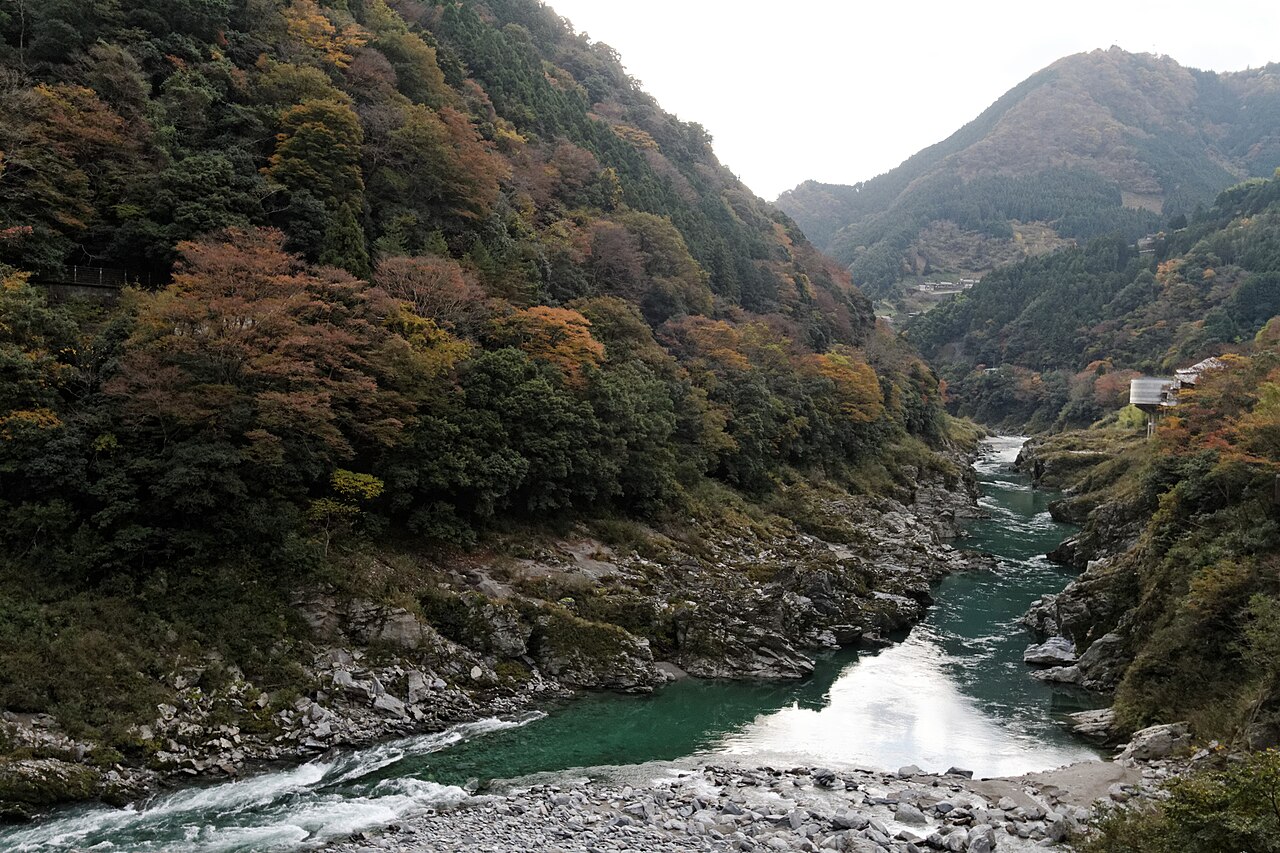
The rock of the gorge is described as having formed on a seabed between one and two hundred million years ago, then heaved upward into the walls that now pinch the Yoshino River.
Guidebooks describe the sightseeing boat as the easy way to meet it, with cormorants and carp along the water and the gorge changing colour season by season.
The cruise lasts about thirty minutes. Adults pay one thousand eight hundred yen, and children from age three through elementary school pay nine hundred yen.
*Rather have the river arranged in advance? Browse tours and tickets for the Iya Valley and Oboke.*
Where to stay
Places to stay near Iya Valley →
Disclosure: This post may contain affiliate links. If you book through them, we may earn a commission at no extra cost to you.
A village on the mountainside
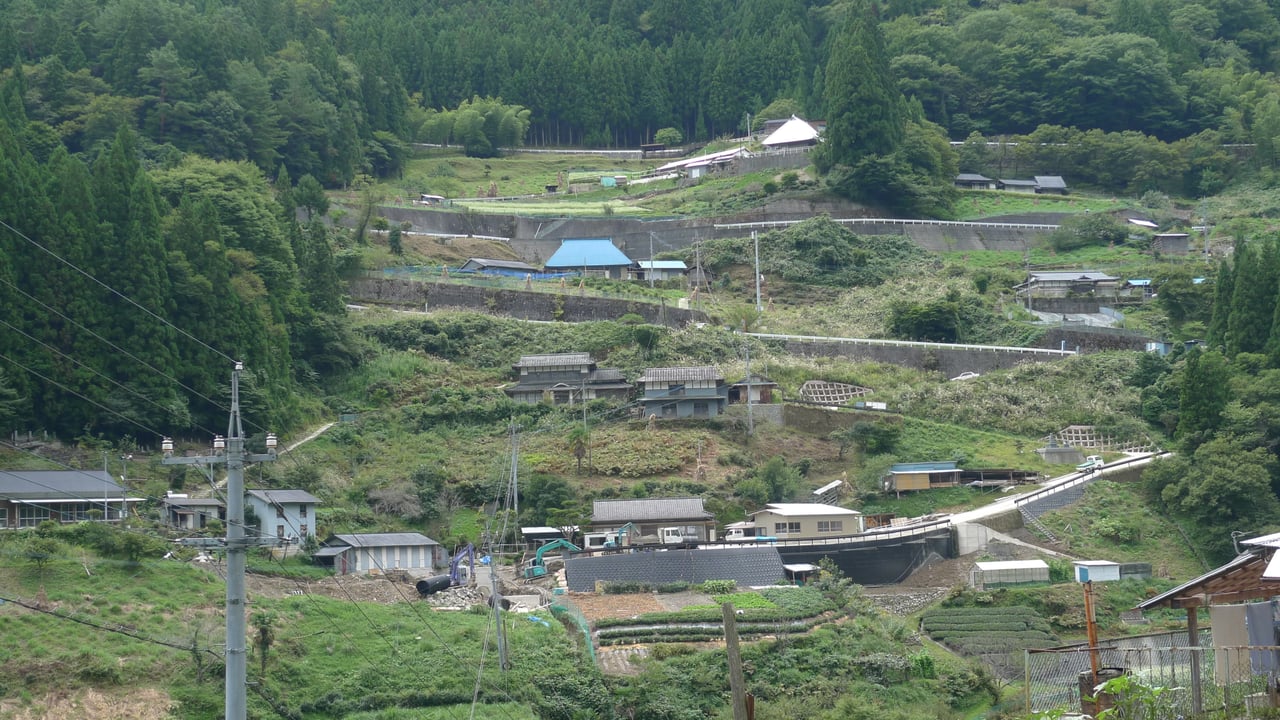
Guidebooks describe Ochiai as a village of houses, lanes and small fields spread over a steeply pitched slope, protected as a national preservation district for traditional buildings.
From its lowest lane to its highest, the village is described as climbing close to four hundred metres, and the Nagaoka House partway up receives visitors inside.
Nearby, the Heike Yashiki folk museum is described as the house of a family descended from a physician to Emperor Antoku, its main building raised in the last years of the shogunate, with a tree in the grounds said to be about eight hundred years old.
Monsters along the old road
Guidebooks describe a stretch of about two kilometres between the Oboke roadside rest stop and the Fuji-no-Sato park where wooden carvings of local yokai line the prefectural road.
The carvings are described as easy to miss from a car, so the advice is to leave it at the rest stop and walk.
According to local telling, the river here belongs to a kappa called Enko. Konaki-jiji, the crying old man of Japanese folklore, is said to belong to these hills as well.
The rest stop itself is described as keeping a yokai house and a museum of stones.
The double bridges of Okuiya
Deeper up the valley, the Oku-Iya double vine bridges are described as a pair, a male bridge and a female bridge, so that the two together go by the name of the couple's bridges.
They are said to trace back to Heike horsemen who trained in these uplands, and the spans are described as woven from the same mountain vines as the bridge downstream, with a stroll around them part of the visit.
What the valley eats
Rice is described as having always been a hard crop on these slopes, so buckwheat became the staple instead.
A grilled skewer called dekomawashi is described in guidebooks at around five hundred yen, and a bowl of sobagome zosui at around one thousand yen.
The lookout and the little boy
The Iya Valley lookout is described as a rest spot with parking and toilets, looking down the length of the V-shaped gorge, and the river bends into the shape of the hiragana "hi" just before it, with no charge to stop.
Guidebooks describe the little statue on the old road, a boy relieving himself off a sheer rock face above the gorge, as the work of a Tokushima-born sculptor in the nineteen-sixties, set at a bend once counted among the road's worst.
Seeing him is described as free at any time, though the spot keeps no parking of its own.
Making a quiet day of it
Give the morning to the boat beneath the rock walls, the middle of the day to the vine bridge and the villages, and the last light to the road of yokai.
Nothing in this valley asks you to hurry, and that is exactly why it is worth the long ride in.
*Planning the wider trip? Compare tours and tickets around the Iya Valley.*