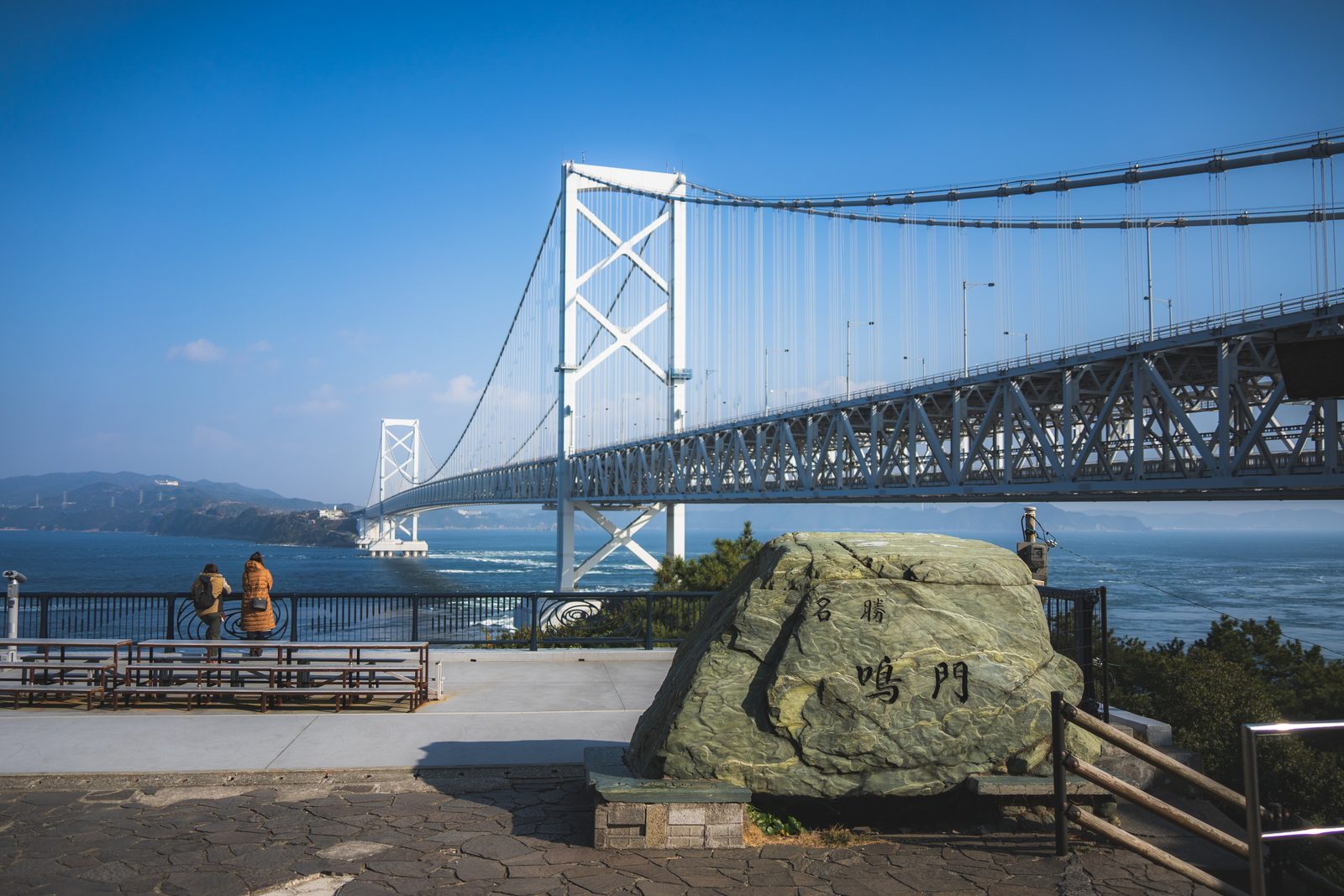
This guide covers a day around the Naruto Strait in Tokushima. It starts with driving to Naruto Park and where to leave the car, then reading the tide and choosing a boat for the whirlpools. Then come Uzu no Michi, the walkway inside the girder of the Onaruto Bridge, the Otsuka Museum of Art and, inland, the Naruto German House.
Getting to Naruto Park
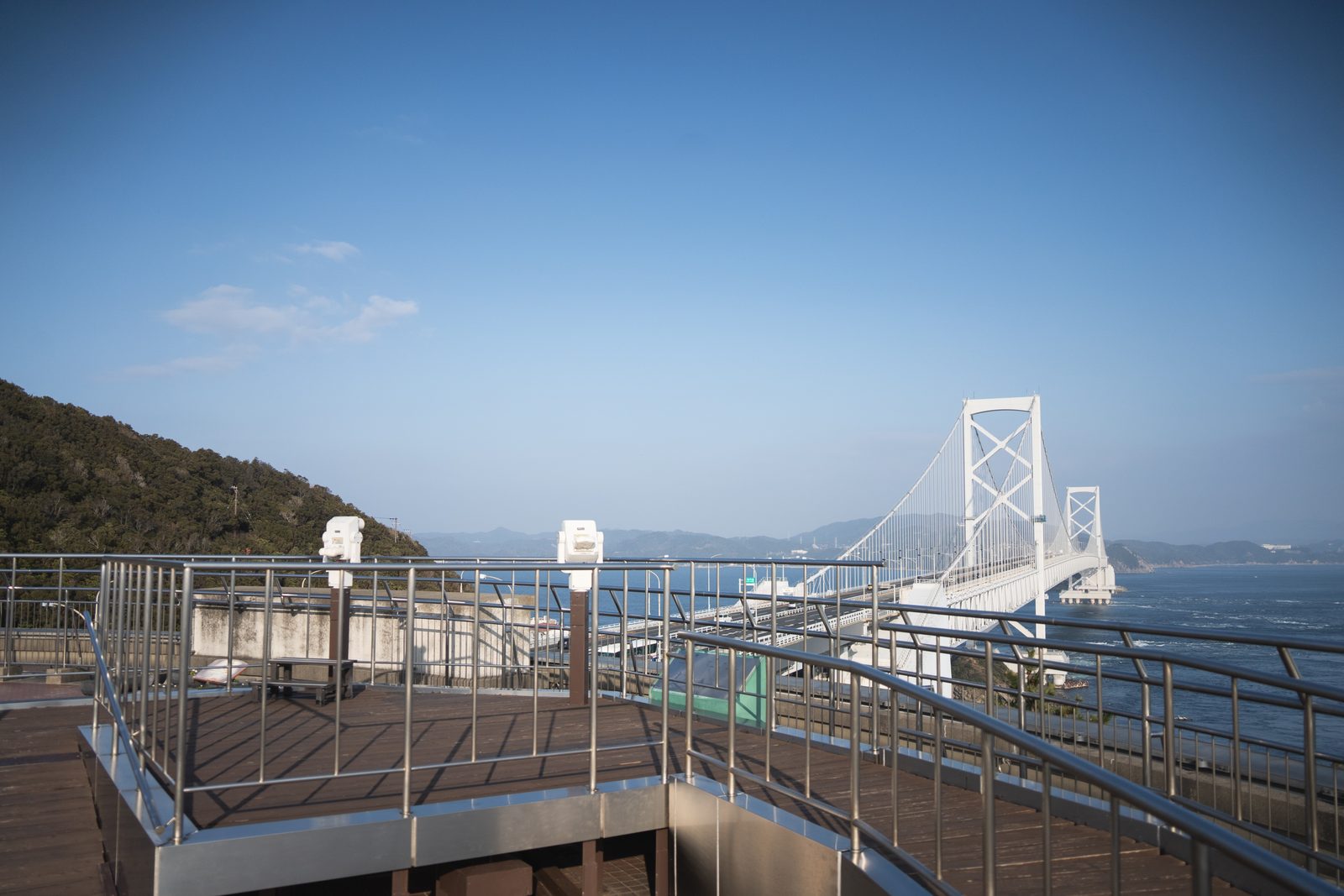
Naruto Park is the base for everything in this guide, so the first task is getting there. There is a bus to the park from the area around JR Tokushima Station, another from Naruto Station and another from Tokushima Awaodori Airport, and the table below shows where each starts, where to get off and how long you are on board.
The park and the Otsuka Museum of Art stand together at the northern end of Oge Island, close to the Onaruto Bridge, so one drive serves both. For drivers the guidebook names Naruto-Kita Interchange as the nearest exit, and for anyone coming over from Awaji Island or the Hyogo side it describes the Kobe-Awaji-Naruto Expressway as the usual approach.
| From | Get off at | Time on the bus |
|---|---|---|
| Tokushima (JR Tokushima Station area) | Naruto Park | eighty minutes |
| Naruto Station | Naruto Park | twenty-five minutes |
| Tokushima Awaodori Airport | Naruto Park | forty minutes |
| Tokushima Station | Naruto Kankoko bus stop (for the Uzushio Kanchosen boats) | about an hour and fifteen minutes |
The sights of Naruto are scattered rather than gathered in one place, and the guidebook's view is that a car makes for a more efficient day than trying to link them without one. Naruto Park has its own car park, and the charge depends on what you arrive in:
- Parking fee for a passenger car: five hundred yen
- Parking fee for a two-wheeled vehicle: two hundred yen
Reading the Tide and Choosing a Boat
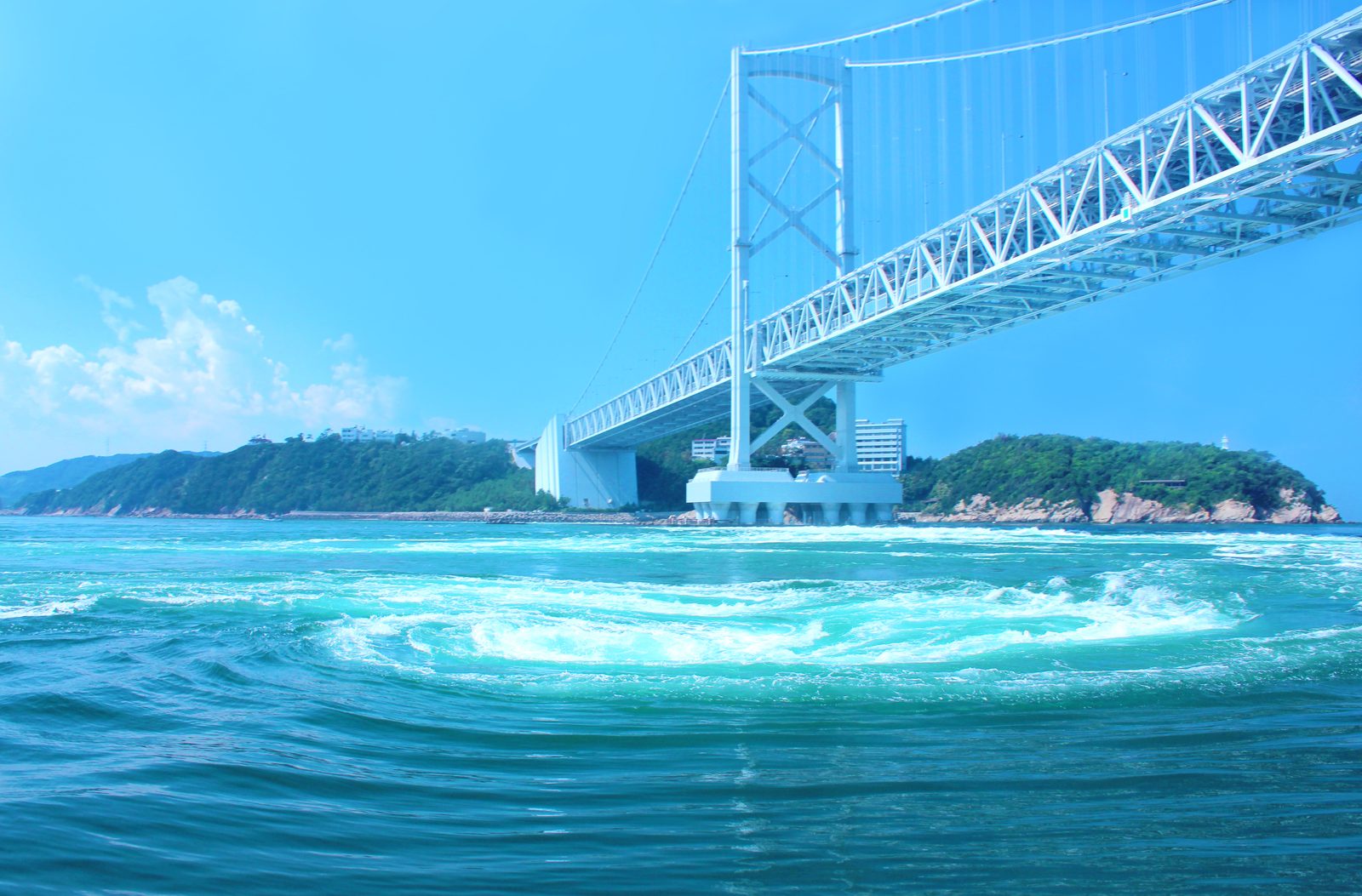
The whirlpools are not there all day. They appear for about an hour and a half before and after each low and high tide, and the guidebook treats checking a tide table for the day's times as an important step before any boat trip. Look it up first, and let that window decide when the rest of the day happens.
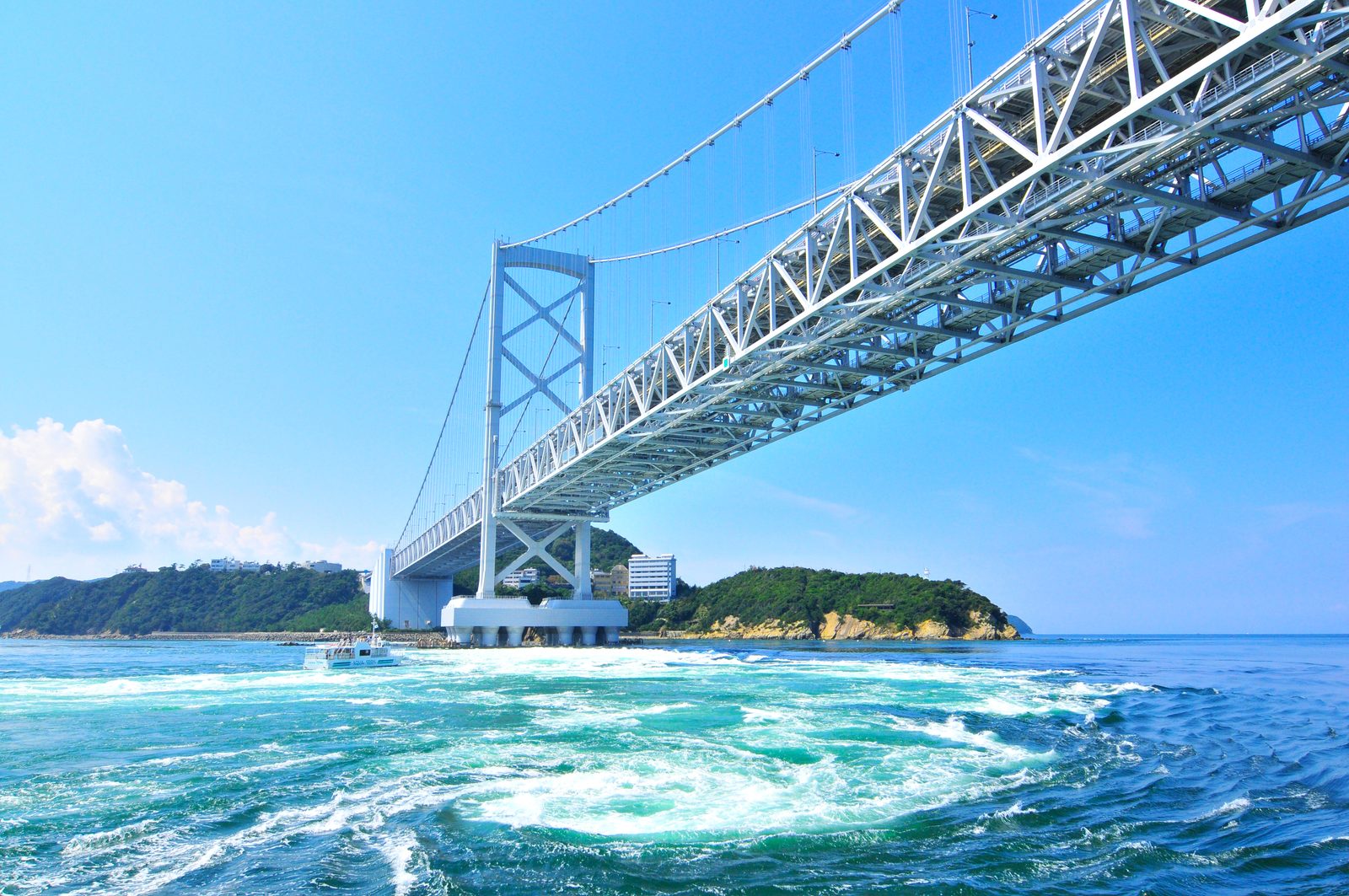
Two companies run tide-watching boats, and the guidebook sets out what separates them. Uzushio Kanchosen operates a large boat, Wonder Naruto, which rolls less, and a smaller one, Aqua Eddy, fitted with an underwater viewing room. Uzushio Kisen runs small boats only, and on those you watch the whirlpools from the deck.
Boat Fares and the Free Car Park
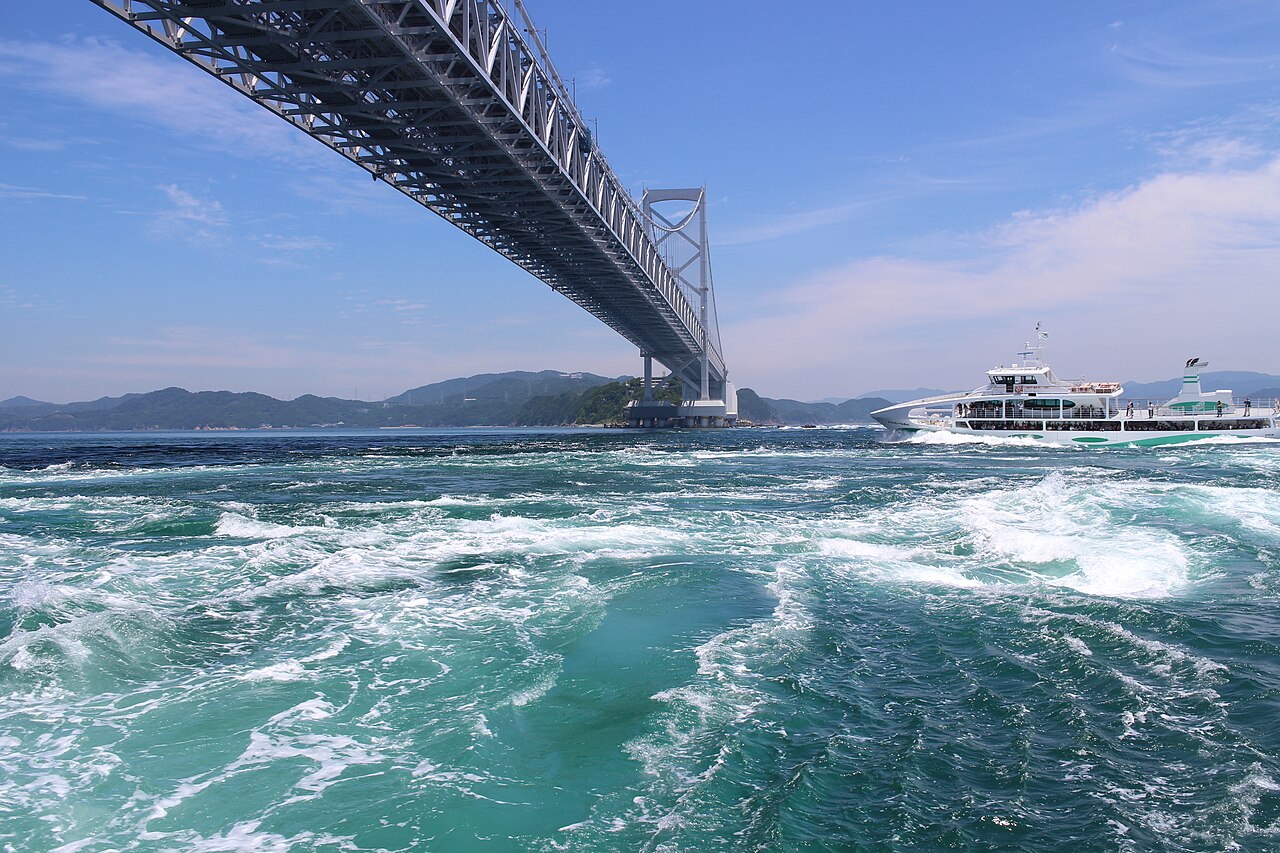
The table gives each boat's fare per person. The child column is for elementary school pupils, and the group and first-class lines are Wonder Naruto fares.
| Boat | Adult | Child (elementary school) |
|---|---|---|
| Wonder Naruto (large boat) | two thousand yen | one thousand yen |
| Wonder Naruto, group fare | one thousand eight hundred yen | not listed |
| Wonder Naruto, first-class cabin | additional one thousand yen per adult | not listed |
| Aqua Eddy (small underwater boat) | two thousand five hundred yen | one thousand two hundred yen |
| Uzushio Kisen (small boat) | two thousand yen | one thousand yen |
Uzushio Kanchosen, the company behind Wonder Naruto and Aqua Eddy, has a free parking lot for passenger cars, which is worth knowing if you are choosing between the two companies on practical grounds rather than on the boats themselves. You can also browse guided tours around Naruto before settling on a boat.
Where to stay
Places to stay near Naruto, Tokushima →
Disclosure: This post may contain affiliate links. If you book through them, we may earn a commission at no extra cost to you.
Walking Inside the Bridge on Uzu no Michi
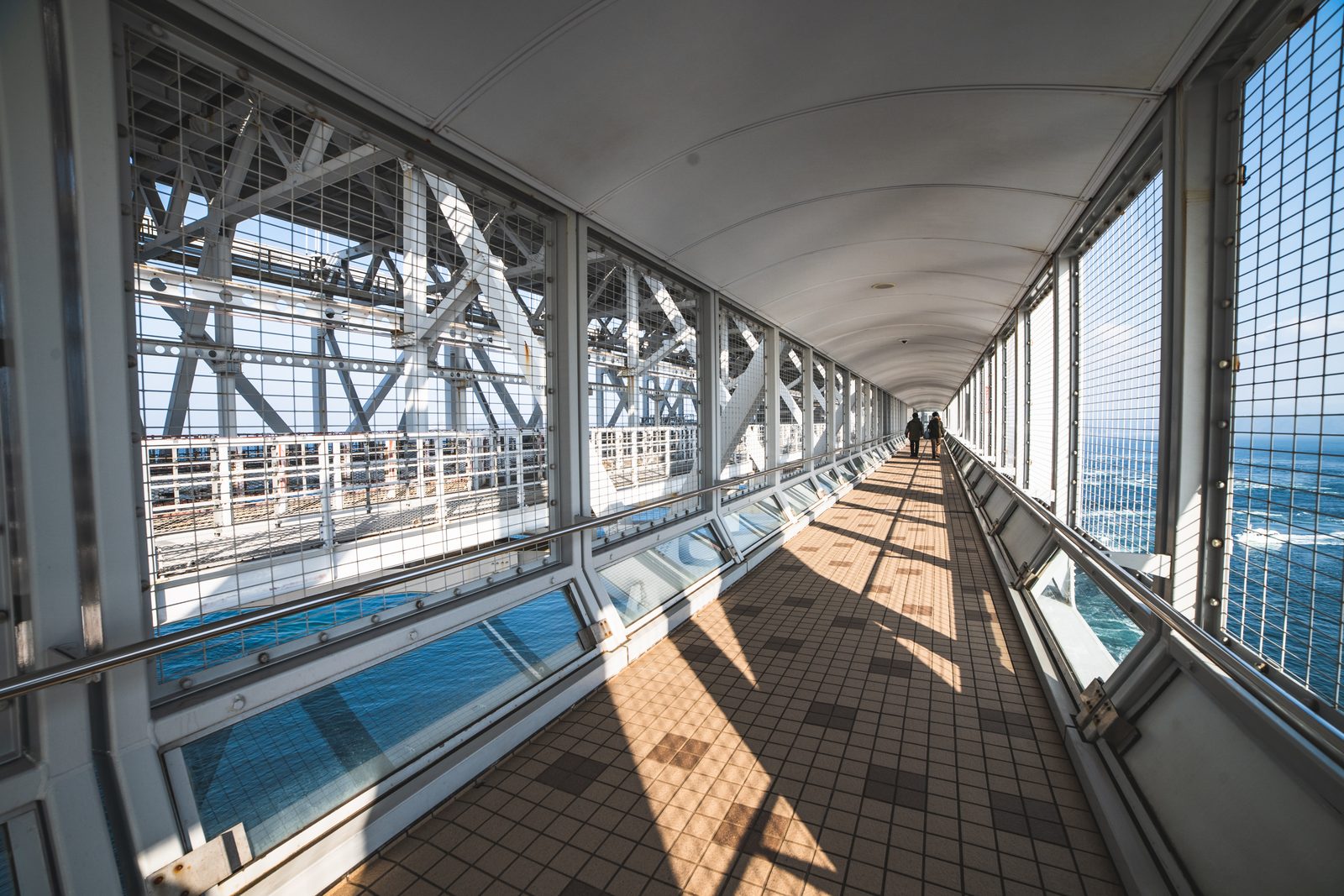
Uzu no Michi is a walkway built inside the girder of the Onaruto Bridge, which is to say inside the structure beneath the roadway that spans the strait. Rather than admiring the bridge from a lookout in the park, you walk out along it under cover, with the water of the strait directly beneath you.
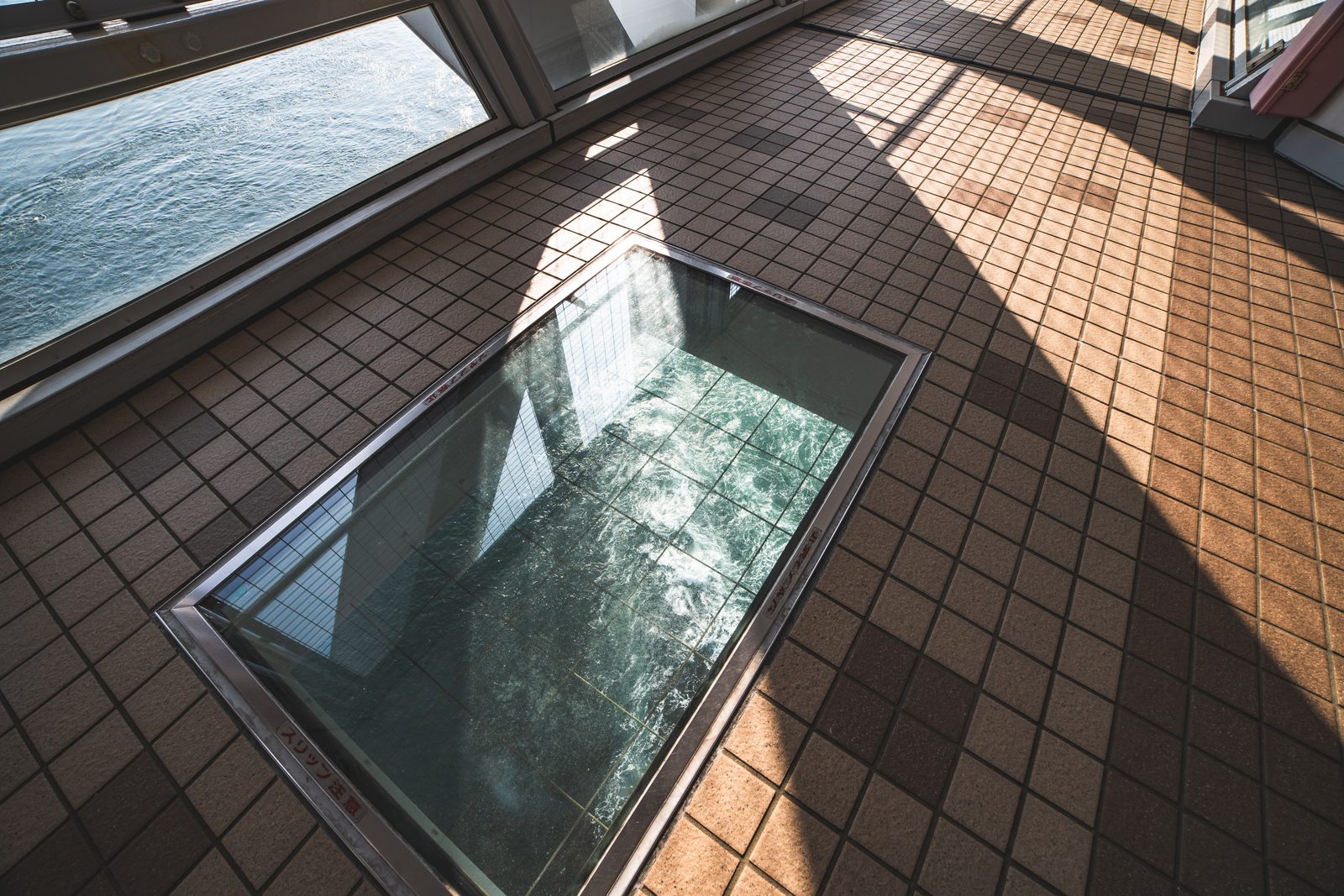
At the far end an observation room lets you look straight down at the strait and, when the tide is running, at the whirlpools forming directly beneath the bridge. Part of that floor is glass, so the view is under your feet as well as ahead of you. The table below gives the price of entry by age band.
| Uzu no Michi admission | Fee |
|---|---|
| Adult | five hundred ten yen |
| Junior and senior high school student | four hundred ten yen |
| Elementary school student | two hundred sixty yen |
| Child under six | free |
The Otsuka Museum of Art
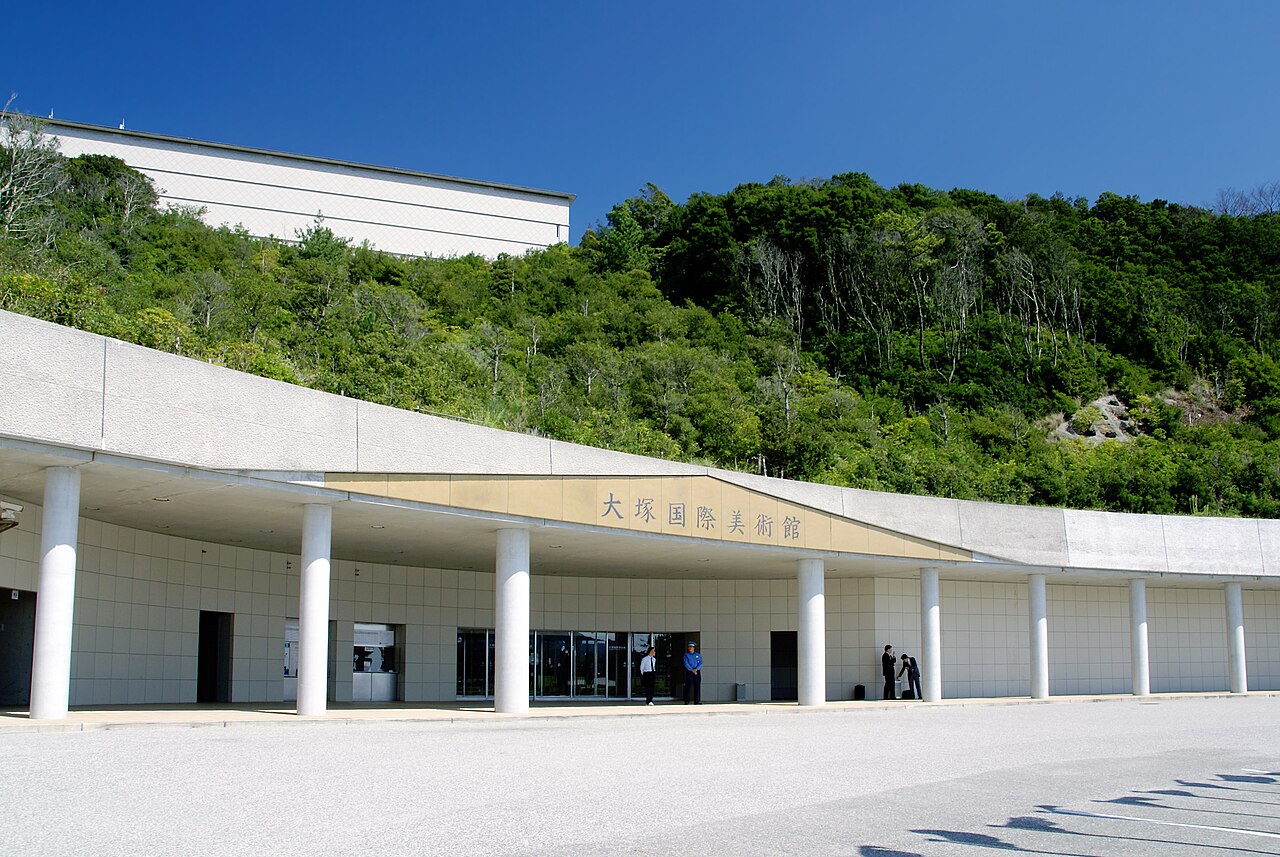
The Otsuka Museum of Art is unlike most art museums in one respect: every work shown is a full-size reproduction on ceramic panel, and no original painting hangs here. What it offers instead is a permanent display of Western masterpieces on a scale described as among the largest in Japan, with many spots set aside for photographs beside the works.
The viewing route is organised in three parts, described as environmental, systematic and themed displays, and together they carry you through Western art from the ancient world to the modern era. The guidebook suggests that seeing every work properly takes around half a day, so arrive with time in hand rather than squeezing it in between boats.
Monet's Large Water Lilies are shown outdoors in a courtyard so that they can be seen in natural light, with a pond of real water lilies nearby that is at its best from mid-June to around September. Leonardo da Vinci's Last Supper is shown twice, side by side, as it looked before and after its long restoration.
| Otsuka Museum of Art | Detail |
|---|---|
| University student admission | two thousand two hundred yen (tax included) |
| Elementary, junior high and high school student admission | five hundred fifty yen (tax included) |
| Opening hours | nine thirty in the morning to five in the afternoon |
| Ticket sales end | four in the afternoon |
Inland to the Naruto German House
Away from the strait, on the inland side of the city, the Naruto German House is a museum about the German soldiers held at the Bando prisoner-of-war camp during the First World War and the exchanges that grew up between them and the people living nearby. Music, in particular, was a large part of life in the camp.
It is said that the first complete performance in Asia of Beethoven's Ninth Symphony was given by German prisoners at this camp, and the museum makes the most of it: in a theatre room devoted to the Ninth, life-size figures perform the symphony. It is a gentler way into the history than a wall of documents.
| Naruto German House | Detail |
|---|---|
| Admission, individual | four hundred yen for adults; one hundred yen for elementary and junior high school students |
| Admission, group of twenty or more | three hundred twenty yen for adults; eighty yen for elementary and junior high school students |
| Opening hours | nine thirty in the morning to five in the afternoon; last admission half past four in the afternoon |
| From JR Bando Station | about a twenty-five minute walk |
If you would rather not do all of this in a single day, there are places to stay around Naruto to look through before you set out.