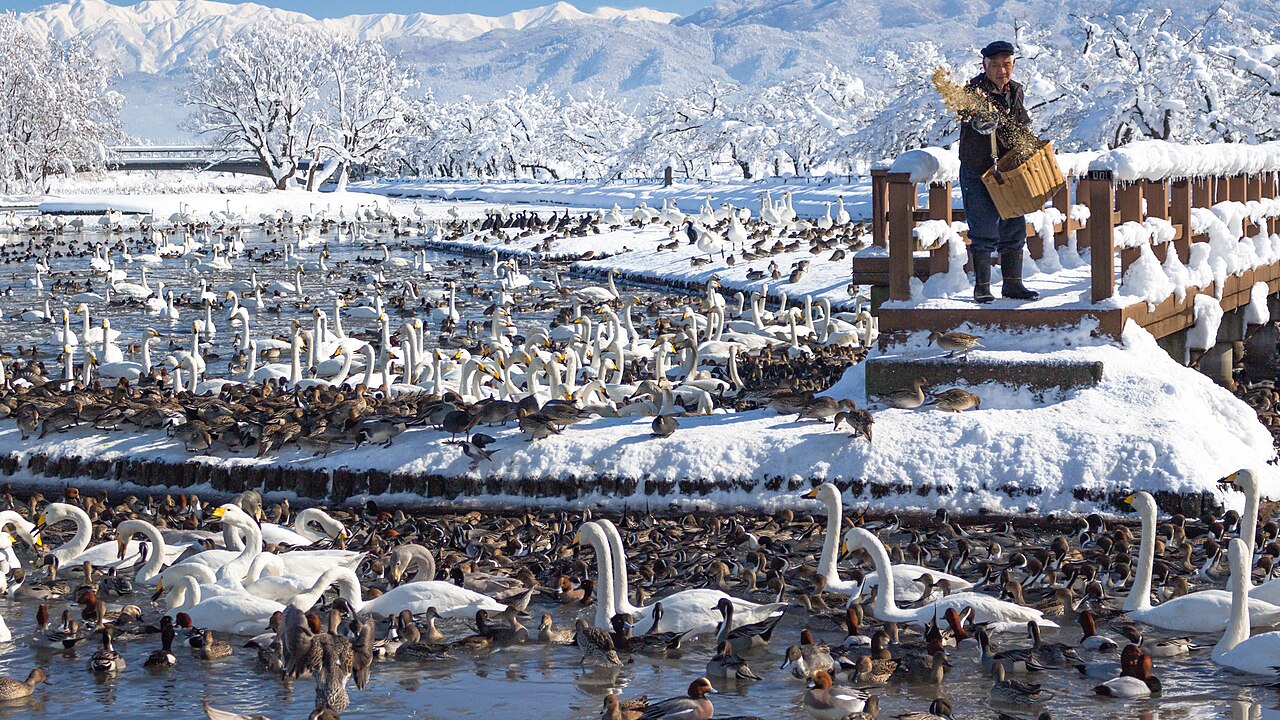
Lake Hyoko in Agano, Niigata, is a winter home for swans, which arrive in early October and stay until March. The reason to be there at first light is the departure: swans run up across the water, lift off, and leave group after group around sunrise. Early morning and evening are the times to see them, since by day they are out in the surrounding rice fields. Later in the morning, the Swan Man's feeding draws the swans and the other waterfowl together.
Dawn Departures on the Main Pond
The swans start leaving around sunrise, and most have left by around ten o'clock. They gather on the main pond, run up across the surface to take off, and leave one after another.
What you see depends on the day. On one November morning in a recent season, the first five swans left the main pond a few minutes after six. With a calm wind, few flocks left even at sunrise, and only about a thousand had gone by seven. On a late-November morning, rain and thunder came before dawn, and the first ten swans left the east pond a little after half past six. On an early-March morning in another season, many began to leave around seven as the northwest wind strengthened, and by around nine most had gone. From December, more flocks leave from around eight o'clock.
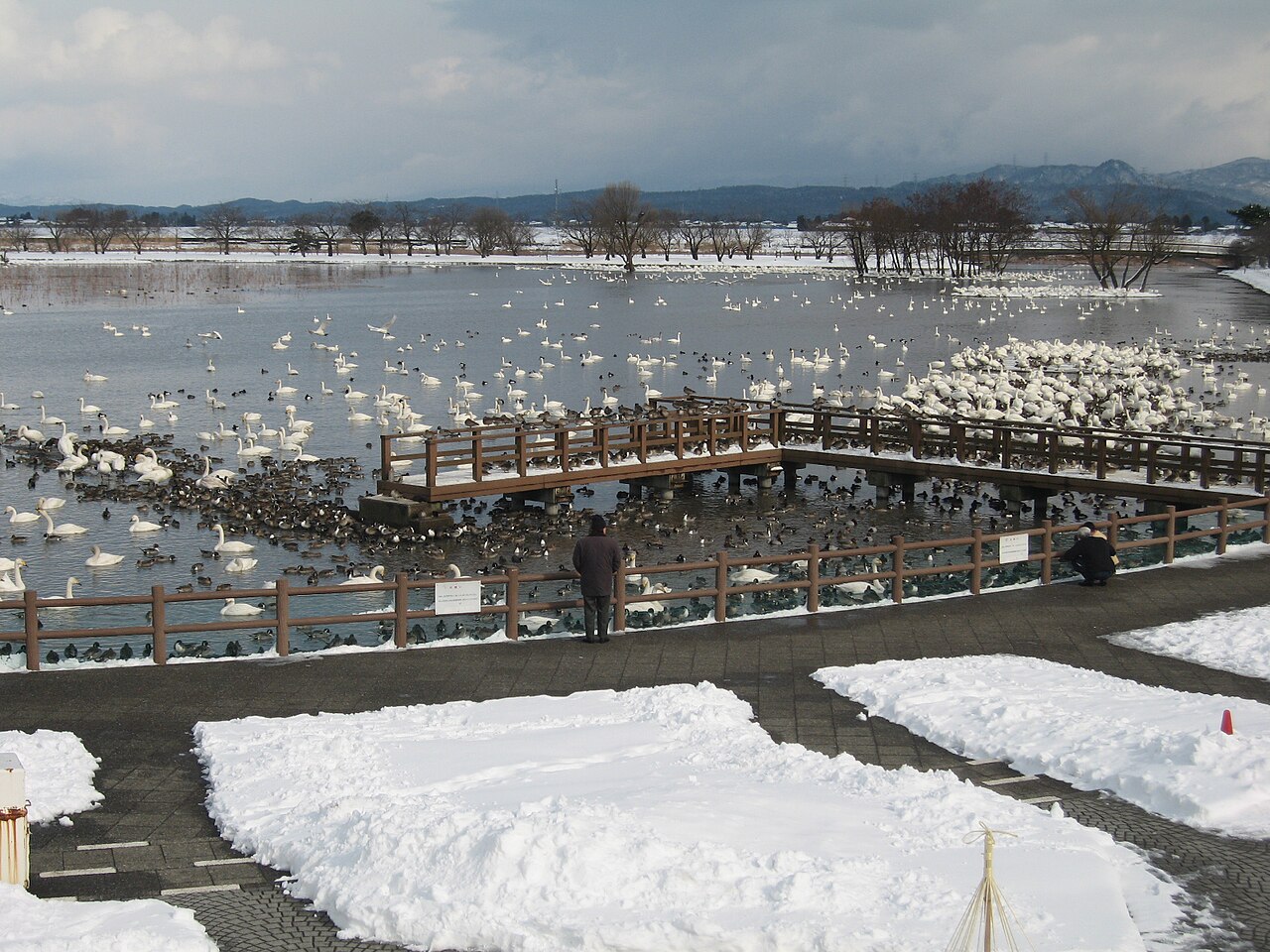
The early-morning air at the lake drops below ten degrees Celsius on some days, so dress warmly for the departures. Before sunrise the sky and the lake surface sometimes turn pink. There are also mornings with nothing to see: a little after six one February morning, the main pond had no swans on it at all.
If you want to see the flights, be on the shore by sunrise, and allow for the chance that a calm morning is slow.
Feeding Time and the Swan Man
Swans and other waterfowl gather at feeding time, which makes it a good moment to visit even if you missed the dawn. During the season the Swan Man feeds them three times a day. Swans that have not yet left can still be seen at the morning feeding. Feeding is not held on some days, so ask the park before building a visit around it.
The Swan Man is a title that has been handed on: the third holder took the post after the second retired. One recent year, thirteen tundra swans with wing injuries or similar problems were still here in early October, unable to migrate to breeding grounds such as Siberia. Nine weak swans kept in the shelter for injured and sick birds recovered and were released onto the lake by the mayor and the Swan Man. All nine swam out in good health.
Do not give the birds anything but the designated feed, and do not go too close to the injured and sick swans, which are wild animals. If you cannot be there at sunrise, plan around a feeding instead, since that is when the swans and the other waterfowl gather.
Midday, Evening and the Season in Counts
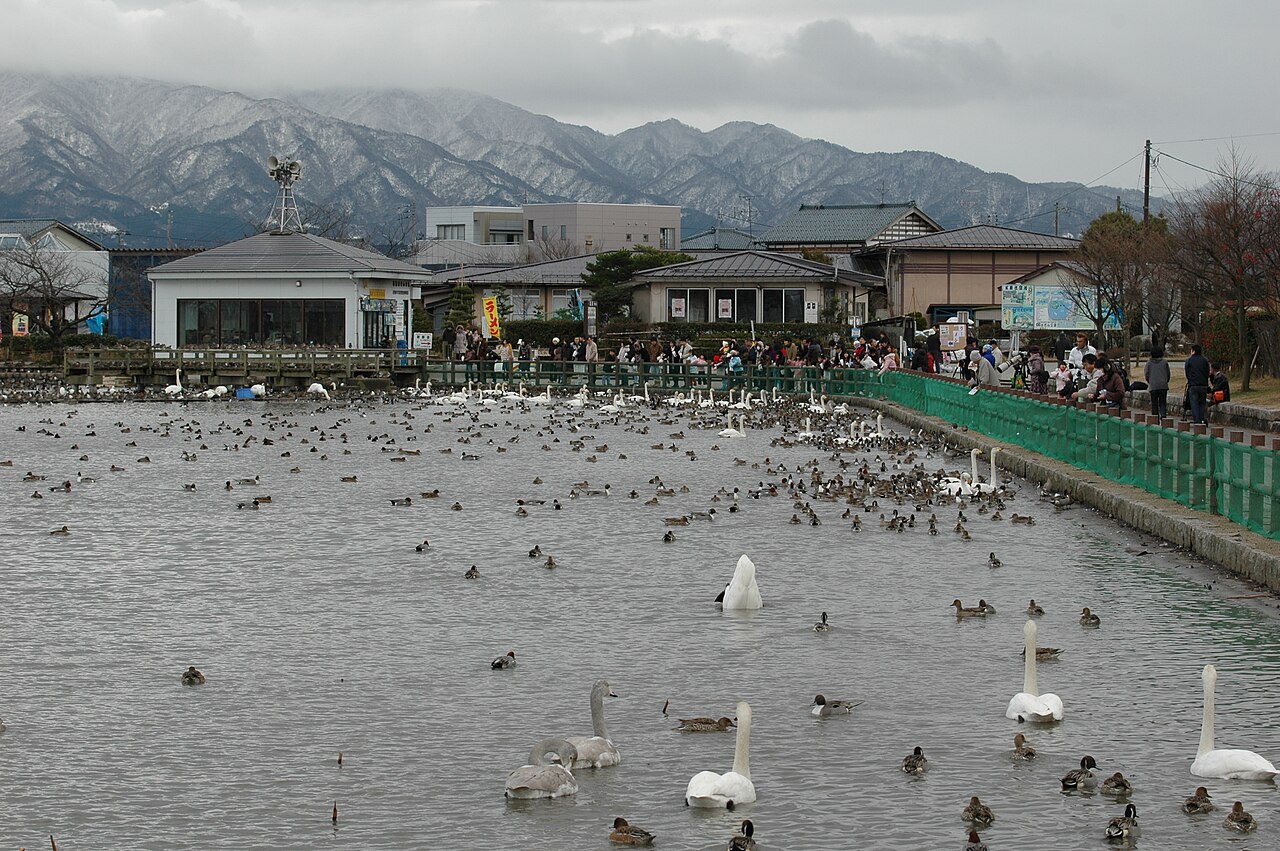
By day the swans go out to the surrounding rice fields to feed, so few are on the lake at midday. They begin gathering again in the evening, from around four o'clock. A live camera shows the migratory birds on the lake surface in video refreshed every three minutes, which lets you check the water before setting out.
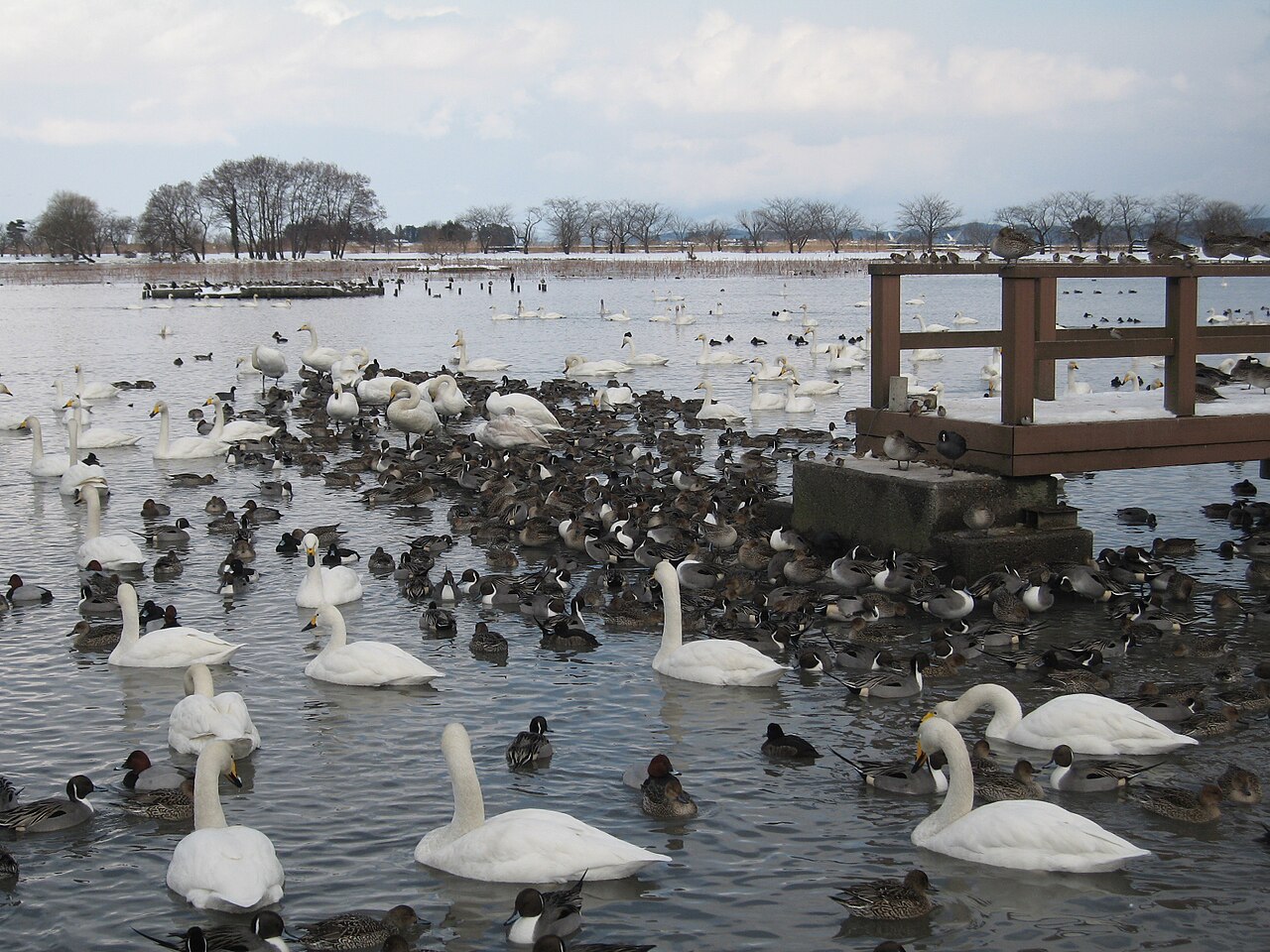
The swans are counted on single mornings, and the figures differ widely from one survey day to the next. In one recent season, an early-October survey found one thousand seventy-seven swans on a fine morning with a light wind. In early January, with snow turning to cloud and fourteen centimetres of snow on the ground, the count was four thousand seven hundred four. Two thousand nine hundred thirty-two were counted on a clear morning in late February, and a week later the count was zero. In another season, an early-March survey counted five thousand seven hundred seventy-six on a clear morning with hail at times.
If you arrive at midday, do not expect many swans on the water. Use the daylight for the ponds, ducks and peafowl described below, then come back toward evening or stay the night for the next sunrise. The counts above are single-day figures rather than a pattern to plan around.
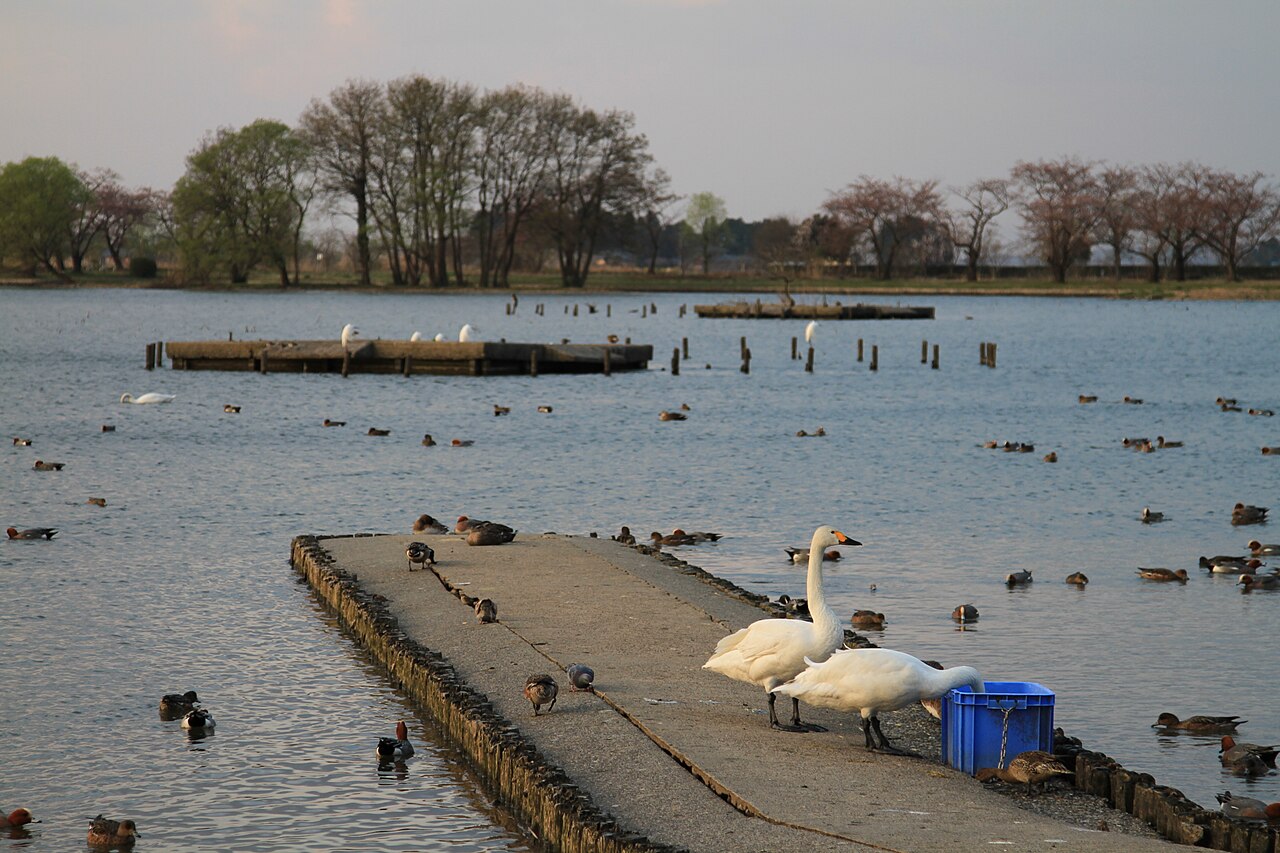
Ducks, Peafowl and Flowers Around the Ponds
The lake's name refers to a gourd, which its old outline resembled when a second pond lay on the south side. Twenty-seven swans arrived here for the first time after the war, and the park is designated a national natural monument.
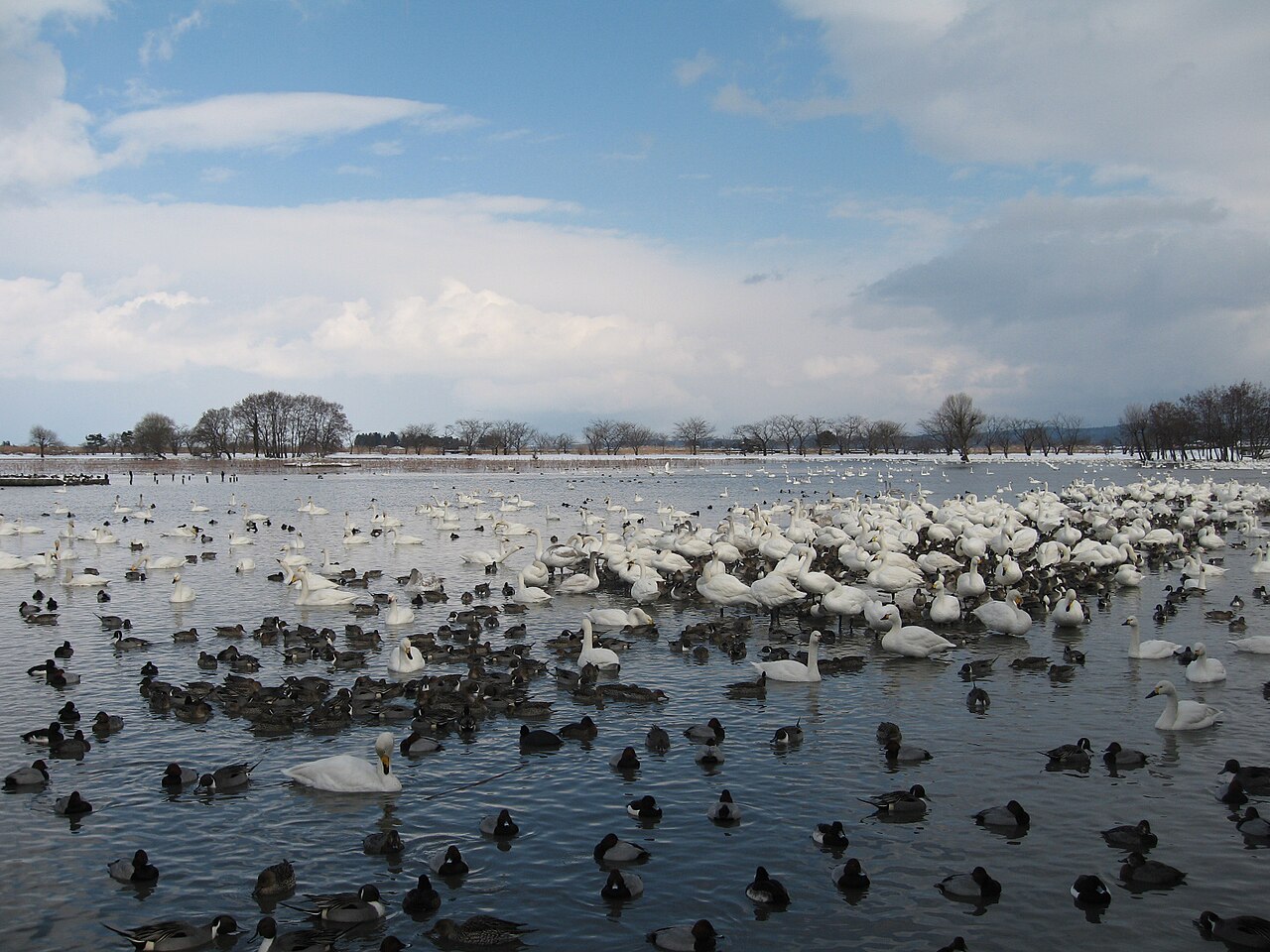
The park was laid out with new ponds around the preserved main pond, with an observation hall and promenades for watching wild birds. Besides whooper swans and tundra swans, nine kinds of ducks can be seen here, along with herons, egrets and coots. Tundra swans dig up lotus rhizomes, their favorite food, from the lake bottom. Young tundra swans have grey plumage and a pink bill. Young whooper swans are grey all over with a white bill base, and gradually turn white as their bills turn yellow.
Outside the swan months the ponds keep their own calendar. Cherry blossoms come from April to May, irises in June, and lotus, Onibasu and Fuyo (cotton rose) from July to August. The peacock house keeps eight Indian peafowl, and one summer two chicks hatched there and could be seen moving around their parents.
If your dates miss the swans, the ponds have flowers and peafowl from April to August, though that is a different visit from a winter dawn.
If you want to be on the shore before sunrise, browse places to stay in Shibata.
Getting to Lake Hyoko
| Leg | How | Time or cost |
|---|---|---|
| Suibara Station to Hyoko Suikin Park | Walk | About 30 minutes |
| Suibara Station to Hyoko Suikin Park | Taxi | About 5 minutes |
| Niitsu interchange (Ban-etsu Expressway) to Hyoko Suikin Park | Car | About 15 minutes |
| Agano city bus (fixed-route line with stops named for the lake) | Fixed-route line | 100 yen per ride for junior high school students and over |
| Parking | Car | Four lots, including the municipal lot |
| Parking | Car | About 200 spaces at the municipal lot and about 160 at the east lot |
There are four toilets in all, three inside the park and one at the municipal parking lot.
New to rural buses and one-man trains? See how to ride them, step by step.
Hours and Fees
| Place | What | Hours or fee |
|---|---|---|
| Hyoko Suikin Park | Swan Man feeding, in the season | 9:00, 11:00 and 15:00 |
| Hyoko Suikin Park | Waterfowl feed | 100 yen |
| Lake Hyoko | When swans stay | Early October to March |
| Agano city bus | Fare per ride, junior high school students and over | 100 yen |
| Agano city bus | Fare per ride, elementary school students | 50 yen |
| Agano city bus | No service | 13 to 16 August and 29 December to 3 January |
| Agano city bus | Days of service | Weekdays only, excluding Saturdays, Sundays and public holidays, apart from the daily-service runs |
| Agano city bus | Line with stops named for the lake | Also runs on Saturdays, Sundays and public holidays |
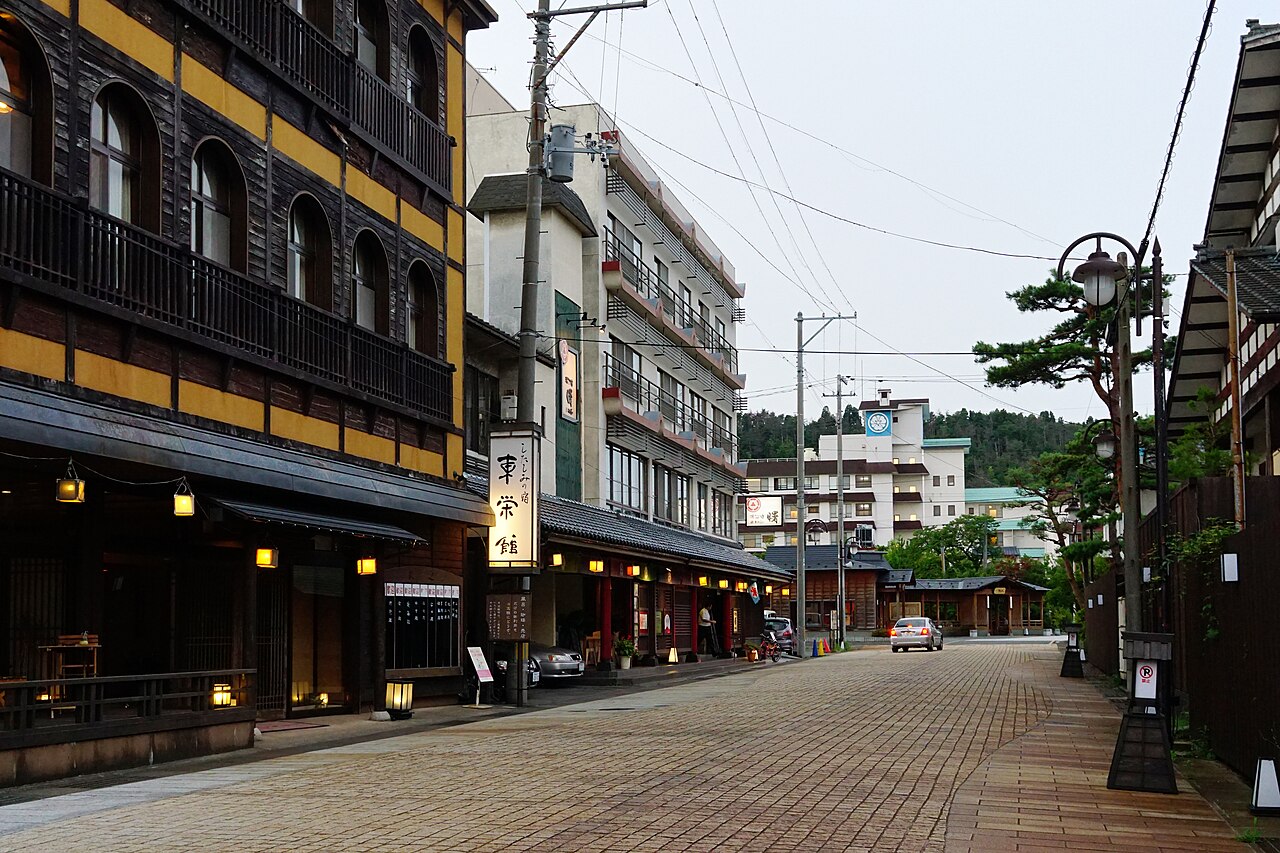
Where to stay
Places to stay near Shibata, Niigata, Japan →
Disclosure: This post may contain affiliate links. If you book through them, we may earn a commission at no extra cost to you.