
At the top of Honshu, Aomori is a prefecture most travellers cross rather than stay in. Its old castle town is the argument for staying. Hirosaki keeps a broad green park behind its moats, a loop bus circling the town centre, a working market in front of the station, and workshops where two of the region's crafts — lacquer and woven bamboo — are still made and sold. None of it is hurried, and almost all of it can be strung into one slow day.
The castle park, first
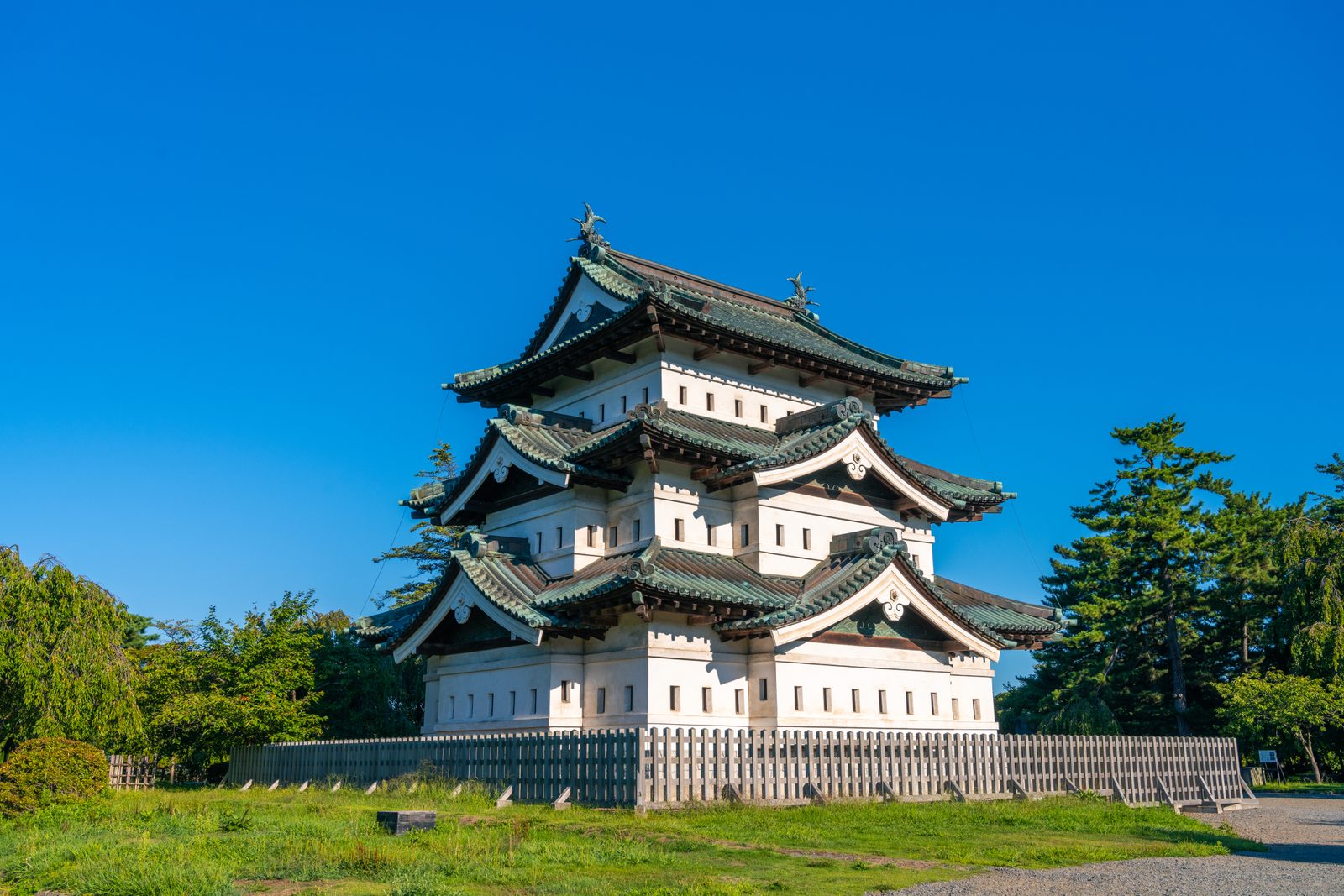
The castle grounds and their park are the natural start. The paid area takes in the castle's Honmaru and Kitanokuruwa along with the Botanical Garden and the Fujita Memorial Garden, and a common one-day adult ticket covering all of them costs five hundred and twenty yen, with a child ticket at one hundred and sixty yen. From the twenty-fourth of November to the thirty-first of March, admission to the Honmaru and Kitanokuruwa is free — a detail worth knowing if you come for the snow rather than the leaves.

Out of blossom season the park settles into itself. The water in the moats goes still, the paths empty out between the old stonework and the big trees, and the pleasure becomes the plain one of walking a large, well-kept green space that the town treats as its own front garden.
The loop bus, and what it costs
The centre is compact, and when your legs need a rest there is the Dotemachi Junkan loop bus. The cash fare is one hundred and fifty yen for adults and eighty yen for children; with an IC card it drops to one hundred and thirty yen and seventy yen. The bus runs from ten in the morning to six in the evening from April through November, and from ten to five from December through March — in any season, a service for the middle of the day rather than an early start or a late return.
Where to stay
Places to stay near Hirosaki →
Disclosure: This post may contain affiliate links. If you book through them, we may earn a commission at no extra cost to you.
A market in front of the station
In front of Hirosaki Station sits Nijino Mart, a covered market that began in nineteen fifty-six as the Hirosaki Food Market and still works as the town's kitchen. Seafood counters, delicatessens and noodle stands share the floor, and you can put together an unhurried standing lunch of Tsugaru soba, sushi and igamenchi, the local speciality. By the magazine's account, the market runs on two rhythms — buyers from the town's restaurants early in the morning, neighbourhood shoppers around midday — and stays lively through the day.
Tsugaru lacquer, close up
Tsugaru-nuri, the local lacquerware, carries more than three hundred years of history, and its signature is the layered, polished pattern work known as togidashi kawari-nuri. CASAICO, a gallery in the Joto-Chuo district, was renewed in twenty twenty-four with displays that explain the technique and reproduce patterns from the Edo period. It keeps hours from ten to five, and its working days vary, so check the gallery's website before you build an afternoon around it. If you would rather have the gallery, the park and the market threaded together with someone else doing the arranging, a guided day in Hirosaki is the low-effort version.
The basket weavers of Atago
The Atago district was once called a village of basket weavers, home to more than a thousand makers; today just two remain. Their material is nemagari-dake, a bamboo gathered in the foothills of Mount Iwaki and elsewhere in the prefecture — light, tough and unbothered by water. A newly woven basket carries a green cast; years of handling turn it brown and give it a shine. The big apple-harvest baskets of the past have mostly given way to smaller pieces sized for a kitchen shelf.
Apple pie for the road
Hirosaki takes its apples seriously enough that the city's bakeries and coffee shops serve apple pie in numbers, each with its own ideas about variety and shape, and there is a dedicated guide map for an apple-pie crawl. Two easy stops: the tea corner at the city's apple park, where the pies come from Tamura Farm, and cafe and shop BRICK inside the brick-warehouse art museum, whose menu is overseen by an Italian restaurant in town.
Make it a quiet day
Start at the market while the morning trade is on, walk the moats before midday, give the afternoon to lacquer and baskets, and end with pie. If the pace of the far north suits you, the springs and standing stones of Oyu, in northern Akita make a natural next day; for another craft town that rewards the same slow attention, there are Takaoka's quiet national treasures. And if you want the day arranged for you, compare guided options for Hirosaki before you go.