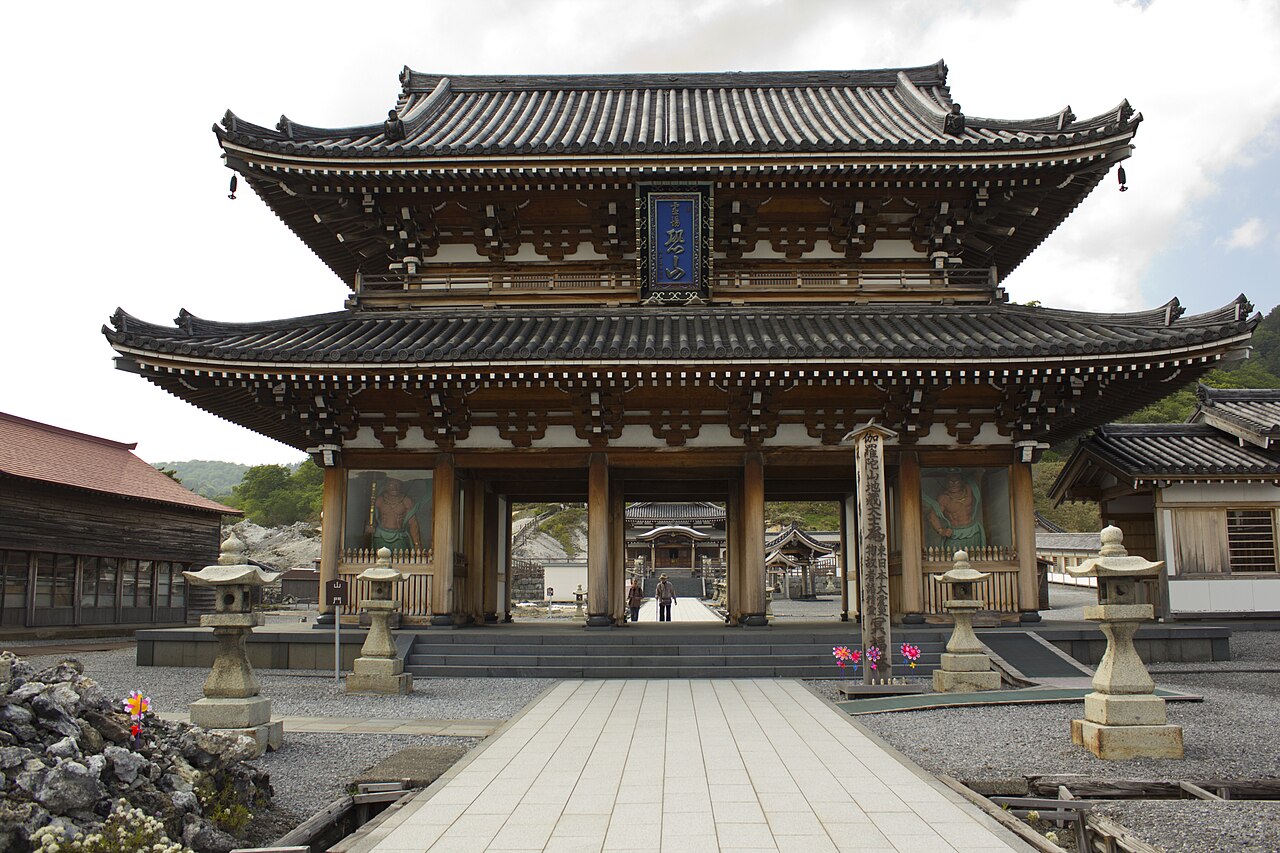
This guide covers the way to Osorezan, the volcanic ground, the lakeshore, the times of year and the practical details for a day out.
Along the road to Osorezan, the smell of sulfur grows stronger as the site gets closer, with many Jizo statues enshrined along the approach. The principal image of Osorezan is Enmei Jizo Bosatsu, enshrined in the Jizo-den. Osorezan has been managed by the Soto school temple Entsuji since its restoration. The sections below follow the route, the volcanic ground, the lakeshore, the times of year and the practical details.
Getting to Osorezan
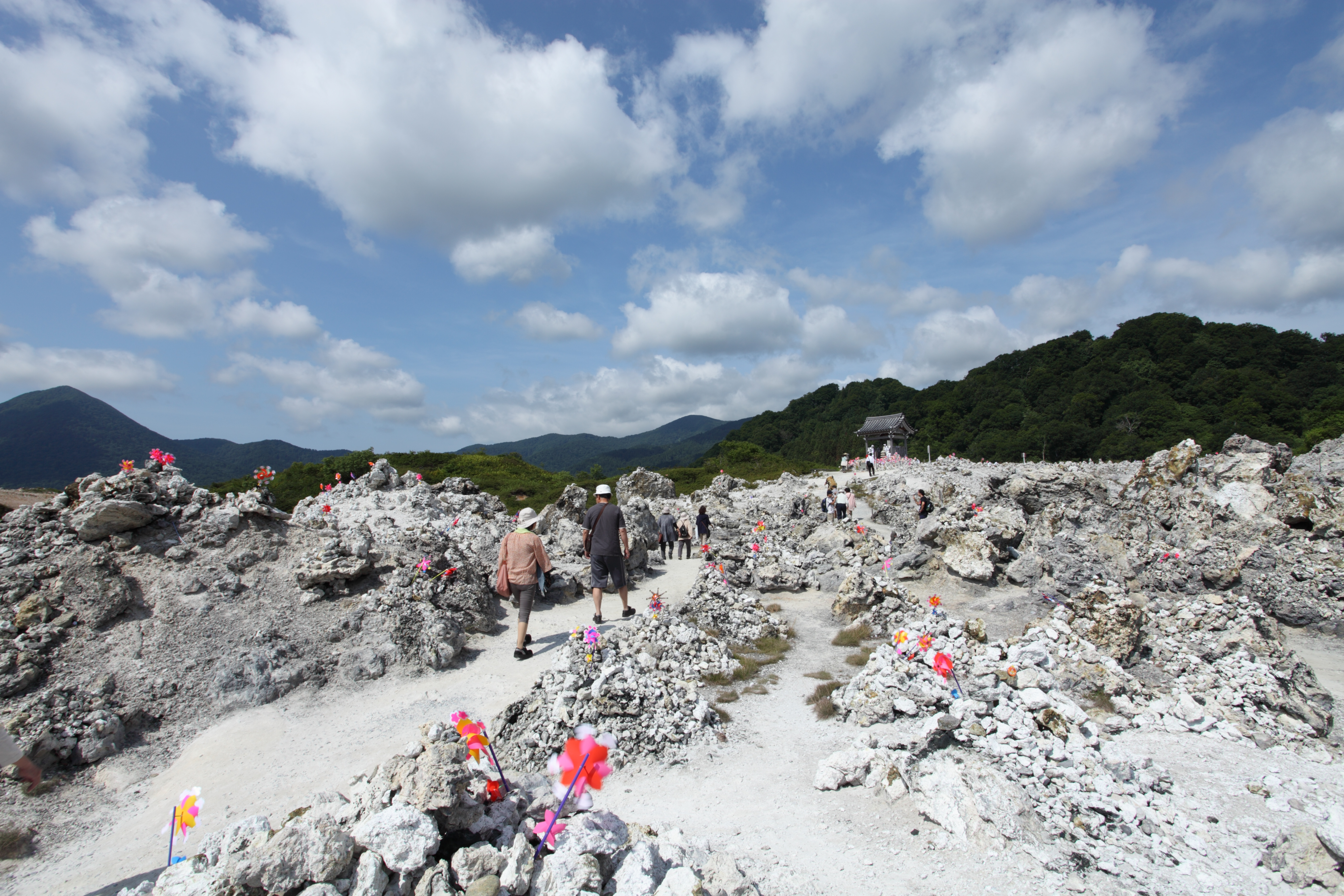
Osorezan is reached by bus from Shimokita Station on the JR Ominato Line. The rail journey from Aomori Station to Shimokita Station runs via Noheji Station by rapid service. From Hachinohe Station, the rapid service to Shimokita Station also runs via Noheji Station.
The table below gives each rail leg, the bus and the drive from Shimokita Station.
| From | Route or operator | Time |
|---|---|---|
| Aomori Station to Shimokita Station | JR rapid service via Noheji Station | About 1 hour 35 minutes |
| Hachinohe Station to Shimokita Station | JR rapid service via Noheji Station | About 1 hour 40 minutes |
| Misawa Station to Shimokita Station | JR rapid service via Noheji Station | About 1 hour 20 minutes |
| Shimokita Station to Osorezan | Bus from the JR Ominato Line station | About 45 minutes |
| Shimokita Station to Osorezan | By car | About 30 minutes |
| Shimokita Station | Shimokita Kotsu route bus to Osorezan, May to October | 4 to 5 services a day |
The Approach and the Volcanic Ground
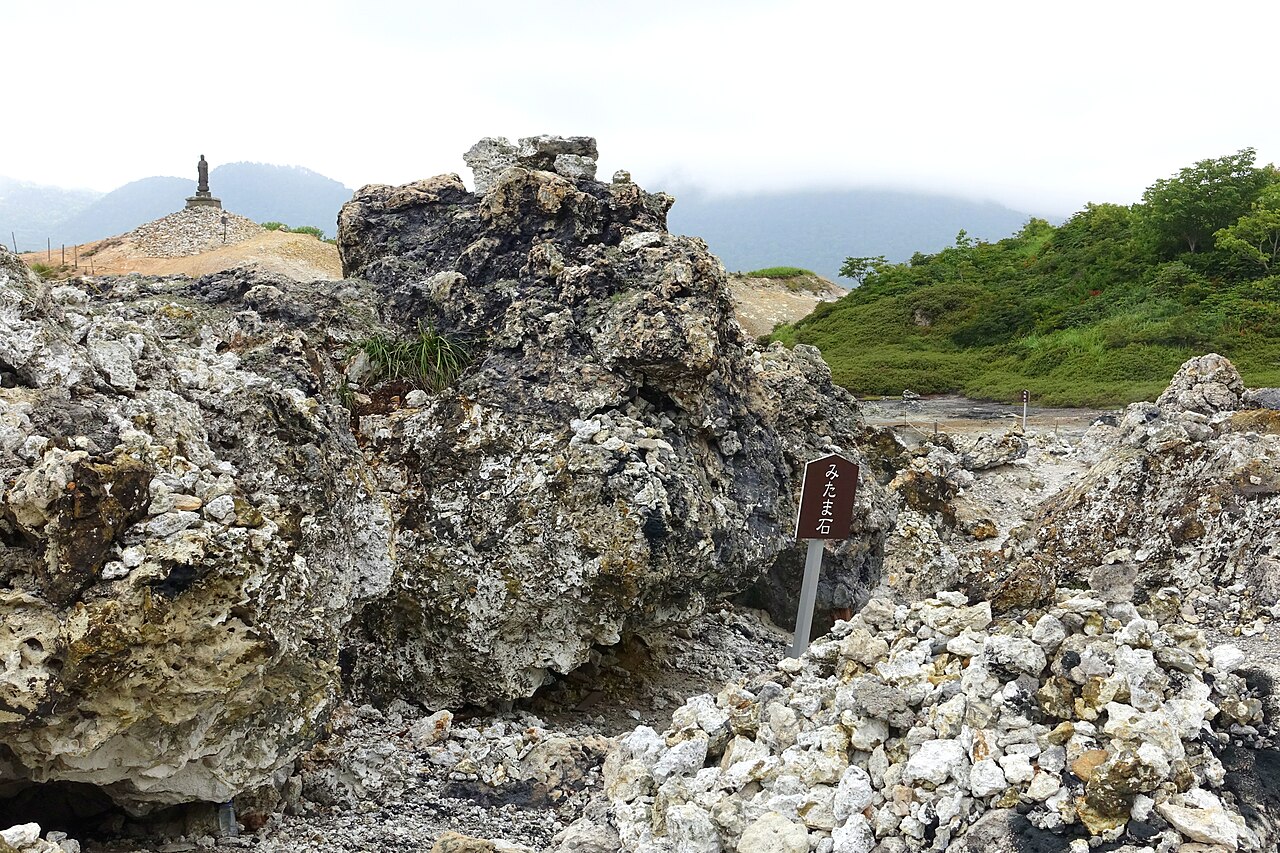
The Jigoku area to the left of the Jizo-den is formed of volcanic rock. Around the Jigoku the ground is desolate, with almost no plants, and volcanic gas is emitted from many places. The craggy rock surface where gas erupts is likened to hell.
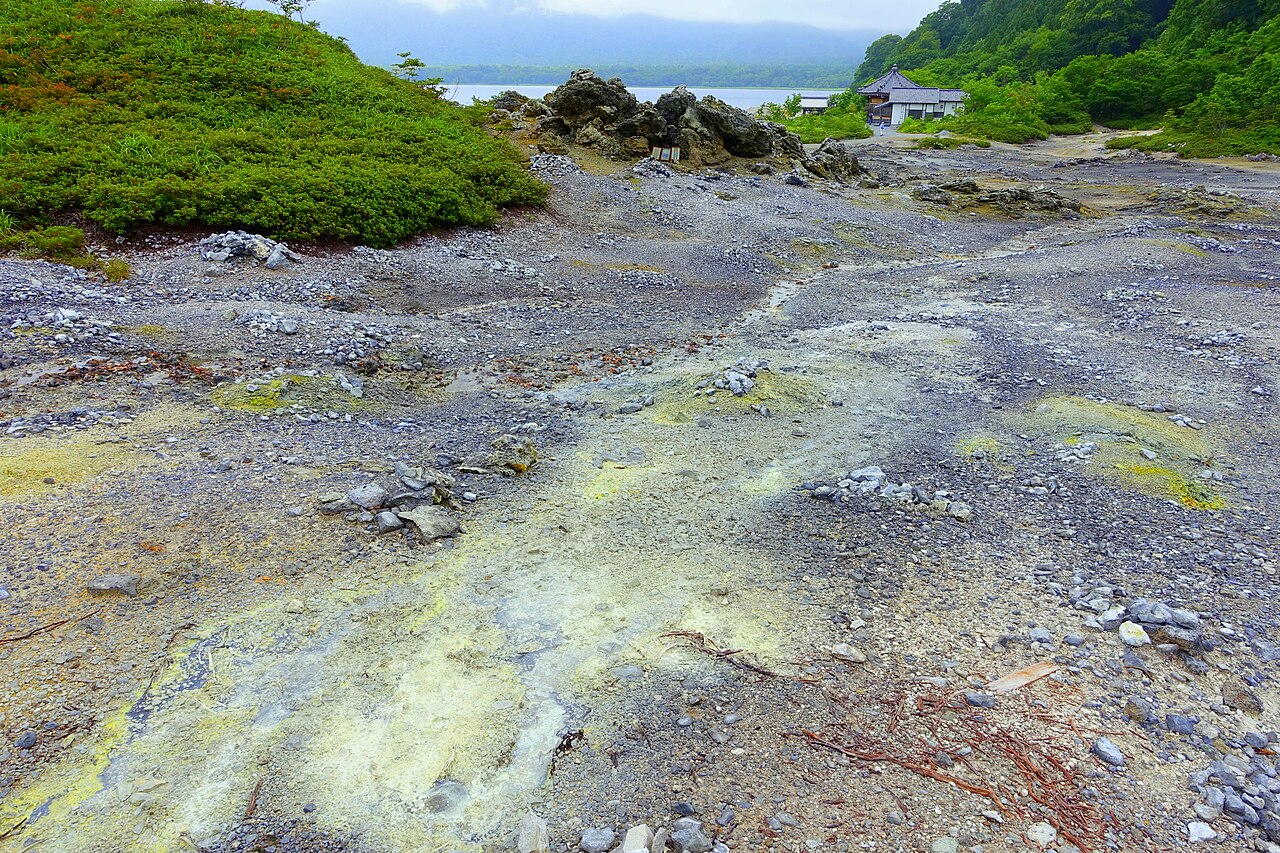
In the Jigoku itself, stones piled by worshippers as offerings and small Jizo dolls are placed casually.
Gokuraku-hama and the Sai no Kawara
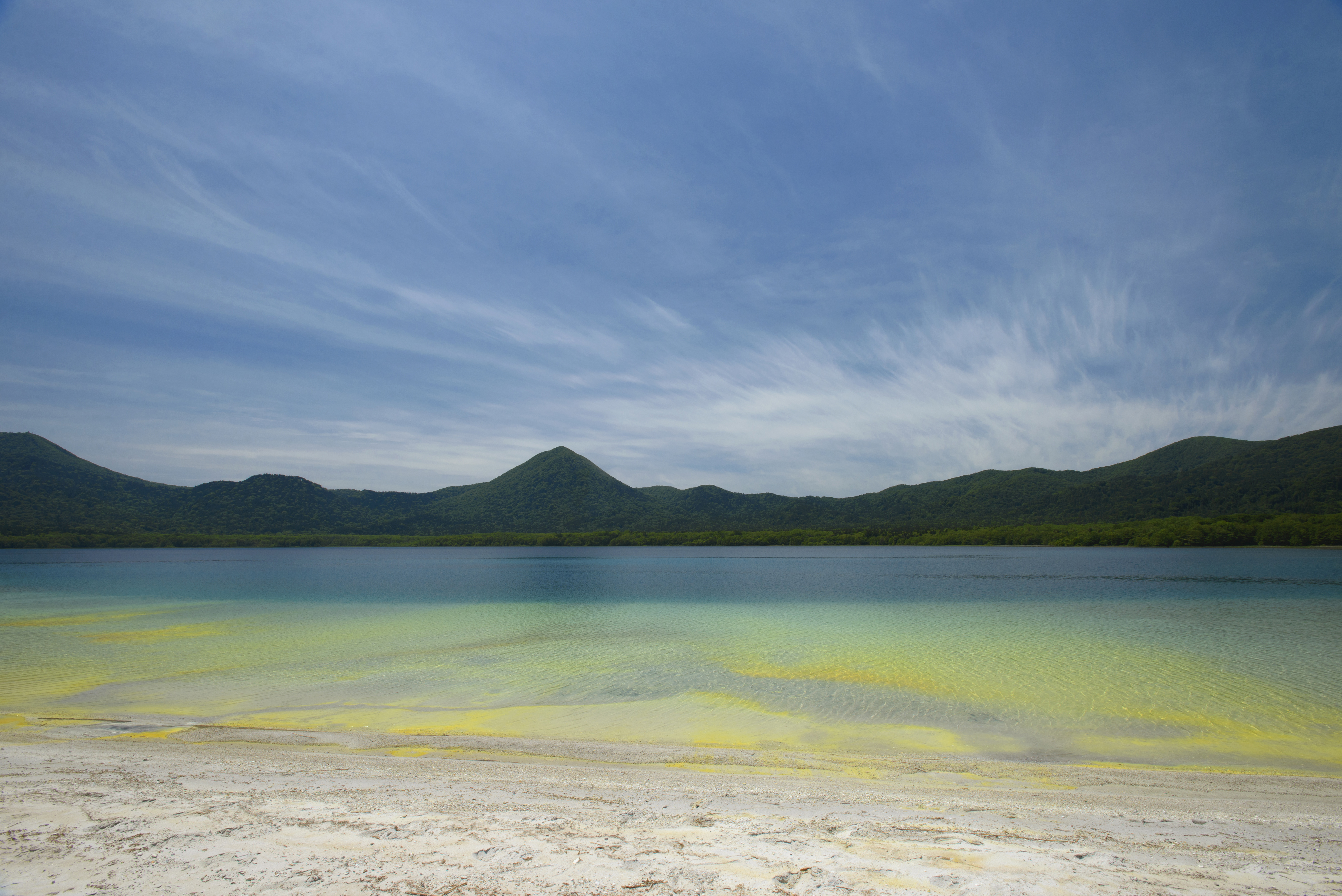
Gokuraku-hama has a white sand beach and an emerald-shining lakeside. The memorial tower at Gokuraku-hama carries many large and small handprints carved on its back.
At Sai no Kawara there are stones piled by parents to mourn their young children who died, and pinwheels that turn around.
Women spiritual mediums called itako began gathering at Osorezan, and the spirit-summoning practice came to be performed within the precincts. The itako are not affiliated with Osorezan, and Osorezan does not manage them.
When Osorezan Is Quiet, and When It Is Not
The facts below set the festival days and the notes from Silver Week beside the times that shape an ordinary day.
Osorezan holds a festival in summer and another in autumn. Before and after the July festival, many pinwheels and bouquets stand on Gokuraku beach, with sweets offered. Fewer visitors than usual came to the summer festival when the weather remained unsettled. Many visitors came during Silver Week, and the goshuin office was packed with people.
| Time of year or day | Dates or times |
|---|---|
| Summer festival, every year | July 20 to 24 |
| Mountain opening each year | May 1 |
| Closed to visitors | November to April |
| Gate opening, in season | 6:00 |
| Gate closing from October 1 | 17:00 |
| Religious services | 6:30, 11:00 and 14:00 |
| Temple lodging, dinner and lights out | 18:00 and 22:00 |
| Walking course around the grounds | About 40 minutes |
Religious services are held at set times through the day. The morning service at the temple lodging comes before breakfast. From the start of October, visitors are asked to leave through the main gate by closing time. Check the dates in the table before you plan the day.
Hours and Fees, and Planning the Day
It helps to settle the order of the stops before the day begins, using the tables below. Check the times before you travel.
| Part of the day | Stop or leg | Duration or hours |
|---|---|---|
| Arrive | Aomori Station to Shimokita Station, JR rapid service | About 1 hour 35 minutes |
| Arrive | Shimokita Station to Osorezan, by bus | About 45 minutes |
| Visit | Mountain entry reception closes | 16:30 |
| Visit | Loop walk through the grounds | About 40 minutes |
| Visit | Free rest area at the Osorezan bus stop | 10:00 to 16:00 |
| Head back | Gate closing from October 1, leave through the main gate | 17:00 |
| Item | Price |
|---|---|
| Entry fee, adults | 900 yen |
| Entry fee, groups of 20 or more | 800 yen per person |
| Entry fee, elementary school students | 400 yen |
| Goshuin stamp | 500 yen per item |
| Kichijokaku temple lodging, one night with two meals | 17,000 yen per person |
| Parking at the site | Free, for about 300 cars |
If you are planning an overnight stay, see places to stay in Hachinohe.
Where to stay
Places to stay near Hachinohe →
Disclosure: This post may contain affiliate links. If you book through them, we may earn a commission at no extra cost to you.