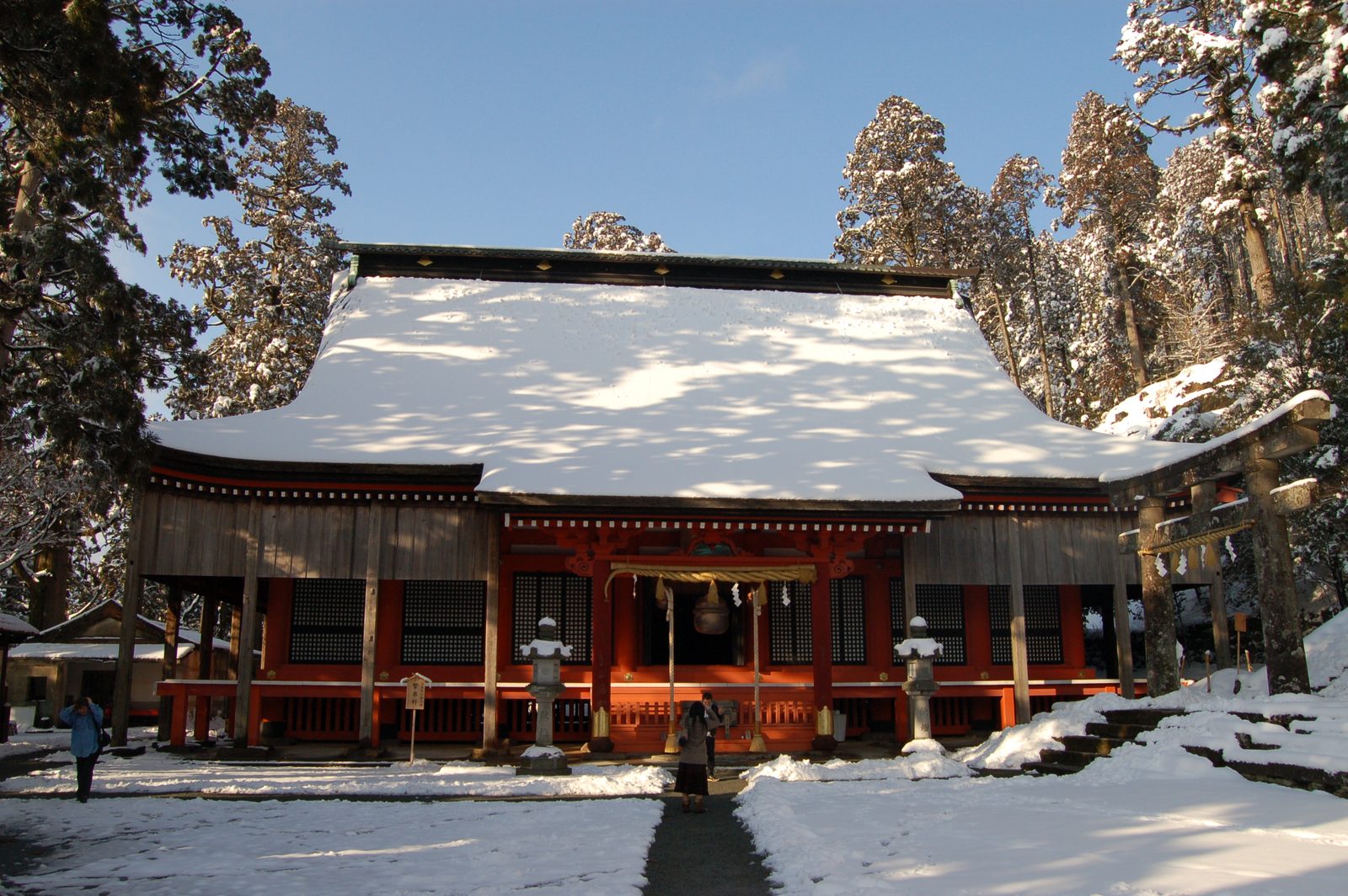
Hikosan Jingu stands on Mount Hikosan in Soeda, its red-lacquered Hoheiden hall seen among the green of the trees. A stone-paved approach of steps leads up to the hall, and an early morning service is held every day. When the autumn colours come, the shrine building and its approach stand out against them, and on the same mountain the Onisugi, a cedar about one thousand two hundred or more years old, carries a legend of oni. A cafe on the mountain serves a soy milk cheesecake made with Hikosan clear water and Kyushu-grown soybeans.
The Stone Approach to Hoheiden
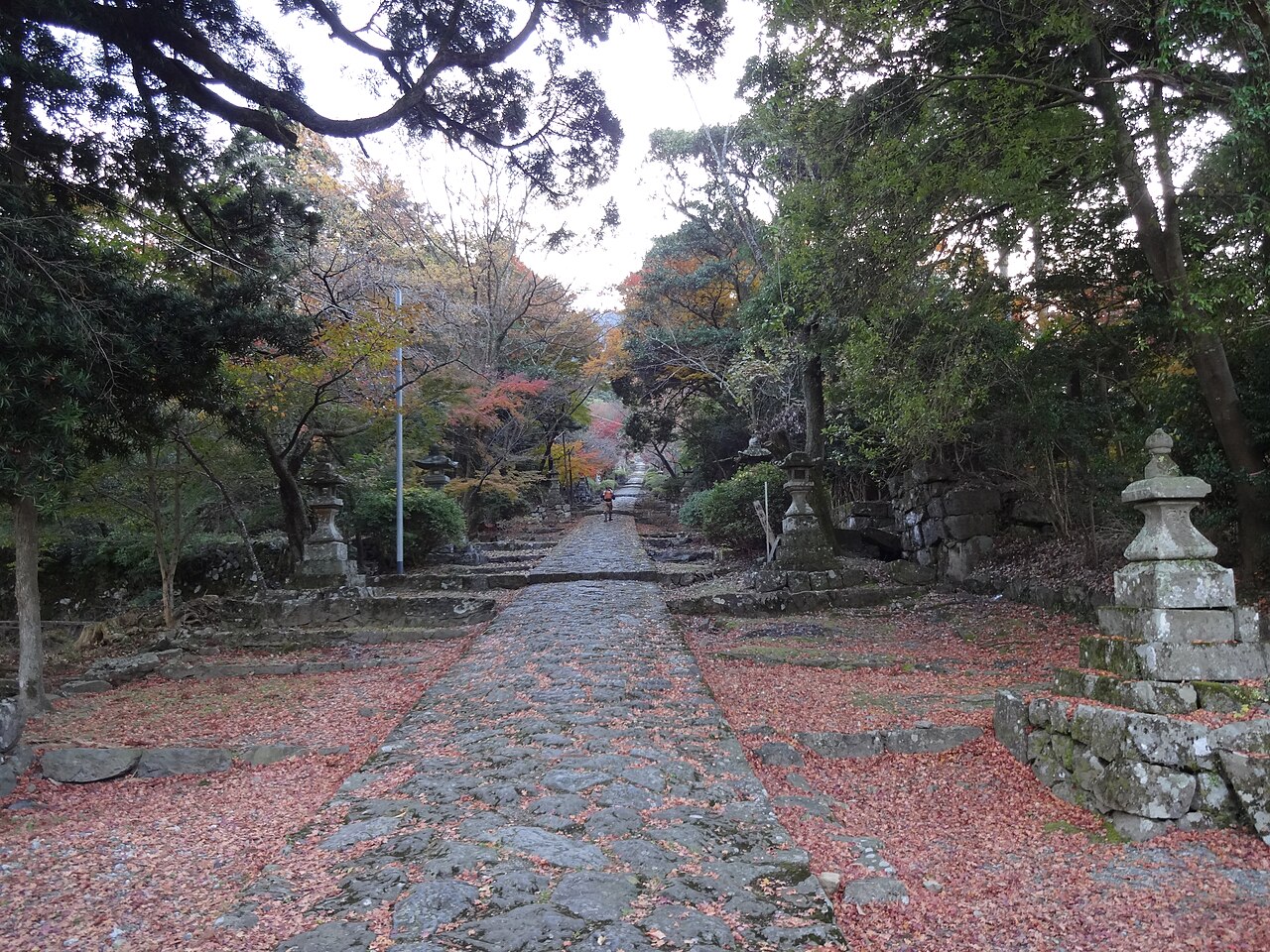
The stone-paved approach beyond the copper torii is wrapped in stillness, and walking it is the heart of a visit. The copper torii itself is a large bronze gate donated by Nabeshima Katsushige, lord of the Saga domain. From that gate to the Hoheiden, the way is built of four hundred and ten stone steps and long stone paving.
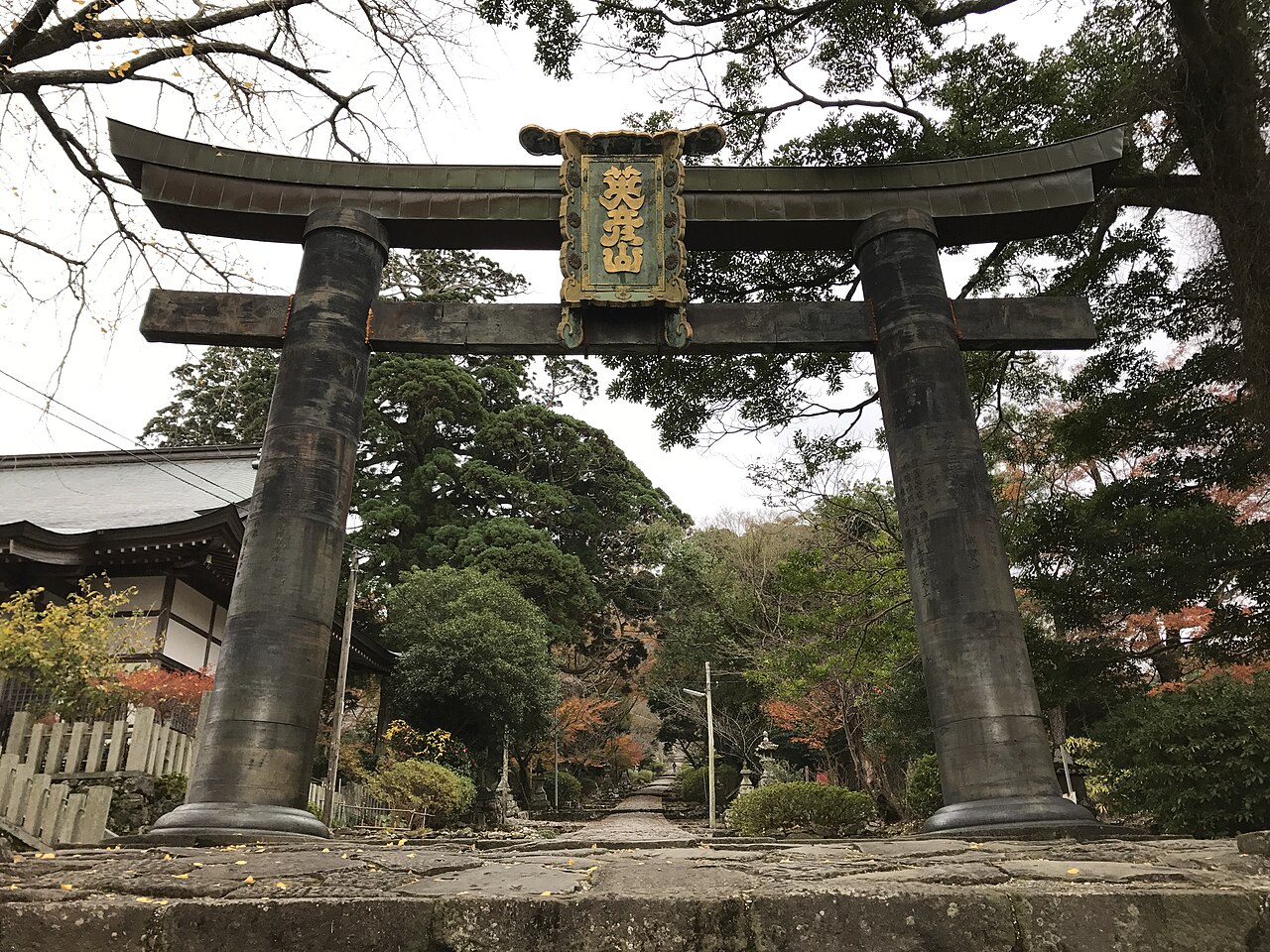
The present Hoheiden was rebuilt by Hosokawa Tadaoki, lord of Kokura, and the same building once served as the main lecture hall of Hikosan Reizenji. The copper torii is itself a nationally designated Important Cultural Property, and beyond the Hoheiden three further shrines lie scattered across the mountain.
Climbing the stone-paved approach takes about fifteen minutes. The approach continues as a slope of stone paving and steps, so comfortable walking shoes are advised. If your time on the mountain is short, give this stretch priority and keep the other shrines and the Onisugi for a visit with more time.
The Morning Service
The shrine priest says the early morning is quiet and has an atmosphere different from usual. Those taking part in the morning service walk the approach in the morning air to reach the assembly place at Shimotsumiya, and the service is held every day.
Reception for the service is at Shimotsumiya, above the Hoheiden, from six-thirty. The service starts with purification using cold mountain water. Participants then kneel before the Buddha, read the sutra text along with the monk's chanting, and offer incense.
Shimotsumiya can also be reached by the stone steps during the day, and a goma fire ritual is held there on the first Sunday of every month. The walk to the assembly place takes time, so set out with time to spare. The service suits anyone willing to rise early for the atmosphere the priest describes; if one visit is all you can make, choose the early service over a daytime climb.
Autumn Colour, Silver Grass and Snow Crystals
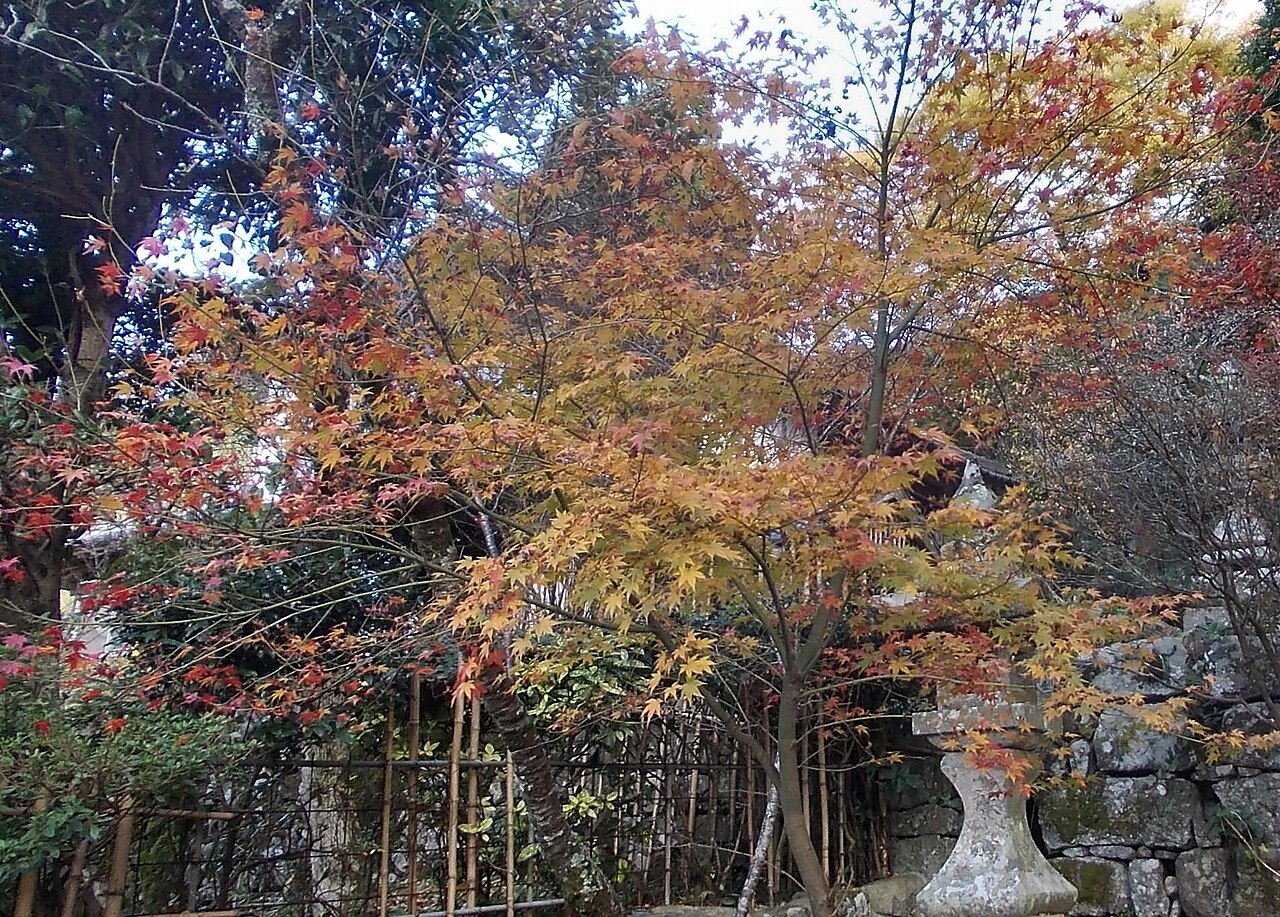
Hikosan Jingu, on the middle part of the mountain, has a solemn shrine building and a quiet approach that stand out against the autumn colours. On both sides of the stone steps leading to the Hoheiden, those colours appear from early to late November. The same steps carry mitsumata flowers from March to May.
Fallen leaves cover the stone steps, and the old buildings contrast with the coloured trees.
Using the cable car or the mountain trails, visitors can see a panorama of the autumn colours from the upper mountain. The silver grass at Takasuhara highland has a long viewing season, from the beginning of October to the end of November.
Hikosan-hime-shara has five petals whose edges are tinged pale pink, and its bud is round like a temari ball. The mountain interior has many days below freezing, and snow crystals can sometimes be seen. If autumn colour is the aim, plan the stone steps and the silver grass at Takasuhara together, since both run through November.
Yamabushi Lodges and the Onisugi Legend
Zaizobo, a former yamabushi lodge, is one of the lodges Hikosan Shugendo yamabushi once used as their base. About two hundred and fifty lodges are said to have stood across the Hikosan area at the end of the Edo period, and Zaizobo keeps that era's structure and interior as the town's history and folk museum.
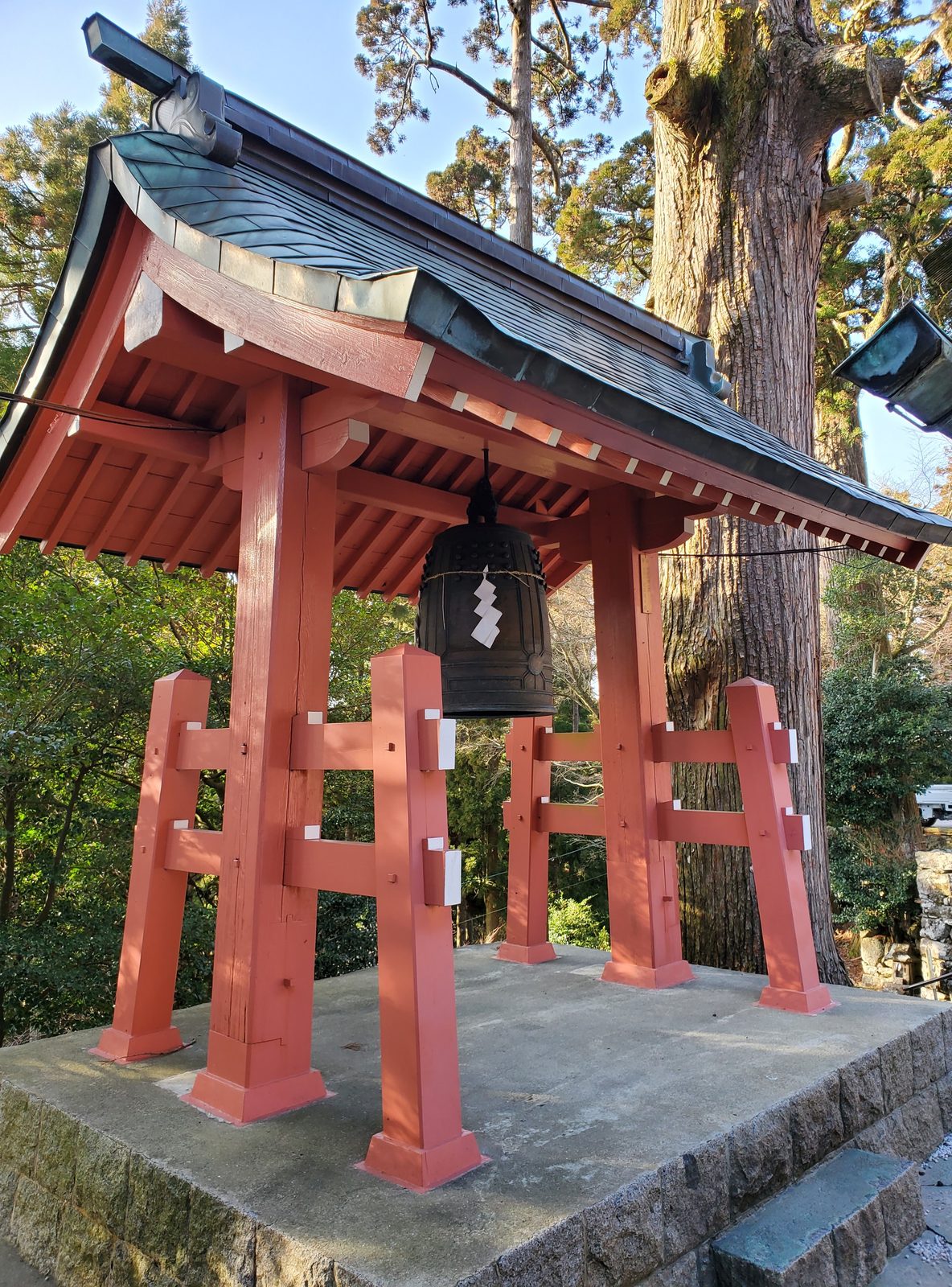
The Hikosan garagara painting class is held on the fourth Sunday of each month from March to November. It runs from eleven in the morning to two in the afternoon.
According to the legend, the cedar staff that the leader of the oni stuck into the mountain became the Onisugi. In the legend, the god of Hikosan imitated a rooster's crowing to feign dawn, and the oni left. The cedar said to be that staff still stands, its top broken off by lightning. The Onisugi is about twenty minutes by bus from the railway, so pair the lodge museum with the painting class on a short visit and keep the cedar for a longer day.
The Slope Car, Cafes and a Rest on the Mountain
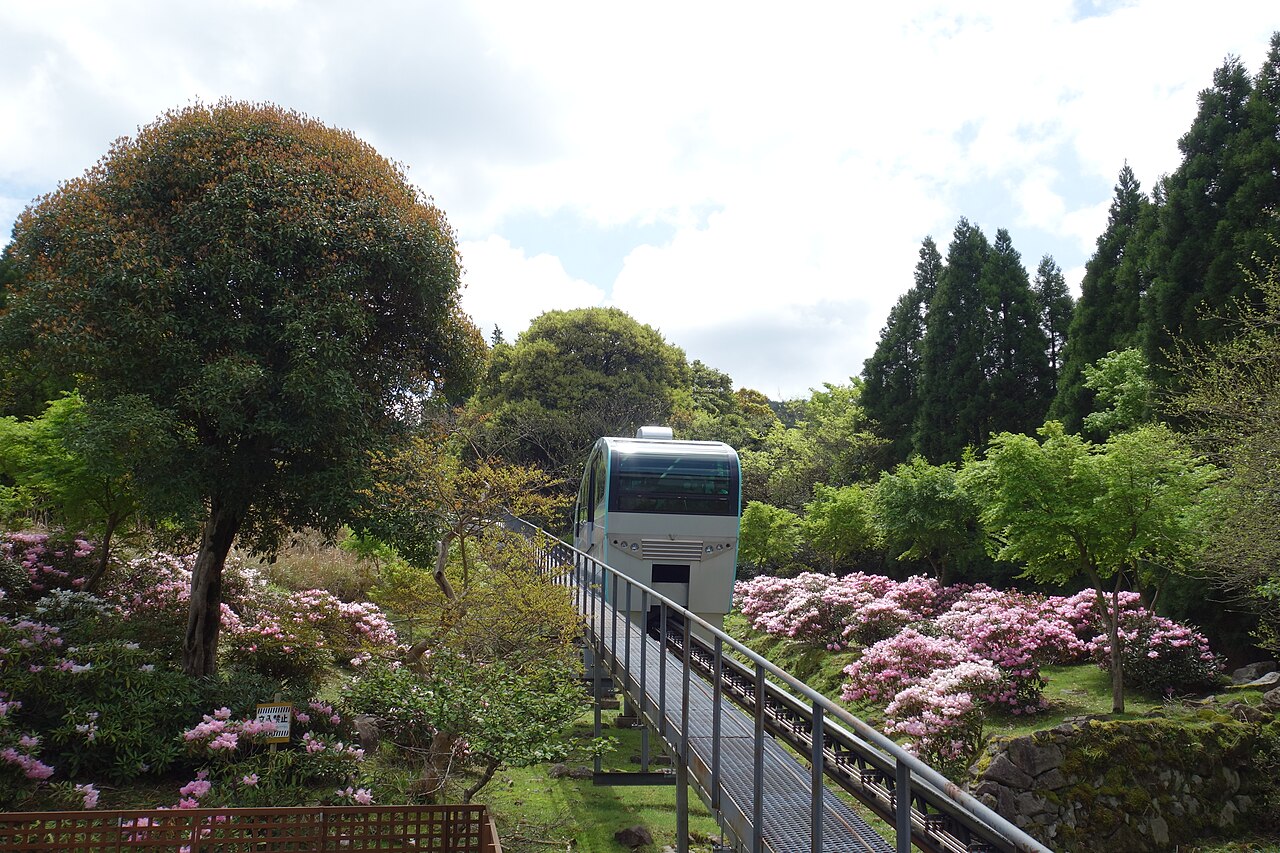
The Hikosan slope car runs parallel to the main approach of Hikosan Jingu, so the ride and the walk cover the same ground. The ride itself takes about seven minutes.
A hotel on the mountain describes its setting as wind blowing through the forest and birdsong. HIKONIWA, a cafe in a renovated former tourist information office, makes soy milk and sells soy milk sweets in the same place. Its curry set is based on dried shiitake mushrooms, with coffee and tea alongside.
Cafe Carin centres on cakes and coffee, with takeout, window-side tables and counter seats. At the lower terminal, the souvenir corner stocks Hikosan garagara, banana yokan and original slope car goods.
If a short stay is all you want, take the slope car up and finish with a sweet at one of the cafes; the hotel's day bath suits a longer rest. If you would rather stay overnight, places to stay around Hikosan is a place to start.
Getting to Hikosan
| Leg | How | Time or fare |
|---|---|---|
| JR Hikosan Station (Hitahikosan Line BRT) to Jingushita stop | Soeda town bus | About 25 minutes |
| Soeda town bus, trip under 10 km | Adult fare | 200 yen |
| Soeda town bus, trip of 10 km or more | Adult fare | 300 yen |
| Soeda town bus, trip under 10 km | Child fare | 100 yen |
| Soeda town bus, trip of 10 km or more | Child fare | 150 yen |
| JR Hikosan Station to Onisugi | Bus | About 20 minutes |
| Soeda Station to a hotel on the mountain | Taxi | About 20 minutes |
| Kane-no-torii (copper torii) stop to Zaizobo | On foot | About 10 minutes |
| Hikosan Jingu to the summit | On foot | About 1 hour 30 minutes |
| Nearest car park to Hikosan Jingu | On foot | Climb of about 300 or more steps |
| Hikosan Jingu | By car | Cannot be reached |
The Soeda town bus gives no change, so riders need the exact fare ready. For car navigation, enter the Japanese name of the slope car as the destination.
New to rural buses and one-man trains? See how to ride them, step by step.
Hours and Fees
| Place | What | Hours or fee |
|---|---|---|
| Slope car | Operating hours | 8:40 to 17:10 |
| Slope car | Interval | Every 20 minutes |
| Slope car | Adult round trip | 700 yen |
| Slope car | Child round trip | 500 yen |
| Hikosan Shugendo hall | Hours, March to December | 10:00 to 17:00 |
| Hikosan Shugendo hall | Closing day | Mondays |
| Garagara painting class | Time, fourth Sunday | 11:00 to 14:00 |
| Garagara painting class | Fee | 500 yen |
| HIKONIWA cafe | Hours | 11:00 to 16:00 |
| HIKONIWA cafe | Closing days | Mondays and Tuesdays |
| Day bath at a hotel on the mountain | Adult | 700 yen |
Where to stay
Places to stay near Hikosan, Fukuoka, Japan →
Disclosure: This post may contain affiliate links. If you book through them, we may earn a commission at no extra cost to you.