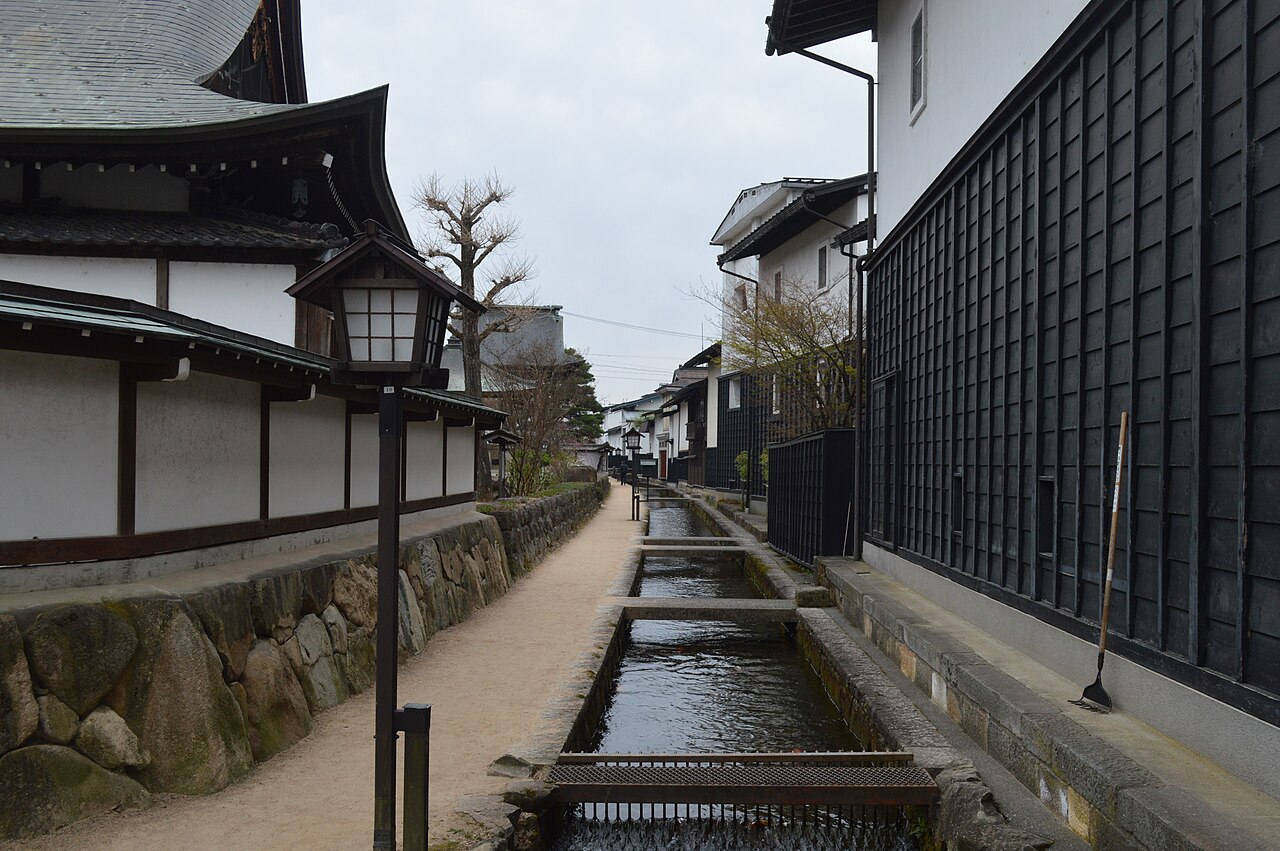
Hida Furukawa is a small town in Hida City, Gifu Prefecture, one short ride up the Takayama Main Line from Takayama. Its signature lane follows the Setogawa, a narrow canal that runs between a white temple wall on a stone base and a row of tall, dark timber storehouses, with lantern-shaped streetlights spaced along the path. Carp live in the water, and a feed box on the bank costs one hundred yen. That is the whole attraction, and it is enough: the canal, the storehouses and the carp set the pace of the day.
What makes Hida Furukawa easy as a day trip is how compact it is. The canal, both museums and the candle shop are each about five minutes on foot from Hida-Furukawa Station. You can arrive mid-morning, walk the water, see a museum or two, eat soba and be back on the platform by mid-afternoon without once hurrying. The notes below give you the rail times, the walking times, the opening times and the prices, and then the handful of dates when the town is anything but quiet, so you can choose your day deliberately.
Getting there by rail
Hida-Furukawa Station sits on the JR Takayama Main Line, and the usual starting points are Nagoya, Takayama and Toyama. From Nagoya, the rail journey takes about two hours and forty minutes. From Hida-Takayama it is about fifteen minutes, which makes Furukawa a natural half-day add-on if you are already staying in Takayama. From Toyama, the rail journey takes about an hour and a quarter. If you take the Limited Express Hida from Toyama Station, the ride to Hida-Furukawa Station is about one hour and thirteen minutes.
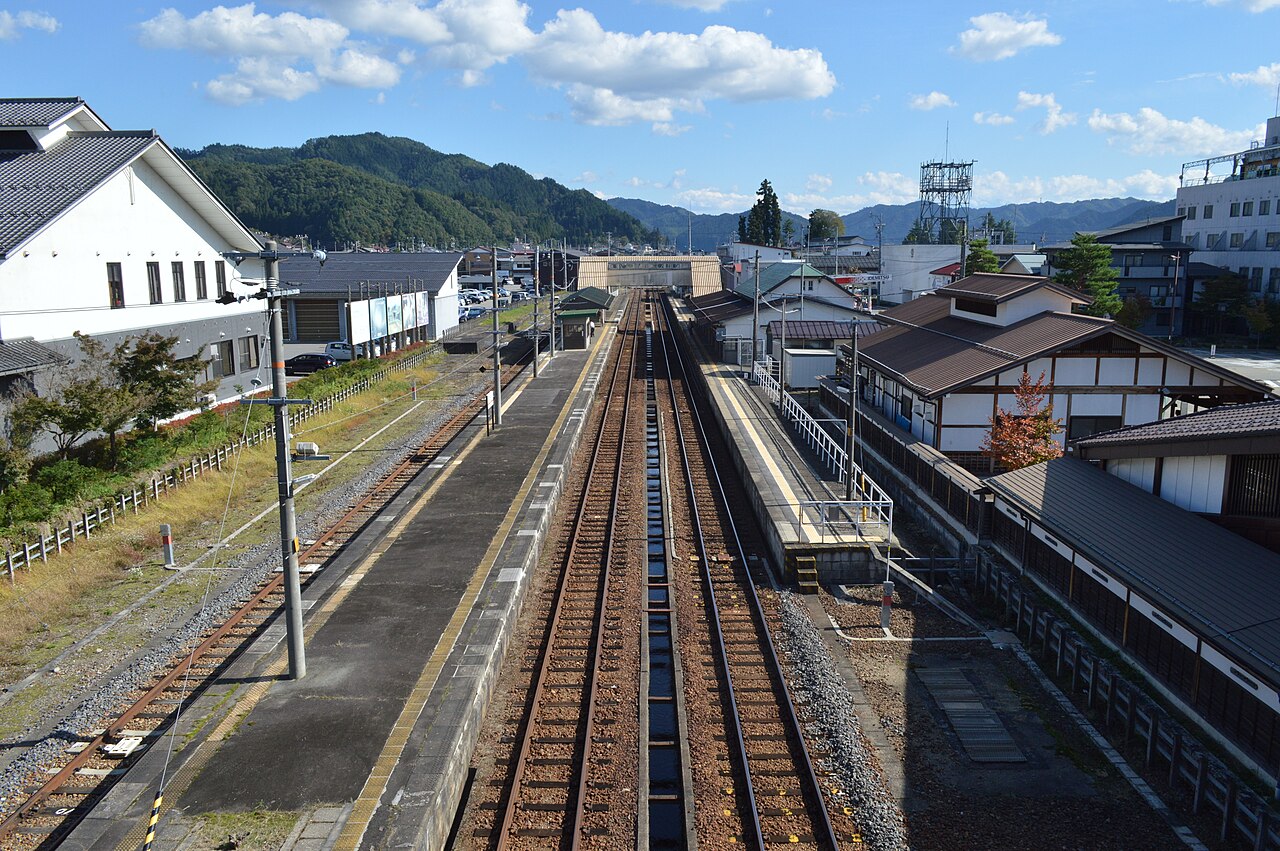
Whichever way you come, the arrival is the same: a small station whose platforms look out onto green hills.
Five minutes from the platform
Everything in this article starts at JR Hida-Furukawa Station, and none of the walks is long.
- The Setogawa canal and the White-Walled Storehouse District: about five minutes on foot.
- Hida Furukawa Matsuri Kaikan, the festival museum: about five minutes on foot.
- Hida no Takumi Bunkakan, the craftsman culture hall: five minutes on foot.
- Mishima Wa-rosoku-ten, the Japanese candle shop: five minutes on foot.
- The Sandera-meguri morning market: five minutes on foot.
- The Sanderamairi event area: five minutes on foot.
In practice this means you can leave the station, be beside the water within a few minutes, and loop back past the museums without consulting a map more than once.
The canal and the storehouses
The Setogawa is not a river you admire from a bridge; it is a channel that runs at the very edge of the lane, close enough to watch the carp turning in it. On one side stands a temple wall, white plaster on a stone base; on the other, a storehouse with dark boarded walls rising well above head height. Lantern-shaped streetlights mark the way, and on a grey day the whole scene is a study in white and black.
One hundred yen in the feed box buys carp food, and that is the only transaction the canal asks of you. Walk it slowly in one direction, then come back along the other side; the point is the pace rather than the distance.
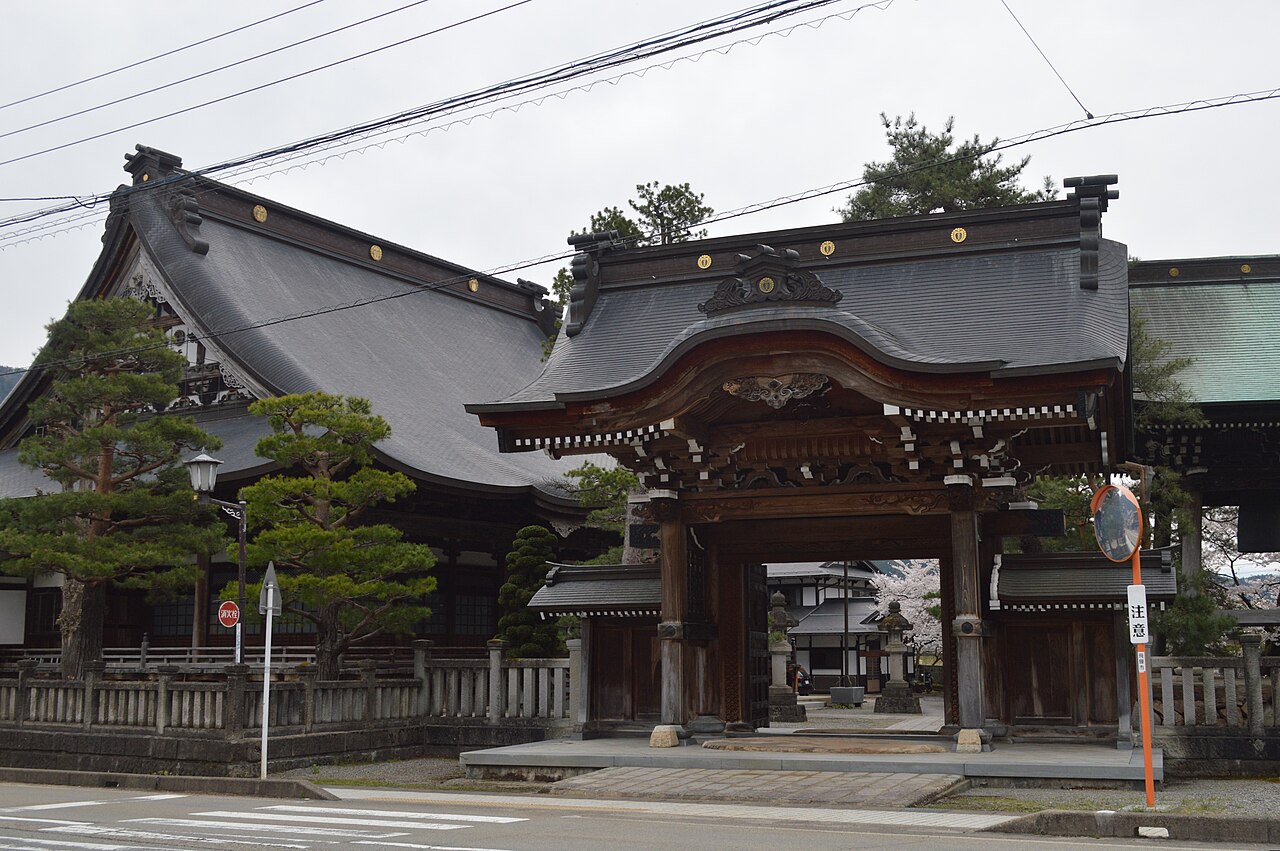
Honkoji shows the town's other face. Honkoji's carved wooden gate opens onto a large hall under a sweep of grey tiles, with pines standing in the forecourt. It is the kind of place to sit for a moment before you turn back towards the museums.
Where to stay
Places to stay near Hida, Gifu, Japan →
Disclosure: This post may contain affiliate links. If you book through them, we may earn a commission at no extra cost to you.
Two museums and a candle shop
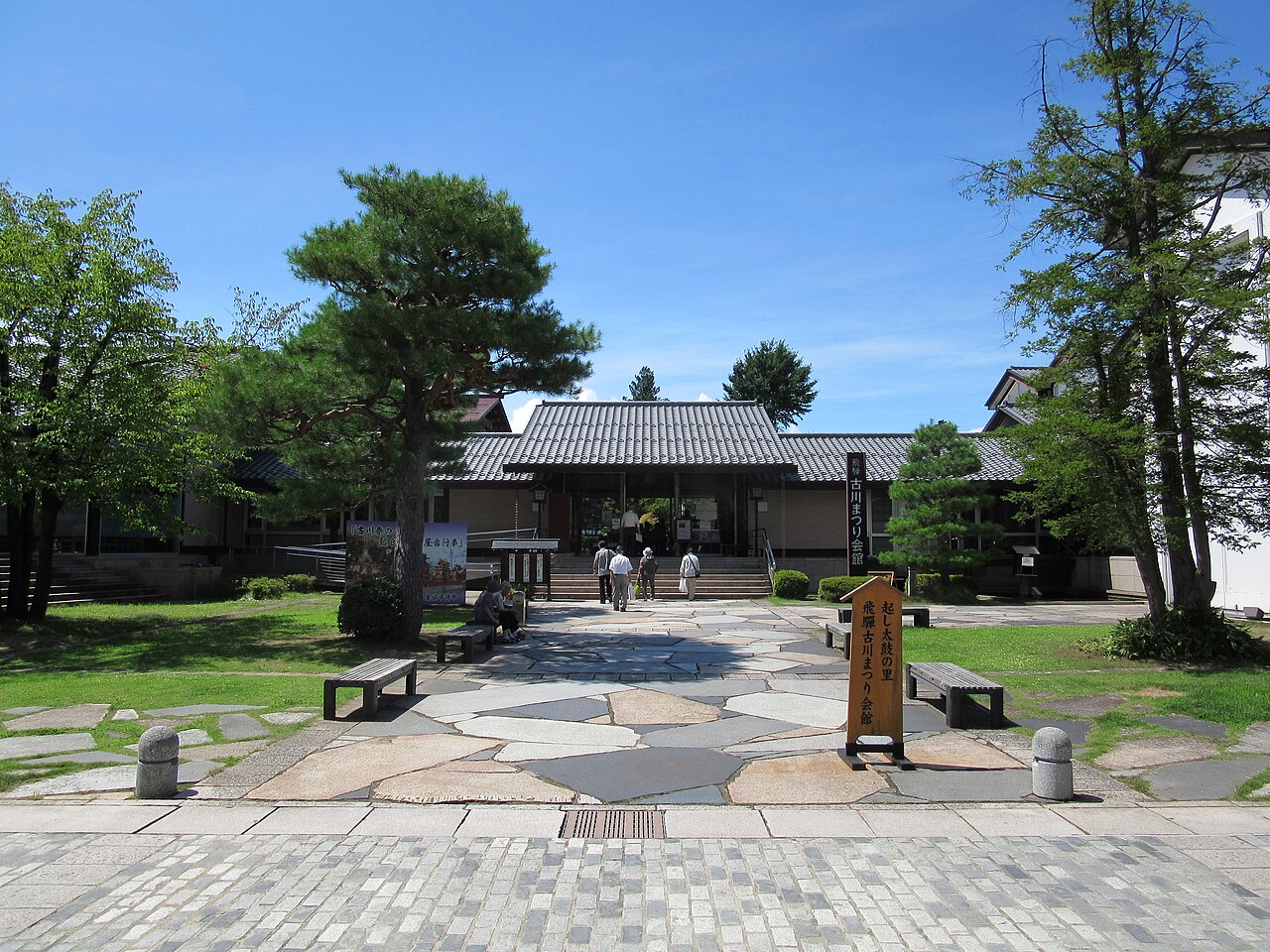
Hida Furukawa Matsuri Kaikan is the festival museum, about five minutes from the station, with a stone-paved forecourt, pines and a wooden sign at the entrance. From March to November it is open from nine in the morning until five. From December to February it is open from nine in the morning until half past four.
Hida no Takumi Bunkakan, the craftsman culture hall, is open from nine to five, with last admission at half past four. If you plan to see both, buy the combined ticket: for an adult it costs eight hundred yen, which is cheaper than two separate tickets.
Mishima Wa-rosoku-ten, the Japanese candle shop, is open from half past nine in the morning to five in the afternoon. It is closed on Wednesdays and from the first to the third of January, so if your day falls on a Wednesday, take the shop off the list and give the time to the canal instead.
| Ticket or item | Yen (individual) |
|---|---|
| Hida Furukawa Matsuri Kaikan, adult | 700 yen |
| Hida Furukawa Matsuri Kaikan, child | 300 yen |
| Hida no Takumi Bunkakan, adult | 300 yen |
| Hida no Takumi Bunkakan, child | 100 yen |
| Combined ticket for both museums, adult | 800 yen |
| Combined ticket for both museums, child | 350 yen |
| Carp feed box beside the Setogawa | 100 yen |
Lunch: soba at Nakaya
Soba Shō Nakaya is open from eleven in the morning to three in the afternoon outside the winter season, with last orders at twenty to three. In winter the hours shorten to eleven until two, with last orders at twenty to two. Either way, lunch here belongs before the museums if you arrive late in the morning, and after them if you arrive early; the last-order time is the one number worth keeping in your head.
When the town is quiet, and when it is not
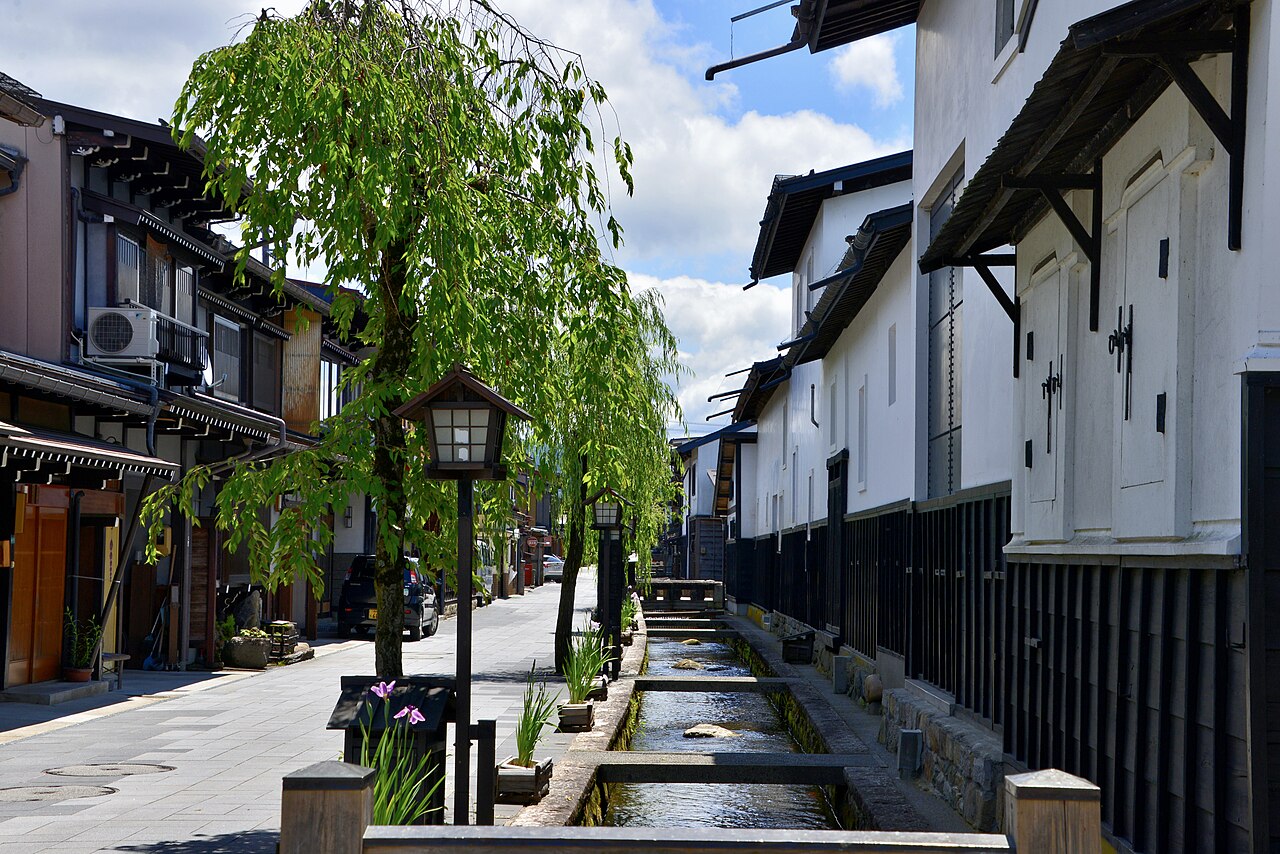
Hida Furukawa's calendar has a few dates on which the lane by the canal is nothing like the empty lane in the first photograph. Furukawa Festival is held every year on April nineteenth and twentieth. The Okoshi Daiko, the festival's drum event, takes place on the night of April nineteenth. If what you want is the canal with few people on it, these are the two days to avoid; if what you want is the festival, they are the two days to plan everything around.
The Sanderamairi, a visit to three temples, is another day with its own rhythm. Kimono rental reception on the day of the Sanderamairi runs from three in the afternoon to half past five. The Hida City Tourism Association rents kimono for four thousand yen including tax, or two thousand yen including tax for dressing only. Someto Gofuku Odo rents kimono or yukata for five thousand five hundred yen including tax, and only when booked in advance.
One more date matters if the carp matter to you: the Seto River koi relocation event is held on Sunday the twenty-ninth of November, twenty twenty-six.
On any other day, the opening times above are what shape the visit: museums from nine, soba from eleven with last orders in mid-afternoon, and the candle shop until five except on Wednesdays. Whether you walk the canal before the museums open at nine or leave the water until after lunch is yours to decide; the festival dates above are the ones to check against your calendar first.
Tours and where to stay
If you would rather have someone walk you through the storehouses and the festival story, browse guided tours around Hida Furukawa. Staying in Takayama keeps the connection to Hida-Furukawa Station at about fifteen minutes by rail, so the town works well as a morning out from there. If you want the canal at first light instead, compare places to stay in Hida Furukawa.
Opening times and prices change, so check official information before visiting.