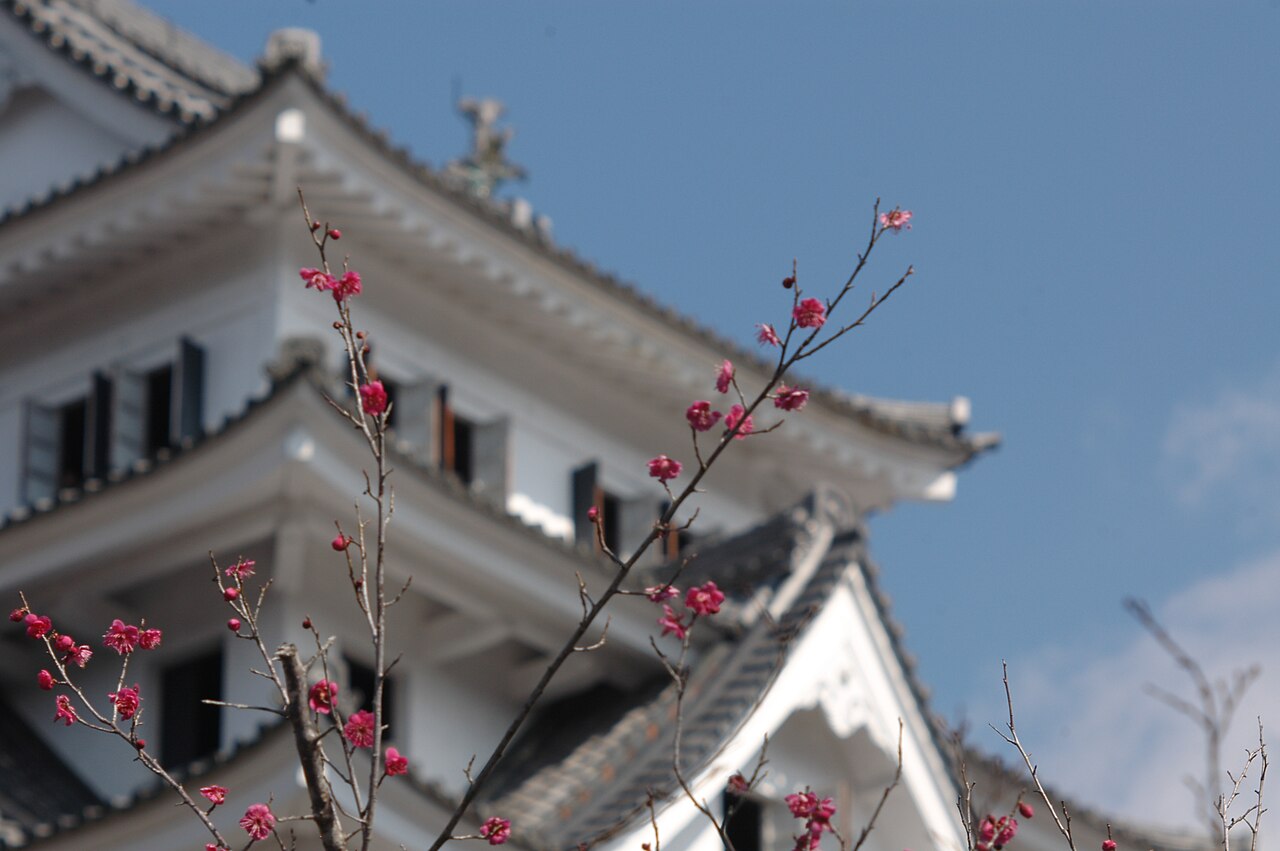
Most itineraries through central Japan hurry between the big-name cities and never turn up the Yoshida River. That leaves Gujō Hachiman — a small castle town folded into the mountains of Gifu, where clear water runs in channels past wooden houses, a rebuilt keep looks down from its forested hill, and the streets keep the unhurried rhythm of a working town rather than a stage set. The whole of it can be done without a car, and the quiet is not a trick of timing: it is simply how the town lives.
Why Gujō Hachiman stays quiet
The town sits in a fold of the mountains, with peaks standing close on its east and north, and the Yoshida River running straight through its middle on the way to join the larger waters below. In the Edo period this was the seat of the Aoyama lords, a castle town of some forty-eight thousand koku, and the shape of that order — castle above, merchant streets below — is still the shape of the place. By the Meiji years it had grown into the commercial heart of its mountain district, a town of roughly six thousand people where goods from the surrounding valleys changed hands. It was never on the way to anywhere famous, and it still is not; that accident of geography is what the visitor inherits.
Streets built on water
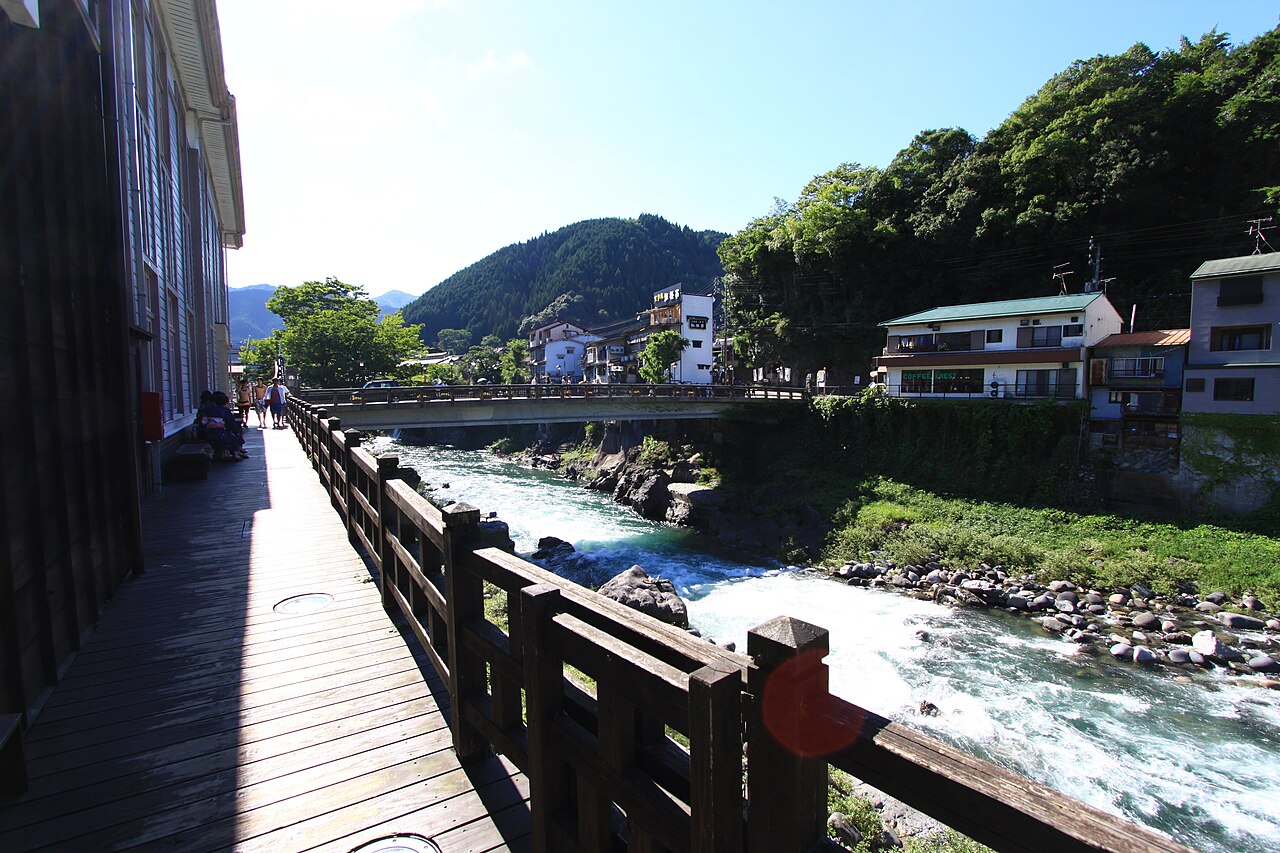
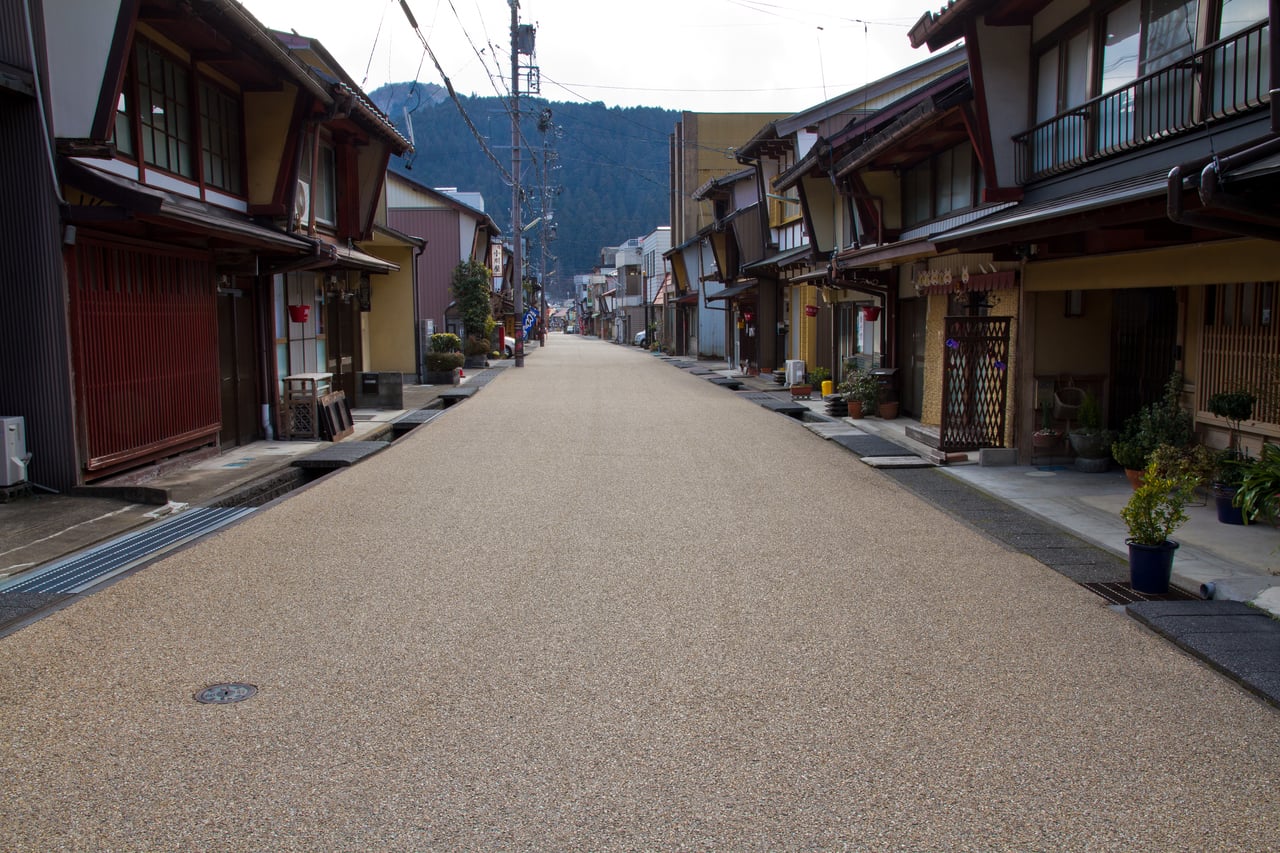
Water is the town's true architecture. Channels run everywhere between the houses, and the wooden troughs called mizubune — once used to cool vegetables and bottles in the running current — still stand at the eaves. The lane called Igawa Komichi, dug in the second half of the seventeenth century, is the largest of the old household waterways: carp and mountain trout hang in its clear current, and its washing places are still used by the neighbours as a place to stop and talk. A few streets away, Yanaka Mizu no Komichi lays a path of river stones — tens of thousands of them, gathered from the Nagara and the Yoshida — in patterns that suggest moving water, with an art museum close beside it. In the old merchant quarter to the north, houses keep their deep lattices and side walls, water runs at the doorsteps, and fire buckets hang under the eaves as they always have. And in the heart of it rises a spring named for the wandering renga master Sōgi, who is said to have kept a hermitage beside it.
The castle on the hill
Gujō Hachiman Castle is spoken of as the most beautiful mountain castle in Japan, and the praise is easier to believe from below, where the white keep shows through the trees above the town. The original fortress was dismantled early in the Meiji era, but the keep was raised again in the nineteen-thirties in wood — counted the oldest wooden reconstruction of a castle in the country — and the climb to it repays the effort with the town laid out along its river far below. In autumn the hill turns to colour and the keep draws real crowds; come in another season, or early in the day, and you may have the view nearly to yourself.
Getting there and getting around
- The town's railway stop lies away from the centre, and the community bus — the Mame Bus — is the easy link between the two.
- Rides on the Mame Bus cost a flat 100 yen.
- A one-day pass costs 200 yen.
- The Mame Bus rests from December 30 to January 3.
- Drivers come in on the expressway to the Gujō Hachiman interchange; paid parking waits at the old town hall and the castle-town plaza, though during the dance season it can be spoken for.
Book a guided day around Gujō Hachiman
If you would rather have the connections handled for you, guided day tours pair the castle, the waterside lanes and the old quarter into one arranged sweep, often with an English-speaking guide.
Compare tours and day trips around Gujō Hachiman
Disclosure: This site may earn a commission if you book through the link above, at no extra cost to you.
Fees and doors at a glance
- Castle admission is 400 yen for adults.
- Children pay 200 yen at the castle door.
- A combined ticket for the castle and the Gujō Hachiman Pavilion is 750 yen for adults.
- The children's combined ticket is 400 yen.
- The pavilion alone is 540 yen for adults and 320 yen for children.
- Groups mean parties of 20 or more.
- The group rate for adults at the castle is 350 yen.
- Holders of a disability certificate of class 3 or higher pay nothing.
- In the regular season — March to May and September to October — the castle keeps its doors from 9:00 to 17:00.
- From June to August the day stretches: 8:00 to 18:00.
- From November to February it shortens: 9:00 to 16:30.
- Last entry is accepted up to 15 minutes before the day ends.
- The castle rests from December 20 to January 10.
Where to stay
Places to stay near Gujo Hachiman →
Disclosure: This post may contain affiliate links. If you book through them, we may earn a commission at no extra cost to you.
The retro quarter
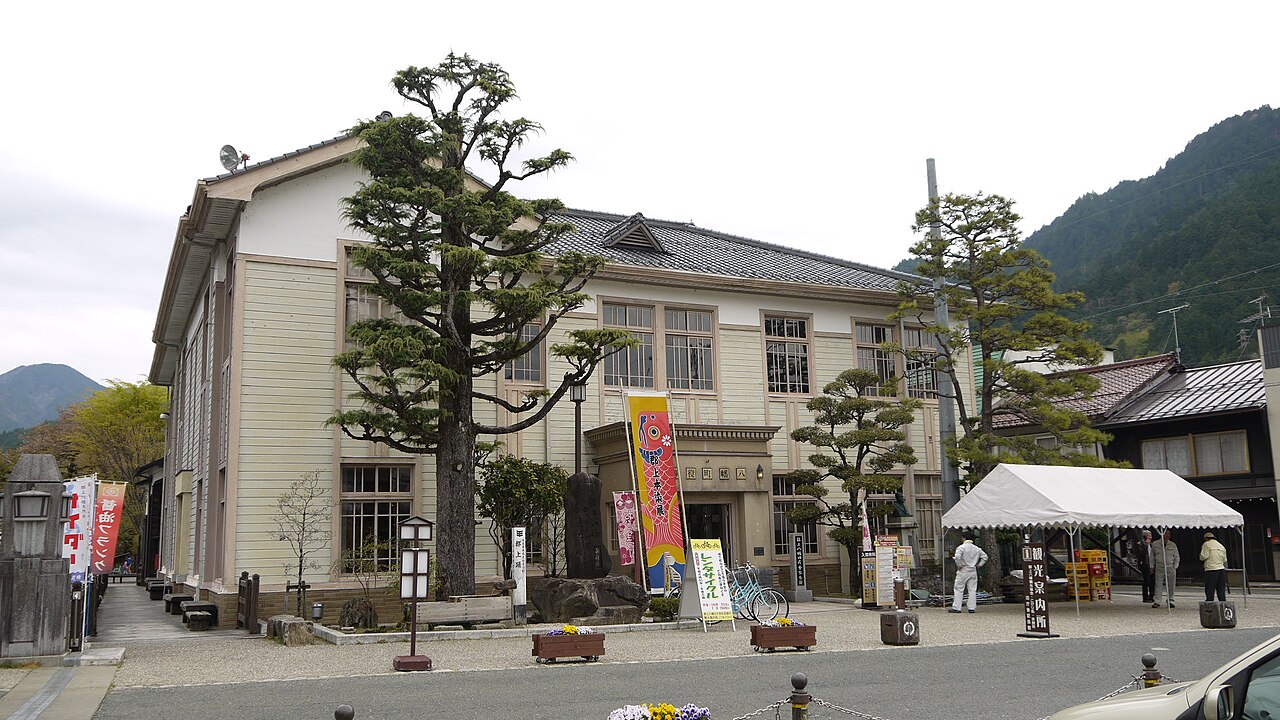
The former town hall by the river is the landmark to start from: a wooden building in Western dress, with a porch, clapboard walls and tall narrow windows, its roof carried on trusswork that was the newest engineering of its day. Around it, old houses have been turning into cafés, so that Shōwa-era woodwork and new kitchens now share the same streets. The Gujō Hachiman Pavilion, a museum kept in a converted tax office from the Taishō years, gathers the town's history, its famous waters and its culture under one roof, and stages demonstrations of the town's dance on weekends and holidays. The dance is the point: the Gujō Odori has been danced here every summer for more than four hundred years, and the town is built around its return. Even the shops carry the fact — one workshop turns local cypress into dancing geta, their bases and teeth cut from a single block so they survive a whole season of stamping, and it stays on into the night whenever the dance is on.
Up the valley: cedars and a frozen cascade
The upper reaches of the district hold an older register of quiet. At Nagataki, a Tendai temple said to have been founded in the eighth century keeps a great hall housing images of the Dainichi, Shaka and Amida Buddhas with the four heavenly kings, all attributed by tradition to the sculptor Unkei; the hall is said not to have burned since it was raised at the close of the sixteenth century. The shrine beside it stands under cedars reckoned a thousand years old, thick enough to shut out the midday sun. Further up the valley, the cascade of Amidagataki drops in a single long fall of water between walls of sheer rock, with a great folding screen of stone at its side. Its spray cools the air even in the height of summer, and in the coldest months the falls freeze into standing columns — a sight the old records call kansuiseki, the cold-water stone. Visitors come mostly from late spring into early autumn; outside that season the path is yours.
A day that fits together
- Morning: ride up from the rail side and give the waterside lanes an hour while the light is low and the streets are at their emptiest.
- Late morning: climb to the keep before the day-trip tide arrives, and let the view explain the town's geography.
- Midday: come down for lunch among the converted houses of the retro quarter.
- Afternoon: the pavilion for the dance and the history, then the old town hall and the northern merchant streets.
- If you have the legs and the season for it, save a second visit for the upper valley and its temple, cedars and cascade.
Before you go
- Autumn is the keep's crowded season; the water lanes below stay calm even then.
- During the dance season the town fills and parking near the centre can be spoken for — the community routes and your own feet are the better plan.
- Summer gives the castle its longest day, and the channels are at their best in the heat, when the sound of running water does the cooling.
- The washing places on Igawa Komichi belong to the people who live there; watch from the path and leave them to their work.