Katsuura, on the Pacific coast of Chiba, is a harbor town that lets you walk through its everyday life: a morning market with fish bought at the harbor auction, a shrine whose steps fill with hina dolls in season, and a red soy-sauce ramen that began as a warm-up meal for ama divers and fishermen. One way to work through Katsuura is to start with the morning market stalls, climb the shrine steps, find a bowl of tantanmen, look out over the bay from Hachiman Misaki Park, follow the coast to the beach and the poem-carved trail, and finish at the window under the sea. It is a place for people who like to look closely at small things: a dried-fish stall, a doll wearing glasses, a poem cut into a white granite post, a fish passing a window below the surface.
Morning Market Stalls Beside the Shrine
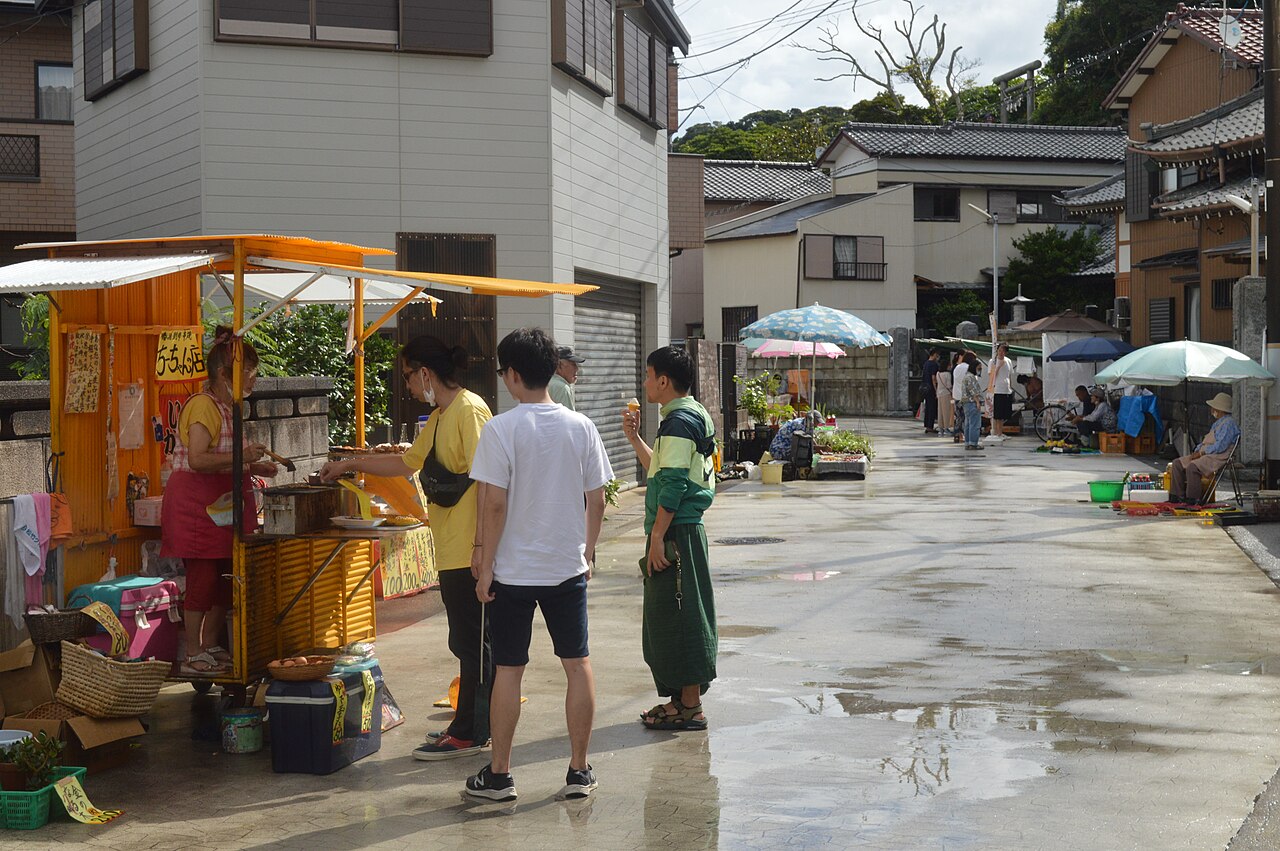
Katsuura's morning market lines up at the approach to Tomisaki Shrine, so the stalls and the shrine are one walk. It shifts between two streets: from the first to the fifteenth of the month on one, and from the sixteenth to the end of the month on the other.
One fish stall lays out fish bought at the harbor auction, and another puts out fish chosen from within Chiba Prefecture. The first stall's dried fish is all homemade and packed in vacuum packs; another lays out mirin-boshi and maru-boshi dried fish in winter. There is also traditional handmade shiokara, salted fish, at one stall and katsuobushi and niboshi at another, with many kinds of katsuobushi alone.
Snacks and drinks run alongside the seafood: SPAiCE COFFEE pours drip coffee from a bicycle coffee cart, Le-ciel has chiffon cake made without additives, and Sucle has freshly fried churros. A small old-style food stall marks the takoyaki stand, and there is street-stall-style ramen and yakitori grilled over charcoal too. If you like to graze rather than sit down to one meal, this is the stretch for it.
Hina Dolls and Fortunes at Tomisaki Shrine
Tomisaki Shrine asks you to climb sixty steps, and in the hina-doll season the steps become the display, with about eighteen hundred hina dolls lined up. On sunny mornings while the display is on, residents set the dolls out. The shrine honors a deity said to have crossed from Shikoku to the Boso Peninsula bringing technology and culture, and the doll-lined steps lead up to it.
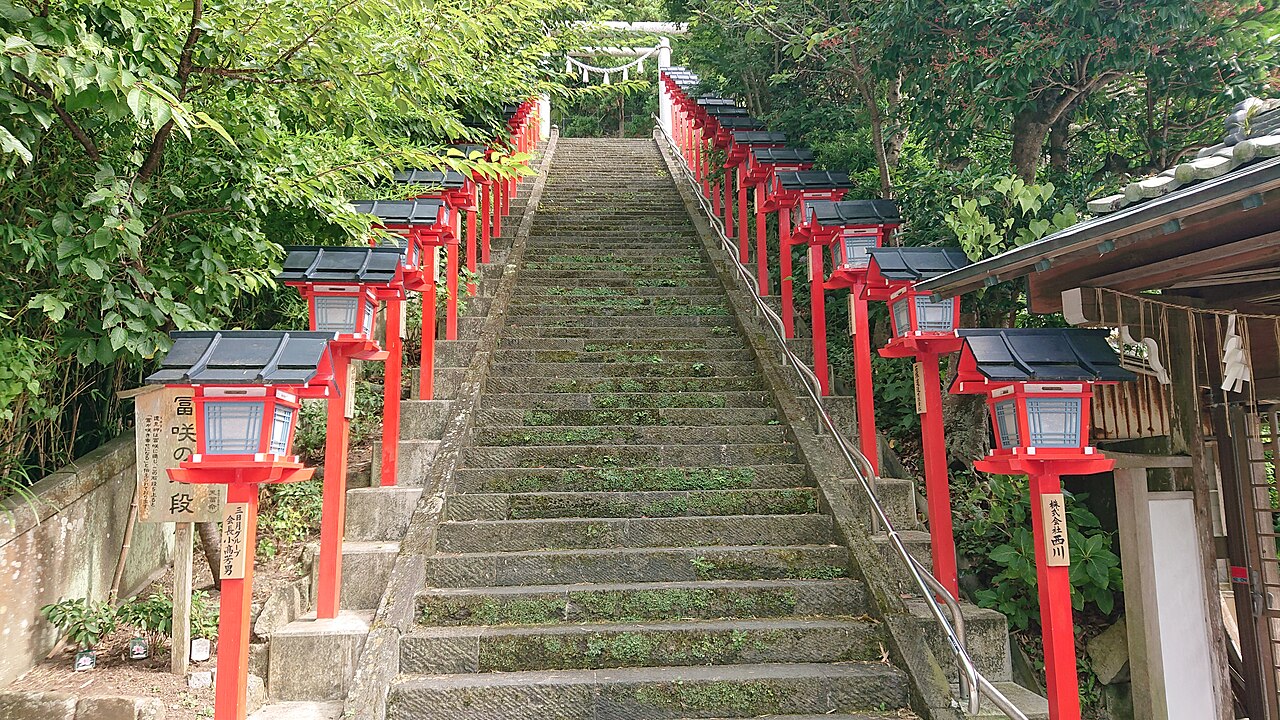
While the dolls are out they spread beyond the shrine: the main gate of Kakuou-ji holds about six hundred, and the shopping street nearby has an Emperor doll wearing glasses. Hanging hina decorations are displayed at Takiguchi Shrine in Hohara, and with dolls donated from across the country, about ten thousand are displayed throughout Katsuura.
Two omikuji are drawn here, a Katsuo fortune for men and a Kinme one for women. The shrine also keeps the belief in a ship-dwelling deity, with prayers for protection in fishing and good voyages, fitting for a shrine with a fish market at its approach. If your time is short, take the steps up first and draw the omikuji on the way back.
Katsuura Tantanmen, the Local Red Ramen
Katsuura tantanmen arrives as a bowl of red: the soup is soy-sauce based and carries a lot of chili oil, which is what colors it. The dish took hold here as a way for ama divers and fishermen to warm up after cold work in the sea, and the red soup in front of you is that same warming bowl.
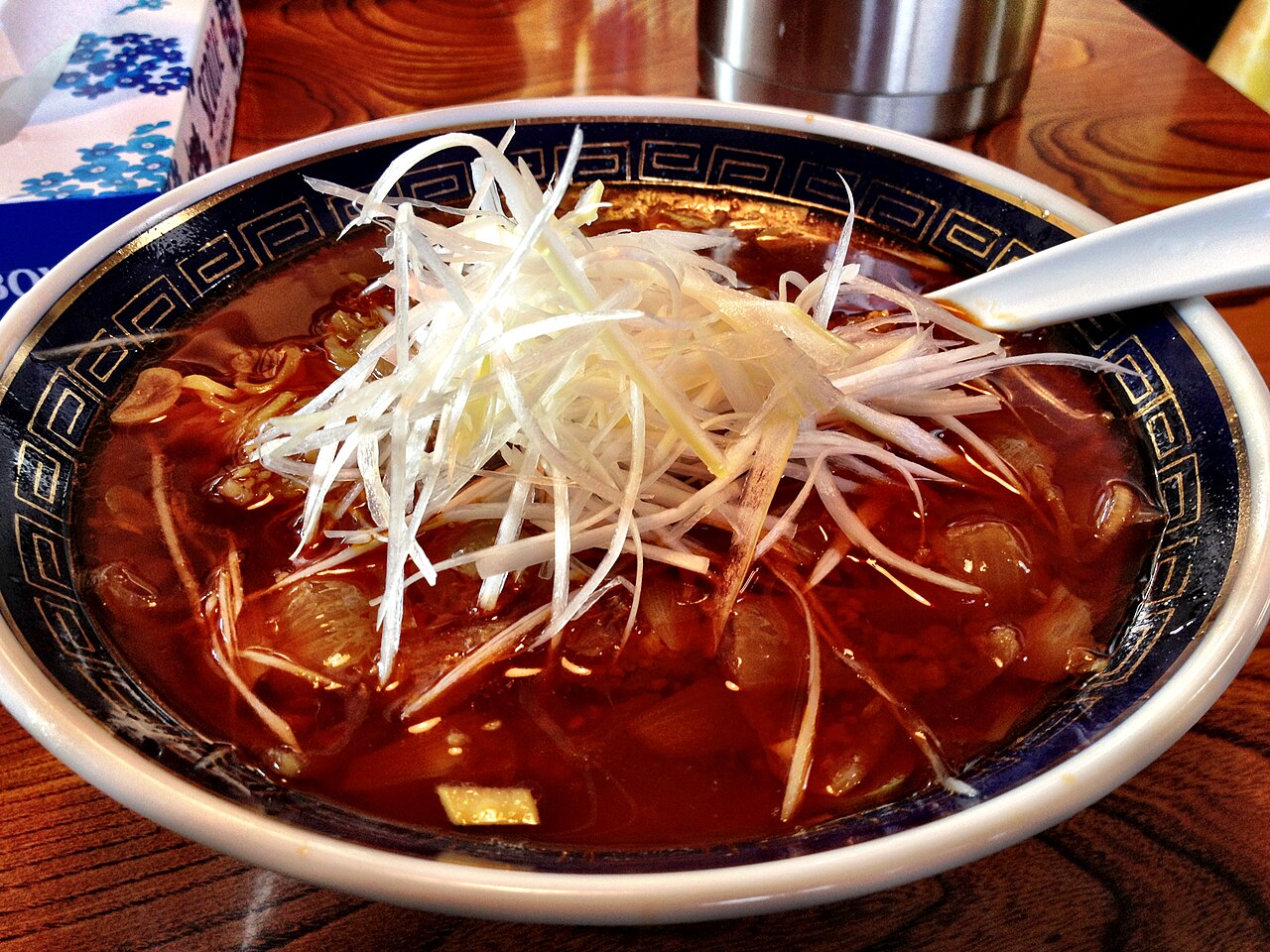
The toppings often include minced onion and ground pork. From shop to shop the recipe shifts: garlic, chives or green onion may be added, and the base may move to miso or tonkotsu.
One shop adds offal in winter, and its sweet fat melts into the soup; a cafe in town makes its tantanmen with fresh pasta in place of ramen noodles. If you want to compare, start with the plain soy-and-chili version and then try a miso or tonkotsu bowl or the pasta one, so the differences between shops come through clearly.
Sea Views From Hachiman Misaki Park and Kangunzuka
Hachiman Misaki Park gives you the sea from two spots. Climb the stairs to the observation deck and the view takes in the Pacific Ocean and Katsuura Bay; from the viewing plaza, look for the sea torii of the former Tomisaki Shrine, a different site from the shrine with the doll steps in town.
The park also has a lawn plaza and an athletic course, which makes it a place to pause rather than just a lookout, and one that suits a family with children as well as a walker heading on to Kangunzuka.
Kangunzuka is a mound that local residents built for memorial services, and a memorial monument stands on it; the walkway leading to it turns into a tunnel of cherry trees when the blossoms are in full bloom. The trees are Kawazu cherries, and when they are in bloom their deep pink is seen against the sea. If the blossoms are out, give Kangunzuka the longer stop and keep Hachiman Misaki for the torii; outside the blossom season, the observation deck is the reason to come this way.
Sea Glass and Poems Along the Coast
Katsuura Chuo Beach is where to slow the day down: white sand, and the sound of calm, gentle waves. Along the sand you can collect driftwood, sea glass and shells, which turns a short stop into a longer one if you let it.
At Ubara Risokyo, the hiking course is a loop marked by nineteen white granite guide posts in two shapes, an elliptical column and a flat plate. Poems by Yosano Akiko are carved on both sides of the elliptical posts, so the trail is read as much as walked.
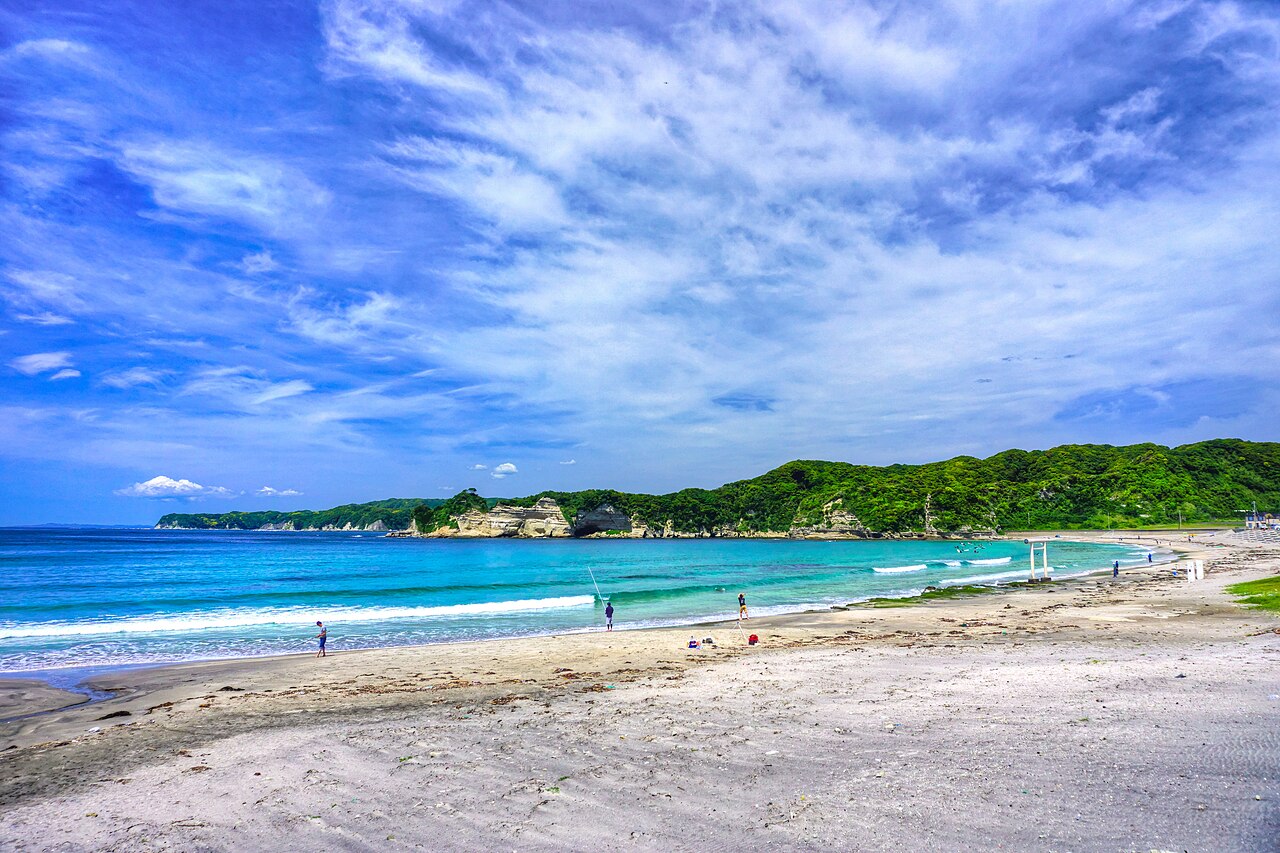
Hurried, the loop takes about forty minutes; walked slowly, about an hour and a half. The slower pace is the one that fits the posts, since stopping to read the poems is the point of the course as much as the path itself; if you would rather not walk at all, the beach by itself is a full stop.
A Window Under the Sea at Katsuura Marine Park
Katsuura Marine Park sends you out over the water first: a pier built over the sea leads to an observation tower standing offshore. Inside the tower, a spiral staircase goes down to a window below the surface, and from there you watch sea creatures in the water around you.
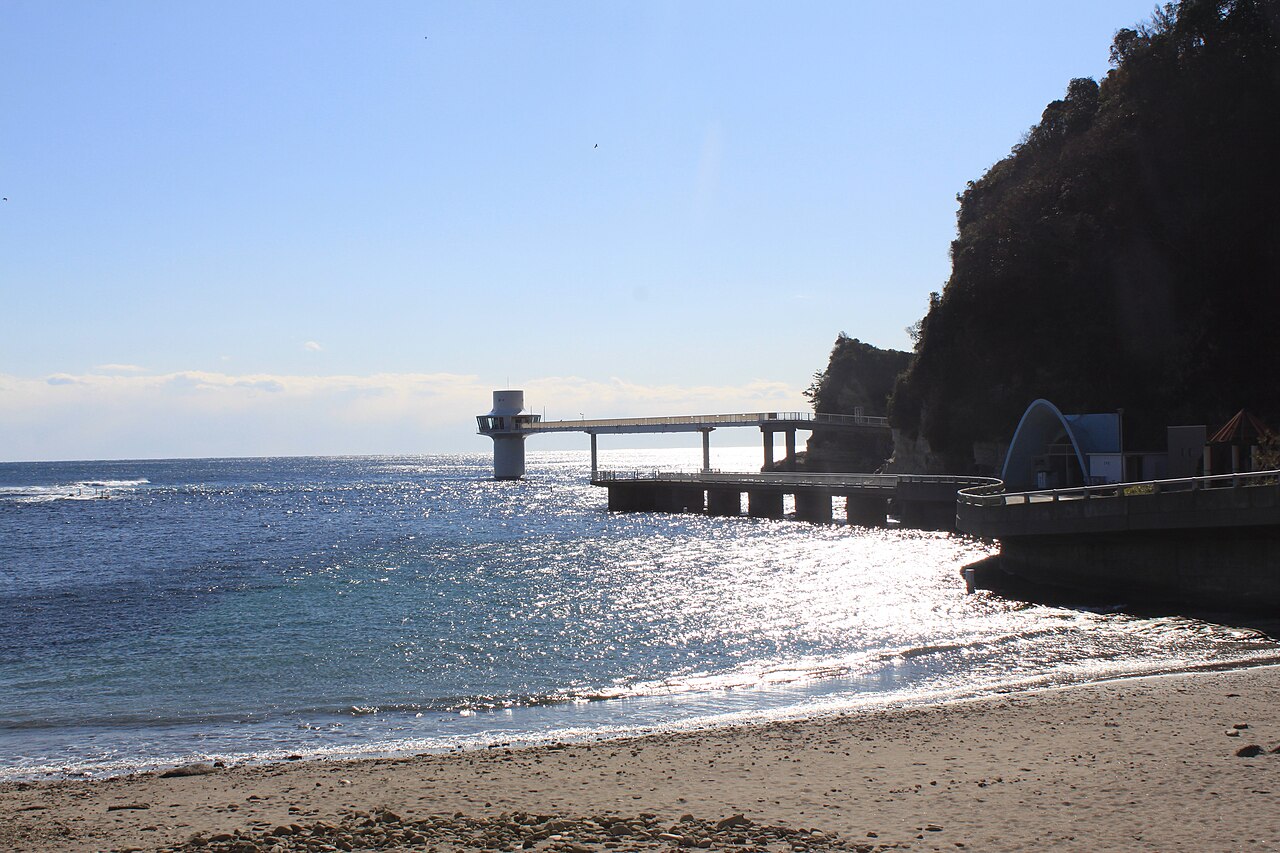
The sea here lies where cold and warm currents meet, which is why the life past the window is varied, with about ninety species seen through the year. Through the window you may pick out the moorish idol and the boxfish, along with ishidai and mebaru, and with luck a leopard shark.
Back up in the observation room above the sea, the horizon of the Pacific Ocean looks round. The finless porpoise, a small dolphin, can sometimes be seen from the same room. If you want the sea from above and from below without rushing between the two, make the tower the last stop and turn the visit into an overnight with places to stay in Katsuura.
Getting to Katsuura
| Leg | How | Time and fare |
|---|---|---|
| Tokyo Station to Katsuura Station | Limited express Wakashio | About 1 hour 27 minutes |
| Tokyo Yaesu bus terminal to Katsuura Station | Highway bus | About 2 hours; fare 2,100 yen |
| Katsuura Station back toward Tokyo | Highway bus, weekday timetable | Last listed departure 16:42 |
| JR Katsuura Station to the Kangunzuka observation deck | On foot | About 40 minutes |
| The morning market to Tomisaki Shrine | On foot | About 1 minute |
| JR Ubara Station to the Ubara Risokyo area | On foot | About 7 minutes |
New to rural buses and one-man trains? See how to ride them, step by step.
Hours and Fees
| Place | What | Hours or fee |
|---|---|---|
| Katsuura morning market | Market streets | About 6:30 to about 11:00, which can differ with weather and stock; closed every Wednesday and on New Year's Day |
| Tomisaki Shrine | Office for omamori, omikuji and goshuin; prayer reception | 9:00 to 17:00 |
| KAPPY Visitor Center | Guidebook and walking map | 8:30 to 17:15; closed over the year-end and New Year period |
| Katsuura Marine Park | Observation tower, adults (high school age and older) | 980 yen |
| Katsuura Marine Park | Observation tower, children (elementary and junior high school) | 480 yen |
| Katsuura Marine Park | Observation tower, small children (aged 4 and over) | 220 yen |
Where to stay
Places to stay near Katsuura, Chiba, Japan →
Disclosure: This post may contain affiliate links. If you book through them, we may earn a commission at no extra cost to you.