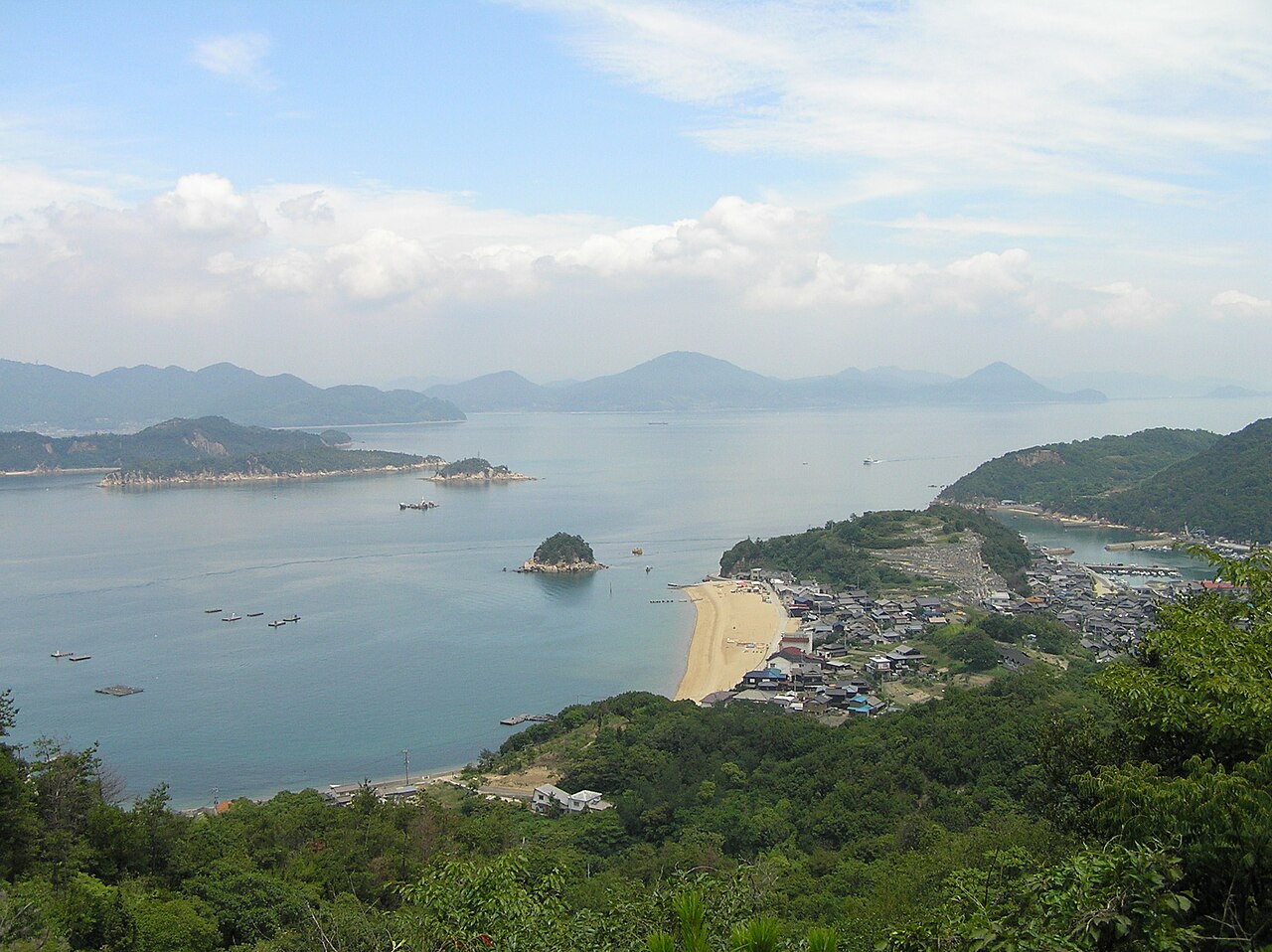
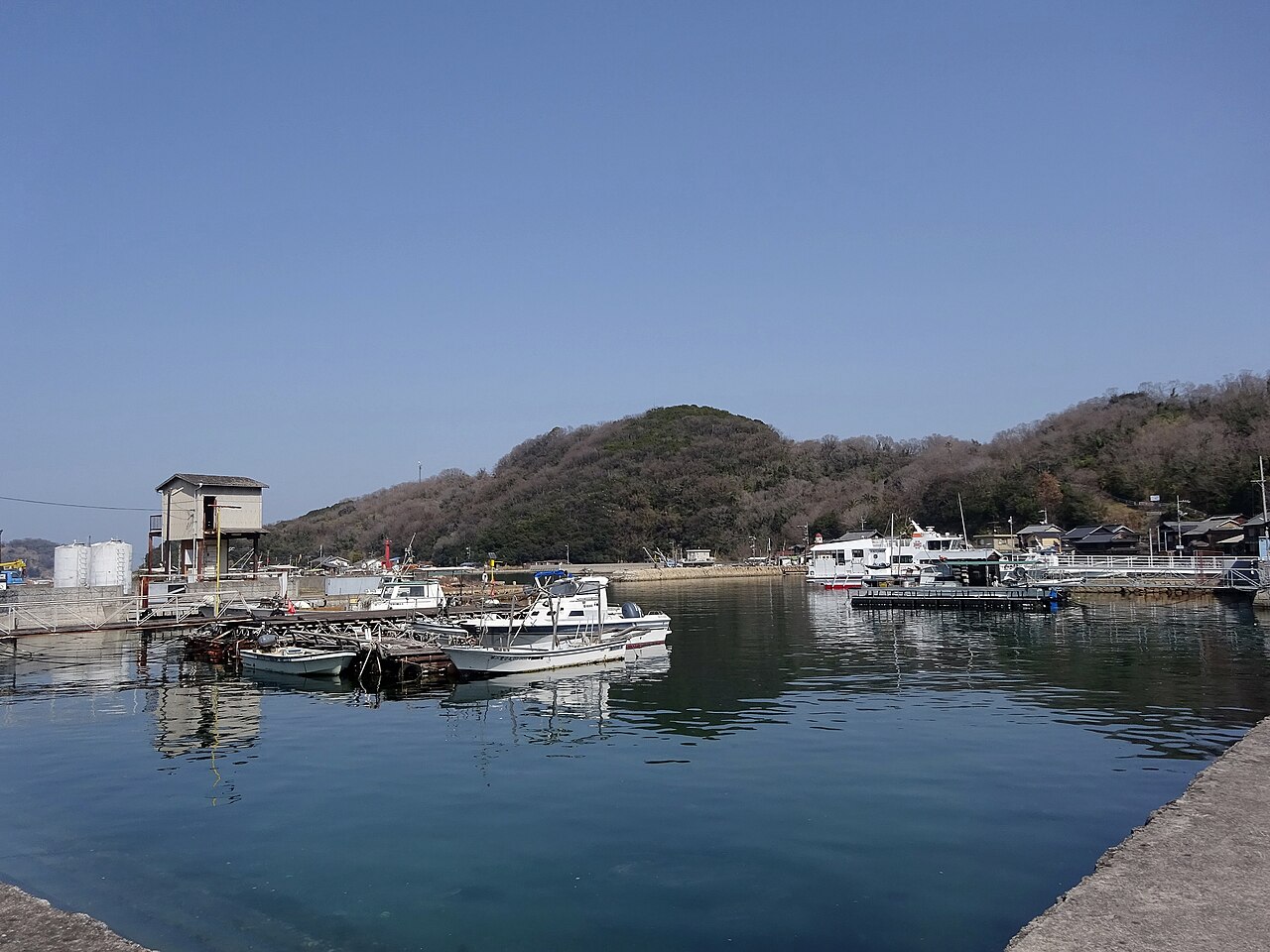
The islands off Kasaoka in the Seto Inland Sea reward the visitor who likes to walk. On Shiraishijima you can sit on top of Hato-iwa and take in the island's scenery, and on Manabeshima you wander lanes that keep the look of a quiet fishing village. Kitagishima adds a working stone quarry seen from a viewing platform set above its cut rock face. Back on the mainland, Kasaoka itself offers living horseshoe crabs seen up close at a museum built around them, and a bowl of Kasaoka ramen topped with chicken rather than pork.
Hato-iwa Rock and the Beach on Shiraishijima
Climb to Hato-iwa on Shiraishijima and sit on top of the rock, with the island's scenery and the port town you walked through spread out in full below. The Hato-iwa course runs from Shiraishijima port up to the rock and back, and a longer loop carries on to a lookout farther up before returning to the port. The walk up from the port to Hato-iwa takes about twenty-five minutes.
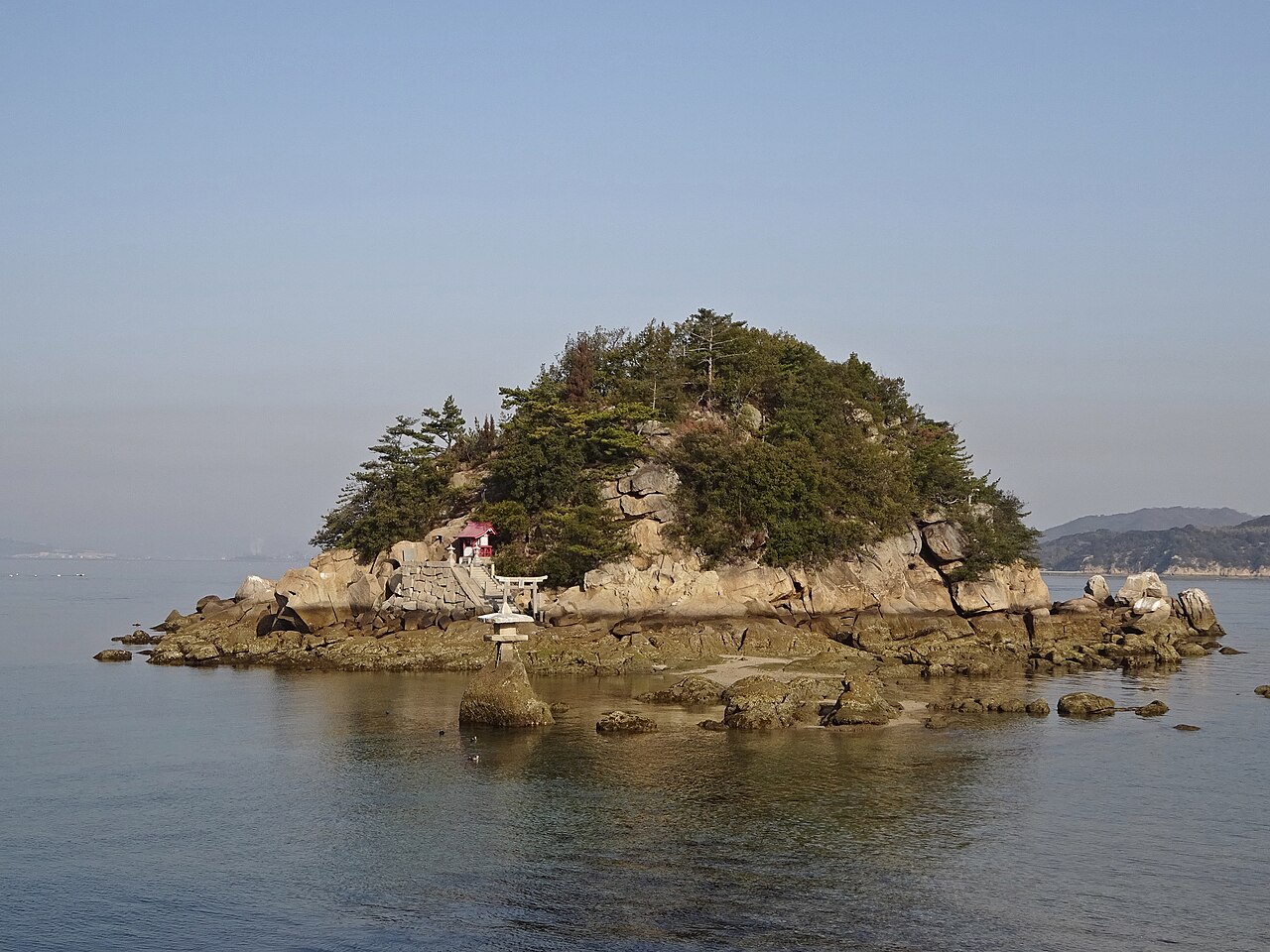
Walk the long stretch of sand at the beach, which counts among Okayama Prefecture's three major beaches. Inns and minshuku guesthouses line the shore, so a night here puts you beside the water. You can also try sea kayaking and windsurfing off the beach.
Wear sturdy shoes and clothes you can move in, as the trekking course has slopes and rocky sections. Carry food and drink up from the port, since there are no restaurants or vending machines along the course. The rock takes its name from 'hato', a breakwater, and is said to have watched over the settlement since long ago.
Quarry Views, Akibayama and a Wooden Cinema on Kitagishima
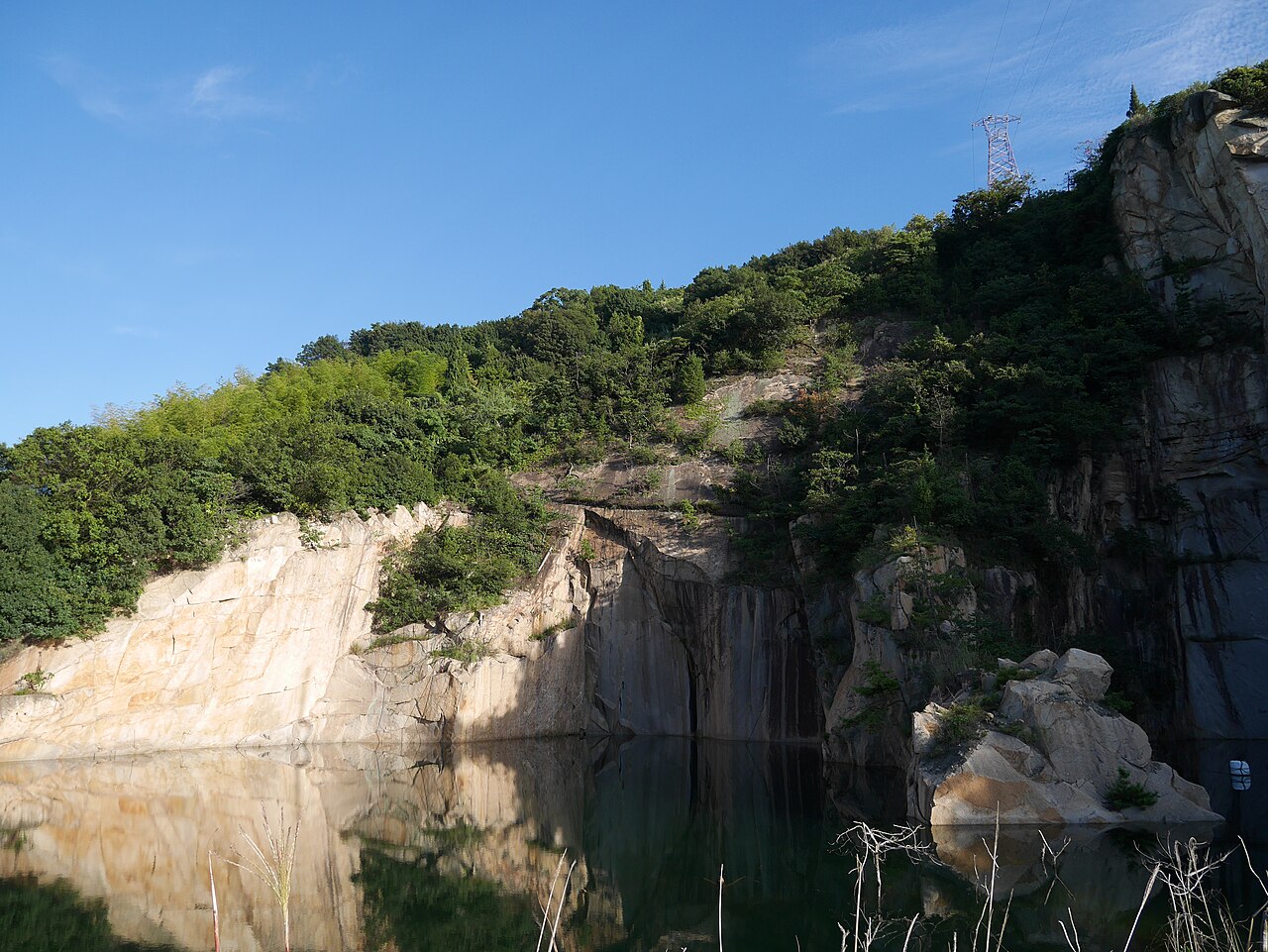
Stand on the viewing platform above Kitagishima's working quarry and look down over the cut rock face from high above it. Quarrying still goes on at the site below the platform. Viewing from the platform runs for a single hour from noon on weekdays, so plan the island day around that slot.
Walk the Akibayama course from the harbour past a temple, up the main approach to the summit and down by way of a shrine. From the summit, the Seto Inland Sea and the harbour area spread out in a full circle with nothing in the way. Pick up a bamboo walking stick at the trailhead, and look out for the Kannon statues enshrined along the mountain path.
Step inside Hikari-gekijo, a former wooden cinema, and watch the video works about Kitagi stone. Kitagishima once had one hundred and twenty-eight quarries, the trade behind the stone on screen. If the slot does not fit, the summit and the cinema fill a visit on their own.
Old Fishing-Village Lanes on Manabeshima
Walk the old lanes of Honura on Manabeshima, a settlement that keeps the look of a quiet fishing village and holds a Furusato-mura designation. From Honura Port you can walk to the wooden Manabe Junior High School, viewed from outside, and the Manabe family house.
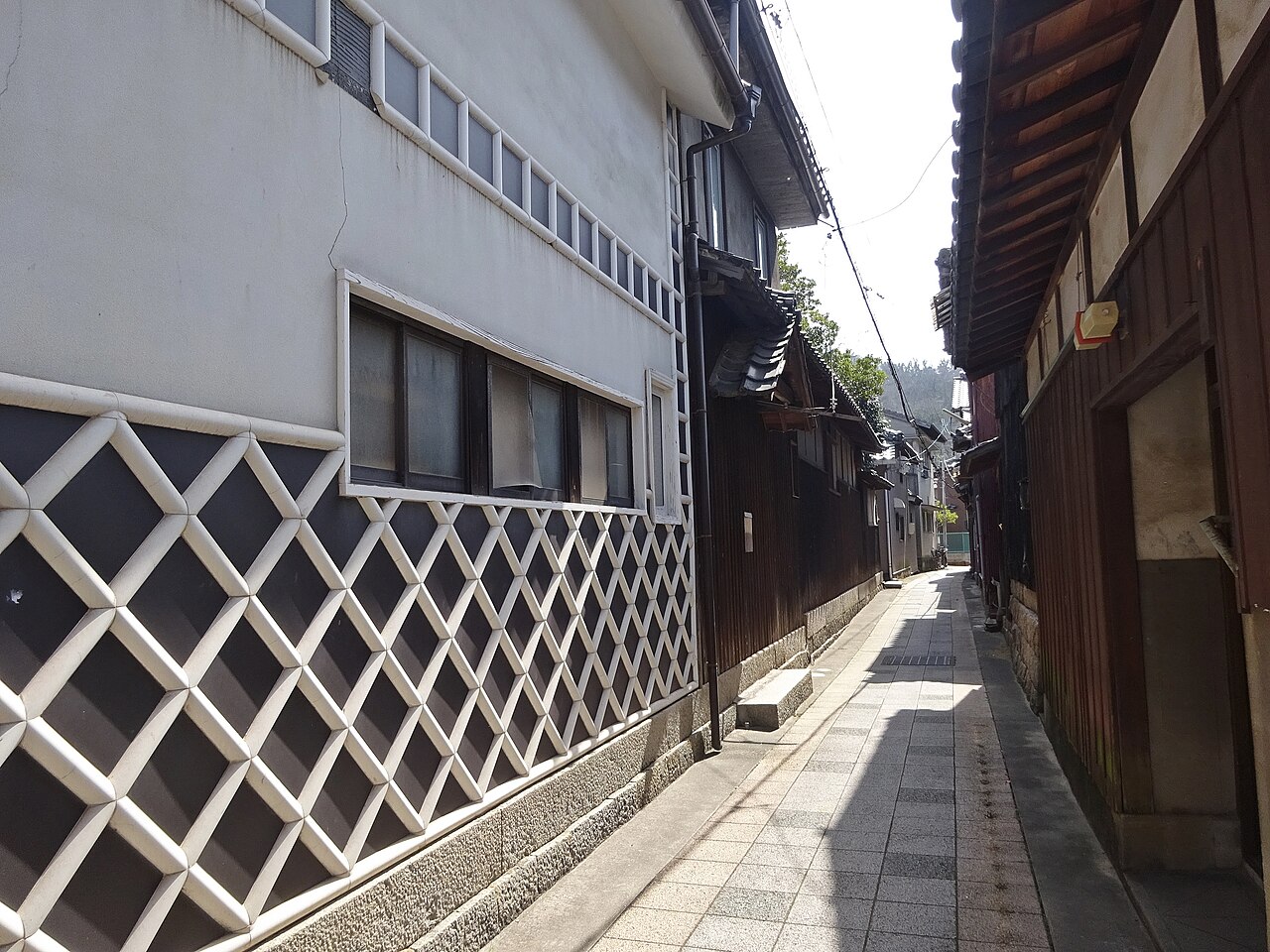
Stop at the eaves of the Manabe residence for the Holt oak, a thick-trunked tree said to be some two hundred and fifty years old. The main house is a wooden building with a tatami room in shoin-zukuri style. The school interior cannot be visited, so take in the wooden schoolhouse from the lane.
The Honura course loops from the port past these sights, a temple, a lookout and a park in about an hour and a half. The Iwatsubo course takes in stone stupas, a lookout and a shrine. The stupas, a city-designated cultural property, are said to be the tombs of the Manabe clan that ruled the island. With a single crossing, walk Honura alone; with more time, a combined course joins the two loops.
The Horseshoe Crab Museum and Dinosaur Park
At the Kasaoka City Horseshoe Crab Museum, watch living horseshoe crabs up close, from larvae through to full-grown adults. Take a seat in the eighty-seat Horseshoe Crab Theatre, where the mascot character leads the presentation on a large screen. In the galleries you also find skeleton specimens of various dinosaurs that lived in the same era.
Step out into the dinosaur park in the museum's front garden, where eight life-size dinosaurs of seven kinds, Tyrannosaurus among them, stand across three zones of forest, desert and sea. Children can let off steam on the athletic playground, whose play equipment carries horseshoe crab and dinosaur motifs.
Behind the displays, the museum works to protect the nationally designated natural monument breeding ground and to carry out research on the animal. The whole place is themed on horseshoe crabs, so galleries, theatre and garden circle back to the one creature. With children, give the park as much time as the galleries; on your own, linger over the living crabs and the theatre.
Chicken Ramen and Seafood in Kasaoka
Order a bowl of Kasaoka ramen and you get a chicken-bone soy sauce broth topped with chicken char siu in place of pork. You also find chicken paitan, tonkotsu soy sauce and shako ramen made with mantis shrimp. The town's shops split broadly into chicken-alone soup and chicken-and-seafood soup, so eat here twice and try one from both camps.
Sakamoto's ramen pairs a chicken-bone soup and a soy sauce base, kept topped up over time, with chicken chashu and diagonally cut green onion. At another shop the chuka soba comes in a soup scented with chicken bones, iriko and ginger, under double chashu of chicken and pork thigh. A third kitchen builds its chicken paitan on an eighteen-hour simmer of chicken bones and vegetables in a custom-made cauldron.
Away from the noodles, Kasaoka faces the Seto Inland Sea and brings in oysters, mantis shrimp, nori and hijiki. The dish grew out of a town where poultry farming and noodle making thrived from before the war.
The Roadside Station and Taiyo no Hiroba on the Reclaimed Land
Browse the direct-sales corner of the roadside stop, where fresh farm produce and processed goods from the reclaimed land are sold. The specialty corner stocks Kasaoka Islands products such as hijiki and haiboshi, ash-dried fish. The seafood corner displays fresh fish and shellfish caught around the islands, and in autumn the cosmos here sway in the wind.
In the restaurant an Italian chef cooks mainly with local ingredients, and Kasaoka ramen is also on the menu. For something quicker, the takeout corner sells mixed soft serve, heart-shaped croquettes and smoothies.
Walk off the meal at Kasaoka Taiyo no Hiroba, a multipurpose park that spreads along the closing dyke of the Kasaoka Bay reclaimed land. Stone sculptures of varied character are scattered along the promenade, lined with flowers of the season. A sculpture square gathers a series of stone pieces in strange shapes. The park also has a BMX course, a roller skating rink and a mountain bike course. Eat first, then follow the promenade from sculpture to sculpture.
Getting to Kasaoka Islands
| Leg | How | Time and estimate |
|---|---|---|
| Okayama, Kurashiki or Fukuyama Station to Kasaoka Station | Conventional line | From Okayama 45 minutes. From Kurashiki 26 minutes. From Fukuyama 15 minutes. |
| Kasaoka Station to Sumiyoshi port | On foot | About 7 minutes |
| Sumiyoshi port to Shiraishijima | Passenger boat | About 35 to 40 minutes by ordinary ship or about 22 minutes by high-speed ship. Ordinary ship 670 yen. High-speed ship 1,170 yen. |
| Sumiyoshi port to Kitagishima and to Manabeshima | Passenger boat | Kitagishima (east side) about 55 minutes. Manabeshima about an hour by regular passenger boat. Ordinary ship 800 yen to Kitagishima and 1,040 yen to Manabeshima. High-speed ship 1,430 yen to Kitagishima and 1,790 yen to Manabeshima. |
| Ferry port to Shiraishijima and to Kitagishima | Ferry from the separate ferry port | The ferry port is about 15 minutes on foot from Sumiyoshi port. About 40 minutes to Shiraishijima. About 60 minutes to Kitagishima. Outbound ferries leave Kasaoka from 6:10 in the morning. The last outbound ferry leaves Kasaoka at 16:20 in the afternoon. |
| Ferry back to Kasaoka | Last ferry of the day from each island | From Shiraishijima the last ferry leaves at 16:46 and arrives in Kasaoka at 17:26 in the afternoon. From Kitagishima the last ferry leaves at 17:10 and arrives in Kasaoka at 18:10 in the evening. |
New to rural buses and one-man trains? See how to ride them, step by step.
Hours and Fees
| Place | What | Hours or fee |
|---|---|---|
| Quarry viewing platform on Kitagishima | Viewing hours and admission | Weekdays 12:00 to 13:00 for viewing. Adults (junior high school students and older) 1,000 yen. |
| Hikari-gekijo on Kitagishima | Admission | 500 yen |
| Horseshoe Crab Museum | Admission | Adults 500 yen. High school students 300 yen. Elementary and junior high school students 200 yen. |
| Horseshoe Crab Museum and dinosaur park | Hours and closing days | 9:00 to 17:00 with admission until 16:30, and the dinosaur park follows the museum's hours. Closed Mondays, the day after a public holiday and over the year-end and New Year period. |
| Passenger boats | Child fares | Half the adult fare from age 1 through elementary school; under age 1 ride free |
| Kasaoka Tourism Association office | Hours | 9:00 to 17:00, open except over the year-end and New Year period |
Where to stay
Places to stay near Kasaoka, Okayama, Japan →
Disclosure: This post may contain affiliate links. If you book through them, we may earn a commission at no extra cost to you.