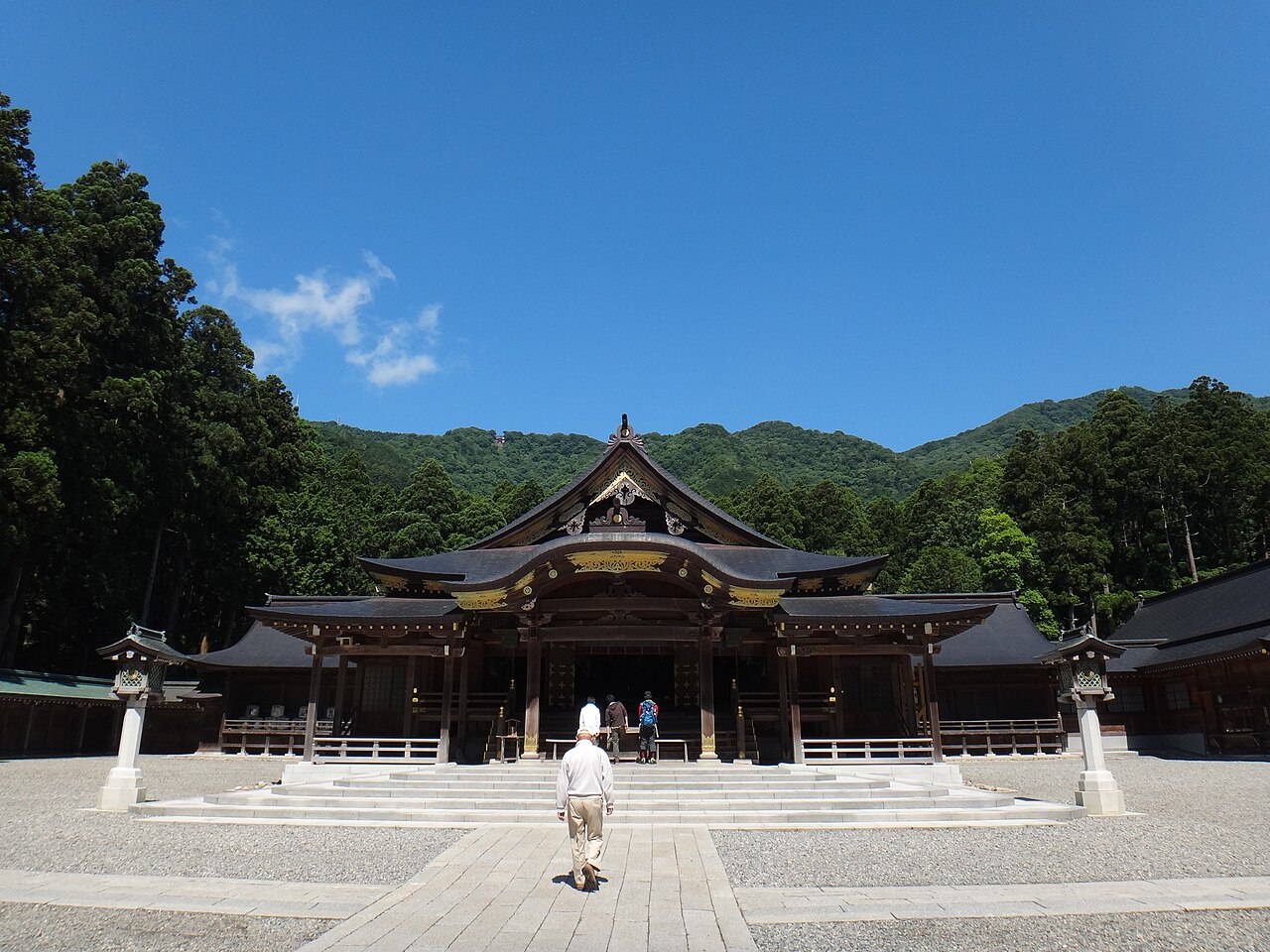
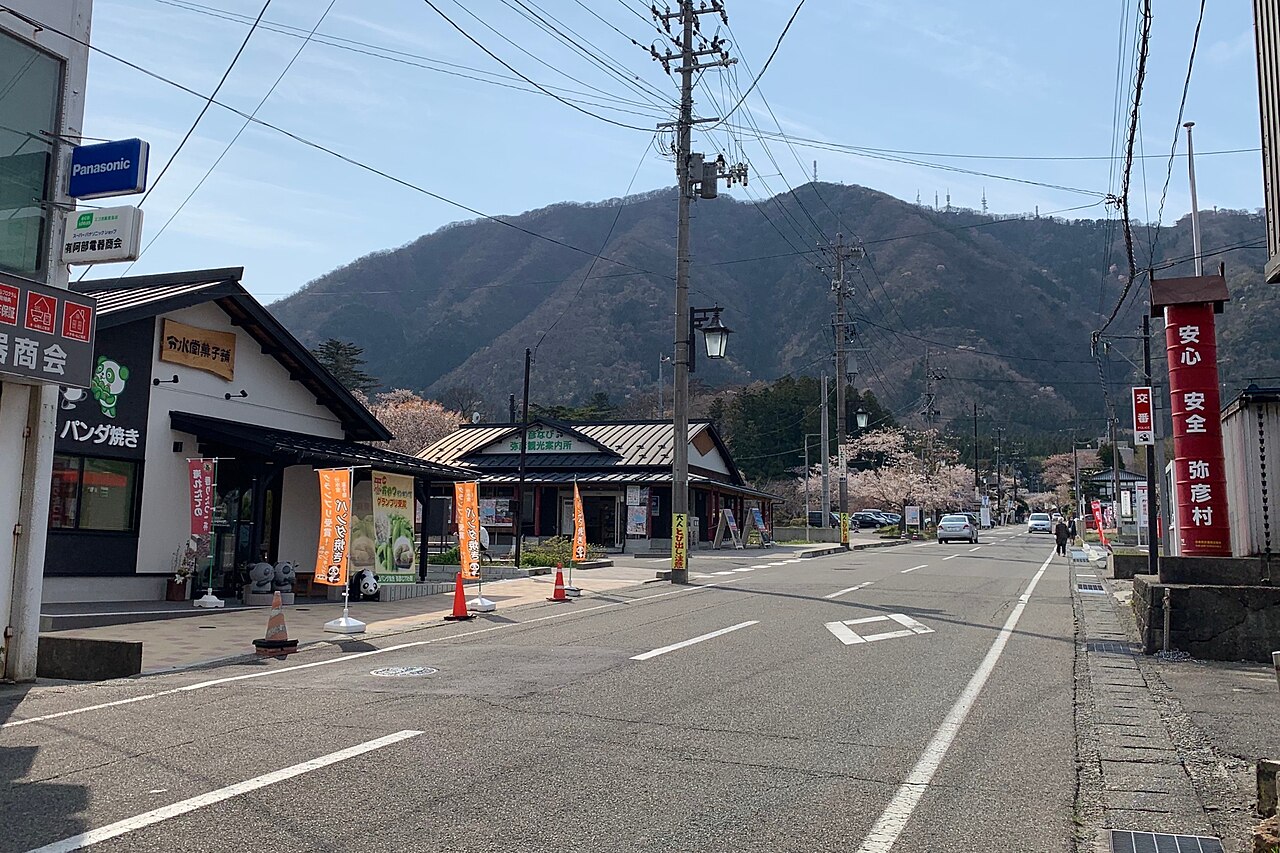
Yahiko Shrine stands at the south-eastern foot of Mount Yahiko in Niigata Prefecture, where a Meiji-era gazetteer places it, with the forested slope rising directly behind its halls. The written record describes it as the first shrine of Echigo Province, a regional great shrine with old ties to the imperial court.
The place suits a half-day on foot: the shrine is a short walk from Yahiko Station, a free shuttle links the worship hall to the ropeway, and the hot-spring inns in the village take day visitors for a bath on the way back. Below is how the pieces fit, with the figures as they were listed.
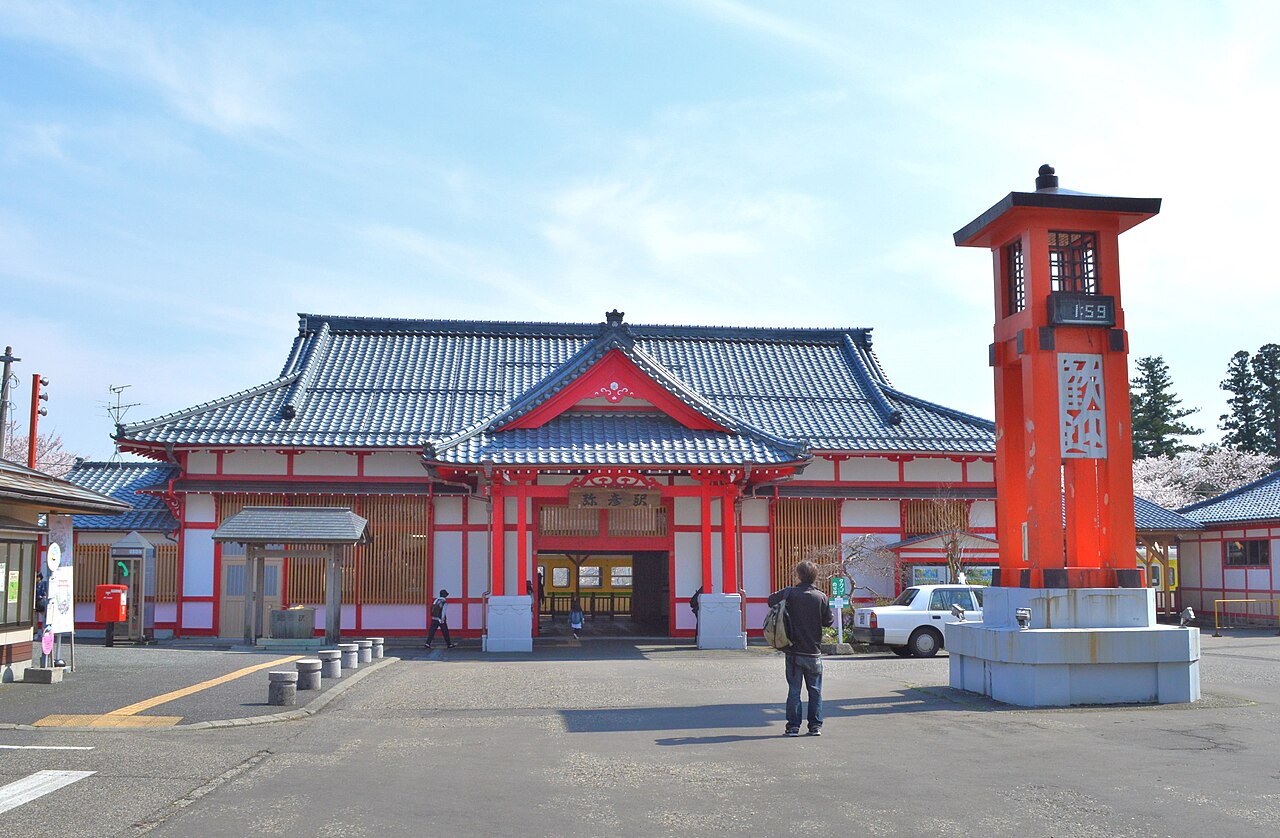
Getting to Yahiko Shrine from Yahiko Station
The simplest approach is on foot from Yahiko Station, about a fifteen-minute walk to the shrine grounds. If you arrive by car or coach instead, the parking lot on the shrine side is about a five-minute walk from the worship hall. Either way, the last stretch is walked, which is part of the point of coming here.
Taxis are the alternative if you are starting from a larger station in the area or travelling with luggage. The approximate journey times from the nearby stations are set out below; the fares are not included, so ask the driver for an estimate before setting off.
| From | Taxi to Yahiko Shrine |
|---|---|
| Tsubame-Sanjo Station | about 30 minutes |
| Higashi-Sanjo Station | about 40 minutes |
| Yoshida Station | about 10 minutes |
Inside the shrine grounds
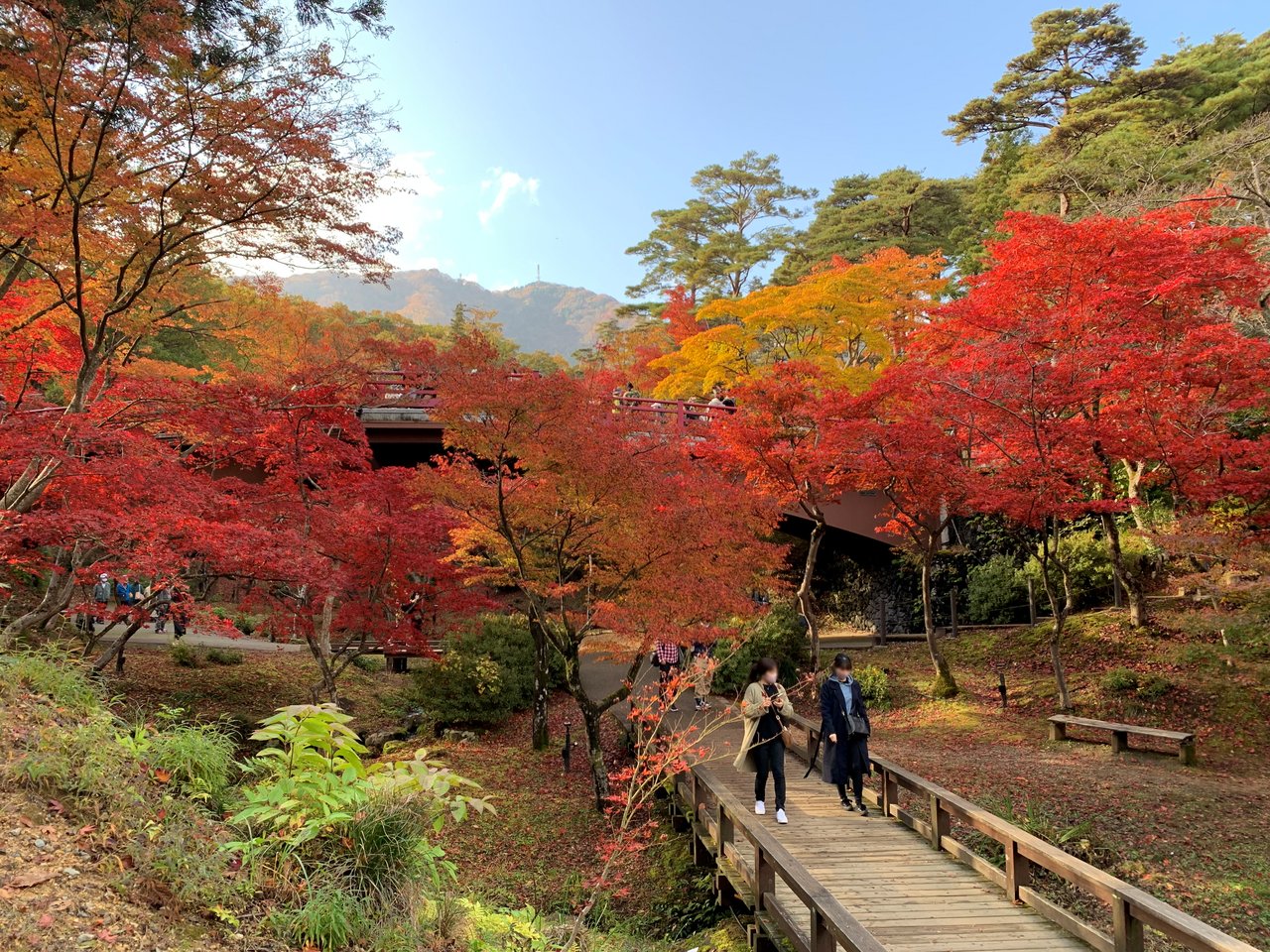
The approach runs through a broad shrine forest in which cedars of great age stand close together, a setting the written record describes as mysterious, and the path brings you out at the worship hall with the mountain directly behind it. It is a walk worth taking slowly rather than hurrying through on the way to the ropeway.
The Treasure Hall holds the shrine's collection and is the part of the grounds that charges admission. It closes on Mondays, or on the following day when the Monday is a holiday, and stays shut through January and February, so check the day of the week before you build the visit around it.
| Treasure Hall | As listed |
|---|---|
| Hours | 09:00–16:00; closed Mondays (the next day if Monday is a holiday) and throughout January and February |
| Admission | 300 yen adults, 200 yen high school and university students, 100 yen elementary and junior high school students |
| Group admission (10 or more) | 200 yen adults, 100 yen high school and university students, 50 yen elementary and junior high school students |
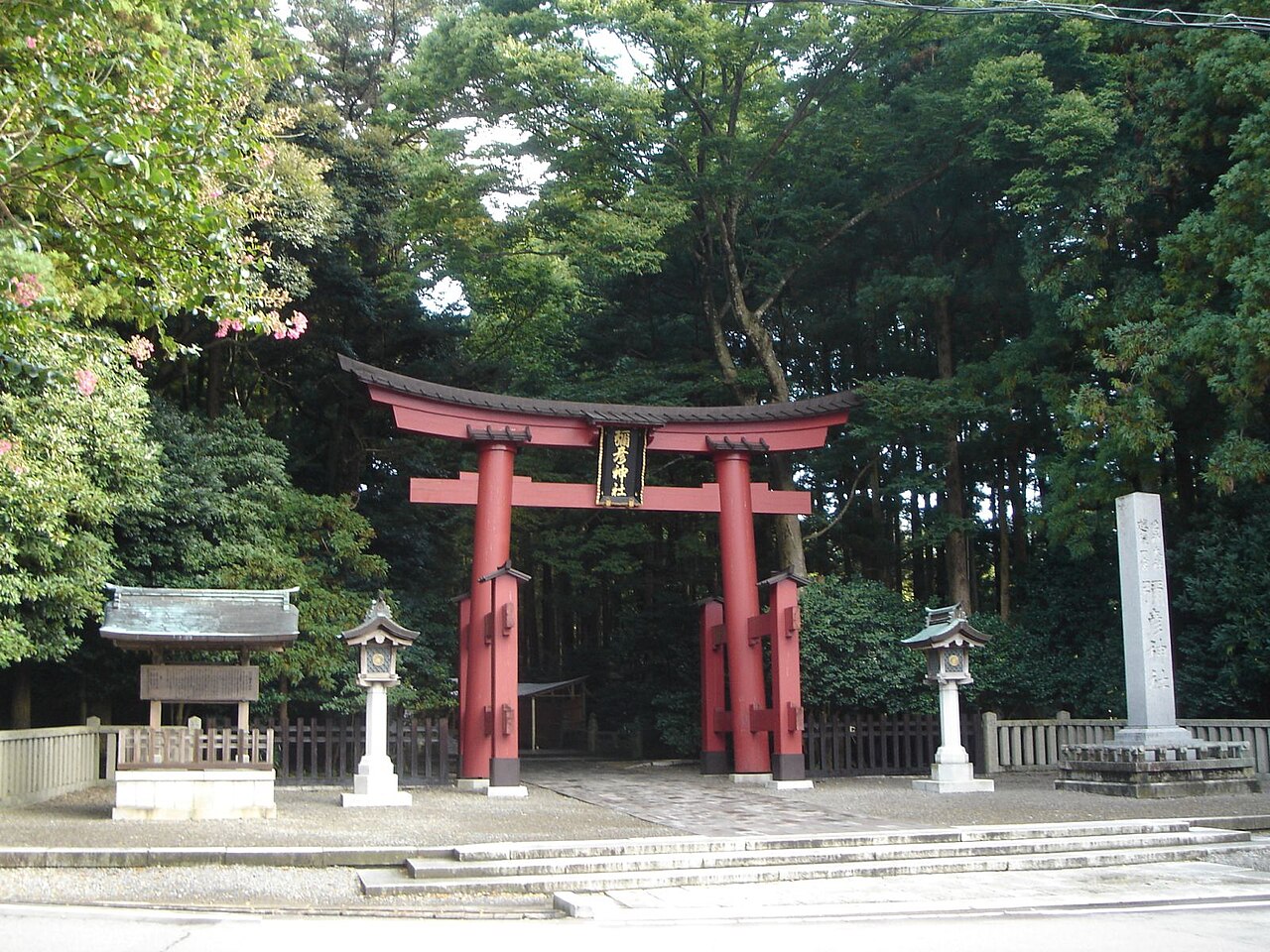
The vermilion torii stand among the trees with stone lanterns on both sides, and a slow loop of the grounds fits easily before you move on to the mountain. The halls are the destination, but the walk under the cedars is what sets the shrine apart from a roadside stop.
Up Mount Yahiko by ropeway
From beside the worship hall, a free shuttle bus runs to the base station of the Yahiko-yama Ropeway, a ride of about two minutes. The cabin then climbs from the base station to the summit station in about five minutes, so the move from shrine to mountaintop is a short one.
The ropeway publishes its times as the day's information rather than a fixed timetable, so treat the figures below as what was listed and confirm them when you arrive. Fares include tax, and the Panorama Tower is ticketed separately from the ride itself.
| Yahiko-yama Ropeway | As listed |
|---|---|
| Departures | first 09:00, last up 16:40, last down 17:00, every 15 minutes |
| Adult round trip | 1,500 yen (tax included) |
| Other individual fares | adult one way 800 yen; child round trip 750 yen; child one way 400 yen (tax included) |
| Panorama Tower | 650 yen adults, 350 yen children (tax included) |
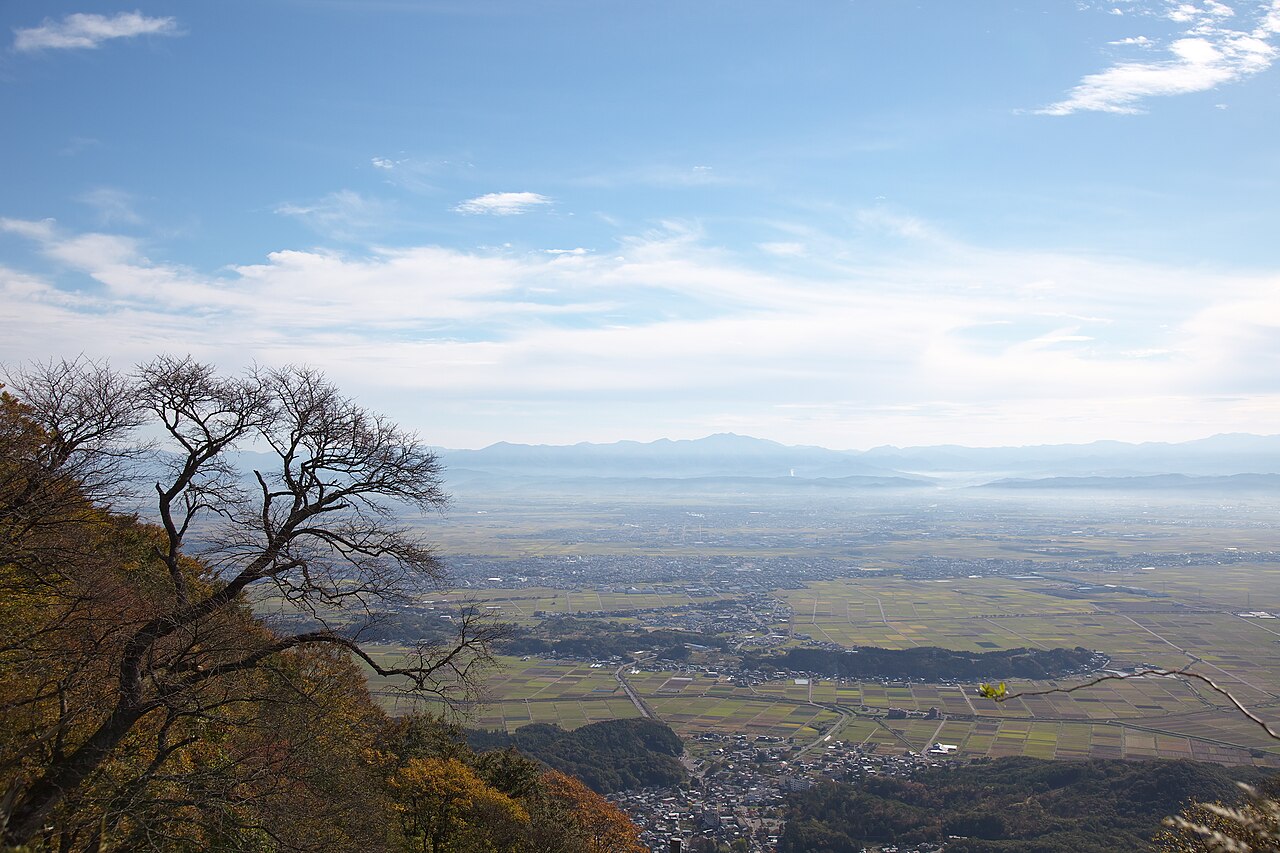
The reward at the top is the long view over the Echigo plain, with fields and the town below and mountain ranges in the distance. Come back down with the last descent in mind, which is listed later than the last ascent, and leave yourself time for the bath that follows.
Where to stay
Places to stay near Yahiko, Niigata →
Disclosure: This post may contain affiliate links. If you book through them, we may earn a commission at no extra cost to you.
A hot-spring bath before heading home
The village below the shrine is a hot-spring town, and several of its inns open their baths to day visitors, each with its own admission and its own window of hours. Those windows differ a good deal from inn to inn, which is where the afternoon planning comes in.
| Inn | Item | As listed |
|---|---|---|
| Sakura no Yu | Day-trip bath admission | 1,150 yen adults, 650 yen children |
| Sakura no Yu | Day-trip bathing hours | 10:00–22:00 |
| Minoya | Day-trip bath admission | 1,000 yen adults, 500 yen children |
| Minoya | Day-trip bathing hours | 11:30–15:00 |
| Myoga-ya | Day-trip bath admission | 1,000 yen adults, 700 yen children |
| Myoga-ya | Day-trip bathing hours | 10:00–17:00 |
| Kappo no Yado Sakuraya | Day-trip bath admission | 1,000 yen adults, 500 yen children |
| Kappo no Yado Sakuraya | Day-trip bathing hours | 10:00–15:00 |
| Yamamotokan | Day-trip bath admission | 750 yen adults, 350 yen children |
| Yamamotokan | Day-trip bathing hours | 11:00–16:00 |
Names like Kappo no Yado Sakuraya are inns as much as baths, so the soak can become the evening rather than a stop on the way out. Sakuraya charges one thousand yen for an adult day-trip bath and five hundred yen for a child; compare places to stay in Yahiko if the day is turning into a night.
Watch the closing times. Some of the baths shut in the middle of the afternoon, so the sensible order is mountain first and bath last, and the inns with the longer windows are the ones to lean on if the summit keeps you longer than planned.
What the old gazetteers say about Yahiko
The written record describes the deity as Ame-no-Kagoyama-no-mikoto, known locally and fondly as Oyahiko-sama. A Meiji-era gazetteer records that the shrine, as the first shrine of Echigo, had long been revered across the province. The deity is said to be a great-grandchild of Amaterasu who descended here under Emperor Jimmu, subdued local foes and taught farming, sericulture and manners.
The halls are said to have been first raised at Emperor Sujin's command and repaired under the sovereigns Gemmei and Murakami. In another account the builder is said to have been the deity's descendant in the seventh generation. A later imperial order is said to have enlarged the precinct, and the deity is credited with relief in drought and epidemic.
The gazetteer lists a main sanctuary, an offering hall, a worship hall and a hall of votive plaques, with the Mitarashi stream beside the middle torii. A large plaque reading Shogu Daimyojin is said to be in the hand of the calligrapher Ono no Tofu. Outside the gate, the gazetteer describes a village centre of inns living from the pilgrims.
The gazetteer puts the inner sanctuary on a flat patch at the summit's southern end, beside a pair of stone-piled burial mounds ringed with a stone fence. From there the view is said to take in the plains of Koshi, Santo and Kanbara, the Shinano River, the Sea of Japan and Sado, and the peaks of the provinces beyond.
Putting the day together
- Walk from Yahiko Station to the shrine, allowing about fifteen minutes.
- Pay your respects at the worship hall, and look into the Treasure Hall if it is open that day.
- Take the free shuttle bus from beside the worship hall to the ropeway base, about two minutes.
- Ride up, about five minutes, and come down with the last descent in mind.
- Finish with a day-trip bath at an inn, then walk back to Yahiko Station.
If the half-day feels too short, the inns make the natural base: Yamamotokan, for example, lists a day-trip bath at seven hundred and fifty yen for adults and three hundred and fifty yen for children, and places to stay in Yahiko is where to compare the rest. A small number of tours that include Yahiko are listed as well.