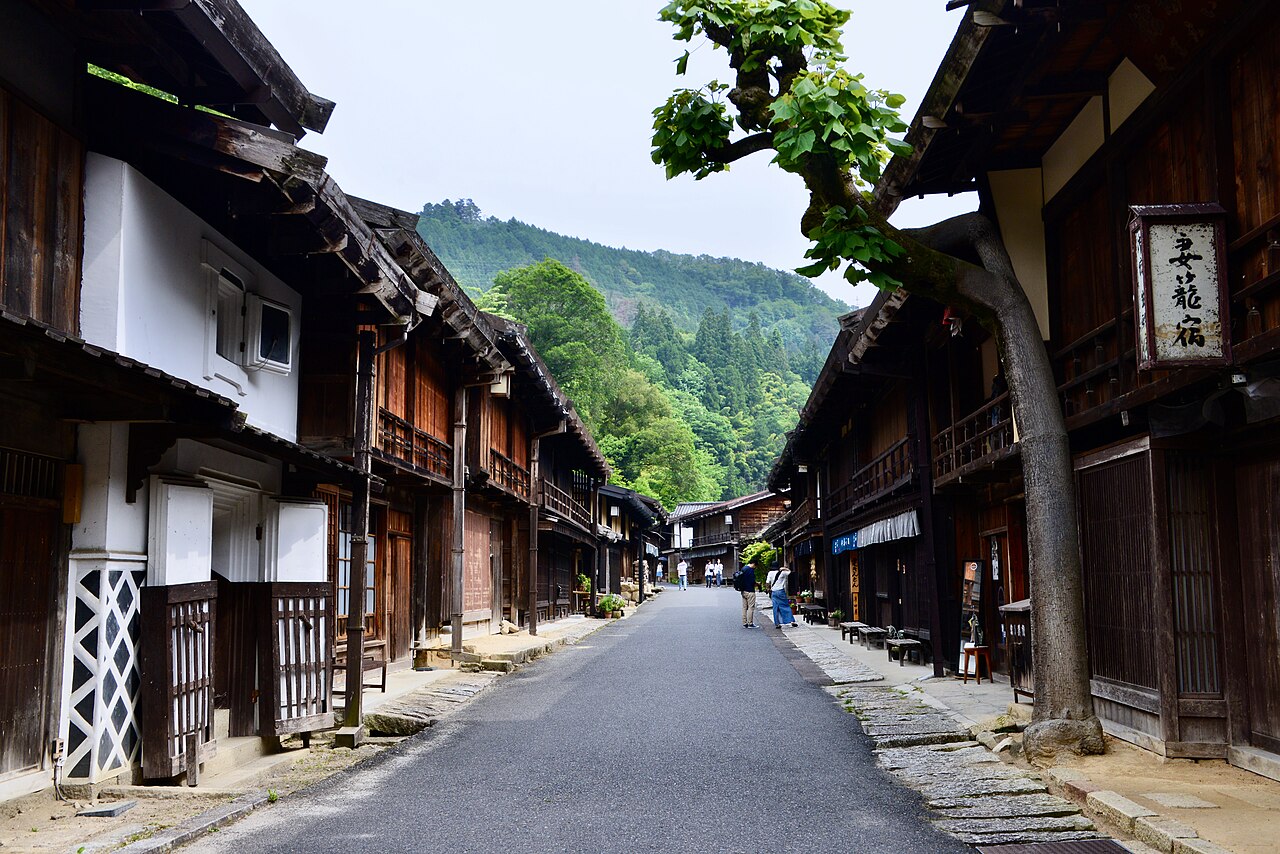
Tsumago-juku is a post town on the old Nakasendo in the Kiso region of Nagano, and its street is preserved as a district of traditional buildings. This guide covers the way in from Nagoya through Nagiso Station, what to look at along the street and inside the Waki-honjin Okuya, how the town's long-vanished barrier appears in old records, and how to carry on over Magome Pass to Magome with your luggage sent ahead. The costs of the day are gathered at the end.
Getting to Tsumago-juku from Nagoya
The Limited Express Shinano from Nagoya Station reaches Nagiso Station in about an hour. Guidebooks describe Nagiso as the southern end of the Kiso region, about thirty-five kilometres south of Kiso town and about twenty-three kilometres from Nakatsugawa in Gifu, so the post town sits close to the prefectural border it shares with Magome.
From JR Nagiso Station a taxi to Tsumago-juku takes about ten minutes. On foot the same stretch takes about forty minutes, a fair opening walk if you travel light. The local sightseeing taxi lists its business hours as seven in the morning to seven in the evening.
The town bus on the Magome line charges by section, and the table below gives the fares for the town section from Nagiso Station, for the out-of-town section from Magome Pass to Magome, and for riding from the station across both. Children of elementary school age pay a reduced fare and preschool children ride free.
By car, Tsumago-juku is about twenty-five minutes from the Misaka Smart IC on the Chuo Expressway by way of the prefectural road over Magome Pass. The town-run car parks charge five hundred yen per day for a passenger car. The street inside the post town is closed to vehicles from ten in the morning to four in the afternoon, so leave the car at the edge and walk in. The Tsumago Tourist Information Center is open from half past eight in the morning to five in the afternoon, and makes a sensible first stop.
| Getting to Tsumago-juku: times, fares and hours | Detail |
|---|---|
| Limited Express Shinano, Nagoya Station to Nagiso Station | about 1 hour |
| Taxi, JR Nagiso Station to Tsumago-juku | about 10 minutes |
| On foot, JR Nagiso Station to Tsumago-juku | about 40 minutes |
| Town bus, Magome line, town section from Nagiso Station (adults / elementary school children / preschool children) | 300 yen / 100 yen / free |
| Town bus, Magome line, out-of-town section from Magome Pass to Magome (adults / elementary school children / preschool children) | 300 yen / 100 yen / free |
| Town bus, Magome line, Nagiso Station to beyond Magome Pass, both sections (adults / elementary school children / preschool children) | 1,000 yen / 500 yen / free |
| By car from Misaka Smart IC, Chuo Expressway, over Magome Pass | about 25 minutes |
| Town-run car parks, passenger car, per day | 500 yen |
| Vehicles inside Tsumago-juku | no entry 10:00 to 16:00 |
| Nagiso sightseeing taxi, listed business hours | 7:00 to 19:00 |
| Tsumago Tourist Information Center, business hours | 8:30 to 17:00 |
Walking the Old Street of Tsumago-juku
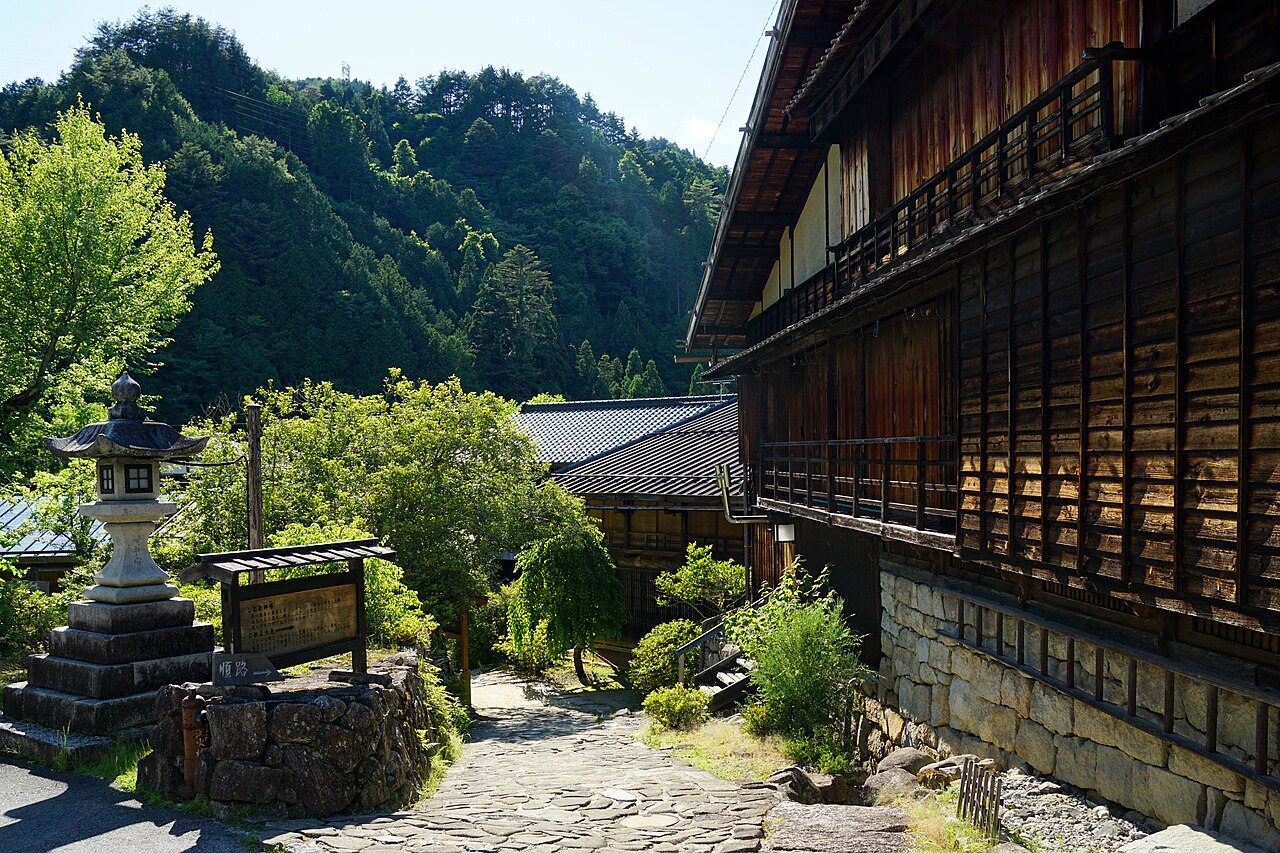
Guidebooks describe Tsumago as the forty-second of the sixty-nine post towns counted from Edo along the Nakasendo, a crossroads where the Nakasendo met the Ina Kaido and prospered on the traffic between them. The street you walk today, though, owes its shape to a decision made in living memory.
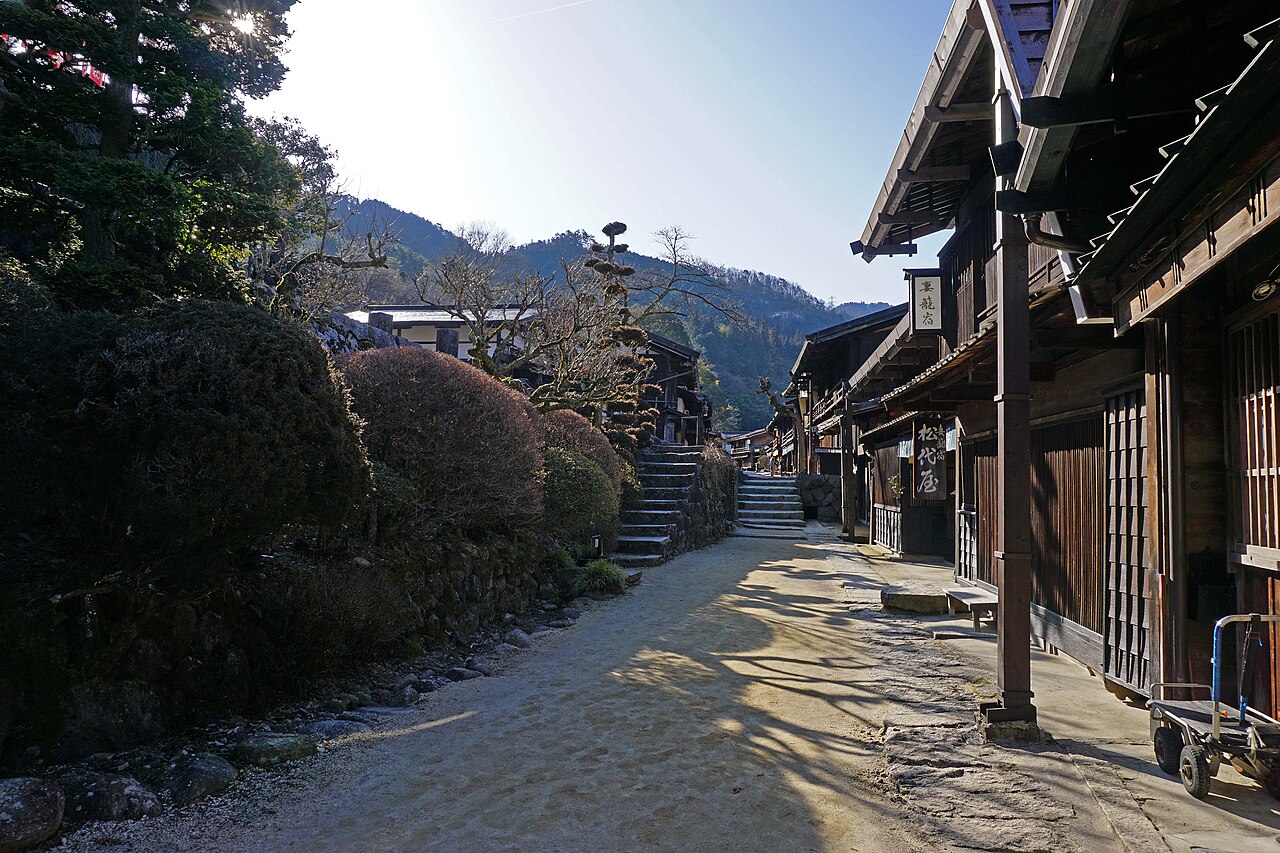
In the Showa era residents are said to have organised a preservation movement under the slogan of not selling, not renting and not destroying, and in the nineteen-seventies the town was selected as an Important Preservation District for Groups of Traditional Buildings. The Terashita quarter is described as the place where that movement began, and its buildings keep Edo-period features such as upper storeys carried out on projecting beams and closely set vertical lattices.
Take the lane slowly. It bends as it goes, stone lanterns stand at the turns, and the wooded hills close the view at the end of the street.
Where to stay
Disclosure: This post may contain affiliate links. If you book through them, we may earn a commission at no extra cost to you.
Waki-honjin Okuya and the History Museum
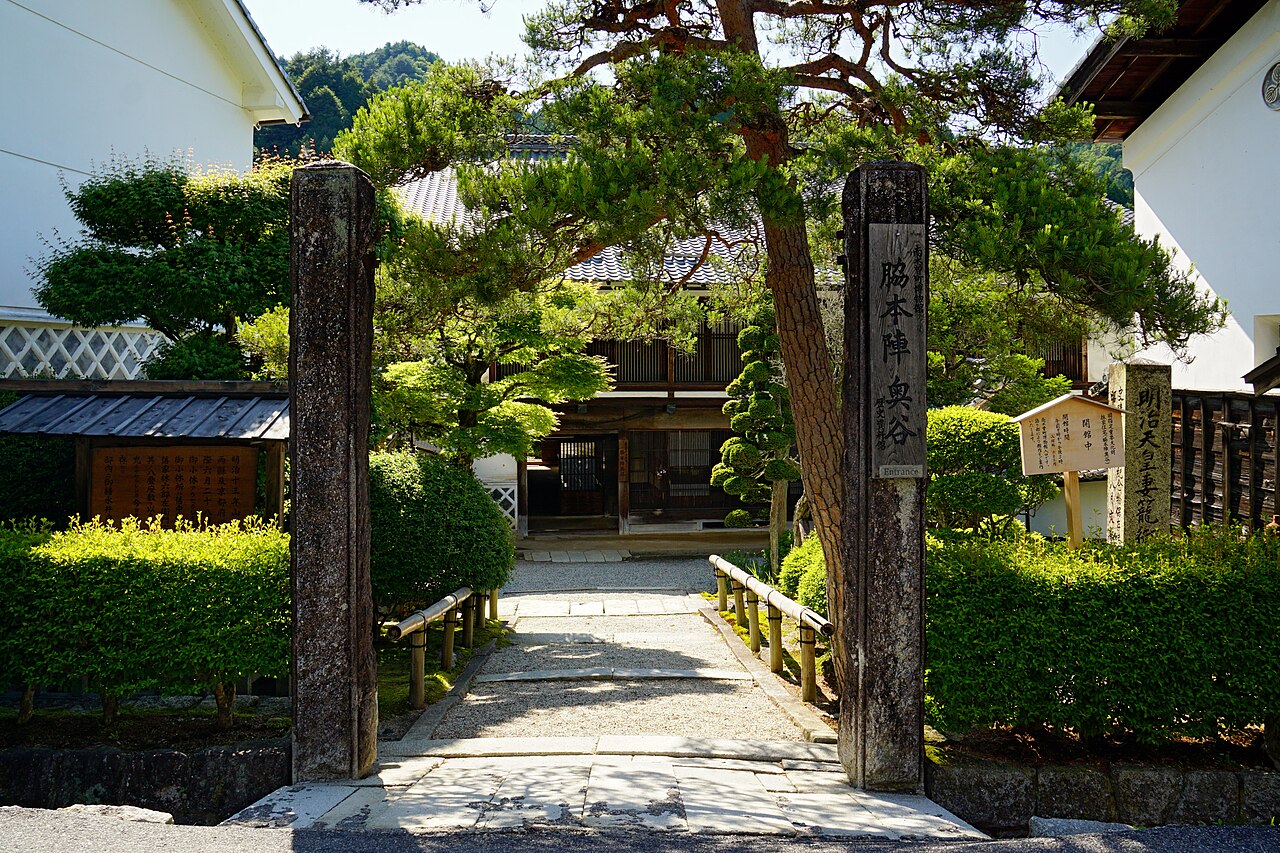
Guidebooks describe Waki-honjin Okuya as a house rebuilt entirely in hinoki cypress in the tenth year of Meiji and now a nationally designated Important Cultural Property. It is also described as the house into which the first love of the novelist Shimazaki Toson married, and the light through its lattice windows is described as its signature. The entrance is marked by stone gateposts bearing the name, with a gravel path between pines leading to the house.
Admission to Waki-honjin Okuya and the History Museum is eight hundred yen for adults and four hundred yen for elementary and junior high school students. A hands-on session making a coaster in the manner of the local hinoki hats is listed at a guideline fee of two thousand yen per person.
Tsumago's Barrier in Old Records
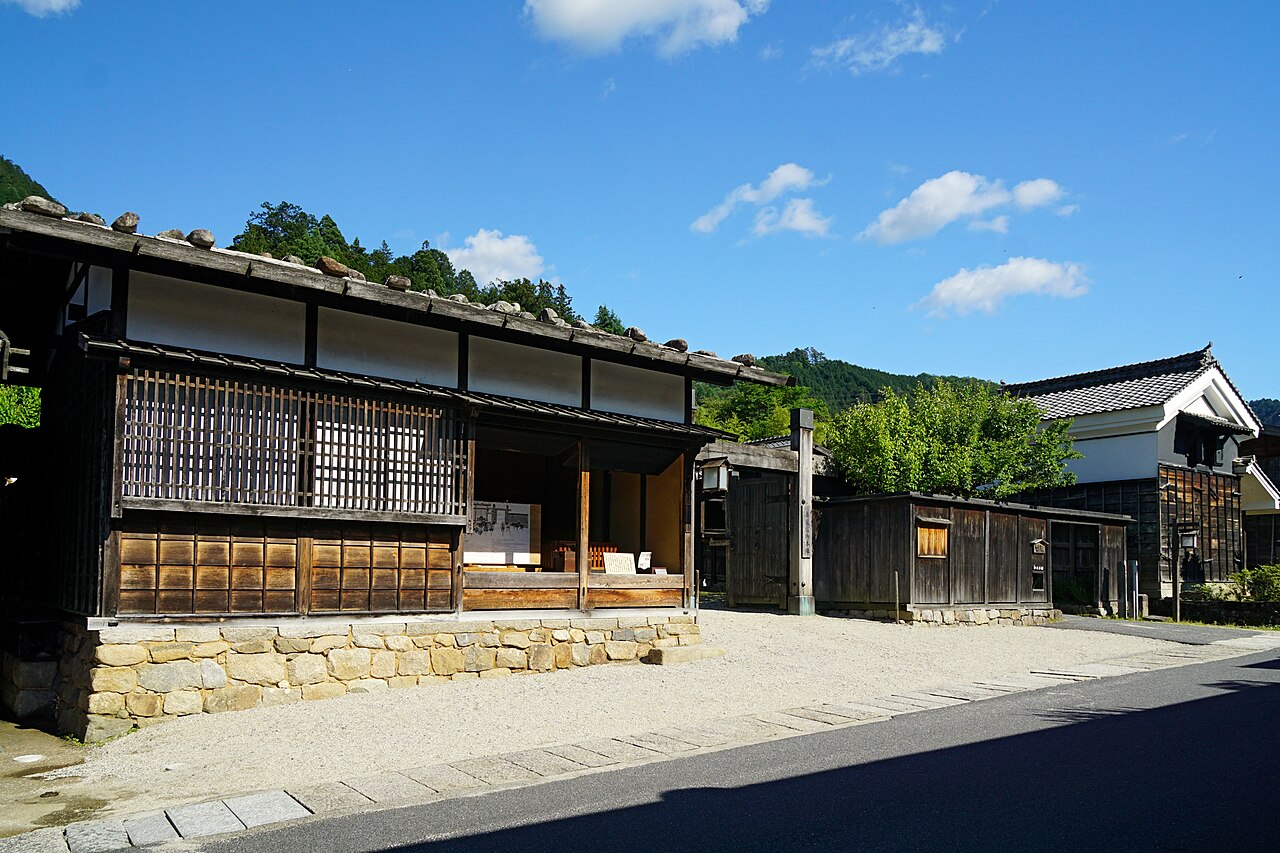
The post town also had a role as a gate. According to local histories, in the early Edo period, when the Yamamura family administered Kiso under Okubo Nagayasu, two barriers carried particular weight: Tsumago at the southern entrance to the valley and Niekawa at the northern one.
The same histories are said to record that as the Fukushima barrier, already standing around the time of the battle of Sekigahara, rose to become the central checkpoint of the Kiso road, the Tsumago barrier was abolished and the Niekawa post slipped out of the shogunate's records. A drawing of the Tsumago barrier is said to survive, held on deposit at the Nagoya City Museum, so the vanished gate remains at least on paper.
Over Magome Pass to Magome
Beyond the town, Otsumago is described as an area where the air of an Edo post town remains strong, with traditional houses bearing sode-udatsu wing walls lined along the old road. Guidebooks describe Magome Pass as the point on the border between Nagano and Gifu where the old Nakasendo footpath meets the prefectural road, marked by a boundary signpost. Between the two post towns, the Odaki and Medaki waterfalls are described as a setting in Yoshikawa Eiji's novel Miyamoto Musashi.
Magome itself is described as the forty-third post town from Edo, the birthplace of Shimazaki Toson, author of Before the Dawn, and a resting place for travellers crossing the pass. Past the houses of Magome the road is said to continue as stone paving that keeps the look of the old highway. Guidebooks describe two cultural facilities in Magome, the Magome Waki-honjin Museum and the Toson Memorial Museum, with displays on the post town's history and on Toson.
The choice between hill and river is an old one. According to local histories, two routes once led from Tsumago to Nakatsugawa in Mino: a newer road following the Kiso River and an older road through the mountains. The river road is described as easier going and rich in scenery, the way travellers preferred. The mountain road is described as a rugged path with many hard stretches, but with the particular appeal of passing through the old post town of Magome, once called the gateway of Kiso.
Luggage, Momosuke Bridge and What the Day Costs
The baggage transport service between Tsumago, Otsumago and Magome costs a thousand yen per piece. Guidebooks describe it as the way to hand over large bags and set out on the hike unburdened. A special trip is priced at four thousand five hundred yen per trip for up to three pieces. On a special trip, a fourth piece and beyond add a thousand yen per piece.
Back at Nagiso, guidebooks describe the Momosuke Bridge as a wooden suspension bridge over the Kiso River, built in the eleventh year of Taisho as a haulage route for the Yomikaki power plant, and now a nationally designated Important Cultural Property that is lit up at night. It stands within walking distance of Nagiso Station, which makes it an easy bookend to the day.
If your dates land in late November, guidebooks describe a procession held each year on the twenty-third, in which more than a hundred residents dressed as samurai, ronin, bird-chasing women, couriers and komuso monks recreate the manners of the Edo period.
| What the day costs | Detail |
|---|---|
| Waki-honjin Okuya and the History Museum, admission (adults / elementary and junior high school students) | 800 yen / 400 yen |
| Hinoki-hat coaster making, guideline fee per person | 2,000 yen |
| Baggage transport between Tsumago, Otsumago and Magome, per piece | 1,000 yen |
| Special-trip baggage transport, per trip, up to 3 pieces | 4,500 yen |
| Special-trip baggage transport, each piece from the fourth | 1,000 yen per piece extra |
Fares, fees and hours change, so check official information before visiting. With the day mapped out, you can browse guided tours around Tsumago and Magome for your dates. If one day feels short, have a look at places to stay around Nagiso and give the valley an evening as well.