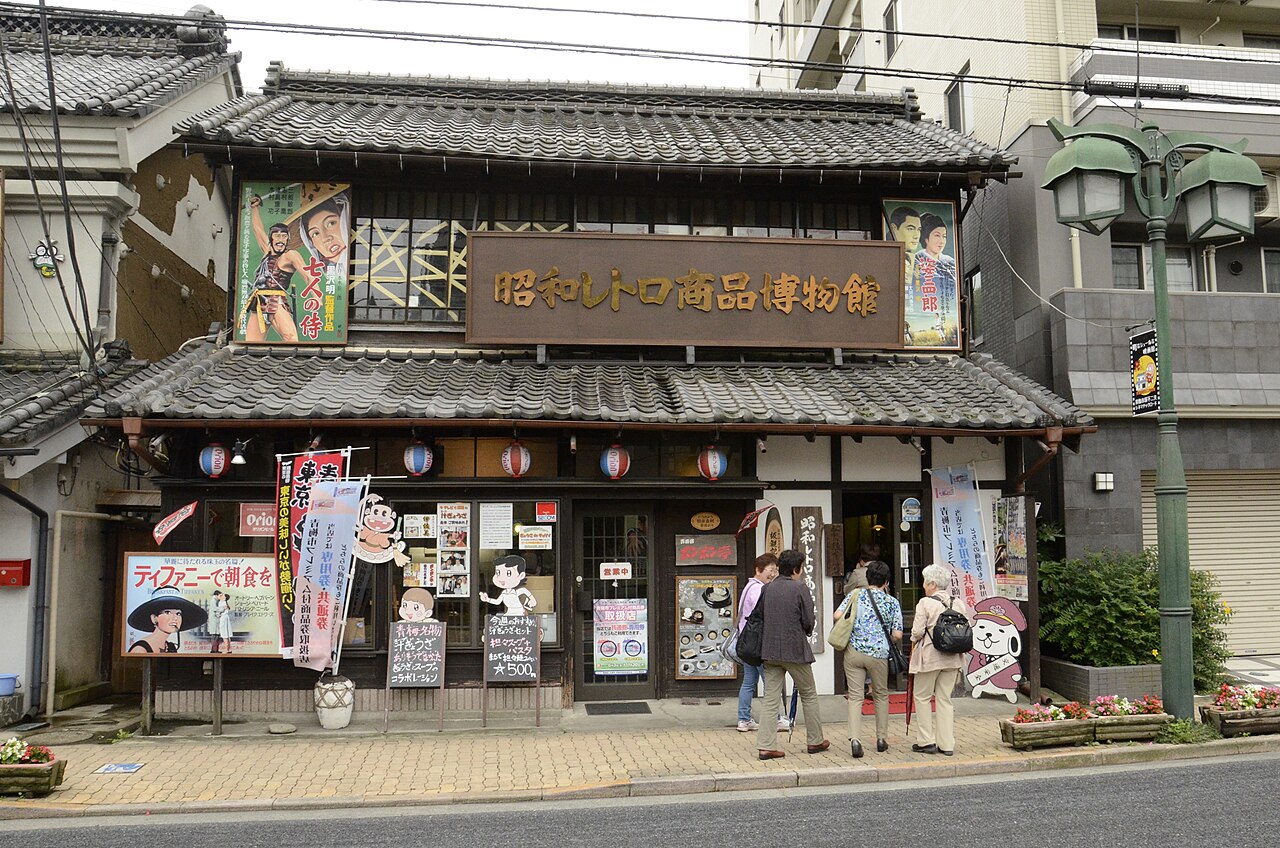
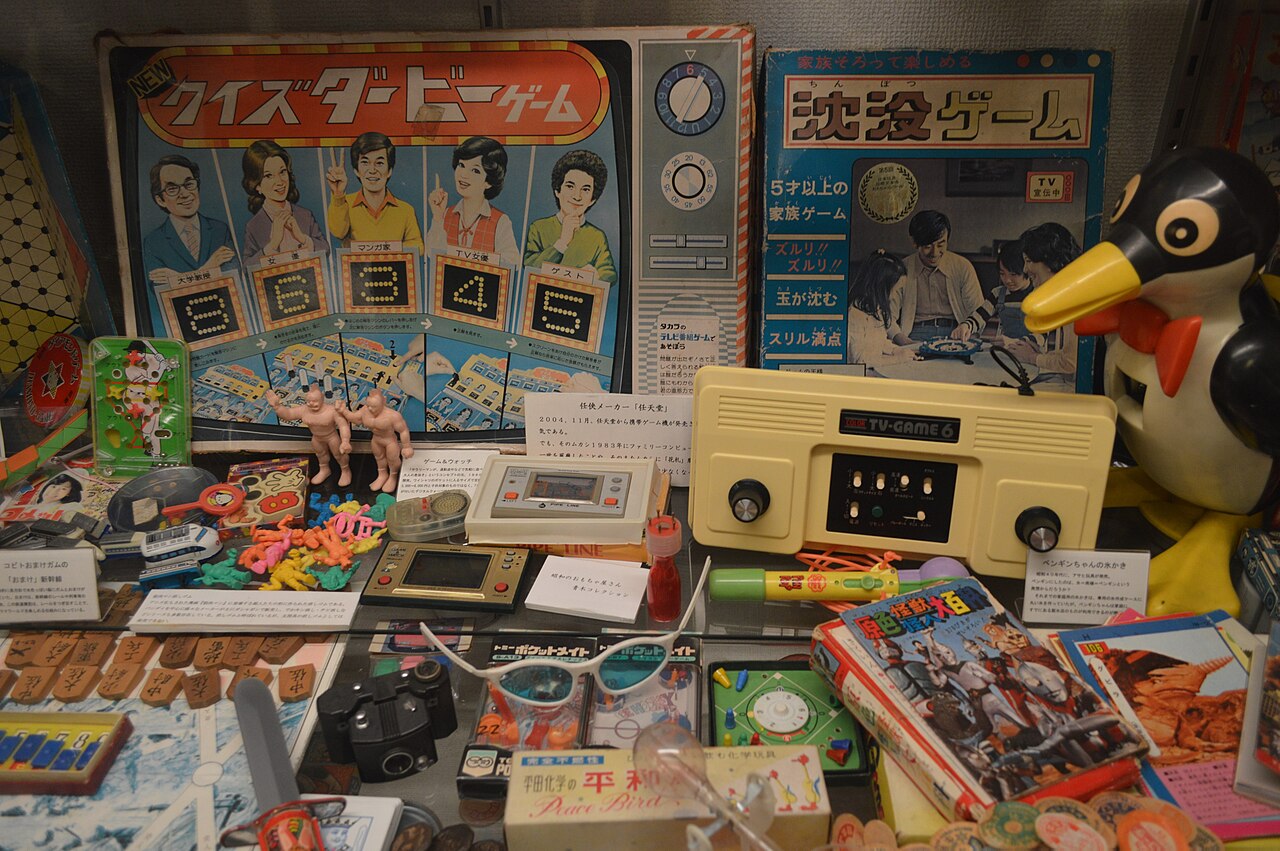
Ome is a Showa retro post town in Tokyo where the Showa Retro Packaging Museum fills a wooden building that began life as a furniture shop, and where Tsumo-tei, a residence from the same era, pours coffee and matcha in its tea room. Elsewhere in the town, steam locomotives and a Series Zero Shinkansen car stand outdoors at Ome Railway Park, and a lookout plaza in the Ome hills looks over the town to central Tokyo far away. It is a place for a day of small museums and long views, with a bowl of Tokyo-X curry udon in between. It suits anyone who wants an older Tokyo that is still inside Tokyo.
Showa Retro Museums and the Tsumo Residence
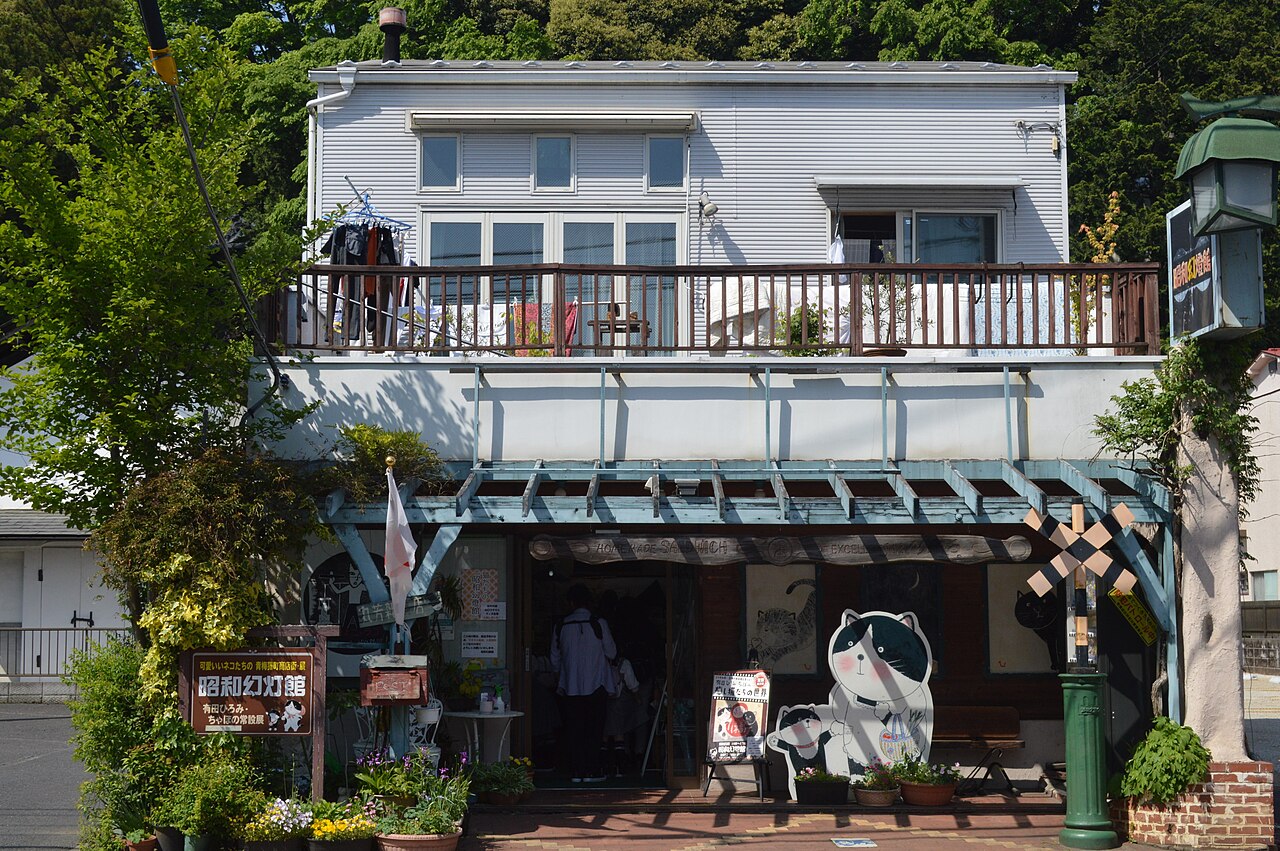
Visitors to the Showa Retro Packaging Museum step into a wooden building that was originally a furniture shop, so the building itself is part of what there is to see. A second, small Showa hall keeps a permanent exhibition of works by two artists, one working in ink painting and the other in stuffed toys.
Tsumo-tei, a residence built in the Showa era as a tile-roofed irimoya-style house and now a nationally registered tangible cultural property, keeps a tea room where coffee, matcha, sencha and handmade cake come out on the Tsumo family's own tea utensils, cups, glasses and lacquered trays. Taking the two museums first and Tsumo-tei after them gives the visit a place to sit down, since the tea room is where the visit turns from looking into tasting.
Old Houses of the Post Town
Kyu Inaba Ke Jutaku is the former home of the Inaba family, who served as town elders of the Ome post town in the Edo period and made their living from a timber business and a wholesale brokerage, and what a visitor stands beside today is their earthen-walled shop storehouse. The main building is in the dozo style, a storehouse construction with earthen walls, and is thought from the way it is built to date from the late Edo period, so the walls themselves carry the age of the house.
The Old Miyazaki House is thought, from its style, to have been built in the early nineteenth century as a typical farmer's house, and its hiroma-gata floor plan and a roof thatched by alternating cedar bark with thatch, a method particular to this area, are what a visitor sees in it today. Seeing the merchant's earthen walls and the farmer's bark-and-thatch roof one after the other is the point of the pairing, because the two houses show two ways the same town was built.
Steam Locomotives and a Shinkansen at the Railway Park
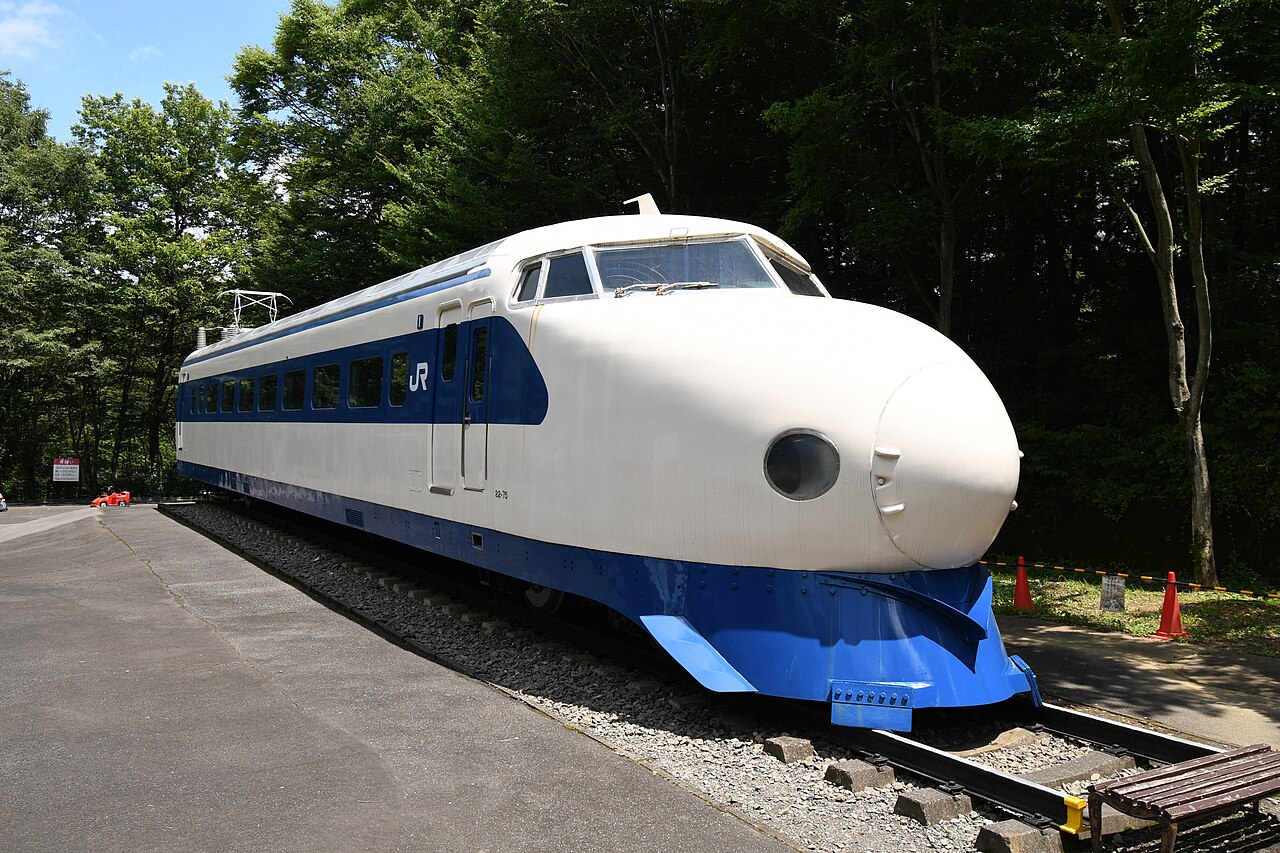
Ome Railway Park keeps its historically valuable vehicles outdoors, so a visit means walking around steam locomotives and a Series Zero Shinkansen car of the type that ran on the Tokaido Shinkansen when that line began. The two kinds of vehicle, steam and Shinkansen, stand in the same park, which is what earns the stop its place on a day otherwise spent in old houses.
Curry Udon, Soy Soft Serve and Storehouse Dining
A noodle shop in Ome serves Tokyo-X curry udon, a curry nanban topped with pork from a breed improved at a Tokyo livestock experiment farm in Ome, on very thick flat noodles with elasticity and a chewy bite. The noodles are as much the reason to order it as the pork, because cut this thick and flat they keep their bounce under the curry.
A tofu workshop makes a soy-milk soft serve that is sixty percent soy milk, and a confectioner sells Ome kuzukiri and a plum-shaped bun filled with bean paste. Mayugura, a dining room and gallery inside a storehouse, holds live events and workshops that use the rich acoustics of the storehouse construction, so the construction of the building is part of what is heard. A workable order is the curry udon first, the soft serve or a sweet after it, and Mayugura last, since a live event there is something to stay for rather than pass through.
Hill Trails, a Lookout and the Tama River
A hiking trail crosses the Ome hills from a pass to a shrine, and partway along it a lookout plaza with nothing in the way of the view takes in Ome's town below and, far off, central Tokyo. Aircraft from an air base pass overhead at the plaza, so the long view across to the capital comes with planes crossing above it.
Kamanofuchi Park is laid out as one piece with the Tama River, and it is where fishing and river play take place. With a single day to spend, the lookout plaza is the pick for the long view and Kamanofuchi Park for time at the water.
A Zen temple in the town holds a Zen meditation session and a sutra-copying session, which turn part of a sightseeing day into time spent sitting still and writing by hand. After a day on the trail and at the lookout plaza, anyone wanting to stay on into the next morning can look at places to stay in Ome.
A Satoyama Cycling Course Past Temples and Farms
A cycling course named for the autumn leaves of Ome's satoyama sets out from the centre of Ome for a Zen temple, then rides on to a mushroom farm, a blueberry farm, a second temple and an onsen. It is the stretch of a visit that leaves the post town behind for temples and farms.
The Zen temple at the start of the ride is a Tokyo Metropolitan designated historic site because it keeps the typical layout of the seven halls of a Zen monastery, and that arrangement of halls is what a walk through its grounds takes in. For riders short on time, the temple and the onsen at the far end are the two stops that frame the course.
Getting to Ome
| Leg | How | Time and estimate |
|---|---|---|
| Shinjuku to JR Ome Station | Chuo line rapid bound for Ome, or change at Tachikawa | About 1 hour |
| Machida to JR Ome Station | Station to station | About 1 hour 20 minutes |
| Omiya to JR Ome Station | Station to station | About 1 hour 40 minutes |
| JR Ome Station to the Showa Retro Packaging Museum; to the Showa exhibition hall; to Tsumo-tei | On foot | About 4 minutes to the Showa Retro Packaging Museum. About 6 minutes to the Showa exhibition hall. About 6 minutes to Tsumo-tei. |
| JR Ome Station to Kyu Inaba Ke Jutaku; to Dining & Gallery Mayugura | On foot | About 10 minutes each |
| JR Ome Station to the Old Miyazaki House; to Kamanofuchi Park | On foot | About 15 minutes each |
| JR Ome Station to Ome Railway Park | On foot | About 15 minutes |
New to rural buses and one-man trains? See how to ride them, step by step.
Hours and Fees
| Place | What | Hours or fee |
|---|---|---|
| Showa Retro Packaging Museum | Admission, days and hours | 350 yen for adults and 200 yen for elementary and junior high school students. Open on Fridays, Saturdays, Sundays and national holidays, closed Mondays to Thursdays. Hours are 10:00 to 17:00. |
| Showa exhibition hall | Admission, days and hours | 250 yen for adults and 150 yen for elementary and junior high school students. Open 10:00 to 17:00, closed Mondays to Thursdays. |
| Kyu Inaba Ke Jutaku | Hours and closing day | Closed Mondays, or the next weekday if Monday is a public holiday. Open 10:00 to 17:00 from April to September and 10:00 to 16:00 from October to March. |
| Old Miyazaki House | Hours | 10:00 to 17:00 from April to September and 10:00 to 16:00 from October to March |
| Ome Railway Park | Admission, hours and closing day | Adults (junior high school age and older) 500 yen. Elementary school children 200 yen. Infants (age 3 to pre-school) 100 yen. Closed Tuesdays and over the year-end and New Year period. Open 10:00 to 16:00. |
| Ome Tourist Information Center | Hours, lunch break and lockers | A large locker costs 500 yen. Closed Mondays (open if Monday is a public holiday) and over the year-end and New Year period. Open 9:30 to 17:00 with a lunch break of 12:00 to 12:45. |
| Cycle rental shop | 4-hour rental | City bike 800 yen; cross bike 1,500 yen |
| Dining & Gallery Mayugura | Hours and closing day | Usually closed on Tuesdays. Open 11:00 to 16:30. |
Where to stay
Places to stay near Ome, Tokyo, Japan →
Disclosure: This post may contain affiliate links. If you book through them, we may earn a commission at no extra cost to you.