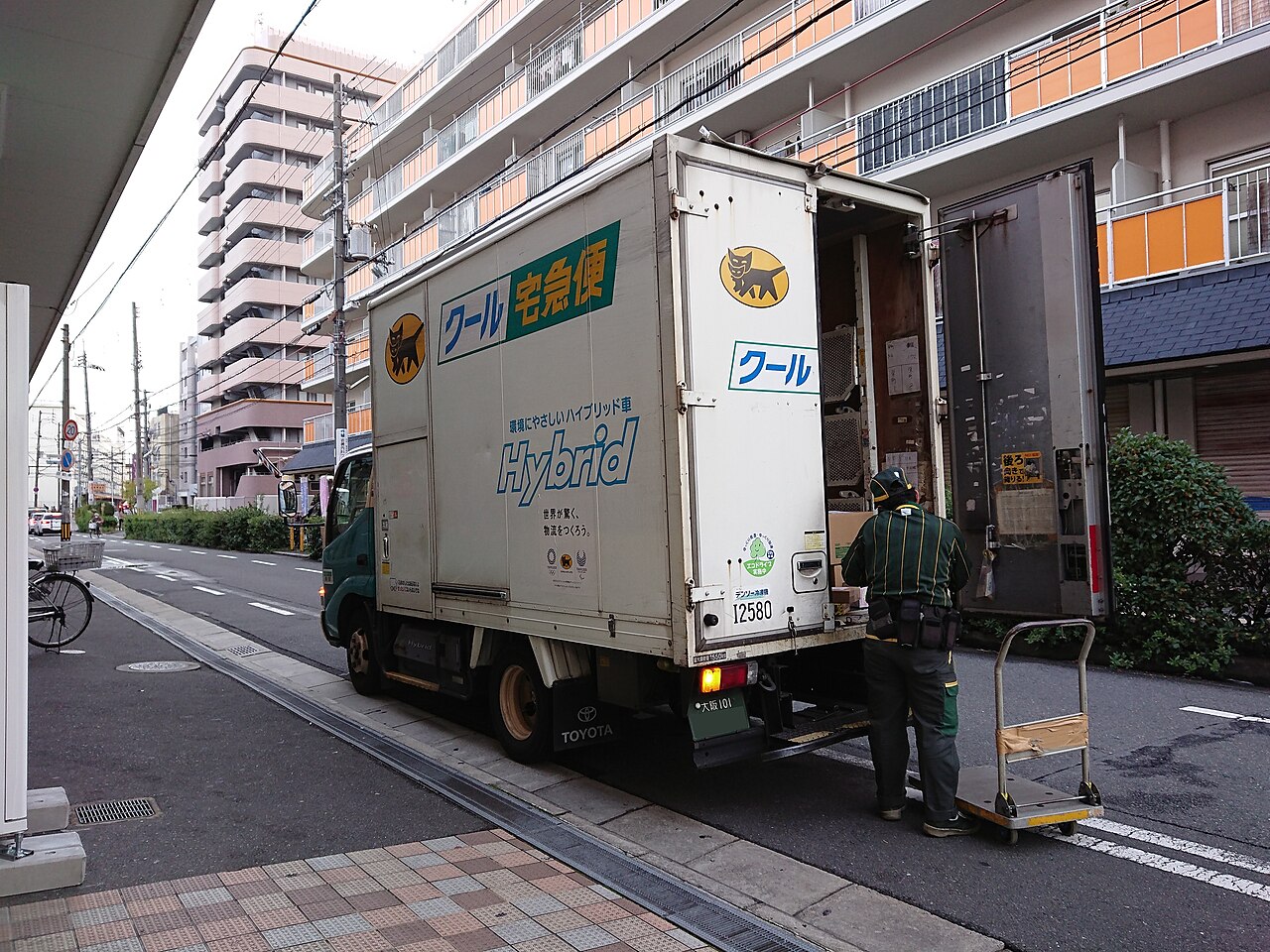
Shipping luggage to Japan before you arrive works through a customs scheme called unaccompanied articles, and it hangs on a form you hand in at entry. The name covers luggage that travels apart from you and reaches Japan on a different day. The rules here are those of Japan Customs and Japan Post, together with Yamato's unaccompanied baggage service in the United States, not those of every carrier.
On entry you hand Customs two copies of Customs Form C-5360, the Declaration of Baggage and Unaccompanied Articles, and one copy comes back to you with a confirmation stamp. Keep that stamped copy with your travel papers. Baggage sent as unaccompanied articles must be cleared within six months of your arrival.
Steps from the declaration to clearance
The sequence runs in one direction: the declaration comes first, at the moment of entry, and clearance of the shipment follows it. The points below keep to that order.
- Declare at entry. The declaration is still handed in as two copies even when the goods are sent separately from several countries. One set of paperwork therefore covers a trip with more than one starting point.
- Do not leave it for later. Unaccompanied baggage cannot be declared after entry into Japan. If boxes are on their way, the form belongs to the arrival itself and not to the days that follow.
- Mind the time limit. Goods can be cleared as unaccompanied baggage, in principle, only if they can be cleared within six months after your entry. A shipment that would land later than that sits outside the scheme.
- Read the simplified route the same way. Simplified customs clearance for goods sent separately as unaccompanied articles is, in principle, limited to goods imported within six months after your entry into Japan.
Taken together, the steps point to one planning rule. Settle what you are sending before you fly, so that the form you fill in on arrival matches the boxes that follow you.
On arrival day: what happens at the airport and after
The day begins before the flight, with paper. The existing paper version of the declaration form can still be used, and it can be printed out in advance.
At entry, you submit the Declaration of Baggage and Unaccompanied Articles to customs in two copies. One of the pair is then returned to you bearing a confirmation stamp from Customs, and that returned copy is the paper to hold on to. From this point the shipment and the stamped sheet belong together, even though the boxes are still somewhere else.
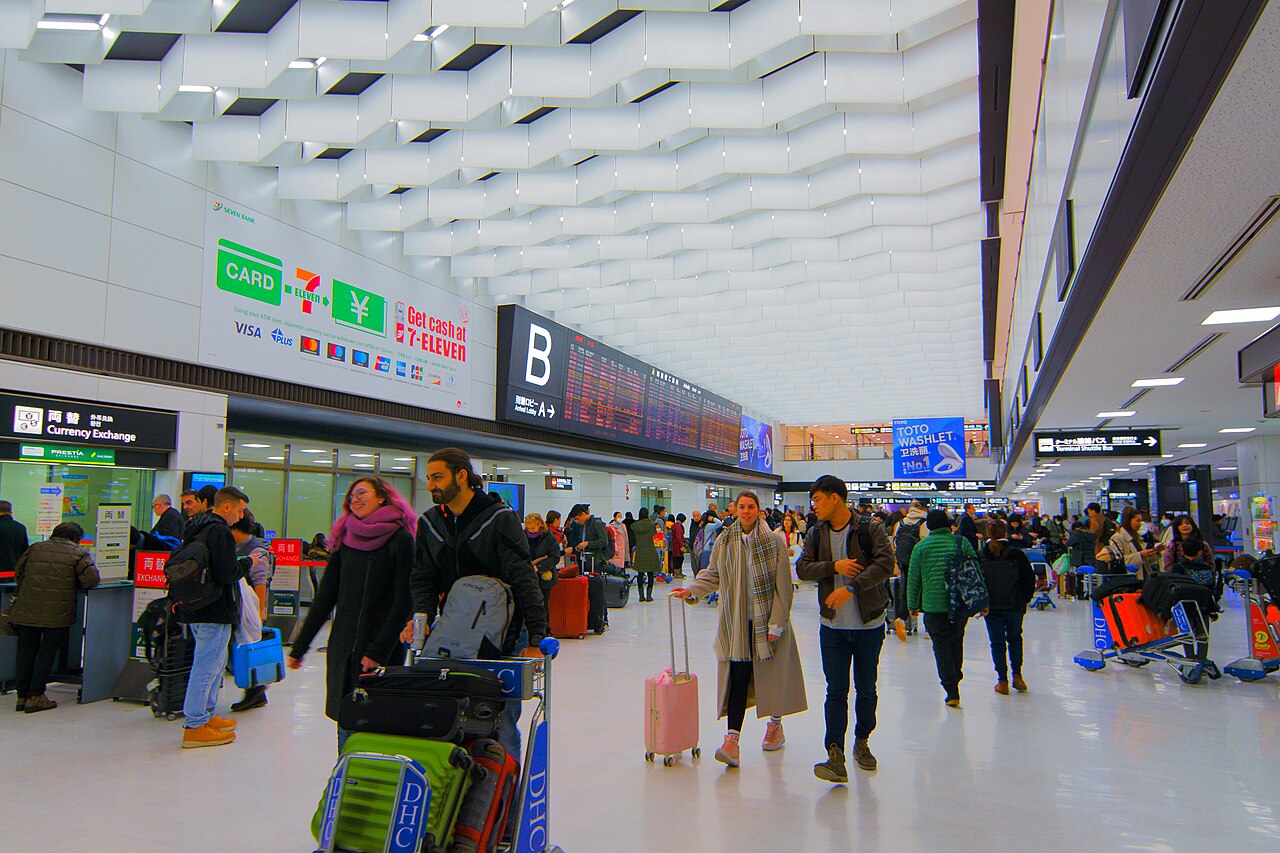
Paper is one route among others. Electronic declaration can also be carried out at some inspection desks that have an electronic declaration terminal. The Electronic Customs Declaration Gates, the e-Gates, are in place at seven international airports. Declaring on a screen does not end the matter there, because baggage may still be inspected by Customs officers even when a passenger declares electronically. Leave room in your arrival plan for that possibility.
After the airport comes the wait. Yamato's unaccompanied baggage service in the United States delivers within seven to ten days after you enter Japan.
Compare options
See partner pricing and availability →
Disclosure: This post may contain affiliate links. If you book through them, we may earn a commission at no extra cost to you.
Costs, duty-free limits and Japan Post parcels
The allowance is counted on value. The total overseas market value of all articles other than alcohol, tobacco and perfume must be under two hundred thousand yen to come within the duty-free allowance. Yamato's unaccompanied baggage service page in the United States states that duty-exempt treatment applies up to a declared amount of JPY two hundred thousand per adult. Both figures concern what you declare, so list the contents and their values before you travel.
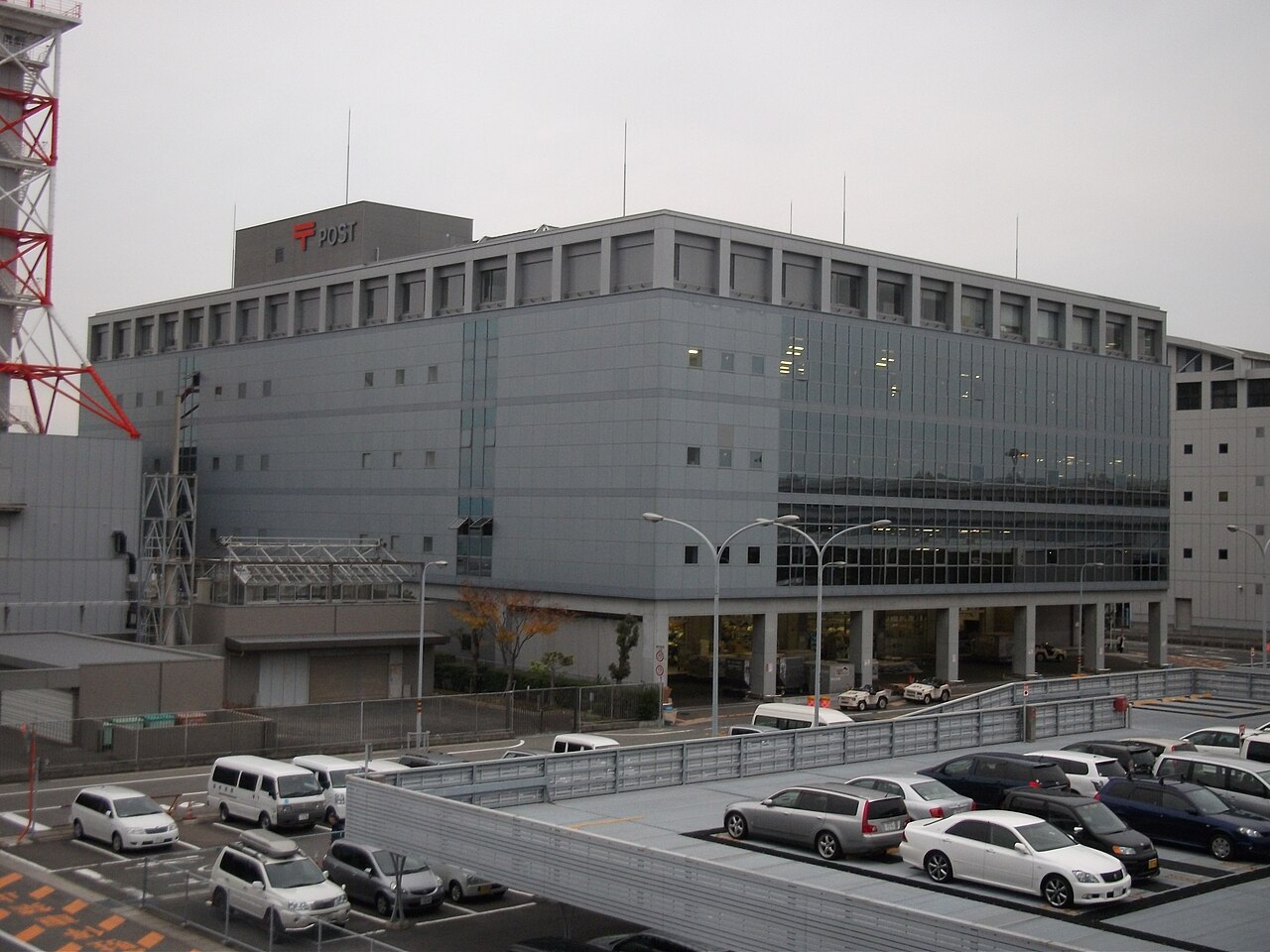
Parcels sent through the post follow the guidance of Japan Post. Post items sent from overseas with a value of less than two hundred thousand yen undergo inspection, with private correspondence excluded. The recipient pays an amount equivalent to the duty, along with a Japan Post handling charge of two hundred yen per parcel. Paying duty and consumption tax on international mail is the responsibility of the recipient.
Check official information before visiting.
Exceptions: missed declarations and items outside the scheme
The scheme depends on the declaration and on the stamped copy. If unaccompanied baggage was not declared, or the stamped declaration form has been lost, the same import procedure as for ordinary trade cargo is required. This is the reason to keep the returned copy until the boxes have been cleared.
The contents matter as well. Unaccompanied baggage that is sold or put to business use is not eligible for the unaccompanied baggage exemption. Commercial cargo and high-value goods may require the same import procedures as ordinary trade cargo.
Higher values bring more paperwork. Permission must be obtained to send overseas, or receive from overseas, mail whose enclosures have a combined value of two hundred thousand yen or more. When a post item with a value exceeding two hundred thousand yen arrives from overseas, the recipient receives a clearance notice from Japan Post.
Related guides
This guide stops at the border and at the first delivery. For sending luggage within Japan, from one lodging to the next, see the guide to sending luggage ahead. For payment cards on local lines, see the guide to IC cards. If you plan to travel by rail after you land, you can look at the JR East Pass.