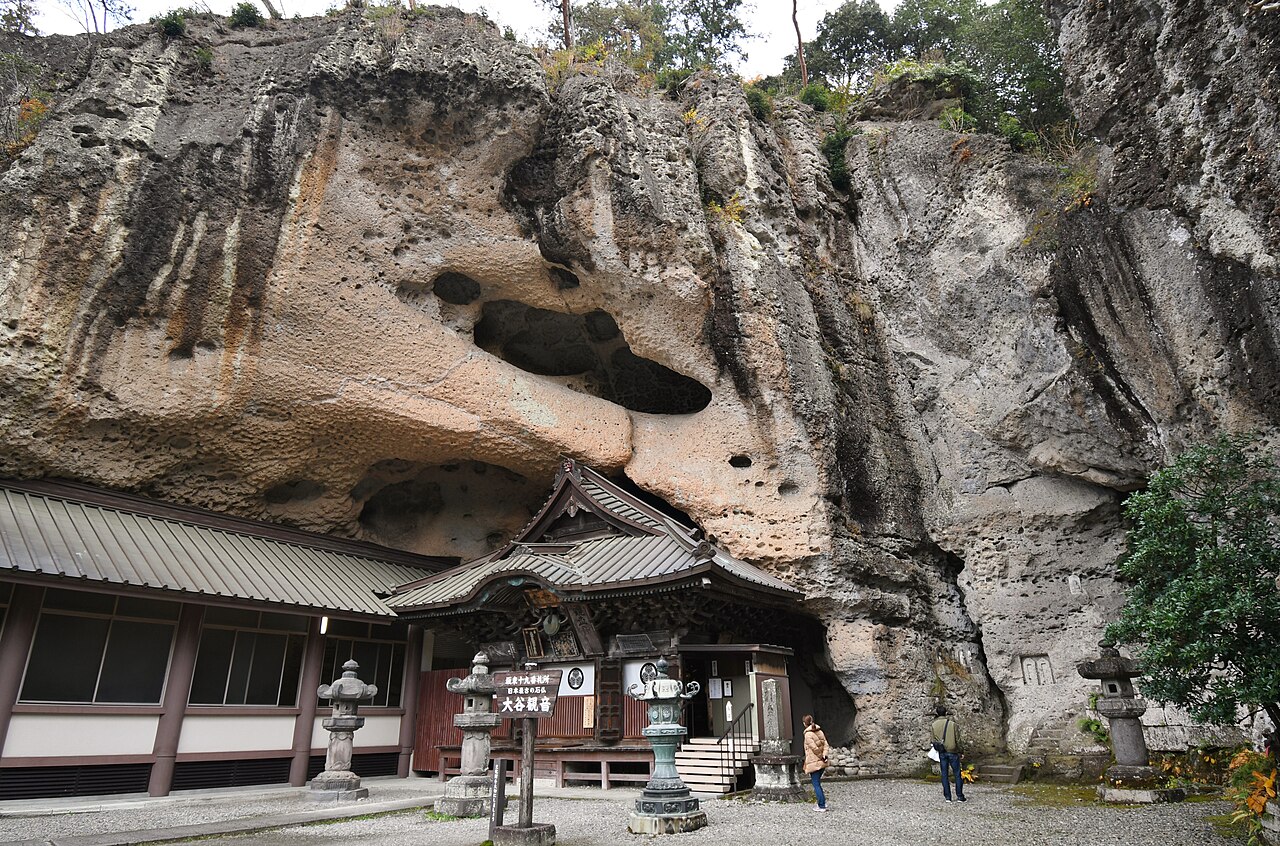
Oya, in Utsunomiya, Tochigi, is a town whose stone is the reason to visit. Beneath the ground is a quarry hall worked for decades and once hidden from public view; above it stand sheer rock faces, a temple wrapped in rock and a street of stone shops. One way to work through Oya is to start in the underground hall of the Oya History Museum, walk on to the lawn park and the Otomeyama rock faces, see the Kannon carved into the rock at Oyaji Temple, and finish over lunch at the cafe on the museum grounds. All of it is Oya stone, light and soft, and the town shows what that stone became once it left the quarry.
Underground at the Oya History Museum and Kanehon Quarry
At the Oya History Museum, visitors go down a flight of stairs and a large underground hall spreads out in front of them. The ceiling is a single block of stone and the walls still carry the traces of quarrying. The quarry was worked for about seventy years, unseen by the general public all that time.
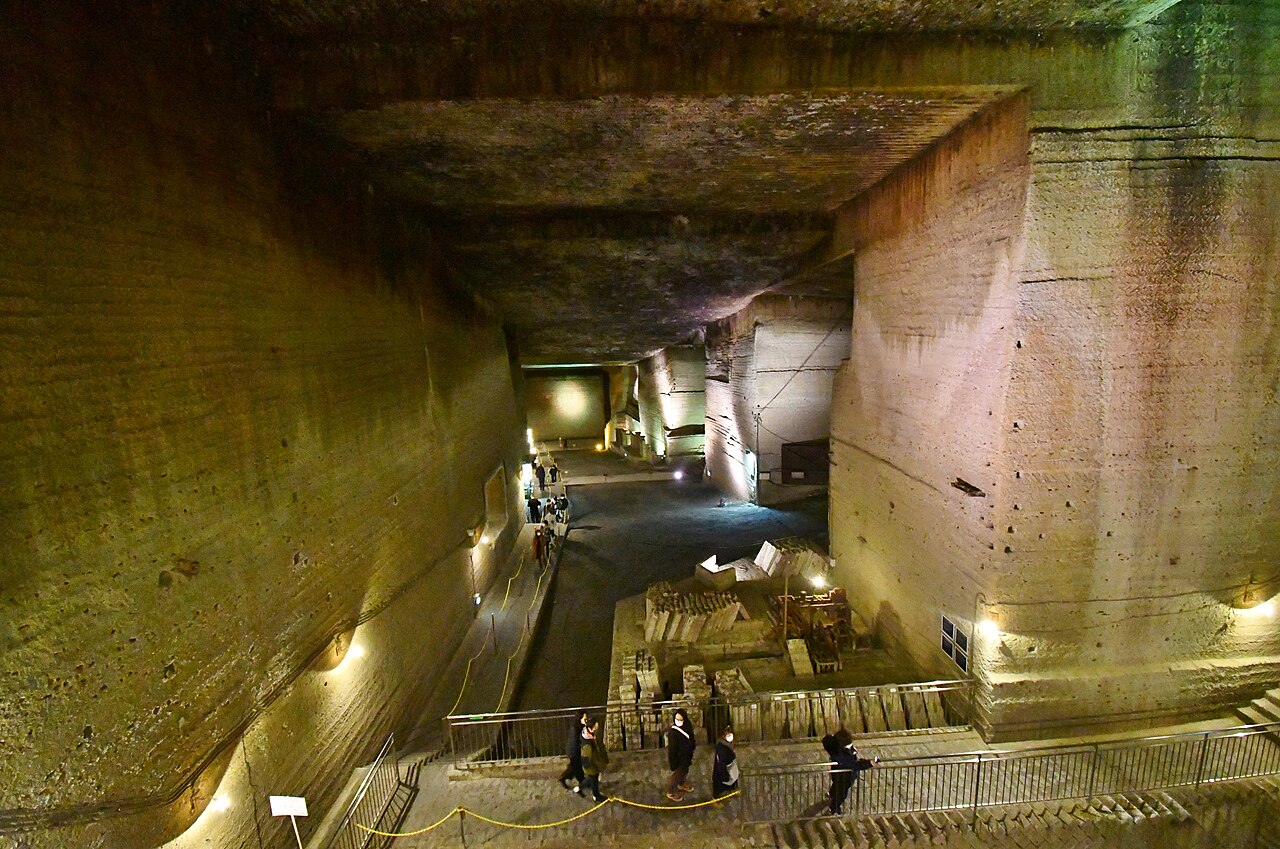
Underground, the temperature averages eight degrees across the year and stays around thirteen degrees even in summer. Look for the stone flower, white salt crystals that appear on the stone. Long before the quarries, Jomon period people lived in cave openings here, and Kofun period side tunnels were dug as burial grounds.
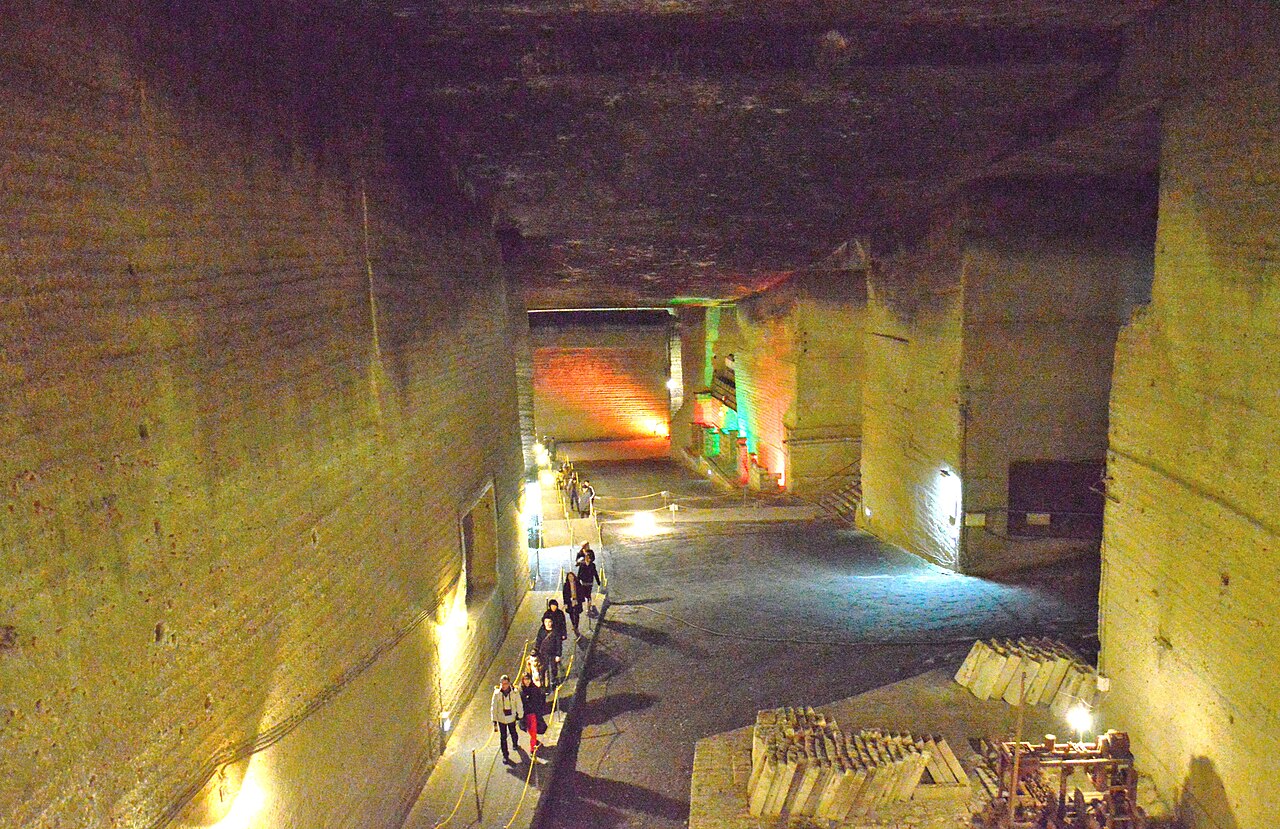
Kanehon quarry, a separate quarry, receives visitors on some Saturdays, on Sundays and on public holidays. There you can walk through the quarry, bake pizza in an Oya stone oven, try an Oya stone craft, or fill a bag with offcuts. To see how the stone was worked, start underground at the museum, then handle it yourself at Kanehon quarry.
The Lawn Park, Otomeyama Rock Faces and the Approach to Oya
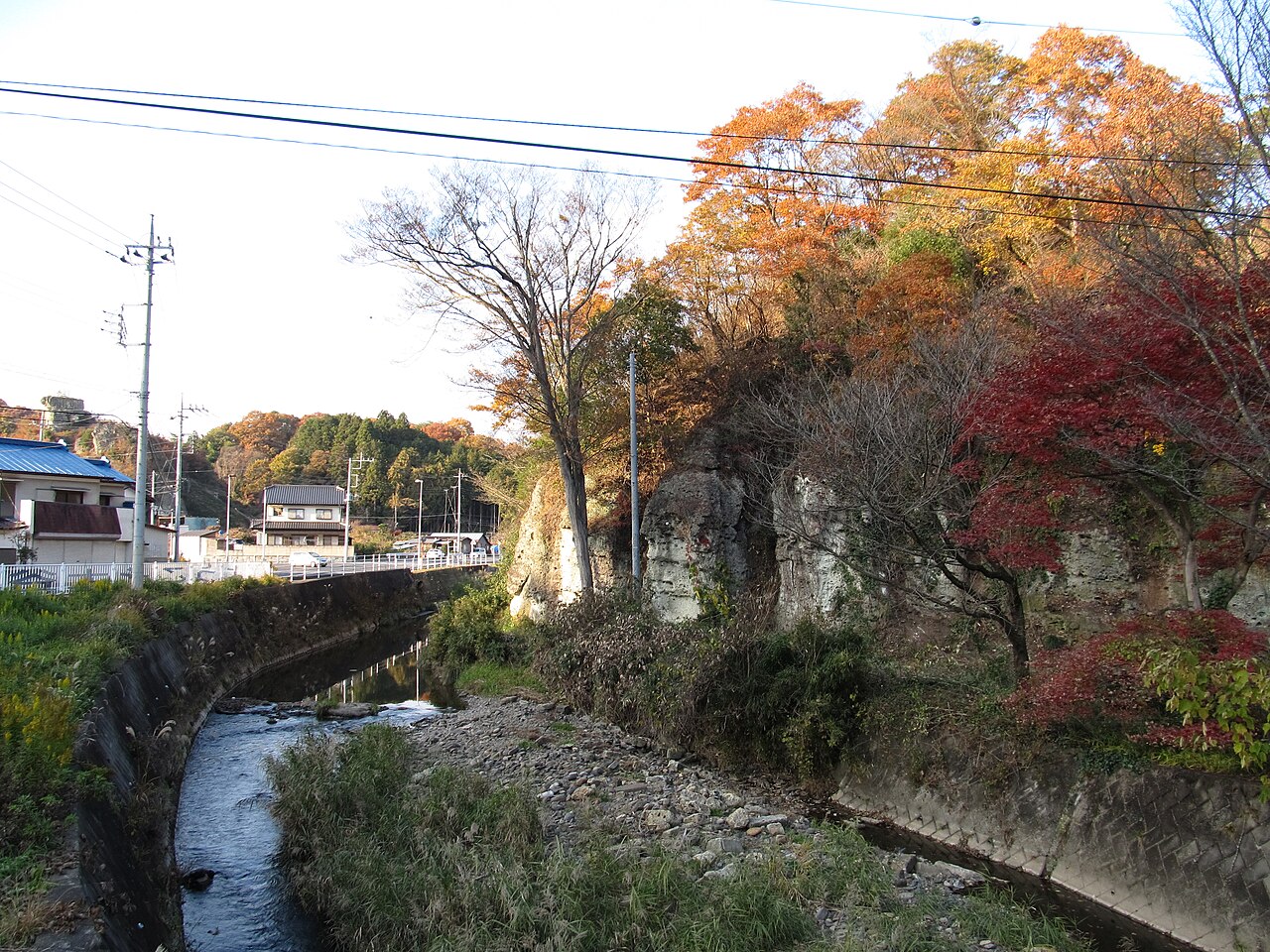
Approaching Oya, visitors are surrounded by sharply rising rock mountains and strange rocks with ivy clinging to their grey-white surfaces. From the lawn park, the Otomeyama rises across the Sugata River as a line of sheer Oya stone rock faces. It is a nationally designated place of scenic beauty, Oya no Kiganguni, and its rock surface and pines form a scene also called Riku no Matsushima.
The park itself is a grass plaza where families have a picnic and spend time listening to the murmur of the Sugata River. It sits midway between Oya Kannon and the Oya History Museum, a natural point to break the walk.
Tengu no Nageishi is an Oya stone sitting on top of a rock face in a delicate balance; legend says a tengu threw it there, and it has since been reinforced so it stays in place. If you want a pause between the underground hall and the temple, the lawn park gives you the river, the rock faces and the pines at once.
Oyaji Temple and the Peace Kannon Carved into Rock
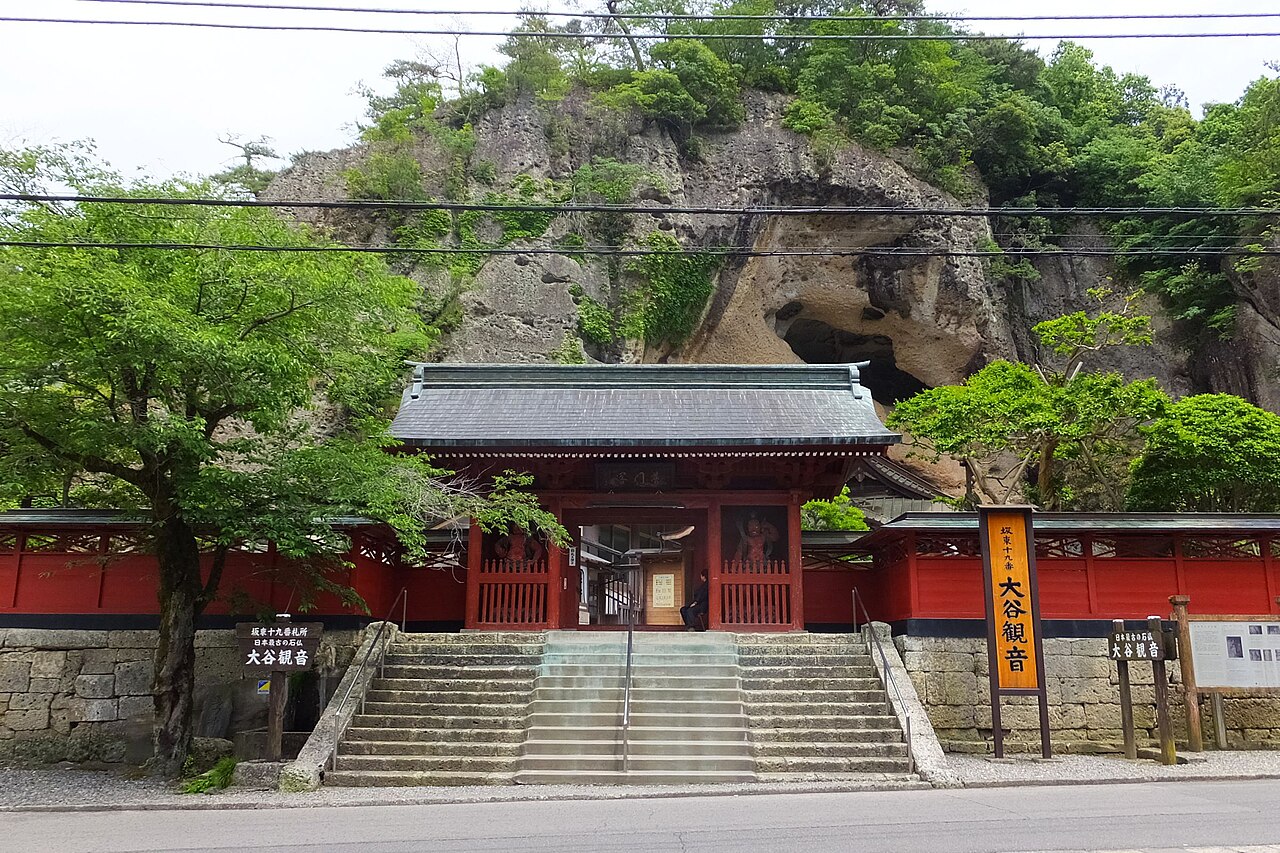
Oyaji Temple sits wrapped in natural rock and was founded by Kobo Daishi; in the Kamakura period it became the nineteenth sacred site of the Bando pilgrimage. Its principal image, Oya Kannon, is a tall Thousand-Armed Kannon carved directly into the rock.
Nearby, at a former outdoor quarry, the Peace Kannon is carved into a rock wall of Oya stone. It is a large figure made entirely by hand carving, worked over six years to pray for the war dead and for peace. Climb the stairs up to the Peace Kannon and its face is right in front of you, together with the Oya townscape. Between the Peace Kannon and the nearby sites, traces of quarrying remain, with marks where the mouths of side tunnels were filled in.
If you like sculpture cut straight into standing stone, see both: the Oya Kannon inside the temple rock, and the Peace Kannon on the quarry wall as a prayer carved by hand.
Stone Streets, the Old Public Hall and Oya Connect
Walk the street laid along the former tramway and stone shops still line it, with the old public hall of Oya stone in one corner. That hall, on the Oya Connect grounds, restores the public hall of the former Shiroyama village, once used for assemblies, plays and theatre, and is built of piled Oya stone. Inside are exhibits on the Japan Heritage Oya stone culture, and Oya Connect itself is the visitor center for the area.
Oya stone is light and soft, with a natural texture and fire resistance, and it supported the industry of Utsunomiya. Frank Lloyd Wright used it in the old main building of the Imperial Hotel. Around nine thousand Oya stone buildings stand in the city, some being converted into cafes and galleries, while underground quarry sites have become a setting for exploration.
To see what the stone became once it left the quarry, the street and the hall show it plainly, and the converted cafes show what comes next.
Lunch at ROCKSIDE MARKET and Gyoza in Utsunomiya
ROCKSIDE MARKET is a cafe and select shop on the museum grounds, where light meals such as galettes and a soft omelette rice lunch set are eaten in a space surrounded by Oya stone.
Punto, in Oya, serves a set meal and a B lunch, with a dessert to add; a workshop cafe does a rice set, a Mont Blanc and a hot matcha; one restaurant serves Thai and Vietnamese dishes.
One city gyoza shop keeps to two items: fried gyoza from a round iron pan, thin, crisp and full of vegetables, and boiled gyoza, chewy and seasoned with vinegar, soy sauce and homemade chili oil. A second shop browns its gyoza in sesame oil with plenty of Chinese cabbage, and a third serves a jumbo gyoza, two point four times its special meat gyoza. If lunch is the plan, eat at ROCKSIDE MARKET and keep gyoza for the city. To take the museum, quarry, temple and lunch without hurrying, places to stay in Utsunomiya let you spread them out.
Getting to Oya
| Leg | How | Time |
|---|---|---|
| Tokyo Station to Utsunomiya Station | Tohoku Shinkansen | About 50 minutes |
| Utsunomiya Station West Exit to the Museum Entrance stop | Kanto Bus route 45 bound for Oya and Tateiwa; the 9:59 departure costs 530 yen | Arrives 10:29 |
| Museum Entrance stop to the Oya History Museum | On foot | About 5 minutes |
| Utsunomiya Station to Oyaji Temple | Bus | About 30 minutes |
| Oya History Museum to the lawn park | On foot | About 10 minutes |
| Lawn park to Oyaji Temple | On foot | About 5 minutes |
A one-day sightseeing bus ticket for the Oya area is sold for two thousand two hundred yen for adults. By car, Oyaji Temple and the Peace Kannon are each about ten minutes from Utsunomiya IC.
New to rural buses and one-man trains? See how to ride them, step by step.
Hours and Fees
| Place | What | Hours or fee |
|---|---|---|
| Oya History Museum | Hours, April to November | 9:00 to 17:00 (entry until 16:30); no regular closed day |
| Oya History Museum | Hours, December to March | 9:30 to 16:30 (entry until 16:00) |
| Oya History Museum | Admission | Adults 1,000 yen; children 400 yen |
| Oyaji Temple | Hours | 8:30 to 16:30 (9:00 to 16:30 from October to March); reception closes 20 minutes before closing |
| Oyaji Temple | Admission | Adults 500 yen; junior high school students 200 yen; elementary school students 100 yen |
| Kanehon quarry | Hours | 10:00 to 15:00 on the 1st, 3rd and 5th Saturdays, Sundays and public holidays (may close temporarily) |
Kanehon quarry admission is five hundred yen. Oya Connect is closed on the third Tuesday of the month and over the New Year, the museum on Tuesdays from December to March, and the temple on Thursdays and over the last days of December.
Where to stay
Places to stay near Utsunomiya, Tochigi, Japan →
Disclosure: This post may contain affiliate links. If you book through them, we may earn a commission at no extra cost to you.