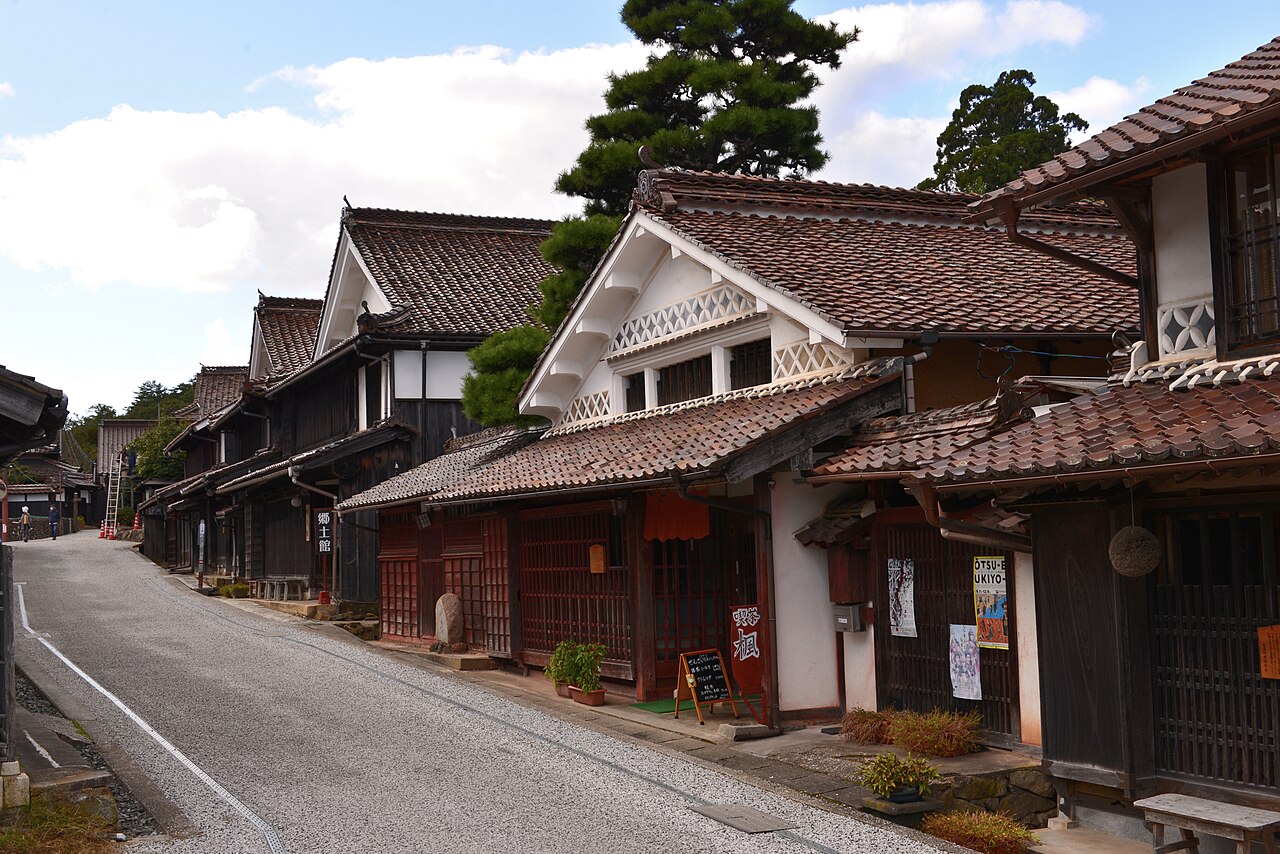
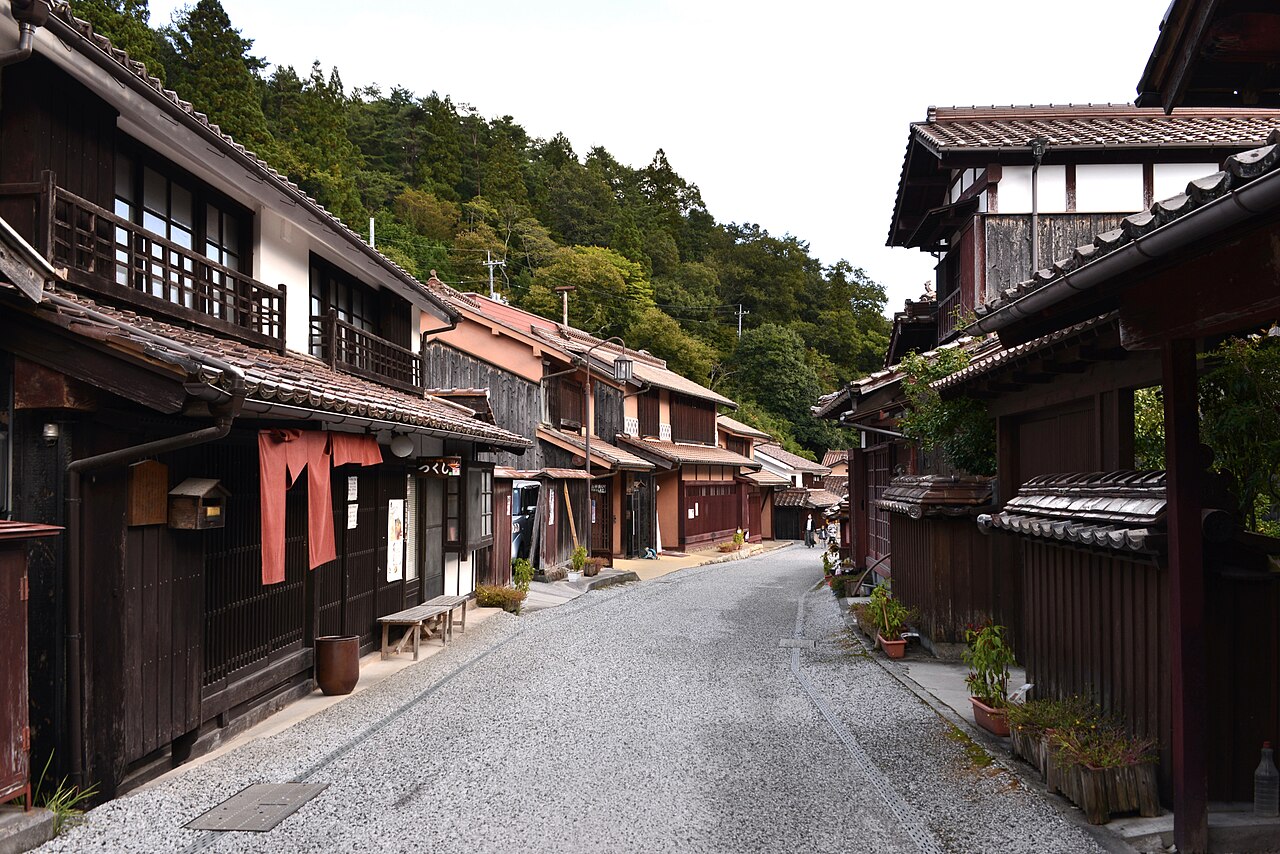
Fukiya is a hillside village in the Narawa district of Takahashi city, Okayama Prefecture, and its main street is coloured by bengara, the red-brown iron pigment the village once sold across Japan. Lattice-fronted merchant houses with red tiled roofs line the slope, and several of them, along with an old wooden school, can be visited inside.
The village is reached by a local bus from JR Bitchu-Takahashi Station, and the practical details below cover the fare, the recommended departure, the return run and what each house charges at the door. If you would rather not rush back the same evening, places to stay in Takahashi make an easy base.
Getting there from Bitchu-Takahashi Station
The approach is a single bus ride. Takahashi Bus Center is at JR Bitchu-Takahashi Station, and the Fukiya service leaves from there for a stop named Fukiya (吹屋). The steps below give the fare, the recommended departure and arrival, and the short walk from the stop to the old school.
- Start at JR Bitchu-Takahashi Station, where Takahashi Bus Center (高梁バスセンター) is the departure point for the Fukiya service.
- Board the bus bound for Fukiya (吹屋); the one-way fare is 800 yen for adults and 400 yen for elementary school children, half the adult fare.
- Take the recommended outbound departure, which leaves Takahashi Bus Center at 10:55.
- Stay on until the Fukiya (吹屋) stop, where the same bus arrives at 11:53.
- From the Fukiya bus stop it is about a 5-minute walk to the Old Fukiya Elementary School (旧吹屋小学校).
Arrival at eleven fifty-three in the morning puts you in Fukiya just before midday, with the afternoon ahead for the houses and the old school. Children of elementary school age ride for half the adult fare, which is worth knowing if you are travelling as a family.
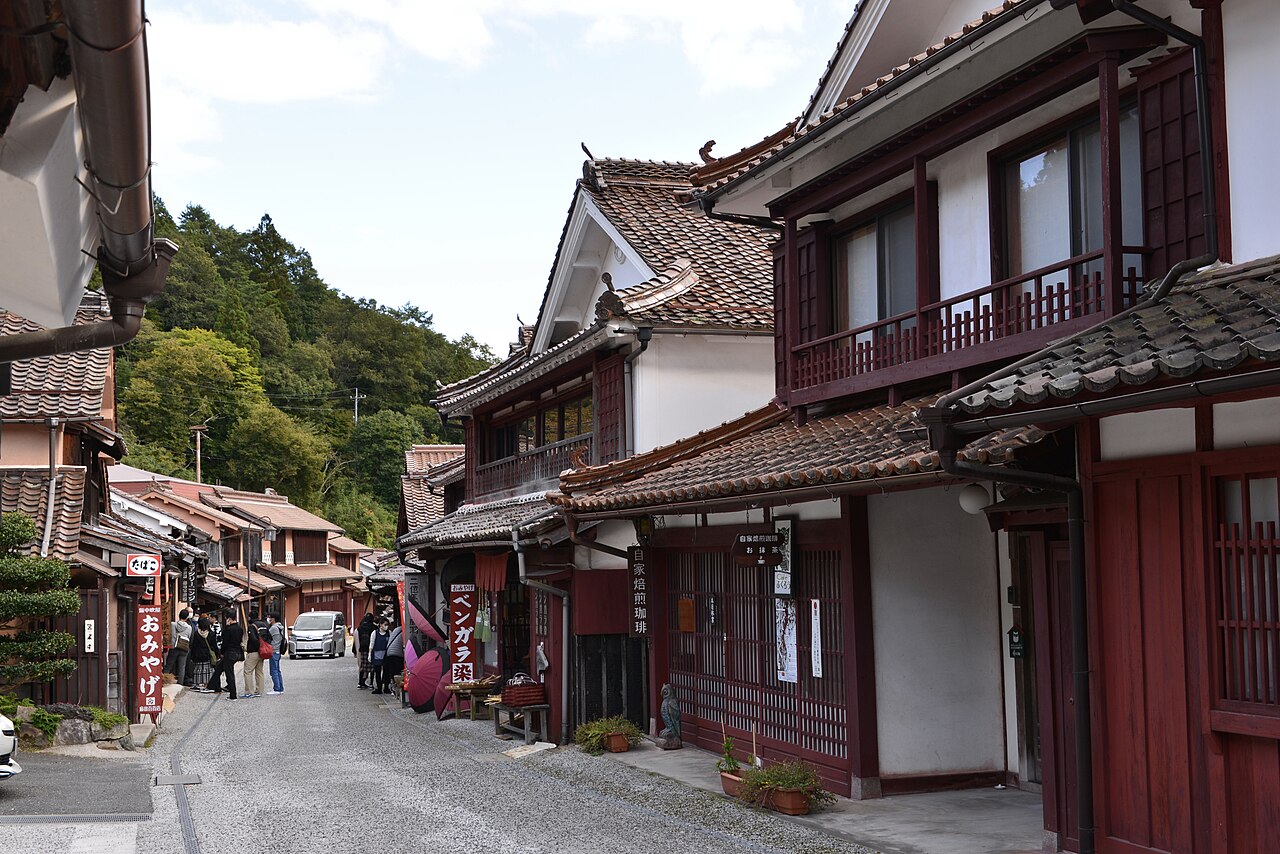
Walking Fukiya's red lattice street
The townscape grew up on the old Fukiya highway, the road that linked Bingo-Tojo, now part of Shobara in Hiroshima Prefecture, with Bitchu-Narawa in what is now Takahashi. As a waypoint on that route the village filled with bengara wholesalers, inns and shops serving the copper miners, and it prospered as a collecting point for goods.
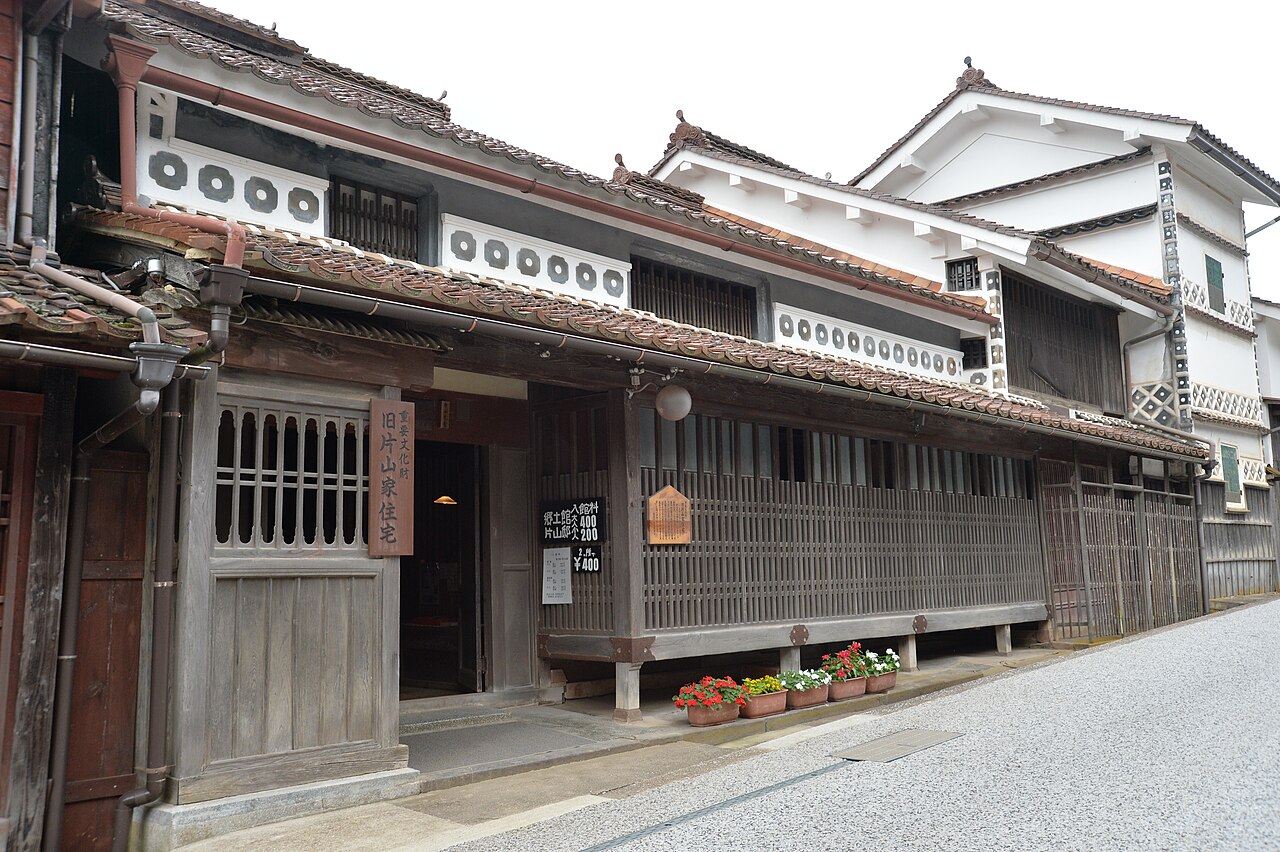
The Former Katayama Residence shares a single ticket with the Kyodokan, the local history museum, at five hundred yen for adults and two hundred and fifty yen for children of junior high school age and younger. From April to November the house is open from ten in the morning to five in the afternoon, seven days a week.
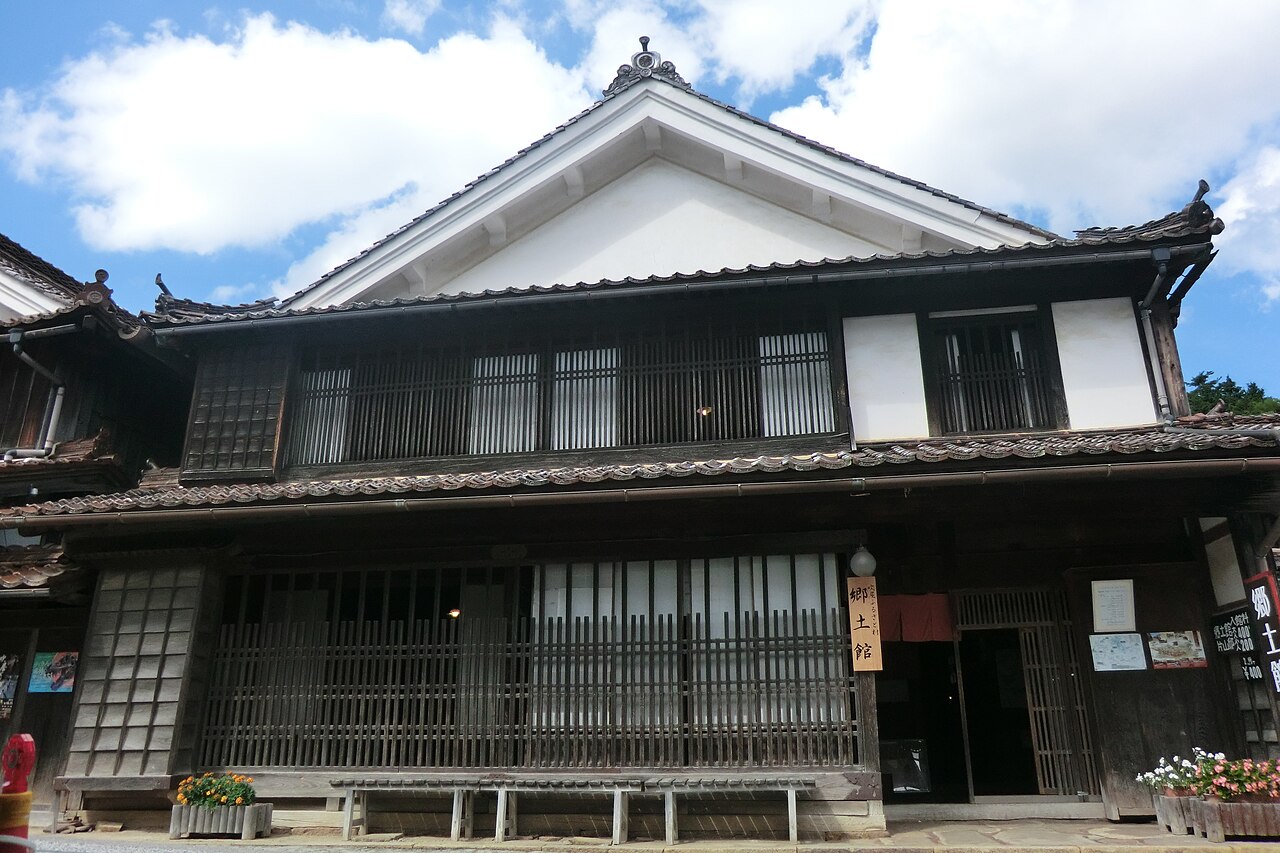
From December to March the house is open from ten in the morning to four in the afternoon, and only on Saturdays, Sundays and public holidays. The Kyodokan itself is a two-storey building with a broad white gable, dark lattice windows and a vertical sign reading Kyodokan, and the same ticket covers it.
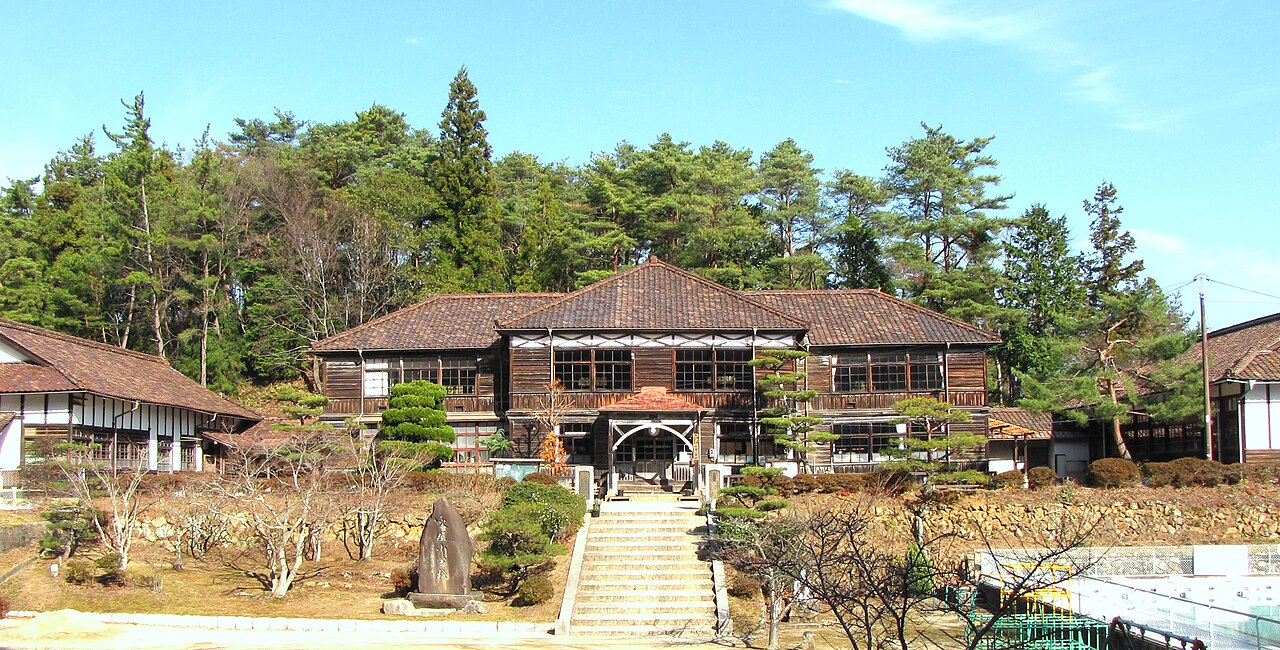
A walk of about five minutes from the Fukiya bus stop brings you to the Old Fukiya Elementary School, a wooden building with a tiled hip roof and entrance stairs set among pines on a hillside. Entry is five hundred yen for adults and two hundred and fifty yen for elementary and junior high school students.
Where to stay
Places to stay near Takahashi, Okayama, Japan →
Disclosure: This post may contain affiliate links. If you book through them, we may earn a commission at no extra cost to you.
Admission and hours at a glance
Besides individual entry, there is a combined ticket. The four-facility excursion ticket is one thousand yen for adults, and the individual charges below let you compare it with the houses you actually plan to enter. Children's rates are set by school year, so check the bracket in the first table before you pay.
| Place | Adults | Children |
|---|---|---|
| Former Katayama Residence and Kyodokan (one shared ticket) | 500 yen | 250 yen (junior high school and younger) |
| Old Fukiya Elementary School | 500 yen | 250 yen (elementary and junior high school) |
| Fukiya Copper Mine Sasaune Tunnel | 400 yen | 200 yen (junior high school and under) |
| Hirokane-tei (Hirokane residence) | 400 yen | 200 yen (elementary and junior high school) |
| Four-facility excursion ticket | 1,000 yen | — |
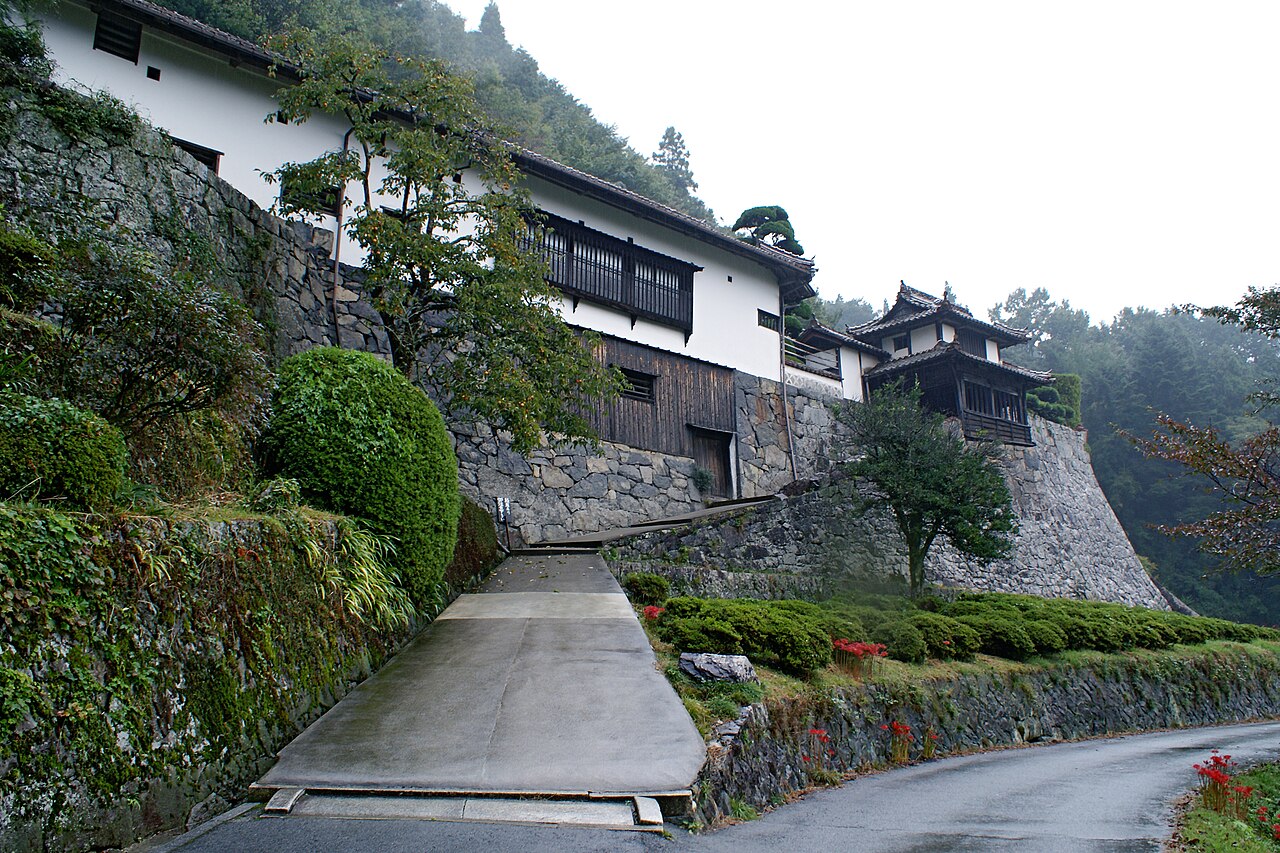
Opening times share one seasonal split, with an earlier close from December to March. Hirokane-tei, on its tall dry-stone foundation, charges four hundred yen for adults and two hundred yen for elementary and junior high school students. The Sasaune tunnel is four hundred yen for adults and two hundred yen for children of junior high school age and under.
| Place | Season | Opening times | Days |
|---|---|---|---|
| Former Katayama Residence | April to November | 10:00–17:00 | seven days a week |
| Former Katayama Residence | December to March | 10:00–16:00 | Saturdays, Sundays and public holidays only |
| Old Fukiya Elementary School | April to November | 10:00–17:00 | — |
| Old Fukiya Elementary School | December to March | 10:00–16:00 | — |
| Fukiya Copper Mine Sasaune Tunnel | April to November | 10:00–17:00 | seven days a week |
| Fukiya Copper Mine Sasaune Tunnel | December to March | 10:00–16:00 | Saturdays to Mondays and public holidays only |
Why the village is red: copper and bengara
Fukiya bengara is a red pigment made from iron sulphide ore out of the copper mine, turned into green vitriol, roasted, refined, ground and sun-dried. Production began in the mid-Edo period; the pigment coloured ceramics and lacquerware, protected buildings and ships, dominated the national market, and won a first-class award at the first National Industrial Exhibition in eighteen seventy-seven.
In the mid-Edo period Izumiya of Osaka, later Sumitomo, helped run the Yoshioka copper mine and made it a leading producer; in early Meiji, Iwasaki Yataro of Mitsubishi bought it and modernised its management. Mining ended in nineteen seventy-two; shafts, smelter and settling tanks survive, and the site was listed in two thousand and seven as Heritage of Industrial Modernization.
A Meiji-era gazetteer describes Fukiya as a hill settlement north of Narawa, in the old Kawakami district. The same gazetteer puts the opening of the copper mine in the year eight hundred and seven. The ore is said to have left by way of Narawa, down the Takahashi River to the port of Tamashima.
Soup curry and coffee in the village
Lunch can be a bowl of soup curry at Soup Curry no Mise Tsukushi, where the bone-in chicken soup curry is twelve hundred yen. A non-spicy children's soup curry is on the same menu at seven hundred yen, which makes the place workable for a family travelling with small children who are not yet ready for heat.
For something after the meal, Sakanaka Coffee serves an iced Vietnamese coffee with condensed milk for four hundred and fifty yen. With the recommended buses you are in the village from just before midday until mid-afternoon, so lunch and a coffee can be fitted around the houses rather than squeezed in before the ride home.
Planning the day
The outbound run at ten fifty-five in the morning puts you in Fukiya at eleven fifty-three. The recommended return bus departs Fukiya at three forty-two in the afternoon and arrives at Takahashi Bus Center at four forty. Write that return time down, because it fixes when you need to be back at the stop.
If you want to go inside several buildings, the four-facility excursion ticket at one thousand yen for adults is the figure to compare against the individual entries in the table above. Winter visitors should note that from December to March both the Katayama house and the Sasaune tunnel admit visitors only on certain days, listed in the second table.
Sleeping in Takahashi the night before means the morning departure is the first thing you do rather than the end of a longer journey, and the same goes for the evening after the return run. For that reason it is worth looking at places to stay in Takahashi before fixing the date.