This guide covers the old merchant street of Wakimachi in Mima, Tokushima: how to reach it from Kobe, Osaka and Tokushima, what its two paid buildings charge and when they open, and how to shape an unhurried day around them. It does not cover the mountain country beyond the town.
Where Wakimachi Sits on the Yoshino River
Wakimachi lies on the north bank of the Yoshino River in Mima, Tokushima, in what the old guides describe as a narrow band of flat land between two ranges of hills. The same guides say the town grew on a terrace above the water, which is why its streets are narrow.
The old records call Wakimachi a post town on the Muya Kaido, the road that followed the north bank, while a second road ran along the south bank. River boats once carried rice, firewood, charcoal, timber and indigo cakes downstream, and an earlier account says a boat could reach Tokushima in about three hours.
In the era those guides describe, Wakimachi counted about one thousand three hundred households and roughly six thousand eight hundred people, and served as the seat of the Mima district office. To the northwest lies the site of Waki Castle, held by Fujiwara no Nakafusa and counted by the records among the nine castles of Awa.
Getting There From Kobe, Osaka and Tokushima
The routes this guide can vouch for are few, and the most direct approach for anyone starting on the Kobe side is the JR Shikoku Bus highway service, which links Kosoku Maiko with Wakimachi Bus Stop. Travellers from Osaka should make their way to the Kobe side first, since the fare confirmed below is counted from Kosoku Maiko.
- Highway bus, Kosoku Maiko to Wakimachi Bus Stop: one-way adult fare three thousand five hundred yen.
From Tokushima, the confirmed timings below are for driving, so treat them as a planning reference. The nearest railway station is Anabuki on the Tokushima Line, which the old guides place on the south bank facing the town; passengers bound for Wakimachi got off there, and the distance given is roughly twenty cho.
- By car from Tokushima city to the Yoshida Family Residence: about forty minutes via the Tokushima Expressway, or about one hour by regular road.
- By car from Takamatsu city by regular road: about one hour and twenty minutes.
- From Wakimachi Interchange to the residence: about ten minutes.
The Merchant Street and Its Udatsu
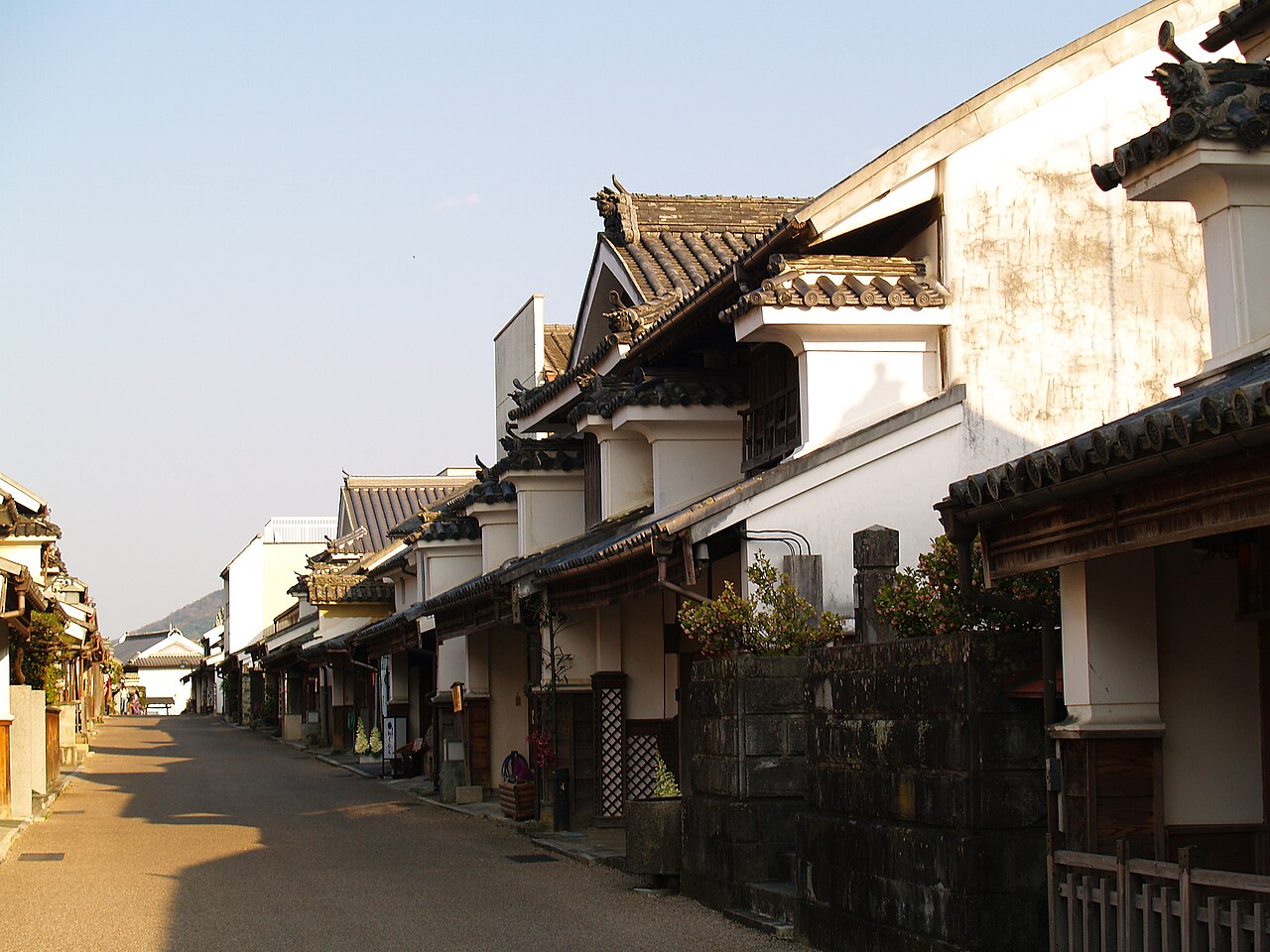
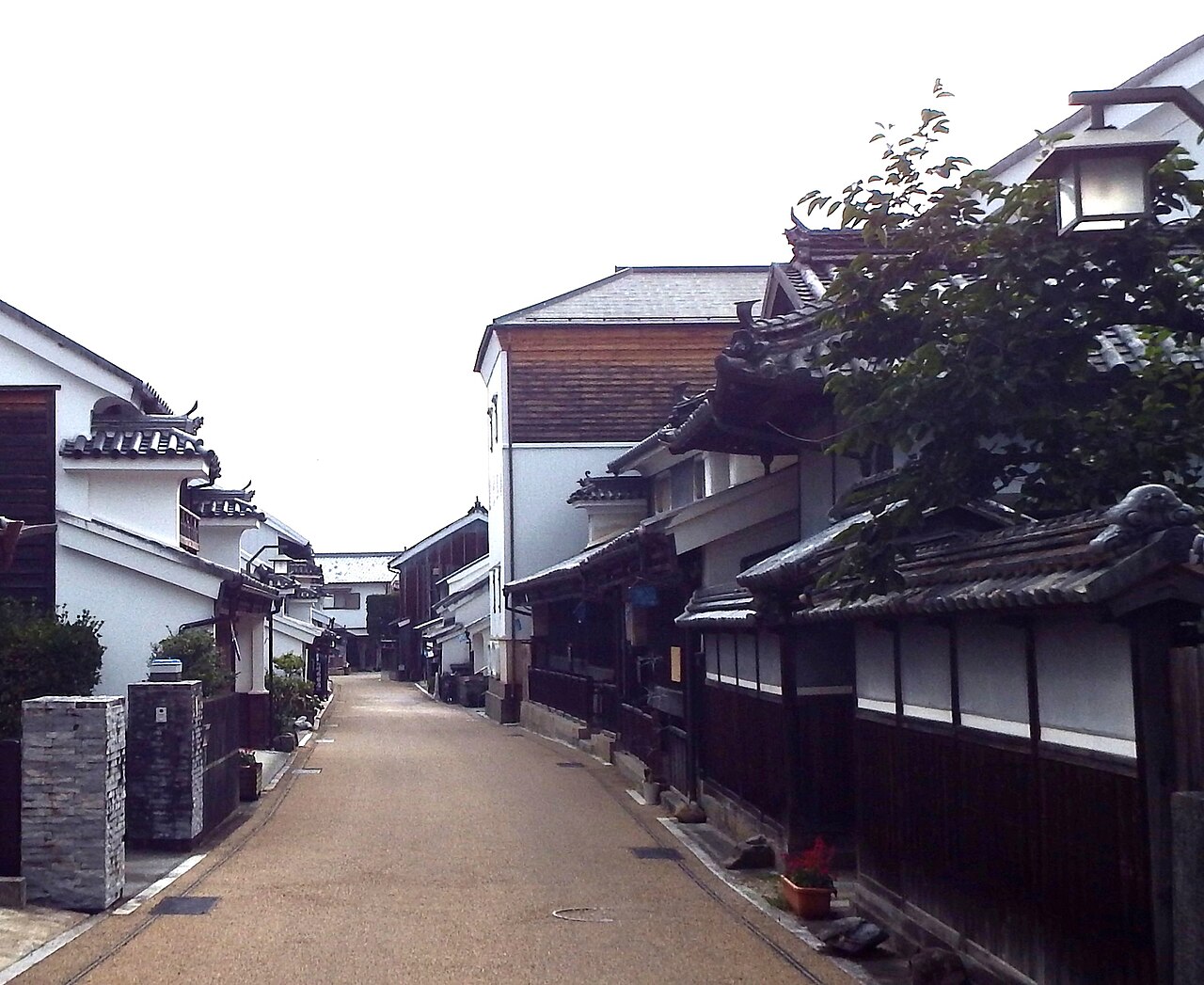
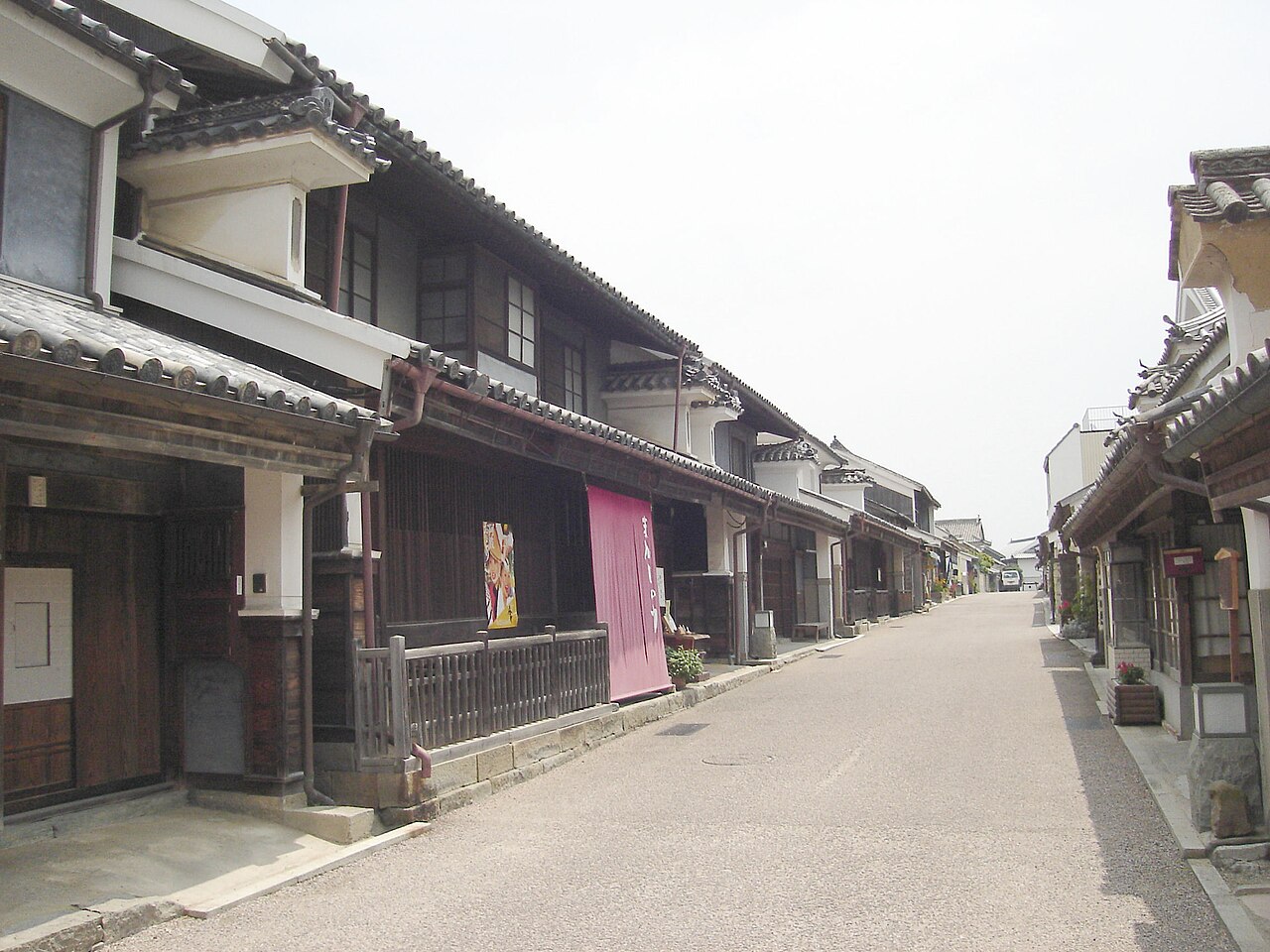
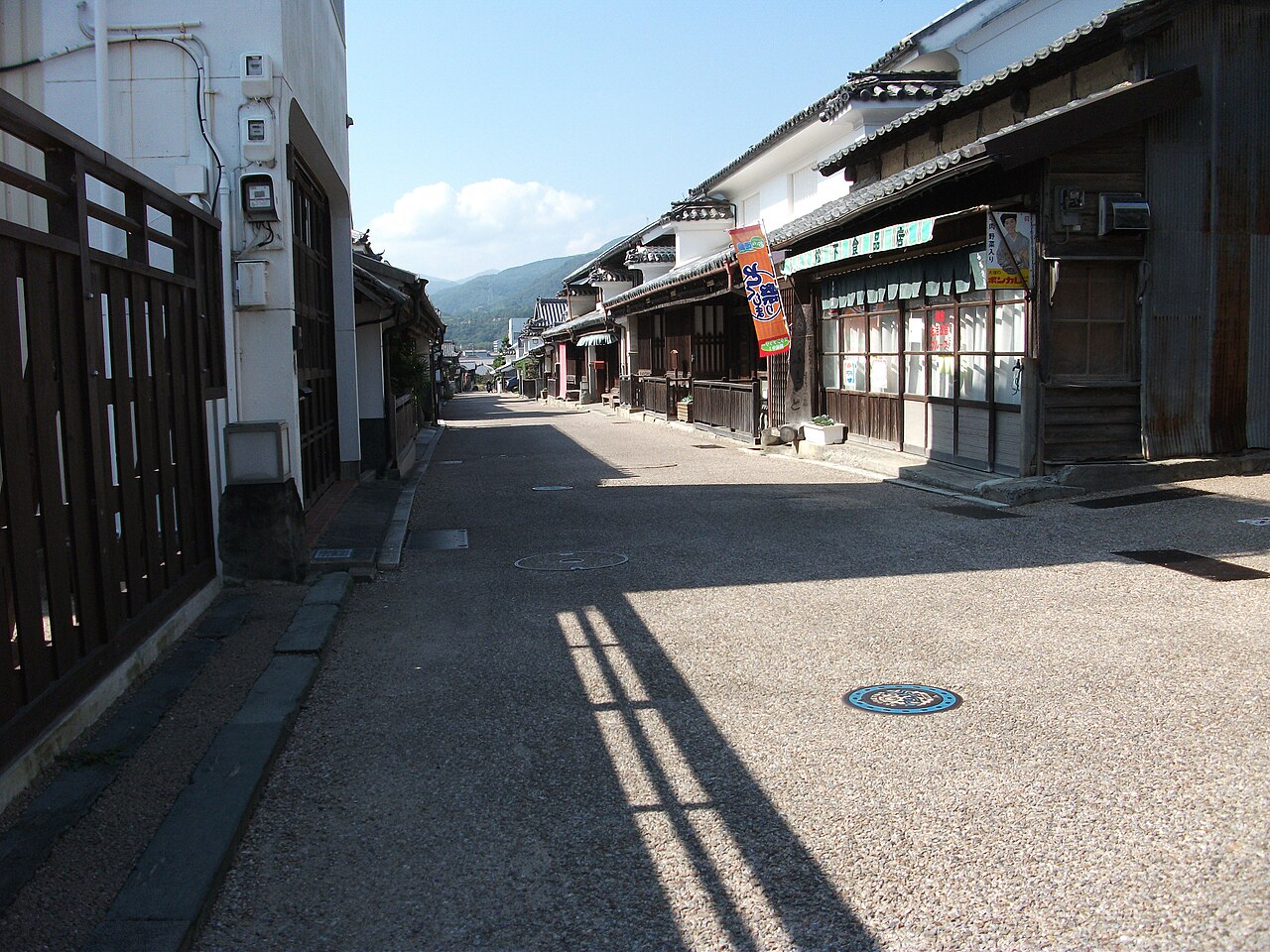
An udatsu is a fire wall raised between neighbouring houses, built up above the roofline in plaster and tile, and because such a wall was costly, the grander the udatsu the wealthier the household behind it. Wakimachi's street is lined with them, and the row of white walls and dark tile is the reason to come.
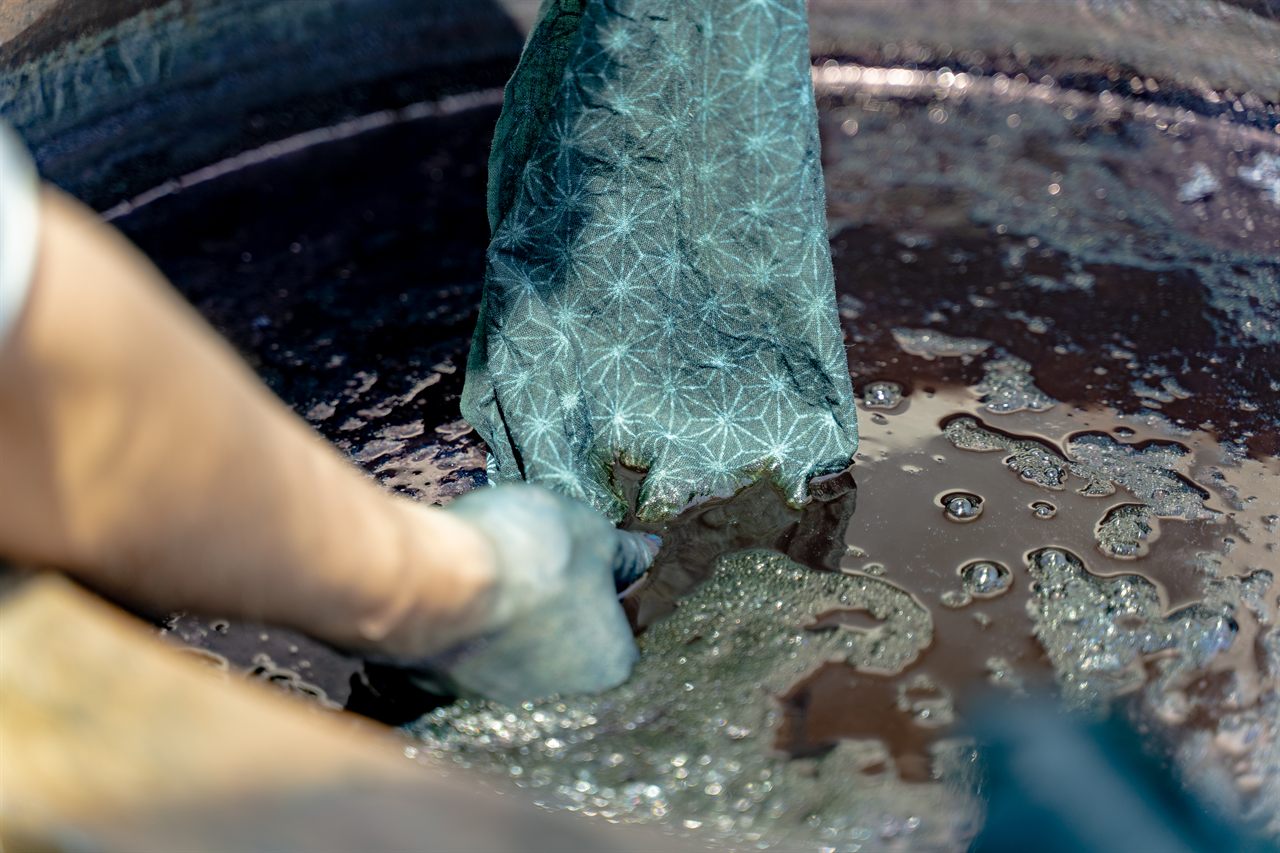
The money came from indigo. The old guides list indigo cakes, called aidama, among the town's chief products alongside rice, firewood, charcoal and timber, and the Awa indigo trade paid for the finest of these walls. Below, star-patterned cloth comes up blue and white out of a dye vat, the colour that built the street.
The street runs along the river on its terrace, which the old guides give as the reason the lanes are narrow. Walk it slowly and look up: the lattice mushiko windows under the eaves and the height and finish of each udatsu are a rough index of how the household behind it fared.
Where to stay
Disclosure: This post may contain affiliate links. If you book through them, we may earn a commission at no extra cost to you.
The Yoshida Family Residence: Hours and Admission
The Yoshida Family Residence is the first of two buildings here with confirmed hours and admission, and it is also the point to which every driving time above is measured. Plan the day around it: arrive within its opening window, pay the admission, and let the rest of the street fill the time on either side.
- Opening hours: nine in the morning until five in the evening.
- Adult admission: five hundred and ten yen per person.
- Child admission: two hundred and fifty yen per person.
- Closed for the New Year holidays from the twenty-seventh of December to the first of January.
Treat the year-end closure as the one fixed constraint: from the twenty-seventh of December to the first of January the house is closed. The stated hours run from nine in the morning until five in the evening, so a mid-morning arrival leaves room for the playhouse and the shrine before the doors shut.
Odeon-za, the Old Playhouse
Odeon-za, listed as Wakimachi Theater, is the second building with confirmed hours and admission, and the cheaper of the two. Its wooden front is painted in pale green and blue with a fan of stained glass above the entrance; inside, a wooden stage and box seating sit under red and white paper lanterns beside a painted kabuki backdrop.
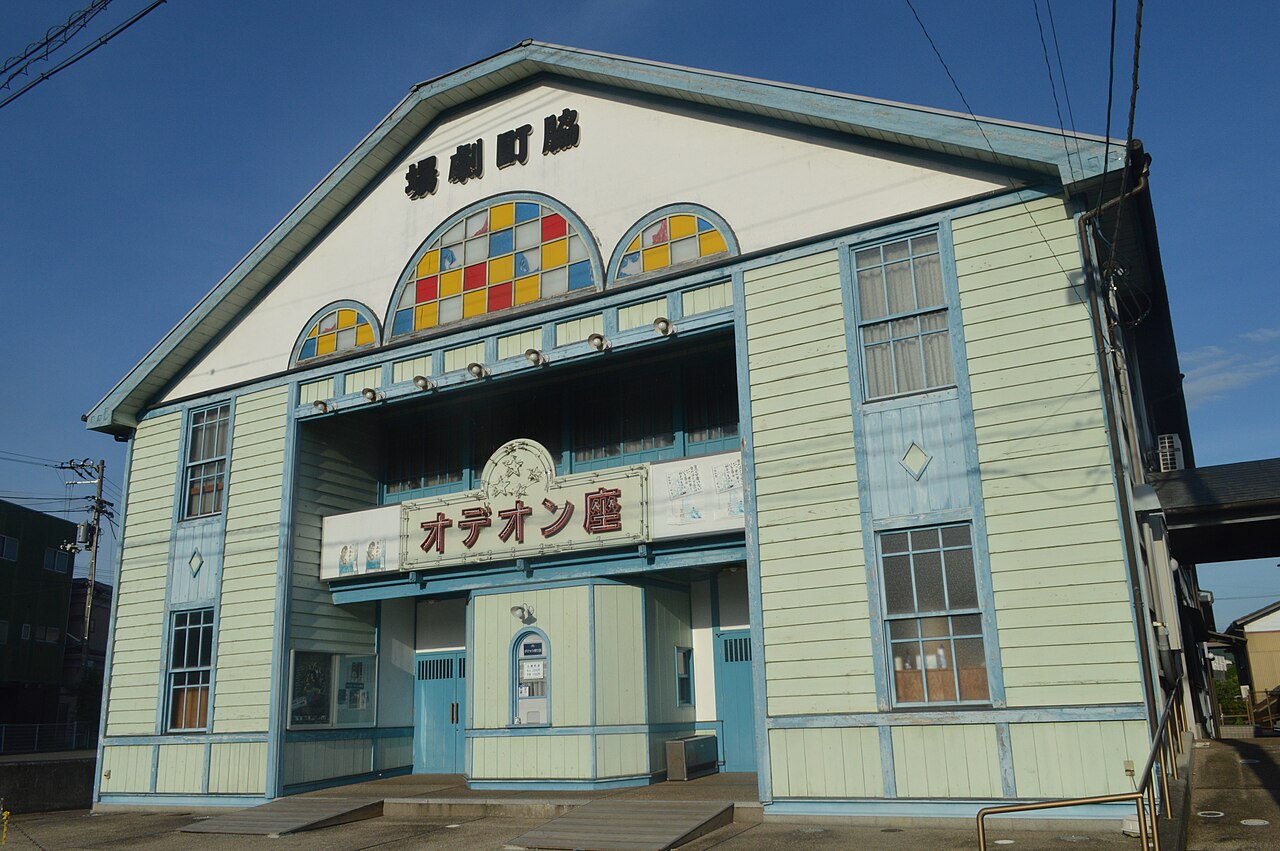
- Opening hours: nine in the morning until five in the evening.
- Adult admission: two hundred yen.
- Closed every Tuesday, and for the year-end and New Year holidays from the twenty-seventh of December to the first of January.
The Tuesday closure is the detail that decides the shape of a visit. Both buildings keep the same window from nine in the morning until five in the evening and the same year-end break, but the playhouse rests every Tuesday, so anyone who wants the stage as well as the house should plan for another day.
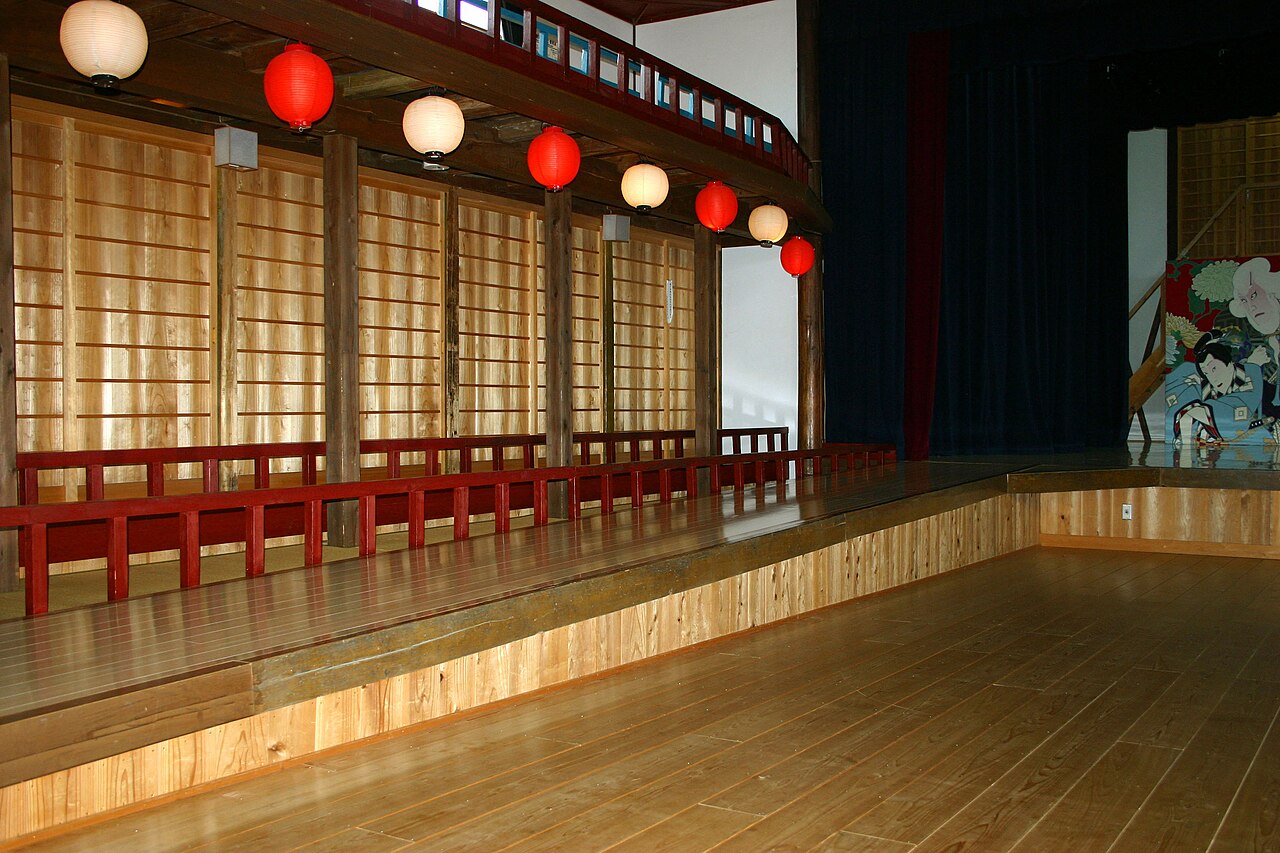
Two hundred yen buys the interior: the boards of the stage, the boxes built for an audience, and the lanterns overhead. It is a small sum for a room that shows how a merchant town entertained itself, and it is the natural second stop after the residence on any day but Tuesday.
The Shrine on the Rise Above the Town
South of the merchant street, on higher ground the old records place in the hamlet of Ueno, stands a Hachiman shrine enshrining Homudawake no Mikoto together with three further deities. The same records speak of Ueno Hachimangu, popularly called Myoren Gongen, whose grounds sit on high, dry land with the Yoshino River flowing below.
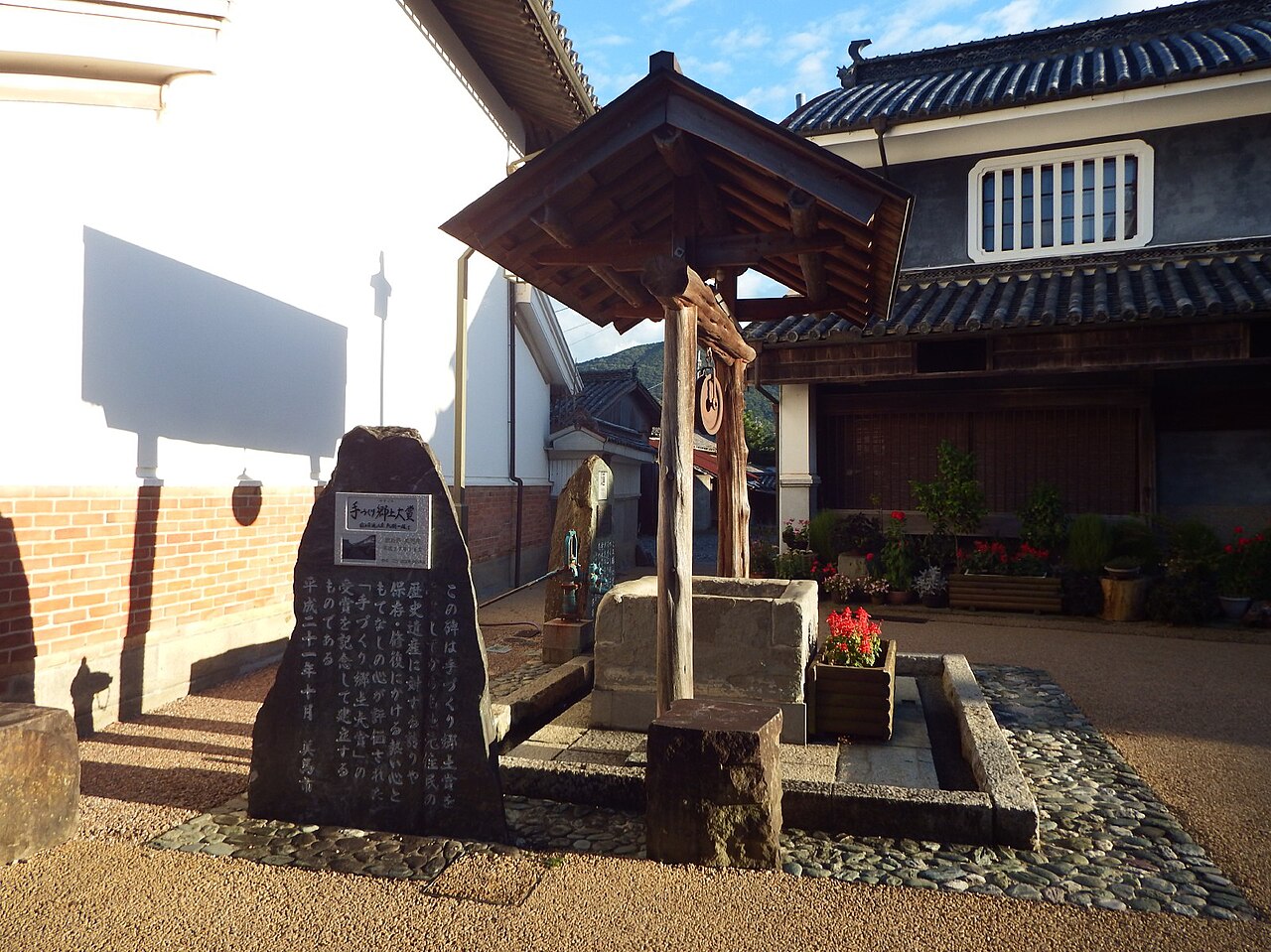
From the grounds, the old guides say, the view runs southwest to Mount Tomouchi and southeast to Mount Kotsu. They also describe the site as thick with cherry and maple, a place people once went for blossom in spring and coloured leaves in autumn; treat that as a note from an earlier age, not a promise.
A story handed down says the shrine's sacred object came to rest here after a great flood on the Yoshino, carried in by the water itself. Taken literally or not, the rise above the town is the one place in this guide where river, terrace and hills line up in a single view.
Shaping a Slow Day, and Staying the Night
The day writes itself once you fix the two paid buildings. Reach the street in the morning, take the Yoshida Family Residence first, go on to Odeon-za on any day but Tuesday, and keep the shrine on the rise for late afternoon, when the light comes low across the river and the white walls warm up.
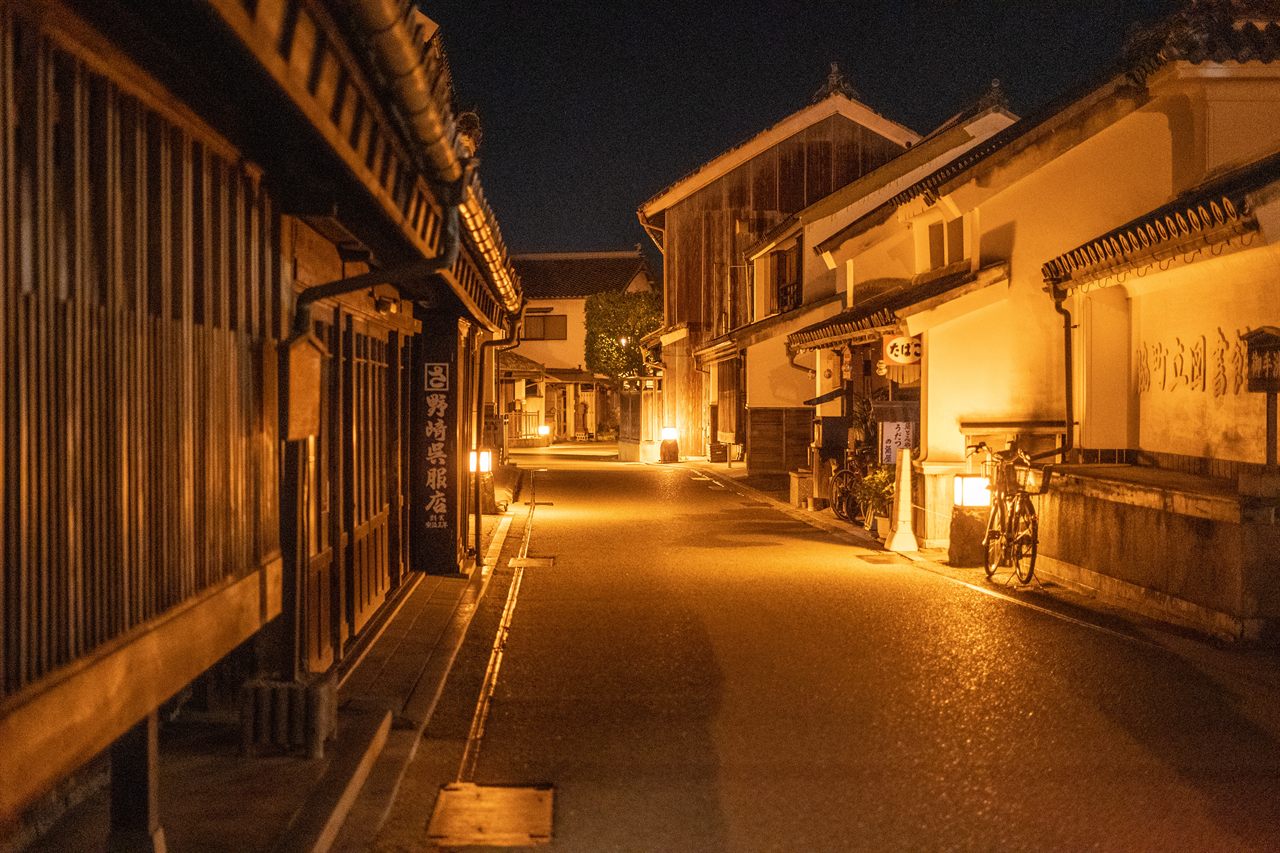
Staying the night changes the town. After dark the shopfronts along the street are lit by warm lamps, and the whitewashed udatsu stand out as pale shapes against the dark. For that hour alone it is worth looking at places to stay in Mima rather than treating Wakimachi as a stop on the road to somewhere else.
If you leave the same day, the highway bus toward the Kobe side departs from Wakimachi Bus Stop, and Anabuki Station across the river is the rail link on the Tokushima Line. Walk the street once more before leaving; the udatsu reward a second look in a different light.