This article covers a quiet day out from Kii-Katsuura to the sights gathered on the mountainside at Nachi: the waterfall, the grand shrine of Kumano Nachi Taisha, and the temple of Seiganto-ji beside it. It does not cover the longer Kumano Kodo walking routes beyond the Daimonzaka steps, nor the wider circuit to Kumano Hongu Taisha and Kumano Hayatama Taisha.
Getting to Nachi from Kii-Katsuura Station
Kii-Katsuura Station is where the day begins. A bus runs up to Nachisan, where the shrine and temple stand, while a shorter ride ends at the Daimonzaka stop, from which the old pilgrimage steps lead up on foot. A taxi is quicker, and those arriving by car pay a toll on the shrine's access road to use its parking.
| Route | Time | Fare |
|---|---|---|
| Bus, Kii-Katsuura Station to Nachisan | about 30 minutes | 630 yen one way |
| Bus, Kii-Katsuura Station to the Daimonzaka stop | about 20 minutes | 430 yen one way |
| Taxi, Kii-Katsuura Station to Nachisan | about 20 minutes | metered |
| Car: Kumano Nachi Taisha disaster-prevention road (toll required to use the parking) | — | 800 yen |
Kumano Nachi Taisha: gates and grounds
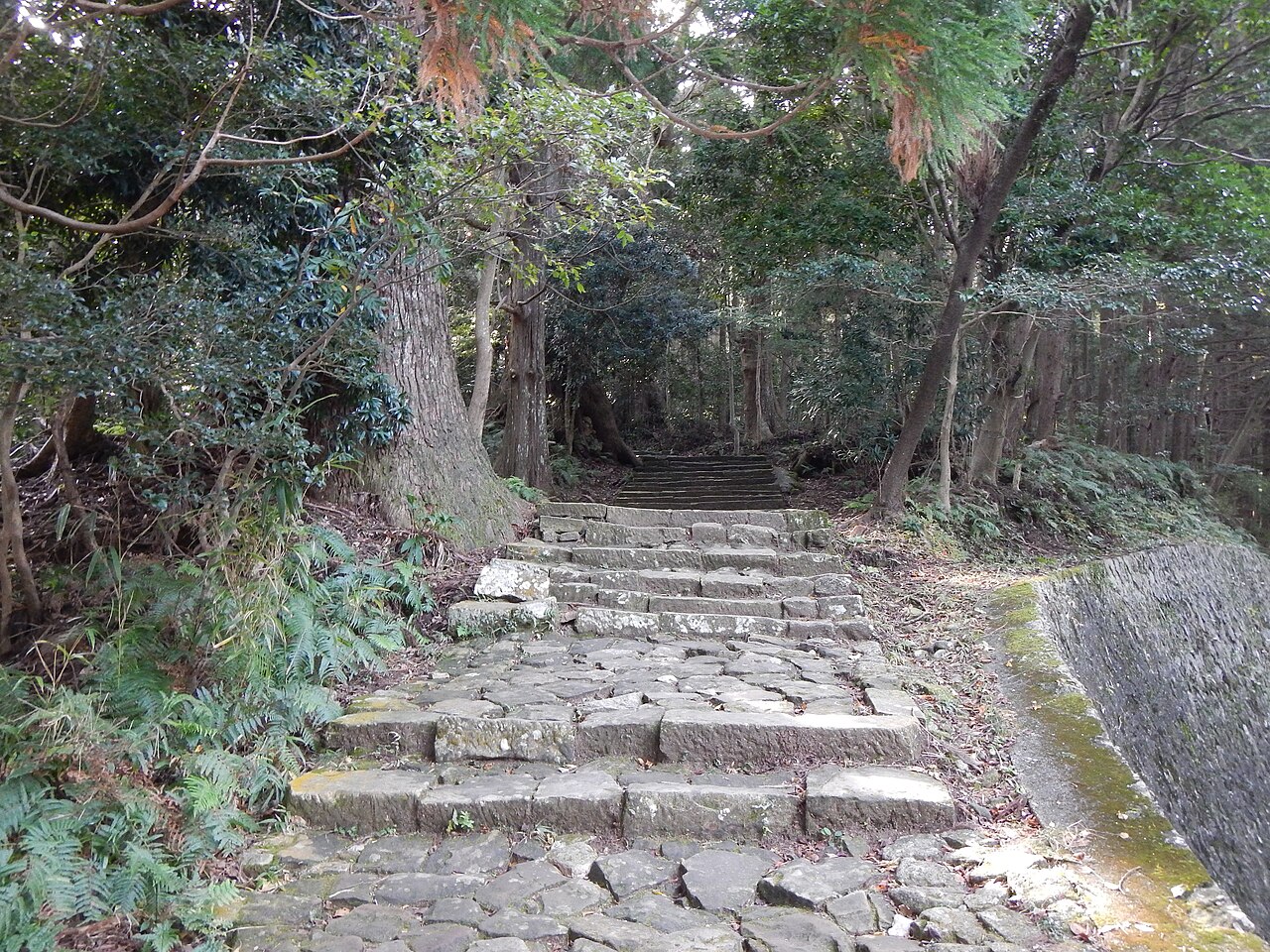
From Daimonzaka, the approach to the shrine follows a solemn stone stairway through an avenue of towering cedars, a stretch of the Kumano Kodo, the old pilgrimage routes of Kumano. Moss and ferns line the edges of the steps, and the thick trunks close in on both sides. Kumano Nachi Taisha sits partway up the slopes of Nachisan.
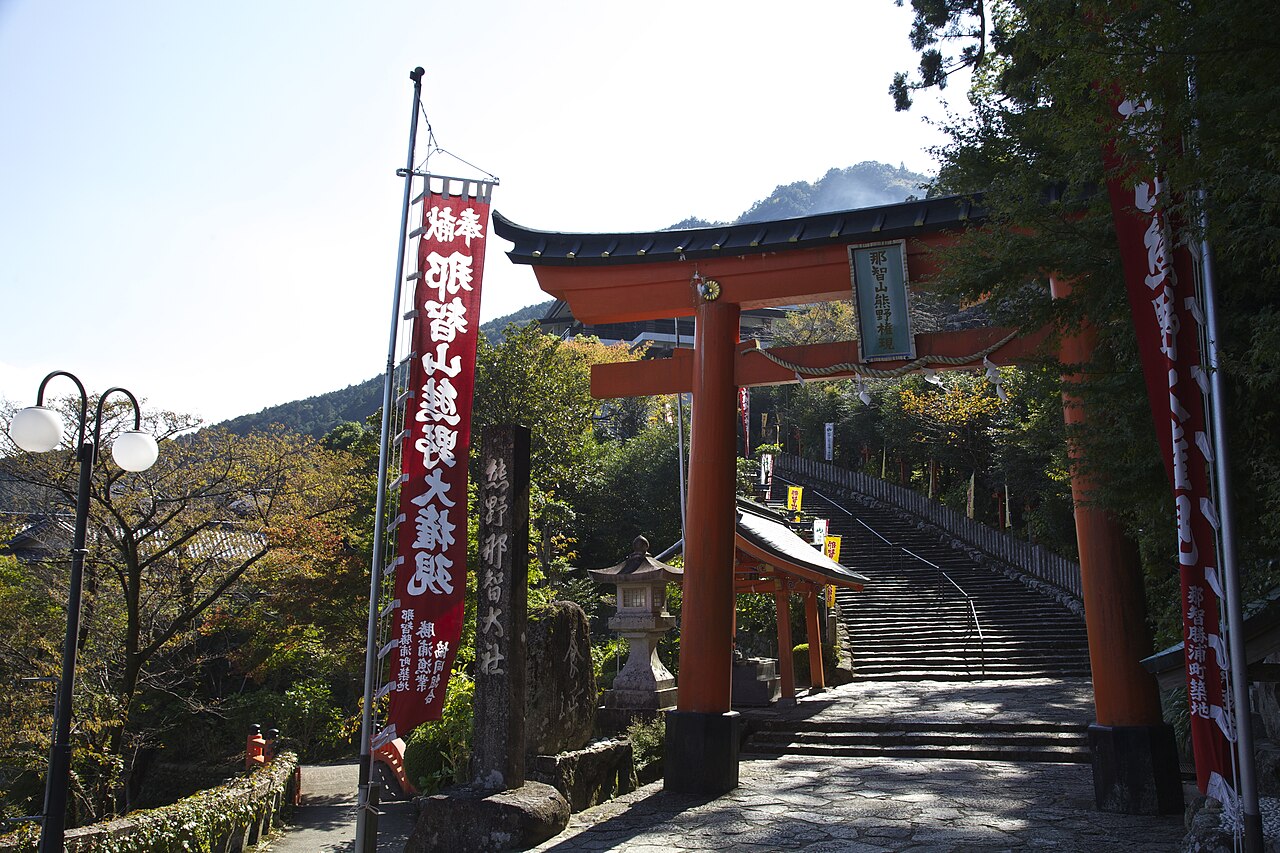
A tall vermilion torii stands at the foot of a stone stairway, and from here visitors climb four hundred and sixty-three stone steps to reach the precinct. The shrine's founding is traditionally dated to the fourth century, in the reign of Emperor Nintoku.
The main sanctuary consists of six halls built in the Kumano-gongen style of shrine architecture, and it enshrines the thirteen kami, or deities, of Kumano, with Kumano Fusumi no Okami as the principal one. The buildings are painted a vivid vermilion, and in the grounds stands a sacred nagi tree said to be a thousand years old.
A subsidiary shrine, Miagatahiko-sha, honours Yatagarasu, the crow of Japanese legend, and a stone called the Karasu-ishi, the crow stone, is linked to the bird by tradition. Nearby stands a huge camphor tree, about eight hundred and fifty years old, whose hollow trunk visitors can walk through. The shrine is traditionally called the foremost place in Japan for miraculous blessings.
A shrine recorded for centuries
A guide to touring the Kumano district of Kishu, published in the Taisho era in the early twentieth century, describes the shrine much as pilgrims found it in those years. At the entrance to the sacred path it notes the Furigase Bridge, whose railings carry ornamental finials, called giboshi, donated by Tokugawa Yorinobu, the first lord of the Kishu domain.
In that period the shrine went by its older name, Kumano Fusumi Jinja, and held the rank of prefectural shrine under the grading system of the day. The guide places it at the point reached after climbing the stone steps, which is where the vermilion halls stand today.
Next to the shrine, the same guide records the Nachi Kannon Hall, the temple now known as Seiganto-ji and the first temple of the Saigoku pilgrimage, and it notes that a flight of stone steps leads down from there to Nachi Falls. That sequence of shrine, temple and waterfall is still the shape of a visit today.
Where to stay
Places to stay near Nachikatsuura, Wakayama →
Disclosure: This post may contain affiliate links. If you book through them, we may earn a commission at no extra cost to you.
Nachi Falls
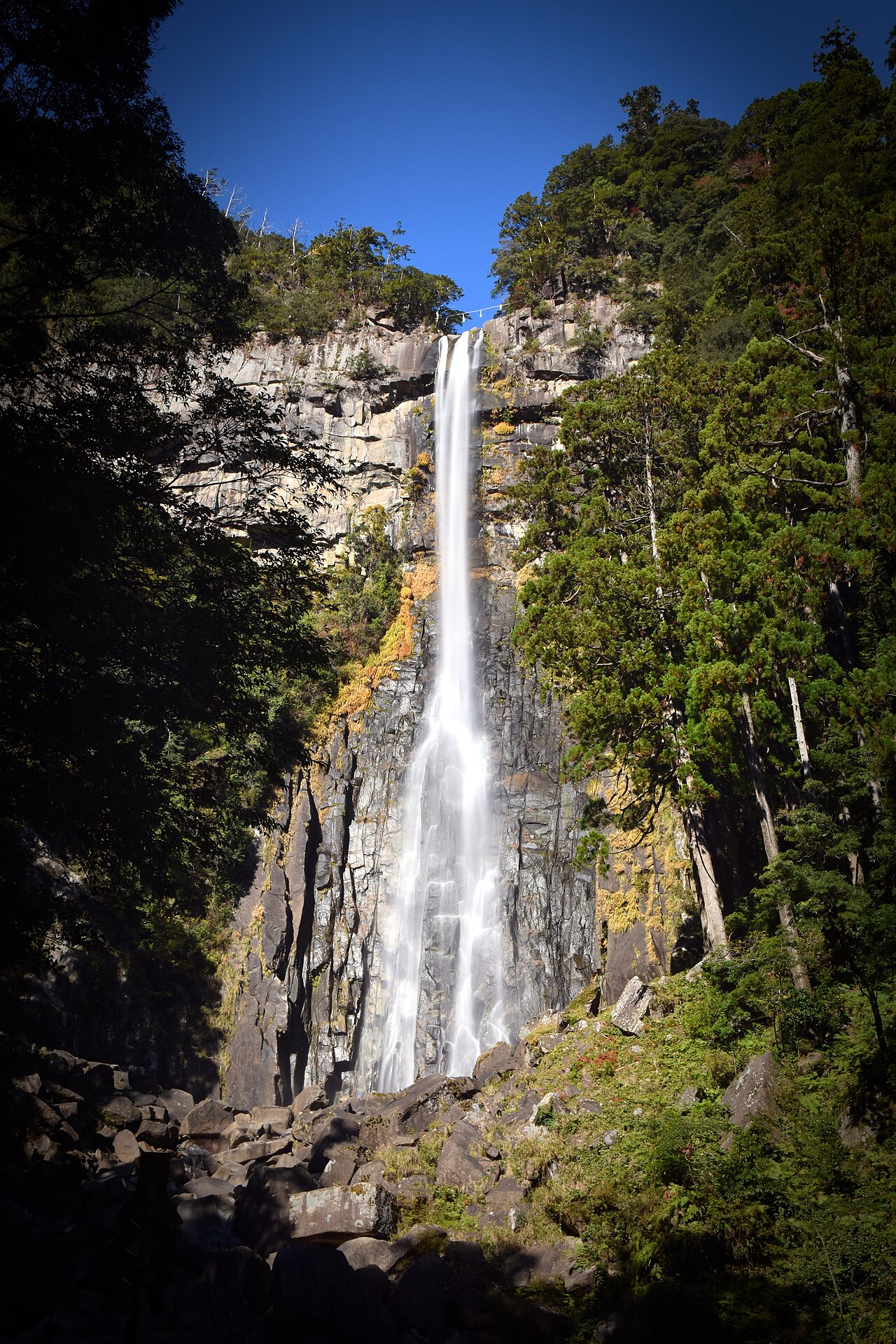
The falls drop in a single unbroken column down a sheer face of rhyolite, a type of volcanic rock, and the roar of the water carries through the surrounding hills and valleys. Among Japanese waterfalls it stands out for the height of that single leap, a thin white ribbon set against grey rock and dense cedar slopes.
Further upstream lie Ni-no-taki and San-no-taki, set among ancient trees in scenery likened to a realm of the immortals. The great waterfall is itself the shrine: according to legend Hiro Jinja, also called Nachi no Otaki, was founded in the seventh century BCE to venerate the falls as the deity, which is why it has no main hall.
Bottles made for carrying home water from the falls are sold here, a light and unusual souvenir. Otherwise there is little to do but stand for a while, let the steady roar fill the quiet of the forest, and then turn back toward the temple above.
Seiganto-ji: the pagoda and the pilgrimage
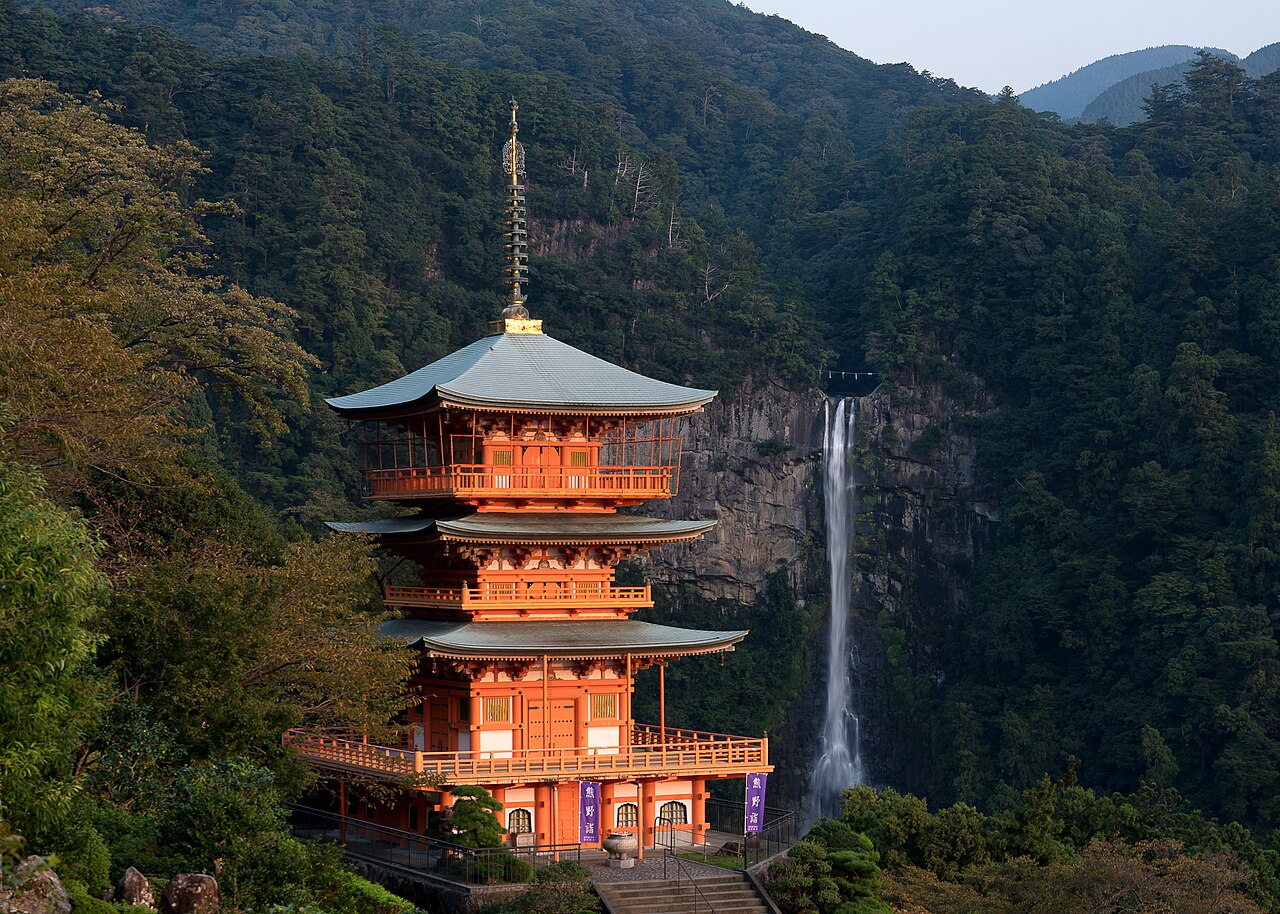
Seiganto-ji is a temple of the Tendai school of Buddhism, with a bell tower and a treasury among its buildings. Its main hall was rebuilt by Toyotomi Hideyoshi and repaired under Toyotomi Hideyori in the Keicho era, around the turn of the seventeenth century, and it was later placed under special protection as a historic structure.
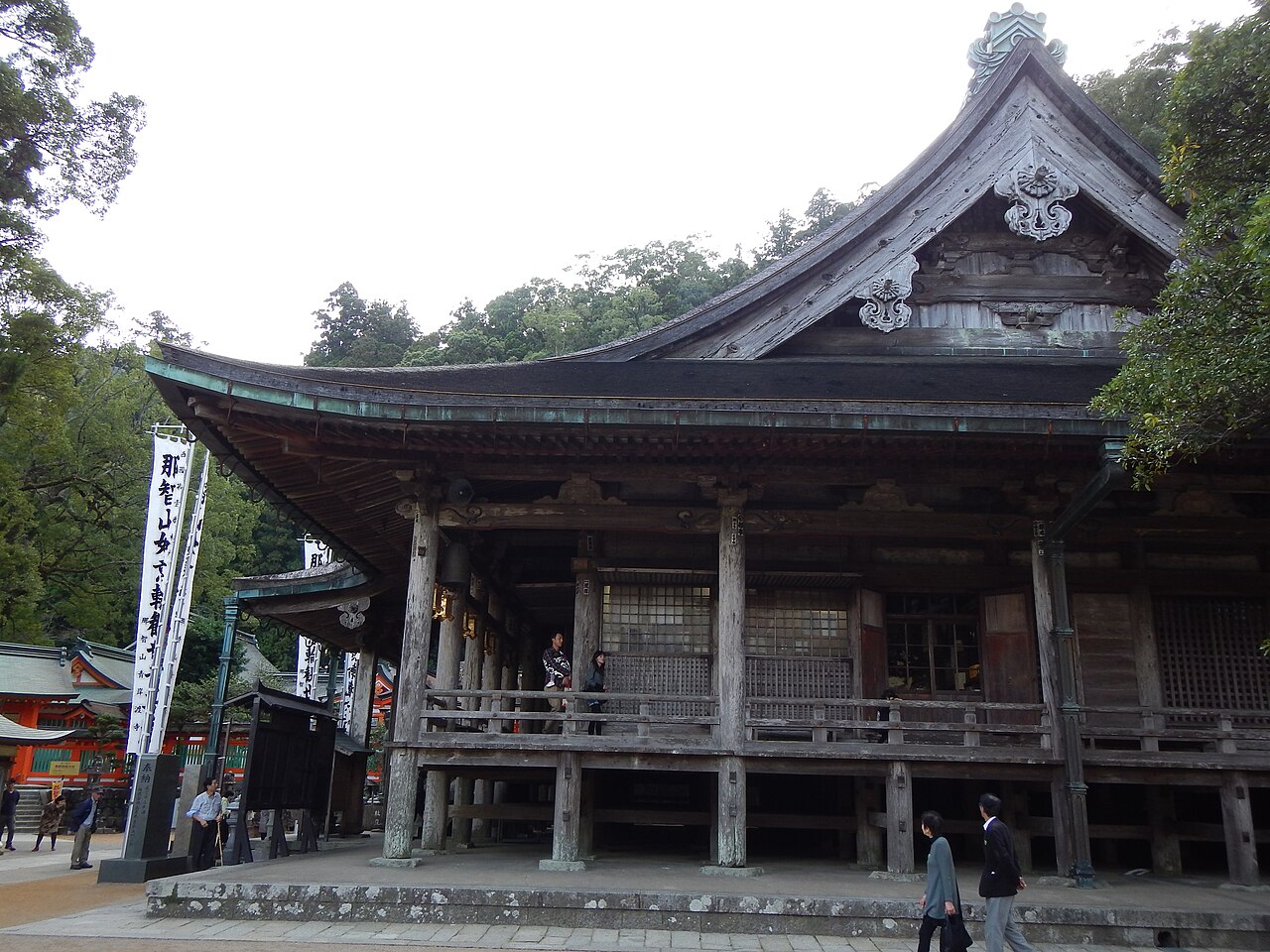
The principal image is a wooden seated statue of Nyoirin Kannon, a form of the bodhisattva of compassion shown holding a wish-granting jewel. Tradition holds that a golden figure is concealed within its chest, an image that the ascetic Ragyo Shonin is said to have received in a vision at the basin of Nachi Falls.
Tradition holds that the Saigoku pilgrimage of thirty-three Kannon temples was founded by the monk Tokudo Shonin, lapsed, and was revived by the retired Emperor Kazan with the monks Shoku Shonin and Butsugen Shonin, who made Nachi its starting point. A golden standing image of the Eleven-Faced Kannon kept here is said to have been Kazan's own devotional statue.
The three-storied pagoda is the building that appears in the classic view with the falls behind it, and it keeps its own admission and hours, separate from the temple gate. Both are set out below, together with the charge for those arriving by car.
| Item | Details |
|---|---|
| Seiganto-ji temple gate, open | 7:00 am to 4:30 pm, every day of the year |
| Three-storied pagoda, open | 8:30 am to 4 pm |
| Pagoda admission, adults | 500 yen |
| Pagoda admission, elementary and junior high school students | 300 yen |
| Pagoda admission, groups of 30 or more, adults | 400 yen |
| Pagoda admission, groups of 30 or more, elementary and junior high school students | 240 yen |
| Access road for cars to Seiganto-ji (toll and parking included) | 800 yen |
Planning a quiet visit
Because Seiganto-ji is the first temple of the Saigoku pilgrimage, pilgrims arrive throughout the year, and the sound of sutras being chanted carries across the temple grounds in every season. This is worth knowing before you go: the quiet of Nachi is not an empty quiet but one shaped by long, steady, unhurried devotion.
Walking up from Daimonzaka rather than riding straight to the top gives the day a natural shape: the cedar-lined steps first, then the shrine, the temple and finally the falls. Check official information before visiting, and if you would rather not hurry back the same afternoon, consider places to stay in Nachikatsuura.