This guide follows a single day on foot in Mito, the capital of Ibaraki Prefecture, beginning with how to reach the sights from the city centre. It covers Kairakuen and its plum groves, the villa Kobuntei, the Togyokusen spring and the moso bamboo grove, the domain school Kodokan, the Mito Castle ruins, and two shrines tied to the same Tokugawa family.
Getting to Mito and Between the Sights
Mito Station is the gateway to the prefectural capital, and guidebooks describe it as a junction where every train on the JR Joban Line stops, where highway bus services arrive and depart, and where the Mito Line and the Oarai-Kashima Line of the Kashima Rinkai Railway begin.
- From the North Exit of JR Mito Station, Kodokan is about an eight-minute walk.
- Bus route ten, bound for Kairakuen, leaves from stop four at the North Exit of Mito Station and reaches Kodokan in about three minutes.
- A round trip by bus between Mito Station and Kairakuen costs five hundred forty yen at the regular fare.
In the plum season only, the Joban Line's Kairakuen Station is said to operate as a temporary stop for down-bound train services, so visitors coming from the Tokyo side can step off there and begin the day at the garden itself. If you would rather have someone else handle the logistics, you can browse guided tours around Mito.
Kairakuen and the Plum Season
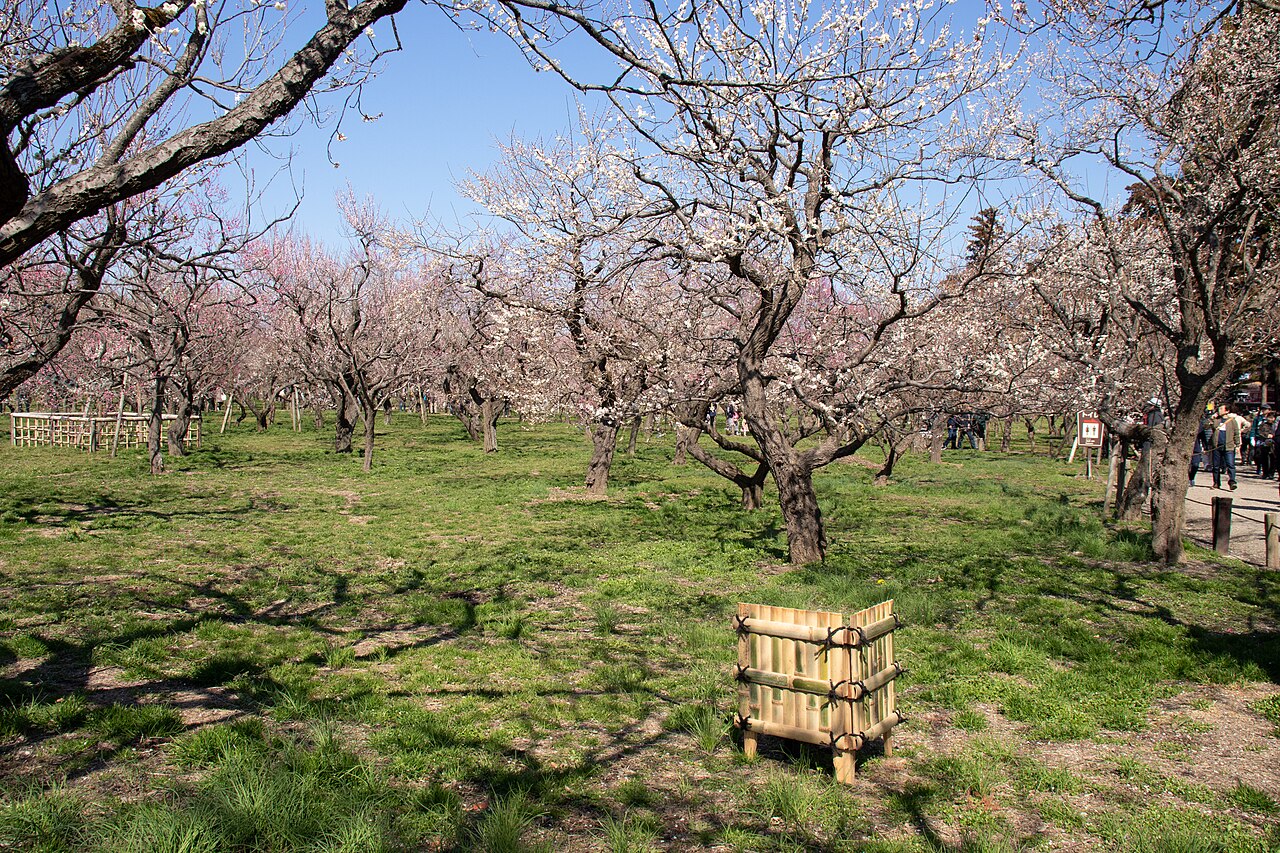
Kairakuen is known across Japan for its plum blossom. Guides describe the garden as holding about one hundred varieties and three thousand trees, with early bloomers coming out in mid-January, mid-season trees in early February and the late ones in early March. The Mito Plum Festival, held from mid-February to mid-March, draws many visitors each year.
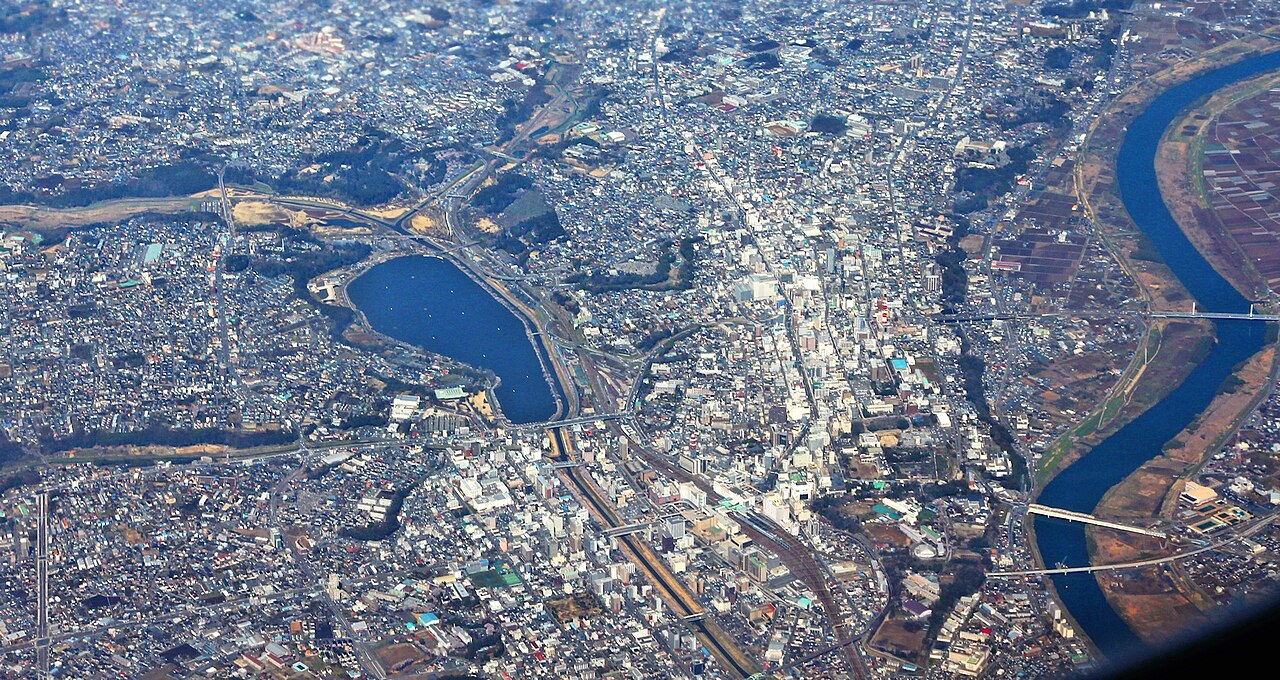
Laid out in eighteen forty-two by Tokugawa Nariaki, the ninth lord of the Mito domain, Kairakuen is counted among the three great gardens of Japan. It was meant for ordinary townspeople from the start, and its name is said to mean enjoying it together with them. Nariaki designed Kobuntei himself, and the Senekidai terrace looks out over Lake Senba.
| Kairakuen garden | Detail |
|---|---|
| Kairakuen garden hours, mid-February to the thirtieth of September | six in the morning to seven in the evening |
| Kairakuen garden hours, the first of October to mid-February | seven in the morning to six in the evening |
| Kairakuen admission outside the plum festival, general adult | three hundred twenty yen |
| Kairakuen admission outside the plum festival, general child | one hundred sixty yen |
| Kairakuen admission during the plum festival, general adult | five hundred yen |
| Kairakuen admission during the plum festival, general child | two hundred fifty yen |
| Kairakuen group admission during the plum festival, adult | three hundred eighty yen |
| Kairakuen group admission during the plum festival, child | one hundred ninety yen |
| Kairakuen free entry | from opening time until nine in the morning, except during the plum festival period |
Kobuntei, the Villa Above Lake Senba
Kobuntei was one of Nariaki's villas and is described as the finest viewpoint in Kairakuen. The building rises three storeys, and from the Rakujuro room on the top floor the view is said to take in Lake Senba and the surrounding hills.
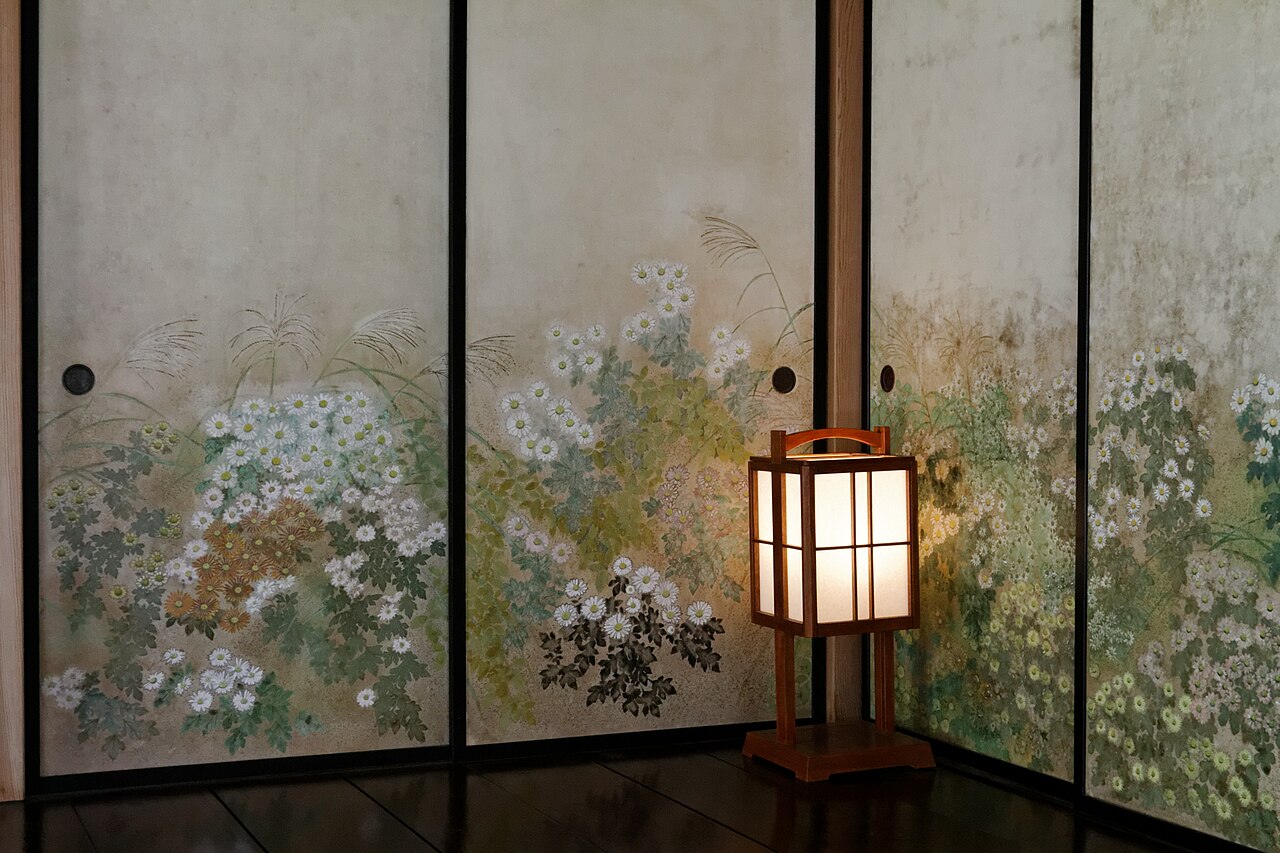
Inside, the villa holds a lacquered great hall, a series of rooms whose sliding paper doors carry painted designs, waiting rooms once used by samurai attendants, and a hand-operated lift that is said to be the oldest of its kind in Japan.
- From the first of October to mid-February, Kobuntei is open from nine in the morning to half past four in the afternoon, with last admission at a quarter past four in the afternoon.
- Kobuntei is closed from the twenty-ninth to the thirty-first of December.
Where to stay
Places to stay near Mito, Ibaraki, Japan →
Disclosure: This post may contain affiliate links. If you book through them, we may earn a commission at no extra cost to you.
Spring Water, Bamboo and Shrines Beside the Garden
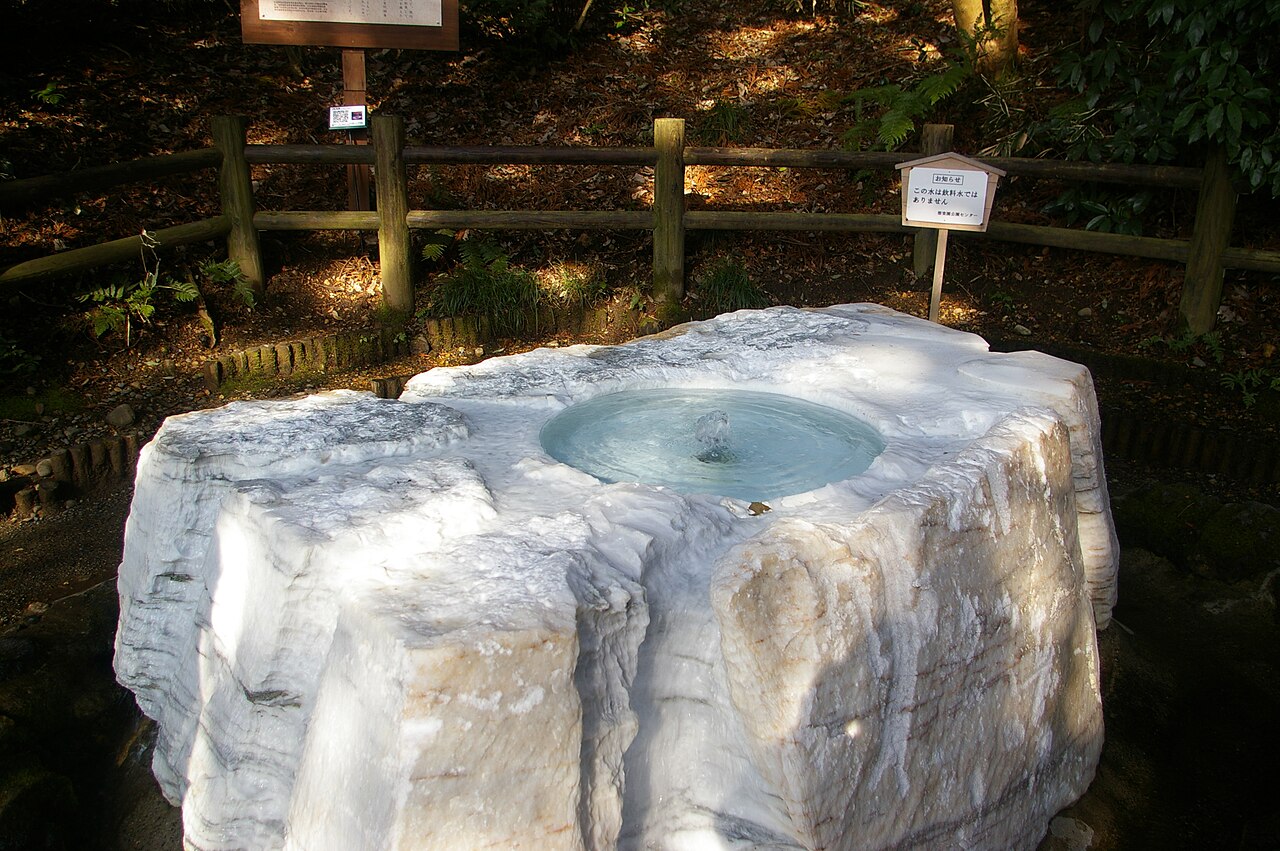
Togyokusen is a spring inside Kairakuen. Its basin of white kansuiseki marble from Hitachiota, set against the surrounding greenery, is described as Nariaki's own design, and the water is said to have been good for ailments of the eyes.
The moso bamboo grove is said to have been brought from Kyoto by Nariaki to supply wood for bows, and cut stems are reused as fencing along its paths. Shrines flank the garden: Tokiwa Shrine to the east, dedicated to the lords Mitsukuni and Nariaki, and Ibaraki Gokoku Shrine to the west, for the prefecture's war dead, with a wooded precinct.
Kodokan, the Old Domain School
Kodokan faces the Great Gate of Mito Castle. Founded in eighteen forty-one by Nariaki, it was the domain school where Mito's samurai trained, and is described as the largest institution of its kind in Japan at the time, teaching subjects from Confucian classics to astronomy. Much of it is said to have escaped wartime destruction and survives as it was.
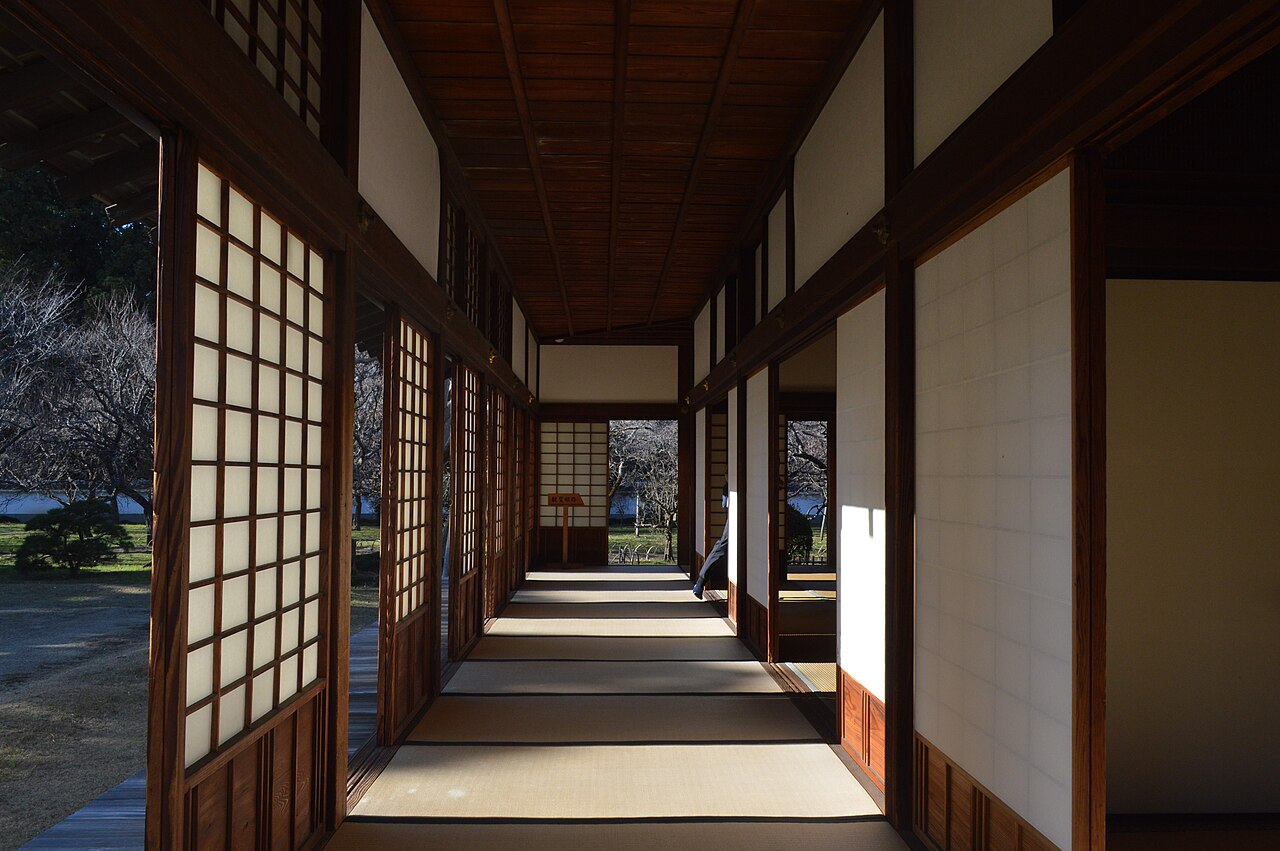
The grounds are a Special Historic Site, and the main gate, the main hall and the Shizendo hall are Important Cultural Properties. In the main hall, examinations and ceremonies were held with the lord in attendance, and a plaque in Nariaki's own hand still hangs there. Where the Bunkan hall once stood there is now a plum grove.
Tokugawa Yoshinobu, Nariaki's son and later the fifteenth shogun, studied here as a boy and, after handing power back to the emperor, is said to have spent about four months here in seclusion. Nariaki conceived Kodokan and Kairakuen as a pair: the school for training in letters and arms, the garden for rest afterwards to restore body and mind.
| Kodokan | Detail |
|---|---|
| Kodokan individual admission, adult | four hundred twenty yen |
| Kodokan individual admission, elementary and junior high school student | two hundred ten yen |
| Kodokan individual admission, senior aged seventy or over | two hundred ten yen |
| Kodokan group admission of twenty or more, adult | three hundred twenty yen |
| Kodokan group admission of twenty or more, elementary and junior high school student | one hundred sixty yen |
| Kodokan opening hours, the twentieth of February to the thirtieth of September | nine in the morning to five in the afternoon |
| Kodokan opening hours, the first of October to the nineteenth of February | nine in the morning to half past four in the afternoon |
The Mito Castle Ruins
The castle ruins sit at the eastern tip of a long, narrow plateau between the Naka River and Lake Senba. First raised by the Baba family in the early Kamakura period, the castle passed through the Edo and Satake families before becoming the seat of the Mito Tokugawa.
The Yakui Gate, from the Azuchi-Momoyama period, is the only original building left on the site and is thought to have been the front gate of the main enclosure. Elsewhere on the site you can trace dry moats and earthen ramparts.
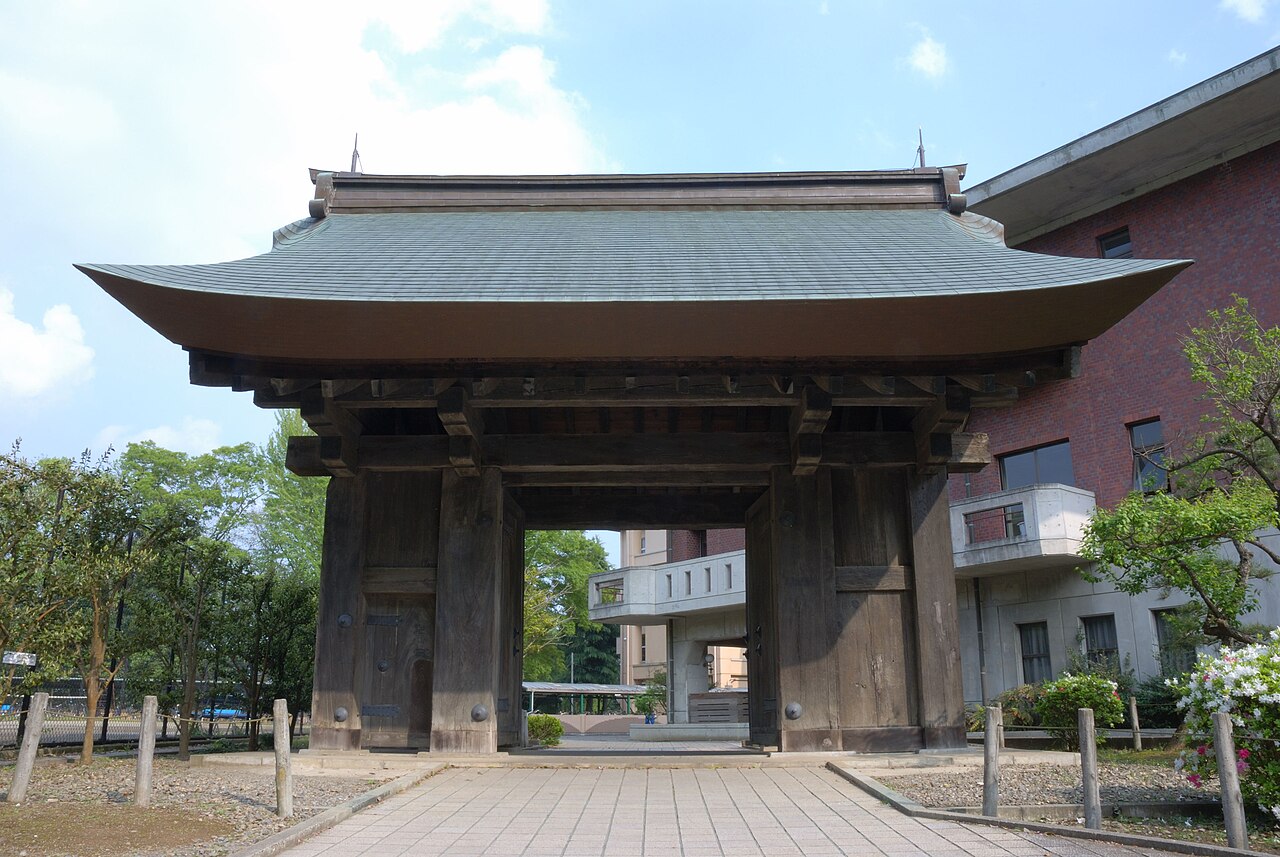
The Great Gate, described as a massive structure, was rebuilt in two thousand twenty on the model of its appearance in the Tenpo era, and the corner turret of the second enclosure followed in two thousand twenty-one. Both are shown to the public.
Mito Toshogu and Kodokan Kashima Shrine
Mito Toshogu dates from sixteen twenty-one, when Tokugawa Yorifusa enshrined his father Ieyasu here; locals are said to call it Gongen-san. The ceiling of the front porch is painted with red and white plum blossom and a bush warbler. In the grounds stands the Anshinsha, an iron war cart built on Nariaki's orders and said to be Japan's oldest.
Kodokan Kashima Shrine, in Kodokan Park, was founded in eighteen fifty-seven as a branch of Kashima Jingu. Burned in the air raids, it was rebuilt in nineteen seventy-four with a former sanctuary building granted by Ise Jingu. A stone in the grounds carries a poem about the kaname-ishi in Nariaki's own hand. If you want to stay overnight, compare places to stay in Mito.