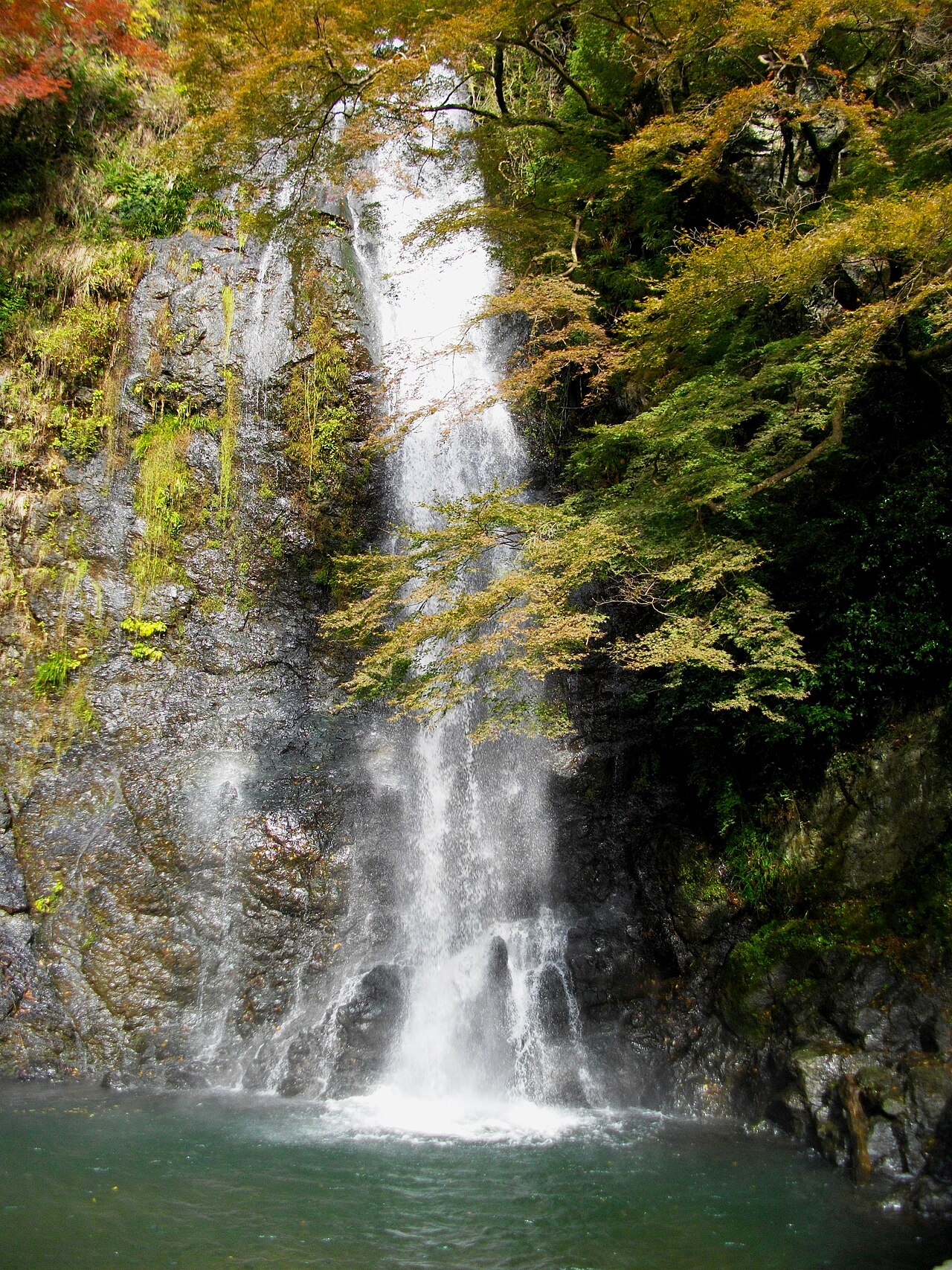
This guide follows the Takimichi path from the edge of town up to Minoh Falls, pauses at Ryuanji temple on the way, and then heads higher to Katsuo-ji; the town's museums and the villages further north are left for another day.
Getting to Minoh
Minoh sits at the northern edge of Osaka's built-up sprawl, close enough that both of the region's airports feed into it by rail. From Itami Airport the approach is a short monorail hop followed by two changes on the Hankyu network; from Kansai Airport the first leg is the Nankai ride into Namba, in the heart of the city.
| Leg | How | Time or charge |
|---|---|---|
| Itami Airport to Hotarugaike Station | Osaka Monorail | 3 minutes |
| Hotarugaike Station to Ishibashi-Handaimae Station | Hankyu Takarazuka Line express | 2 minutes |
| Ishibashi-Handaimae Station to Minoh Station | Hankyu Minoh Line | 6 minutes |
| Kansai Airport to Namba Station | Nankai train | 50 minutes |
| Minoh Station to Minoh Falls | On foot along the Takimichi path | about 40 to 50 minutes |
| Dainichi Parking Lot No. 2 (book-ahead, 4 vehicles) | By car | fee of 3,000 yen |
| Large tour bus lot in front of Minoh Station (book-ahead, 5 vehicles) | By coach | free of charge |
Once you step off at Minoh Station, no further transport is needed: the falls are about a forty to fifty minute walk up the Takimichi path, and the way is described in the next section. For anyone who would rather leave the connections to someone else, there are also day tours from Osaka to Minoh that start in the city.
Walking Takimichi to the Falls
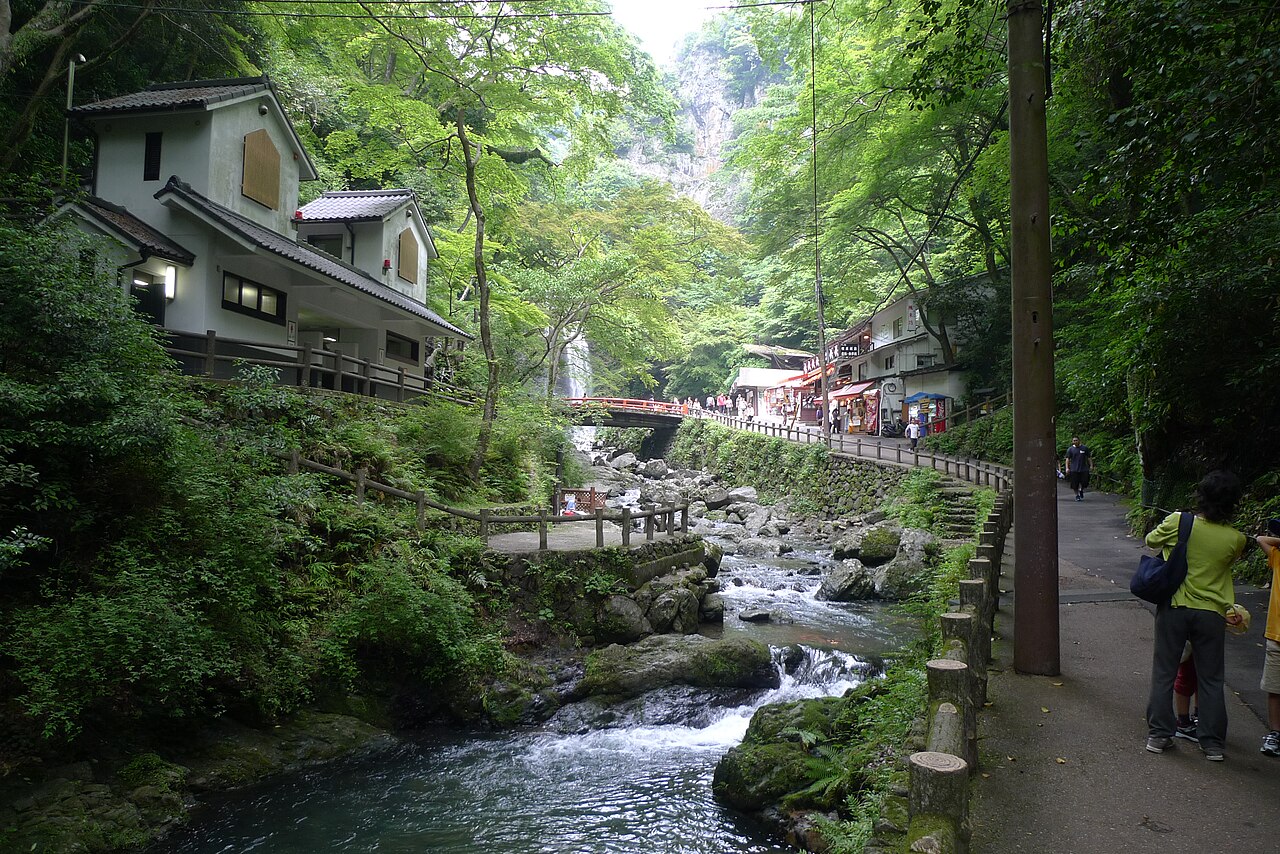
From Minoh Station to Minoh Falls is about a forty to fifty minute walk, and the whole route stays inside Minoh Park, which is run as a prefectural park and forms part of the Meiji no Mori Minoh Quasi-National Park. The path runs beside a mountain stream, with a row of traditional shops near the start.
The path has a few gentle rises but no harsh climbs, so it is a comfortable walk all the way to the falls. The Minoh Park Insect Museum, about fifteen to twenty minutes from the station, is a handy marker that you are well on your way; from there the going stays just as kind.
The main falls stand thirty-three meters tall and are listed among Japan's Top One Hundred Waterfalls. Around one million two hundred thousand people come each year, which makes them Minoh City's signature sight. The ground is said to have long been sacred to Shugendo, a tradition of mountain asceticism, and to be where the ascetic En no Gyoja trained.
Souvenir shops along the path sell tempura-fried maple leaves, the local specialty, and a few places near the path pour Minoh Beer, the town's own craft brew, which makes a fair reward once you are back down. Both sit right beside the walk, so there is nothing to plan; you simply pass them on the way.
Where to stay
Places to stay near Minoo, Osaka →
Disclosure: This post may contain affiliate links. If you book through them, we may earn a commission at no extra cost to you.
Ryuanji Temple Along the Path
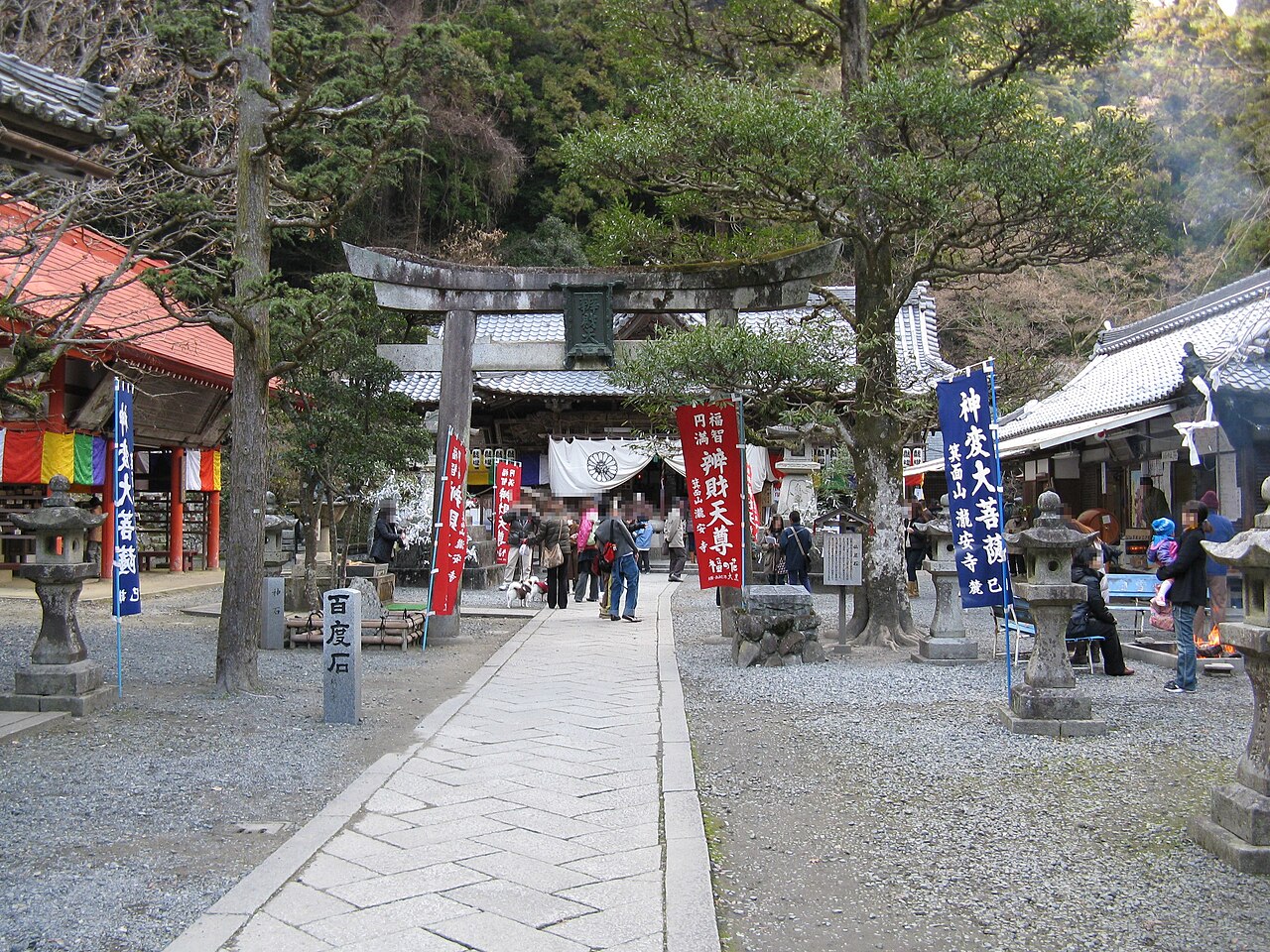
Partway along the Takimichi stands Ryuanji, an old temple of the Shugendo tradition dedicated to the goddess Benzaiten. According to tradition it issued the Minoh Fukutomi, a lottery of the Edo period, and for that reason it is known as the temple where Japan's lottery custom began.
The stone torii gateway and prayer banners at the entrance stand right beside the path, so the stop adds no detour. It makes a natural pause on the way up, and the wooded setting suits a slow look around before the last stretch to the falls.
From Railway Resort to Quiet Neighbourhood
Minoh's modern story begins with the railway. Hankyu's forerunner, the Minoh-Arima Electric Tramway, opened its Minoh and Takarazuka routes in nineteen-ten, and Minoh was one of the two resort destinations that carried the young company through its first years. Bringing visitors up to the falls was thus part of the company's earliest business.
On the high ground north of the railhead, Minoh once had a zoo, among the largest in Japan, with a Ferris wheel, an aquarium, and an ornate gate, and it rivalled the falls. Built into the terrain, it was hard to manage in emergencies and expensive to maintain, complaints over waste disposal mounted, and it closed after about five years.
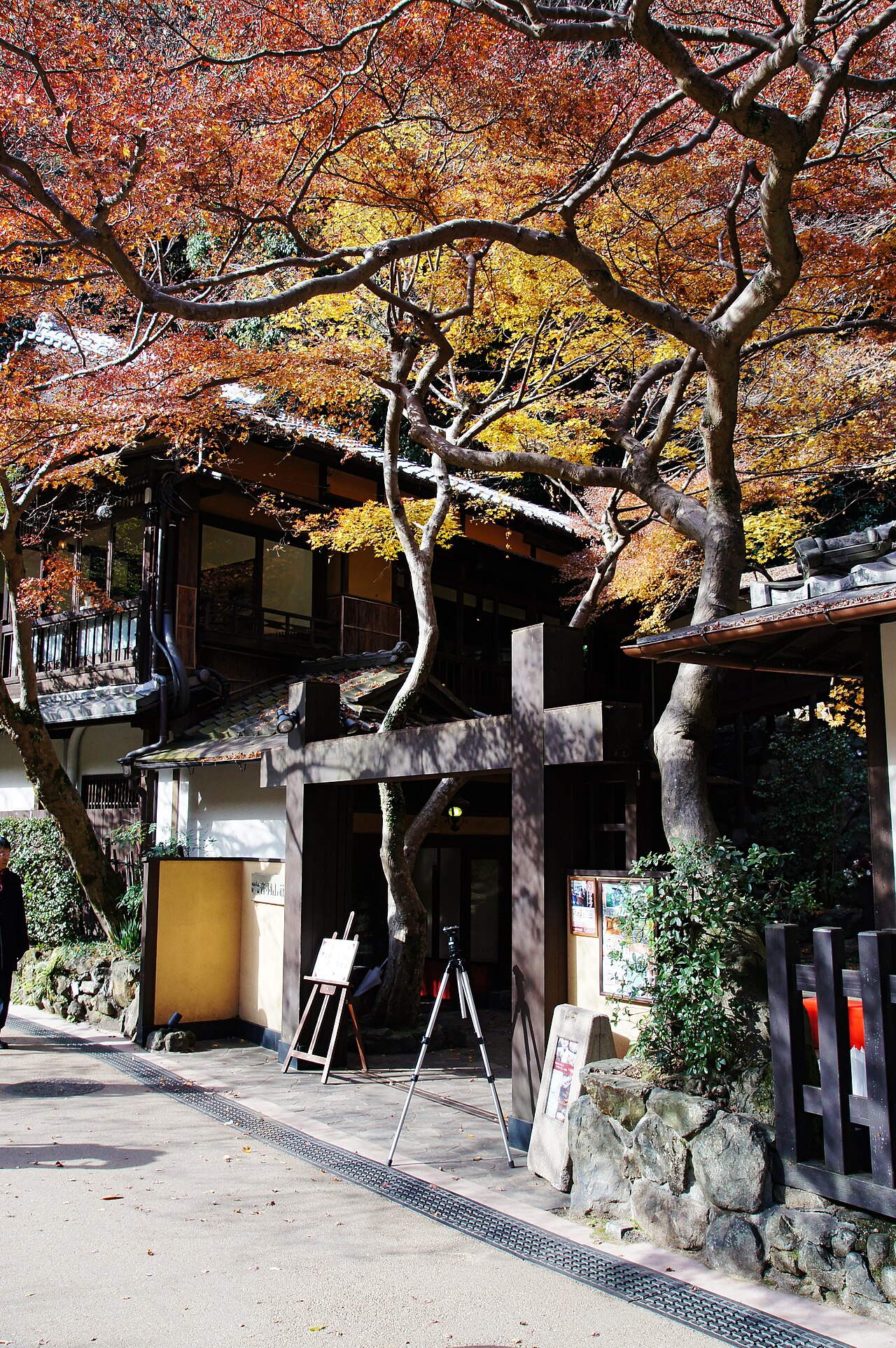
After the zoo closed, Minoh Falls kept its standing as a leading outing spot in the Hokusetsu area, and it is still the natural landmark that defines the town. Present-day Minoh blends quiet residential neighbourhood and resort town, a character shaped by Hankyu's housing developments layered onto generations of visitors drawn to the falls.
Katsuo-ji Temple in the Hills Above
Katsuo-ji lies higher in the hills and is reached by a different route from the falls. Take the Kita-Osaka Kyuko line to Minoh-Kayano Station, then a Hankyu bus to the Katsuo-ji stop; the temple is a short walk from there. It is a separate outing from the Takimichi rather than a continuation of it.
The temple is said to have been founded in the Nara period, and it is the twenty-third stop on the Saigoku pilgrimage, a circuit of thirty-three temples in western Japan. Its grounds run to roughly eighty thousand tsubo, an old Japanese land unit, with numerous halls scattered across the wide hillside site.
| Visitor | Admission |
|---|---|
| Adults (high school age and above) | 500 yen |
| Elementary and junior high school students | 400 yen |
| Children not yet in elementary school | 100 yen |
| Children aged 2 and under | free |
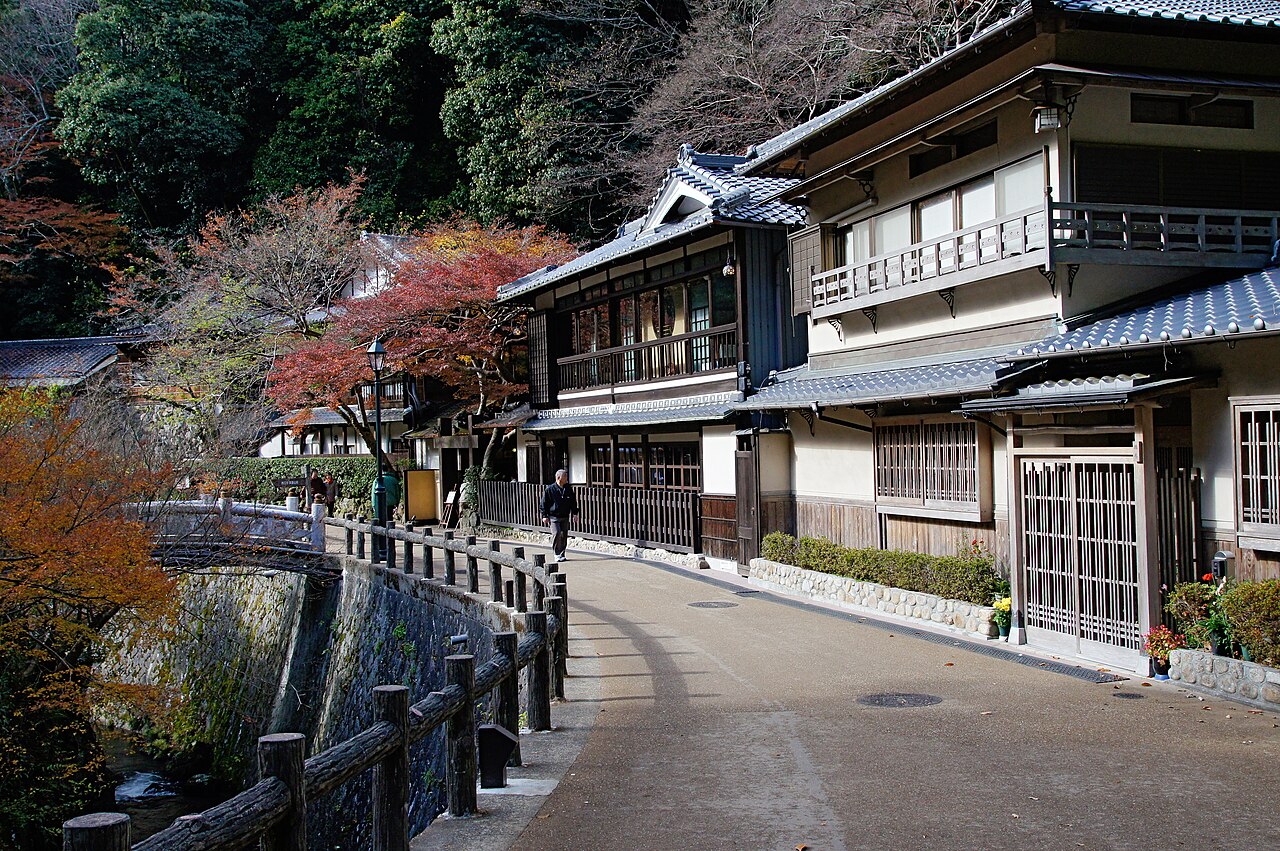
In the cherry blossom and autumn foliage seasons the temple holds special evening viewing, with the grounds lit after dark. If you want to see that without racing back to the city the same night, there are places to stay near Minoh Falls that keep both the falls and the hills within easy reach.