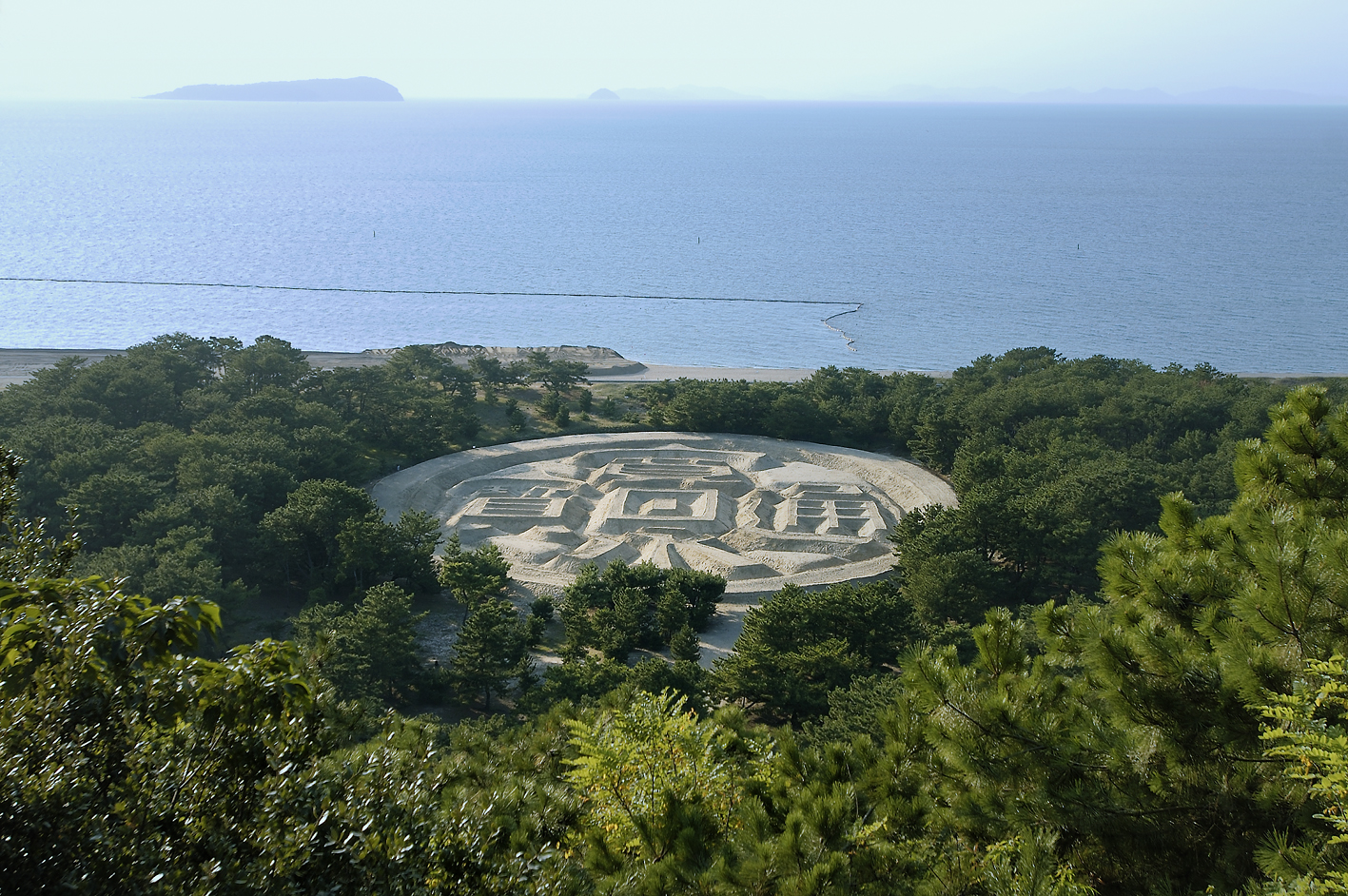
From the summit of Mount Kotohiki in Kanonji, the Zenigata sand picture lies with Ariake Beach, white sand and green pines, against the Seto Inland Sea. This coin-shaped picture has been used in the title sequence of the TV programme Zenigata Heiji. Stone steps climb to Kotohiki Hachimangu, two pilgrimage temples share one precinct, and the town serves soft udon and morning ramen.
The Zenigata Sand Picture and Its Night Lighting
The Zenigata sand picture is generally said to have been made overnight in the Kan'ei era of the Edo period to welcome the domain lord. From the summit of Mount Kotohiki it looks like a neat circle, so the view from the top is where the picture makes sense. It is handed down that those who see the Zenigata will be healthy and long-lived and will not lack money.
After dark the picture takes on a different character under its lighting, which is normally green and for limited periods is switched to gold or blue. Pairing the daytime circle with its lit form after sunset is a reason to give the sand picture both ends of the day.
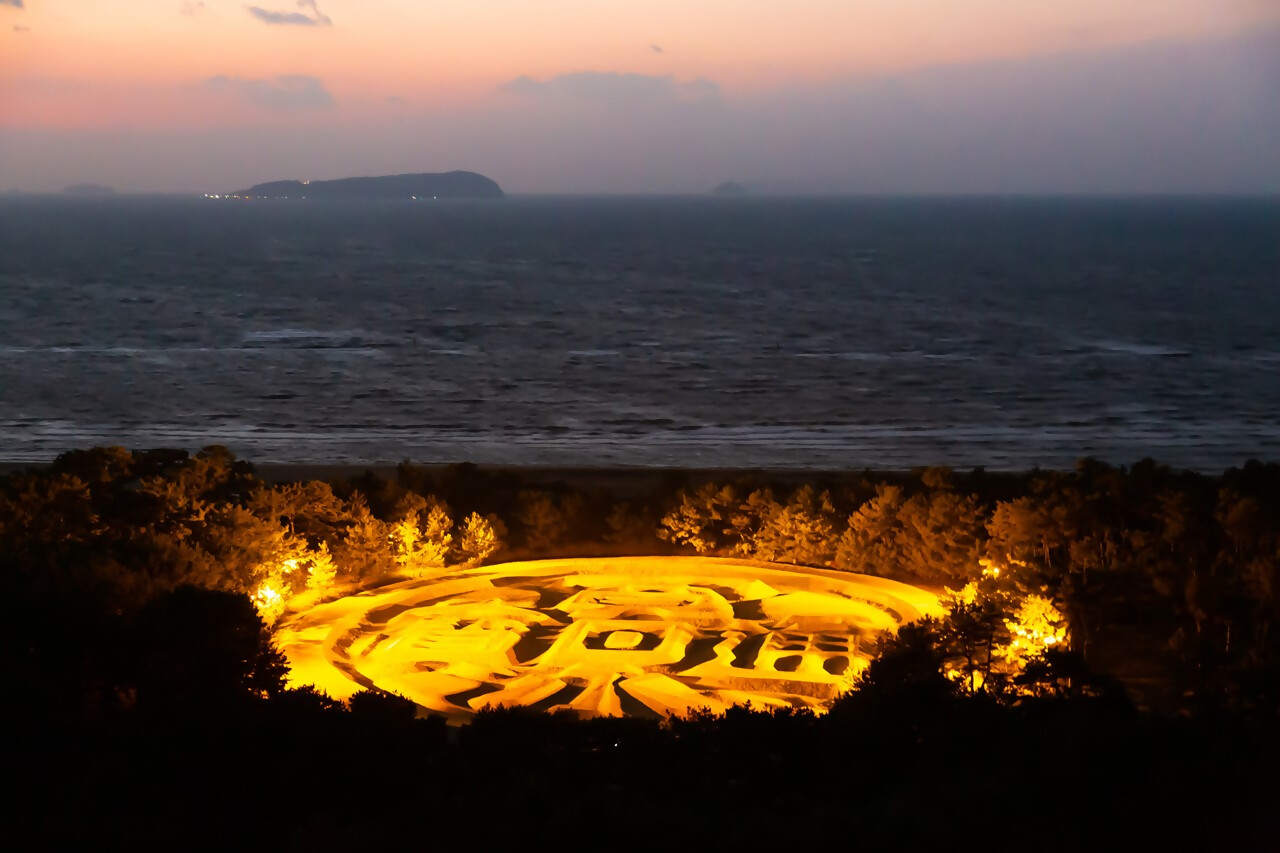
Keeping the lines sharp takes work: the sand picture is tidied every year in spring and autumn by several hundred people, mainly citizens. During that tidying, and as part of it, people can step inside the sand picture itself.
If you want to see the picture as a full circle, head for the summit of Mount Kotohiki, where Ariake Beach and the sea frame it.
Ariake Beach and Kotohiki Park by the Seto Inland Sea
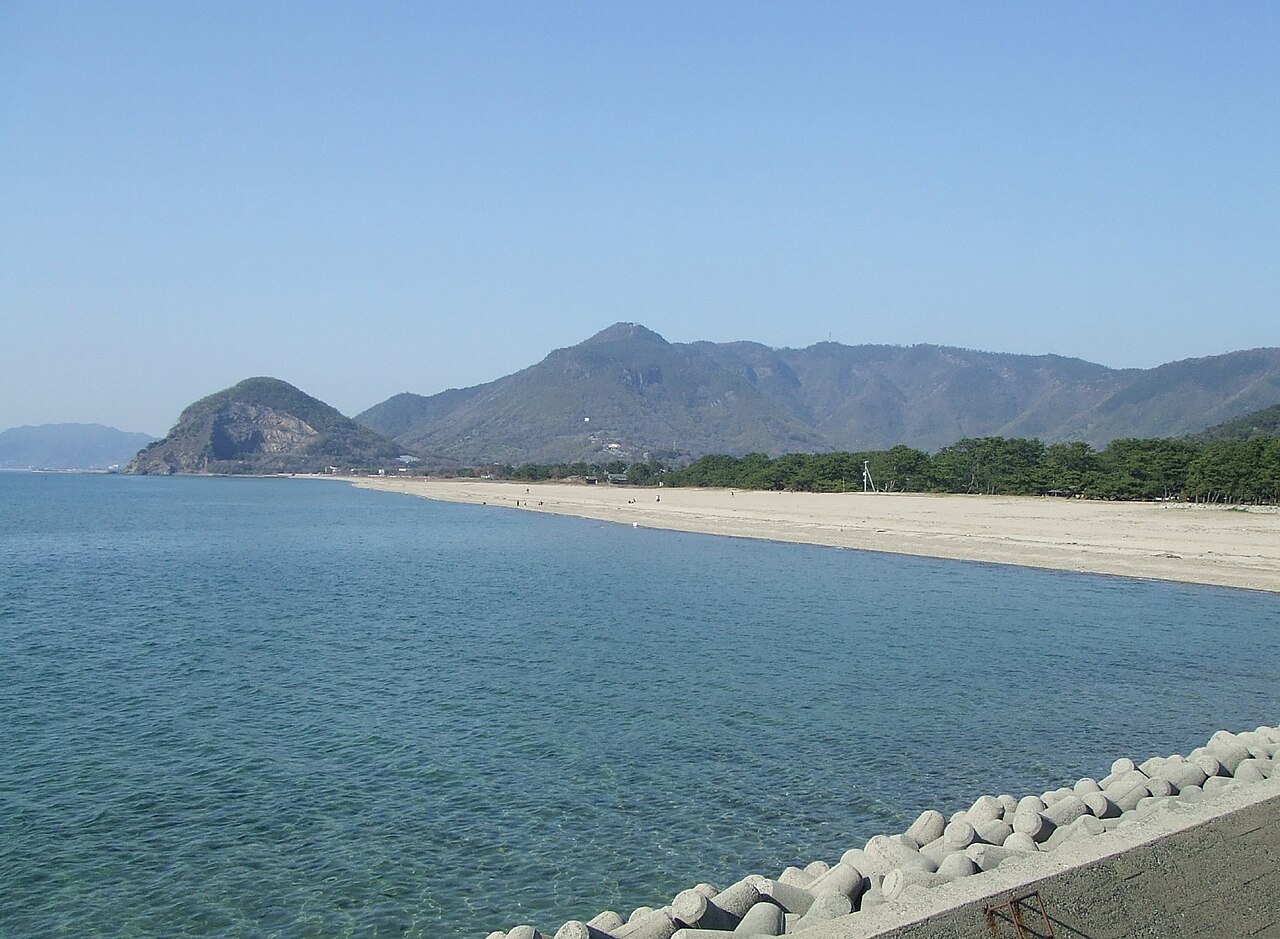
Ariake Beach is a shallow-water coast on the Seto Inland Sea, and its sand is still busy with many swimmers. The beach is part of Setonaikai National Park and appears in national selections of fine shores and of white sand and green pines. Its particular draw is the evening, when the sun sets into the sea off the beach.
Many coastal plants grow along the beach; they are designated as city cultural property and come into flower one after another from spring to autumn. Kotohiki Park spreads over a wide area, and its seasonal flowers include cherry blossoms, azaleas and camellias. The park is also in a national selection of sunset views, because of the sun sinking into the Seto Inland Sea.
Right next to the park's rest house stands a suikinkutsu, a sculpted instrument combining the Kan'ei Tsuho coin with the sound of a koto. Water drops falling into a jar buried in the ground give off a tone like a koto being played.
If you like seaside walks with the sun going down, save the beach and the park for the end of the day.
Kotohiki Hachimangu and the Stone Steps Above the Park
The stone steps up to Kotohiki Hachimangu climb from the great torii of Kotohiki Park to the main hall, three hundred eighty-one of them in all. On the way up stands a wooden torii said to have been dedicated by Minamoto no Yoshitsune in prayer for victory at Yashima.
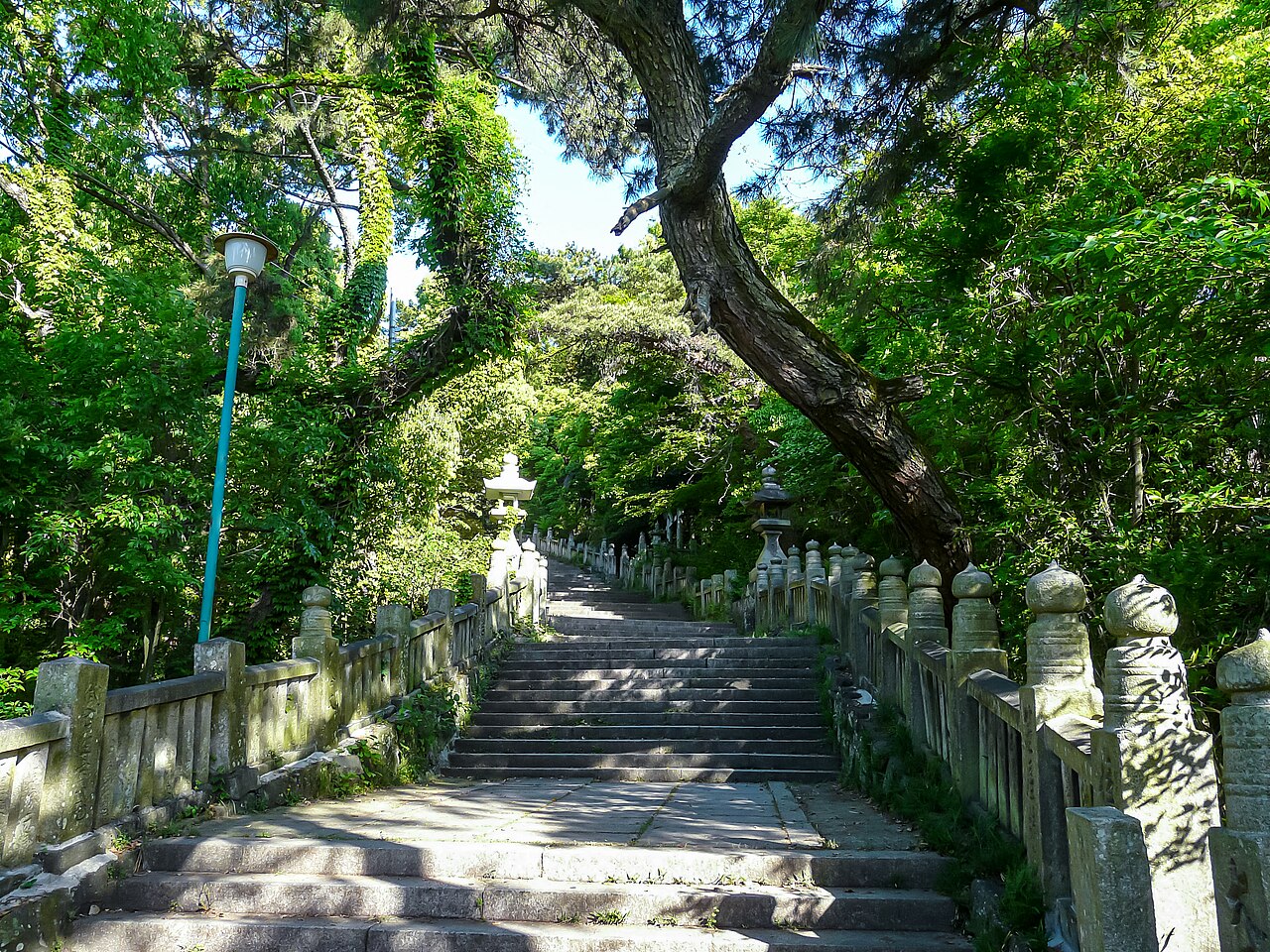
According to the legend, a high priest heard a sound after the western sky darkened, went down to the shore, and found an old man playing a koto on a boat. The priest and the villagers hauled the boat and the koto up the mountain, built a shrine named Kotohiki Hachiman, and founded a temple beside it that is now Kannonji.
Yoshitsune's prayer here for victory in the Genpei war survives in a prayer text and the dedication of a sacred horse. That history gives the shrine its standing as a god of victory, and many worshippers come to pray as exam candidates or before contests.
Jinnein Kannonji is a single temple holding two sites of the Shikoku pilgrimage, with Jinnein as the sixty-eighth and Kannonji as the sixty-ninth. The two came to share one precinct at the separation of Shinto and Buddhism in the early Meiji era. The Buddha statue from Kotohiki Hachimangu was moved to a hall of Kannonji then, and that hall became the sixty-eighth temple, Jinnein.
If you climb to the main hall, the Seto Inland Sea and the city of Kanonji appear in one view, with koto music tied to the shrine's origin playing.
Udon and Morning Ramen in Kanonji
Fukuya Udon, a self-service shop, serves udon of a softer texture alongside ramen and small side dishes. Its owner's motto puts selling heart ahead of selling udon. Shohachi Udon has several branches in Kagawa Prefecture, and its offering noodles are the ones presented to the head temple Zentsuji.
Near the port, Sanuki Ramen Ibuki Iriko Center serves morning ramen built on Ibuki iriko, a marine product of Kagawa Prefecture, used generously in the bowl. One bowl pairs a rich Ibuki iriko dashi with medium-thick flat noodles that cling together. The chuka soba has a golden soup of plenty of Ibuki iriko in chicken fat, light enough to eat quickly even early in the morning.
Elsewhere in town, Genpei is a long-established chuka soba shop in the traditional style, and another shop serves piping-hot udon.
If you want to start the day with a hot bowl, begin with the morning ramen near the port and leave the softer udon for later. Udon of a softer texture at Fukuya Udon, or the offering noodles of Shohachi Udon, can follow at lunch.
To stay overnight in the area, browse places to stay in Kanonji.
Getting to Kanonji
New to rural buses and one-man trains? See how to ride them, step by step.
| Leg | How | Time or cost |
|---|---|---|
| JR Kanonji Station to the Zenigata sand picture | Taxi | About 5 minutes |
| JR Kanonji Station to Kotohiki Park | Taxi | About 3 minutes |
| Onohara IC on the Takamatsu Expressway to Kotohiki Park | Car | About 12 minutes |
| Around town | Municipal shared bus; no fixed stops | 100 yen per ride; no service on Sundays |
Hours and Fees
| Place | What | Hours or fee |
|---|---|---|
| Zenigata sand picture lighting | Hours | Every day from sunset to 10 pm |
| Fukuya Udon (self-service udon shop) | Hours | 9:00 to 15:00; closes when the noodles sell out; closed Mondays |
| Sanuki Ramen Ibuki Iriko Center (near the port) | Hours | 6:00 to 14:00; closed Thursdays and over the year-end and New Year period |
| Shohachi Udon | Hours | 9:00 to 20:00; closes when the noodles sell out |
Fees and hours were checked against official sources on 8 November 2026.
Thinking of staying overnight?
Compare places to stay near Kanonji, Kagawa, Japan →
Disclosure: This post may contain affiliate links. If you book through them, we may earn a commission at no extra cost to you.