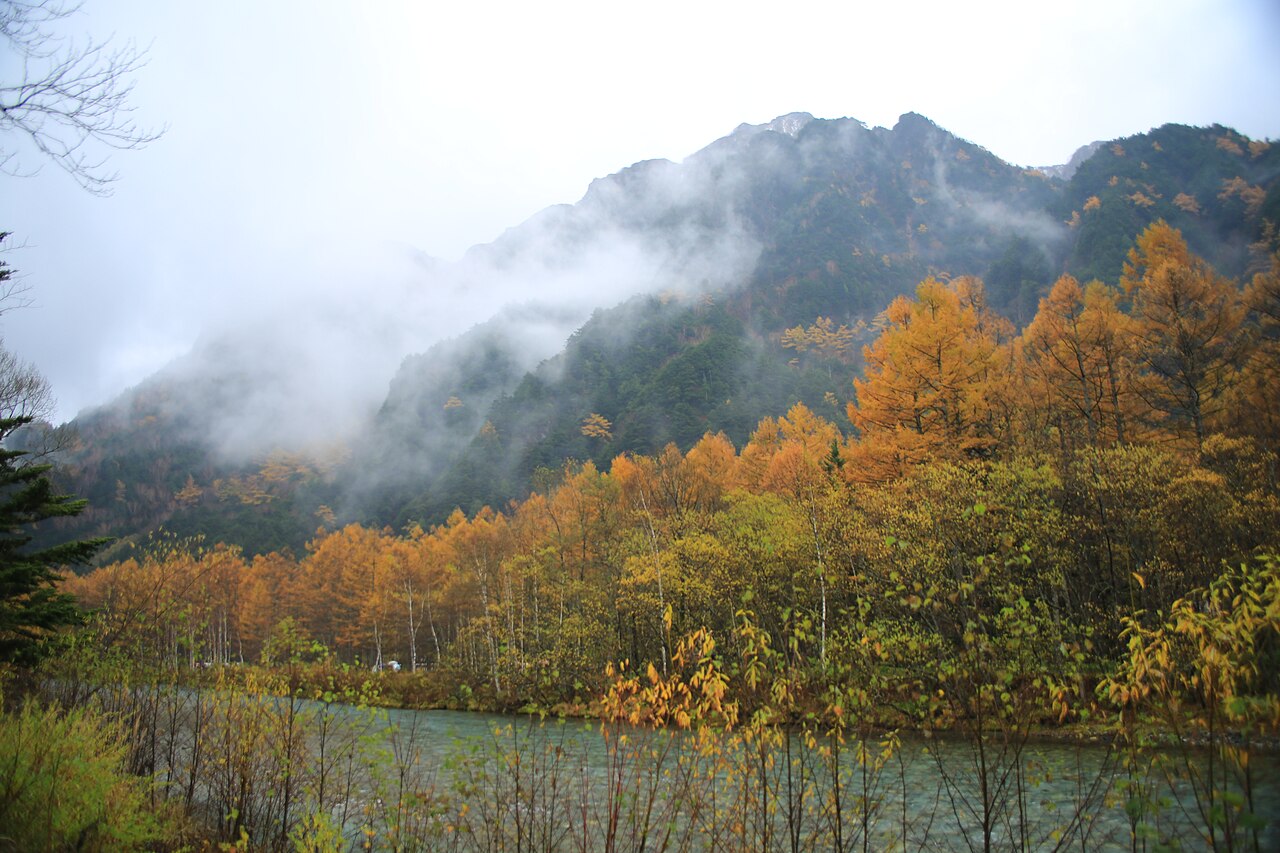
The morning at Kamikochi, in Nagano, begins with the clear flow of the Azusa River, the sound of tree leaves swaying and the singing of small birds. From Kappa Bridge the Hotaka range is in view, and on mornings after rain mist rises over the dead trees standing in Taisho Pond. The early morning is the thread, from the bridge and the two ponds to a night in the valley.
Kappa Bridge in the Early Morning
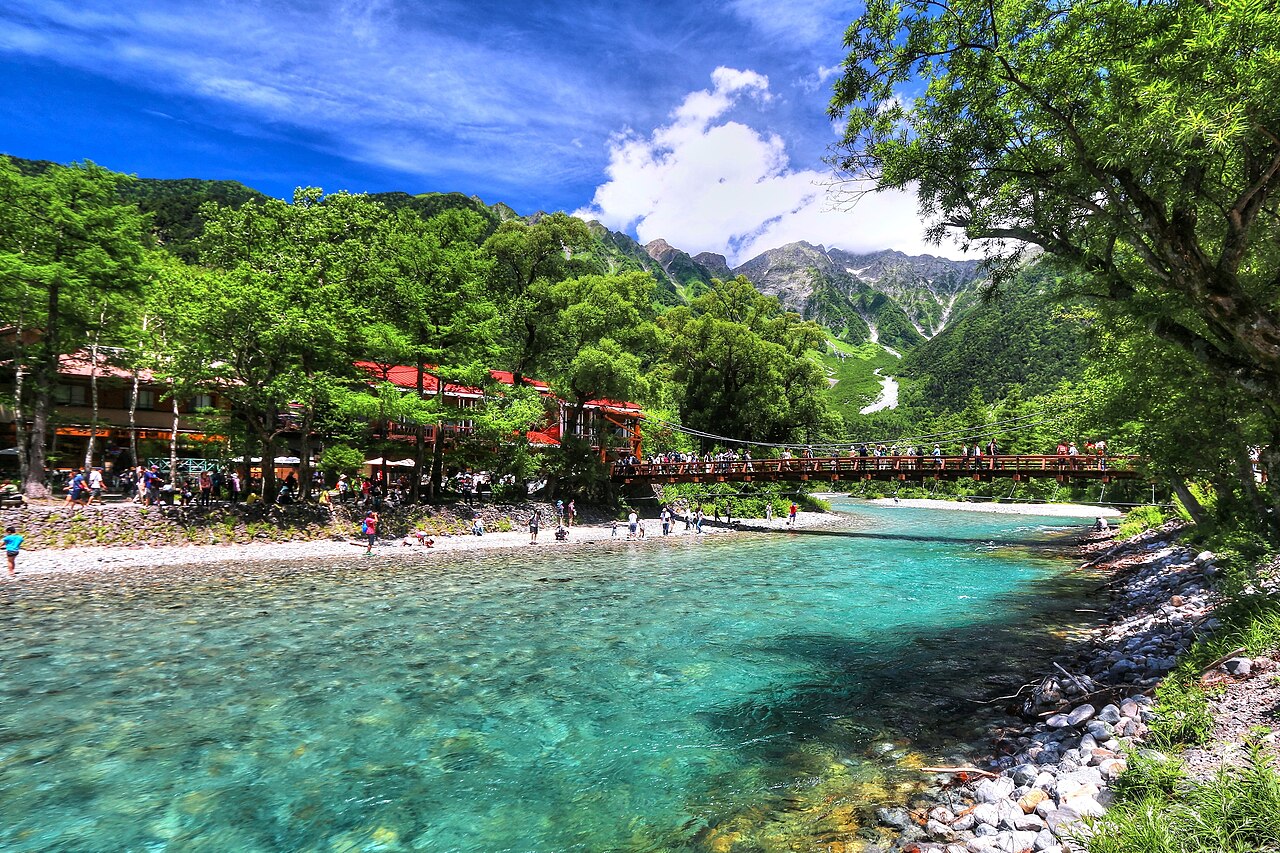
A visit to Kappa Bridge that began a little early in the morning found few other visitors, with the mountain air a little chilly and crisp. The bridge is a wooden suspension bridge over the Azusa River, with the Hotaka range in view.
In the morning the clouds along the mountain edge flow slowly. In the summer holidays and the autumn colour season the Kappa Bridge area is said to be as busy as the Ginza of Kamikochi.
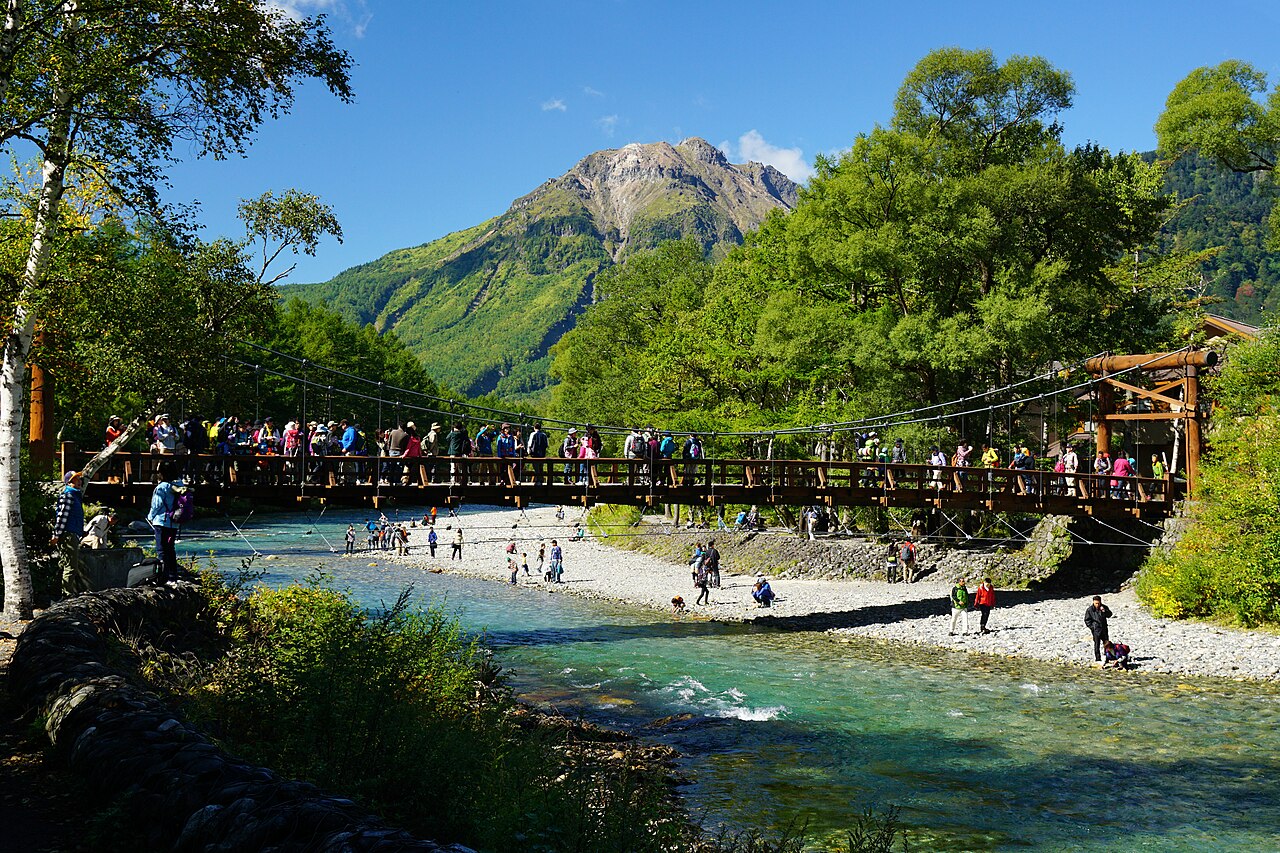
From the bridge, the Hotaka range, Dakesawa, the Kesho-yanagi willows and larches, and Mount Yake with its occasional plume of smoke can be seen. Several theories exist for the name: a deep pool where a kappa might once have lived, or people crossing with clothes on their heads looking like kappa before the bridge existed.
If the visit falls in either of those seasons, when the area is said to be as busy as the Ginza of Kamikochi, give the early start to Kappa Bridge rather than to the ponds.
Taisho Pond and the Morning Mist
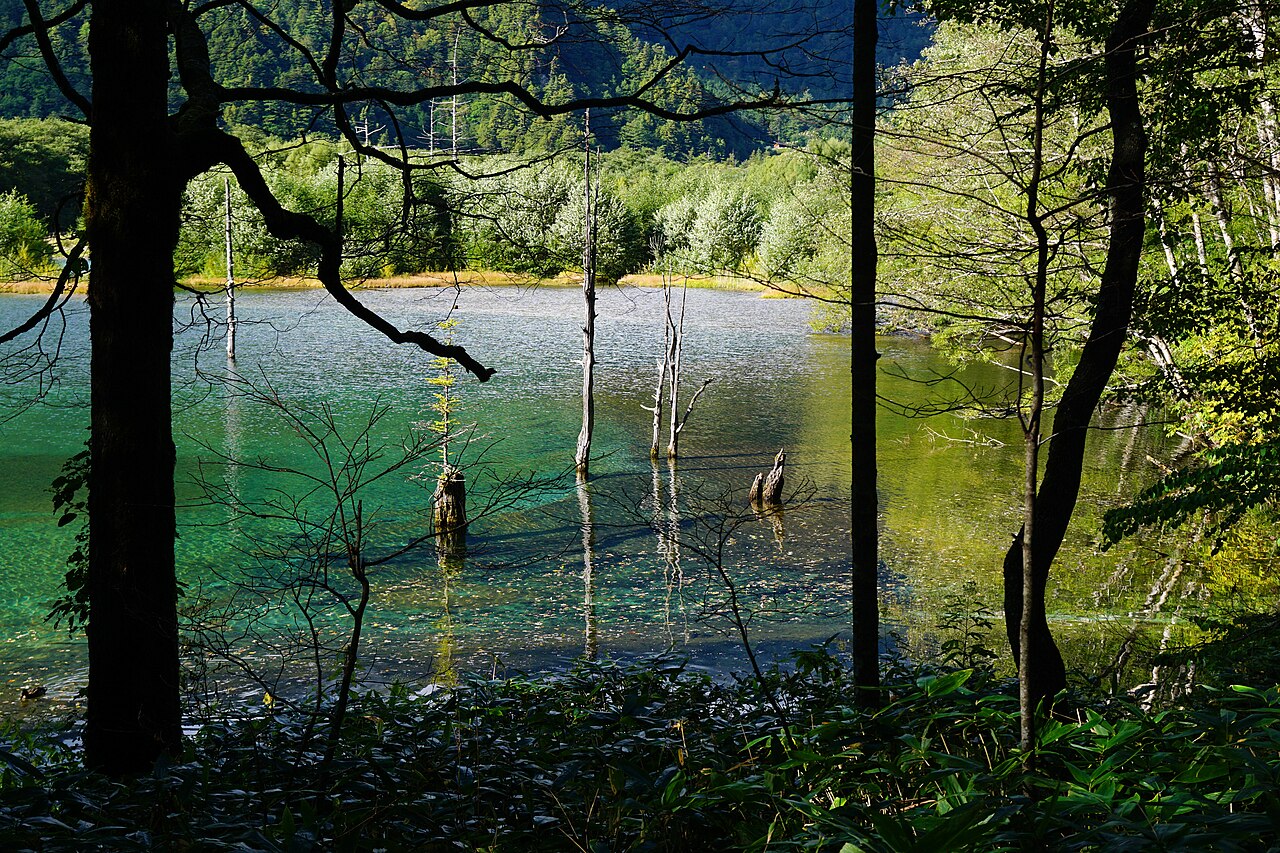
Taisho Pond appeared when lava and mudflow from the Mount Yake eruption dammed the Azusa River, and the dead trees standing in the water are what that event left in view. Especially on mornings after rain, mist rises and, with those dead trees, makes a whitish, hazy blue world. On a calm, windless morning the scenery changes moment by moment.
A calm water mirror reflects the mountains in stillness, and night at the pond is described as a time of stillness. Mandarin ducks and mallards can be observed from relatively close at the water's edge.
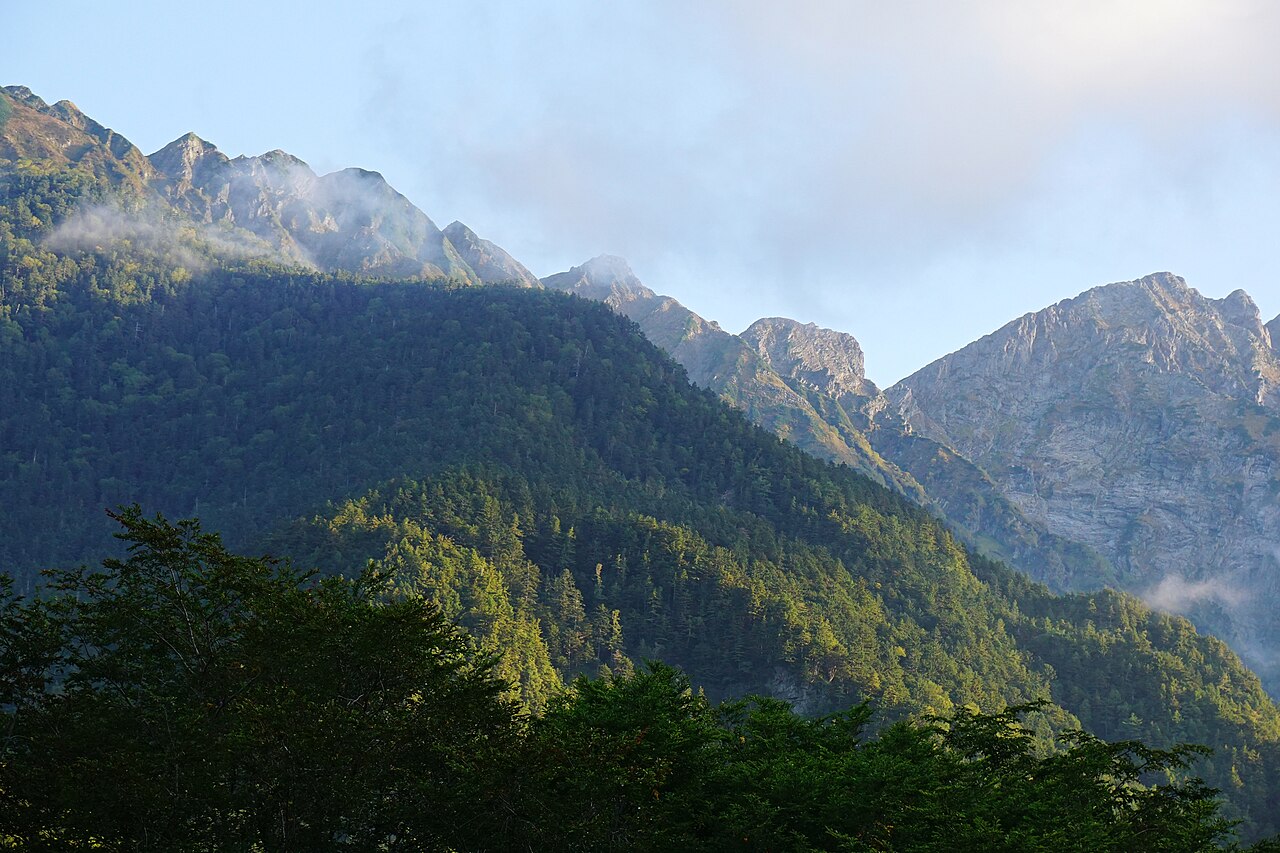
The Hotaka rock faces carry remaining snow from early spring to early summer and fresh snow in late autumn. A calm morning, especially one after rain, is the time to look for the mist; if rain fell overnight, Taisho Pond is where to spend that morning. Guided outings in the area are listed under experiences around Kamikochi.
The Right-Bank Path to Myojin Pond
The right-bank path from Kappa Bridge to Myojin has comparatively fewer visitors than the Nature Study Path and the left bank from Konashidaira, and can be walked at a leisurely pace. On fine days beyond Myojin, toward Tokusawa, birdsong and the sound of the Azusa River rapids resound.
Myojin Pond lies within the precinct of the Hotaka Shrine Okumiya, a larger and a smaller pond, Ichinoike and Ninoike. In the morning, mist hangs over the mirror-like surface ringed by larch forest, and a lodge stands a five-minute walk from the pond.
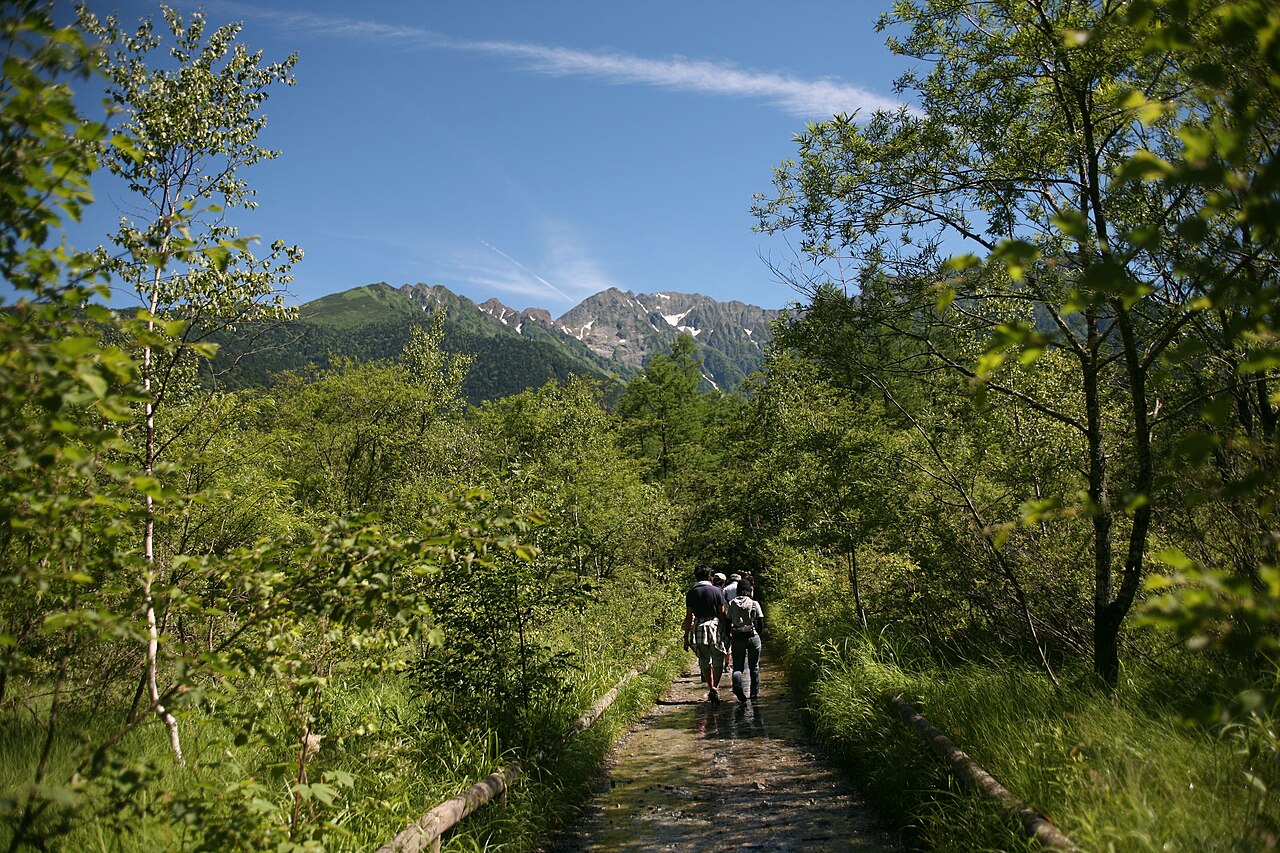
Kamonji hut, beside the approach road to the pond, serves char salted and grilled slowly over a wood fire, eaten whole from head to tail. In its irori hearth room the crackling of the firewood can be heard.
From Kappa Bridge, the right-bank route takes a little over one hour on foot. For a walk with fewer people, take this bank and reach the pond in the morning; if time is short, keep the char and drop Tokusawa.
Tashiro Pond and Wetland
June, the rainy season, brings comparatively little rainfall to Kamikochi and is a time when it is not crowded, and from mid-June to early July Tashiro Wetland is lively with colourful flowers such as Japanese azalea. Tashiro Pond is a shallow pond formed when sediment from streams dammed the flow, with several islands and a scenery calm like a paddy-field area.
Its named sights follow the seasons: fresh green in May, yellow leaves in October and rime ice in late autumn. In summer the pond shows Ichoubaika, a water crowfoot, with Nikko daylilies and cowberries nearby.
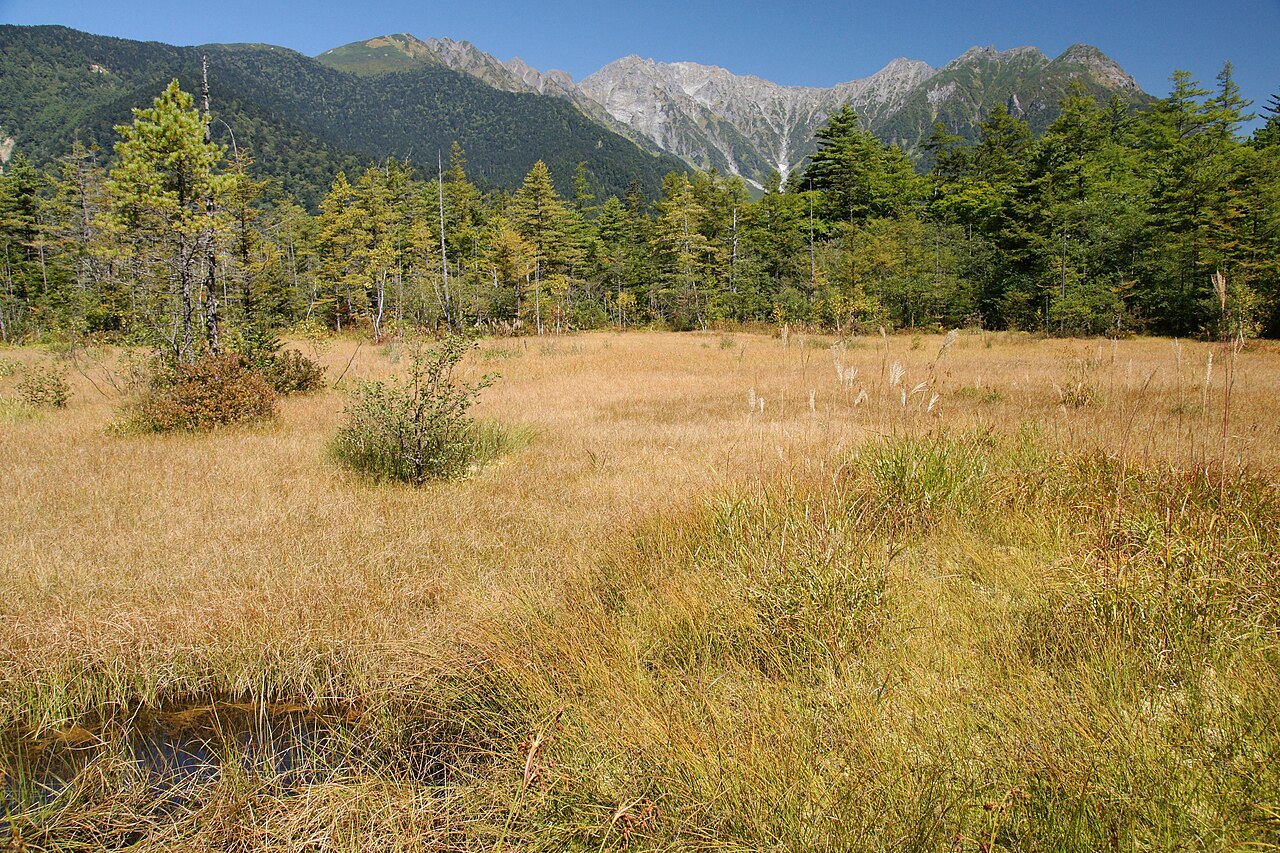
The walk from the Taisho Pond bus stop to Tashiro Pond and Tashiro Wetland is about twenty minutes. June suits the wetland, as the month when Kamikochi is not crowded and the flowers begin; in October the yellow leaves are the draw.
Staying Overnight in the Valley
One lodge in the valley stands in a very quiet environment, where the calls of birds wake guests in the morning. At the Nishi-itoya lodge the Azusa River rapids, birdsong and rustling leaves can be heard, and in the early morning the rock faces of Hotaka dyed in dawn colour can be seen from the bath.
At a lodge at Myojin, getting up early lets guests see the morning glow on Mount Myojin close up, while by day the area around it is busy with strollers, hikers and climbers.
From November fifteenth to mid-April all facilities in Kamikochi are closed and no transport runs above the Kama Tunnel, so the season for a stay ends in mid-November. A night in the valley brings the dawn colour on the Hotaka rock faces and the birdsong at waking within reach, and suits a visitor whose aim is the early morning.
If you would rather stay overnight, places to stay in Kamikochi is a place to start.
Getting to Kamikochi
| Leg | How | Time or fare |
|---|---|---|
| Shinjuku Station to Matsumoto | Limited express Azusa | About 2 hours 40 minutes |
| Matsumoto Station to Shin-Shimashima Station | Matsumoto Electric Railway | About 30 minutes |
| Shin-Shimashima Station to Kamikochi Bus Terminal | Route bus | About 1 hour |
| Matsumoto Station to Kamikochi Bus Terminal | Route bus, booking needed | About 1 hour 30 minutes |
| Sawando car park to Kamikochi Bus Terminal | Shuttle bus, one way | 1,600 yen |
| Sawando car park to Kamikochi Bus Terminal | Shuttle bus, round trip | 3,000 yen |
| Sawando car park to Kamikochi | Shuttle bus or taxi | About 30 minutes |
| Kamikochi to Shin-Shimashima and Matsumoto | Last bus of the day | 17:55 |
| Kamikochi to Sawando car park | Last listed departure | 17:30 |
Private cars are restricted beyond the Kama Tunnel all year round.
New to rural buses and one-man trains? See how to ride them, step by step.
Hours and Fees
| Place | What | Hours or fee |
|---|---|---|
| Kamikochi facilities and transport above the Kama Tunnel | Closed season | November 15 to mid-April |
| Kamikochi Bus Terminal ticket office | Business hours | 6:00 to 17:30 |
| Sawando municipal car park | Hours | 24 hours |
| Sawando private car parks | Opening | From around 5:00 |
| Sawando car park | Private car, per day | 800 yen |
| Hirayu Akandana car park | Private car, per day | 600 yen |
| Sawando shuttle bus | Child, one way | 750 yen |
| Myojin Pond | Adult admission | 300 yen |
Where to stay
Places to stay near Kamikochi, Nagano, Japan →
Disclosure: This post may contain affiliate links. If you book through them, we may earn a commission at no extra cost to you.