The Shimanto River winds through the far southwest of Kochi Prefecture, and the river town of Nakamura sits close to its mouth. The valley is best known for its chinkabashi, the low, bare crossings built so that the river can rise over them and move on. The quietest way to meet them is from the saddle of a bicycle, following the water upstream at your own pace.
Getting to Nakamura
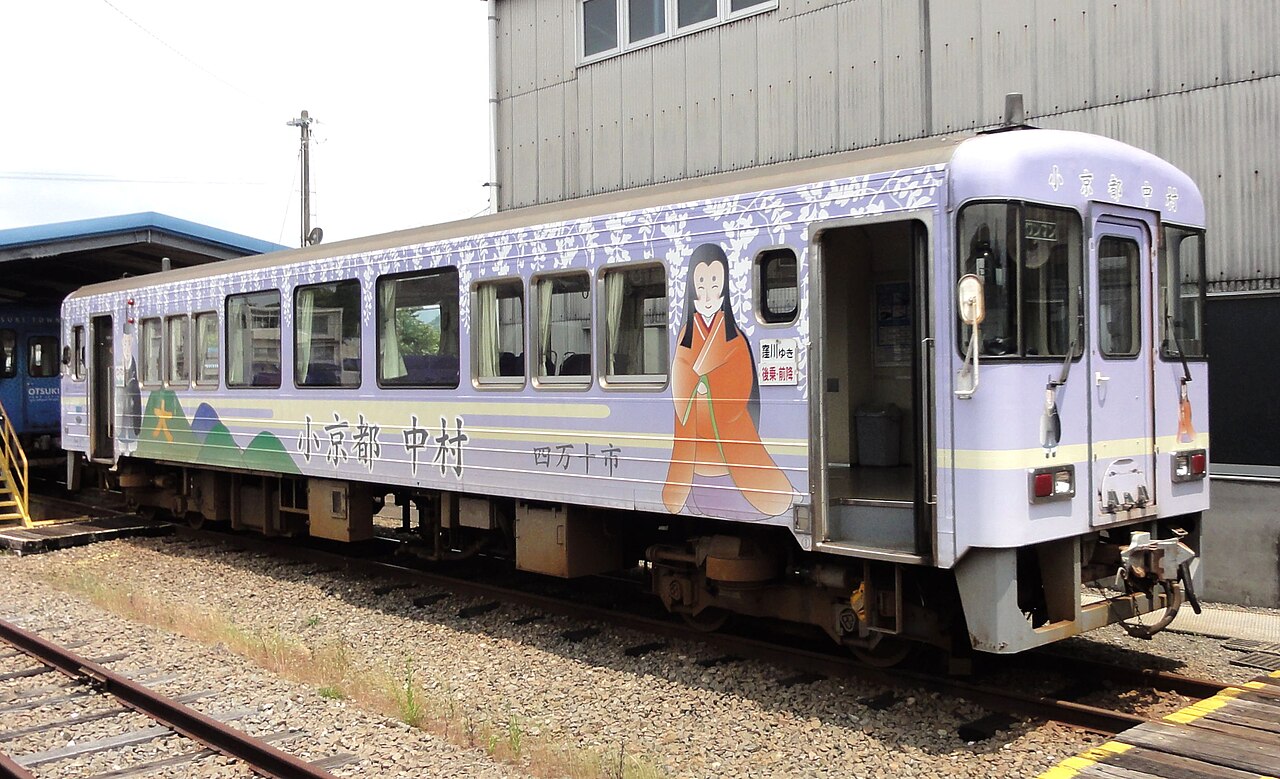
From Okayama, the rail journey to Nakamura takes about four hours and twenty minutes. The Nanpu limited express covers Okayama to Kochi in about two hours and forty minutes, and the Ashizuri limited express carries you on from Kochi to Nakamura in about an hour and forty to fifty minutes. Coming from Takamatsu instead, plan on about four hours and ten minutes. The platform at Nakamura Station is where the valley begins for most visitors.
Renting a bicycle
A town bicycle with a basket, or a fat-tyre bike, costs one thousand five hundred yen for four hours, with two hundred yen added for each hour after that. The price includes insurance of one hundred and fifty yen. A mountain bike is one thousand yen for up to five hours, or one thousand five hundred yen for a full twenty-four hours. You can also ride one way and hand the bike back at the far end. The one-way plan costs one thousand two hundred yen for up to five hours. An electric-assist bike is four thousand eight hundred yen for up to five hours. Luggage can be left for three hundred yen a day, with the counter open from half past eight in the morning until five in the afternoon.
Where to stay
Places to stay near Nakamura →
Disclosure: This post may contain affiliate links. If you book through them, we may earn a commission at no extra cost to you.
The sunken bridges
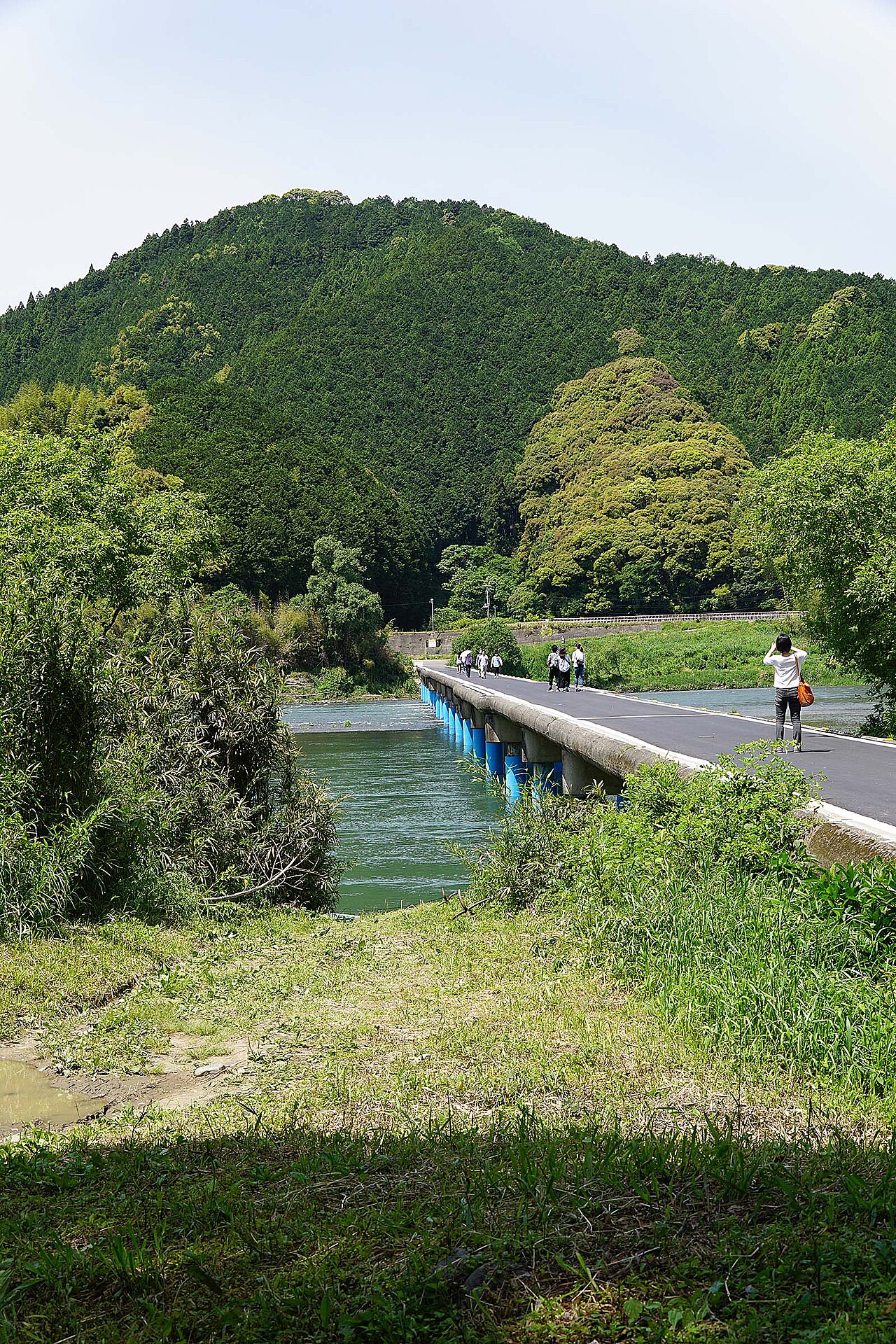
From Nakamura the river road runs upstream toward Ekawasaki, and this is the stretch where the sunken bridges follow one after another. Each is a plain ribbon of concrete laid close to the water, without ornament, so the river simply passes over it when it swells. Among the family of bridges along the river, Ittohyo is the oldest still standing and is registered as a national tangible cultural property. At Daiichi-Mishima, the sunken bridge runs beside the rail bridge of the Yodo line, so passing trains and the river cross in the same frame. Kamioka bridge, known locally as Mukaiyama-bashi, keeps the same low profile further along the valley.
Nakamura, the little Kyoto of Tosa
Nakamura itself rewards a slow loop before or after the river. Its grid of streets was laid out under Ichijo Norifusa, a court noble who came from Kyoto to Tosa, which is why the town is called the little Kyoto of Tosa. In the Yasunami district, waterwheels turn beside an old irrigation channel dug to serve four villages. In early June the banks around them colour with hydrangeas. Behind the town, a path of a little over two kilometres climbs Ishimiji-yama, strung with a miniature version of the eighty-eight temple pilgrimage of Shikoku.
When to come
At Irita, just upstream from town, a belt of riverside willows runs for about two hundred metres. From late February into the middle of March the ground beneath the willows turns yellow with rapeseed blossom, and local people walk the grove in the low spring light. Outside those weeks the valley does not perform at all, which is exactly its appeal. The bridges wait, the water moves, and the road is mostly yours.
If you would rather have company on the river, browse guided tours along the Shimanto.