This article follows a day at Cape Ashizuri, the southern tip of Shikoku, from the Kochi Seinan Kotsu bus out of Nakamura Station to the walk linking Kongofuku-ji, Hakusan Domon and the lighthouse. It covers the John Manjiro Museum, its hours and admission, the sandstone coast, aquarium and glass boat at Tatsukushi, and lunch prices at Ashizuri Kuroshio Market.
Getting to Cape Ashizuri by Bus from Nakamura Station
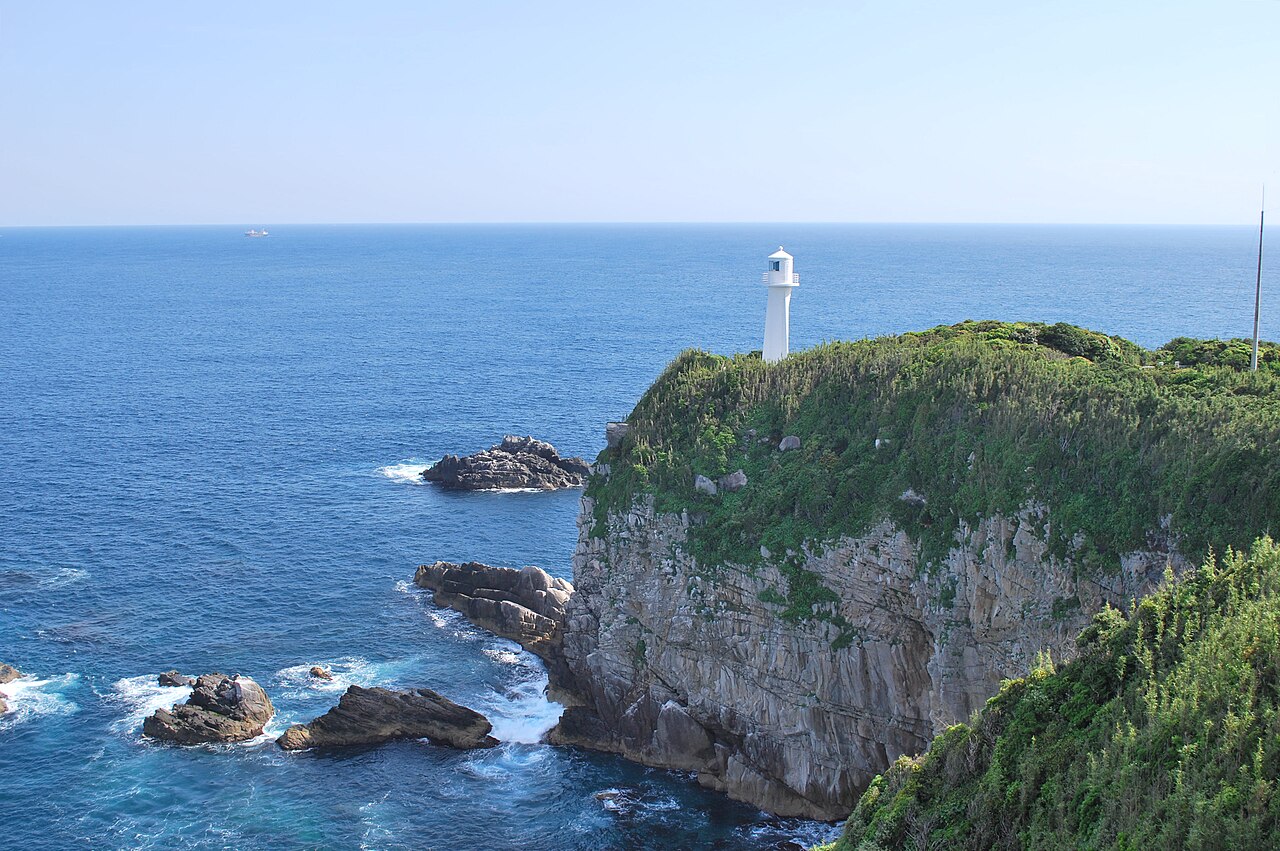
Cape Ashizuri sits in Tosashimizu, Kochi, and a guidebook notes it as the place where Shikoku ends in the south, with the Pacific breaking against sheer rock faces. The tip of the headland has a maintained walkway, so once you arrive you can go from the viewing platform right down to the foot of the white lighthouse on foot.
From Nakamura Station the approach goes like this:
- Begin at Tosa Kuroshio Railway Nakamura Station, the starting point for the bus.
- Board the Kochi Seinan Kotsu bus with Ashizuri shown as its destination.
- Stay on for about eighty minutes until the bus reaches the cape by the Kongofuku-ji area.
| Item | Detail |
|---|---|
| Nakamura Station to Cape Ashizuri, Kochi Seinan Kotsu bus, ride time | about 80 minutes |
| Nakamura Station to Cape Ashizuri, same bus, distance | 45 km |
| Tosashimizu City Tourism Association, opening hours | 8:30 to 17:00, all year round |
Once off the bus, find the standing statue of John Manjiro at the cape car park. A guidebook describes a walking course that starts there and links Kongofuku-ji, Hakusan Domon, the lighthouse and the Manjiro foot bath, so begin with it. For questions, the Tosashimizu City Tourism Association keeps the hours shown in the table above.
Kongofuku-ji, Temple Thirty-Eight on the Shikoku Pilgrimage
A guidebook notes that Kongofuku-ji stands within Tosashimizu and is the thirty-eighth temple on the Shikoku pilgrimage, the circuit of temples around the island. An old gazetteer records it as a temple of the Shingon school, also called Fudaraku-in, with its main hall, pagoda, Daishi hall, gate and bell tower scattered across the grounds, so allow time to wander between them.
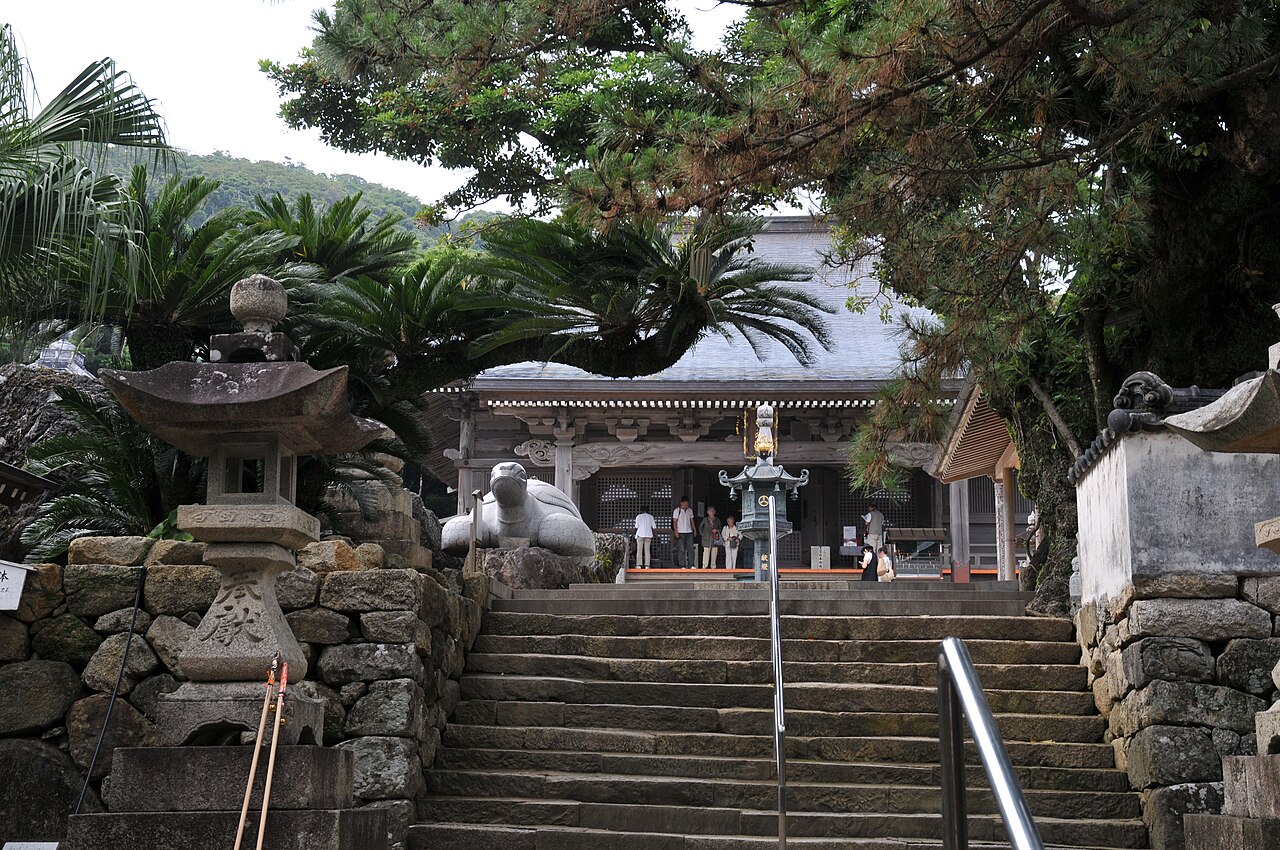
In the main hall is a standing figure of Kannon, the deity of compassion, shown with several faces and a multitude of arms, which according to tradition Kobo Daishi carved himself. The gazetteer records that the temple sits on high ground at the cape, so from the grounds the Pacific opens out to the south; pause there.
A guidebook adds that the cape was known for Fudaraku crossings, in which devotees set out by boat toward the paradise of Kannon believed to lie to the south, an act of self-sacrifice. From Sengoku times into the early Edo period it ranked alongside Kumano Nachi as a holy ground for this practice, so look south with that in mind.
| Kongofuku-ji | Detail |
|---|---|
| Visiting and worship hours | 8:00 to 17:00 |
Hakusan Domon, the Headland Walk and Seven Wonders
Hakusan Domon is a sea cave with a natural rock arch, cut by waves into the granite of the cape shore. A guidebook notes that from a certain angle the opening looks like a heart, which is why it is known as a power spot for finding a partner; walk around the viewpoints until the heart shape appears.
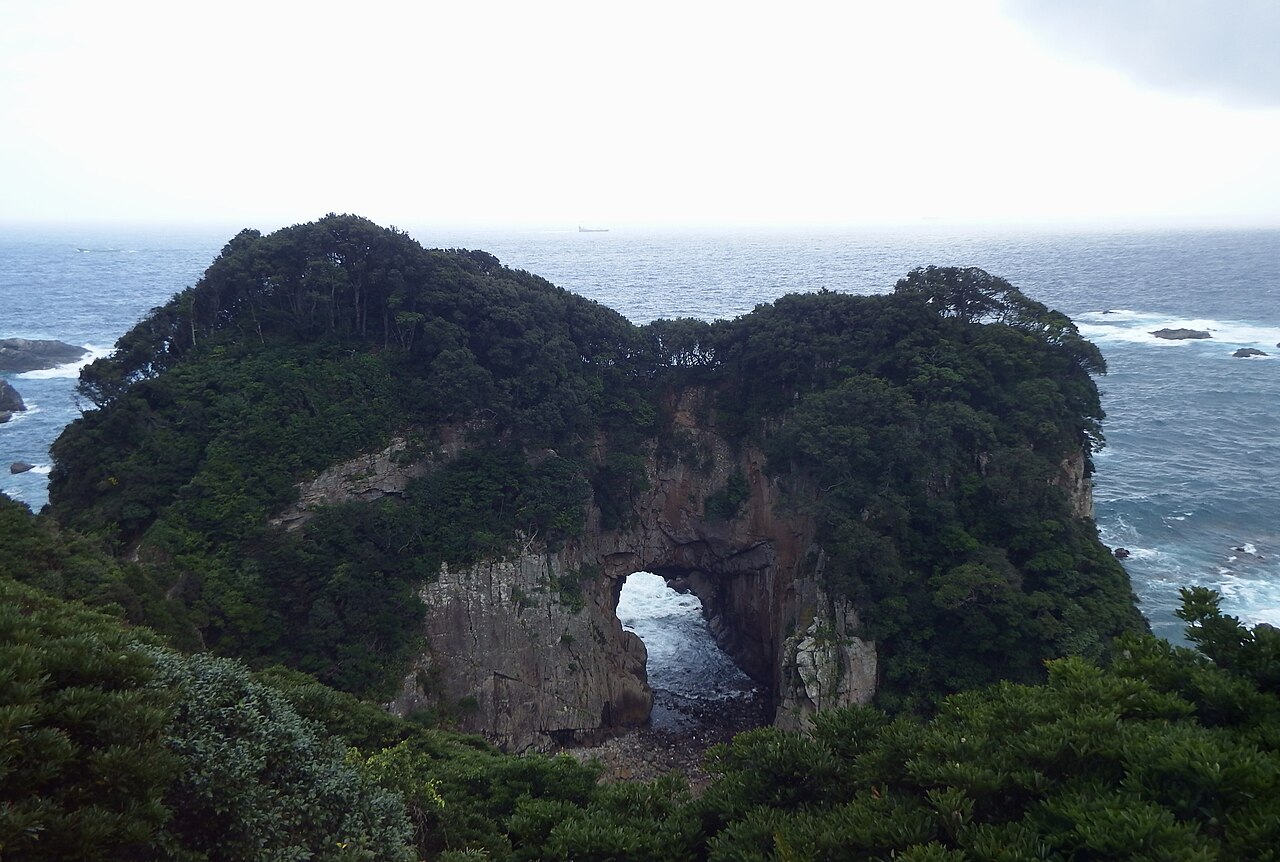
Tengu no Hana, a viewpoint on the headland, takes in the rock faces and the open sea at a wide angle and is the classic spot on the cape for a photograph. Afterwards the Manjiro foot bath, a public foot bath nearby, lets you soak your feet while its large windows frame the sea and Hakusan Domon.
Along the walkway around the lighthouse lie the Seven Wonders of Ashizuri, a set of legend spots tied to Kobo Daishi, each with an explanation board beside it. Among them is a stone on which the Daishi is said to have scratched characters with his fingernail; read the boards as you pass, since they explain what each spot is.
Where to stay
Places to stay near Tosashimizu, Kochi, Japan →
Disclosure: This post may contain affiliate links. If you book through them, we may earn a commission at no extra cost to you.
John Manjiro Museum: Hours and Admission
Tosashimizu is said to be the birthplace of John Manjiro, also written Nakahama Manjiro, who is regarded as the first Japanese to cross to America. The museum tells his story from being cast adrift at sea, through his rescue by an American whaling ship, to his years in Hawaii and America, using graphics and trick art; start your visit there.
His birthplace house stands in the Nakahama district, a wooden single-storey building with a thatched roof rebuilt from old photographs of the original. Within walking distance are a stone marking the place of his birth, the graves of the Nakahama family and a memorial to Manjiro, so link them into a short loop. Hours and admission for the museum follow.
| John Manjiro Museum | Detail |
|---|---|
| Opening hours | 9:00 to 17:00, last admission 16:30 |
| Admission, adult | 440 yen |
| Admission, elementary and junior high school students | 220 yen |
| Admission, children below elementary school age | free |
Tatsukushi: Sandstone Coast, Aquarium and Glass Boat
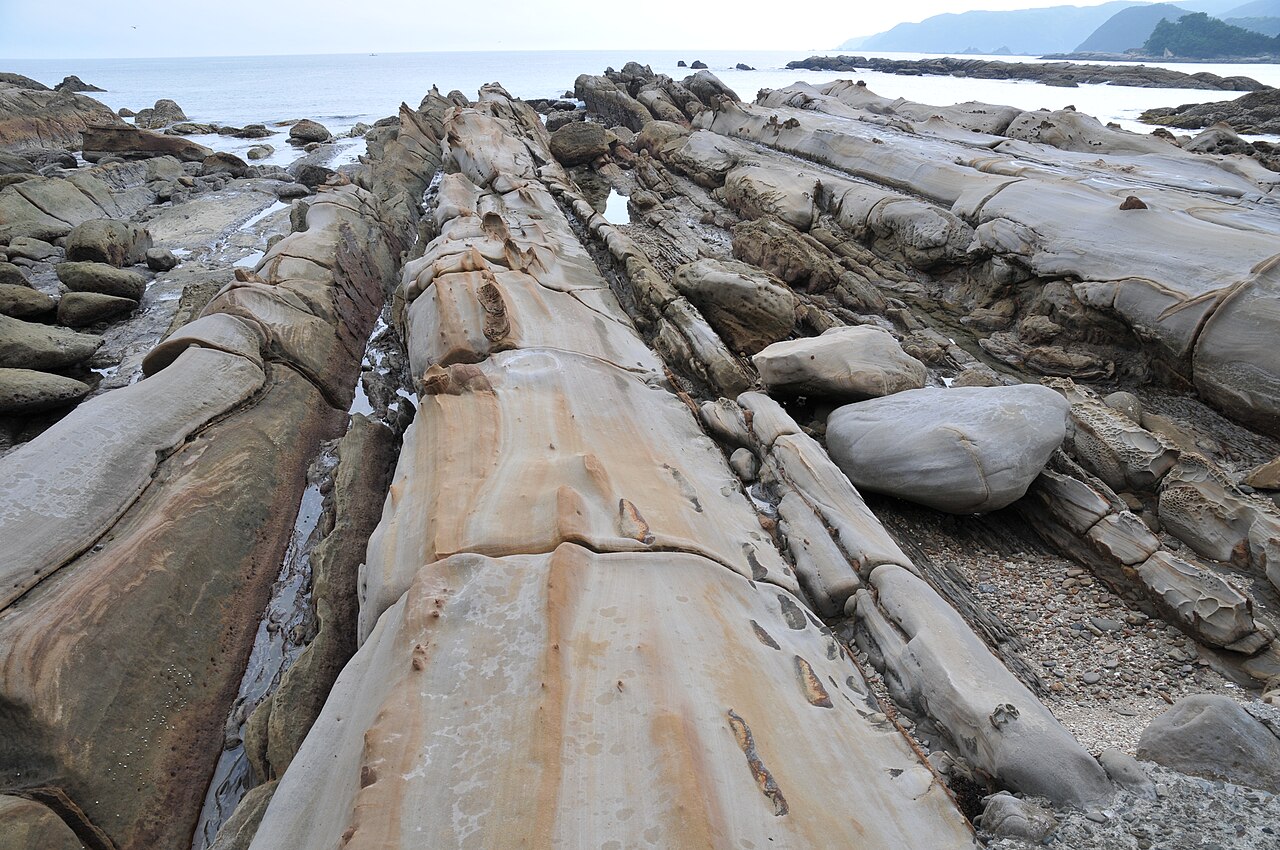
Tatsukushi lies on a bay that a guidebook notes was the first in Japan to be designated a marine park. Along the shore, beds of sandstone have been worn by waves and wind into long ridges and odd shapes, each carrying its own name, and a guidebook says the walk along them takes about thirty minutes at an easy pace.
At the far end of the coast stands the Ashizuri Kaiteikan, an underwater observation tower; go down its spiral staircase and you watch table coral and fish through windows below the surface. Also in the Tatsukushi area is the aquarium Ashizuri Kaiyokan SATOUMI, whose displays move from forest to deep sea and whose mascot is a blue sea slug.
There is also a glass boat experience, priced separately, and combined tickets cover either the aquarium and the Kaiteikan or both of those plus the glass boat; prices are in the table below. Decide which you want before buying. For help with reaching Tatsukushi, ask the Tosashimizu City Tourism Association, whose hours are listed with the bus details above.
| Place and item | Detail |
|---|---|
| Ashizuri Kaiyokan SATOUMI, opening hours | 9:00 to 17:00, last admission 16:30 |
| Ashizuri Kaiyokan SATOUMI, admission, adult | 1,200 yen |
| Ashizuri Kaiyokan SATOUMI, admission, children (elementary to high school students) | 600 yen |
| Glass boat experience, adult (junior high school students and older) | 2,000 yen |
| Glass boat experience, children aged 6 to 12 | 1,000 yen |
| Combined ticket, Kaiyokan and Kaiteikan, adult | 1,500 yen |
| Combined ticket, Kaiyokan, Kaiteikan and glass boat, adult | 3,000 yen |
If you would rather not plan the coast yourself, take a look at tours around Cape Ashizuri before you travel.
A Fish Lunch at Ashizuri Kuroshio Market
Ashizuri Kuroshio Market is reached by bus from Tosa Kuroshio Railway Nakamura Station in about one hour, and the restaurant inside it serves a midday meal. Treat it as its own destination for the day and check the dining hours before you go, since the restaurant serves lunch only within a short window.
The menu lists a Tosa Shimizu mackerel bukkake-don, which is a rice bowl, a Tosa Shimizu mackerel set meal, a soda-bushi fisherman's ochazuke, a rice dish, and a bonito tataki set meal. Prices with tax included and the dining hours are set out below, so pick a dish before you go in.
| Restaurant at Ashizuri Kuroshio Market | Price or hours |
|---|---|
| Nakamura Station to Ashizuri Kuroshio Market, bus ride time | about 1 hour |
| Dining hours | 11:00 to 14:00 |
| Tosa Shimizu mackerel bukkake-don, tax included | 1,480 yen |
| Tosa Shimizu mackerel set meal, tax included | 1,890 yen |
| Soda-bushi fisherman's ochazuke, tax included | 1,100 yen |
| Bonito tataki set meal, tax included | 1,650 yen |
If the day stretches into the evening, places to stay in Tosashimizu are worth settling before you set out.