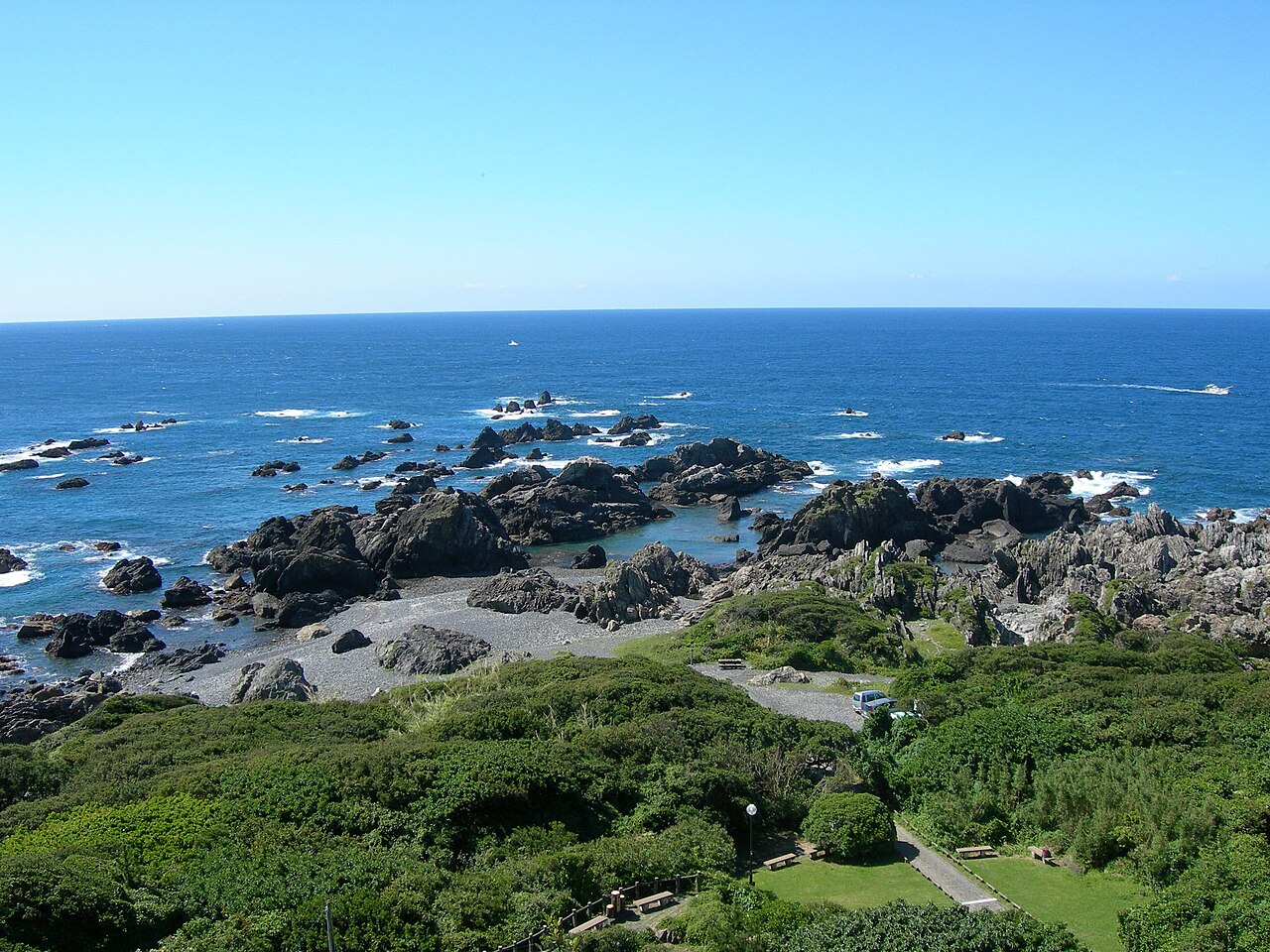
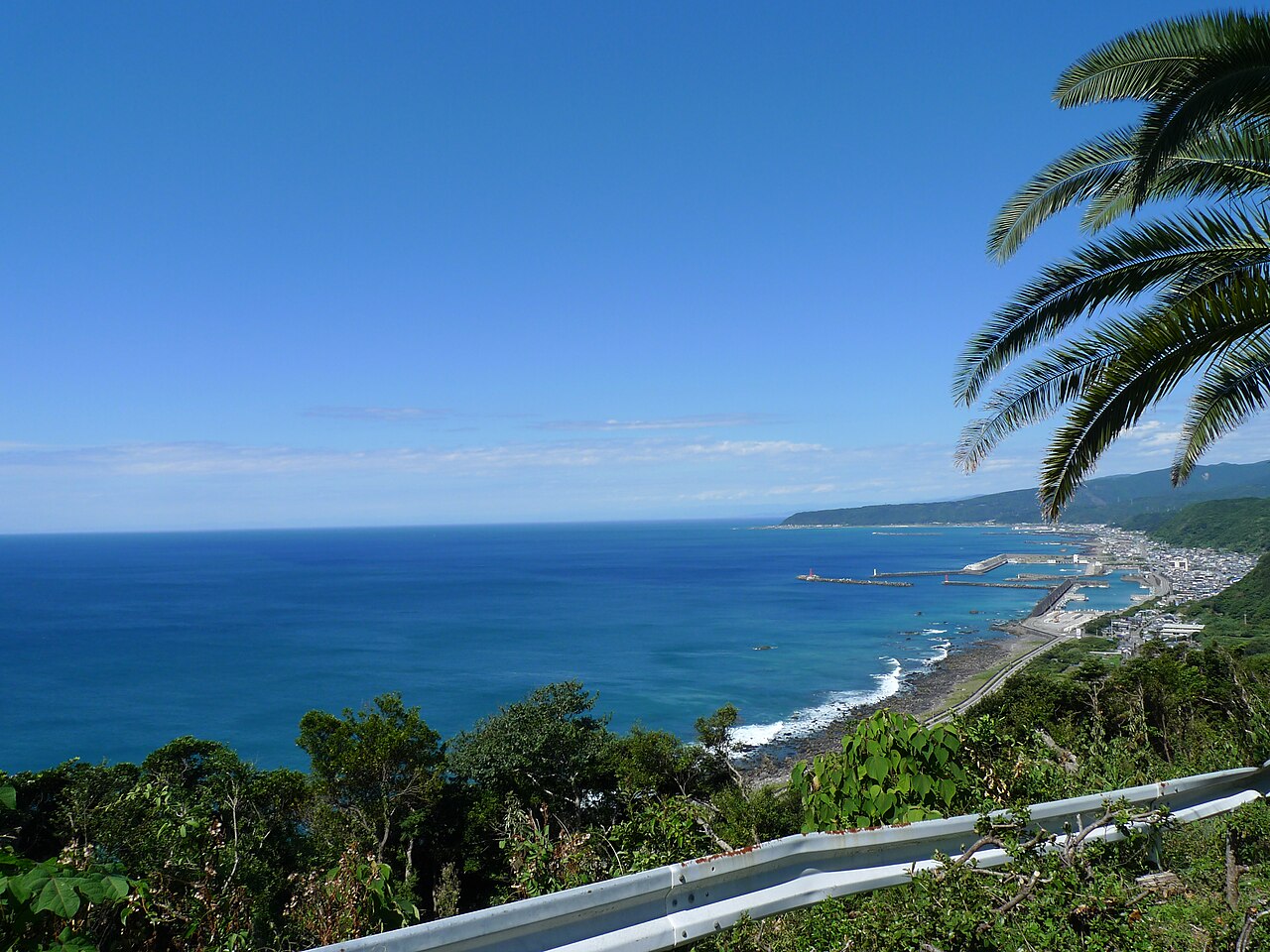
Muroto is a cape to walk: a promenade follows the shore, with dynamic strata, landforms and rare subtropical plants to observe. A lighthouse stands on the hill at the tip. The city became the fifth World Geopark in Japan, so the rocks underfoot come with an explanation. The day ends with the Muroto kinmedai bowl, grilled local kinmedai and sashimi of local fish on rice.
Walking the Cape Coast and Its Caves
The Ransho promenade runs along the Cape Muroto coast for about two point six kilometres, connecting the Nakaoka Shintaro statue with the Young Kobo Daishi statue. It is a course for observing strata, landforms and rare subtropical plants, so it rewards a slow pace. The subtropical forest and coastal plant community here is a national natural monument.
Akou trees grow wild across the cape and hang aerial roots like octopus legs, clinging to the rock surface. They can also grow on top of other trees and wither them by tightening those roots, hence the name strangling tree. Burning the dried leaves gives off a pleasant fragrance, which is why the tree is also called jinkoboku.
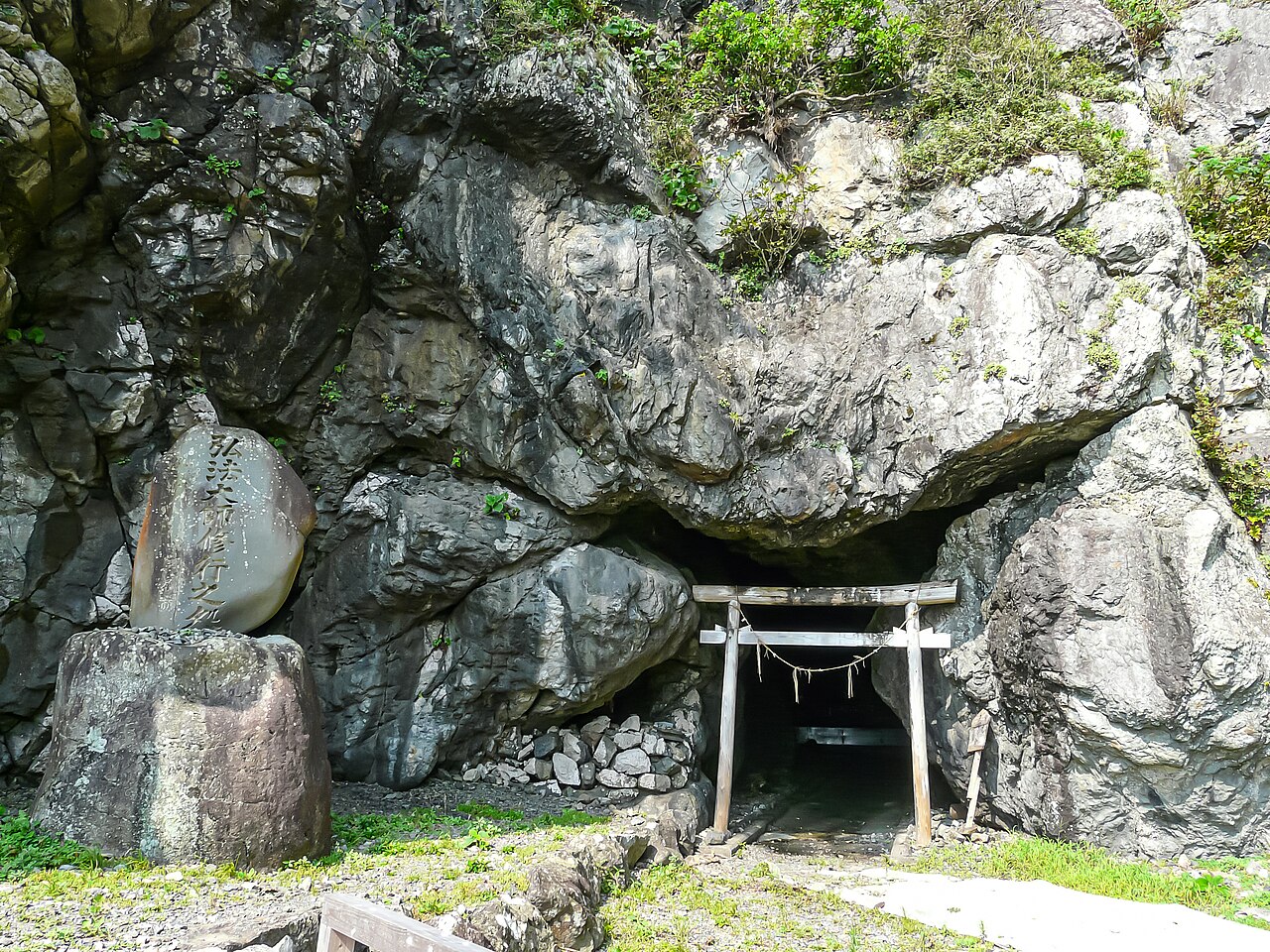
Near the tip of the cape, two caves formed by wave erosion lie on the coast, and the left-hand one is Mikurodo. The right-hand cave, Shinmeikutsu, is said to have served as a place of training. Inside Mikurodo, listen: the sound of the waves there was chosen by the Environment Agency as one of the one hundred soundscapes of Japan.
On the way from the town toward the cape, about seven thousand five hundred hibiscus are planted over one point one kilometres along National Route fifty-five. Red flowers bloom among bright green foliage against the blue sea and clear sky.
The Lighthouse, Hotsumisaki-ji and the Daishi Statue
The Muroto-misaki Lighthouse stands on a hill at the tip of Cape Muroto. It has been in service since the thirty-second year of Meiji as a guide for mariners, which makes it a working light rather than a monument. Inside is a first-class lens.
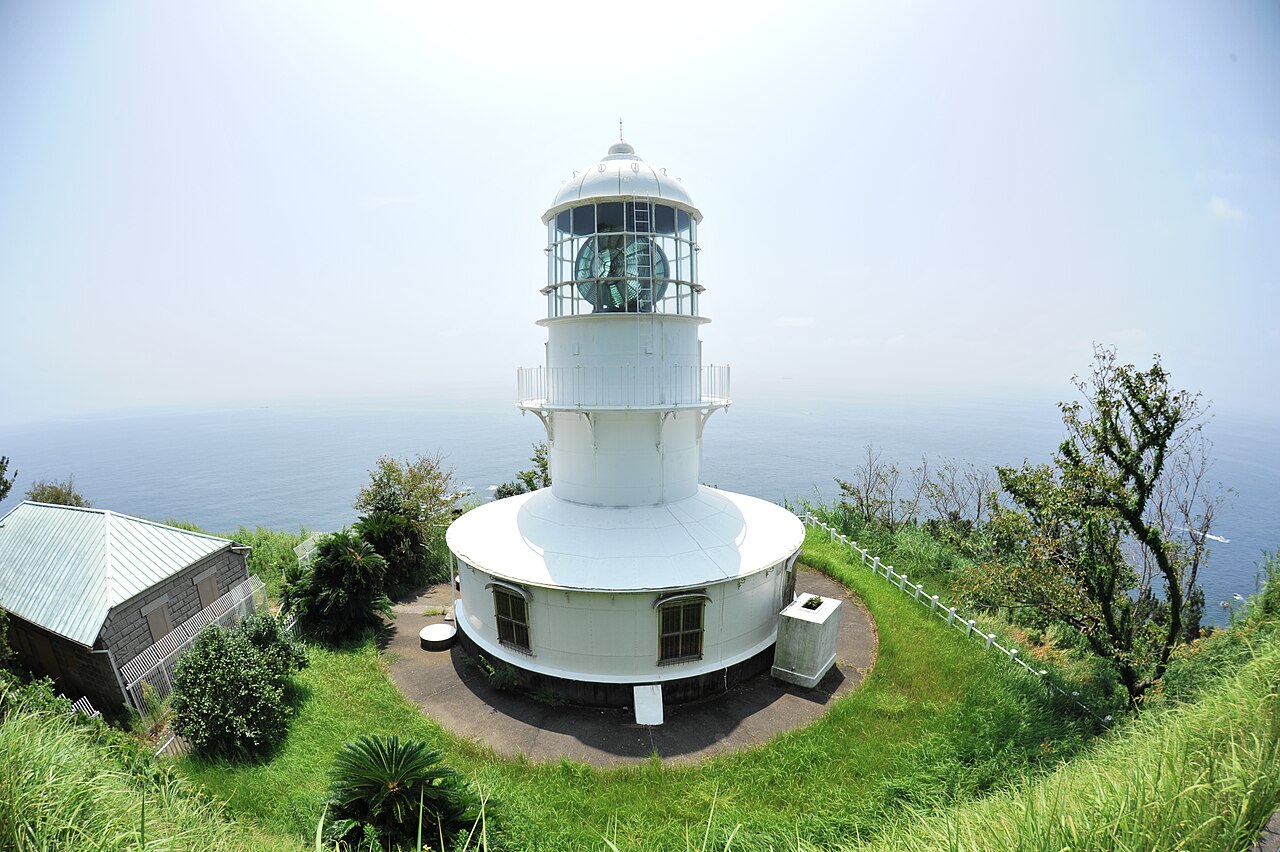
The Muroto-misaki Lighthouse Festival is held on the Sunday closest to the first of November each year. On that day the inside of the lighthouse, which visitors normally cannot enter, is opened to general visitors. On the Saturday before the festival, the interior is also shown to the public at night.
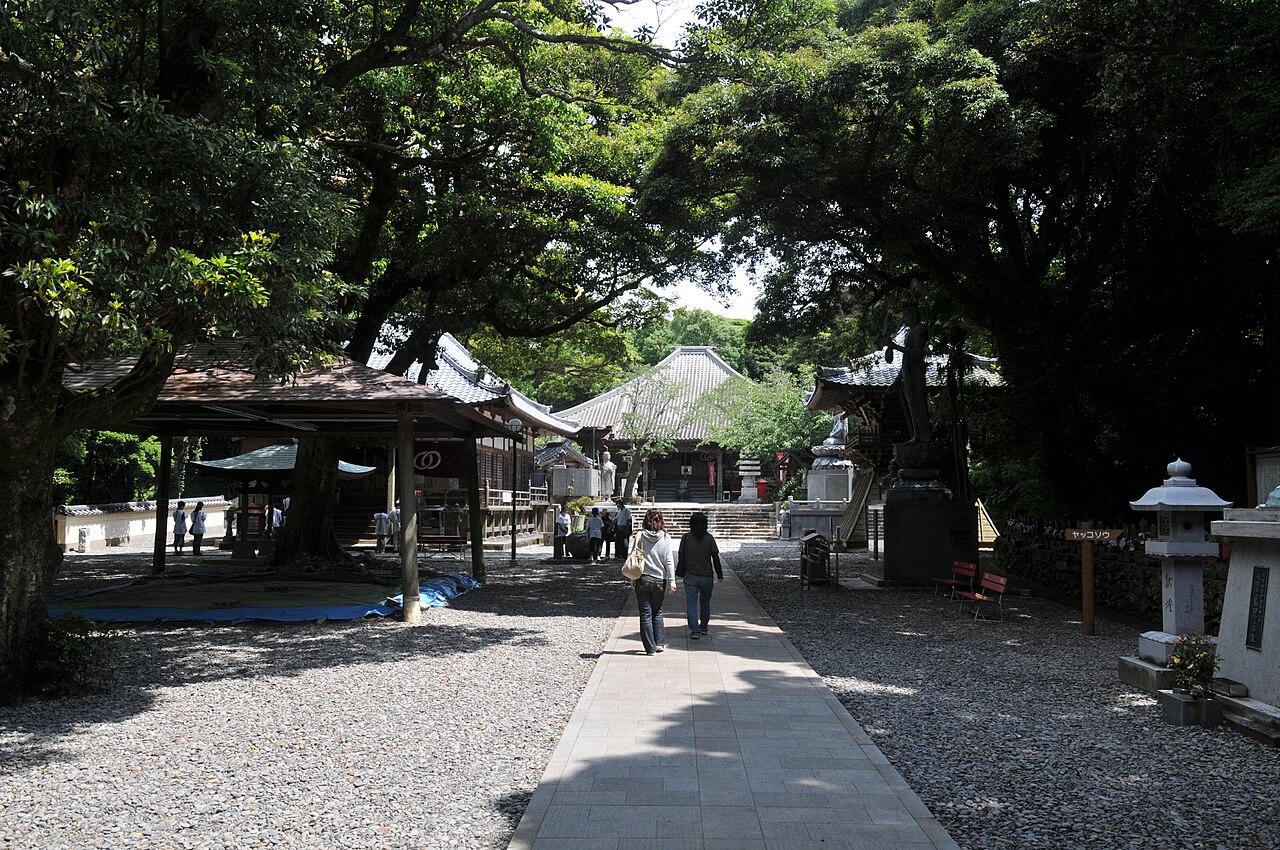
Hotsumisaki-ji is the twenty-fourth temple of the Shikoku pilgrimage and was founded by Kobo Daishi in the second year of Daido. Three Buddhist statues here are designated important cultural properties. The principal image is Kokuzo Bosatsu. Pilgrims arrive here as a numbered stop on the route.
At the other end of the promenade stands the Young Kobo Daishi statue, raised on a pedestal. It was erected in November of the fifty-ninth year of Showa through donations from believers and members of the public who admired the Daishi's virtue.
Eating Kinmedai and Local Produce
Kinmedai is landed off Muroto throughout the year because the fishing grounds lie offshore. The local way to eat it is the Muroto kinmedai bowl: by its rules, grilled Muroto kinmedai and sashimi of local fish go on the rice. Each shop serves its own kinmedai broth with the bowl. The ingredients, by the same rules, come from Kochi Prefecture.
The bowl is served at Ryotei Kagetsu, Kamameshi Hatsune and Henro no Eki Fufu Zenzai in Murotsu. Every participating shop in the city charges the same amount for it, so choose by the broth rather than the bill. Minshuku Tokumasu serves it only to overnight guests.
Kiramesse Muroto covers the rest. Its restaurant Kujira no Sato serves dishes made with fresh local ingredients. The Rakuichi market stocks seasonal fruit such as ponkan and yamamomo, field-direct vegetables and market-direct fish. Kujirakan there exhibits the history and culture of Muroto living alongside whales, along with the ecology of whales.
The Geopark, Dolphins and a School Aquarium
Muroto became the fifth World Geopark in Japan, following Toya-Usu, Itoigawa, the Shimabara Peninsula and the San'in Coast. Exhibits inside the Muroto World Geopark Center, including the geo theatre, present how the land was formed and the human life nurtured on it. On the theatre's large screen you investigate Muroto's land, sea and culture with Doctor Magari.
The geo cafe offers a menu made with seasonal Muroto ingredients, including freshly squeezed seasonal juice. Its recommendation is aonori udon, made with plenty of aonori grown in Muroto deep ocean water. The geo shop sells products from Muroto and elsewhere in Kochi, with a corner of handmade goods by local artisans.
Deep ocean water is Muroto's other signature. The Aqua Farm takes in four thousand cubic metres of it a day. Panel exhibits and video there explain the resource. Shiresuto Muroto, a health promotion facility using the same water, has a heated pool, outdoor baths, a Finnish sauna and an outdoor-air hot tub.
Whale watching and a cruise around Cape Muroto are offered, and visitors may encounter whales and dolphins. At the Muroto Dolphin Center you can view the dolphins from inside the fence, do dolphin touch and swim with them. At the Muroto Abandoned School Aquarium, sea turtles and fish caught in local set nets swim in the outdoor pool and in tanks indoors.
Kirakawa and Its Old Townscape
Kirakawa's townscape is formed by buildings with white walls and water-shedding tiles, together with ishiguro stone walls. It was built by people of the past alongside the prosperity of binchotan charcoal. The district was selected as an Important Preservation District for Groups of Traditional Buildings on the thirty-first of October in the ninth year of Heisei.
The Omatsuri-kan introduces the history and traditions of Kirakawa. At the Kirakawa Machinami-kan, visitors can look through materials and apply for a townscape guide, which has to be arranged in advance. Visit them first and the streets read differently.
Getting to Muroto
| Leg | How | Time |
|---|---|---|
| Kochi Station to Nahari Station | JR Dosan Line and Tosa Kuroshio Railway Gomen-Nahari Line | About one hour and thirty minutes |
| Nahari Station to the Muroto World Geopark Center | Kochi Tobu Kotsu bus bound for the Geopark Center and Kounoura | About one hour |
| Nahari Station to Cape Muroto | Kochi Tobu Kotsu bus bound for Kounoura, getting off at Muroto-misaki | About one hour |
| From the Muroto World Geopark Center bus stop | On foot | About four minutes |
| Kochi Ryoma Airport to the Muroto Abandoned School Aquarium | By car | About one hour and forty minutes |
| Nankoku interchange on the Kochi Expressway to the Muroto Abandoned School Aquarium | By car | About two hours |
| Bus stop in front of the Muroto Abandoned School Aquarium to the aquarium | On foot | About one minute |
The Tokushima Bus service between Osaka and Kounoura and Ikumi runs two round trips a day, and its direct service to Muroto runs one round trip a day. The DMV of the Asa Coast Railway has suspended its weekend and holiday extension into Muroto as of September twenty twenty-six because of vehicle failure, so check official information before visiting.
Shared bicycles come in three types: an electric-assist bicycle, a regular bicycle and a cross bike. The rental and return bases are the Muroto World Geopark Center, the Muroto City Tourist Association at the Cape Muroto park rest house, and Ouchi-yado Shidao in Hane-cho.
New to rural buses and one-man trains? See how to ride them, step by step.
Hours and Fees
| Place | What | Hours or fee |
|---|---|---|
| Mikurodo cave | Entry | Eight in the morning to five in the afternoon; may change or be suspended by season and weather |
| Muroto World Geopark Center | Opening | Nine in the morning to five in the afternoon |
| Muroto Abandoned School Aquarium | April to September | Nine in the morning to six in the evening |
| Muroto Abandoned School Aquarium | October to March | Nine in the morning to five in the afternoon |
| Muroto Abandoned School Aquarium | Adult (high school and older) | Six hundred yen |
| Muroto Abandoned School Aquarium | Child (elementary and junior high) | Three hundred yen |
| Shared bicycles | Electric-assist, per day, helmet and insurance included | One thousand five hundred yen |
| Shared bicycles | Regular bicycle or cross bike, per day, helmet and insurance included | One thousand yen |
| National Route hibiscus | Flowering season | June to November |
| Airport shared taxi | Kochi Ryoma Airport to Noichi Station, adult one way, child half | Five hundred yen |
| Kujira no Sato at Kiramesse Muroto | Listed hours | Half past ten in the morning to half past seven at night, last orders half past six |
| Rakuichi at Kiramesse Muroto | Listed hours | A quarter past eight in the morning to five o'clock |
| Kujirakan at Kiramesse Muroto | Listed hours | Nine in the morning to five o'clock |
| Kiramesse Muroto | Closing days | Mondays (none in August; the next day if Monday is a national holiday) and the start of the year |
Entry to Mikurodo runs from eight in the morning to five in the afternoon and may change or stop with the season and weather, so plan the cape walk for the morning. With the promenade, the aquarium and Kirakawa all on the list, compare places to stay in Muroto and give the city more than a day.
Where to stay
Disclosure: This post may contain affiliate links. If you book through them, we may earn a commission at no extra cost to you.